
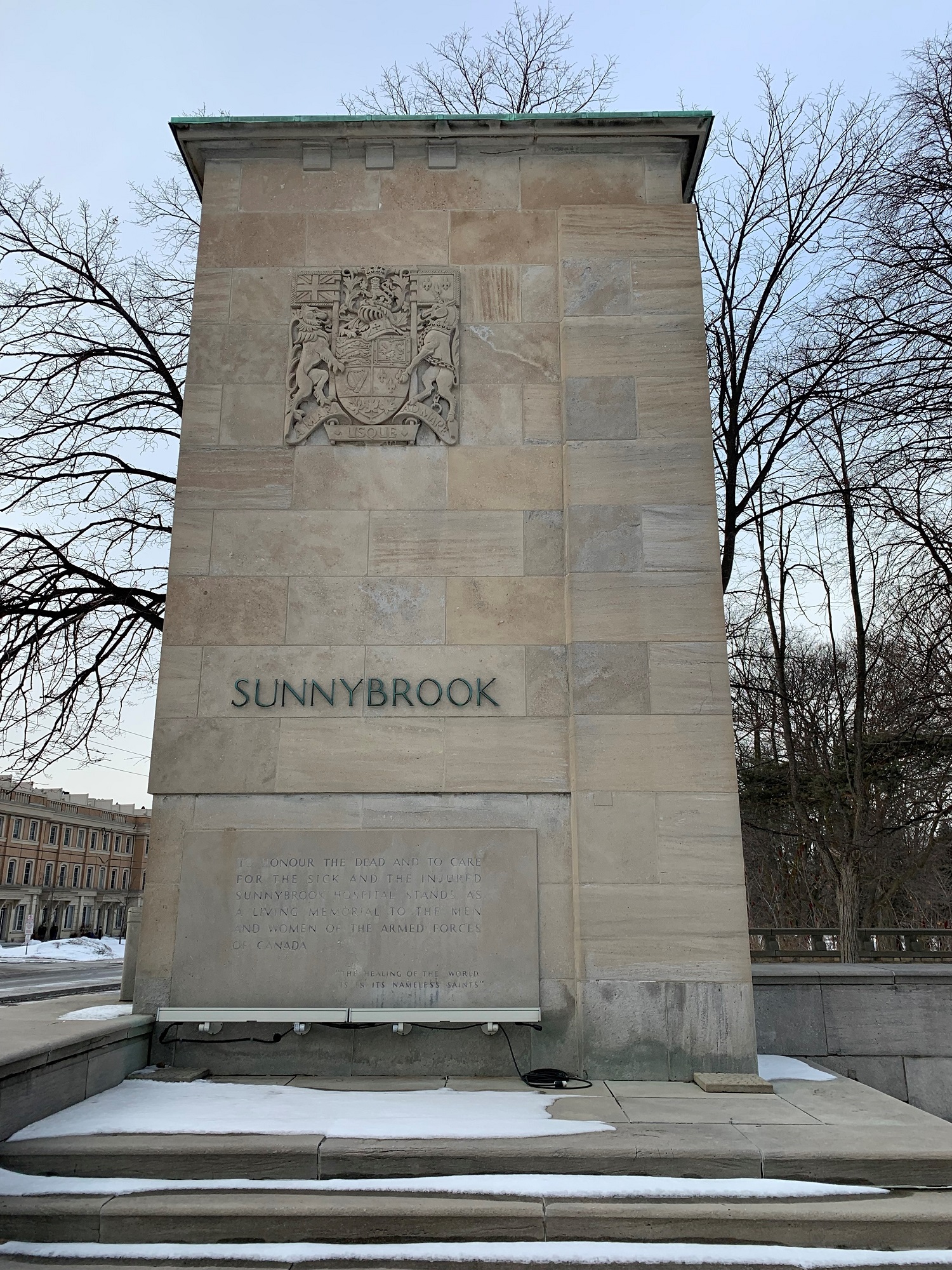

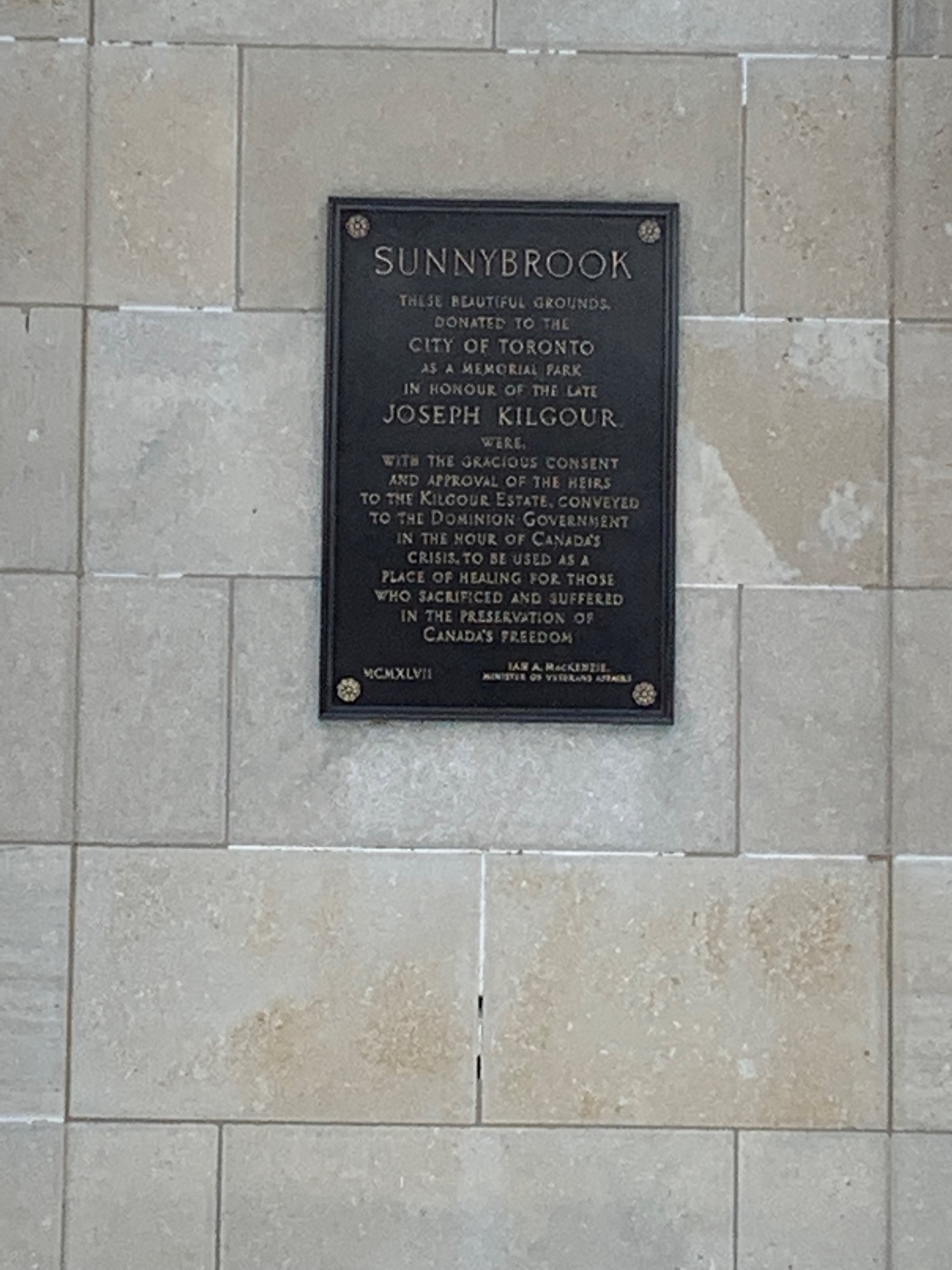

Joseph and Alice Kilgour, owned sizable lots on the edge of Toronto. When Joseph died in his early 70s, Alice donated a 71-hectare parcel of Sunnybrook Farm to the city of Toronto and the remaining land — Bayview Avenue marked the western boundary — was transferred in 1944 to the federal government as a hospital site for Canadian Veterans. Architects Allward and Gouinlock designed the new hospital. The first sod was turned November 11, 1943, and one year later, the Honourable Ian MacKenzie laid the cornerstone for the Neuropsychiatric Building
The Red Cross Lodge foundation stone was laid in June of 1945. It is now located in front of the Veterans Centre in memory of all the Red Cross volunteers who cared for Veterans over the years. On November 11, 1945, Corporal Fred Topham, VC, laid the cornerstone for the Active Treatment Building. The Red Cross Lodge opened on January 30, 1947, and volunteers provided services for Veterans until 2000.
On September 26, 1946, the first wounded Veterans arrived at Sunnybrook Military Hospital from Christie St. Hospital. Private Raymond Frank Scott of Toronto’s Royal Regiment was the first patient. Scott, 25, had survived Dieppe and lost his right eye in Normandy. He was part of a group of 87 walking patients and 14 stretcher patients transferred. These first patients were located in Lancaster Wing.
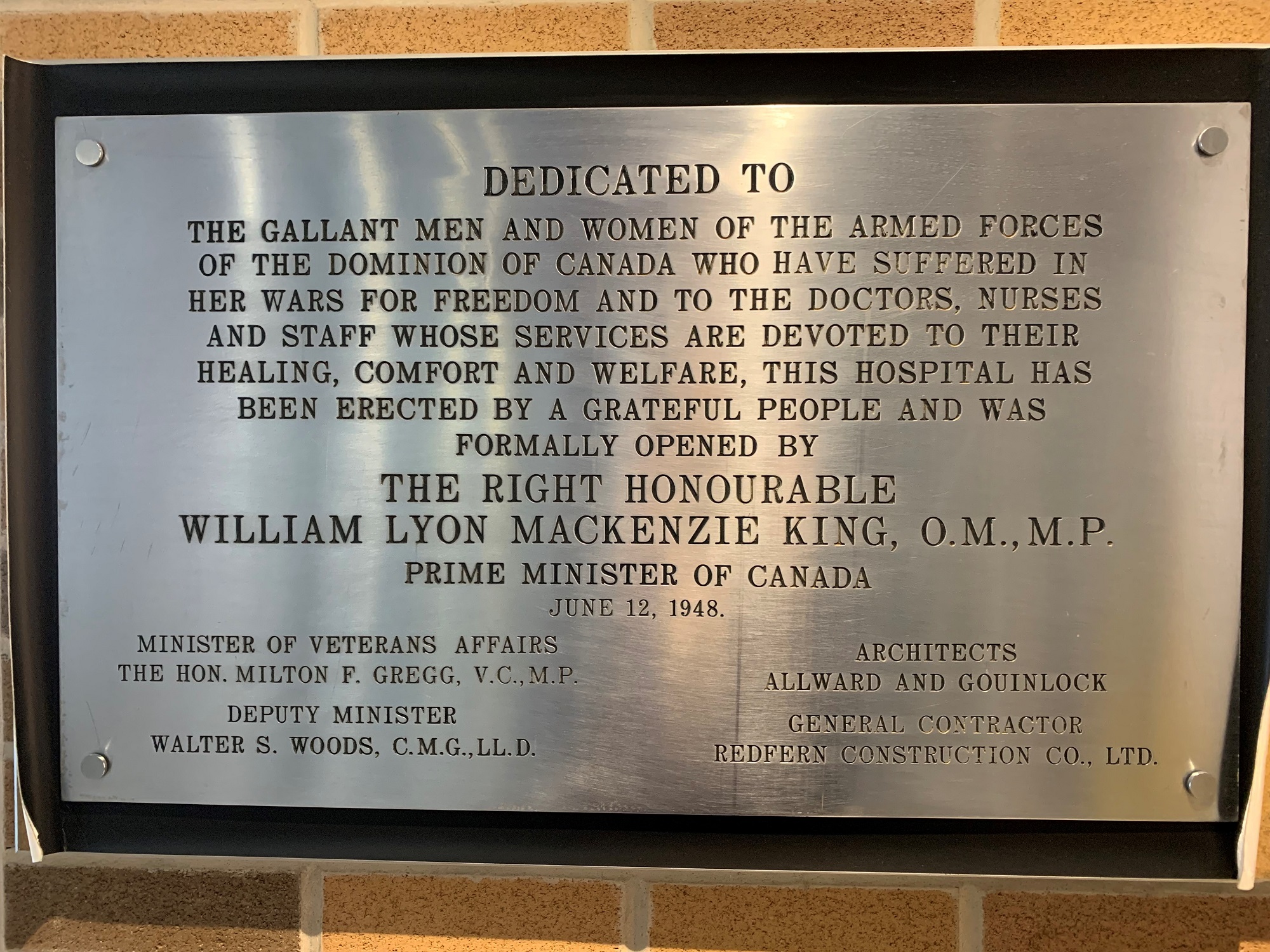
The Sunnybrook Military Hospital was officially opened by the Right Honourable W.L. Mackenzie King, Prime Minister of Canada on June 12, 1948. The hospital wings were named Ypres, Ortona, and Falaise to honour the Royal Canadian Army; Atlantic to honour the Royal Canadian Navy; and Lancaster and Spitfire to honour the Royal Canadian Air Force.
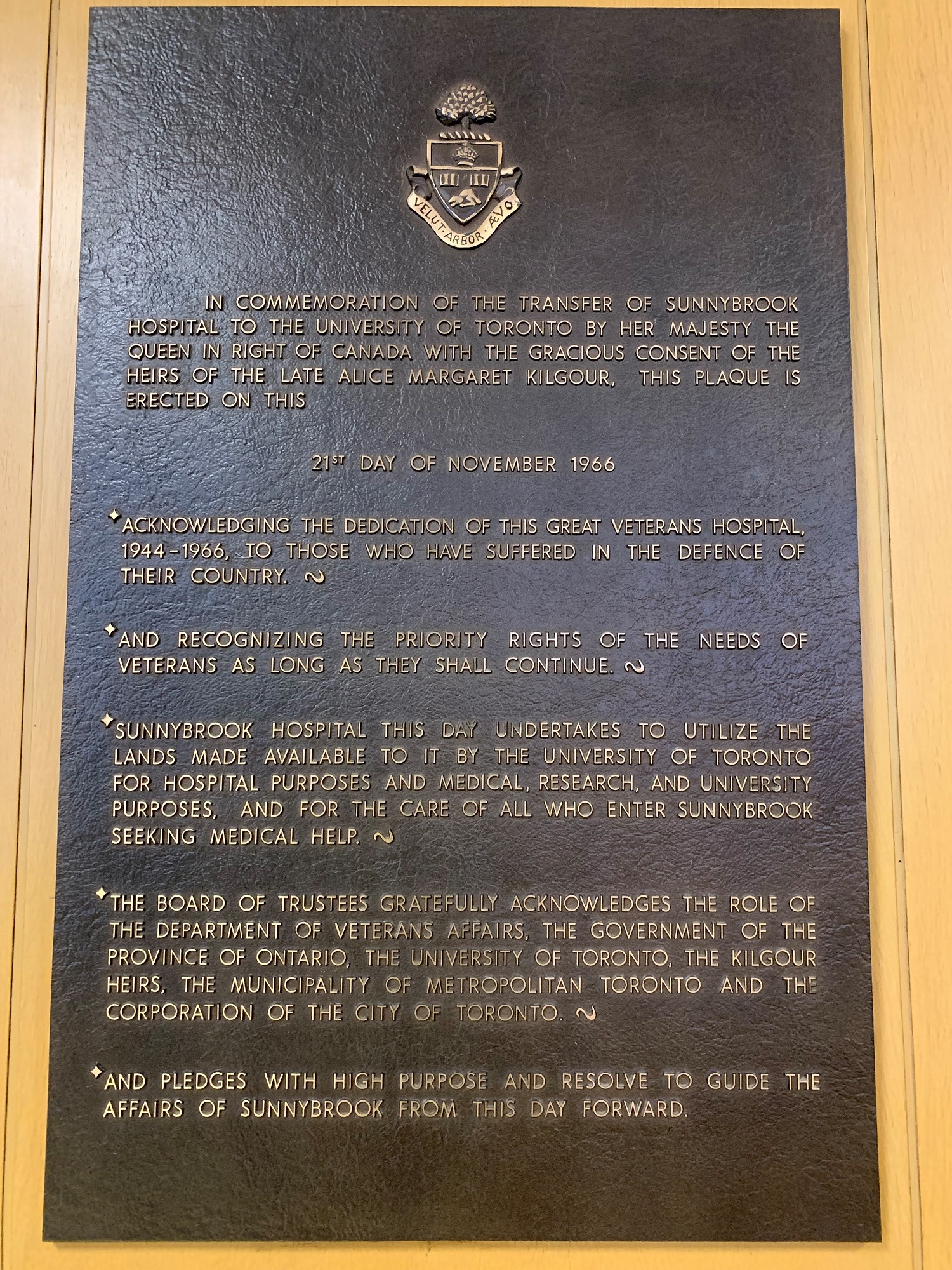
On October 1, 1966, the Government of Canada transferred the administration of Sunnybrook to the University of Toronto and its name was officially changed to Sunnybrook Hospital. It became a teaching hospital, serving the needs of Veterans and the general public. On January 1, 1990 the name was changed to Sunnybrook Health Sciences Centre.
Veterans were visited by many dignitaries and celebrities including Her Royal Highness Princess Elizabeth in 1951 who returned eight years later as Her Majesty Queen Elizabeth II for another visit. Celebrity visitors included Dame Very Lynn, Bob Hope, Jimmy Durante, Roy Rogers and Red Skelton.
The wings of the building changed from their original names to an alphabetical listing (A, B, C, etc.), however, there are memorial plaques in each of the wings commemorating their former names.