
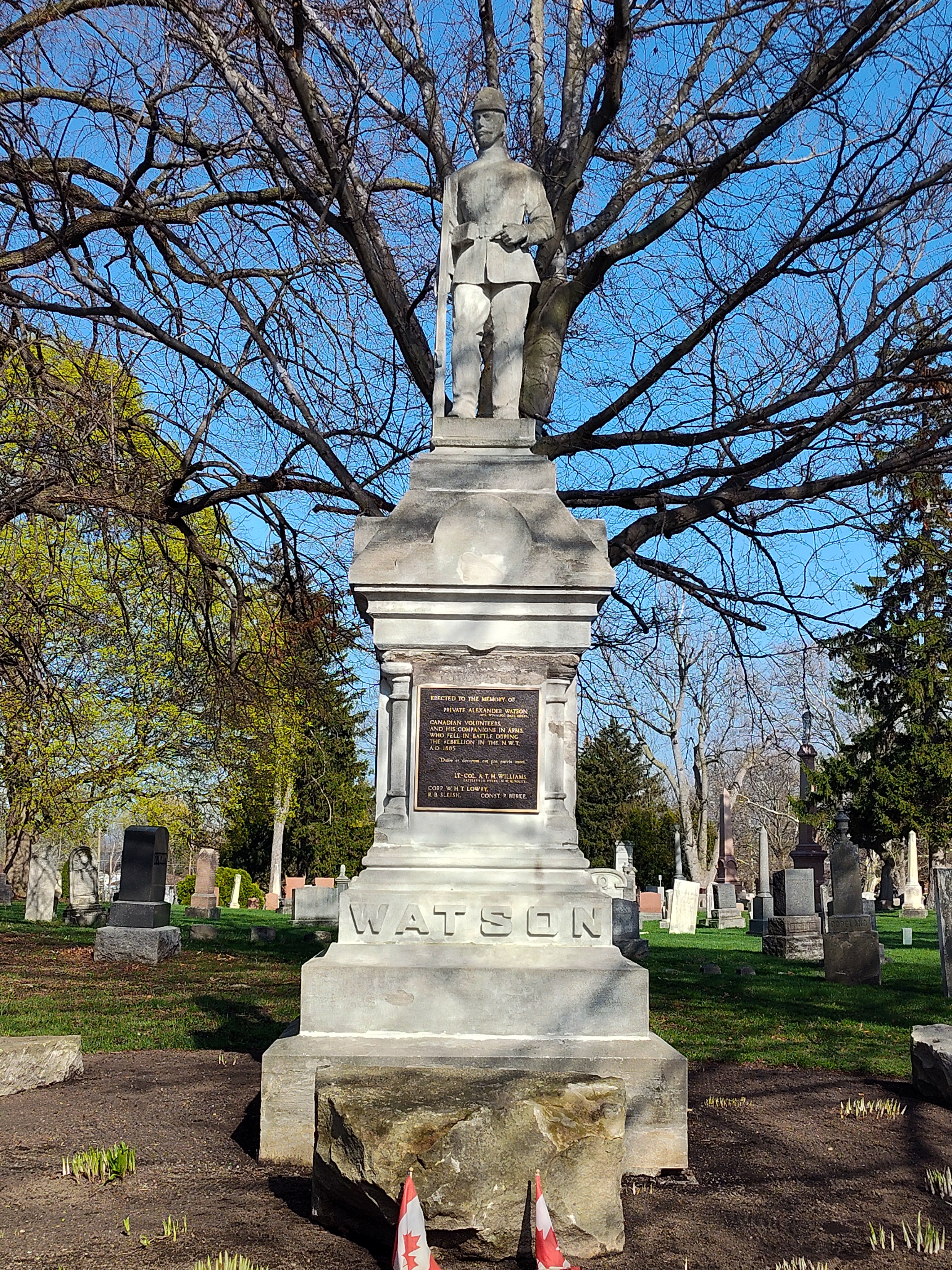
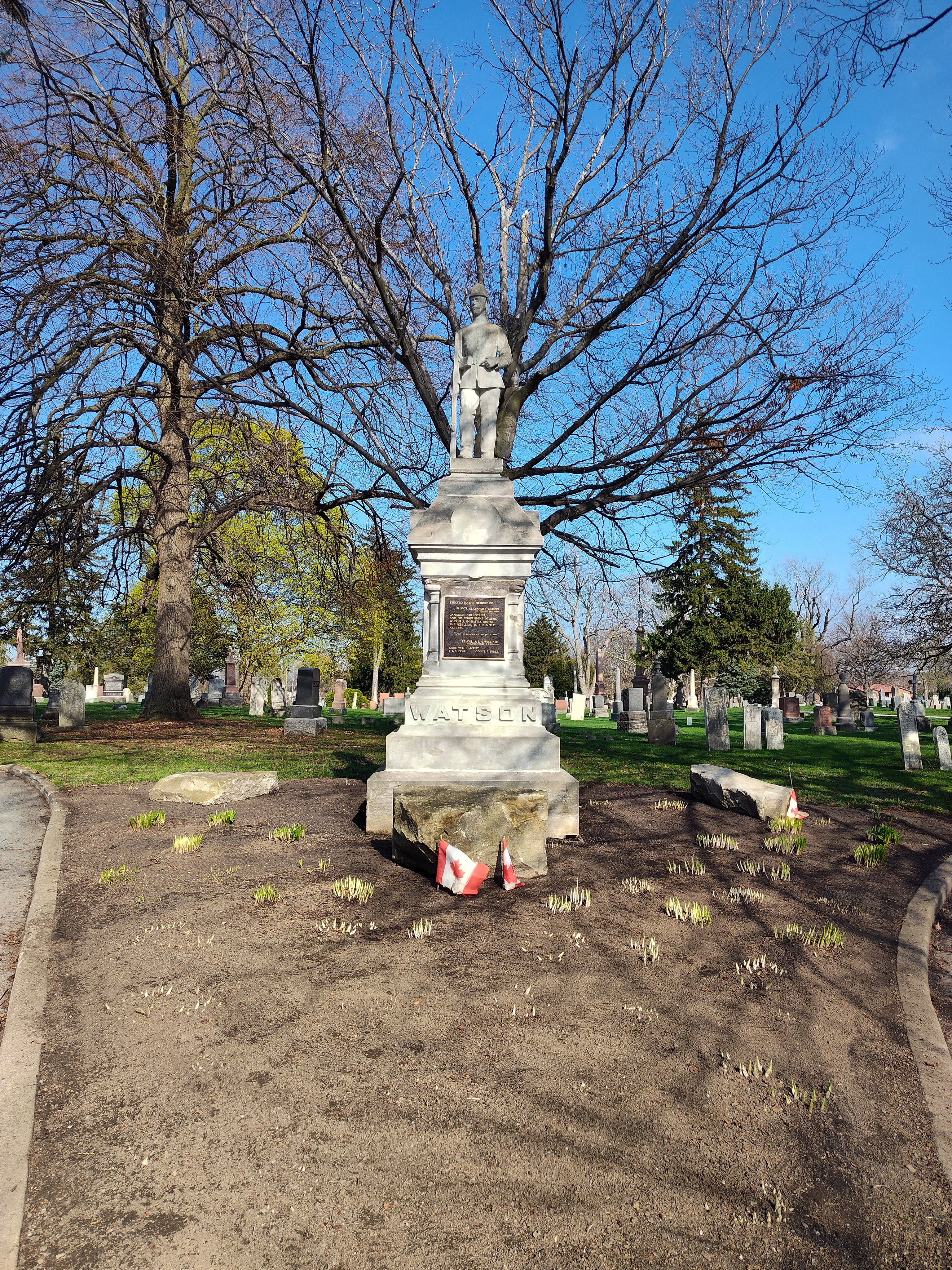
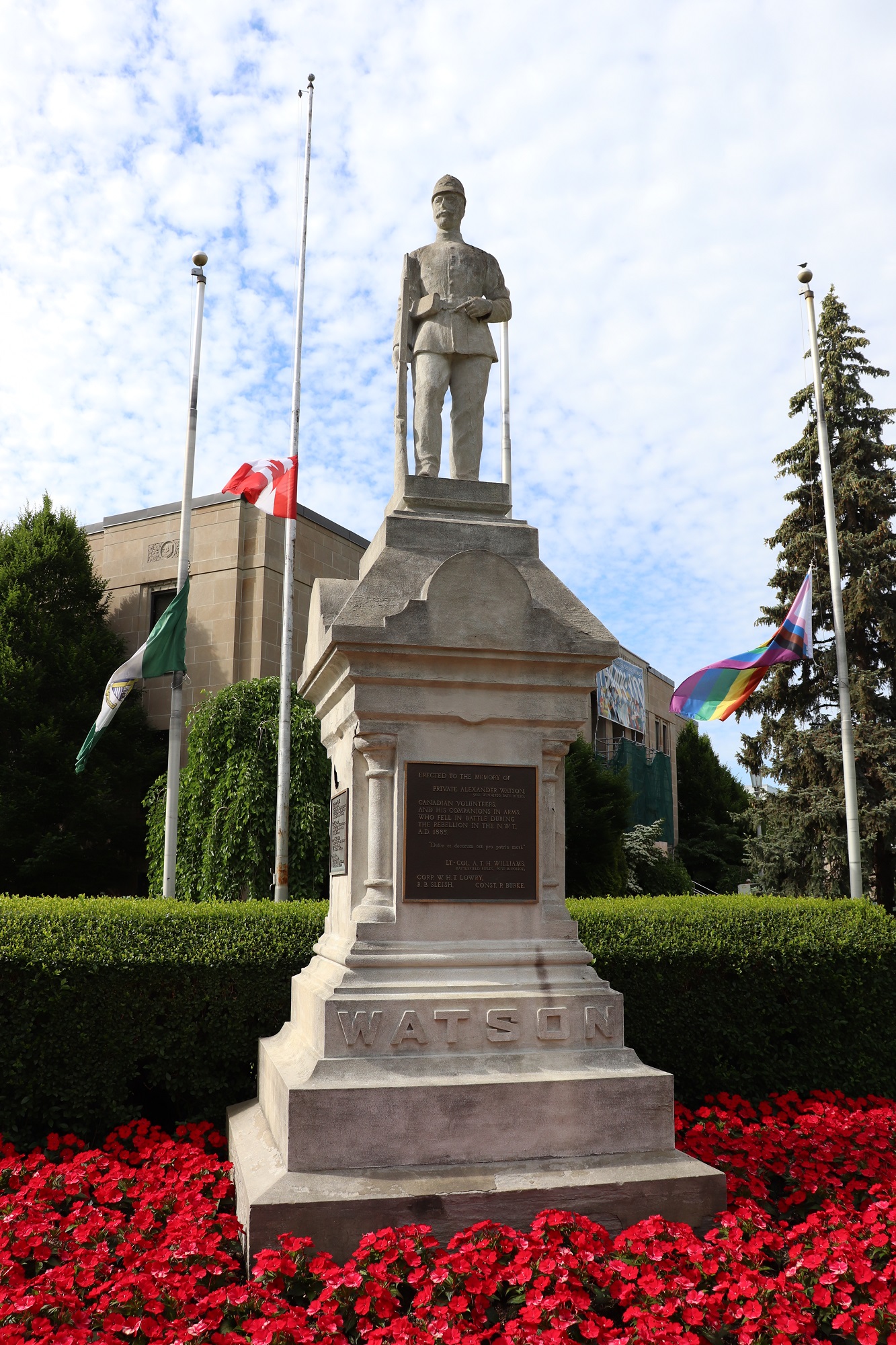
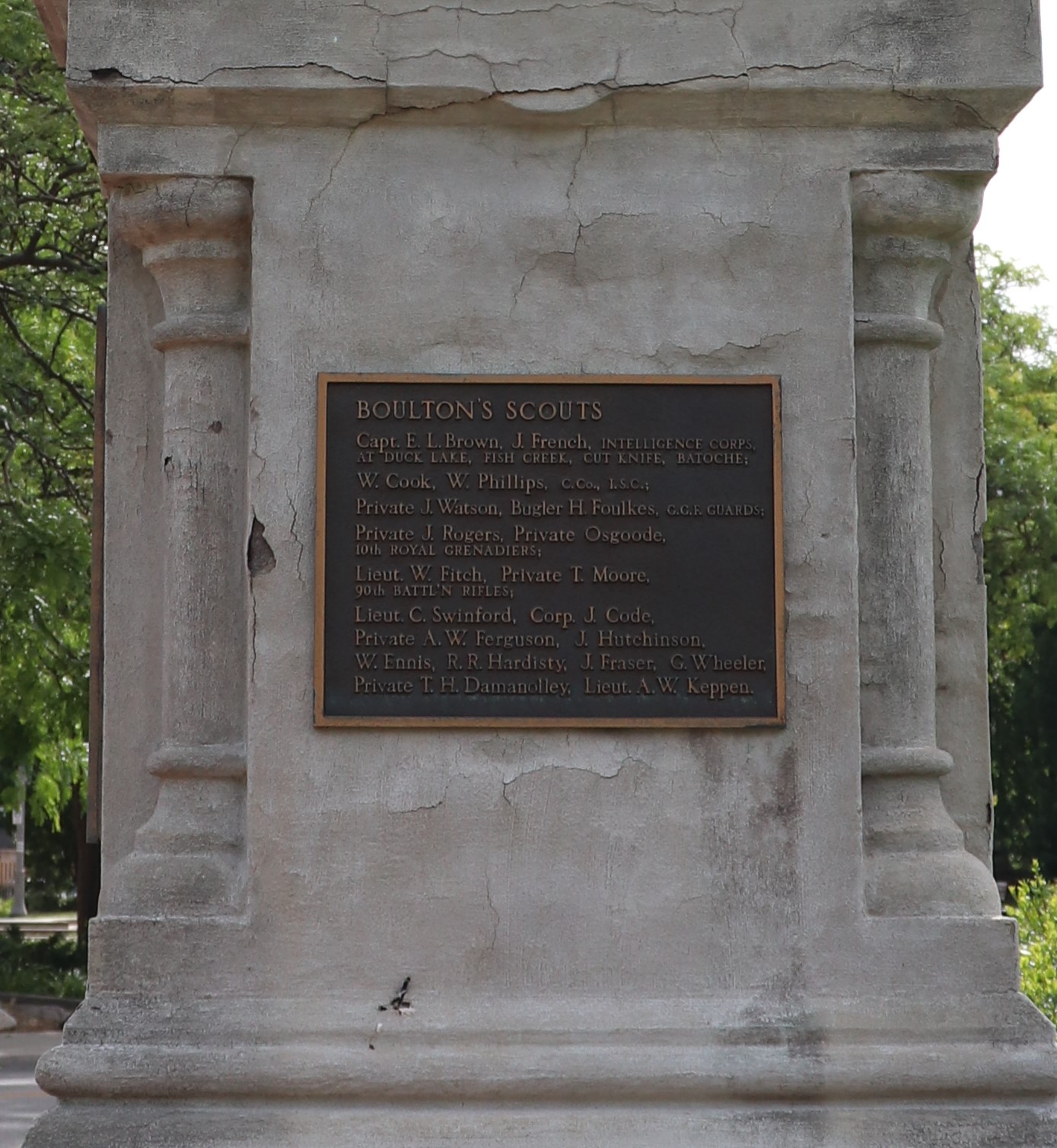
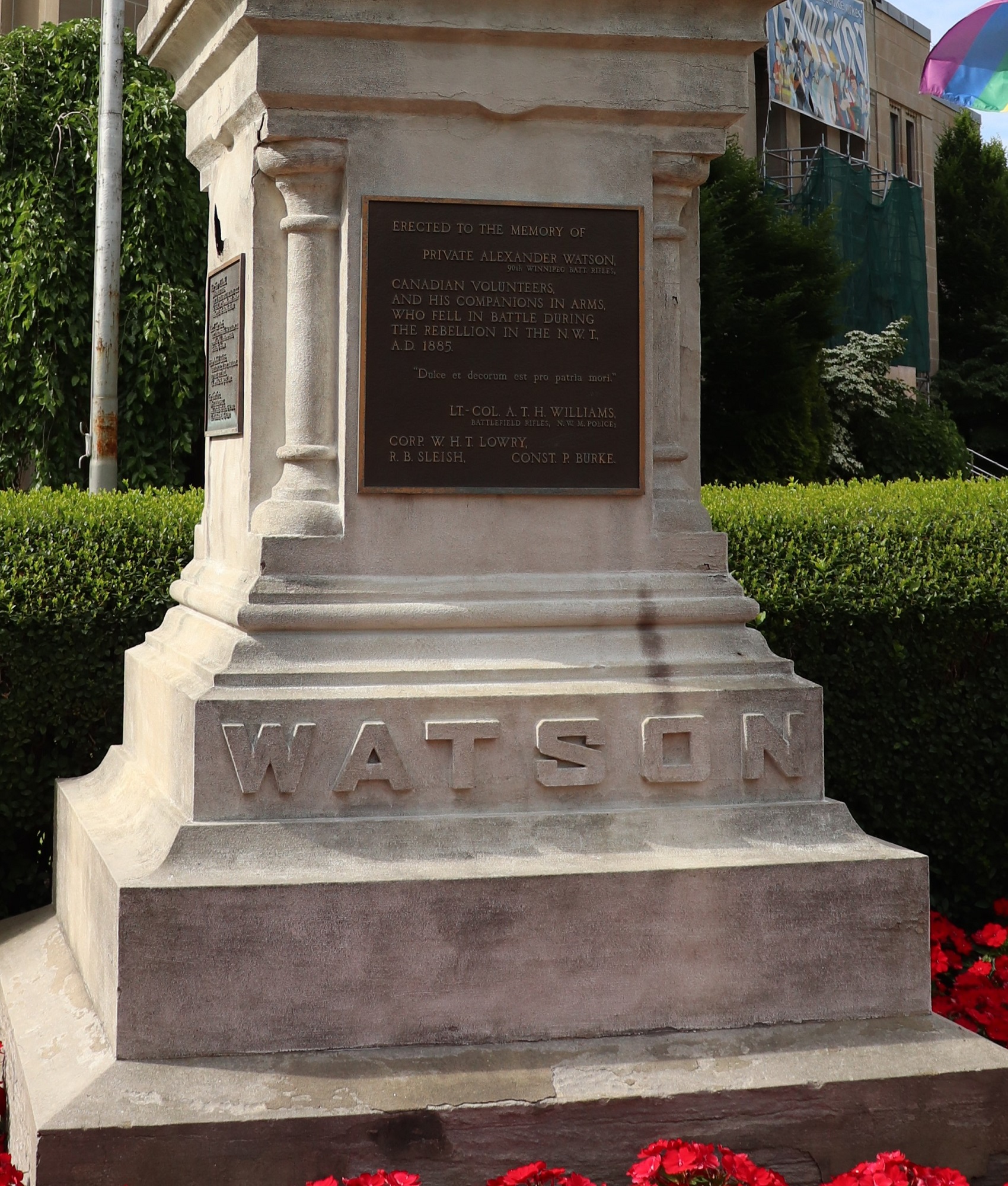
The Watson Monument was erected by the people of St. Catharines in 1886 in memory of Private Alexander Watson, 90th Winnipeg Battalion Rifles, Canadian Volunteers, and his companions in arms, who fell in battle during the North West Resistance in the Northwest Territories, A.D., 1885.
Private Watson, F.Co., was wounded on May 12, 1885, in the last action of the North-West Resistance - the Battle of Batoche - and died three days later. He was born in Toronto in 1858, but lived in St. Catharines the greater part of his life. About four years before the North-West Resistance, he moved to Winnipeg. He was the eldest son, but had an elder sister. Personally he was a generous, kind-hearted young man and a great favorite with everyone. He was unmarried, but was shortly to have led to the altar a very estimable young lady of Winnipeg.
On August 13, 1886, City Council had a special meeting and granted permission to the Watson Monument Memorial Committee to place the monument on the grounds in front of the City Buildings. The original intention was to place the memorial in the St. Catharines Victoria Lawn Cemetery, where he is laid to rest.
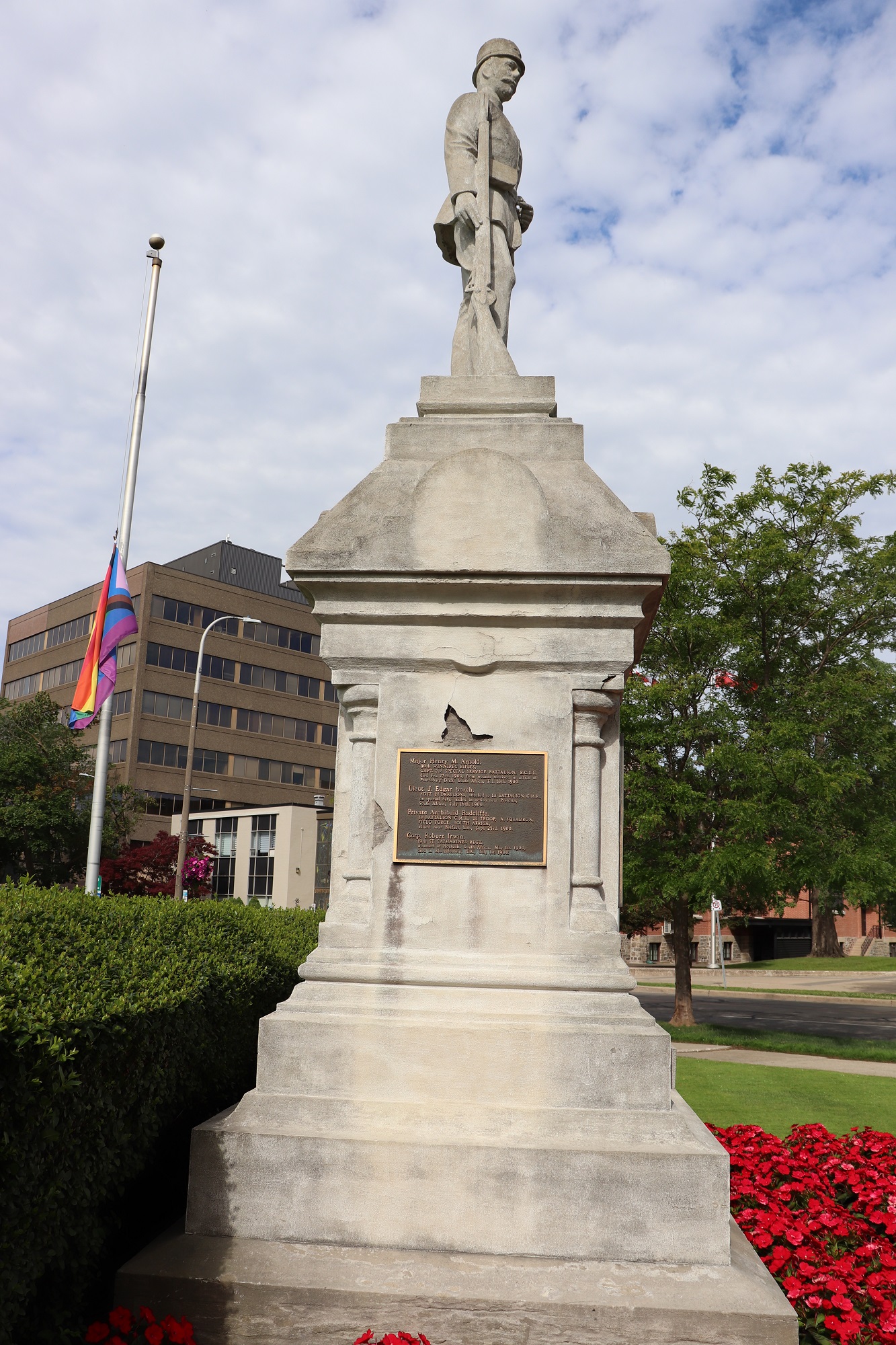
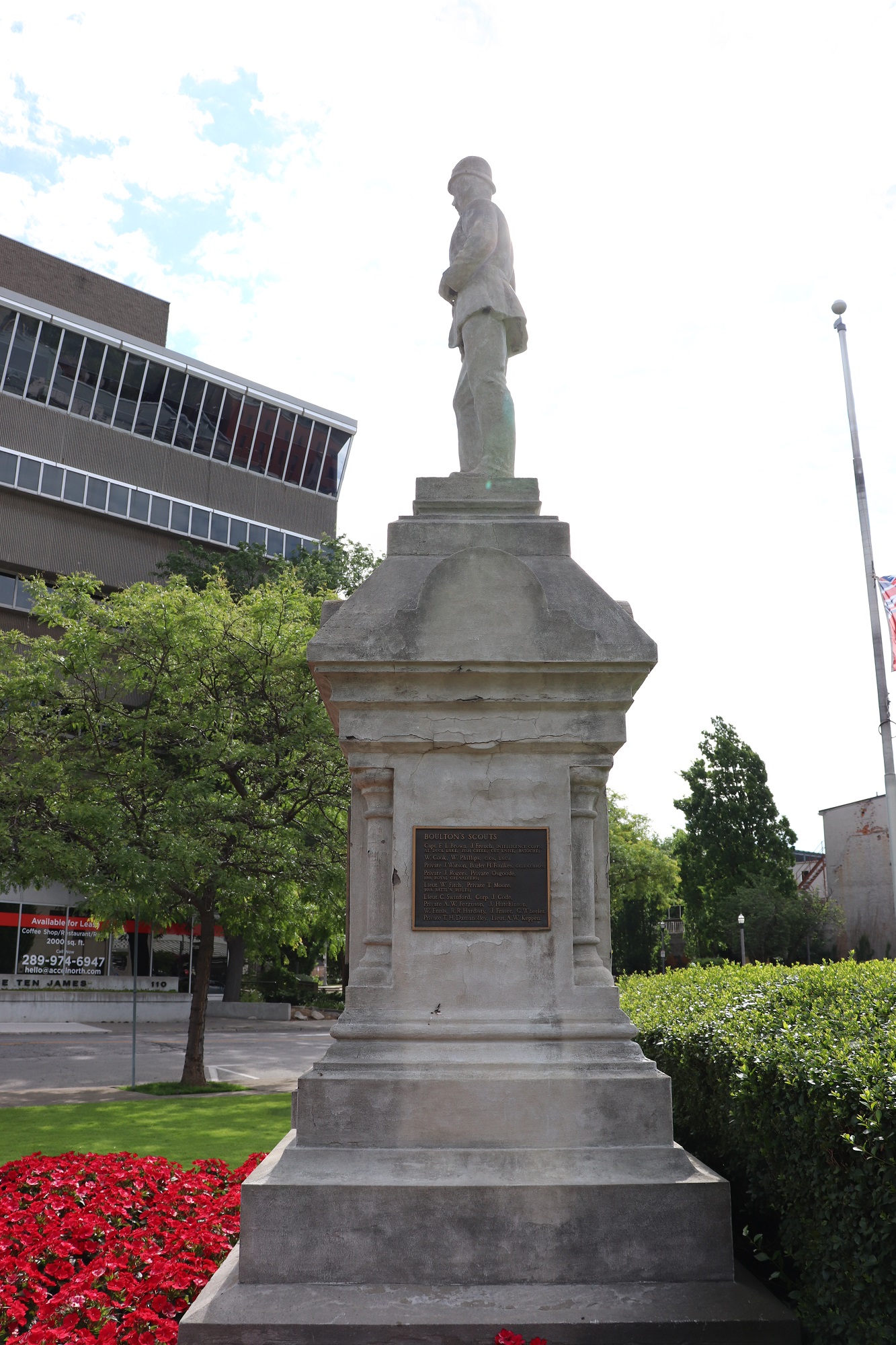
The monument was unveiled by Major General F.D. Middleton, C.B. on September 14, 1886, with hundreds in attendance. The deed was handed over to Mayor King from the Committee. It was erected in St. Catharines as Watson and his family were long resident of this community. The memorial stands about fifteen feet high and at the top is a statue of a soldier in the at-ease position, dressed in full uniform of the 90th Winnipeg Rifles. Each face of the pedestal was originally adorned with trophies which are no longer visible due to later conservation work on the monument. It was built by James Munro's Marble and Granite Works located at 193 St. Paul Street West in St. Catharines, Ontario.
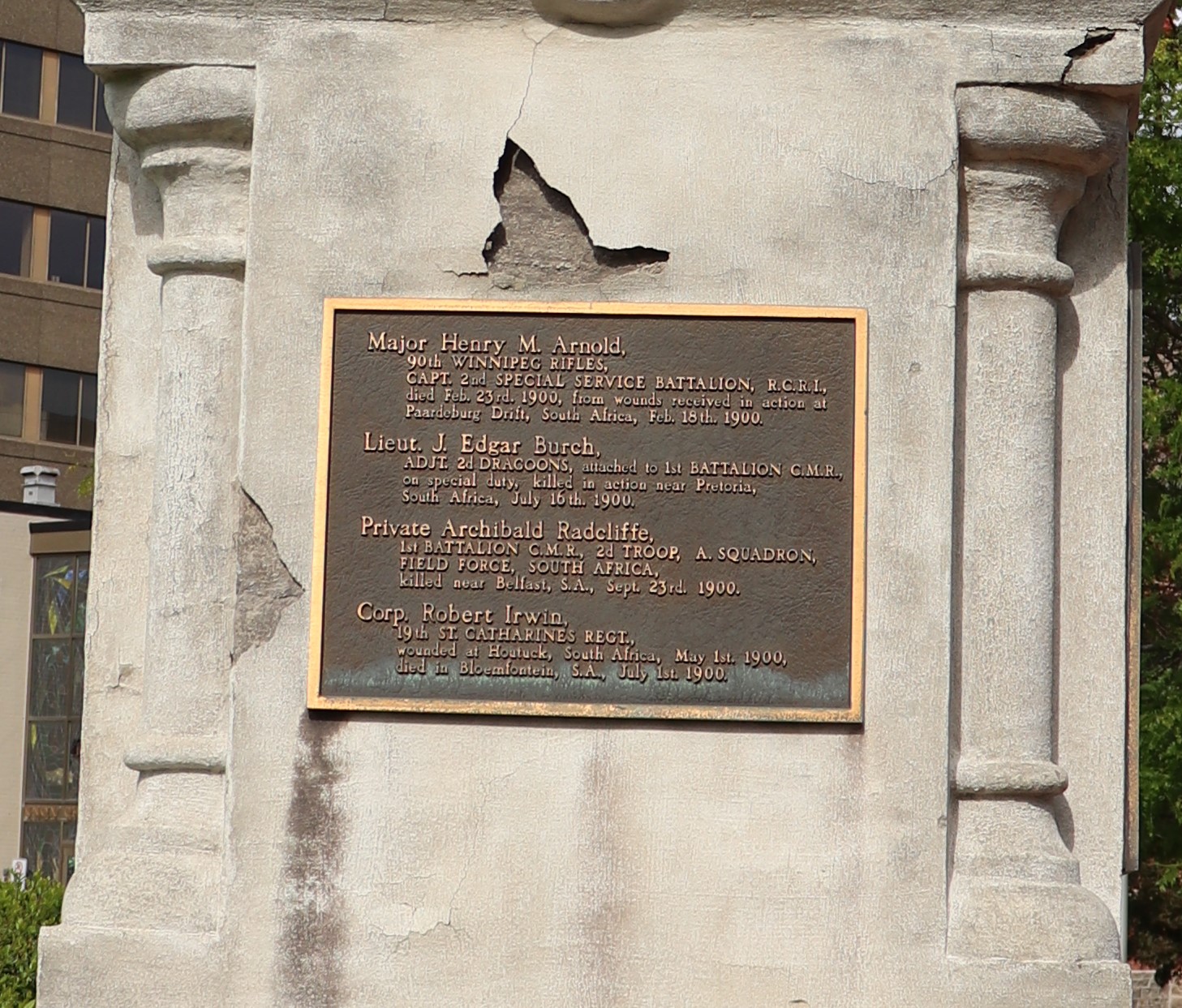
Watson’s Memorial continued to be the only war memorial in the community for the rest of the 19th Century. As such, when the community sent soldiers to participate in the Boer War in 1899, local soldiers who fell in that conflict were also memorialized on the side of Watson’s Monument.
In 1936, the Watson Memorial was moved from its original location to its current location on the James Street side of the property, when the new City Hall was built.
In 1971, extensive restoration took place and the bronze plaques were added.
In 2024, following a debate within the community regarding ethics of the North-West Campaign, the statue was moved from City Hall to the Victoria Lawn Cemetery close to where Alexander Watson is buried.