Description
Ray Nickerson
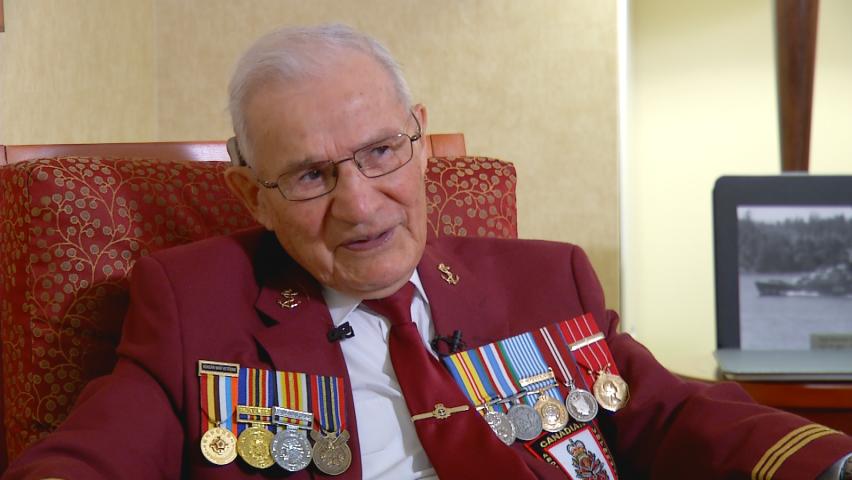
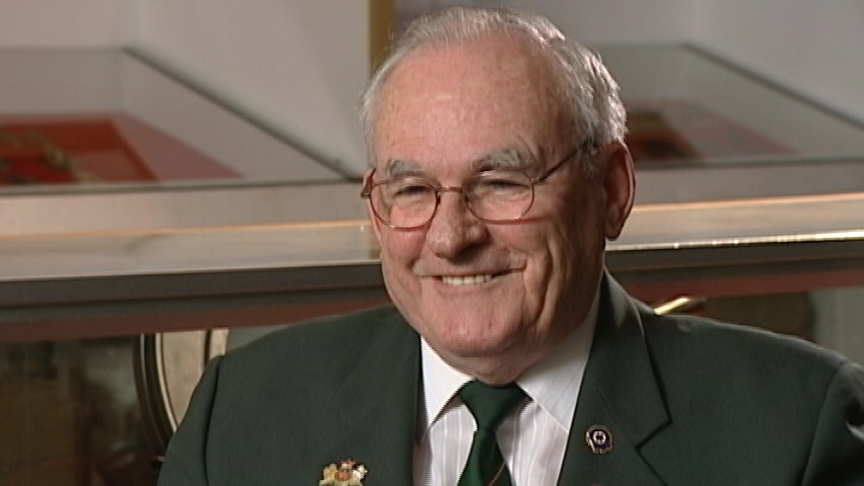
Mr. Nickerson's father was a farmer and Veteran of the First World War. Mr. Nickerson was the second youngest of 10 children. Three of his older brothers served in the Second World War. He left school at the age of 16 and enlisted in the army with the PPCLI. His parents were not happy with this. After enlisting, Mr. Nickerson went to Curry Barracks in Calgary for basic training. He did his advanced training in Curry and in Wainwright, Alberta. In November 1950, his battalion was told they were going to Korea to serve with the U.N. force. Mr. Nickerson saw action near Pusan, Seoul and at Kapyong. While in Korea, Mr. Nickerson was wounded by a land mine. He was hospitalized for nine weeks. After his recovery, he returned to the front . Mr. Nickerson's tour of duty ended late in 1951 and he returned to Canada. He remained in the Canadian Army until his retirement in 1968.
Transcript
Interviewer: What company where you with at that time?
"A" Company.
Interviewer: You were there on the Pimple then?
Yes.
Interviewer: The battle developed from that first contact?
Yes.
Interviewer: How would you describe how the battle developed that first night?
Well, it was really eerie because they were flying, firing parachute flares, our people were, to try and give you some light to see by, and when you looked, they were attacking on all fronts, I mean, it wasn't just this platoon getting hit or that, they were hitting the whole hill, and with the parachute flares and that up, you had some light and really, the hill was just crawling with Chinese. Just crawling with them. Everywhere you looked, it was moving and there was Chinese and they just kept coming and coming and then they'd stop and then more would come and they'd stop, and it just went on continuously.
Interviewer: Were there moments when you thought you were going to be overwhelmed by the numbers?
Yeah, kind of thought we were going to get overrun. In fact, "B" Company, I think it was or "C" Company, did get a bit of an overrun and the company commander called artillery down on their positions to clear the, clear the area. Everybody got down on their trenches and they called down the artillery. We were being supported by New Zealand artillery, the Kiwis, at the time.