Description
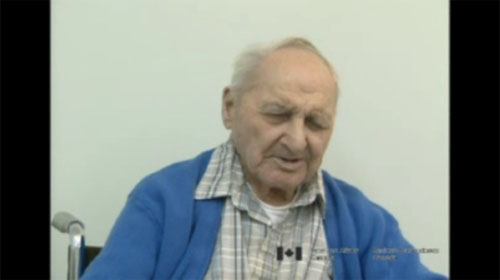
Mr. Skeates describes the harshness of the front after joining the 46th Battalion, and describes the losses at Ypres.
Charles Darwood Skeates
Charles Skeates was born in Ingersoll, Ontario on February 3, 1894. He worked as a barber until his enlistment at Swift Current, Saskatchewan on March 11, 1916 in the 209th Unit, 4th Infantry, despite his original hopes to be called into the cavalry. Arriving overseas in England in October, 1916, he joined the 9th Reserve Brigade at Bramshott and then the 128th at Whitley as a band member. He went into action as a member of the 46th Battalion, 10th Brigade. Mr. Skeates saw action in several major offensives; Passchendaele, Valenciens, Amiens, Drury Mill where he was wounded, and the Oppy Front. Mr. Skeates was a machine gunner during his tour of duty. After the war, he resumed his work as a barber and married Bessie Becker Maitland, on June 13, 1921. During the Second World War, he served as a barber with the RCAF in England, and finished his military service in 1968 after a 13 year stint in the Canadian Army. Mr. Skeates died on December 5, 1982.
Transcript
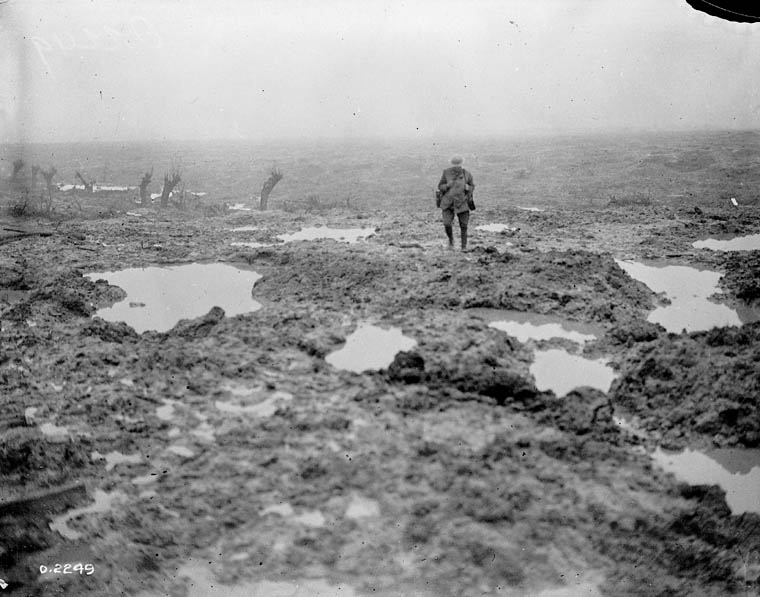
Well, when I joined they just came off the Lens front just before Christmas in ‘17 down in Souchez Valley there, had there a lot of snow there. Go down to shave and had to dig, break the ice down in the little pot hole there to shave with and damn it was, it was cold. So right after Christmas the battalion moved up to the Ypres front. That was the second gas attack up there. The Battalion went in, oh, about 700 strong (inaudible) and came out with what, only seventy-five, I think it was, that came out. Oh, it was disgraceful to send them in under those conditions. There is more fellas that, there was many fellows died that slipped into a shell hole and couldn’t get out, got drowned that got shot. The big, the top guys that forced that battle onto the troops, by God, they’re the ones that should have been shot. God, it was ridiculous. The horses couldn’t move, couldn’t pull the guns up. You couldn’t walk hardly in that there chalk. It was terrible when it was wet. Yes, it was ridiculous to try to send troops over under those conditions. You couldn’t stand up hardly.