
Introduction
In 2018, Parliament passed the Canadian Gender Budgeting Act. The Departmental Plans and Departmental Results Reports are being used to fulfill the President of the Treasury Board’s obligations to make public, every year, analysis on the impacts of expenditure programs on gender and diversity.
Each organization is responsible for conducting their own Gender-based Analysis Plus (GBA Plus).
The Policy on Results indicates that Program officials, as designated by Deputy Heads, are responsible for ensuring data collection for meeting policy requirements.
Applicability
All organizations must complete GBA Plus supplementary information tables in Departmental Plans and Departmental Results Reports on an annual basis.
Section 1: Institutional GBA Plus Governance and Capacity
Governance
Our Policy and Research Division at Veterans Affairs Canada (VAC) holds functional responsibility for GBA Plus and the shared responsibility to implement the departmental 2020 Gender-Based Analysis Plus Strategy.
The Division promotes the integration of GBA Plus across our Department to ensure equitable outcomes for all Veterans, including those from under-represented sub-populations. This is achieved by supporting the development and accessibility of tailored training and resources for our employees; encouraging the collection of disaggregated data for research, planning, and evaluation purposes; and building our capacity to apply an intersectional lens when designing programs, policies, and services.
In 2018, we established a senior Executive level GBA Plus Champion. The role of the Champion is to disseminate information and tools, promote special events and awareness days related to GBA Plus, and provide support to our branches. Champions play a key role in advancing departmental and Government of Canada initiatives and priorities. Working closely with our managers, employees, and program areas, they provide leadership, support, and guidance to raise awareness and drive key priorities and issues across our organization.
We also have Champions for Veterans, Accessibility, Inclusion, Women, Two-Spirit, Lesbian, Gay, Bisexual, Transgender, Queer or Questioning, Intersex and other sexual and gender diverse communities (2SLGBTQI+), Indigenous Peoples, Racialized employees, Values and Ethics, and Mental Health and Well-being.
The GBA Plus Network includes members from each branch as well as representatives from the Veterans Review and Appeal Board, the Office of the Veterans Ombud, and the Union of Veterans Affairs Employees. The Network meets quarterly, or as needed, to help build GBA Plus capacity by sharing knowledge, leveraging best practices, and serving as organizational points of contact for GBA Plus in their respective areas.
The Policy and Research Division also has two departmental representatives (GBA Plus Focal Points) on the GBA Plus Interdepartmental Committee, led by Women and Gender Equality (WAGE) Canada, which allows us to connect with other federal departments and learn about best practices across the federal government.
Capacity
GBA Plus analysis has been included in all Budget proposals, Memoranda to Cabinet, Treasury Board submissions, and regulatory packages since 2016.
In April 2020, we launched the Veterans Affairs Canada GBA Plus Strategy. We continue to implement the Strategy, focusing on changing the culture and raising awareness to ensure GBA Plus is integrated from the outset of all new initiatives. This ensures we are more responsive to the specific needs of Veterans, making sure our policies, programs, and initiatives are inclusive and barrier free. The Strategy serves as a broad policy framework that outlines our approach and provides the foundation for all areas of our Department to enhance GBA Plus capacity in their respective functions. It also ensures the integration of GBA Plus at all stages of design, development, implementation, monitoring and decision-making.
As part of mainstreaming GBA Plus, we developed a GBA Plus policy to drive equity, diversity, and inclusion in support of the Strategy. This policy outlines how we will continue to integrate GBA Plus principles into all aspects of our work and reinforces a shared commitment across all areas - from research and policy to service delivery and audit and evaluation. The policy establishes clear responsibilities and accountabilities for staff at all levels, emphasizing that GBA Plus is a shared responsibility. It encourages staff to adopt an intersectional mindset to ensure programs, policies and services are designed in an inclusive and equitable manner.
Supporting GBA Plus training for all staff is a key part of this effort. For example, we provided VAC-specific GBA Plus competency training to Policy Analysts, including the guide ‘Applying VAC’s GBA Plus Step Guide,’ which supports the review of program policies through a GBA Plus lens. We also maintain a GBA Plus page on our internal website, VAC@work, which serves as a centralized knowledge hub. This site supports staff by providing GBA Plus training materials, tools and resources, including a VAC-specific GBA Plus Job Aid, and other up-to-date information to build capacity and inform different areas of our Department about GBA Plus.
In May 2019, the first Women Veterans Forum was held, bringing together Veterans, researchers, experts, and organizational leaders to discuss the unique challenges women face after service. In 2020, a series of four virtual events were held focusing on Women and LGBTQ2+ Veterans. The third Women and 2SLGBTQI+ Veterans Forum took place in February 2023. In March 2024, we hosted another forum dedicated to Women Veterans, and in August 2024, a 2SLGBTQI+ Veterans Forum provided a dedicated space to hear directly from 2SLGBTQI+ Veterans. The forum addressed their unique challenges, such as discrimination and lack of inclusive services, and informed the development of programs tailored to their needs.
These forums provide opportunities to engage directly with Veterans and stakeholders to better understand the experiences of underrepresented Veterans. They help identify systemic barriers, inequities, and gaps in our existing policies, programs, and services, and they facilitate collaboration with Veteran communities, stakeholders, partners, and academia to ensure their input is integrated into our work to achieve equity for all Veterans. We will continue to host forums to listen to the lived experiences of Women, 2SLGBTQI+ Veterans, Indigenous Veterans, Black and other racialized Veterans, and Veterans with disabilities. Meaningful engagement with Veterans with diverse lived experiences remains a critical component of GBA Plus.
In the 2024–25 fiscal year, the Women and 2SLGBTQI+ Veterans Team applied a GBA Plus approach to advocate for equity-deserving groups. The team also provided secretariat support in the establishment of the first-ever Women Veterans Council. We launched the call for applications in June 2024 and received an impressive 215 submissions. An Assessment Board, composed of Women Veterans, was created to ensure the selection process was led by women Veterans, for women Veterans. This approach aligned with the Council’s Terms of Reference and ensured balanced representation. As a result, in December 2024, 12 Council members were announced, reflecting diverse ranks, backgrounds, perspectives, and lived experiences.
In March 2025, we hosted ‘Honouring Her Service: 2025 Women’s Forum’ to recognize and celebrate the contributions of women who have served in various capacities in the Canadian Armed Forces (CAF) and the Royal Canadian Mounted Police (RCMP). These efforts demonstrated our ongoing commitment to using GBA Plus to ensure fairness and improve support for all Veterans.
Alongside engagement efforts, we are renewing our Data Strategy to improve decision-making by ensuring better management and use of data and information. We maintain a data warehouse that contains data extracted from various internal systems. These data points are used to create validated program data sets and are made available through self-service dashboards based on program area reporting requirements, including GBA Plus data elements. This allows program areas to readily access the information needed to better monitor, manage and track program outcomes. The enhanced reporting tool provides timely and accurate views of intersecting data elements as more data becomes available.
For the first time, the 2021 Canadian Census included a Veteran Identifier, enabling us to gain valuable insights into Canada’s Veteran population. We are working with Statistics Canada to link our program data with Census and survey data as part of the Disaggregated Data Action Plan. These data linkages will allow us to analyze our programs using identity factors and will foster greater understanding of gender-diverse, Indigenous, and racialized Veterans.
Additionally, since the 2022 edition, the VAC National Client Survey has included gender, Indigenous, and visible minority/racial identity indicators, allowing us to disaggregate and analyze data by subpopulations. Secondary analyses will provide new insights into satisfaction levels, improve service delivery, and support further research into the needs of Veterans. The 2024 Survey separated results for women Veterans from all women who completed the survey to more accurately reflect their unique experiences with our services and benefits.
The Veteran and Family Well-being Fund (VFWF) supports innovative projects and research that address the needs of diverse groups of Veterans, including Women, 2SLGBTQI+, homeless, and Indigenous persons.
Budget 2021 provided an additional $5M per year for three years, starting in 2021–22, to expand and enhance the Fund through projects that supported Veterans in post COVID-19 recovery, including addressing homelessness, employment, retraining, and health challenges. In accordance with the Budget funding decision, a portion of this additional funding was designated to support projects that assist the vulnerable sub-populations of Women and/or LGBTQ2 Veterans. Eighty percent of additional funding recipients’ best practices (for initiatives/projects focused on women and/or LGBTQ2 Veterans) were shared with our policy decision-makers, other Government departments, and external partners who work in the relevant domain of well-being. Budget 2024 provided an additional $6 million over three years, starting in 2024–25, for the VFWF. A portion of the funding is focused on projects for Indigenous, Women, and 2SLGBTQI+ Veterans.
In 2024–25, through the Joint Federal Research Funding Program, we allocated $350,000 to support diverse, inclusive projects addressing the unique health needs of military members, Veterans, and their families, particularly women and gender-diverse individuals. Funded research explored critical areas such as reproductive health, menopause, mental health, and chronic illness, with a strong emphasis on closing systemic gaps in care and access. These projects prioritized Sex and Gender Equity in Research (SAGER) aligned approaches, including literature reviews and longitudinal studies that examined sex-and gender-specific impacts of occupational exposures, mental health interventions, and the military-to-civilian transition experience.
In 2020, we published the strategic direction document, Timely disability benefits decisions: Strategic direction for improving processing times, which outlined measures to improve services for Veterans and their families by speeding up disability benefits decisions. The document was updated in March 2023, highlighting the progress made over the past two years and setting priorities through to March 2024.
We continue to work on a multi-year plan to modernize two disability benefits decision-making tools: the Entitlement Eligibility Guidelines (EEGs) and the Table of Disabilities (TOD).
The modernization of these tools is designed to:
- apply a Veteran-centric approach, using GBA Plus;
- reflect advances in the disability assessment field, and evidence-based health and scientific research;
- support equitable, transparent, and consistent disability benefits decisions;
- improve the decision-making process; and
- reduce the need for additional internal consultations, which will improve the processing time for some medical conditions.
As of 31 March 2025, 22 EEGs have been revised to provide up-to-date guidance and more support to decision-makers. In addition, 10 new EEGs were developed for high-volume or complex conditions. The TOD chapter for the Additional Pain and Suffering Compensation was published in December 2024. The review/update of the remaining TOD chapters is expected to be finished in 2025–26. We have successfully decreased the gap in processing times between male and female applicants. In the 2024–25 fiscal year, the average processing times for first applications were 20.4 weeks for female applicants and 21.0 weeks for male applicants. This shows a significant improvement compared to previous years. In 2023-24, the average processing times for first applications were 22.3 weeks for females and 19.8 weeks for males compared to 54.1 weeks and 47.9 weeks in 2020-21. It is important to note that the gap will continue to fluctuate.
We continue to implement the Government of Canada’s policy on the Modernization of Sex and Gender Information Practices, reviewing when sex information is required and limiting access to only those who need it for decision-making. We are also exploring ways to recognize gender-diverse Veterans who wish to have their identity factors updated in our systems and acknowledged by our employees. Additionally, program areas are developing dashboards to report on GBA Plus data as required.
We ensure that all research funds conform to principles of Sex and Gender Equity in Research. This informs how we design, conduct, and report findings, and ensures fair representation of women Veterans and underrepresented groups in our research initiatives. In 2024, the Research Directorate began activities to inform the development of a Women Veteran Research Plan (WVRP), including undertaking an environmental scan, literature scan, and beginning extensive consultations with women Veterans that extended into 2025. These joint efforts will identify research gaps and priorities and shape plans to respond to the research goals of women Veterans.
We are enhancing our cyclical review of program policies to enable continuous improvement through the application of a GBA Plus lens, ensuring all policies incorporate an evidence-based review framework. This will support our goal of achieving equity, diversity, and inclusion across all programs. In 2023, we implemented a GBA Plus Roll Out Plan to address the actions required to further advance equity, diversity, and inclusion in our work moving forward.
Findings and a recommendation from the 2022 Horizontal Evaluation of Program Alignments highlighted the need to improve data collection to support intersectional analysis including (but not limited to) data related to race, socio-economic status, gender and gender identity, spirituality/religion, language, and education. This recommendation was a driving factor in initiating a partnership in 2024–25 with Statistics Canada that aims to strengthen our capacity for GBA Plus and related data-driven insights.
Human resources (full-time equivalents) dedicated to GBA Plus
4.75 FTEs were dedicated to working on GBA Plus during the 2024–25 fiscal year.
Section 2: Gender and Diversity Impacts, by Program
Veterans Affairs continues to advance its GBA Plus initiative by enhancing data collection, analysis, and assessment of program impacts on gender and diversity. Currently, we collect and use several data points that support GBA Plus, such as sex at birth (Male/Female), age, official language, and geography. We are now working to expand this list, starting with the voluntary collection of gender identity. This information may be gathered when clients call our Contact Centre, use our online self-service portal, or visit an area office.
These efforts enable further analysis of Veteran program participation by 2SLGBTQI+, Indigenous, and racialized Veterans as well as by gender identity, allowing us to continually improve service delivery.
The following is a focused snapshot on data collection by program.
Core Responsibility 1: Benefits, Services and Support
Caregiver Recognition Benefit (CRB)
Target Population: Veterans, Families
Program goals: The Caregiver Recognition Benefit provides a monthly tax-free payment (indexed annually) to the informal caregivers of a qualified Veterans to recognize the contribution that caregivers make to the health and well-being of seriously injured Veterans.
The Caregiver Recognition Benefit program continues to collect sufficient data to enable it to monitor and/or report program impacts by gender and diversity (GBA Plus).
Specific demographic group(s) to be monitored
The following groups may benefit from this program (directly or indirectly), face barriers to access or participation, and/or experience impacts for various reasons. We continually work to identify and address these barriers:
Groups that may be impacted directly by the program (includes positive and/or negative impacts):
- Veterans
- Persons with disabilities or health issues or their caregivers
- Seniors
- Women
- Families
Groups that may be impacted indirectly by the program (includes positive, negative and/or neutral impacts):
- Families
Groups that may face barriers:
- Black or other racialized / visible minority communities
- Indigenous Peoples
- 2SLGBTQI+
- Individuals of particular socio-economic status, educational level and/or particular familial characteristics (e.g., marital status, family status)
Key program impacts on gender and diversity
Source: 2023 Caregiver Recognition Benefit survey.
Based on the 2023 Caregiver Recognition Benefit survey, women caregivers reported results above the overall average (84%), while male caregivers reported results below average.
Efforts are underway to better understand and address gender and equity disparities in program outcomes. For example, Service Delivery and Program Management are reviewing existing data and exploring opportunities to develop new reports to enhance the analysis of these disparities.
Key program impact statistics
Not available at this time. We are currently undertaking a GBA Plus review of Program Indicators and plans to include key program impact statistics in future Departmental Results Reports.
GBA Plus Data Collection Details:
We are working on improving data collection for this program, while maintaining privacy compliance. We currently collect and use several data points that enable GBA Plus, including sex at birth (male/female), age, official language, and geography, and is exploring the addition of other intersectional identity factors.
It is important to note that the Caregiver Recognition Benefit validated dataset does not identify VAC Community Members by gender. Instead, individuals are categorized by sex at birth. While the terms "sex" and "gender" are sometimes used interchangeably in everyday language, it is important to recognize that they are distinct concepts. For the purposes of data collection and reporting, the term "sex" has been consistently applied across the data set.
We continued our work in 2024–25 to develop a CRB dashboard that will allow for timely monitoring and review of program data. Once created, other intersectional identity factors can be added to the dataset and dashboard as they become available - allowing for more robust GBA Plus analysis.
Plans to develop and improve GBA Plus data collection and analysis tools, including related activities, timelines, and strategies to address data gaps, can be found in our GBA Plus Supplementary Information Table within the 2025–26 Departmental Plan.
Disability Benefits (DB)
Target Population: Veterans, Families
Program goals: The Disability Benefits Program recognizes the impact of a service-related injury or disease in the form of a tax-free financial compensation. The Disability Benefits Program produces weekly internal reports that include data related to language and biological sex to continue its commitment to gender parity in claims processing and to adjust workloads as required. Currently, there is sufficient data to administer and monitor the program but not to report program impacts through a full GBA+ lens.
Specific demographic groups to be monitored
The following groups may benefit from this program (directly or indirectly), face barriers to access or participation, and/or experience impacts for various reasons. We continually work to identify and address these barriers.
Groups that may be impacted directly by the program (includes positive and/or negative impacts):
- Veterans
- Persons with disabilities or health issues
- Seniors
- Families
Groups that may be impacted indirectly by the program (includes positive, negative and/or neutral impacts):
- Families
Groups that may face barriers:
- Black or other racialized / visible minority communities
- Indigenous Peoples
- 2SLGBTQI+
- Individuals of particular socio-economic status, educational level and/or particular familial characteristics (e.g., marital status, family status)
Key program impacts on gender and diversity
Source: 2024 VAC National Client Survey
Based on the 2024 survey results, younger Veterans (ages 19 to 59) as well as Male, Indigenous and English-speaking Veterans reported results below the overall average (79%), while older Veterans (ages 60 to 90+), Women, Racialized Veterans, and French-speaking Veterans reported results above the overall average.
We continue to work on a multi-year plan to modernize two disability benefits decision-making tools: the Entitlement Eligibility Guidelines (EEGs) and the Table of Disabilities (TOD). As of 31 March 2025, 22 EEGs have been revised to provide up-to-date guidance and better support for decision-makers. Additionally, 10 new EEGs have been developed for high-volume or complex conditions. The TOD chapter for Additional Pain and Suffering Compensation was published in December 2024 and updates to the remaining TOD chapters are expected to be completed during the 2025-26 fiscal year.
A GBA Plus methodology has been developed specifically for this work and was applied to the revision of each EEG and the creation of the new EEGs. This methodology was also used in the creation of the Additional Pain and Suffering Compensation (APSC) TOD chapter and will be used in the revisions of the remaining TOD chapters. This ensures that these tools reflect and consider unique Veteran health-related experiences , taking into account sex, service characteristics, and disability.
Efforts are underway to better understand and address gender and equity disparities in program outcomes. For example, Service Delivery and Program Management are reviewing existing data and exploring opportunities to develop new reports to enhance the analysis of these disparities.
Key program impact statistics
Disability Benefits processing times for female applicants:
Reducing the processing times for disability benefits remains a priority for us. The service standard target for disability benefits is for 80% of decisions to be made within 16 weeks for first applications.
Between 2015-16 and 2024-25, we experienced a 92% increase in the number of applications received for disability benefits. The increase in applications over the years caused us to get behind in processing applications, including applications from female Veterans.
We made significant improvement towards achieving the disability benefits service standard in 2023-24 when 65% of first applications from female applicants were completed within the 16 week service standard (69% for both sexes combined). Unfortunately, in 2024-25, our service standard for first applications declined to 47% for both male and female combined. Despite this decline, the result for female applications was 51% which is slightly higher when compared to the result for both sexes combined.
A contributing factor for the recent rise in the backlog is a 7% increase in the number of applications received in 2024-25 compared to the previous fiscal year (average 7,200 applications per month compared to 6,700 per month, respectively). This increase, combined with a loss of some trained decision-makers, has impacted the recent improvements in processing times and reductions to the backlog.
Significant progress in addressing the processing times for applications from female Veterans has been made. We hired an designated manager who is responsible for workload management and monitors the completion times for applications from female and francophone Veterans. In addition, a dedicated team was created to process applications from female applicants. This team has assisted in successfully decreased the gaps in processing times between male and female applicants. In the 2024–25 fiscal year, the average processing times for first applications were 20.4 weeks for female and 21.0 weeks for male, compared to 22.3 weeks for female and 19.8 weeks for male in 2023–24. It is important to note that the gap will continue to fluctuate.
We remain focused on department-wide initiatives to reduce the backlog of disability benefit applications and improve the percentage of applications processed within the service standard. Continued emphasis on reducing processing times and regularly reviewing the processing times for both female and male applicants is crucial to achieving gender parity.
Disability Benefits processing times for francophone applicants:
We remain committed to meeting our service standards for disability benefits applications. In 2023–24, we met the service standard for French first applications 73% of the time (69% for both languages combined). Unfortunately, in 2024–25, our service standard result for first applications declined to 47% for both English and French applications combined; however, the result for French applications alone was higher at 56%.
A contributing factor for the recent rise in the backlog is a 7% increase in the number of applications received in 2024–25 compared to the previous fiscal year (average 7,200 applications per month compared to 6,700 per month, respectively). This increase, combined with a loss of some trained decision-makers, has impacted the recent improvements in processing times.
Despite these challenges, we have made significant progress in addressing the gaps in processing times for applications from Francophone Veterans. Approximately 30% of our staff that make disability benefit decisions are either French or bilingual. We hired more bilingual and Francophone Disability Adjudicators to supplement our capacity to process French applications and bring the average processing times for English and French applications closer to parity. With the help of these additional resources, we have reduced the processing times for French applications and are processing on par with English applications.
In the 2024–25 fiscal year, the average processing times for first applications were 20.5 weeks for Francophone applicants and 20.9 weeks for Anglophone applicants. While the gap may continue to fluctuate, this near parity reflects our ongoing commitment to equitable service delivery for both official language groups.
Supplementary information sources
2024 VAC National Client Survey
GBA Plus Data Collection Details:
We are working on improving data collection for this program, while maintaining privacy compliance. We use existing client demographic data captured at the departmental level for monitoring and reporting purposes, along with supporting the GBA Plus analysis of current recipients of Disability Benefits. As our Information and Data Strategy is implemented, additional improvements in data analysis will be incorporated.
Plans to develop and improve GBA Plus data collection and analysis tools, including related activities, timelines, and strategies to address data gaps, can be found in our GBA Plus Supplementary Information Table within the 2025–26 Departmental Plan.
Health Care Benefits
Target Population: Veterans
Program goals: The Health Care Benefits (HCB) Program provides eligible Veterans and other qualified individuals with financial support to access health care benefits (treatment benefits) to meet their identified needs. Treatment benefits include medical, surgical or dental examinations or treatment; surgical or prosthetic devices and aids and their maintenance; home adaptations to accommodate the use of devices or aids; preventive health care; pharmaceuticals; cannabis for medical purposes; mental health benefits; and travel and other expenses incurred to access these benefits. Since 1 April 2022, Veterans applying for certain mental health conditions can receive prompt access to coverage for mental health related services and benefits, while they await their disability decision.
Currently the HCB Program collects sufficient data to determine program eligibility and benefit entitlement. Existing client demographic data is captured at the departmental level and can be accessed for monitoring and reporting purposes. This departmental-level data includes age, sex, marital status, geographical location (derived from postal code), language, and a homelessness indicator. HCB Program Management can access client demographic data, working closely with enterprise data, corporate statistics and business intelligence within our Department, to inform our work and support the GBA Plus analysis of current recipients of health care benefits. In addition, third-party service providers who administer treatment benefits on our behalf, collect and report on usage data for enhanced reporting capability where additional data elements are deemed necessary for the effective administration of the program.
Specific demographic group(s) to be monitored
The following groups may benefit from this program (directly or indirectly), face barriers to access or participation, and/or experience impacts for various reasons. We continually work to identify and address these barriers:
Groups that may be impacted directly by the program (includes positive and/or negative impacts):
- Veterans
- Persons with disabilities or health issues
- Seniors
Groups that may be impacted indirectly by the program (includes positive, negative and/or neutral impacts):
- Families
Groups that may face barriers:
- Black or other racialized / visible minority communities
- Indigenous Peoples
- 2SLGBTQI+
- Individuals of particular socio-economic status, educational level
Key program impacts on gender and diversity
Source: 2024 VAC National Client Survey
Based on the 2024 survey results, younger recipients (ages 19–59) as well as women, Indigenous, and racialized recipients, reported results below the overall average (78%), while older (ages 60–90+) and male recipients reported results above average.
Efforts are underway to better understand and address gender and equity disparities in program outcomes. For example, Service Delivery and Program Management are reviewing existing data and exploring opportunities to develop new reports to enhance the analysis of these disparities.
Key program impact statistics
Not available at this time. We are currently undertaking a GBA Plus review of Program Indicators and plans to include key program impact statistics in future Departmental Results Reports.
Supplementary information sources
2024 VAC National Client Survey
GBA Plus Data Collection Details:
The Health Care Programs Directorate continued developing detailed program performance dashboards and reports containing GBA Plus data. These dashboards are expected to be valuable tools, enabling program management to analyze, utilize and report on GBA Plus data, detailed program usage, and trends more easily and efficiently.
Follow-up questions were added to the 2024 VAC National Client Survey to provide greater insight into the satisfaction levels of disaggregated groups. We are enhancing our GBA Plus analysis capabilities for current Health Care Benefits recipients by exploring opportunities for new or improved reporting methods to better utilize existing data and provide additional insights. This includes supporting the development of validated datasets and a program dashboard and collaborating with the Federal Health Claims Processing Services (FHCPS) contract implementation team to build comprehensive reporting capabilities. Information collected through our gateway programs which may not be specifically collected for Health Care Benefits may also be leveraged to inform GBA Plus. As our Information and Data Strategy is implemented, additional data analysis improvements are anticipated.
Plans to develop and improve GBA Plus data collection and analysis tools, including related activities, timelines, and strategies to address data gaps, can be found in our GBA Plus Supplementary Information Table within the 2025–26 Departmental Plan.
Income Support
Target Population: Veterans, Families
Program goals: The Income Replacement Benefit (IRB) is a taxable, monthly benefit that ensures Veterans’ total income will be at least 90 percent of their gross pre-release military salary, while they are participating in the Rehabilitation Services and Vocational Assistance Program.
The Canadian Forces Income Support (CFIS) is a tax-free monthly financial benefit for low-income Canadian Armed Forces Veterans who no longer qualify for the Income Replacement Benefit. The program provides financial support for those who have completed the rehabilitation program but are unable to find a post-military career or job or whose income is too low for them to meet their basic needs. It is also available to the survivors and dependent children of those Veterans.
Income Replacement Benefit and Canadian Forces Income Support programs use existing client demographic data captured at the departmental level for monitoring and reporting purposes, along with supporting the GBA Plus analysis of current recipients.
Specific demographic group(s) to be monitored
The following groups may benefit from this program (directly or indirectly), face barriers to access or participation, and/or experience impacts for various reasons. We continually work to identify and address these barriers:
Groups that may be impacted directly by the program (includes positive and/or negative impacts):
- Veterans
- Persons with disabilities or health issues
- Families
- Individuals of particular socio-economic status, educational level, and/or particular familial characteristics (e.g., marital status, family status)
Groups that may be impacted indirectly by the program (includes positive, negative, and/or neutral impacts):
- Families
Groups that may face barriers:
- Black or other racialized / visible minority communities
- Indigenous Peoples
- 2SLGBTQI+
Key program impacts on gender and diversity
*Data suppressed due to small counts
Source: 2024 VAC National Client Survey
Based on the 2024 survey results, recipients aged 19–49 and 70–79 as well as male, Indigenous, racialized and anglophone recipients reported results below the overall average (69%), while female, francophone, and recipients aged 60–69 reported results above average.
Efforts are underway to better understand and address gender and equity disparities in program outcomes. For example, Service Delivery and Program Management are reviewing existing data and exploring opportunities to develop new reports to enhance the analysis of these disparities.
Key program impact statistics
We use existing client demographic data for monitoring and reporting on current Income Support recipients, using a GBA Plus lens. We are in the process of developing a dashboard for the Income Replacement Benefit. This dashboard will aid us in monitoring impacts of Income Replacement Benefit decisions and identify trends. This will allow for effective review, monitoring and reporting program impacts using readily available, up-to-date, and validated data.
Supplementary information sources
2024 VAC National Client Survey
GBA Plus Data Collection Details:
We are currently improving data collection for this program while maintaining privacy compliance. An IRB dataset has been developed and has been validated. Now that this has been developed, a program dashboard for Income Replacement Benefit is in the process of being developed that will allow for timely monitoring and review of program data. Once created, additional intersectional identity factors can be added as they become available. This additional data will allow for more robust GBA Plus analysis.
Plans to develop and improve GBA Plus data collection and analysis tools, including related activities, timelines, and strategies to address data gaps, can be found in our GBA Plus Supplementary Information Table within the 2025–26 Departmental Plan.
Long term care (LTC)
Target Population: Veterans, Seniors
Program goals: The Long-term Care (LTC) Program supports eligible Veterans who require nursing home type care to meet their needs, by providing financial support to Veterans towards the cost of their accommodation and meals for long term care. It also provides financial support to some establishments for an increased level of services and benefits.
The LTC Program collects sufficient data on application to determine program eligibility and benefit entitlement. Existing client demographic data is captured at the departmental level and can be accessed for monitoring and reporting purposes. This departmental-level data includes age, sex, marital status, geographical location (derived from postal codes), language, and a homelessness indicator. LTC Program Management, working closely with enterprise data, corporate statistics and business intelligence within our Department can use this demographic data to inform their work and support the GBA Plus analysis of current recipients of long-term care. Additionally, because LTC is a program that pays for access to services for eligible Veterans from independent service providers, the type of services offered will vary across facilities and provinces based on their own specific operating guidelines. Through the administration of these third-party service contracts, collection and reporting on disaggregated data is limited to the data elements that are available and deemed necessary for the effective administration of the program.
Other data:
Note: LTC represents Clients who were alive and in a bed as of 31 March 2025. They do not include Veterans inpatients funded through Veterans Independence Program (VIP) Nursing Home Intermediate Care (NHIC). Counts are determined using Residential Care Support System data; periodically, administrative errors are flagged and corrected, which can lead to minor variations in the number of clients deemed to be LTC versus VIP NHIC throughout the year.
Specific demographic group(s) to be monitored
The following groups may benefit from this program (directly or indirectly), face barriers to access or participation, and/or experience impacts for various reasons. We continually work to identify and address these barriers:
Groups that may be impacted directly by the program (includes positive and/or negative impacts):
- Veterans
- Persons with disabilities or health issues
- Seniors
Groups that may be impacted indirectly by the program (includes positive, negative and/or neutral impacts):
- Families
Groups that may face barriers:
- Black or other racialized / visible minority communities
- Indigenous Peoples
- 2SLGBTQI+
- Individuals of particular socio-economic status,
- Veterans in rural/remote areas
Key program impact statistics
Not available at this time. We are currently undertaking a GBA Plus review of Program Indicators and plans to include key program impact statistics in future Departmental Results Reports.
GBA Plus Data Collection Details:
The Health Care Programs Directorate continued developing detailed program performance dashboards and reports containing GBA Plus data. These dashboards are expected to be valuable tools that will allow program management to more easily and efficiently analyze, utilize and report on GBA Plus data, detailed program usage, and trends.
We use existing client demographic data captured at the departmental level for monitoring and reporting purposes, along with supporting the GBA Plus analysis of current recipients of Long-Term Care. Information collected through our gateway programs which may not specifically be collected for the Long-Term Care program may also be leveraged to inform GBA Plus. As our Information and Data Strategy is implemented, additional improvements in data analysis will be incorporated.
Plans to develop and improve GBA Plus data collection and analysis tools, including related activities, timelines, and strategies to address data gaps, can be found in our GBA Plus Supplementary Information Table within the 2025–26 Departmental Plan.
Research and Innovation
Target Population: Veterans, Families
Program goals: There are two Centres of Excellence within the Research and Innovation program: the Chronic Pain Centre of Excellence and the Atlas Institute for Veterans and Families. The Chronic Pain Centre of Excellence for Canadian Veterans was established to enhance the understanding of Veteran-specific chronic pain and its management. The Atlas Institute focuses on building knowledge networks with researchers across Canada to expand expertise in military and Veteran mental health, suicide prevention and substance use disorders.
We provide annual funding to these Centres of Excellence through an arm’s-length contribution agreement. Both submit an annual GBA Plus report on activities specifically targeted to the needs of the diverse Veteran population. They also collect data to monitor and report on program impacts by gender and diversity, in compliance with federal GBA Plus guidelines. This includes submitting an annual GBA Plus report and using a GBA Plus Research Checklist with disaggregated data to identify potential differences due to multiple aspects of identity. The data collection helps identify gaps and set future priorities for GBA Plus implementation within both Centres.
The Joint Federal Research Funding Program aims to enhance the well-being of Canadian Armed Forces members, Veterans, and their families by supporting Canadian research focused on these populations. This program includes operational funding for the Canadian Institute for Military and Veteran Health Research.
The Veteran and Family Well-Being Fund provides grants and contributions to private, public, academic and Indigenous organizations across the country to implement community-based initiatives that support the well-being of Veterans and their families.
Distribution of Benefits: GBA Plus data is not yet available for this program due to the nature of third-party data via the Chronic Pain Centre of Excellence and the Atlas Institute for Veterans and Families. Similarly, the Research Funding Program and the Veteran and Family Well-being Fund do not measure benefits in terms of distribution across specific groups of Veterans. Rather, these programs establish criteria for how funding recipients interact with and represent under-represented communities in their work.
Other Data:
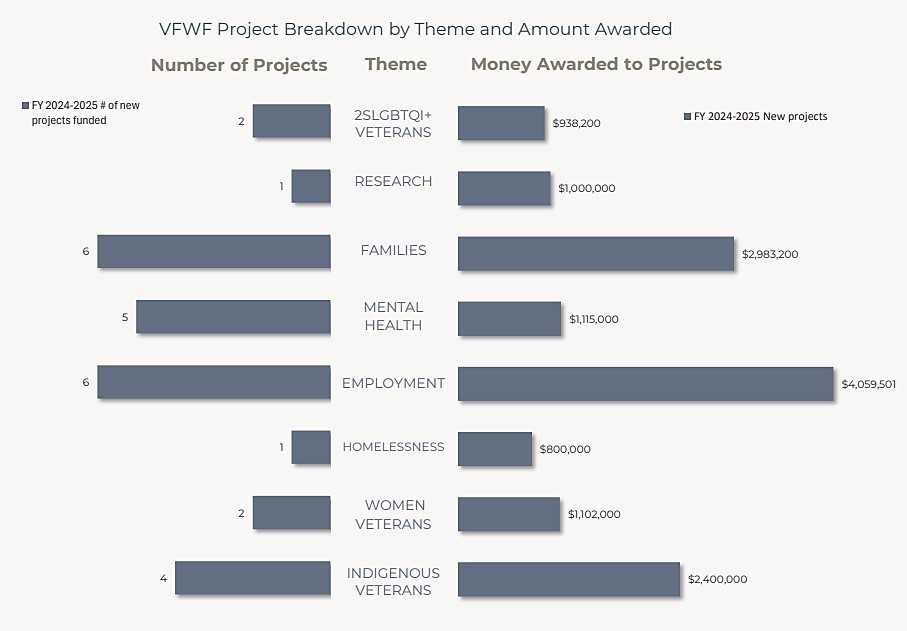
Text version of Graph
Specific demographic groups to be monitored
The following groups may benefit from this program (directly or indirectly), face barriers to access or participation, and/or experience impacts for various reasons. We continually work to identify and address these barriers:
Groups that may be impacted directly by the program (includes positive and/or negative impacts):
- Veterans
- Persons with disabilities or health issues
- Women
Groups that may be impacted indirectly by the program (includes positive, negative and/or neutral impacts):
- All Canadians
Groups that may face barriers:
- Black or other racialized / visible minority communities
- Indigenous Peoples
- 2SLGBTQI+
- Individuals of particular socio-economic status, educational level and/or particular familial characteristics (e.g., marital status, family status)
Key program impact statistics
Not available at this time. We are currently undertaking a GBA Plus review of Program Indicators and plans to include key program impact statistics in future Departmental Results Reports.
GBA Plus Data Collection Details:
All initiatives undertaken through both Centres of Excellence (Chronic Pain Centre of Excellence and the Atlas Institute for Veterans and Families)—including the development of knowledge products, research studies, webinars, workshops, blogs, podcasts, etc.—ensure equitable representation of under-represented groups, such as women, Indigenous Veterans, and members of the 2SLGBTQI+ community.
Through the Joint Federal Research Funding Program, we funded a study titled “Experiences of LGBT Purge Survivors with VAC Programs and Services.” The study is currently underway and led by researchers at the MacDonald Franklin Operational Stress Injury (OSI) Research & Innovation Centre. Its goal is to enhance our understanding of LGBT Purge survivors’ experiences in accessing our programs and services. It focuses on identifying how factors such as sex, gender, age, 2SLGBTQI+ identity, and military service history act as barriers or facilitators for this group. The findings will inform recommendations to strengthen intersectional considerations, including sex, gender, age, sexual orientation, and military characteristics, in our policies, programs, and service development. The final report is expected in Fall 2025..
Organizations applying to the 2024–25 Veteran and Family Well-being Fund call for applications were required to demonstrate how their projects support equity-seeking groups, align with GBA Plus principles, and, for research projects, follow SAGER guidelines. Reporting templates also require applicants to describe how GBA Plus is applied in their initiatives.
Plans to develop and improve GBA Plus data collection and analysis tools, including related activities, timelines, and strategies to address data gaps, can be found in our GBA Plus Supplementary Information Table within the 2025–26 Departmental Plan.
Transition Services
Target Population: Veterans, Families
Program goals: The Education and Training Benefit (ETB) is a taxable benefit that exists to provide funding to Veterans to help them achieve their education and post-military employment goals, better position themselves to be more competitive in the civilian workforce, and pursue activities that give them a sense of purpose. Veterans who have honourably released from the Canadian Armed Forces (Regular or Reserve Force), or members of the Supplementary Reserve, who have at least 6 years (2,191 paid days) of service may be eligible to receive up to $40,000 (indexed annually by the Consumer Price Index).Veterans and members of the Supplementary Reserve who have at least 12 years (4,382 paid days) of service may be eligible to receive up to $80,000 (indexed annually by the Consumer Price Index). Eligible clients can access ETB funding up to 10 years from their release/transfer date. ETB funding is paid directly to Veterans, who are then responsible for paying tuition and expense costs to the educational institution when needed. The amount of funding provided to an eligible Veteran depends on the cost and length of the approved program.
ETB uses existing client demographic data captured at the departmental level for monitoring and reporting purposes, along with supporting the GBA Plus analysis of current recipients.
The current contract for Career Transition Services (CTS) became operational in January 2023 and includes updated language to support all Government of Canada reporting requirements, including those for gender and diversity. Working with the national service provider also allows us to gain valuable knowledge of best practices in private industry around equity, diversity, and inclusion.
CTS supports approximately 1,000–1,200 new candidates annually in achieving employment, education or other post-service related goals. We receive monthly reports and analytics which include GBA+ related data to best understand and appreciate the diversity of our clientele in order to tailor community-based services if needed or desired. This range of information supports our program management decision making and program enhancements.
The Rehabilitation Services and Vocational Assistance Program (RSVP) provides medical, psycho-social, and vocational rehabilitation services to eligible Veterans who experience health problem(s) that result primarily from service in the Canadian Armed Forces and are causing a barrier to re-establishment in life after service. It may also provide vocational assistance services to spouses and survivors. As of November 2022, these services are delivered through one national contractor, Partners in Canadian Veterans Rehabilitation Services (PCVRS).
The Veteran Family Program offers medically-releasing CAF members and their families continued access to the Military Family Resource Centres and to a suite of transition-support programs and services. Through this program, a Veteran Family Telemedicine Service is being piloted. This pilot provides Medically released Veterans of the Canadian Armed Forces and their families, one year access to virtual care service, ensuring timely access to a primary care provider during the first year of transition.
Specific demographic group(s) to be monitored
The following groups may benefit from this program (directly or indirectly), face barriers to access or participation, and/or experience impacts for various reasons. We continually work to identify and address these barriers:
Groups that may be impacted directly by the program (includes positive and/or negative impacts):
- Veterans
- Persons with disabilities or health issues
- Students
Groups that may be impacted indirectly by the program (includes positive, negative and/or neutral impacts):
- Families
Groups that may face barriers:
- Black or other racialized / visible minority communities
- Indigenous Peoples
- 2SLGBTQI+
- Individuals of particular socio-economic status, educational level and/or particular familial characteristics (e.g., marital status, family status)
- Women
- Persons with disabilities or health issues
Key program impacts on gender and diversity
*data suppressed due to small counts
Source: 2024 VAC National Client Survey
Based on the 2024 survey results, younger recipients (ages 19–49) as well as Indigenous, racialized and anglophone recipients reported results below the overall average (52%), while women, francophone and older recipients (ages 50–69) reported results above average.
To better understand and address the differences in gender and diversity results noted above, RSVP has launched a Participant Experience Survey. This survey is designed to gather feedback on various aspects of program service delivery and participants’ perceptions of their outcomes. The data collected can be disaggregated by factors such as age and geographic location, enabling analysis of where disparities may exist and informing targeted actions to improve equity in program delivery.
Efforts are underway to better understand and address gender and equity disparities in program outcomes. For example, Service Delivery and Program Management are reviewing existing data and exploring opportunities to develop new reports to enhance the analysis of these disparities.
Key program impact statistics
Not available at this time. We are currently undertaking a GBA Plus review of Program Indicators and plans to include key program impact statistics in future Departmental Results Reports.
Supplementary information sources
2024 VAC National Client Survey
GBA Plus Data Collection Details:
An Education and Training Benefit dashboard now exists to allow users to query program data using numerous factors. We are working on improving data collection for ETB, while maintaining privacy compliance. We currently collect and use several data points that enable GBA Plus, including sex at birth (male/female), age, official language, and geography, and is exploring the addition of other intersectional identity factors.
It is important to note that the ETB validated dataset and dashboard do not identify VAC Community Members by gender. Instead, individuals are categorized by sex at birth. While the terms "sex" and "gender" are sometimes used interchangeably in everyday language, it is important to recognize that they are distinct concepts. For the purposes of data collection and reporting, the term "sex" has been consistently applied across the data set.
A dashboard for CTS data has been in use since 2021–22, enabling users to query CTS data using numerous factors, including GBA Plus data. Over the past year, CTS has implemented better data collection to identify male/female distribution of referrals as well as systematic age-based analytics to help guide program development and job development support. Additionally, through Power Business Intelligence (BI) analytics, improved data collection was implemented related to geographic service distribution across all provinces and territories to ensure national coverage is provided that is consistent with regional labour market trends. In working with coaches, individuals are provided with information on various employment resources available to persons who identify as women, transgender, non-binary, black or indigenous and based on self-identification coaches are able to provide specific guided support to additional labour market resources.
RSVP has made significant strides in operationalizing it has enhanced Performance Measurement and Reporting Framework. This framework, designed to measure meaningful outcomes for every participant, including improvements of overall health and well-being, functional capacity and satisfaction with rehabilitation services in now actively informing the program’s service delivery Outcome measure results and cost data will be disaggregated by sub-populations and intersecting identity factors, providing evidence to guide program improvements where equity in service delivery is required. We are also addressing the best methods to enhance data collection for this program while respecting privacy regulations. As our Information and Data Strategy evolves, further improvements in data analysis will follow.
We are updating the Performance Measurement and Reporting Framework for the Veteran Family Program to provide a more accurate picture of participants and their outcomes.
Plans to develop and improve GBA Plus data collection and analysis tools, including related activities, timelines, and strategies to address data gaps, can be found in our GBA Plus Supplementary Information Table within the 2025–26 Departmental Plan.
Veterans Emergency Fund
Target Population: Veterans, Families, Low-income individuals and/or families
Program goals The Veterans Emergency Fund (VEF) is a $1M per fiscal year fund that exists to provide tax-free payments to Veterans and their families who are facing a financial emergency that is threatening their health and well-being. VEF is provided to cover essential needs such as food, shelter, clothing, and uninsured essential one-time medical needs. Eligible Veterans and their families can be approved for up to a maximum of $2,500 per fiscal year (or up to $10,000 in exceptional circumstances). VEF applicants will also be referred to other internal and external resources to assist them in the longer-term.
VEF uses existing client demographic data captured at the departmental level for monitoring and reporting purposes, along with supporting the GBA Plus analysis of current recipients.
Other data:
Note: VEF Clients represents the number of VAC Community Members that have received VEF payments for the period April 1st 2024 to March 31st, 2025.
Specific demographic group(s) to be monitored
The following groups may benefit from this program (directly or indirectly), face barriers to access or participation, and/or experience impacts for various reasons. We continually work to identify and address these barriers:
Groups that may be impacted directly by the program (includes positive and/or negative impacts):
- Veterans
- Families
- Individuals of particular socio-economic status, educational level and/or particular familial characteristics(e.g., marital status, family status)
Groups that may be impacted indirectly by the program (includes positive, negative and/or neutral impacts):
- Families
Groups that may face barriers:
- Black or other racialized / visible minority communities
- Indigenous Peoples
- 2SLGBTQI+
Key program impact statistics
Not available at this time. We are currently undertaking a GBA Plus review of Program Indicators and plans to include key program impact statistics in future Departmental Results Reports.
GBA Plus Data Collection Details:
A Veterans Emergency Fund dashboard now exists to allow users to query program data using numerous factors.
We are working on improving data collection for this program, while maintaining privacy compliance. We currently collect and use several data points that enable GBA Plus, including sex at birth (male/female), age, official language, and geography, and is exploring the addition of other intersectional identity factors.
It is important to note that the VEF validated dataset and dashboard do not identify VAC Community Members by gender. Instead, individuals are categorized by sex at birth. While the terms "sex" and "gender" are sometimes used interchangeably in everyday language, it is important to recognize that they are distinct concepts. For the purposes of data collection and reporting, the term "sex" has been consistently applied across the data set.
Plans to develop and improve GBA Plus data collection and analysis tools, including related activities, timelines, and strategies to address data gaps, can be found in our GBA Plus Supplementary Information Table within the 2025–26 Departmental Plan.
Veterans Independence Program
Target Population: Veterans, Families
Program goals: The Veterans Independence Program (VIP) helps eligible Veterans, their primary caregivers, and survivors remain in their homes and communities for as long as possible by providing funding towards the cost of services that support their independence. Services supported include: housekeeping, grounds maintenance, personal care, ambulatory care, access to nutrition, and professional health and support services. When remaining at home is no longer practical, the service can provide support with care in a community facility (nursing home care).
The VIP collects sufficient data on application to determine program eligibility and benefit entitlement. Existing client demographic data is captured at the departmental level and can be accessed for monitoring and reporting purposes. This departmental-level data includes age, sex, marital status, geographical location (derived from postal codes), language, and a homelessness indicator. VIP Program Management, working closely with enterprise data, corporate statistics and business intelligence within our Department, can use this demographic data to inform their work and support the GBA Plus analysis of current recipients of VIP services.
Specific demographic group(s) to be monitored
The following groups may benefit from this program (directly or indirectly), face barriers to access or participation, and/or experience impacts for various reasons. We continually work to identify and address these barriers:
Groups that may be impacted directly by the program (includes positive and/or negative impacts):
- Veterans
- Persons with disabilities or health issues or their caregivers
- Seniors
- Families
Groups that may be impacted indirectly by the program (includes positive, negative and/or neutral impacts):
- Families
Groups that may face barriers:
- Black or other racialized / visible minority communities
- Indigenous Peoples
- 2SLGBTQI+
- Individuals of particular socio-economic status, educational level and/or particular familial characteristics (e.g., marital status, family status)
- Veterans in rural/remote areas
- Persons with disabilities or health issues or their caregivers
Key program impacts on gender and diversity
Source: 2024 VAC National Client Survey
Based on the 2024 survey results, recipients who were younger (ages 19–59) or francophone reported results below the overall average (94%), while older (ages 60–90+), Indigenous and racialized recipients reported results above average.
Efforts are underway to better understand and address gender and equity disparities in program outcomes. For example, Service Delivery and Program Management are reviewing existing data and exploring opportunities to develop new reports to enhance the analysis of these disparities.
Key program impact statistics
Not available at this time. We are currently undertaking a GBA Plus review of Program Indicators and plans to include key program impact statistics in future Departmental Results Reports.
Supplementary information sources
2024 VAC National Client Survey
GBA Plus Data Collection Details:
We are strengthening our GBA Plus analysis for current VIP recipients. We are developing a VIP dashboard that will allow for effective review, monitoring and reporting of program impacts using a GBA Plus lens. Beginning in 2022-23 Program Management has also been working on developing a draft interim dashboard to support GBA Plus analysis while the permanent dashboard is in development. This interim dashboard is nearing the approval stage.
Follow-up questions were added to the 2024 VAC National Client Survey to provide greater insight into the satisfaction levels of disaggregated groups. We use existing client demographic data captured at the departmental level for monitoring and reporting purposes, along with supporting the GBA Plus analysis of current recipients. We are developing a dashboard for the Veterans Independence Program that will improve the program’s ability to conduct more timely and effective reviews, monitoring and reporting of program impacts using a GBA Plus lens. We are also developing new or enhanced reports that better utilize data currently captured. Information collected through our gateway programs which may not specifically be collected for the Veterans Independence Program may also be leveraged to inform GBA Plus. As our Information and Data Strategy is implemented, additional improvements in data analysis will be incorporated. We continued to collaborate with the FHCPS contract implementation team to build comprehensive reporting capabilities.
Plans to develop and improve GBA Plus data collection and analysis tools, including related activities, timelines, and strategies to address data gaps, can be found in our GBA Plus Supplementary Information Table within the 2025–26 Departmental Plan.
War Veterans Allowance
Target Population: Veterans, Families
Program goals: War Veterans Allowance (WVA) is a tax free, monthly financial benefit for low-income Veterans of the Second World War and/or the Korean War and their survivors/orphans. It also provides important access some of our other programs such as Health Care Benefits (Treatment Benefits), the Veterans Independence Program, the Long-Term Care Program, and the VAC Assistance Fund. The War Veterans Allowance collects sufficient data to monitor and report program impacts by gender and diversity (GBA Plus).
Other data:
Note: WVA Clients represents the number of VAC Community Members who are in-pay or suspended for WVA as of 31 March 2025.
Specific demographic group(s) to be monitored
The following groups may benefit from this program (directly or indirectly), face barriers to access or participation, and/or experience impacts for various reasons. We continually work to identify and address these barriers:
Groups that may be impacted directly by the program (includes positive and/or negative impacts):
- Veterans
- Persons with disabilities or health issues
- Seniors
- Families
- Individuals of particular socio-economic status, educational level and/or particular familial characteristics(e.g., marital status, family status)
Groups that may be impacted indirectly by the program (includes positive, negative and/or neutral impacts):
- Families
Groups that may face barriers:
- Black or other racialized / visible minority communities
- Indigenous Peoples
- 2SLGBTQI+
Key program impact statistics
Not available at this time. We are currently undertaking a GBA Plus review of Program Indicators and plans to include key program impact statistics in future Departmental Results Reports.
GBA Plus Data Collection Details:
We are currently exploring the best methods for increasing data collection for this program while maintaining privacy boundaries. As our Information and Data Strategy is implemented, further improvements in data analysis will be incorporated.
Plans to develop and improve GBA Plus data collection and analysis tools, including related activities, timelines, and strategies to address data gaps, can be found in our GBA Plus Supplementary Information Table within the 2025–26 Departmental Plan.
Core Responsibility 2: Commemoration
Canada Remembers Program
Target Population: Veterans, General Public, Youth
Program goals: Canada Remembers Program initiatives ensure that those who served in Canada’s military efforts are honoured and that the memory of their sacrifices and achievements is preserved. GBA Plus, including gender and other identifying factors (e.g. Indigenous identity), are considered to help inform the development and review of programming.
Distribution of Benefits: Although this program doesn’t deliver benefits in a traditional sense, we do have data available based on surveys conducted with Canadians.
Specific demographic group(s) to be monitored
The following groups may benefit from this program (directly or indirectly), face barriers to access or participation, and/or experience impacts for various reasons. We continually work to identify and address these barriers:
Groups that may be impacted directly by the program (includes positive and/or negative impacts):
- All Canadians
- Veterans
- Youth and Children
Groups that may be impacted indirectly by the program (includes positive, negative and/or neutral impacts):
- Students
Groups that may face barriers:
- Black or other racialized / visible minority communities
- Indigenous Peoples
- Newcomers or immigrants
- Rural or remote communities
Key program impacts on gender and diversity
Source: 2024 VAC National Client Survey
Based on the 2024 survey results, younger Veterans (ages 19-59) as well as Male, English-speaking and Racialized Veterans reported results below the overall average (74%), while older Veterans (ages 70-90+), Women, French-speaking and Indigenous Veterans reported results above the overall average.
The Commemoration Division is actively reviewing its current programming to ensure it is inclusive and responsive to the needs of groups that reported below-average outcomes. We are exploring opportunities to strengthen existing initiatives that address barriers experienced by racialized and younger Veterans, and are working to expand our digital presence to better engage a broader and more diverse audience.
Installed in February 2025, the new permanent commemorative wreath station at the Vimy Education Centre serves as a powerful symbol of ongoing remembrance. Featuring an evergreen wreath adorned with flowers representing remembrance of many nations, and a rotating display of major Canadian military anniversaries, the station offers visitors a dedicated space for reflection. Beyond honouring past generations, this commemorative installation also creates a meaningful opportunity to remember more modern military missions and campaigns and thereby recognizing younger Veterans, many of whom (according to the 2024 VAC National Client Survey numbers listed above) may be feeling their service is unrecognized. By highlighting both historic and modern military contributions, the wreath station helps to bridge a generational gap and reinforces that all who serve, regardless of era, are valued and remembered. It stands as a year-round reminder that remembrance is not limited to the past, but is a living, evolving commitment to all who have served and sacrificed in uniform.
In the past year, International Operations developed several temporary exhibits using a GBA Plus lens, highlighting diverse voices and experiences. These included exhibit banner displays marking significant Canadian military anniversaries and the Olympics / Paralympic Games in Paris that featured women, Black, Indigenous, and French Veterans, as well as wounded and injured service members. Notably, Canada’s Sports Hall of Fame’s Service and Sport exhibit and our VAC Invictus Games banners showcased stories of modern Veterans from varied backgrounds, emphasizing inclusion and representation across gender, ethnicity and ability.
Key program impact statistics
Not available at this time. We are currently undertaking a GBA Plus review of Program Indicators and plans to include key program impact statistics in future Departmental Results Reports.
Supplementary information sources
2024 VAC National Client Survey
GBA Plus Data Collection Details:
In February 2025, we supported the 7th Invictus Games, an international sporting event for wounded, injured and ill Veterans and serving military members, held in Vancouver and Whistler. Furthermore, we:
- Contributed $15 million over three years to help secure and deliver the Games. A total of 535 Veterans and serving members from 23 nations, including 55 members of Team Canada competed in the 2025 Games, supported by 1,200 of their families and friends and more than 1,900 volunteers drawn from across Canada and around the world.
- Worked closely with the Musqueam, Squamish Tsleil-Waututh, and Lil’wat Nations—the Four Host First Nations—to help plan and host the 2025 Invictus Games on their traditional lands. This partnership made sure Indigenous communities were fully included and their culture, language, and customs were respected, following the calls of the Truth and Reconciliation Commission.
- As part of this work, we hosted Canada’s first all-Indigenous Veterans group at the Games. Veterans from Inuit, Métis, and First Nations communities across Canada, along with youth and elders from the host Nations, took part in cultural activities and saw how sport supports healing and recovery for Veterans, serving members, and their families.
In 2024–25, the Commemorative Partnership Program (CPP) supported projects that recognized and commemorated the legacy of the No. 2 Construction Battalion. Dedicated call-outs resulted in the approval of 36 projects, with a total of $1,001,116 in approved funding.
We distributed over 2.8 million commemorative learning products to Canadians all across the country in the weeks leading up to Veterans’ Week. These educational resources featured content on Canada’s mission in Afghanistan, RCAF100, Canadian service in Africa, D-Day and the Battle of Normandy, the Invictus Games, Canadian service in Rwanda, the Newfoundland Tomb of the unknown solider, Canadian efforts in Cyprus, and the service of Indigenous Veterans. They also highlighted the contributions of individual Veterans, including those from diverse and underrepresented groups. Our materials for young learners concentrated on key commemorative concepts, including remembrance and recognition, memorials, Veterans, and peace.
Throughout the year, we developed and promoted lesson plans on a broad range of topics and Veteran cohorts, including the Canadian Rangers; Black Canadians who died in service; the deaths of the Buffalo 9 peacekeepers on 9 August 1974; and the experiences of 2SLGBTQI+ Veterans. We also launched comprehensive learning units incorporating activities, videos and lesson plans about the Newfoundland Tomb of the unknown soldier; Canadian service in Rwanda; and the contributions of Indigenous Canadians across Canadian military history.
We distributed more than 800,000 Veteran recognition cards to schools and community groups. These cards encourage youth to thank a Veteran in their community. They carried images and messaging that also increased awareness of or supported programming linked to the Invictus Games, VAC’s Canadian Armed Forces in the Americas theme, and Indigenous military history.
In 2024–25, comprehensive accessibility assessments of the Canadian National Vimy Memorial, the Beaumont-Hamel Newfoundland Memorial, and our 13 smaller commemorative sites were completed. These evaluations are guiding the planning and implementation of physical and interpretive improvements to ensure that all visitors—regardless of ability—will have a more meaningful and easy experience at the sites.
Updated Quality Visitor Experience (QVE) training, which has been developed from a GBA Plus lens, was provided to our staff in France to improve student guide training with a lens on inclusivity and acceptance.
Commemorative initiatives that reflect International Operations’ continued commitment to diversity, inclusion and education through a GBA Plus lens continued throughout the year at our sites in France, with a focus on representation and awareness. For the second year, the Pride flag was raised at both the Vimy and Beaumont-Hamel memorials during Public Service Pride Week, accompanied by a student guide-led social media post on their Instagram account, Memorial Camera Canada. On the National Day for Truth and Reconciliation, student guides wore orange t-shirt pins to honour residential school victims and survivors, sharing a message of remembrance on their social media platform. During Black History Month in 2025, the student guides created and shared an interpretive video highlighting Black soldiers who are commemorated on the Vimy Memorial. This post was also amplified through Veterans Affairs Canada’s social media accounts and the social media platforms of our partner, The Vimy Foundation.
Visitor Experience Strategy (VES) reports were developed in collaboration with stakeholders for both Vimy and Beaumont-Hamel throughout the past year. These strategies provide a five-year roadmap for enhancing visitor engagement, guiding product development, promotion and planning. They clarify goals, assess current and potential audiences, and identify opportunities to improve both on-site and virtual experiences. The process was shaped using a GBA Plus lens, ensuring inclusive input and targeted, impactful actions for Canadian and international visitors both onsite and virtually.
Several temporary exhibits were developed with a GBA Plus focus, highlighting diverse voices and experiences. These included exhibit banner displays marking significant Canadian military anniversaries and the Olympics in Paris that featured women, Black, Indigenous and French Veterans, as well as wounded and injured service members. Notably, Canada’s Sports Hall of Fame’s Service and Sport exhibit and the VAC’s Invictus Games banners showcased stories of modern Veterans from varied backgrounds, emphasizing inclusion and representation across gender, ethnicity and ability.
From April 6–9, delegates from Rainbow Veterans of Canada and the LGBT Purge Fund undertook a meaningful journey retracing the footsteps of courageous Canadian soldiers, including Ross Hamilton and Frederick Hardy—both of whom endured harsh discrimination due to their sexuality. This commemorative pilgrimage culminated at the Canadian National Vimy Memorial, where the delegation took part in the annual ceremony marking the anniversary of the Battle of Vimy Ridge. Notably, the name of Frederick Hardy is engraved in the memorial, serving as a powerful reminder of the sacrifices and resilience of 2SLGBTQI+ service members. As part of the ceremony, members of the Rainbow Veterans of Canada delegation recited the Act of Remembrance, laid a commemorative wreath and shared a story of a 2SLGBTQI+ soldier who served in the First World War, contributing to an inclusive and representative commemoration of Canada’s military legacy.
The Program also applies GBA Plus through:
- Commemorative initiatives that are designed and implemented in a respectful, inclusive manner to honour all those who served our country;
- Delegations for ceremonies and events which include intergenerational representation and diverse culture
- Educational resources and public information that reflect diverse cultural and regional backgrounds; and
- Canadians' attitudes and participation with respect to remembrance are gathered using the Attitudes Towards Remembrance and Veterans' Week survey, which allows us to continue determining the impact and effectiveness of its commemorative initiatives. Data is weighted to ensure that the gender and age composition generally reflects that of the adult Canadian population, according to census data.
Plans to develop and improve GBA Plus data collection and analysis tools, including related activities, timelines, and strategies to address data gaps, can be found in our GBA Plus Supplementary Information Table within the 2025–26 Departmental Plan.
Funeral and Burial Program
Target Population: Veterans
Program goals: Funeral and burial assistance is provided through the Last Post Fund (LPF)– a non-profit organization – to help pay for funeral and burial services, including a military gravestone, for eligible Veterans.
Specific demographic groups to be monitored
The following groups may benefit from this program (directly or indirectly), face barriers to access or participation, and/or experience impacts for various reasons. We continually work to identify and address these barriers:
Groups that may be impacted directly by the program (includes positive and/or negative impacts):
- Veterans
- Seniors
Groups that may be impacted indirectly by the program (includes positive, negative and/or neutral impacts):
- Families
Groups that may face barriers:
- Indigenous Peoples
- Individuals of particular socio-economic status, educational level and/or particular familial characteristics (e.g., marital status, family status)
Key program impacts on gender and diversity
Source: 2024 VAC National Client Survey
Based on the 2024 survey results, Veterans aged 19-69 as well as Male, English-speaking and Indigenous Veterans reported results below the overall average (81%), while older Veterans (ages 70-90+), Women, French-speaking and Racialized Veterans reported results above the overall average.
The Commemoration Division is actively reviewing its current programming to ensure it is inclusive and responsive to the needs of groups that reported below-average outcomes. We are exploring opportunities to strengthen existing initiatives that address barriers experienced by racialized and younger Veterans, and are working to expand our digital presence to better engage a broader and more diverse audience.
Key program impact statistics
Not available at this time. We are currently undertaking a GBA Plus review of Program Indicators and plans to include key program impact statistics in future Departmental Results Reports.
Supplementary information sources
2024 VAC National Client Survey
GBA Plus Data Collection Details:
The Last Post Fund delivers our Funeral and Burial Program. To address challenges that LPF had in reporting on GBA Plus in previous years, our Commemoration Division worked with the LPF in 2024–25 to improve their reporting capabilities to better support us in collecting and analysing GBA Plus data.
Plans to develop and improve GBA Plus data collection and analysis tools, including related activities, timelines, and strategies to address data gaps, can be found in our GBA Plus Supplementary Information Table within the 2025–26 Departmental Plan.
Core Responsibility 3: Veterans Ombudsperson
Veterans Ombudsperson
Target Population: Veterans, Families, Military Personnel
Program goals: The Office of the Veterans Ombud (OVO) reviews complaints and challenges the policies and decisions of Veterans Affairs Canada where we find individual or systemic unfairness. We strive to be an independent and respected voice for fairness and a champion for the well-being of Veterans and their families.
Distribution of Benefits: Although this program doesn’t deliver benefits in a traditional sense, we do have data available based on client inquiries and complaints.
Specific demographic groups to be monitored
The following groups may benefit from this program (directly or indirectly), face barriers to access or participation, and/or experience impacts for various reasons. OVO continually work to identify and address these barriers:
Groups that may be impacted directly by the program (includes positive and/or negative impacts):
- Veterans
- Families/Survivors
Groups that may be impacted indirectly by the program (includes positive, negative and/or neutral impacts):
- Families/Survivors
Groups that may face barriers:
- Black or other racialized / visible minority communities
- Indigenous Peoples
- 2SLGBTQI+
- Individuals of particular socio-economic status, educational level and/or particular familial characteristics (e.g., marital status, family status)
- Persons with disabilities or health issues or their caregivers
- Seniors
- Children or Youth
Key program impact statistics
Not available at this time. We are currently undertaking a GBA Plus review of Program Indicators and plans to include key program impact statistics in future Departmental Results Reports.
GBA Plus Data Collection Details:
OVO continues to collaborate with counterparts within VAC to align with VAC’s work on GBA Plus data. We will explore how to leverage existing data collection methods to help the OVO capture meaningful and representative GBA Plus demographic information on our clients.
Plans to develop and improve GBA Plus data collection and analysis tools, including related activities, timelines, and strategies to address data gaps, can be found in our GBA Plus Supplementary Information Table within the 2025–26 Departmental Plan.