

Joined
1989

Posting
- 1989-1993 – 1st Canadian Ranger Patrol Group – Pond Inlet, Nunavut
- 2000-present – 1st Canadian Ranger Patrol Group – Iqaluit, Nunavut
Living in the north
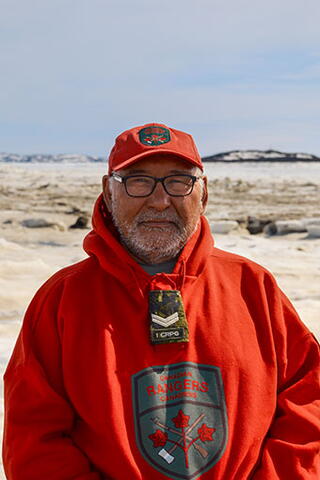
Solomon Awa was born in 1959, near the hamlet of Igloolik, Nunavut. As an Inuk, he spent much of his childhood living on the land with his parents and grandparents. He learned traditional survival skills including hunting, weather reading, and how to endure the extreme cold.
He left school as a teenager to work as a labourer for an oil company, learning most of his English on the job. However, the constant travel took its toll on him.
“It was really good money, but flying was killing me.”
The constant traveling became too much for Awa, so he decided to settle in Pond Inlet, where he worked in several roles such as a housing association secretary and a municipal recreation coordinator. However, he was looking for something that better matched his way of life.
That was when he learned of the Canadian Rangers.
He was inspired by their duties to hunt, travel and scout the land, which he already did as an Inuk. He had also been a Boy Scout as a child, which influenced his sense of discipline and service. Seeing what the Rangers offered, he knew what he had to do.
“That gave me the idea [that] maybe I should join them, and I did.”
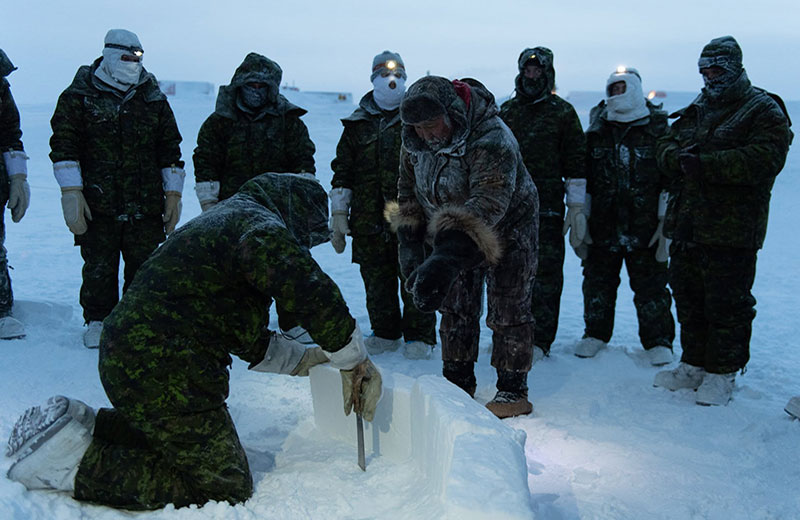
Awa regularly takes part in patrols and drill exercises as part of his work with the Rangers. Photo credit: Cpl. Brian Lindgren, Canadian Armed Forces.
Working as a Ranger
Awa joined the Canadian Rangers in 1989, at the age of 30, starting in Pond Inlet as a member of 1st Canadian Ranger Patrol Group. He later moved to Iqaluit and resumed his duties in 2000, after a seven-year pause in service while working for an Inuit non-profit organization.
As a Ranger, he conducts land patrols, takes part in drill exercises and weapon maintenance. He also participates in commemorative ceremonies for Veterans with his fellow Rangers, including an annual Remembrance Day parade. His group meets every month. They talk about what they have seen and learned on the land.
The Rangers are the eyes and ears of Canada’s remote and isolated regions, watching their surroundings.
“We always look out whenever we are out on the land. Whatever we find, we report it back.”
Awa’s patrols have led to many memorable experiences. Once, he discovered a wildlife tracking camera placed by a mining company to monitor the premises. When he reviewed the footage inside, he saw an animal’s eyes staring back at him.
He has also assisted in rescue efforts for people lost in the region, working alongside fellow Rangers to organize a makeshift landing strip for planes using the headlamps from their snowmobiles. Sometimes, his group must get creative.
“I’ve done jerry cans on the sea ice, so that airplanes can look at the air strip that was created by the Rangers.”
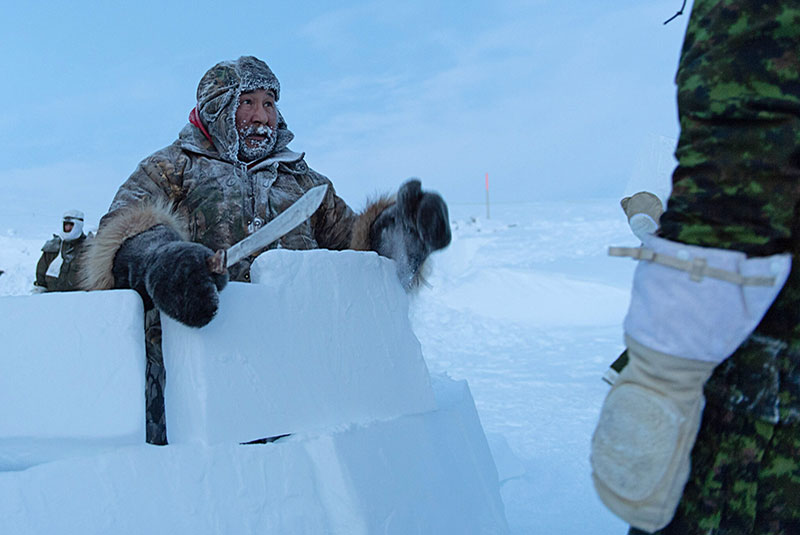
Awa takes great pride in teaching young Rangers and other Canadian Armed Forces members skills needed to survive in the north. Photo credit: Cpl. Brian Lindgren, Canadian Armed Forces.
Teaching others
One of the most rewarding elements of Awa’s service is teaching others how to survive in the north.
Each winter, he works and trains with Canadian Armed Forces members and Rangers. He shows them how to make igloos and other shelters. They also learn how to navigate the tundra and predict weather patterns.
He takes great pride in teaching others the skills of his heritage.
“We want to teach them. We want to be able to show them that this is what you do during these cold days, and for you to be able to survive. If we teach them well, they’re going to serve us well.”
His teaching goes beyond practical skills. He talks about the importance of patience, observation, and learning through hands-on experience. He reminds his students that there is a lot of trial and error involved in their work, and that making mistakes is part of the process.
“It’s the right thing to do, because if you make a mistake, you know next time, you can do better.”
Becoming Mayor of Iqaluit
In 2019, after nearly two decades of working in various government jobs while serving as a Ranger, Awa decided to run for city council in Iqaluit and was elected.
Then, in 2021, he was made Deputy Mayor after the previous Deputy was elected to the legislative assembly. Later that same year, he had the opportunity to step into the role of Acting Mayor.
When the next election approached in 2023, Awa initially planned to run again as a councillor. Encouraged by members of the community, he instead decided to run as Mayor. The outcome was clear.
“When the election results came in, the newspaper said that it was a landslide.”
Now serving as Iqaluit’s full-time Mayor, Awa works hard to address the needs of its citizens, committed to both his Ranger service and strengthening the wellbeing of his community.
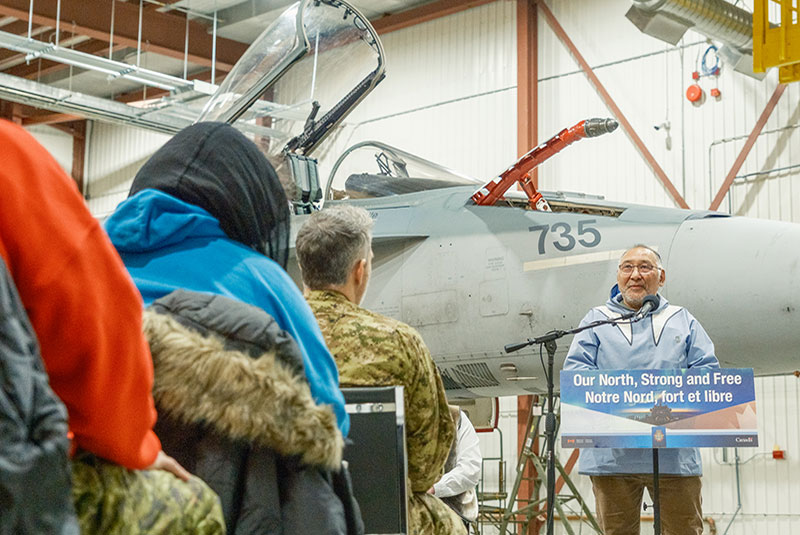
Awa intends to continue serving as a Ranger for as long as he is physically able to do so, and plans to run as Mayor of Iqaluit again in its next election.
No plans to retire
Unlike most members of the Canadian Armed Forces, Rangers can typically extend their service for as long as they are physically able to carry out their duties.
At 66 years of age, Awa has no plans to retire as a Ranger. He also intends to run as Mayor of Iqaluit again next year. He attributes his resilience and dedication to service to his Inuit heritage.
“We want to keep going all the way because our survival, as an Inuk, is giving us that. You have to keep going if you want to survive.”
Awa is also inspired by a fellow Ranger and Inuit Elder he worked with, who remained active into his eighties. When he passed away, the Rangers held a funeral in full uniform to honour his lifelong commitment to serving his country.
That example continues to guide Awa today.
“I would like to do that too, if I can follow him.”
Supporting Indigenous Canadians
Over the years, Awa has seen growing recognition for the contributions and sacrifices of Indigenous soldiers and Veterans who have served to protect Canada.
He hopes to continue to raise the voice of the Inuit, urging Canadians to recognize and remember that the Inuit are an important part of the country.
“We have our own language. We have our own lifestyle. We have our own traditional knowledge, so people should know that Inuit are up here…and we need respect.”
He encourages other Indigenous Canadians to consider joining the Canadian Armed Forces as Rangers, emphasizing they will have the opportunity to learn not only as service members, but as Indigenous People connected to their culture and the land.
“I’m proud of being a part of [the Rangers], because I can be serving Canada as well as serving Inuit in Nunavut.”
With courage, integrity, and loyalty, Solomon Awa has left his mark. He is one of our Canadian Veterans. Discover more stories.
The well-being of Canadian Veterans is at the heart of everything we do. As part of this, we recognize, honour and commemorate the service of all Canadian Veterans. Learn more about the services and benefits that we offer.
If you are a Veteran, family member or caregiver, the support of a mental health professional is available anytime at no cost to you. Call 1-800-268-7708.