
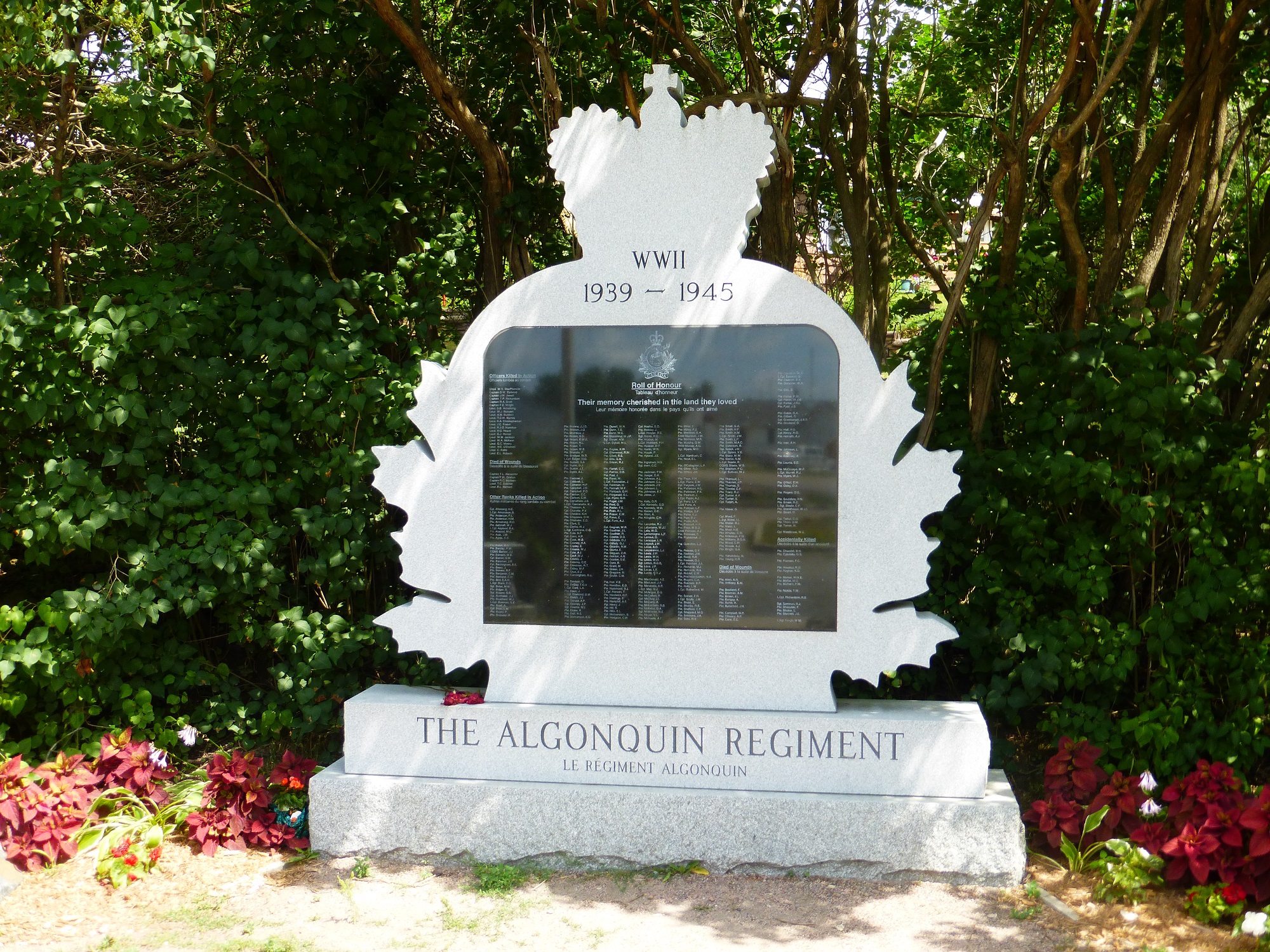
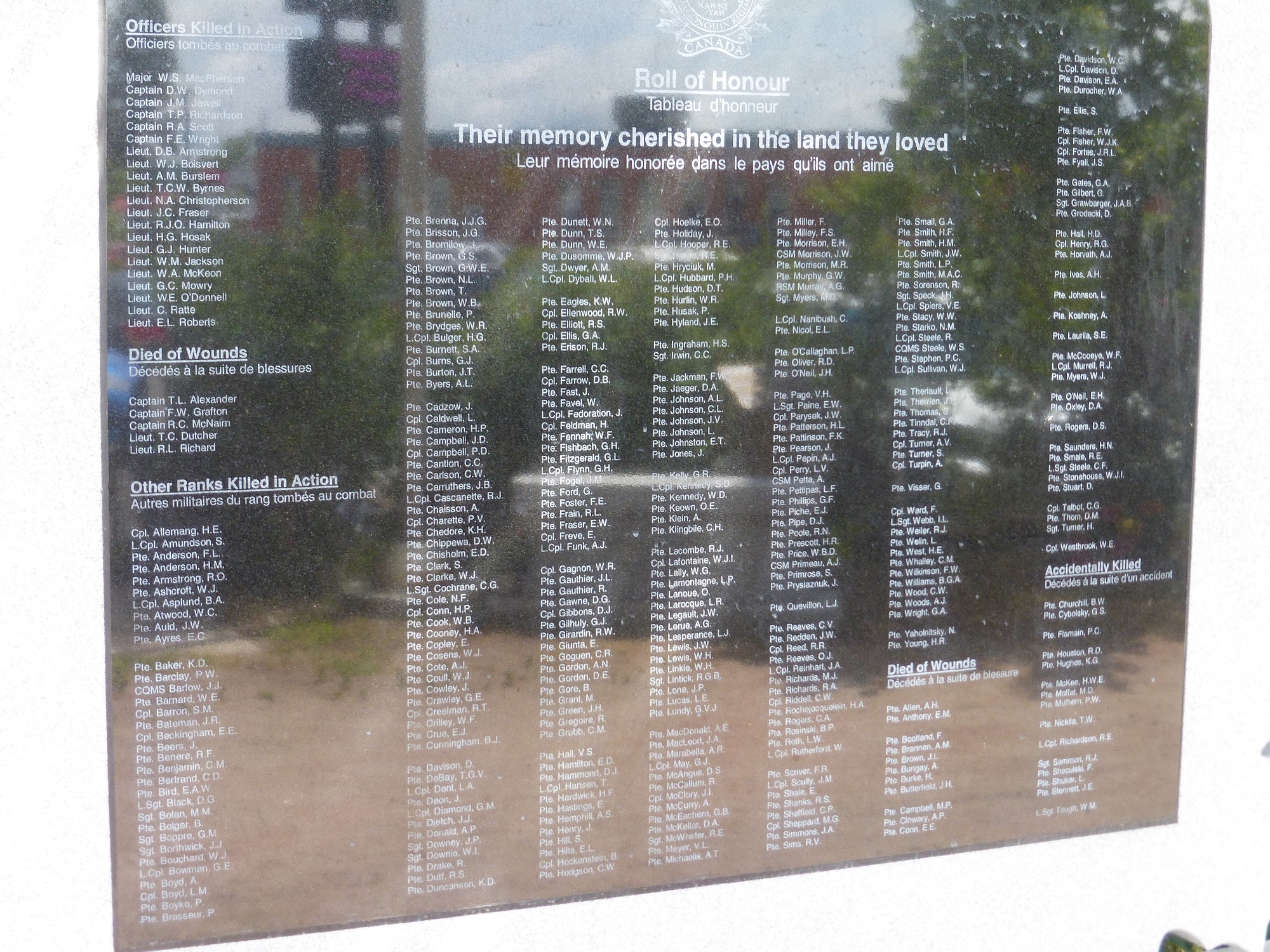
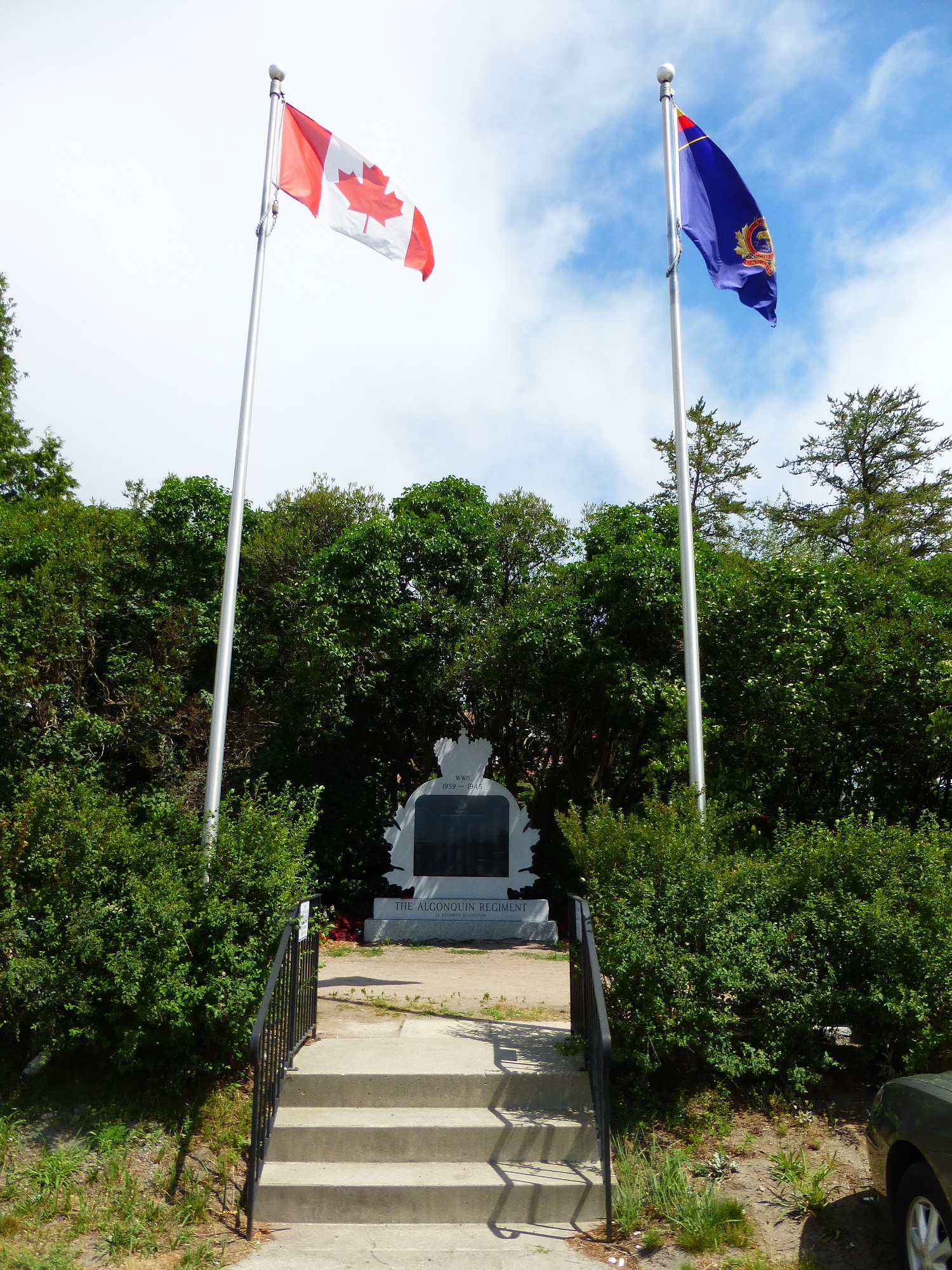
The Algonquin Regiment Memorial was unveiled on September 23, 2012. It recognizes the 372 members of the regiment who lost their lives in the Second World War. The ceremony began with a parade of The Algonquin Regiment from the CNR station on Church Street to a Freedom of Municipality and inspection of troops in front of the Town Hall before proceeding to the memorial site.
Sanderson Monument was awarded the contract to design and erect the memorial. It towers roughly 8' high and 6.5' wide and is in the shape of The Algonquin Regiment's badge. Grey granite envelopes the 372 names etched in black granite. The memorial was built through the efforts spearheaded by the last remaining Algonquin Veterans and was their way to deal with the trauma of losing people around them on the battlefield.
For Algonquin Veteran Jack Patterson it was the culmination of a dream, spawned by the emotional experience of visiting the graves of fallen Algonquin comrades overseas. Veteran James Broomfield drove a jeep bringing wounded soldiers back from the front lines, a role which brought him under frequent fire. He was captured in the woods of Holland and spent nearly a year in the Stalag XI-B German prisoner of war camp. Barbara Monk travelled from the Kingston area to the ceremony to honour her father Major Lyle Monk who led the Algonquins in Normandy, Belgium and Holland. Although he survived the war, he died in 1961. Patterson served under him and Broomfield was his driver.
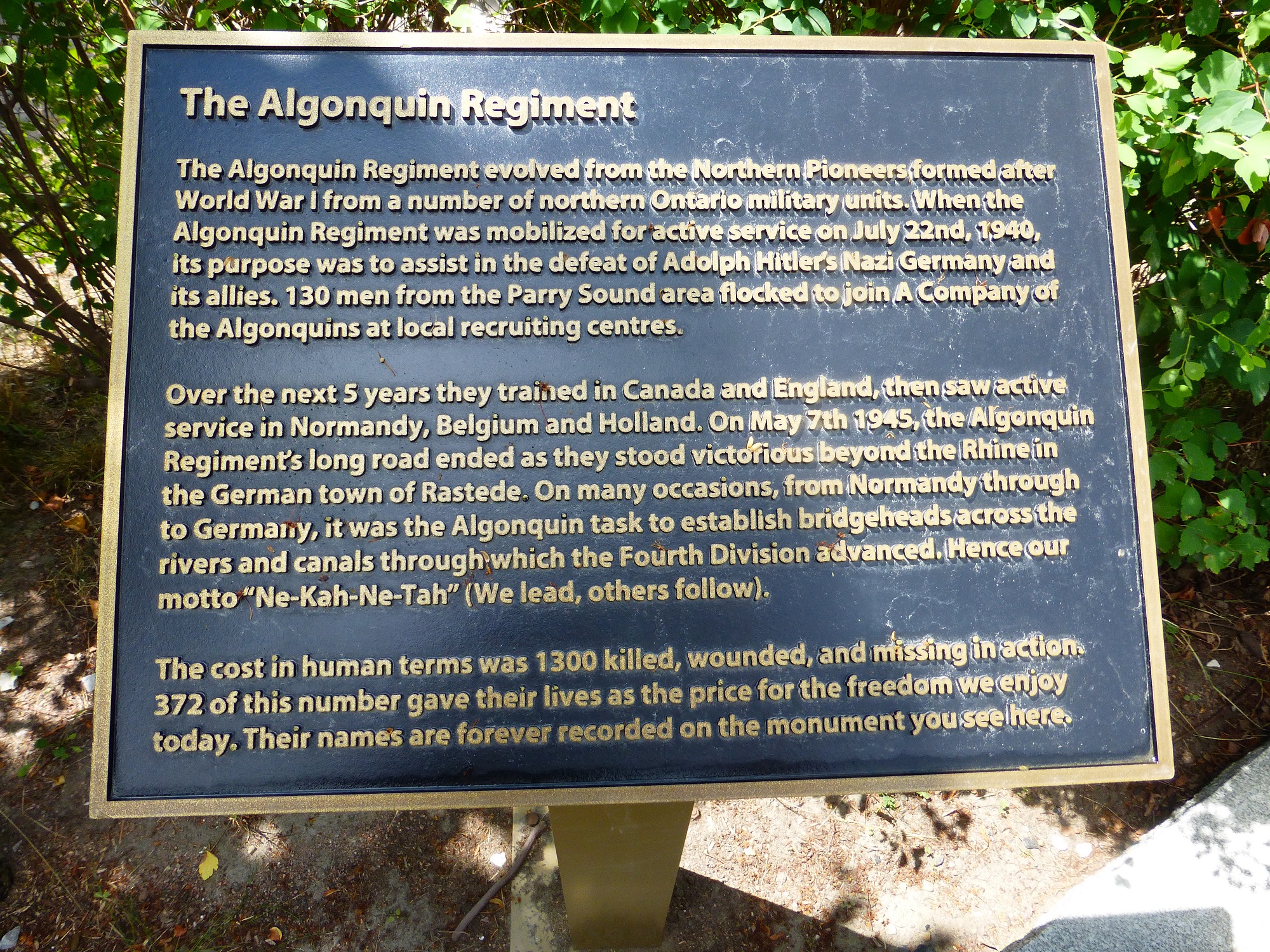
The Algonquin Regiment evolved from the Northern Pioneers formed after the First World War from a number of northern Ontario military units. When The Algonquin Regiment was mobilized for active service on July 22, 1940, its purpose was to assist in the defeat of Adolph Hitler's Nazi Germany and its Allies. 130 men from the Parry Sound area flocked to join A Company of the Algonquins at local recruiting centers.