



The Citizens' War Memorial Advisory Committee, formerly called the Cenotaph Advisory Committee, first met on December 11, 1920. During a public meeting on December 17, 1920, a design by Walter S. Allward was approved. Allward was chosen by the Canadian Government to execute the Canadian National Vimy Memorial in France, so he secured the assistance of an eminent English sculptor, Gilbert Bayes, to assist in carrying out the Peterborough design. The statues were cast in Allward’s England studio and then shipped to town with the help of Allward’s son Hugh, who was the project manager.
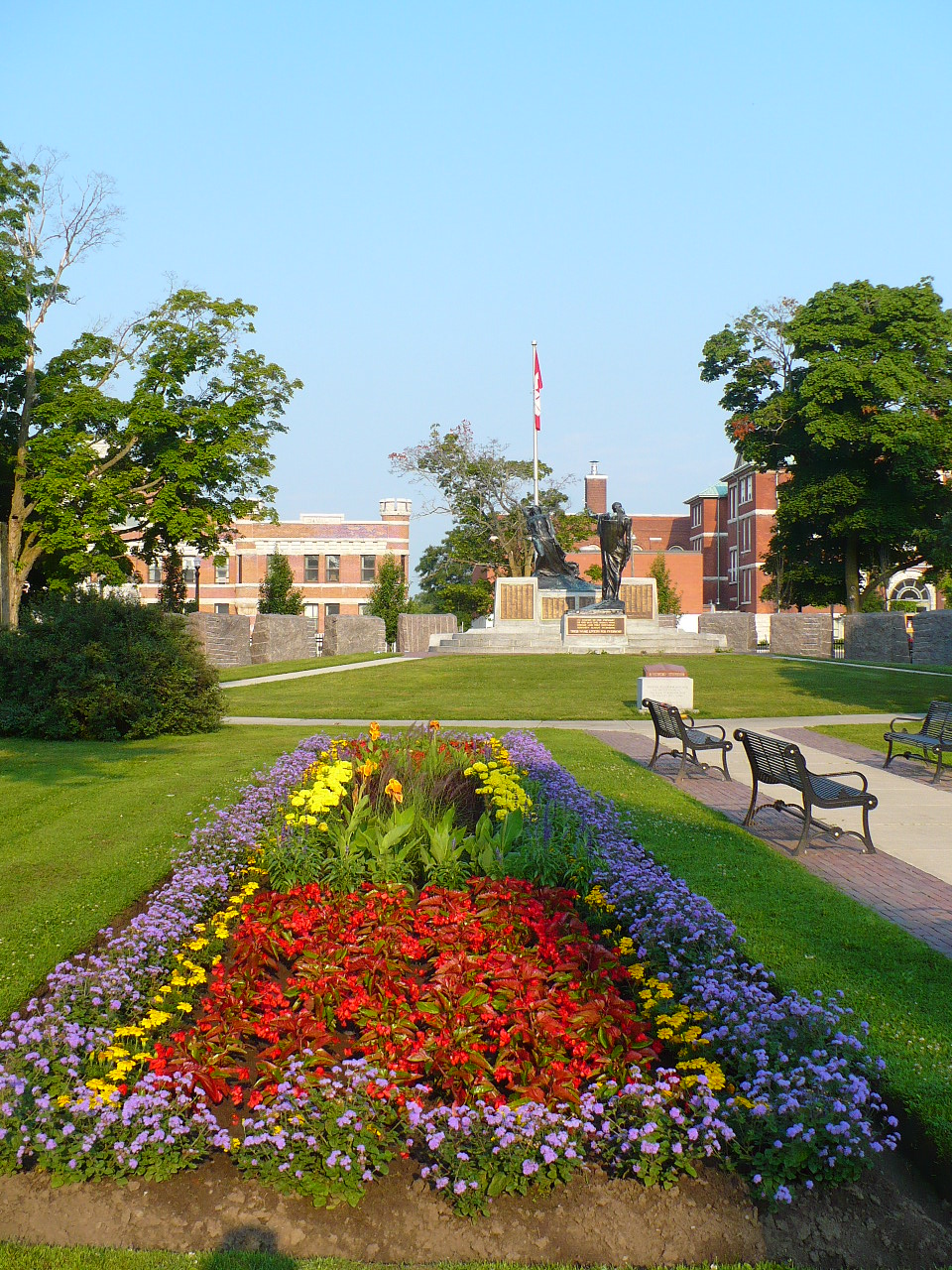
On October 10, 1927, the Creber Brothers' tender for memorial granite work was accepted. The committee was still securing a complete list of those who died in the First World War. Excavation began and the cement work started on May 28, 1928. The memorial was dedicated by Sir Arthur Currie on June 30, 1929. Central Park, now known as Confederation Park, was selected because of its central location and more importantly, as a sentiment to the fact that many of the soldiers started and returned at that location.
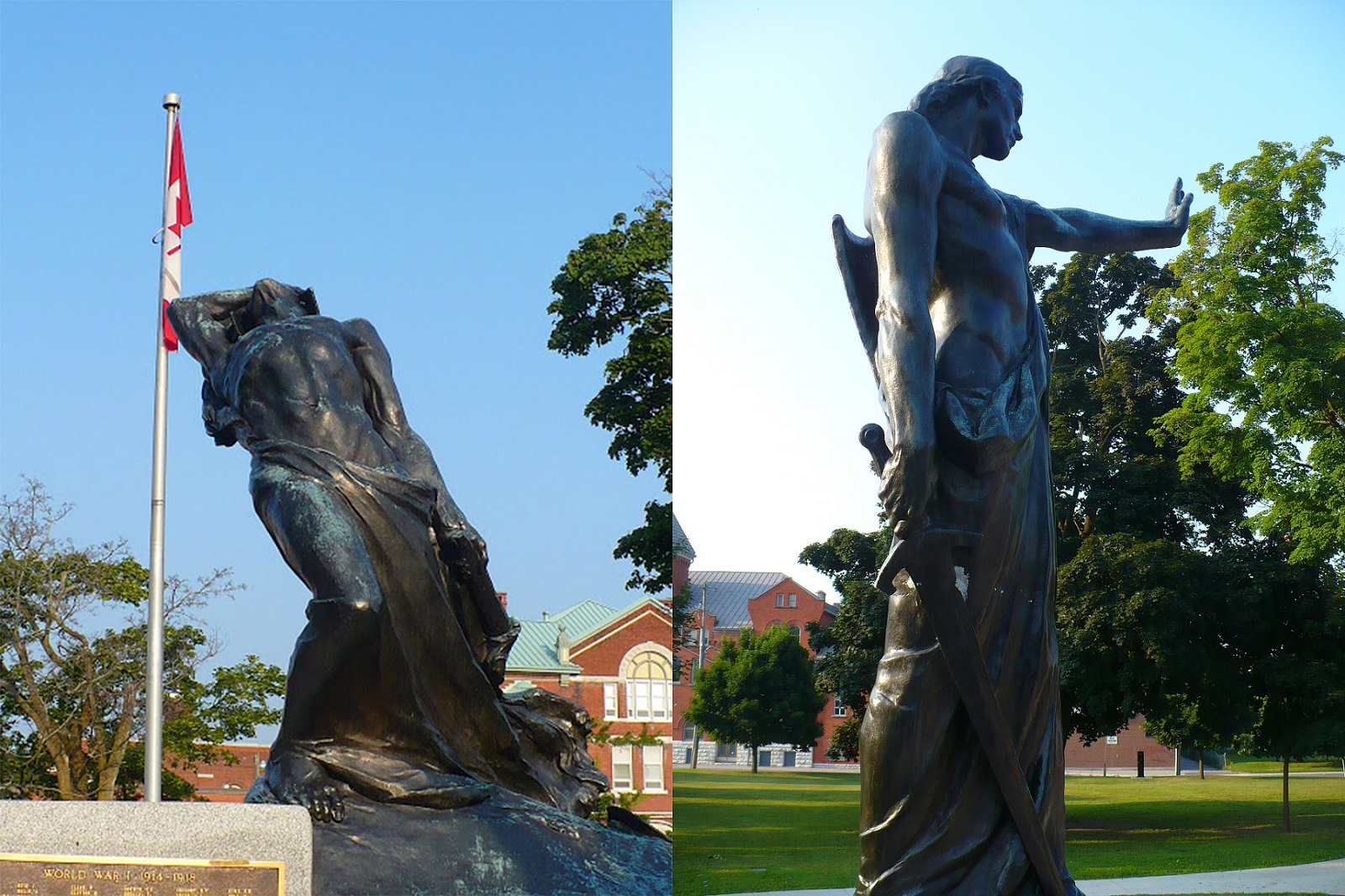
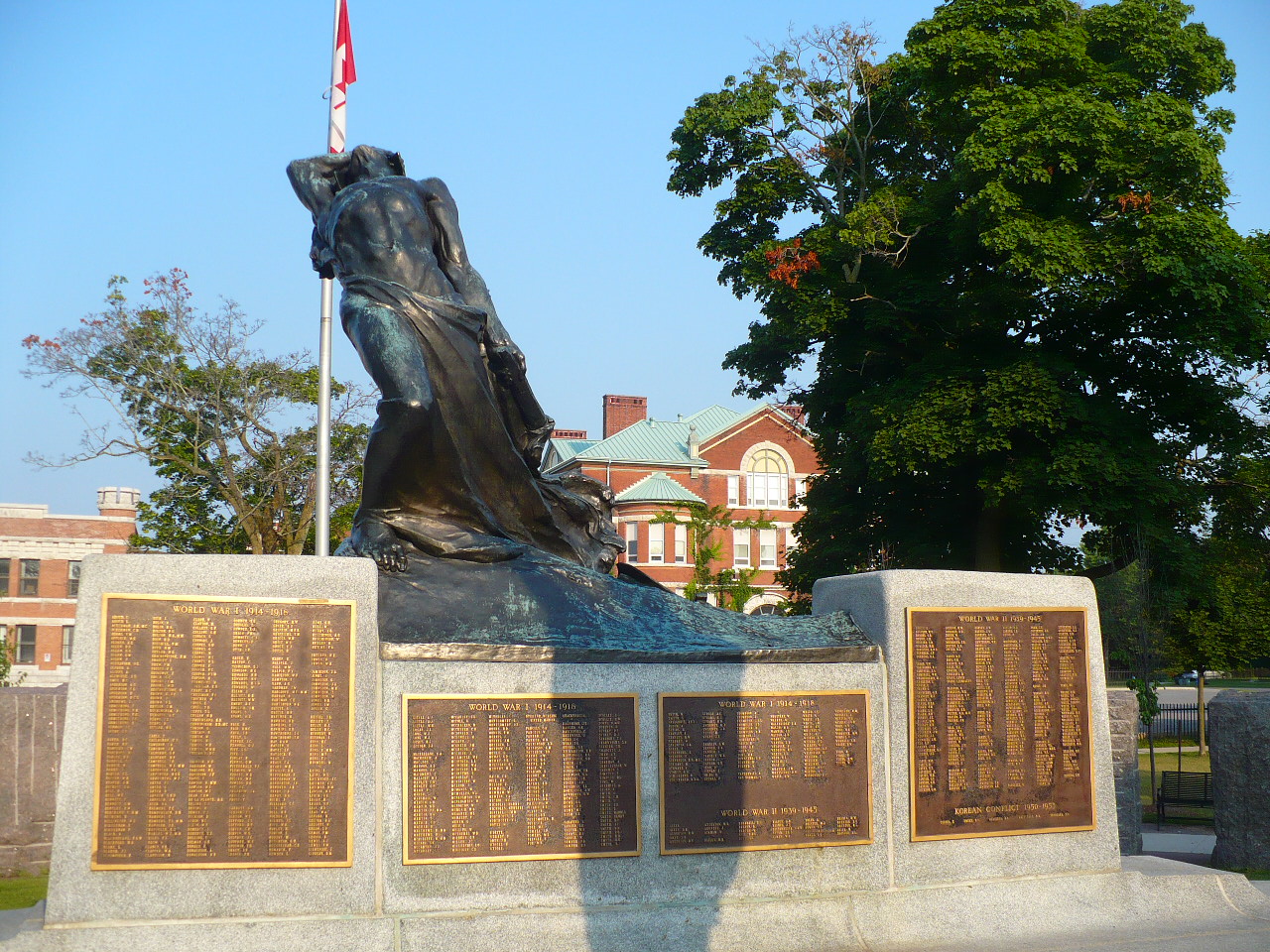
The Citizens' War Memorial sits on a circular, stepped base made of white granite and the pedestals for both bronze figures are also of white granite. The west pedestal is carved on the front and back with the names of war victims from the First World War. The four bronze plaques placed over the inside of the western pedestal are inscribed in raised gold lettering with the names of all war dead from the World Wars and the Korean War. A dedication plaque is on the eastern side of the east pedestal. Above the pedestals are two bronze figures of heroic dimensions. The first is known as the Knight of Chivalry, which portrays a brave Canadian soldier standing tall, a sword in his right hand and his left hand is held up as a warning to stop. The other figure shows a cringing and recoiling figure in fear with his hand on his fevered brow, known as the “defeated enemy.”
A monument was unveiled on June 18, 1967, by the ex-servicewomen's branch 452 of the Royal Canadian Legion. The monument is a polished red granite Book of Remembrance sitting on a rectangular pedestal of smooth white granite with a rectangular base of rough white granite.
By the 1970s, the Citizens' War Memorial's granite base had eroded and the names originally inscribed on the memorial were nearly illegible. From 1977 to 1981 in Operation Cenotaph, the Veterans group refurbished the memorial and added name plaques. The names of those who died in the Second World War and Korean War were added. A re-dedication ceremony took place on Sunday, June 24, 1979 at 2 pm and the new plaques were unveiled.
Veterans organized the restoration of the statues in 1993-94, by Craig Johnson Restoration Ltd. The Peterborough chapter of Ontario Electrical League donated new lighting in June 1995.
In February 2019, city councilors approved the name change of Cenotaph Advisory Committee to the Citizens' War Memorial Advisory Committee.
Sculptor Walter S. Allward left school at fourteen and learned about sculpture through books and magazines at the local library and by studying replicas at a nearby museum. By twenty, he had won his first commission. One of Allward’s first projects was through Sir Edmund Walker, President of the Bank of Commerce. In 1918, Walker asked Allward for memorial ideas honouring bank employees who had served and Allward submitted two wax models sculptures. The first, The Service of Our Women—Healing the Scars of War, depicts a woman sowing seeds on rocky incline strewn with war debris, including a broken canon. The second, The Service of Our Men–Crushing the Power of the Sword, portrays a man standing over a recumbent figure with his sword cast aside, symbolizing the brute beast of willful war waged by a misguided nation. The sculptures were never used, but his proposals explored ideas that would be expressed in his future war memorials: Stratford, 1919–22; Peterborough, 1921–29; and Brantford, 1921–33.