
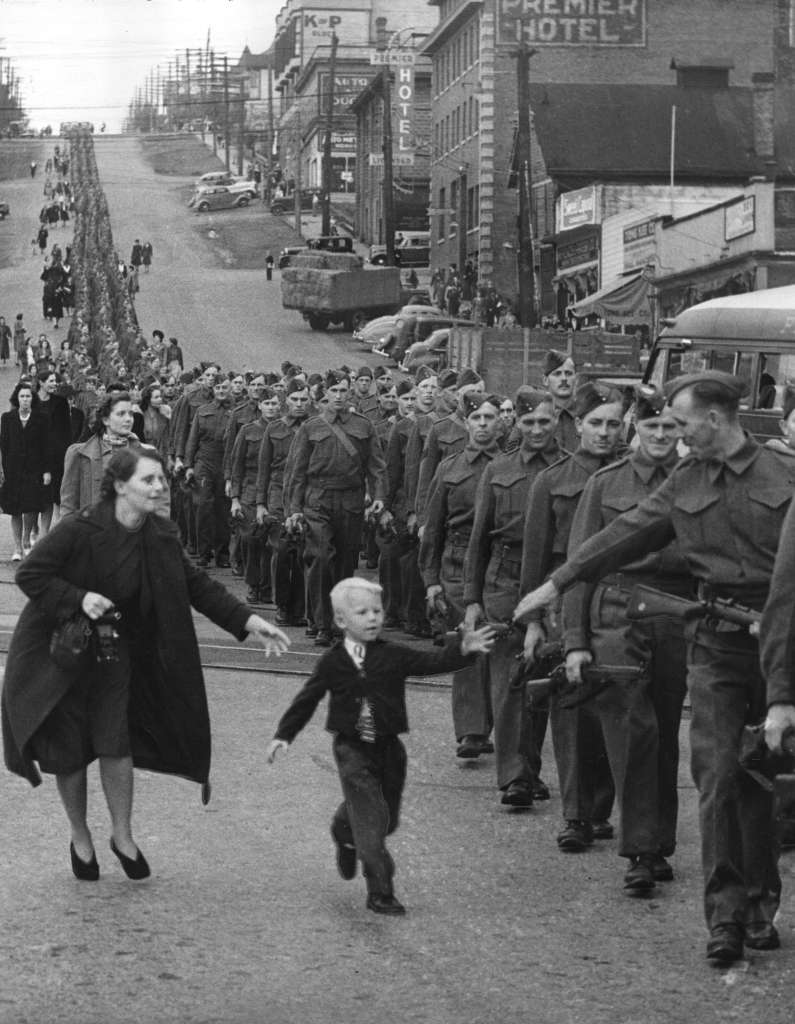
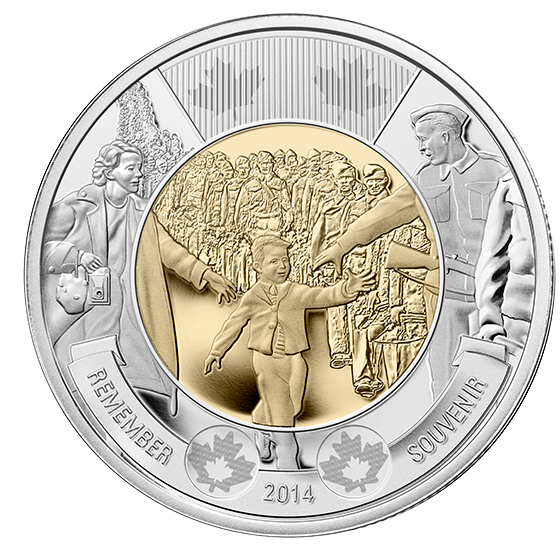
In 1940, early during WWII, Claude P. Dettloff photographed The British Columbia Regiment (Duke of Connaught’s Own Rifles) marching down the 8th Street hill to Columbia Street. As the Province photographer took pictures of the column, a young boy ran from his mother’s grasp to reach his father’s outstretched hand. The photo became known as Wait for Me Daddy and is one of the iconic Canadian images of WWII. Pictured are five-year-old Warren "Whitey" Bernard and his parents Bernice and Jack Bernard, as the family was about to be separated on October 1, 1940.
The men of the B.C. Regiment, the Duke of Connaught's Own Rifles, form an impressive line as they march down the street. But the focus of the image is on the real and touching scene of one family that is saying goodbye. In the centre of the image field, a pale-haired young boy has broken free of his mother's grasp (at left) to reach out to his uniformed father (at right), who is marching off to war. The father has turned to smile at his son; shifting his rifle to the other hand, he reaches out to his son one last time before they are to be separated by war.
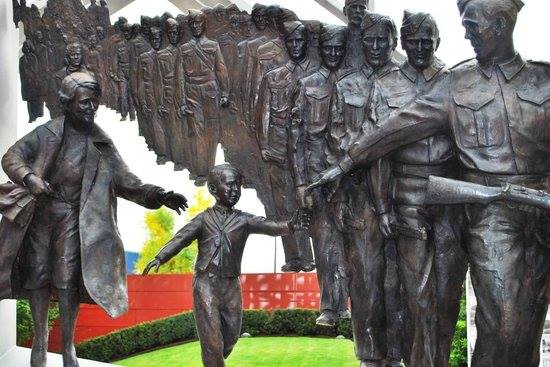
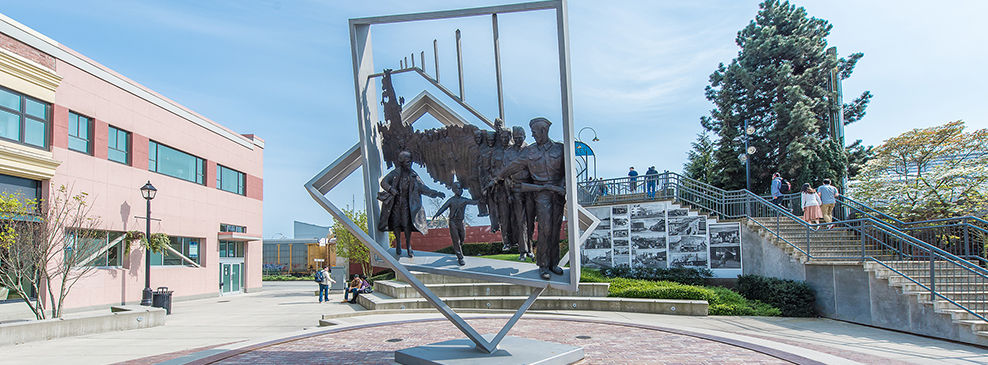
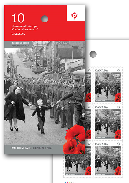
The city established a mayor's task force in 2011 to develop a public art piece to commemorate this historic photograph and issued a call for artists in July 2012 for submissions for the creation of three bronze life-sized sculptures depicting the Wait For Me, Daddy photograph. The City of New Westminster commissioned sculptors Veronica and Edwin Dam De Nogales to create a war memorial sculpture which was installed near the place where the photo was taken. On October 4, 2014 in a public unveiling ceremony, Hyack Square became home for the Wait For Me Daddy monument that was immortalized in bronze, a Canadian Mint Coin and Canada Post Stamp. Warren 'Whitey' Bernard himself unveiled the sculpture.
The Wait For Me, Daddy photograph holds not only tremendous historical significance to New Westminster, but also to the rest of Canada, as it depicts the emotional connection between father and son, and the struggle that ensues when leaving to do one's duty in the armed forces.