
Profile image

Military service
Service number:
R/197789
Age:
29
Rank:
Sergeant
Force:
Air Force
Unit/Regiment:
Royal Canadian Air Force
Death:
August 31, 1944
Burial/memorial information
Grave reference:
Panel 255.
Additional information
Son of William J. and Margaret Bristow, of Vancouver, British Columbia.
Digital gallery of Sergeant Frederick David Bristow
-
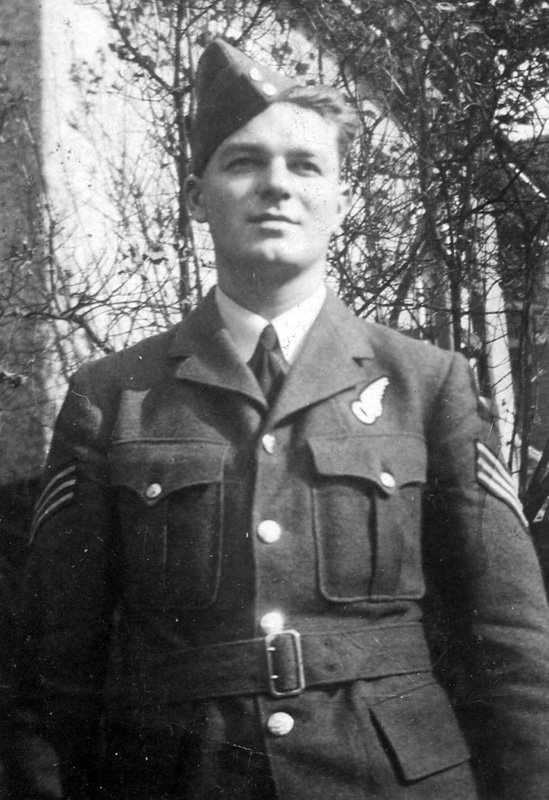
Photo of Frederick Bristow
Photo courtesy of David Loosley from England, cousin of Sgt. Bristow. Sgt. F. David Bristow was killed while completing his training at #22 Operational Training Unit, RAF Gaydon, Warwickshire. The all-Canadian crew of Wellington DF-737 was on a night flight when their aircraft disappeared over the North Sea. Their names are commemorated on the Runnymede Memorial for those with no known grave. With Sgt. Bristow are the following crew: F/O (P) William C. Miller, age 22, from Vancouver. F/O (BA) Norman Douglas, from Vancouver Sgt. (WAG) Douglas McLean, age 19, from Toronto F/O (N) James K. Reid, age 21, from Edmonton Sgt. (AG) Curtis Jutzi, age 19, from Kitchener, ON Sgt. (AG) Murray Casey, age 19, from Brandon, Man. -

Photo of William Melville Bristow
Photo of F/O William Melville Bristow, brother of Sgt. Bristow, courtesy of David Loosley from England, William Bristow served in the RCAF during and post-WWII. Like his younger brother, he was stationed at #22 OTU an Operational Training Unit based at RAF Wellesbourne with satellite stations at Gaydon and Stratford. Training on Wellington bombers took place as well as bombing and air sea rescue operations. It was on a training flight out of RAF Gaydon that 21-yr old Sgt. Bristow lost his life on August 31, 1944.<P> While stationed at #22 OTU, F/O William Bristow married Avril Eaton Davies on 22 April 1944 in the Wellesbourne Parish Church. He and his wife came to Canada after the war but returned to the U.K. where F/O Bristow continued to serve in the air force. He died in Swansea, Wales in 1995. -
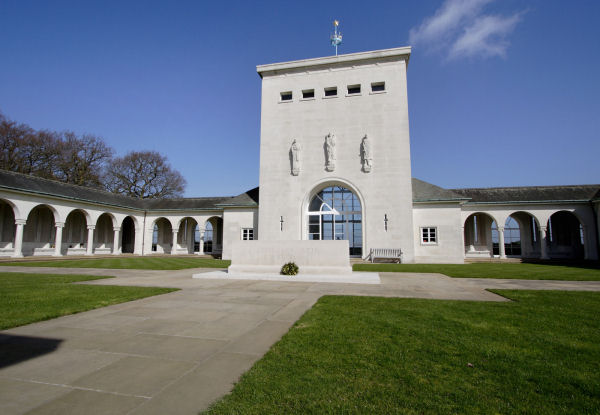
Runnymeade Memorial
Photo of Runnymede Memorial (CWGC). The Air Forces Memorial at Runnymede was dedicated by Queen Elizabeth II on 17 Oct 1953. Sgt. Bristow's father had died in 1947 and his mother sailed to England, arriving on October 16th, in order to attend the service. <P> On the memorial are commemorated by name over 20,000 airmen who were lost in the Second World War during operations from bases in the United Kingdom and North and Western Europe, and who have no known graves. -
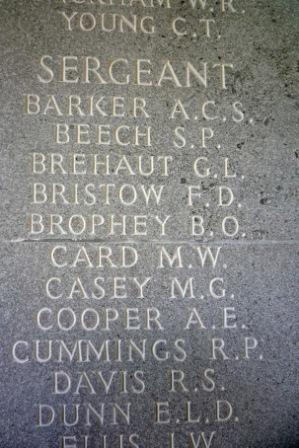
Inscription
Memorial panel at Runnymede Memorial Photo courtesy of David Loosley, England -

Memorial
Inscription - Runnymede Memorial - April 2017 … photo courtesy of Marg Liessens -

Id Card
Submitted for the project, Operation Picture Me -

Photo of FREDERICK DAVID BRISTOW
Submitted for the project, Operation Picture Me -

Photo of FREDERICK DAVID BRISTOW
Submitted for the project, Operation Picture Me -

Photo of FREDERICK DAVID BRISTOW
Submitted for the project, Operation Picture Me -
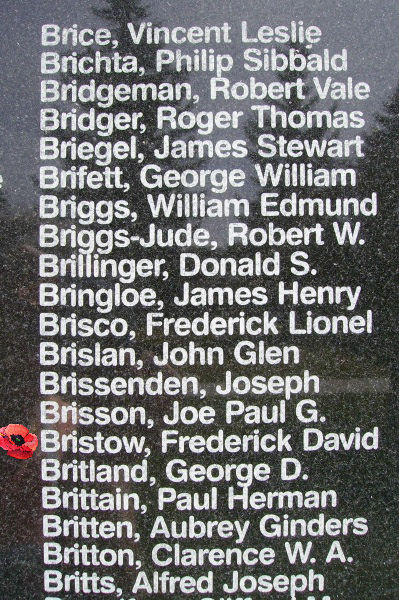
Memorial
Sergeant Frederick David Bristow is also commemorated on the Bomber Command Memorial Wall in Nanton, AB … photo courtesy of Marg Liessens -

Memorial
Sergeant Frederick David Bristow is also commemorated on the Bomber Command Memorial Wall in Nanton, AB … photo courtesy of Marg Liessens -

Memorial
Father J P Lardie's comments as inscribed on the Bomber Command Memorial Wall in Nanton, AB … photo courtesy of Marg Liessens -

Newspaper clipping
From a World War 2 issue of the Vancouver Province c. 1943. Submitted for the project Operation Picture Me -

Newspaper clipping
From a World War 2 issue of the Vancouver Province c.1944. Submitted for the project Operation Picture Me -

Newspaper clipping
From a World War 2 issue of the Vancouver Province c. 1945. Submitted for the project Operation Picture Me
Digital gallery of
Sergeant Frederick David Bristow
Digital gallery of
Sergeant Frederick David Bristow
Digital gallery of
Sergeant Frederick David Bristow
Digital gallery of
Sergeant Frederick David Bristow
Digital gallery of
Sergeant Frederick David Bristow
Digital gallery of
Sergeant Frederick David Bristow
Digital gallery of
Sergeant Frederick David Bristow
Digital gallery of
Sergeant Frederick David Bristow
Digital gallery of
Sergeant Frederick David Bristow
In the Books of Remembrance
Commemorated on:
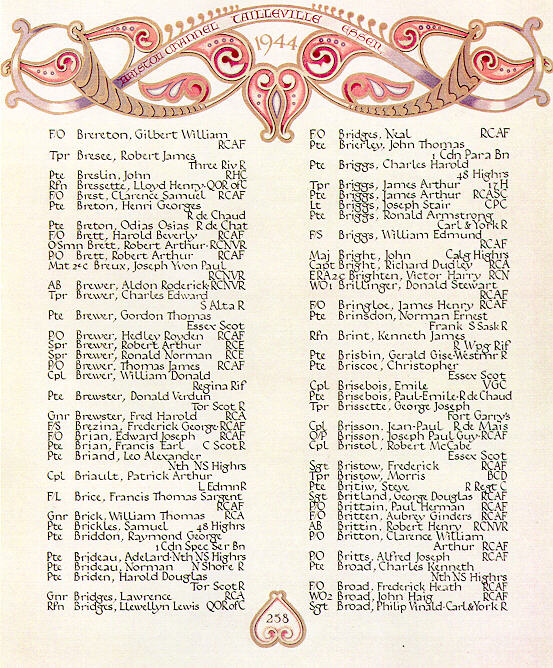
Page 258 of the Second World War Book of Remembrance.
Request this page
Download this page
The Poppy Design is a trademark of The Royal Canadian Legion (Dominion Command) and is used with permission. Click here to learn more about the poppy.
Did we miss something?
Contribute information to this commemorative page
Do you have photographs, information or a correction relating to this individual’s virtual memorial? Learn more about the CVWM and the information we collect.