
Profile image

Military service
Service number:
R/129339
Age:
29
Rank:
Leading Aircraftman
Force:
Air Force
Unit/Regiment:
Royal Canadian Air Force
Death:
December 19, 1942
Burial/memorial information
Grave reference:
Row 4. Grave 33.
Additional information
Son of Heber C. Hutton and Clara Hutton, of Toronto, Ontario, Canada.
Digital gallery of Leading Aircraftman Charles Fortune Hutton
-
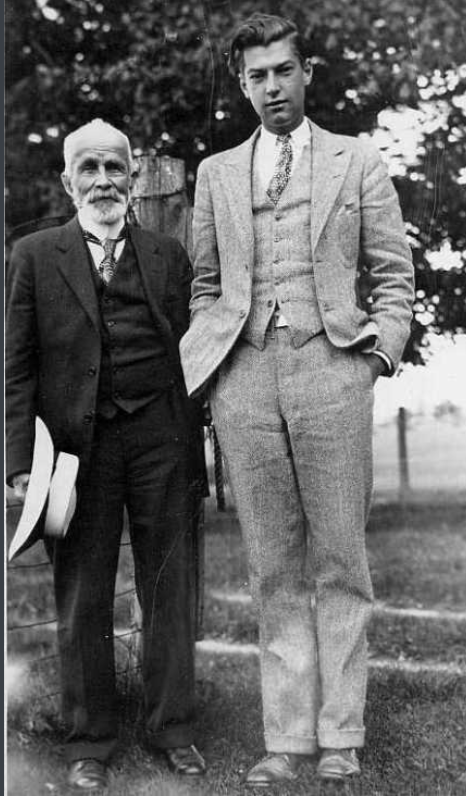
Photo of CHARLES FORTUNE HUTTON
H W Hutton and Charles Fortune Hutton. Submitted for the project, Operation Picture Me -

Letter
Submitted for the project, Operation Picture Me -

Document
Submitted for the project, Operation Picture Me -
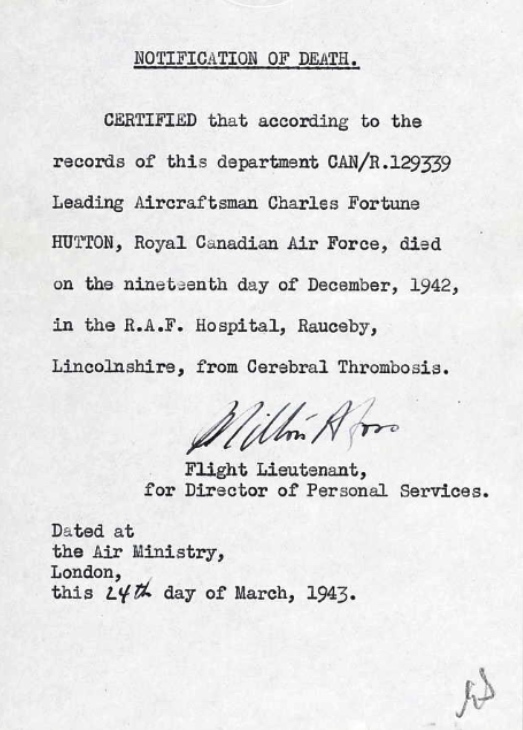
Document
Submitted for the project, Operation Picture Me -

Report (1)
Submitted for the project, Operation Picture Me -

Report (2)
Submitted for the project, Operation Picture Me -
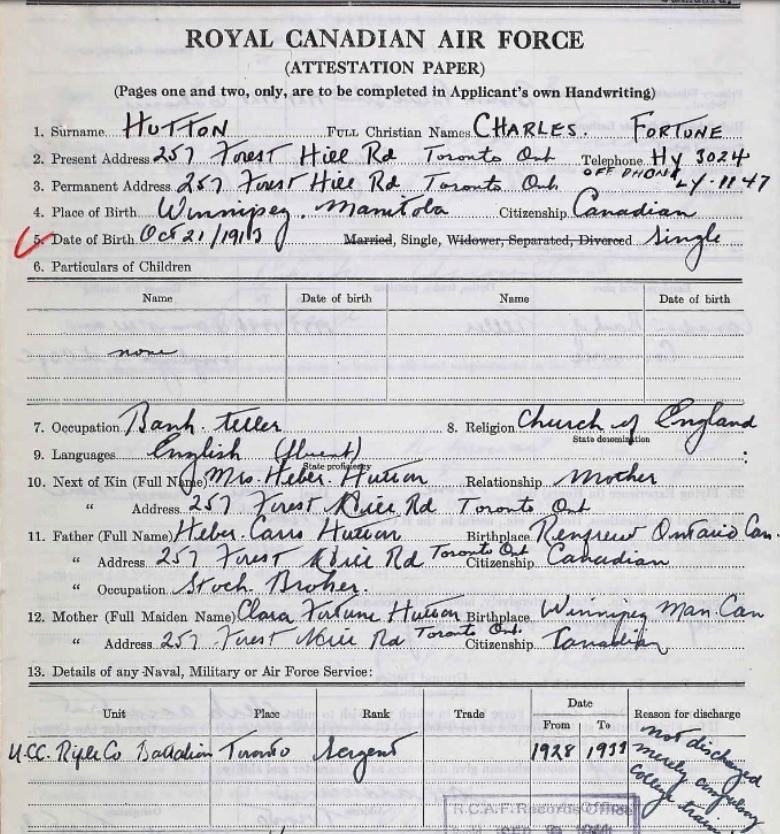
Attestation paper
Submitted for the project, Operation Picture Me -

Attestation paper
Submitted for the project, Operation Picture Me -
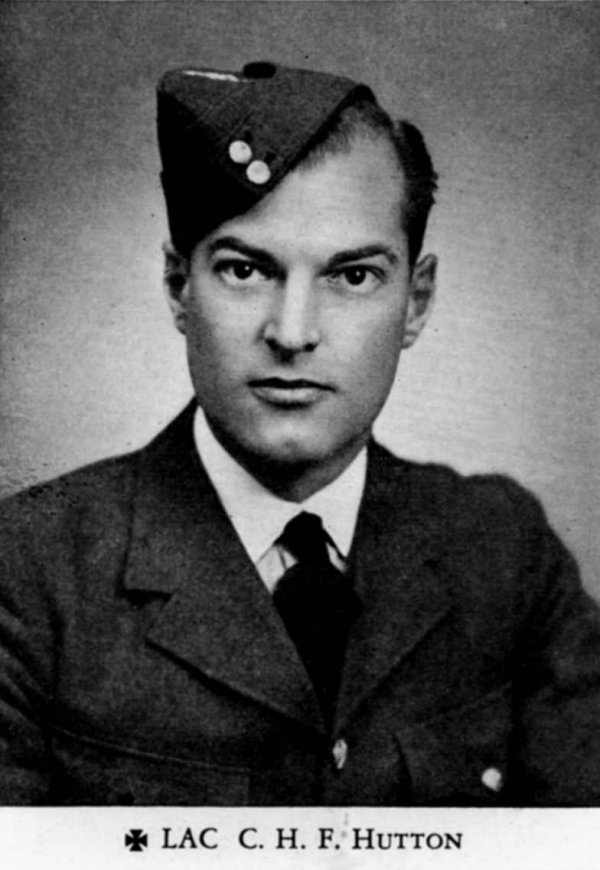
Photo of Charles Hutton
Hutton, Charles Henry Fortune - Leading Aircraftman. Born 21st October, 1913, at Winnipeg. Educated at Upper Canada College, Toronto. Entered the service of the Bank 28th September, 1933. Served at Toronto city branches, Newcastle and Oshawa, Ont. Enlisted 28th August, 1941, from Jane & Annette (Toronto) in The Toronto Scottish Regiment (M.G.). Transferred to R.C.A.F. Trained at Toronto and Picton, Ont. Overseas in February, 1942. Served with 411 and 421 Squadrons, R.C.A.F. Died on active service 19th December, 1942. Buried in Lincolnshire, England. <br><i>From a memorial booklet prepared by the Canadian Bank of Commerce.</i> -

Scopwick Church Burial Ground
-
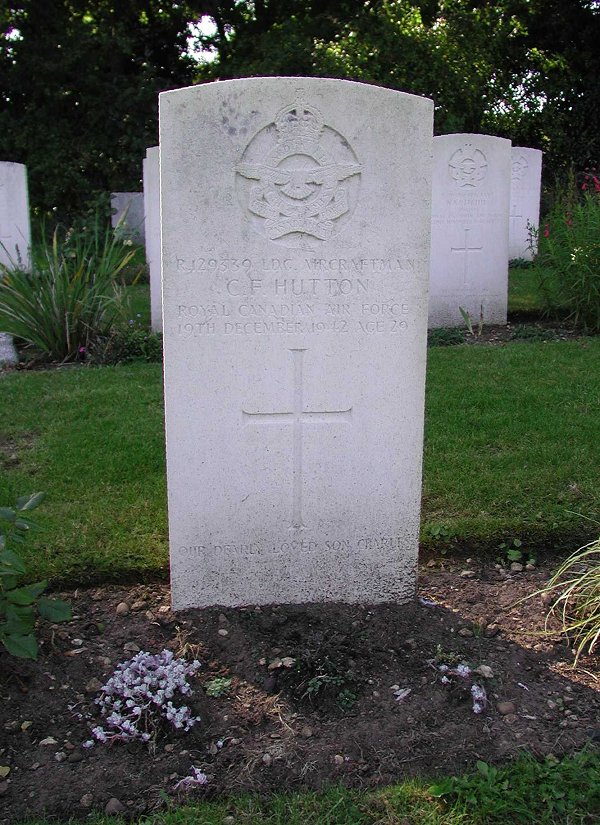
Grave Marker
Marker stone to Ldg Aircraftman C. F. Hutton in Scopwick Church Burial Ground, Lincolnshire, England. Personal inscription reads: Our dearly loved son Charles. -
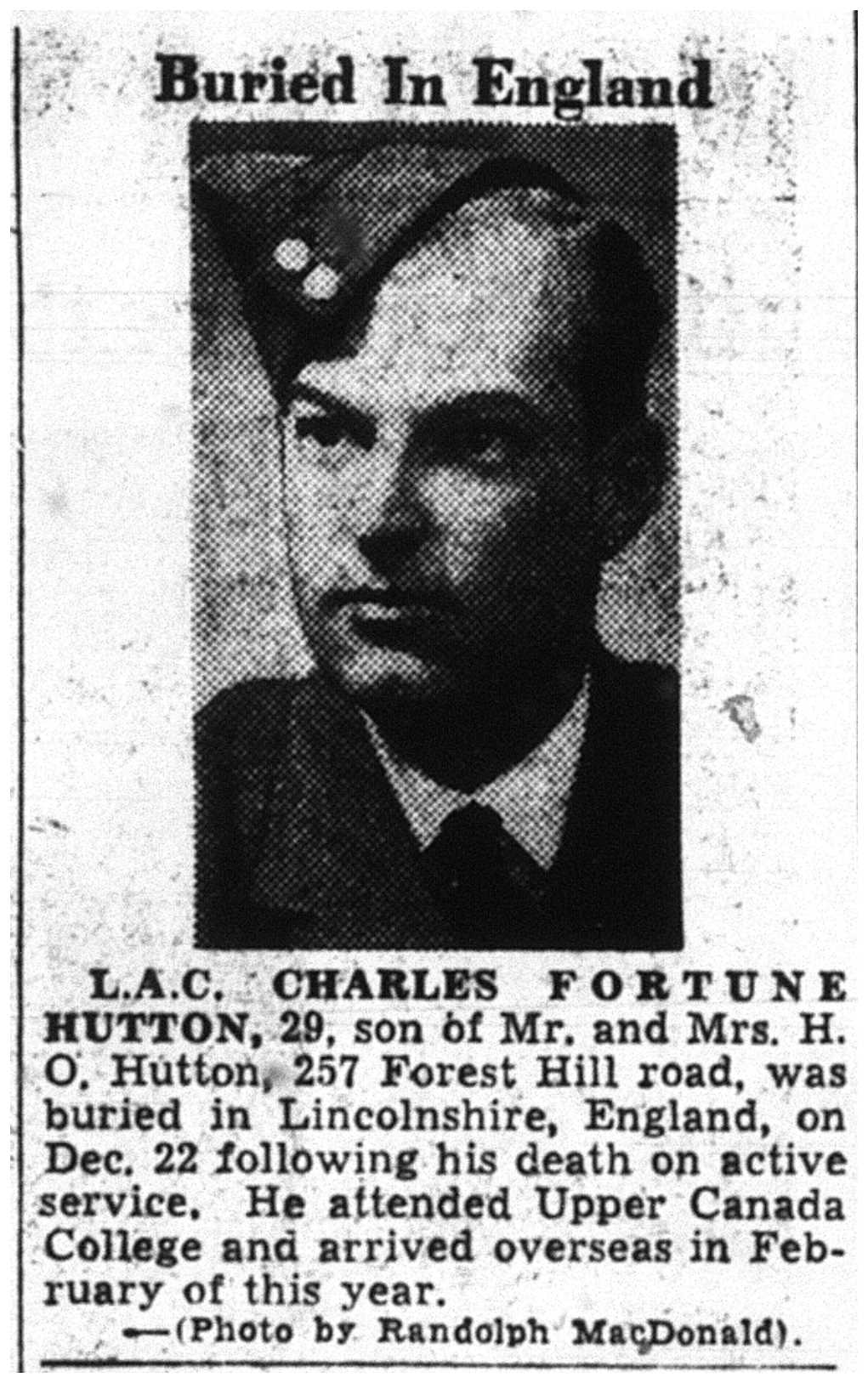
Newspaper clipping
From the Toronto Telegram December 1942. Submitted for the project Operation Picture Me
Digital gallery of
Leading Aircraftman Charles Fortune Hutton
Digital gallery of
Leading Aircraftman Charles Fortune Hutton
Digital gallery of
Leading Aircraftman Charles Fortune Hutton
Digital gallery of
Leading Aircraftman Charles Fortune Hutton
Digital gallery of
Leading Aircraftman Charles Fortune Hutton
Digital gallery of
Leading Aircraftman Charles Fortune Hutton
Digital gallery of
Leading Aircraftman Charles Fortune Hutton
Digital gallery of
Leading Aircraftman Charles Fortune Hutton
Digital gallery of
Leading Aircraftman Charles Fortune Hutton
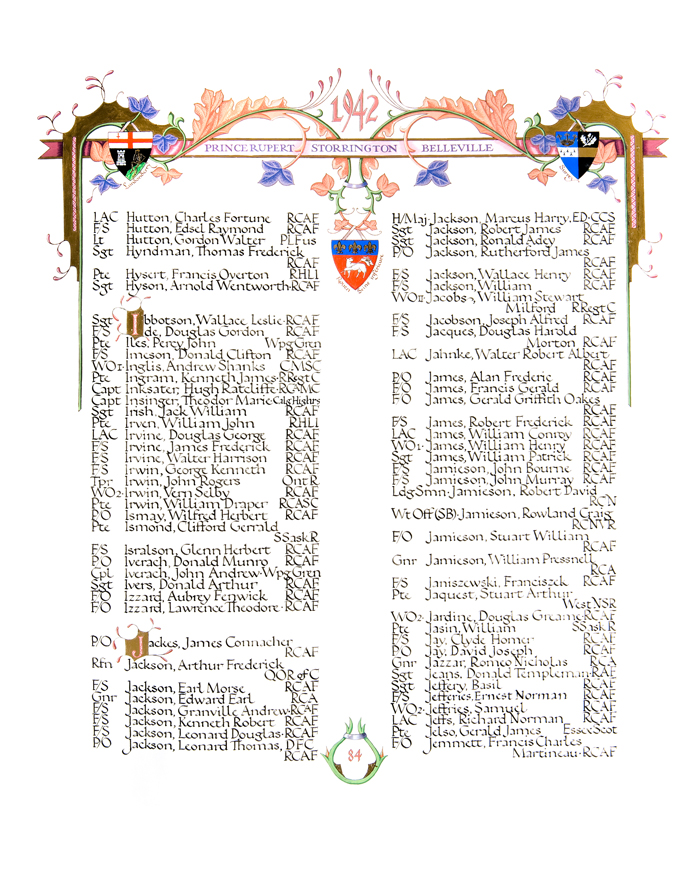
In the Books of Remembrance
Commemorated on:
Page 84 of the Second World War Book of Remembrance.
Request this page
Download this page
The Poppy Design is a trademark of The Royal Canadian Legion (Dominion Command) and is used with permission. Click here to learn more about the poppy.
Did we miss something?
Contribute information to this commemorative page
Do you have photographs, information or a correction relating to this individual’s virtual memorial? Learn more about the CVWM and the information we collect.