
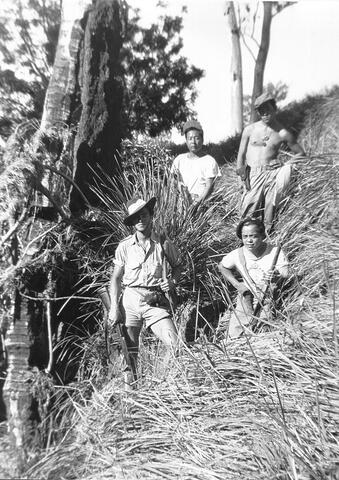
Operation Oblivion and Force 136
This unit, which included more than a hundred Chinese-Canadians, was a branch of the British Special Operations Executive (SOE) during the Second World War under the British command of Lord Louis Mountbatten.
Its covert missions were based in Japanese-occupied southeast Asia, where they supported and trained local resistance movements to sabotage Japanese supply lines and equipment.
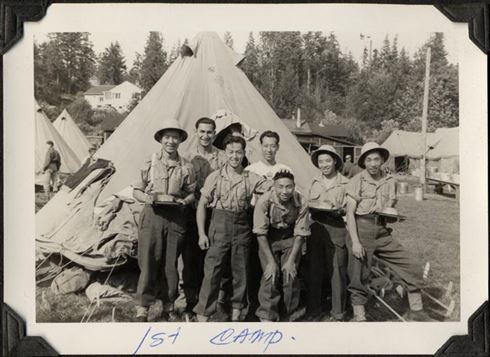
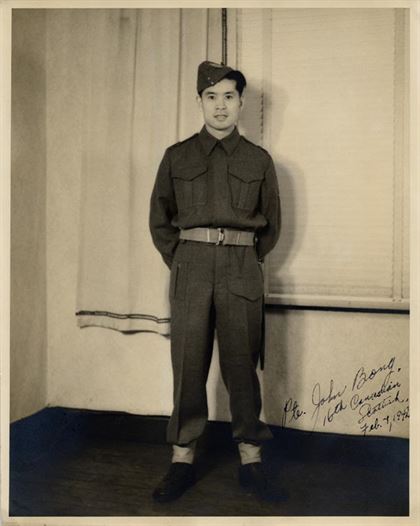
John Ko Bong
When they declared that the war had ended, we thought we were going to be going home, but instead we were sent up north (in Malaysia) and we were quite pleased because we were going to be instrumental in receiving the prisoners of war who had been held by the Japanese during the war.
Interview
HTML5 Transcript/Captions
Wesley Lowe (Interviewer)
Even in his nineties, the pride that John Ko feels about his service in the armed forces shines through. However, even before he volunteered for service, he had to fight for the opportunity to serve.
John Ko Bong (Interviewee)
There was conscription had been declared and all the young Canadian boys 17 years of age were given notices to report right, report for military duty. The Chinese community said to us, we were the Youth Association leaders at that time, Roy and I. And we had a... a big public meeting to say which side shall we take. Are we going to fight with... side by side with the Canadians? Or are we going to sit on the fence (laughs) and let the Canadian boys do the fighting for us, eh?
So Roy and I decided that we're not going to be fence-sitters; we're not going to show that we're too yellow to fight. So we went up to the Canadian Scottish people at the Bay Street Armouries and then we joined up.
Well in those days all...all active force people went to Vernon. That was the basic camp there, so we trained... trained there for two months. And then that's your basic training and then you had took the advanced training by that time you'd get assigned to a unit and ... I think I took training in Toronto. Some was back east. I got shifted then assigned to an infantry unit.
After I finished what they called the advanced training, I went with the Canadian boys back east that are heading for... for England and Europe, for D-Day, and then I was lying in my bunk shooting the bull as they say (laughs) from the top bunk to the other boys. And a message came, "John, you're... you're, you ... go to ... go to the... go to the office right away and pick up your train fare to Toronto." So I picked up my fare, went down to Toronto, they said, "Well you report at... at this place." I went down to some kind of a hotel up... upstairs (rubs nose). Here to pass one room the second like here, one reception room and then, then the officers inside said, "Well you you're called up on a special duty." I said, "Oh how come?" See I thought I was going to go to England; I was got all excited... getting ready to go overseas to England and France, eh? See the... see the world a bit.
He said, "No," he said, "you're… you speak Chinese and you can read Chinese, you're going on intelligence group. Prepare to go to Hong Kong." And here I was growing up with boys I know, eh? (laughs) At that... that... that's at, at Oblivion camp in.
Wesley
Operation Oblivion was a select group of 13 Chinese-Canadians chosen to go behind enemy lines in China to subvert the Japanese. The group was given little chance of survival, hence the code name Oblivion. However, a few scant weeks before they were to be parachuted in, bombs were dropped in Hiroshima and Nagasaki, causing the Japanese to surrender. The nature of Operation Oblivion’s service changed.
John
When they declare the war has ended, well everybody was cheering and happy and everything else. We were going to be going home eh, but that fact that we were sent up north we were quite happy because we were going to be instrumental in receiving prisoners of war held by Japanese.
So in Manila we set up a big camp to receive the mainly British... British prisoner of war; and they'd been locked up in prisoners' camps in Japan. And they were, some of them starved to death, but those that were walking, able, they came back down to this refugee camp where we were, we had set up. And then they were, well there a few, maybe a couple thousand of them, eh? And they were… they came in walking like human skeletons. Jesus, when I saw them I said, ‘Holy smoke.’ All you could see was (medals clink) their head and the ribs, you know, skinny legs with no meat on them. And I said "Holy smoke." I said, "Where did these guys come from?" He said, "Oh they were just re...released from the Ja...Japanese prisoner of war."
This is part of what satisfaction, you might say, that we've been able to do as well as enjoy the experience of doing it, eh? Getting the job done and, what it was like to, to say we are, we are Canadians because we earned it, we made it; we helped to create it for the Chinese people here.
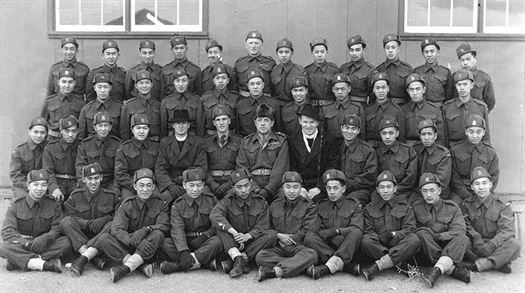
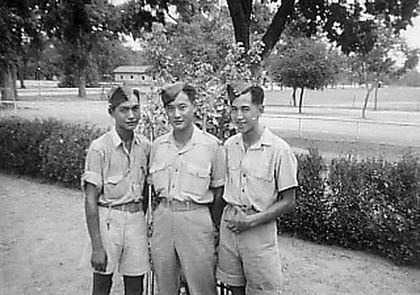
Neill Chan
Neill Chan joined the Canadian Army in 1944 and was offered the chance to fight the Japanese as he knew the language as well as fluent Chinese. He was seconded to SOE, Special Operations Executive, in London. From there he went to India to decipher military communications.
Interview
HTML5 Transcript/Captions
Larry Wong (Interviewer)
Neill Chan was born in 1924. He was raised in Vancouver's Chinatown and when he finished high school, worked in the shipyards in North Vancouver. Neill joined the Army in 1944 and was sent to Maple Creek for training. Almost immediately, he was recruited to the elite guerrilla Force 136. Before he knew it, Neil was on his way to London, England. Why did they select you to go to London, England?
Neill Chan (Interviewee)
I don't know why um but they, we were sent sent to Ottawa first, and in Ottawa a sergeant asked me where, what unit I belonged to, and ah I told him. I said, "We just signed on for ah the Force 136," so he said to me, "You're going to be a spy." I told him, I said, "You're nuts." I signed up to be a fighting soldier and I left it at that, which came out to be true; and ah when we got there London, England, they ah they ah, in Aldershot they issue us rifles from the case cases and we just had to clean them up. We just clean it up for parade ah by lunch time and then we had to turn them all in; and that there we're told that we're in the British Army and we don't need the ah rifles.
Larry
What did you do after you were discharged from the Army then?
Neill
I don't know. I'm so confused over it because they they gave us a lecture in Eng in England and in and uh and they said, "To kill: to kill is all normal. If other people want to kill to kill you, they're willing to die; so they're willing to die -- you're willing to kill," so that kinda confused me all the way through ah; and the motto for the British soldier was: "Not to question where or why. The duty is to do or die." And that's their motto. And they expect us to live up to that.
Larry
Did you ever kill anyone?
Neill
Thank goodness no. (with the forces?) Didn't have to. When we were sent we were sent out in the bush I didn't; we were away from the enemy, miles and miles away, and then they're, most of us got malaria, sick from malaria. That's when ah that's when I went to the BMH. When I got out the BMH I met a sergeant who spoke perfect Chinese and he said to me in Chinese, "Don't go back. Come with me," so I didn't know what he - I didn't, naive in those days, so I went to him and he went and ah dismantled a couple of ah depots up on the Lido Road, the beginning of the Lido Road. And ah that's why ah I don't, I don't want to get involved with that because a lot of legal things that weren't supposed to be there and yet that was there.
Larry
So so overall what what did you think of your war experience and ...?
Neill
Oh, it's good. It taught me a lot of things. It taught me more tolerance, what I saw in in India and the other countries like England: ah made me more tolerant. And uh I always believe that uh when I went to school that Canada, the policy was "Born in this country, you you are part of this country;" so so never, regardless of my ethnic culture and all that, I still say, "I'll I'll join the Army and fight for this country and try and do for what's right."
Larry
But in the end did you feel that it was worthwhile joining up the Army and ah getting the right to vote?
Neill
Well, when I joined the Army I didn't care about the vote or not. (He laughs.) I didn't care about it. My aim was at that time was is join join up to fight the Japanese at that time, so when when they enlisted the whole bunches of us I was naive. I thought they were going to form a Chinese unit just like the ah Japanese unit from Honolulu; so I thought that was that until I got to Ottawa and that sergeant said to me, "Ah, you're going to be a spy." I told him, "That's bullshit."
Larry
So you never did become a spy.
Neill
Thank goodness. Anyone who was born in Canada, raised in Canada and earned his support to for living in Canada should put their devotion to Canada. That's the way I feel, and that's the way I've always gone. So whether we get ordered or discriminated against, whether your lack of education, you shouldn't feel that way. You just go ahead and and be a Canadian.
Did you know?
Neill Chan had an ear for languages. A friend taught him Japanese while at Strathcona school and he learned Hindu while he was stationed in India.
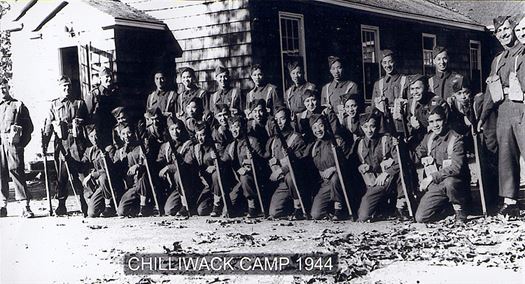
Paul Chan
Paul Chan is one of four brothers who served in the Second World War. Like many in Force 136, Paul was stationed in India. He gives a personal perspective on the advanced training he received.
Interview
HTML5 Transcript/Captions
Wesley Lowe (Interviewer)
Herby, Ira, Roy and Paul Chan were four brothers from Victoria that served in the Second World War. While Paul knew why he was there, he was able to find adventure and humour, sometimes in the darkest places.
Paul Chan (Interviewee)
So we were on this New Amsterdam, so we were on that troop, and by the time we go down we feel like warmer weather and then we go up north. One night, we had, I had, we had supper about five o'clock and saw the cook running up. I said, "Oh maybe they are training," and later on this loudspeaker said, "The German claim to sink the New Amsterdam" (laughs). We were sitting there for supper.
Wesley
Like many in Force 136, Paul was stationed in India. He gives a personal perspective on the advanced training he received.
Paul
We learn ... map-reading and ... short arms shooting and, and ... there was a lake there so we had a kayak paddle. Learn how to row the kayak with two person in a kayak. And then ... the Sergeant said, " You want to go for the sailing, a small sailing boat?" So we said, "Sure," we'd go sailing, and just go around and come back.
And then we got the order, and they gave us money, enough for the train. Went up back to Bombay to New Delhi; take two days on the train. So we. we got on the train, there's... 10 of us. We said, "Don't let anybody in." You know the. you've seen a lot of them in India. They hang on outside the train there packed tight, so we just keep ourself [sic]. And then they took us to this called Merritt (snap) up a little further. It's a big Pay Corps camp the British have there so we had this compound. So we were learning wireless... training wireless. I asked them, "How long actually the training of a wireless?" He says, "Six month." We only do two month. They try to rush us, so we need another month. And after that, so we take the train or bus it to... this place, stop for the night. And we saw this bridge there in Calcutta and then a bus come along, take us to the airport, so we had our parachute training.
Wesley
Proper parachute training was mandatory if one was to be dropped behind enemy lines.
Paul
Well four days we're there. First day is in the hangar. Show you how to put on the. the. the strap and everything, and learn how to roll to left or right, not forward; with your pack and everything. And the Sergeant told us, "If it's water, you just hit ( slaps chest) the button and the leg part drop off but you still got the harness on your shoulder." Until you, if you then you hit the water, then you open up your (raises his arms) and let it. the chute got out ( lowers arms). He said, "People, jump out" and he got drowned, he didn't get out fast enough. With two feet of water, he get drowned. And another thing he said, "When you come to see tree, you bend your leg ready to kick, but make sure (demonstrates) you cover your face. And then kick the tree, the branch so you, if it's coming to it." So he teach us all that; we listen to him. So after that, we finish that... we had two day jump and one night jump - a thousand feet (rustling sound) as long as the wind is not over 20 miles. So we. they had a "T" lighted up at nighttime. Like a "T", you're supposed to drop it right there (slaps knee). And you pull this way or the side way, or this way or back way. So the chute would go. all depend which way you see. They show you how to do it. It was good. It was a Dakota. We jump in the. that front door, but if you go in the operation, it's on the tail slide, different plane.
Wesley
It sounds like ... being in the military was a lot of fun for you.
Paul
Oh yeah, well we had a lot of fun.
Wesley
Yeah.
Paul
Yeah it was, and we've been around.
Roy Chan
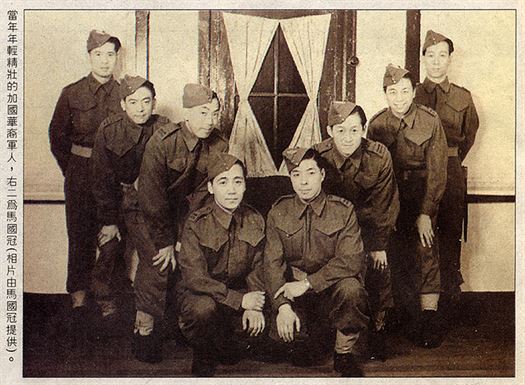
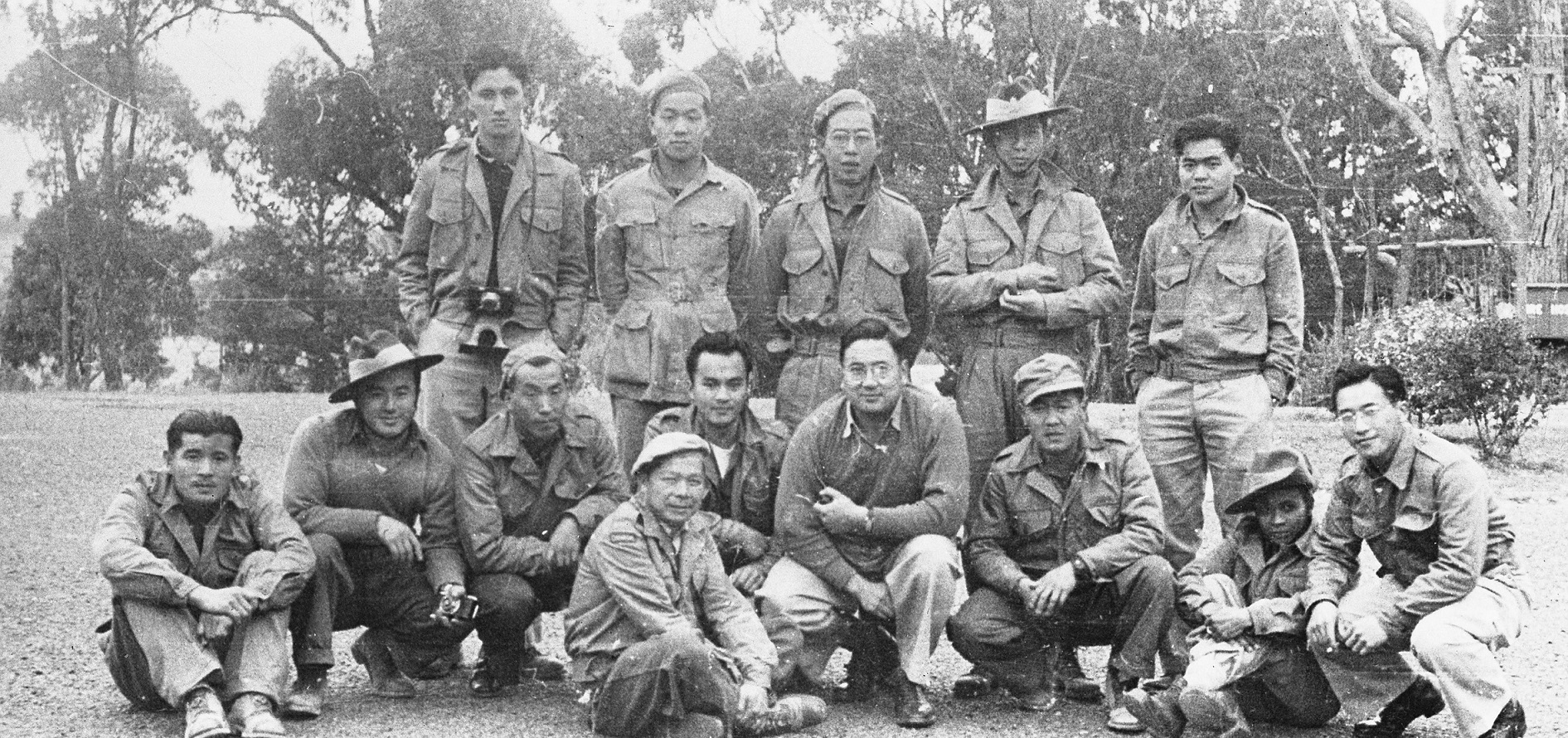
Sergeant Roy Chan, one of four Chan brothers from Victoria to serve in the Second World War, volunteered to be part of Special Operations Executive's Operation Oblivion. Dropped behind enemy lines into Japanese held territory, he operated with the 9th Australian Division at Labuan, Borneo (Malaysia). There, he organized and led native guerillas and Iban Headhunters. Challenges in working with these locals included language and their lack of training.
Interview
HTML5 Transcript/Captions
Wesley Lowe (Interviewer)
Sergeant Roy Chan, one of four Chan brothers from Victoria to serve in the Second World War, volunteered to be part of Special Operations Executive's Operation Oblivion. Dropped behind enemy lines into Japanese held territory, he operated with the 9th Australian Division at Lebuan Borneo. There, he organized and led native guerillas and Iban Headhunters. Challenges in working with these locals included language and their lack of training.
Roy Chan (Interviewee)
A bunch of local Chinese boy in Borneo, take them on patrol. Never realize it until, in Borneo, I never had the chance to learn Malay. We got to learn Malay to speak with the native but I have a Chinese boy. He speak Chinese, Cantonese, Mandarin, Malayan and English so I depend on him all the time. So one day they say, "Sign him up as a soldier instead of as an interpreter. Give him a 38 pistol." So the sergeant said, "Take him into the bush and let him have the feeling of a 38 pistol." So I let him fire his pistol. I fire my 45 and I was lucky I hit the can. They think I was pretty good and the rest of the boys was crying. They want to fire a few round from their rifle. So I said alright. I give them permission to fire three round. Afterward, they told me that's the first time they fire a rifle. And I took them on patrol three, four times, but of course there's a couple of machine guns, bren guns. Whenever I stop, I make sure those machine gun right beside me. I don't want them shoot behind me. So those are the things you never realize. They train you how to clean a rifle, how to slope arm, present arm. They never teach them how to fire rifle.
Wesley
This Australian mission had little chance for success - something that was drilled into Roy.
Roy
Major Kendall mentioned many times for us to prepare to commit suicide. That's to me I don't like that phrase but I was there behind the line. I got one thing I promise myself - not to be taken alive. I gonna [sic] shoot myself first, because if I captured alive, I know I die a thousand deaths. So I put myself out of misery by having two extra round bullets in one pocket for myself, but good thing I don't have to use it.
Wesley
Added to the danger of the complexity and scope of the mission was an inadequate amount of time and manpower.
Roy
Well, there were so many briefing. The way they were briefing at Labuan - that's the headquarter that they got a job for us to do to from where we drop we go four hundred mile overland to organize a guerilla army to free 2,000 European in a city called Kooching. Now, headquarters say allow us six month. I say to myself, "How can they allow six months to do a job that to recruit enough men to break into that compound?" But by the time we get there they change their mind because in one town north of where we were, the Japanese heard that there's movement of prisoner. They killed so many see. They don't have to have a repeat at Kooching so we were stuck in there in that small operation.
Wesley
Roy and his group succeeded in blocking the mighty Rejang River to the enemy, forcing them back out on the headquarters near the coast controlling the river traffic. His patrols also successfully attacked the enemy inflicting heavy casualties. Although Roy and his group were heroes, it was something that they could not advertise, even to their families.
Roy
When I get back to Australia after the war, first thing went to the headquarters in Melbourne and they call the four of us sergeants in there. They said, "Your job is finished as far as the Australian army." He said, "You forget where you've been." So when we went back home, we never tell them where we've been. My mother and brother they thought all the time I'm in Australia, training all the time and coming home after the war 'til the newspaper put that thing tell everyone where we been. I guess it's sort of protection for not mention. This should be a secret act for five years after the war before they mention what we done.
Did you know?
In September 1946, Roy, along with four other members of Force 136 were awarded the Military Medal for their mission in Borneo.
Bill Chong
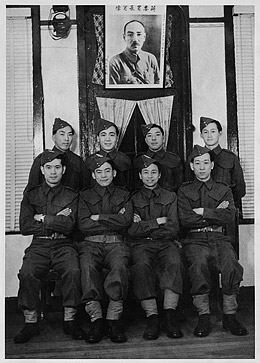
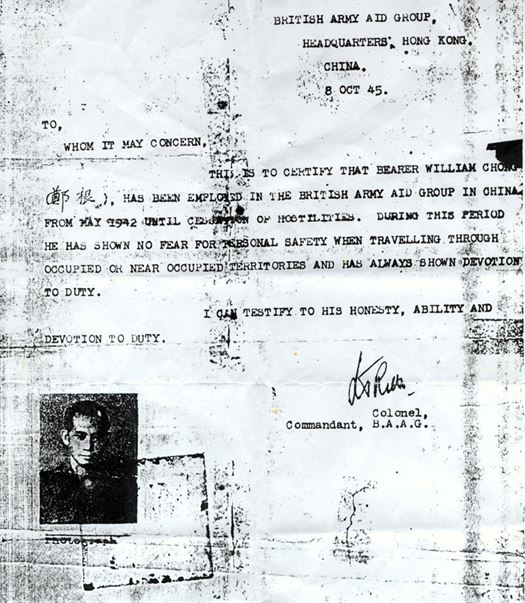
Bill Chong, born in Vancouver, was caught up with the Japanese takeover of Hong Kong in 1941 and volunteered with the British Army Aid Group, an intelligence unit, serving as Agent 50 under extreme dangerous and hostile conditions in China. Bill took his orders from the British Army Aid Group, also known as MI-9. From 1942 to 1945, Bill travelled alone, dressed as a peasant, avoiding bandits and enemies, though he was twice captured by Japanese patrols. His mission was to bring escapees from occupied territory and save other lives with medical supplies. The British Army recognized Bill's courage and bravery with the highest civilian award, the British Empire Medal.
Interview
HTML5 Transcript/Captions
Larry Y Wong (Interviewer)
Before he was known as Agent 50, William Gun Chong was born in Vancouver July 15, 1911. By circumstances, he found himself in Hong Kong in the fateful week of December 1941.
Bill Chong (Interviewee)
The Japanese had already occupied Hong Kong and I was staying in my my sister's apartment. My sister then, she left and half of the apartment was vacant below. She rented and I look up from the veranda. I won't dare go up there, and stand up and look. I just peek down. I saw the Japanese kill one of the American uh or the Canadian. I think he's officer ah ah. He's a young man. He was wounded. He was lying on the sidewalk. He asked. Japanese came and didn't take him as a prisoner, then shoot him. They they do not understand what this guy want. All he want is a drink of water and the Japanese soldier didn't do anything until the officer came. He look at this guy and ah the the soldier, I think he's a a second lieutenant. He had one pip on his shoulder. Ah he asked for water and the Japanese pulled pulled out of his back. I thought he would take the water bottle out. Instead he took a pistol out and shoot him right there. But I said, "How could ah people do that?" He couldn't fight any more. He was a young guy. He could have taken him in too as a prisoner, but they didn't. That's ah how the Japanese, when when they occupied Hong Kong, they were rude. They were mean. They killing people without any reason. So then finally I thought, "When is my turn are they going to be kill?" so I I decided to escape, and went into free China and I joined up with with the British Army.
Larry
Bill took his orders from the British Army Aid Group, also known as MI-9. From 1942 to 1945, Bill travelled alone, dressed as a peasant, avoiding bandits and enemies, though he was twice captured by Japanese patrols. His mission was to bring escapees from occupied territory and save other lives with medical supplies. The British Army recognized Bill's courage and bravery with the highest civilian award, the British Empire Medal
You went into free China you went looking for the ah British Army and I believe ah you found the British Army A Group which was really an intelligence (Yeah.) unit using civilians to ah spy on the Japanese (Yes.) and I understand you met um ah I believe it was Colonel Lindsay Ride at that time.
Bill
Yeah. They never told me but our group called B A A G -- British Army A Group. We're supposed to help the Chinese. Well, the Chinese need a lot of help from foreign country ah and ah ah our organization called British Army A Group: it's phony, it, because we are doing intelligence actually. I was never told. We were under Lord Mountbatten. He's over our command of Southeast Asia, Southeast Asiatic Command (coughs), Lord Mountbatten. I never met him, but all our work is doing under, for, under him; so any information about China the Japanese occupy, what the China, how the Japanese work, anything about the Chinese I'm supposed to bring back. And that will go into England, and where they ah ah compile them, know what the Japanese, how they're doing, how strong are they, things ah like that. But besides this job I, they told me that I'm to rescue, I'm to rescue any person if they are British subjects. I I brought out people ah from England, Australia, French ah ah ah India: lot of places, if they are British subjects; they mostly escaped from Hong Kong.
(The story of Deamato and Marcus da Silva) (Yes.) They both are very famous people in Hong Kong which I never met them before, I don't know who they are because I wasn't in Hong Kong long enough to know them, so I brought them out from ah ah to safety but I, my job, I never ask them for their last name. I never tell them who I am or what I am doing. All they know about me is "Bill" and they, ah I don't know this person is Leo and the other one's Marcus da Silva, his name is Marcus. So they are very important people in Hong Kong. They were more of captured by, tortured by the Japanese, and they escaped, and my job, I brought them home free; and after the war I was sent by the Supreme Court -- the land bailiff came, looked for me in my hotel.
They want me to listen to the Court ah in session. Afterward I went out and sat down. Marcus is the prosecutor. Leo Deamata is the Chief Justice. The guy he, they, prosecute is a Chinese guy. His name is Lee. He work for the Japanese. He knows all about Hong Kong. He knows whose and who. He marked a deserter that was tortured. Japanese film warder and put a flag over his his body and walk over it. He survive but ah ah Leo Deamata I don't know. He didn't say. But he's the ah Chief Justice of the Supreme Court and they ah finally they got this guy, Lee guy, they they order execution. He's to be hanged.
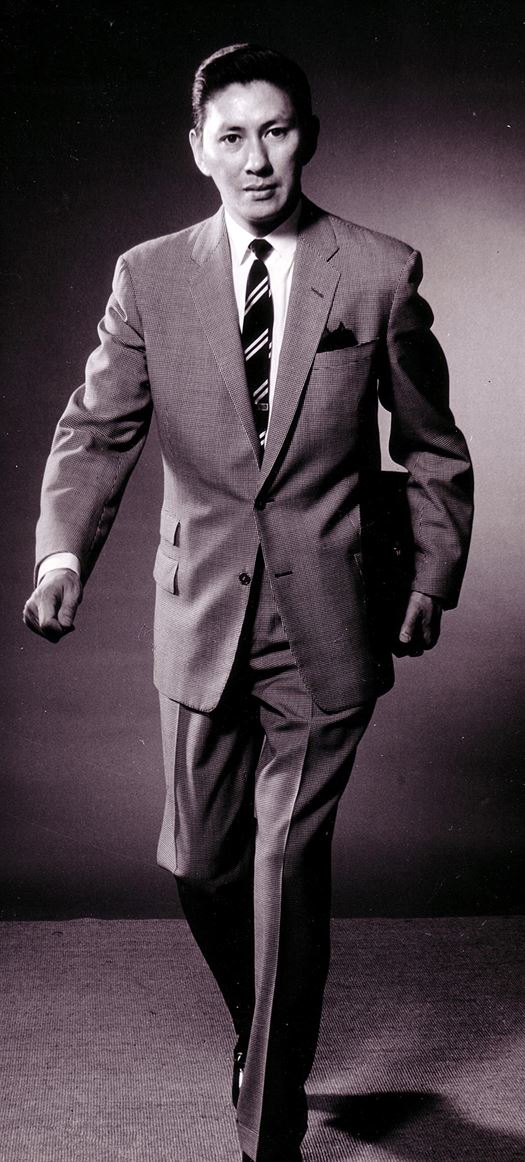
Douglas Jung
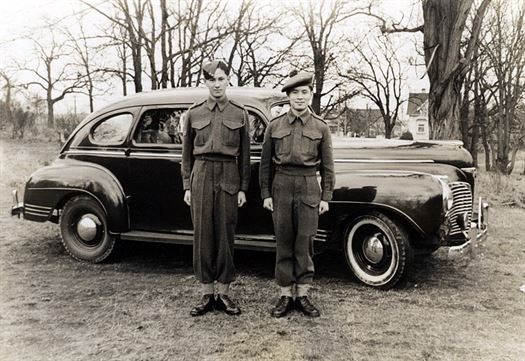
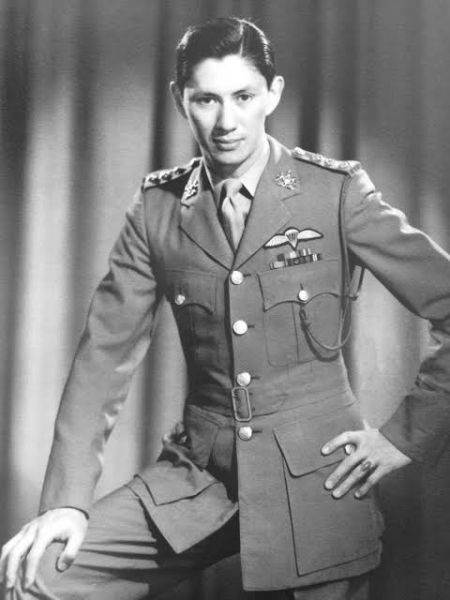
Some of us realized that unless we volunteered to serve Canada during this hour of need, we would be in a very difficult position after the war ended to demand our rights as Canadian citizens because the Canadian government would say to us, ‘What did you do during the war when everybody else was out fighting for Canada? What did you do?’ So a few of us volunteered to serve, and my group was probably the first to join up. He was one of 13 Chinese Canadians selected for Operation Oblivion. Jung was injured during a parachute exercise during training and remained in Australia as an intelligence instructor.
Interview
HTML5 Transcript/Captions
Wesley Lowe (Interviewer)
Douglas Jung, born without legal status in Canada, became Canada's first Chinese- Canadian Member of Parliament. The Second World War was a pivotal time in Chinese-Canadian history and Jung recounts the significance of the era.
Douglas Jung (Interviewee)
Some of us realized that unless we volunteered to serve Canada during this hour of need, we would be in a very difficult position after the war ended to demand our rights as Canadian citizens because the Canadian government would say to us, "What did you do during the war when everybody else was out fighting for Canada? What did you do?" So a few of us volunteered to serve, and my group was probably the first to join up. My group consists of 12 Chinese-Canadian soldiers who were already volunteers in the Canadian army. We volunteered for an operation called Operation Oblivion. This was an operation mounted by the British War Ministry under the auspices of Special Operations Executive, which is the same branch that did all the clandestine operations behind German lines and France - dropping allied agents in for sabotage, espionage and things like that.
Our operation was for the Southwest Pacific, and I was at Pacific Command here in Vancouver during the war in the Intelligence Section under Major General George Perks. When this British officer came out from England, he came to see the Intelligence Section to find out if they knew of any Chinese-Canadians. I was there. He asked me about the volunteer, and when you're age 19, you don't think very much about what you're volunteering for, but we volunteered and he asked me if I knew of any other Chinese-Canadian Veterans. I happen to know all of them because there were so few of us at that time. And, so within a matter of 24 hours, they were all ordered to report to Vancouver. We took our initial secret training at a secret camp in Lake Okanagan. It was a place called Goose Bay.
But, as a result of our training there, the provincial government, the British Columbia Historical Society, has now officially renamed it as a historical site and there is a plaque there now with our names on it to commemorate our training there.
Wesley
The aspirations of Operation Oblivion were bold and far-reaching. Like many war plans however, things had to change in the heat of battle.
Douglas
And the original plan was for our group to go into China and to arm and train an army of 300,000 communist soldiers because the British government considered at that time that they would help whoever was fighting the Japanese. And at that time, the most effective opposition to the Japanese were the Chinese communist. The arms and equipment destined for us were the captured German-Africa corps' arms and equipment because they were using nine millimetre ammunition, which was the ammunition used in the Orient. And so all that German-Africa corps equipment, had been destined to go to China to equip this army. But before we got into the actual operation, a decision was made by the Allied high command that anything north of New Guinea would be a sphere of operation under General McArthur, which then became a "U.S. only" military operation. And so we were given our choice of either going home or remaining behind to work in some other area. We chose to remain behind because we said we were already here now and let's not waste our training. And so we were sent to New Guinea and Borneo.
Well, this was the underground, the clandestine operations behind enemy line, behind Japanese lines setting up intelligence circuits, observations and communications for the Australian army; and generally playing hell.
Wesley
Secrecy was paramount in Operation Oblivion not only to the Allies but to the Canadian military. But ultimately, true recognition came not only personally, but to all Canadians of Chinese heritage.
Douglas
There were only two officers in the Canadian army who knew about our operation at that time. That was General Perks and his colonel in charge of the administration, Colonel Hugh Alan. We were so secret in our operations that after we came back from overseas the military depot at Little Mountain refused to recognize that we had been overseas. We had to contact General Perks to confirm that we had been overseas because on our records, when we went overseas, it was shown as being struck off strength. Pacific Command, taken on strength National Defense Headquarters, Ottawa. There is no mention about going overseas.
And it is interesting to say that of the 12 of us who volunteered for this operation overseas, four received military medals for bravery, and this is the highest proportion of decorations given to any Canadian military formation either, before, during or after the Second World War. So we're very proud of that record and all this was done, bearing in mind, at a time when we did not have to serve Canada, but we thought in our guts that unless we did something like that, we could show to the Canadian people, and to the Canadian government that we were willing to work for everything that we wanted, which was no more than the rights of Canadian privileges, the rights that every other Canadian enjoy.
Did you know?
Elected in 1957, Douglas Jung became the first Chinese-Canadian Member of Parliament. Learn more about Doug Jung’s life and career.
Alex Louie
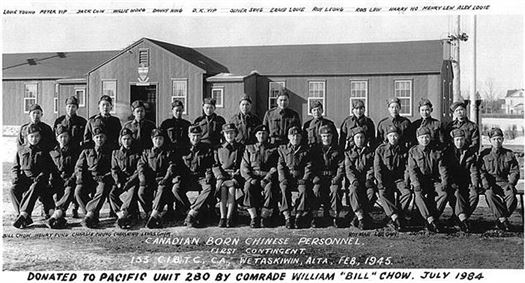
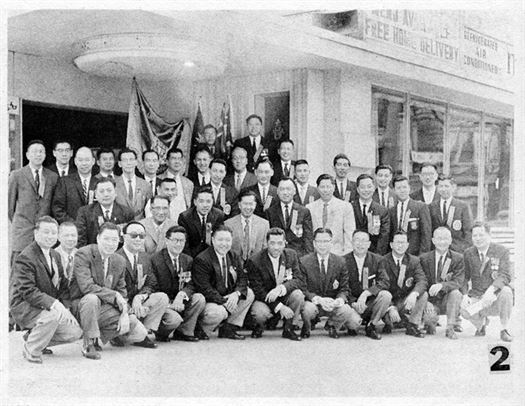
Eighteen year old Alex Louie toiled in a BC pulp mill before he volunteered for active service.
Alex was sent for basic training in Westaskwin, Alberta. By the time he'd finished, the Japanese occupation of southeast Asia meant that Chinese-Canadian participation was highly sought after. Alex found himself sent on a mission that took him to a base in India where the goal of the training was to prepare for being parachuted behind enemy lines as part of Force 136.
Interview
HTML5 Transcript/Captions
Ramona Mar (Interviewer)
In the 1930's there were no dreams of a better life for Alex Louie. Alex was ensnared in 2 worlds. His teen years were spent unhappily in a BC pulp mill.
Alex Louie (Interviewee)
It's very bleak, I don't know I don't know how to describe it but the times were such a disappointment, you don't know your future; you don't know what's going to happen tomorrow ...
You can't dream, there's nothing you can do. You have no money, you have no education and if you do have education you can't find a job. A lot of people finish highn school, people finish university here, they can't get jobs, you know some of my friends you know. So, so we worked there until I got drafted into the army.
Ramona
Alex, what did you think when you received that draft notice to go to war?
Alex
When you're 18 you're still wet behind the ears you know so, We just follow, actually we just follow what the older people do. . I just found a herd, I was too young then to know much; I don't know about politics. ...
A lot of people think volunteer is just you volunteer to go in, but it wasn't. Volunteer, the word volunteer means that you could either go active which you, which they can send you anywhere, or you can stay as a home guard; you stay home. If you volunteer for active service, we get an emblem on our sleeve which shows with the word "G" in it and shows, and we don't want to wear the uniform without this. ...
... And we all felt the same way because if you're going to wear a uniform, you might as well let the people know, especially the white people. You've got to let them know that you know we're, hey we're gung-ho, we're in there, right?
Ramona
How did you feel when you put on that uniform for the first time?
Alex
Oh I tell you it was uh, it was something that I just, wearing it is pretty hard to describe it. When you're being discriminated and then when you wear a uniform you've, I, and you felt equal. You felt, you know, you felt equal, hey nobody better than I am now anymore right?
Ramona
Alex was sent for basic training in Westaskwin, Alberta. By the time he'd finished, the Japanese occupation of SE Asia meant that Chinese-Canadian participation was actually being sought after . Alex found himself on a mission that took him to India. The goal was to go behind enemy lines in the Asian theatre with the British Force 136.
Alex
They needed people like us be able to, that were bilingual, uh and we can arrange for guerrillas. Our job is to either go by submarine or we got parachuted behind enemy line. We were trained to be demolition uh people and morse code, we're supposed to contact one another you know so that they'd know where we are. And we're supposed to while the British attack in the front we were, we were engaging with the guerillas. So so when the Japanese retreated, you know, they can't retreat because we got the guerilla under our under our instructions.
Ramona
The training time in India must have been one of intense anxiety and almost fear for you, and then at the same time you also had a good time because you were with your buddies!
Alex
I was anxious, oh no I was anxious, I was. Well actually you don't know any better; you go anyway, you go with the group right? But my 2 uncles parachuted when I went in there, and uh there were 2 good friend of mine, uh Poon Wong and Larry Wong and his brother Ted ...
... Anyway when I when I got in there, got into, the first person I meet was my good friend Poon; uh he died since. He says, "What are you doing here?" He said, quot;The war may not end for another 5 years". I said "Holy Mackerel, I didn't realize that". And then believe it or not then I went back, I start praying; I'm not a religious person. I'm not, I have no religion really, but I think people do pray I guess when they're in trouble or they think they're in trouble.
Ramona
So you never had to do any battle, you never had to parachute into enemy territory because the war ended before you were supposed to go?
Alex
I think we consider ourself either lucky or what whatever it was. Uh if they would have drafted, if we were Canadians and we were drafted earlier there'd be a lot of casualties; a lot of us wouldn't have come back. As a result as only a couple dozen, maybe two, three of dozens that went to the front; not that many of us.
Ramona
As it turned out, the war for Alex, was a bit of an equalizer. Back in post-war Vancouver, Alex would eventually become a successful restaurant nightclub operator, opening Chinatown's first smorgas board, a venture that would have been unthought of in his pulp mill days. A natural impresario, Alex regularly brought home acts from Los Angeles and Las Vegas to his Marco Polo Theatre Restaurant. The days of grinding poverty, discrimination and war are long behind him and for Alex Louie, life is ... rosy.
Alex
I just can't think of a better life now; I mean I'm I'm contented and see all my grandchildren grow up. I don't I don't think, I don't think any anybody's life can be more happy than my life now. I'm very very contented and happy here.
Roy Mah
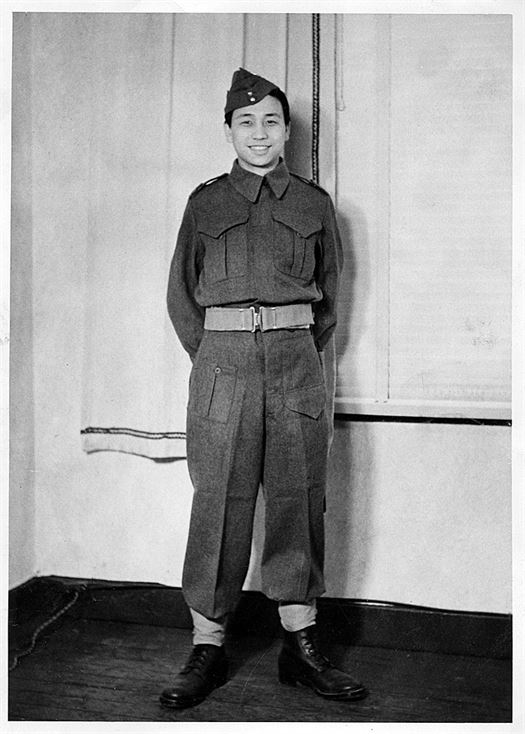
As the Second World War erupted, so did the controversy over whether Chinese-Canadians should even volunteer to fight for a Canada that wouldn’t even give them the right to vote. One faction argued that Chinese-Canadians should get the right to vote first, before volunteering to fight. Roy felt otherwise. By the time the focus of the war turned to Japanese aggression in Asia, Roy had already been promoted to Sergeant and chosen to lead an all-Chinese-Canadian contingent of 109 men to fight the Japanese behind enemy lines in the Malaysian-Singapore front.
Interview
HTML5 Transcript/Captions
Ramona Mar (Interviewer)
The unassuming, humble man who walks the streets of Vancouver's Chinatown is known by almost everybody here. That's because for 42 years, as editor of Canada's first English-language news magazine for Chinese-Canadians, Roy Mah has earned the community's respect for his tireless devotion to a multicultural and just Canada. Many however, don't realize that Roy's passion for equality began when he was just a young man.
As World War Two erupted, so did the controversy over whether Chinese-Canadians should volunteer to fight for a Canada that didn't even give them the right to vote. One faction argued that Chinese-Canadians should get the right to vote first, BEFORE volunteering to fight. Roy felt otherwise.
Roy Mah (Interviewee)
The other faction, led by myself, I said no because for this reason: The Chinese community was too small at that time. All of Vancouver there were only about 7000 Chinese and of military age, maybe only a couple of a hundred. All, the total Chinese population in Canada was maybe around 30,000 and of military age, less than 1,000. You're not going to exert enough pressure with such a miniscule number you're not going to put enough pressure on the government to give in to your demand. I said far better, now is our golden opportunity, far better to enlist now, go and serve prove to the Canadian public, prove to the Canadian government that we are loyal Canadians, that we were born in this country, that we deserve equal rights, we deserve equal status. And then, when we come back from the war we would have full credentials to demand for our rights.
Ramona
By the time the focus of the war turned to Japanese aggression in Asia, Roy had been promoted to Sergeant and chosen to lead an all-Chinese-Canadian contingent of 109 men to fight the Japanese behind enemy lines in the Malaysian-Singapore front. Force 136 was under the British Command of Lord Louis Mountbatten.
Roy
In Malaysia and Singapore, one third of the population was Chinese so they needed Chinese to be flown in behind enemy lines and organize guerilla movements. You know, coordinate the activities with the local population to harass the Japanese. And that's why at that time they wanted the service of Chinese-Canadians.
Those of us who volunteered, you know went overseas and you know, we even had danger pay, had extra 200 dollars, for the nature of the work that we had to do. In fact, some of the items that they issued us on our mission, among all the items, was two cyanide tablets. They say if you get captured and the Japanese would interrogate you to get information from you about the Allied Forces. If they torture you to try to get the information, you can't stand it; you swallow it.
Ramona
Roy trained as a dynamiter and along with other members of Force 136 waited for the word to make the ultimate parachute jump into enemy territory.
Roy
To be honest with you, when I got my order to leave in about another four days I was a little bit scared; very apprehensive. You're going into enemy-occupied territory, nothing but Japanese there, you could easily be caught so, but that sense of duty, you know you just shrug it off.
Ramona
Despite his preparation and training, Roy's group was spared by the timing of the atomic bomb and the mission was put on hold. A very happy and relieved young man came home to Canada having done his duty in the hopes of getting his people the vote.
Roy
We were very happy that we were able to do something for the Chinese Community. Even while we were away overseas, the Chinese community was already lobbying the government. They keep on pointing, "Look at our boys! Look at, they are willing to sacrifice their lives for our country and yet you still don't recognize us as Canadians. How much more loyalty do you need to prove our sincerity?" And they present briefs to the government, they lobbied the different politicians and so on. So when we came back, we feel a sense of pride that we had been able to accomplish something, because had it not been for us, we certainly would not have got it so fast.
Ramona
Launched by his experience in the Second World War, Roy would spend the rest of his career as a journalist to forge the multicultural Canada of today. His Chinatown News Magazine took on issues with a proud Chinese-Canadian perspective.
Roy
I know that we can't have everything we want in life, but we can always strive to achieve our objective. So I always want to fight for a cause, especially for a just cause. Fight for civil liberty, fight for equal rights, fight for a fairer society. It has become reality now, you know, it's just a matter of daily life. You know, these people enjoying all these privileges and rights you know, that we had to fight so hard to achieve.
Did you know?
For 42 years, Roy Mah was editor of Canada's first English-language news magazine for Chinese-Canadians – Chinatown News – a publication he founded in 1953. And, for his service to Veterans, he was presented the Minister of Veterans Affairs Commendation in 2003.
Hank Wong
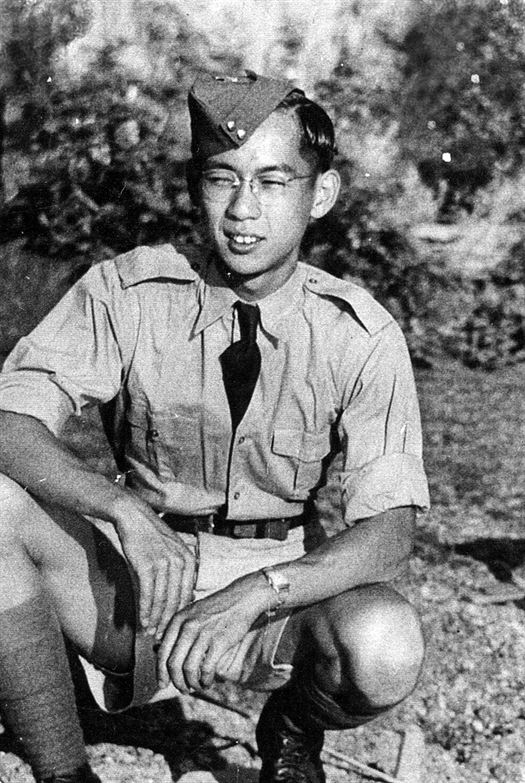
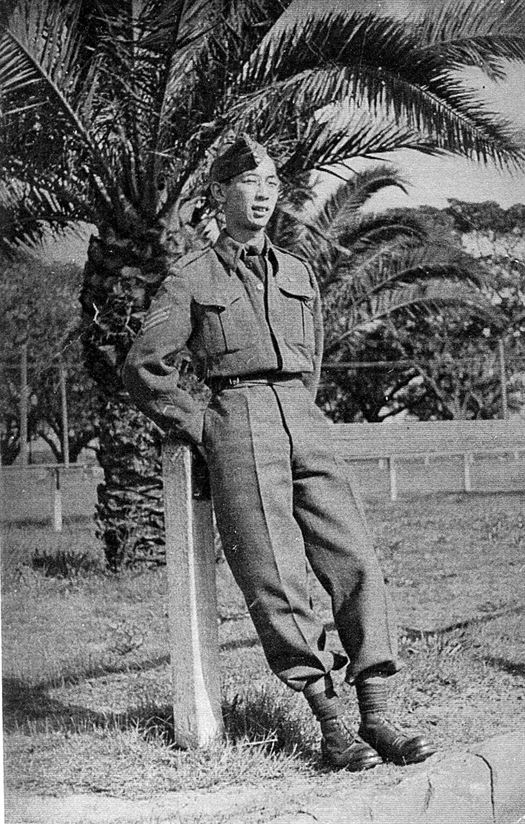
Henry Albert (Hank) Wong enlisted in the army in 1940. He served with the Kent regiment until he was recruited for Operation Oblivion, in 1944. While on leave, Hank received an intriguing letter that both discharged him from regular duties and recruited him to a dangerous mission. It turned out that Hank had been recruited for what would be known as Operation Oblivion, an elite guerilla unit dispatched to harass the enemy in Hong Kong.
Interview
HTML5 Transcript/Captions
Larry Wong (Interviewer)
Hank Wong was born in the heartland of Ontario and was not considered a Canadian citizen because of his race.
Hank Wong (Interviewee)
During my youth I belonged to the Sea Scouts, so as. as a Sea Scout, I'm naturally going to be in the navy. I was going to join the navy. So with my gang, we went up to join the navy, and all my gang, all got in; five of them, and I didn't get in.
Hank
Lt-Cmdr Hunter . brought out a little black book and he says, "Hank you can't go in the navy. They don't, they're not allowed to. They're not allowed to bring Chinese into the navy. You must be of white race." So after I left my boys I went downstairs with, the recruiting was upstairs, went down to the army.
Now yes, about discrimination or anything like that. I was paraded for the Colonel before I was able to join and they. the. I guess the recruiting officer who was asked and he says, "Are we. are we allowing Chinese boys in the army?" And he says, "Well what's. what's his background?" And I told him I was a tech for a number of years and I got a motor mechanic degree, and he says, "Good, he's my, he's my driver." So I got in the army. And but a very a short while later, because I was speeding, I didn't drive him anymore (laughs).
In 1940, the Kent Regiment moved out to New Westminster and they. they. the whole, the whole Fraser Delta was covered by .We, we protected the whole thing 'cause the Japanese had already shelled. shelled the coast in, in Vancouver, Vancouver Island. So then. then when the. Japanese were coming down through Kiska. Remember that? They. they attacked Kiska. Well, then they. we sent a whole brigade of troops up to Terrace and Prince George and all down the line. There was no roads in those days. We had to use the railroad, and we were training up there all through the two years up in that area. And then we broke up the Kent Regiment to guard all Bella-Bella and Ocean Falls and, and Nanaimo and Vancouver and Victoria. All the little stations along there, we. we guarded that.
Larry
You didn't get into the navy because you were Chinese?
Larry
While on leave, Hank received an intriguing letter that both discharged him from regular duties and recruited him to a dangerous mission.
It turned out that Hank had been recruited for what would be known as Operation Oblivion, an elite guerilla unit dispatched to harass the enemy in Hong Kong.
Hank
I went down to the old Vancouver Hotel. In one of the big ballrooms they had this table set up and all these guys with the red tabs and red hats on and Major Kendall was standing at the window with a. not facing us. And I was paraded in and he, as soon as he heard me talk, he turned right around. He says, "Are you Chinese?" And I says, "Yes I am." And he says, "'Cause you don't have an accent." And I says, "Well, I don't speak Chinese." And he said, "Wow." He said, "Well what's your background?" I told him my background was weapons and machinery. I was a weapons instructor. So he says, "Well that's okay, put him in." So that's how, that's how I got in. And then he sent me over to the camp. camp Commando Bay and that, that's where I was. See it wasn't called Commando Bay then, it was called Goose Bay.
Larry
Hank
About four months. Four months intensive training
Larry
Now you mentioned that not all the Chinese spoke Chinese.
Hank
No. So they set up schools. Kendall's wife became our teacher, and they brought out this book. It's like. like it's like a primary book, and if you speak Chinese now, it's called. (speaks Chinese) which means a thousand words. But don't forget, I never spoke. My wife says to me, "If they ever caught you they'd have killed you, 'cause you can't speak Chinese. And also with that accent you got, you'd never get anywhere."
Larry
So what happened after your training was completed at Goose Bay?
Hank
Well then we were sent. We're okay. We're sent to Australia. We packed up and we're going on our way to Australia. We did the full training and the crash training. Like a five mile run every morning, do all your, all your exercises and your. your training, flying, coming out of airplanes and jumping. and jumping 13 foot walls. Jumping off the walls. did all that for to toughen you all up. Oh, it was. That was wonderful, yeah.
Larry
So you earned your parachute wings then?
Hank
Got the wings. Got the. got everything going, oh yeah. Never used it. Yeah, five jumps, five jumps, yeah.
Larry
So what happened after your training in Australia? Where did you go?
Hank
The war stopped, August the 15th. When the war stopped, everything stopped. They just told us "go home." They had no way of getting us home. If you stop and think of it, the Americans had all the troops, all the machines, all the air, all the airplanes and all the vessels to take all their boys home. The war's over now, right? We're talking a million soldiers. How are you going to get the Canadians home? We had to work our way home on tramp steamers. Anytime a, a tramp steamer came in and unloaded its cargo, they had no new cargo to take home so they'd put on the soldiers, but they have to work back; they have to sign on and work back. So in our case, we had the. the Kitsilano Park, which is about a 25-ton freighter. We had to work our way back by chipping decks.
Related information
Chinese Canadians of Force 136
The Canadian Encyclopedia
The Canadian Encyclopedia
Chinese-Canadian Military Museum Society