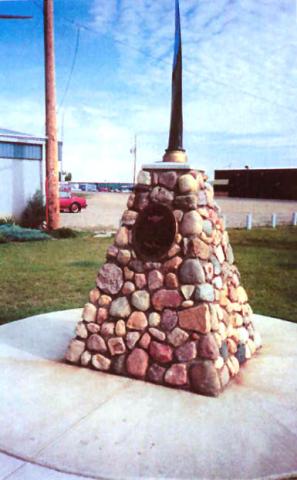
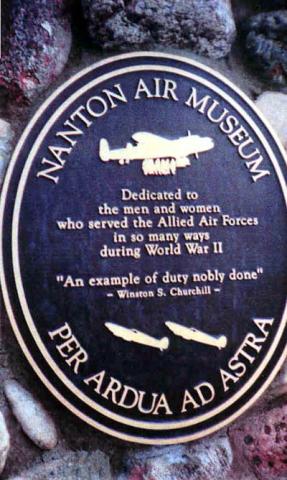
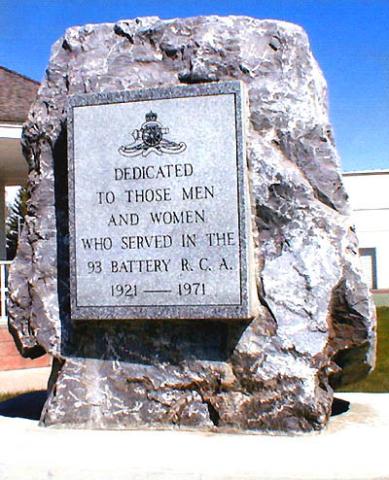
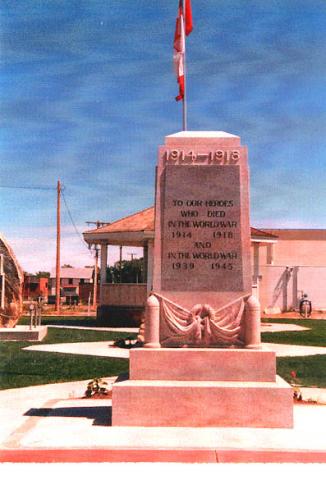
This display of individual and unit portraits is dedicated to the local war dead of the Second World War.
Bellevue Second World War Memorial Portraits
[front/devant]
LEST WE FORGET
WE SHALL REMEMBER THEM
LEST WE FORGET
My VAC Account
My VAC Account[front/devant]
LEST WE FORGET
WE SHALL REMEMBER THEM
LEST WE FORGET
This display of individual and unit portraits is dedicated to the local war dead of the Second World War.
[front/devant]
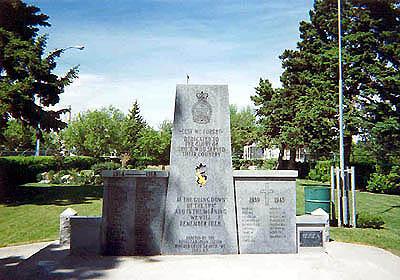
DEDICATED TO THE HONOR AND SACRIFICE OF OUR MEN AND WOMEN WHO SERVED OUR COUNTRY
1914-1918
L. ADLAM
W. ARCHER
G. BELL
G. BELSHAW
J. DREVINSKI
G. GEARY
J.R. HEWITT
G. HUTTON
W. MCCULLOCH
E. MITCHELL
A.E. PETTS
W. RAYNOR
W. SHEEN
J. SINDELL
R. SLOAN
W. SLOAN
R. TURNER
G. WILDE
1939-1945
J.R. DRYDEN
T. EVANS
A.J. FORTUNASO
A. GARDINER
G.W. GRANT
C.M. HOLLENBECK
J.G. HUTTON
H. JORDAN
D. MANCHUL
P. MANIAGO
A. PENMAN
A.S. RHODES
M. WOOD
LET NONE FORGET THEY GAVE THEIR ALL AND FALTERED NOT WHEN CAME THE CALL
Erected in 1992 on behalf of the local Royal Canadian Legion branch, this memorial is dedicated to the local war dead of the First and Second World Wars. The small concrete walls flanking the central stele depict military images of an aircraft, a warship, a tank and soldiers.
[front/devant]
IN MEMORY OF THOSE NAMES ENDURE
THE GREAT WAR
1914-1918
THE WORLD WAR
ERECTED BY THE CITIZENS OF COLEMAN
THEY DIED THAT WE MAY LIVE
[left side/côté gauche]
WAR 1914-1918
J.A. PRICE
J.H. WILLIAMS
M. ODGERS
W. ANDERSON
R. TURNER
C.F. DUNLOP
J.A. JOSEPHS
E. REID
W.H. KENT
J.P. GREGORY
H. CLAES
L. HENRIET
J. GURIN
C. MITCHELL
W. MAGGS
E.E. BLAES
H. TRETTE
[right side/côté droit] WAR 1939-1945
W. NIMCAN
G.J. KROESING
G.C. MORRIS
L.J. JANKULAK
J.W. MACQUARRIE
J. ROGERS
A. MACDONALD
W. HARRISON
M. RUCKA
P.J. GANDY
R.H. GREWCUTT
A.F. DICKSON
R.K. MCLEOD
KOREA 1950-1953
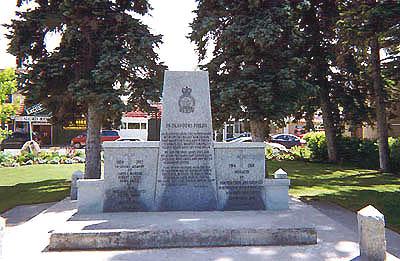
This memorial was erected on behalf of the citizens of Coleman and is dedicated to the local war dead of the First and Second World Wars and the Korean War.
[front/devant]
1914 1918
IN HONOR OF THE MEN OF BLAIRMORE WHO DIED FOR THEIR COUNTRY IN THE GREAT WAR
THEY HAVE PASSED ON LEAVING THE HERITAGE OF A GLORIOUS MEMORY
AND
IN HONOR OF THOSE WHO SERVED IN THE SECOND GREAT WAR AND THE KOREAN WAR
LEST WE FORGET
ERECTED BY THE CROWS NEST CHAPTER
I.O.D.E.
In approximately 1924 this memorial was erected on behalf of the local branch of the Imperial Order of the Daughters of the Empire (I.O.D.E.) and dedicated to the local war dead of the First World War. Inscriptions were later added to honour the local veterans of the Second World War and the Korean War and, in October 1986, the stele was relocated from a location near the old municipal courthouse to its current location.
WARNER MEMORIAL
LIBRARY
In the summer 1945, a motion was passed that would lead to the establishment of the Warner Memorial Library. A committee solicited the help of the community who responded enthusiastically. In 1945, the library was incorporated and throughout 1946, money and books were donated. The Elks Club made the ladies' cloak room in their hall available to house the 650 donated books and on March 29, 1947, the library was operating.
The Warner Lions Club planned for a permanent library building and purchased an Air Force building from the Canadian Forces Base in Lethbridge. With volunteer help, the building was torn down and set up on a donated lot. The Warner Memorial Library was officially opened January 16, 1951 as a memorial to those men and women who were the builders of the community and to those who served their country in the wars.
MIKE MOUNTAIN HORSE ELEMENTARY SCHOOL
Shortly after the death of Albert Mountain Horse, his older brothers Mike and Joe enlisted in the First World War. Albert had died one day after his return to Canada on 19 November 1915. He was hospitalized because of gas poisoning and, with acute respiratory distress, contracted tuberculosis.
Mike was buried alive for four days at Cambrai in October 1917, for which he was hospitalized for shell shock. He returned to action, was wounded twice, became a sergeant and won the Distinguished Conduct Medal for bravery.
Mike Mountain Horse Elementary School was named in honour of Mike in 1986.
The Fallen Heroes Memorial Walkway project allows us to better commemorate their sacrifice and beautify the museum grounds. The Museum is a vital component of our Main Street and by enhancing our municipal facilities, we enhance the perception and viability of the Raymond commercial district! The project includes redeveloping the Museum grounds. Black wrought iron fences will wrap around the perimeter and LED lighting will be strategically placed to highlight the individual veterans monuments, the Wall of Honour which will list the names of all of Raymond’s daughters and sons who have and are currently serving in the armed forces and our own “Tomb of the Unknown Soldier” where poppies can be placed to remember those who now live in Raymond but had relatives serve from other parts of Canada. Four lite flag poles flying the Canadian Flag, the Canadian Red Ensign, as well as the Alberta and Raymond flags. Irrigation will be installed along with new sod, decorative rock or chips, plants and shrubs will be placed around each monument along the walkway, a gazeebo with benches and picnic tables will be located in the “Serenity Garden” behind the museum along with a water feature of some kind.
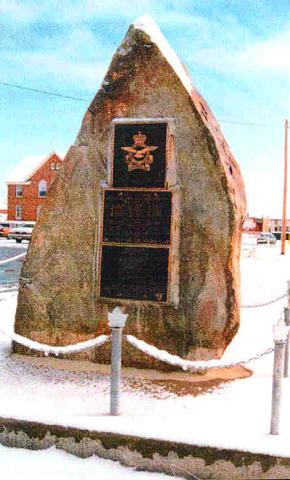
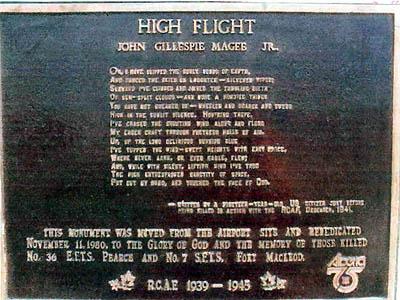
The 425 Squadron memorial was erected in 2017 to celebrate their 75th anniversary.
[street sign/plaque de rue]
Vimy Ave.
Vimy Avenue is named in memory of the Battle of Vimy Ridge.
The Battle of Vimy Ridge took place from April 9 to 12 in 1917 with the combatants being the Canadian Corps, of four divisions, against three division of the German Sixth Army.
The objective of the Canadian Corps was to take control of the German-held high ground along an escarpment at the northernmost end of the Arras Offensive. This would ensure that the southern flank could advance without suffering German enfilade fire. Supported by a creeping barrage, the Canadian Corps captured most of the ridge once the Canadian Corps overcame a salient of considerable German resistance. The final objective, a fortified knoll located outside the town of Givenchy-en-Gohelle, fell to the Canadian Corps on April 12. The German forces then retreated to the Oppy-Méricourt line.
Historians attribute the success of the Canadian Corps in capturing the ridge to a combination of technical and tactical innovation, meticulous planning, powerful artillery support and extensive training. The battle was the first occasion when all four division of the Canadian Expeditionary Force participated in a battle together and thus became a Canadian nationalistic symbol of achievement and sacrifice. A 100 ha (250 acres) portion of the former battleground serves as a preserved memorial park and site of the Canadian National Vimy Memorial.
[sign/panneau]
General Stewart School
General Stewart School is named in honour of Brigadier-General John Smith Stewart, CMG, DSO, Croix de Guerre, DDS. The school opened on October 3, 1956.
John Smith Stewart was born in 1878 in Brampton, Ontario where he completed his education before attending the Royal College of Dental Surgeons in Toronto. In 1896 he moved to Edmonton and joined the Lord Strathcona’s Horse, serving with this Regiment in South Africa from 1900 to 1901, and earning the Queen’s Medal with four clasps. Upon his return from the Boer War, he relocated to Lethbridge in 1902 and continued his military service where, as a major in 1908, he was appoint Officer Commanding the 25th (Militia) Battery, later raising the 20th Battery for overseas service. In 1915, he was appointed Officer in Command of the 7th Brigade, Canadian Field Artillery (CFA) and deployed to France in 1916 where he was twice wounded. In March 1917, he was transferred to command the Fourth Brigade CFA in France, and won the DSO and CMG. He was also twice mentioned in dispatches and awarded the French Croix de Guerre. In December, 1917, he was promoted to the rank of Brigadier General, and commanded the divisional artillery of the 3rd Canadian Division until the end of the war. Upon his return to Canada, he continued his public service as a member of the Provincial Legislature, a post he had held prior to his overseas service. He also served as a member of the House of Commons from 1930 to 1935. General Smith died in 1970.