Alberta

Province Code
AB
City/Municipality
Edmonton
Memorial Number
48011-072
Type
Address
15203 Campbell Road
Location
Northern Lights Cemetery is adjacent to Holy Cross Cemetery and near Henry Singer Park
in Canada
Yes
GPS Coordinates
53.6135925, -113.5852935
Image
Photo Credit
Victoria Edwards / David M Habben
Caption
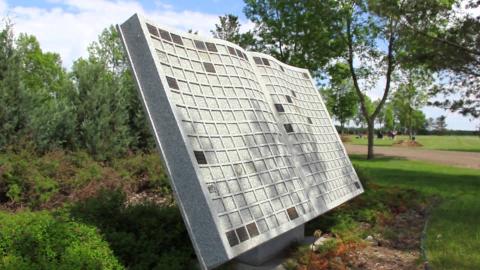
Northern Lights Cemetery Vimy Wall of Remembrance - plaques
1 of 4 images
Image
Photo Credit
Victoria Edwards / David M Habben
Caption
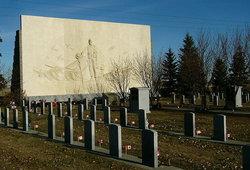
Northern Lights Cemetery Vimy Wall of Remembrance
1 of 4 images
Image
Photo Credit
Victoria Edwards / Wes Rosa/ Global News
Caption
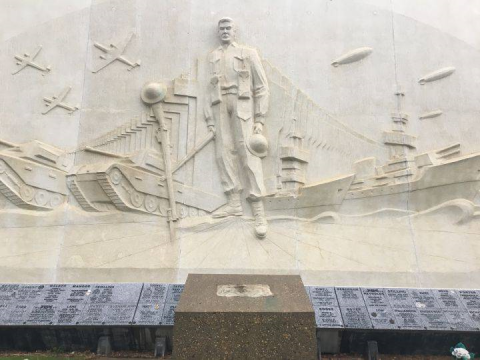
Northern Lights Cemetery Vimy Wall of Remembrance
1 of 4 images
Image
Photo Credit
Victoria Edwards / Wes Rosa/ Global News
Caption
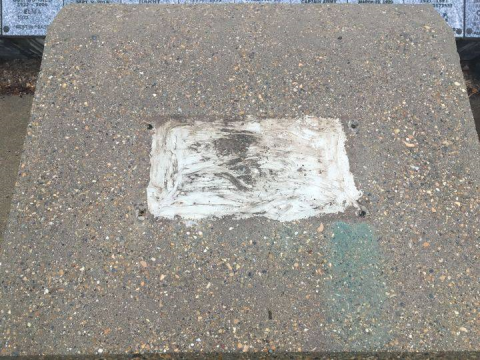
Memorial Plaque stolen, Northern Lights Cemetery Vimy Wall of Remembrance
1 of 4 images
Province
!4v1615393533807!6m8!1m7!1sCAoSLEFGMVFpcE5yVWQ2OHFKYTNCamJFR3NPSXowTGxRd2Y1N0pvTGw0QzA0d21D!2m2!1d53.613592523866!2d-113.58529354274!3f358.5558454241331!4f1.8042835398286598!5f1.8530328854948954"
Body Content

Northern Lights Cemetery, which is surrounded by oak trees, features a Vimy Wall of Remembrance in memory of our military veterans. Some of the funeral plaques, which families purchased and the city had installed in the cemetery, date back to the 1980s. This north Edmonton cemetery was unofficially known as Sturgeon Cemetery before being named Sturgeon Heights Memorial Park in 1986. In 1987, it was renamed Northern Lights Cemetery.

On one side of the Wall of Remembrance, there is space for funeral plaques to be erected in what looks like two pages of a giant book.  On the other side of the Wall, there is a battlefield scene featuring a serviceman holding his helmet at a military grave marked with a bayonet and helmet. The serviceman stands in the middle of two tanks, two ships, underneath three airplanes and three bombs. There are plaques on stones along the walkway.

Seven funeral plaques were stolen from the military memorial section of the Northern Lights Cemetery sometime between July 3 and 6, 2018. The thefts were reported to Edmonton Police Services July 7, 2018. The plaques were removed off the back monument and stones along the walkway.
City
Edmonton
Country
Type Description
Wall
Memorial CF Legacy ID
10035
City/Municipality
Edmonton
Memorial Number
48011-071
Type
Address
Arras Avenue
Location
Lancaster Park
in Canada
Yes
GPS Coordinates
53.670691, -113.4918602
Inscription

needs further research/recherche incomplète

War or Conflict Term
Province
!4v1717775652115!6m8!1m7!1s6sLm1ZhWr32wgCabaXxVOg!2m2!1d53.67069095986651!2d-113.4918601532885!3f121.00374003500065!4f-2.5146948609454682!5f3.324266100891234
Body Content

This street commemorates those who fought at Arras in the First World War.

City
Edmonton
Country
Type Description
Street
Memorial CF Legacy ID
10006
City/Municipality
Edmonton
Memorial Number
48011-070
Type
Address
10800 - 97 Avenue
Location
Alberta Legislature Building (on the grounds)
in Canada
Yes
GPS Coordinates
53.53357, -113.50657
Image
Caption
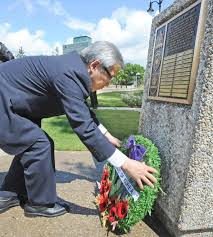
South Korean ambassador Cho Hee-yong at the Korean War Cairn, Edmonton
Province
Body Content

This cairn on the grounds of the Legislature Building is dedicated to all Korean War veterans, in particular the Albertans killed in action during the Korean War (1950-1953). The cairn was unveiled when the Korea Veterans Association held their national reunion in Edmonton in 1991.


City
Edmonton
Country
Type Description
Cairn
Memorial CF Legacy ID
9851
City/Municipality
Edmonton
Memorial Number
48011-069
Type
Address
McDonald Drive
Location
McDonald Drive near 100th Street
in Canada
Yes
GPS Coordinates
0, 0
Image
Caption
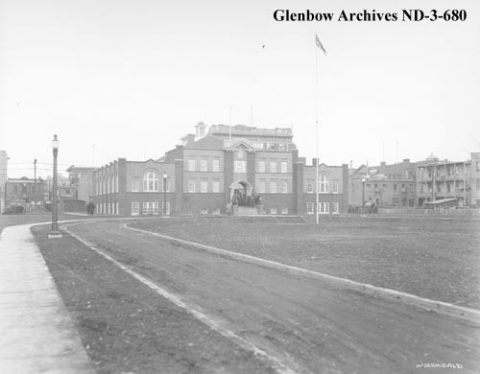
Memorial Hall Edmonton
1 of 4 images
Image
Caption
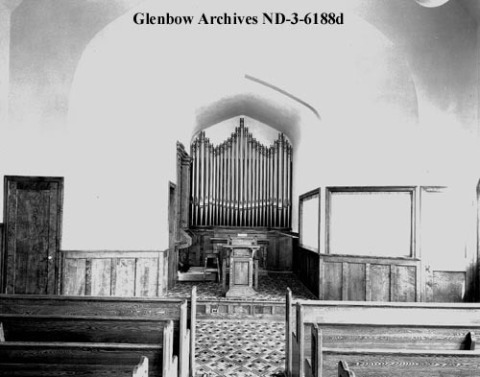
Memorial Hall Chapel
1 of 4 images
Image
Caption
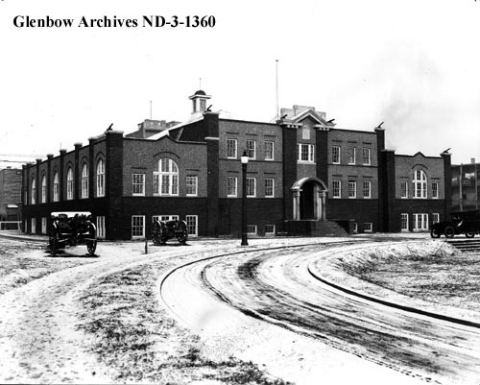
Memorial Hall 1924
1 of 4 images
Image
Caption
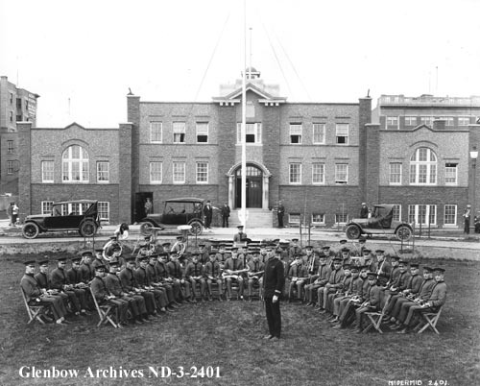
Memorial Hall 1928
1 of 4 images
Province
Body Content

Edmund Wright designed the Great War Veterans Association Memorial Hall 1918-19. The Memorial Hall remembered comrades who gave up their lives during WWI. The building was demolished.

City
Edmonton
Country
Type Description
Building
Memorial CF Legacy ID
9844
City/Municipality
Edmonton
Memorial Number
48011-067
Type
Address
10209 123 St NW, Edmonton, AB T5N 1N3
Location
Memorial Chapel & Hall, Robertson Wesley United Church
in Canada
Yes
GPS Coordinates
53.543404741975, -113.53352612938
Image
Photo Credit
Victoria Edwards
Caption
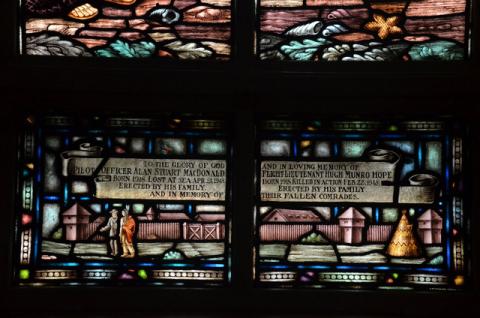
MacDonald & Hope memorial window
1 of 3 images
Image
Caption
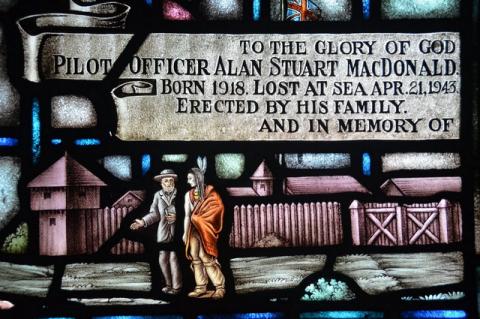
MacDonald & Hope memorial window
1 of 3 images
Image
Caption
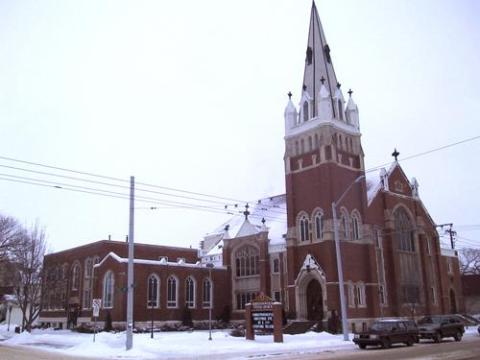
Robertson Wesley United Church, Edmonton, Alberta
1 of 3 images
Province
Body Content

The Memorial Chapel and hall, 1950-5, commemorates the dead from both World Wars. The stained glass memorial windows in the chapel were made by R. McCausland.

Pilot Officer Allen Stuart MacDonald born 1918, lost at sea, April 1945 erected by his family and in memory of Flight Lt High Munro Hope born 1918 kia Feb 22 1945 and in loving memory of their fallen comrades.

City
Edmonton
Country
Type Description
Stained Glass Window
Memorial CF Legacy ID
9608
City/Municipality
Edmonton
Memorial Number
48011-066
Type
Address
304 Griesbach School Road
Location
Village of Griesbach
in Canada
Yes
GPS Coordinates
53.60762, -113.49687
Inscription

MAJOR GENERAL GRIESBACH SCHOOL
EDMONTON PUBLIC SCHOOLS

Image
Caption
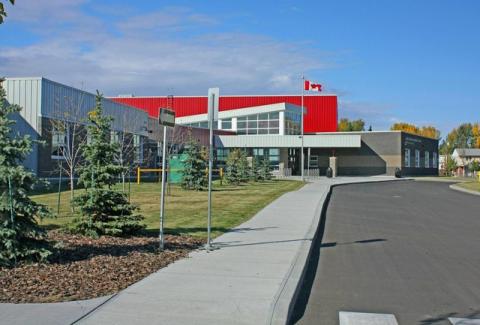
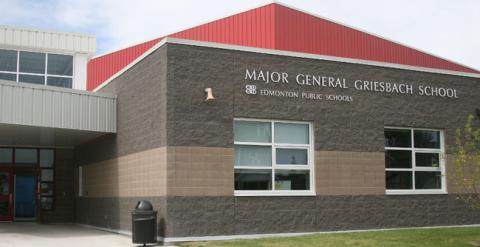
Major-General Griesbach School
1 of 3 images
Image
Caption
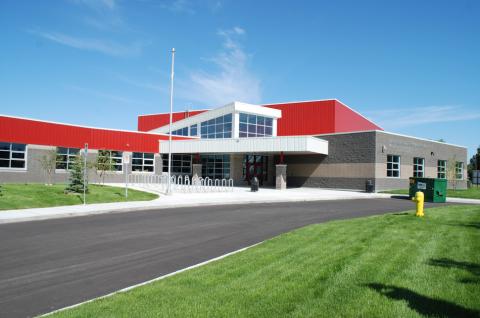
Major-General Griesbach School
1 of 3 images
Image
Caption
Major-General Griesbach School
1 of 3 images
War or Conflict Term
Province
!4v1615392376412!6m8!1m7!1sAE3gAssARG83DS17UT0mcA!2m2!1d53.60753951719497!2d-113.4959500757218!3f282.81782768005854!4f7.3004259524109045!5f1.613279137580225"
Body Content

Major-General Griesbach School is named in honour of Major-General Griesbach. The school was originally attended by the children of military families stationed at Canadian Forces Base Edmonton, but is now a part of the Edmonton Public School Board. A new school, retaining the name, was opened on September 4, 2012, and is situated near the former school.

William Antrobus Griesbach was born in 1878 in Fort Qu’Appelle, Saskatchewan and moved to Edmonton with his family in 1883, graduating from St. John’s College in Winnipeg in 1895. He enlisted in the Canadian Mounted rifles in 1899 to fight in the Second Boer War and was awarded the Queen’s South Africa Medal with four bars. Upon his return in 1901, he opened a law office and was successfully elected to Edmonton Town Council in 1904. He tried his hand at federal politics in 1905, but returned to municipal politics and was elected mayor of Edmonton in 1906.

In 1906, Griesbach was commissioned as a lieutenant in the 19th Alberta Dragoons. He was promoted to captain in 1907. When the First World War began, the Dragoons volunteered as a unit. In December of that year, Griesbach was promoted to major and assigned to command the 49th Battalion. The unit served in various engagements, including the Battle of Vimy Ridge, the Battle of Arras, the Third Battle of Ypres, and the liberation of Mons. In 1917, Griesbach was promoted to Brigadier-General and assigned command of the 1st Canadian Infantry Brigade of the 1st Canadian Division. He was awarded the Distinguished Service Order twice and the Victorian Decoration for long service. He was also made a Companion of the Order of Bath, and a Companion of the Order of St. Michael and St. George. During the Second World War. He was made Inspector General of the Canadian Army for Western Canada and was promoted to the rank of Major-General. He retired from that position in 1943 and died in 1945.

City
Edmonton
Country
Type Description
Building - school
Photo Credit
Richard Turcotte
Memorial CF Legacy ID
9132
City/Municipality
Edmonton
Memorial Number
48011-064
Type
Address
1032 Gault Boulevard NW
Location
Village of Griesbach
in Canada
Yes
GPS Coordinates
53.6023608, -113.4997688
Inscription

[plaque]

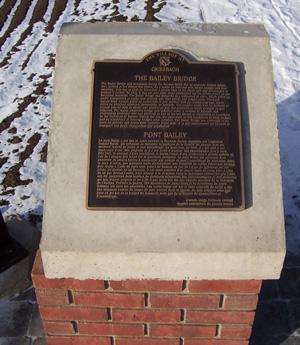
THE BAILEY BRIDGE

The Bailey Bridge was developed during the Second World War By engineer Donald Bailey,
who worked in the British War Office. As a hobby he tinkered with model bridges and their
assembly. One day in 1940 he presented a unique idea to his chiefs and was encouraged to explore it further. By 1941, it was put into large scale production for the Allied attack on the
European mainland. The Bailey Bridge was designed as a collection of parts, which could be
easily transported in trucks and erected with man power and simple tools. The steal
lattice-work trusses could be connected to one another with pin connectin logs, which
could be attached sideways, downwards, or upwards. The trusses could also be doubled or tripled side-by-side or above one another to give the structure as much strength as was required. The highly adaptable bridge was installed under a number of different and challenging situations and was credited as one of the key pieces of equipment to contribute
to the liberation of Europe. During the war, the equivalent to 320 kilometres of fixed bridges
and 64 kilometres of floating bridges were installed. The Bailey Bridge has continued to be
used for military and peace-time ventures world wide, it is still unsurpassed for its ease of transport and quick construction and installation.

PONT BAILEY

Le pont Bailey a /t/ mis au point pendant la Seconde Guerre mondiale par l' ingénieur
Donald Bailey, qui travaillait au ministère britannique de la Guerre. Sa passion était les
modèles réduits de ponts et leur assemblage. Un eau jour, en 1960, il a fait part à ses
supérieurs d`une idée originale et il a été invité a pousser son raisonnement plus à fond.
Dès 1941, le concept s`était concrétisé et faisait l`objet d`une production à grande échelle en
vue de l`attaque des Alliés sur le continent européen. Le pont Bailey est constitué d`un
ensemble de pièces faciles à transporter par camion et dont l`assemblage ne nécessite, outre la main d`ouvre, que quelques outils élémentaires. Les montants en treillis métallique peuvent
être réunis à l`aide de tiges avec pattes de fixation en vue de l`ajout de panneaux sur les
côtés, au-dessus ou en dessous.Il est aussi possible d`en placer deux ou trois, côte à côte
ou un par dessus l`autre, pour assurer à la structure toute la résistance voulue. De tels ponts
ont été assemblés dans nombre de situations présentant des caractéristiques et des obstacles
qui leur étaient propres et on a dit d`eux qu'ils ont été une cheville ouvrière de la libération
de l`Europe. Pendant la guerre, 320 kilomètres de ponts fixes et 64 kilomètres de ponts flottants ont ainsi été assemblés. Les ponts Bailey ont par la suite continue de servir à des
fins militaires comme en temps de paix partout dans le monde. Ils sont toujours sans égal pour ce qui est de la facilité de transport ainsi que de la vitesse de construction et d`assemblage.

Canada Lands Company Limited
Société immobilière du Canada limitée

Image
Photo Credit
Canada Land Company
Caption
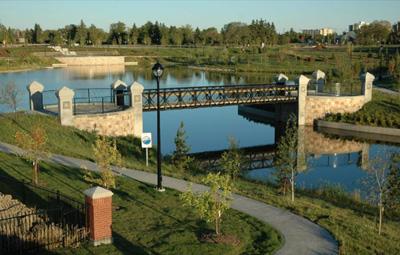
Bailey Bridge
1 of 2 images
Image
Caption
plaque
1 of 2 images
Province
!4v1696335919056!6m8!1m7!1sCAoSLEFGMVFpcE1ubkJZVm8xVXN5V1Fqa1N4Rlp3WV9Mb0RrU25QVURaVTk1QV9M!2m2!1d53.60236077295513!2d-113.4997687550347!3f14.211087908194756!4f-4.9922762413141015!5f0.7820865974627469
Body Content

Bailey Bridge was dedicated by the Canada Lands Company as part of their redevelopment of Edmonton’s former Canadian Forces Base (Griesbach Barracks).

The Bailey Bridge was developed during the Second World War by engineer Donald Bailey, who worked in the British War Office. In 1940 Bailey presented a unique idea to his chiefs and was encouraged to explore it further. By 1941, it was put into large-scale production for the Allied attack on the European mainland. The highly adaptable bridge was installed under a number of different and challenging situations and was credited as one of the key pieces of equipment to contribute to the liberation of Europe.

The Royal Canadian Engineers started training on the Bailey Bridge in England in June 1942 and Royal Canadian Engineers field units started receiving their equipment in August 1943. The first Bailey bridge built by Canadians in operations was in Sicily that same month.  As the war progressed, the Allies erected some 4,500 Bailey bridges.

Some 50 years after its introduction, the Bailey Bridge was withdrawn from use in the Canadian Forces, to be replaced by the Armoured Vehicle Launched Bridge, the Medium Girder Bridge and the Medium Floating Bridge.

City
Edmonton
Country
Type Description
Bridge, plaque
Memorial CF Legacy ID
8229
City/Municipality
Edmonton
Memorial Number
48011-063
Type
Address
903 Valour Way NW
Location
Village of Griesbach
in Canada
Yes
GPS Coordinates
53.6063705, -113.4926128
War or Conflict Term
Province
!4v1697820343783!6m8!1m7!1sl3Z6n6EyQ2q-JMbwxLXzUA!2m2!1d53.60637047272377!2d-113.4926128107261!3f126.65230038946322!4f-9.234526475327087!5f0.7820865974627469
Body Content

The original Maple Leaf Park, now known as Maple Grove Park, was dedicated to returning soldiers by the Canada Lands Company on August 15, 2007, as part of their redevelopment of Edmonton’s former Canadian Forces Base (Griesbach Barracks). The park is a strand of maple trees which pay tribute to the returning soldiers.

In 2017, the name Maple Leaf Park was moved to its current location at 2603 Sir Arthur Currie Way SW.

City
Edmonton
Country
Type Description
Park
Memorial CF Legacy ID
8228
City/Municipality
Edmonton
Memorial Number
48011-062
Type
Address
DeWolf Road
Location
Village of Griesbach
in Canada
Yes
GPS Coordinates
53.6000978, -113.5079718
Inscription

DEWOLD RD

[plaque]

THE VILLAGE AT
GRIESBACH

VICE ADMIRAL HARRY DEWOLF,
CBE, DSO, DSC, RCN

Harry DeWolf won a near legendary reputation for skill and daring as a Canadian destroyer
captain in the operations which preceded D-Day in 1944. his name is linked in naval history
with HMCS Haida, the Tribal class destroyer he commanded during a series of might actions in
the English Channel and the Bay of Biscay.
DeWolf was born in Nova Scotia in 1903 and graduated from the Royal Naval College of Canada,
Halifax, in 1921. Early in the Second World War he commanded the Canadian destroyer
St. Laurent and took part in the evacuation of the British Expeditionary Force from Dunkirk. Later,
while on anti-submarine patrol in the North Atlantic, his vessel rescued 859 survivors form the
torpedoed liner SS Aran Dora Star.
DeWolf was awarded a Distinguished Service Order (DSO) and a Distinguished Service Cross
(DSC) for his actions against German destroyers in 1944. He was also Mentioned in Dispatches
four times and he was decorated by the American French and Norwegian governments for his
wartime exploits.
In 1952, DeWolf became chairman of the Canadian Joint Staff in Washington and was promoted
to the rank of Vice Admiral. In 1956 he became Chief of Naval Staff of the Royal Canadian Navy.
At the time of his retirement in 1960 De wolf was Canada's most decorated naval officer.

VICE ADMIRAL HARRY DEWOLF,
CBE, DSO, DSC, MRC

Harry DeWolf se taille une réputation presque légendaire à cause de la compétence et de
l`audace dont il fait preuve au commandement d`un destroyer durant les opérations qui
précèdent le Jour J, en 1944. Dans l`histoire navale, son nom est lié au NCSM Haida, le
destroyer e classe Tribal qu`il commande durant une série de combats nocturnes dans la
manche et dans le golfe de Gascogne.
Né en Nouvelle-Écosse en 1903, DeWolf obtient son diplôme de Collège naval royal du Canada,
à Halifax, en 1921. Au début de la Deuxième Guerre mondiale, il commande le St-Laurent, un
destroyer canadien, qui participe à l`évacuation de la Force expéditionnaire britannique, à
Dunkerque. Plus tard, pendant une patrouille anti-sous-marine dans l`Atlantique Nord, son
navire repêche 859 survivants du SS Arandora Star, un navire de ligne torpillé
Harry DeWolf est décoré de l`Ordre du service distingué (DSO) et d`une Croix du service
distingué pour ses exploits contre des destroyers allemands en 1944. Il est également cité à
l`ordre du jour à quatre reprises, et est également décoré par les gouvernements américain,
français et norvégien pour ses exploits durant la guerre.
En 1952, DeWolf devient Chef d`état-major interarmées de l`Armée canadienne à Washington et
promu Vice-amiral En 1956, il est nommé Chef d`état-major de la Marine royale canadienne. A
son départ à la retraite en 1960, DeWolf est l`officier naval le plus décoré au Canada.

Canadian Naval Centennial 1910-2010
Centenaire de la marine Canadienne 1910-2010

Canada Lands Company Limited
Société immobilière du Canada limitée

Image
Photo Credit
Don Stewart
Caption
plaque
1 of 2 images
Image
Photo Credit
Don Stewart
Caption
surroundings
1 of 2 images
Province
!4v1615391771903!6m8!1m7!1sxshfAfpJIjWnIwBYxUh2JQ!2m2!1d53.60009750976658!2d-113.5079693777072!3f185.6050125646!4f9.662824407061464!5f3.325193203789971"
Body Content

DeWolf Road was dedicated to Vice Admiral Harry DeWolf by the Canada Lands Company on January 16, 2008, as part of their redevelopment of Edmonton’s former Canadian Forces Base (Griesbach Barracks).

Vice Admiral  DeWolf won a near legendary reputation for skill and daring as a Canadian destroyer captain in the operations which preceded D-Day in 1944. His name is linked in naval history with HMCS Haida, the Tribal class destroyer he commanded during a series of night actions in the English Channel and the Bay of Biscay.

DeWolf was born in Nova Scotia in 1903 and graduated from the Royal Naval College of Canada, Halifax, in 1921. Early in the Second World War he commanded the Canadian destroyer St Laurent and took part in the evacuation of the British Expeditionary Force from Dunkirk. Later, while on anti-submarine patrol in the North Atlantic, his vessel rescued 859 survivors from the torpedoed liner SS Arandora Star. DeWolf was awarded a Distinguished Service Order and a Distinguished Service Cross for his actions against German destroyers in 1944. He was also Mentioned in Despatches four times and he was decorated by the American, French and Norwegian governments for his wartime exploits.

In 1952, DeWolf became chairman of the Canadian Joint Staff in Washington and was promoted to the rank of Vice Admiral. In 1956 he became Chief of Naval Staff of the Royal Canadian Navy. At the time of his retirement in 1960 DeWolf was Canada's most decorated naval officer.

The Vice Admiral Harry DeWolf plaque was unveiled on June 6, 2010.

City
Edmonton
Country
Type Description
Street, plaque
Memorial CF Legacy ID
8227
City/Municipality
Edmonton
Memorial Number
48011-061
Type
Address
Corvette Street
Location
Village of Griesbach
in Canada
Yes
GPS Coordinates
53.6020469, -113.5109305
Inscription

CORVETTE ST

[plaque]

THE VILLAGE AT
GRIESBACH

ROYAL CANADIAN NAVY CORVETTES

Canada's navy in the Second World War was a small ship navy, with no battleships, and no
aircraft carriers. The diminutive corvette was the mainstay of the Royal Canadian Navy (RCN)
in the North Atlantic; escorting convoys and protecting them against submarines. The corvette's
design was based on a whaling ship and its simplicity meant it could be constructed quickly and
cheaply in small commercial shipyards. This is just what Canada needed to enlarge its Navy at
the beginning of the Second World War. By war's end, more than 120 corvettes were built in
Canada for the RCN and other Allied navies.
As Admiral Percy Nelles, the Chief of the Naval Staff, observed "corvettes were the stepping
stones of the fleet program, not the final objective". RCN corvettes were named after Canadian
communities in an effort to engage the Canadian people more directly in the war at sea.
corvettes were very small and lightly armed but also tough. Service on corvettes in the North
Atlantic was typically cold, wet, monotonous and uncomfortable. Interior decks were
constantly wet and condensation dripped form the deck heads.
The RCN lost 11 corvettes during the Second World War; torpedoed by U-boats, mined or sunk by enemy aircraft. RCN were credited with sinking numerous enemy submarines.
Canada's last corvette, HMCS Sackville, is berthed in Halifax Harbour and serves as the
National Naval Memorial.

LES CORVETTES DE LA MARINE
ROYALE CANADIENNE

Durant la Deuxième Guerre mondiale, la marine canadienne ne compte aucun cuirasse ou
porte avions, et ne dispose que de petits navires. Connus sous le nom de corvettes, ces petits
bateaux jouent un rôle important dans l`Atlantique Nord, car ils sont chargés d`escorter les
convois et de les protéger des sous marins ennemis. Inspiré des formes d`une baleinière, le
dessin très simple de la corvette a l`avantage de rendre sa construction plus rapide et moins
dispendieuse dans de petits chantiers navals commerciaux. Grâce à cette solution, le Canada
peut accroître sa marine au début de la Deuxième Guerre mondiale. À la fin de la guerre, plus
de 120 corvettes ont été construites au Canada pour la MRC et d`autres marines alliées.
L`amiral Percy Nelles, Chef d`état-major de la marine, déclare: <>Afin d' impliquer davantage les
citoyens dans la lutte livrée en mer, la MRC donne aux corvettes des noms de villes canadiennes. Petites et munies d' armes légères, les corvettes sont néanmoins robustes. Grâce à
leur portée considérable, elles assurent la protection des convois. À bord des corvettes dans
l`Atlantique Nord, les marins sont éprouvés par les violentes tempêtes, le froid et les conditions
difficiles à bord des navires. Les ponts intérieurs sont constamment humide et la cdondensation
coule du toit d`entrepont.
Durant la Deuxième Guerre mondiale, 11 corvettes de la MRC sont coulées, soit par des torpilles
de sous-marins, des mines ou des avions ennemis. On attribue aux corvettes de la MRC de
nombreuses victoires sur les sous-marins allemands.
La dernière corvette canadienne, le NCSM Sackville, est en rade dans le port de Halifax, et sert de Monument maritime du Canada.

Canadian Naval Centennial 1910-2010
Centenaire de la marine Canadienne 1910-2010

Canada Lands Company Limited
Société immobilière du Canada limitée

Image
Photo Credit
Don Stewart
Caption
plaque
1 of 2 images
Image
Photo Credit
Don Stewart
Caption
surroundings
1 of 2 images
Province
!4v1615391643080!6m8!1m7!1sNUDcvodrtJrtgDXKNAlxNA!2m2!1d53.60204576085455!2d-113.51093375444!3f64.01894488203088!4f0.8624994505671992!5f3.3111683151083704"
Body Content

Corvette Street was dedicated to all the men and women who served on Royal Canadian Navy corvettes by the Canada Lands Company on August 25, 2010, as part of their redevelopment of Edmonton’s former Canadian Forces Base (Griesbach Barracks).

Canada's navy in the Second World War was a small ship navy without battleships or aircraft carriers. The corvette was the mainstay of the Royal Canadian Navy in the North Atlantic; escorting convoys and protecting them against submarines. Corvettes were built in Canada for the Royal Canadian Navy and other Allied navies. The Royal Canadian Navy corvettes were named after Canadian communities in an effort to engage the Canadian people more directly in the war at sea. They were very small and lightly armed, but also tough and with a long range that suited them to convoy protection.

Service on corvettes in the North Atlantic was typically cold, wet, monotonous, uncomfortable and interior decks were constantly wet and condensation dripped from the deckheads. Eleven Royal Canadian Navy corvettes were lost during the Second World War; torpedoed by U-boats, mined or sunk by enemy aircraft. Royal Canadian Navy corvettes were credited with sinking numerous enemy submarines. Canada’s last corvette, HMCS Sackville, is berthed in Halifax Harbour and serves as the National Naval Memorial.

The Royal Canadian Navy Corvettes plaque was unveiled on June 6, 2010.

City
Edmonton
Country
Type Description
Street, plaque
Memorial CF Legacy ID
8226