Nova Scotia

Province Code
NS
City/Municipality
Bedford
Memorial Number
12005-003
Type
Address
Greenway Trail
Location
Fish Hatchery Park
in Canada
Yes
GPS Coordinates
44.7301594, -63.6621408
Inscription

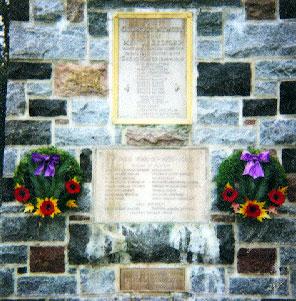
NAMES OF THE WAR DEAD
WORLD WAR I
KILLED IN ACTION
HARRY BOUTILIER
ALLAN BOUTILIER
ASHLEY HOBIN
THOMAS MACWATT
GEORGE ROACHE
JOSEPH ROACHE
ARTHUR SILVER
GEORGE TOLSON
DIED ON DUTY
HOWARD CHRISTIE
JOHN HOBIN
ALEXANDER HEFFLER
CLARENCE SHAFFELBURG

WORLD WAR II
KILLED IN ACTION
HOWARD H. ADLINOTON
ROBERT D. DEAL
ROY R. ELLIS
EDWARD H. FITZMAURICE
GERALD V. GEIZER
HARRY HAMILTON
FRED W. KEYES
PETER LOWE
RAND LUGAR
GORDON H. PARKER
EARL RAYNAR
LAWRENCE A. RUDOLPH
WILLIAM J.D. STURMY
LESLIE THOMAS
CLIFFORD WILLIAMS
GORDON B. WOOD
DIED ON DUTY
HENRY P. BLOIS
HARVEY R. HARLOW
DONALD L. KENNEDY

Image
Photo Credit
Marilyn Gurney
Caption
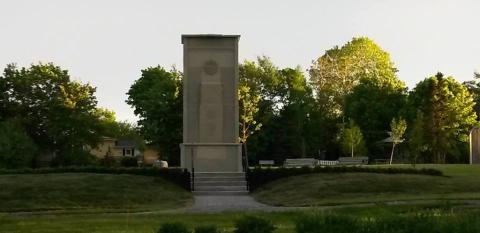
front view
1 of 4 images
Image
Caption
Plaques
1 of 4 images
Image
Caption
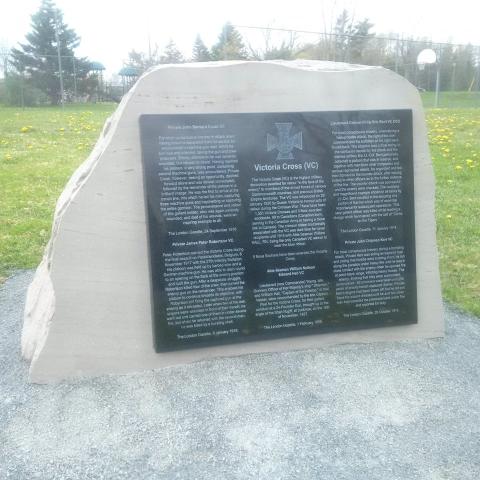
Plaque
1 of 4 images
Image
Caption
front view
1 of 4 images
War or Conflict Term
Province
!4v1633441043561!6m8!1m7!1sElypxQkGA4bINxyFMNN9DA!2m2!1d44.73024639186547!2d-63.66255527688616!3f105.44256739049894!4f-6.434551418661215!5f3.325193203789971"
Body Content

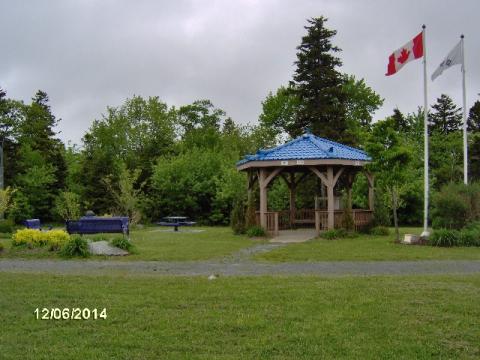
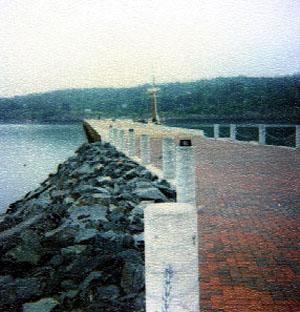
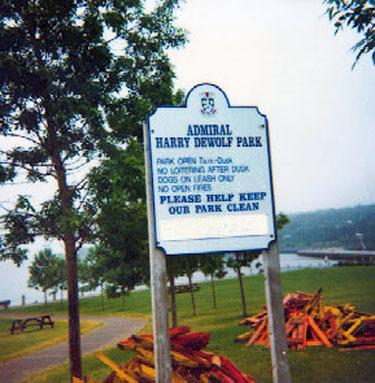
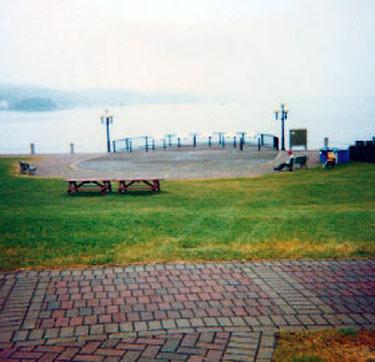
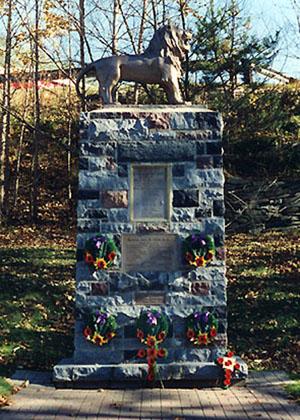
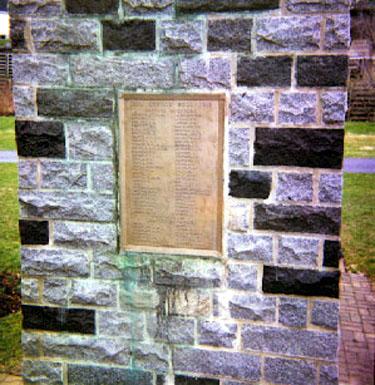
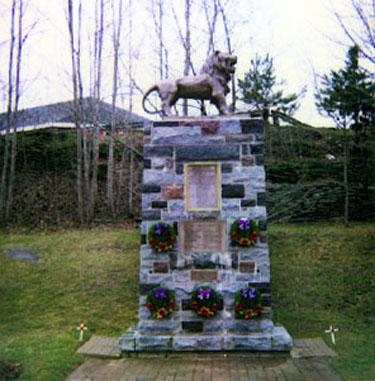
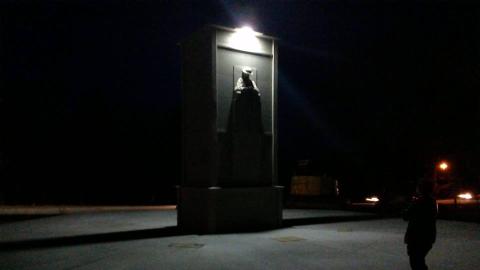
The Bedford Cenotaph was constructed in 1926 initially in memory of those who died in the First World War (1914-1918). This memorial was erected by the Bedford Chapter of the Imperial Order of the Daughters (I.O.D.E.). Below is a history of the Cenotaph: In 1926, the first cenotaph was erected on a plot of land deeded to the I.O.D.E. by the G.N.R. Initially, there was one bronze plaque listing men who died in the First World War (1914-1918). In 1928, through the efforts of Mr. Andrew Cobb, a lion, modeled by Mrs. Dorothy Dick and cast in bronze by Hillis & Sons, was unveiled August 5. In 1931, a second tablet was placed on the reverse side with the names of the men listed who served (1914-1918). In 1958, a third tablet was placed on the cenotaph listing names of Veterans lost in action in the Second World War (1939-1945). In 1989 the cenotaph was relocated at the Fish Hatchery and the lion was properly placed looking toward Bedford Basin. In 1991 a forth tablet was placed listing the years of Korean conflict (1950-1953). The area is maintained and beautified by the Town of Bedford Horticultural Society and the branch - a most pleasant spot to spend a restful period.

City
Bedford
Country
Type Description
Cairn with lion sculpture
Memorial CF Legacy ID
4390
City/Municipality
Spryfield
Memorial Number
12005-001
Type
Address
7 Sussex Street
Location
Royal Canadian Legion Branch 152
in Canada
Yes
GPS Coordinates
44.6112061, -63.618359
Inscription

(needs further research/recherche incomplète)

Image
Province
!4v1613573911543!6m8!1m7!1sN3WFNyFC2Vr3KgwUd13ZeQ!2m2!1d44.61121263340747!2d-63.61835341816337!3f285.416170003353!4f-1.2405366485526912!5f3.325193203789971
Body Content

The Spryfield cenotaph was erected at the Spryfield Royal Canadian Legion Hall, 7 Sussex.

City
Spryfield
Country
Type Description
Stele
Memorial CF Legacy ID
1662
City/Municipality
Halifax
Memorial Number
12004-231
Type
Address
2729 Gottingen Street
Location
Canadian Forces Base Halifax, Naval Museum of Halifax, Admiralty Garden
in Canada
Yes
GPS Coordinates
44.65953, -63.59282
Inscription

[plaque on column/plaque sur colonne]
PRESENTED TO
THE
ROYAL CANADIAN NAVY
WITH DEEP AFFECTION AND APPLICATION
FOR A LONG AND WARM ASSOCIATION
BETWEEN TEH NAVY AND THE CITIZENS
OF HALIFAX. THIS PRESENTATION MADE ON
JUNE 29, 1967, BY MAYOR ALLAN O'BRIEN
ON BEHALF OF THE
HALIFAX CENTENNIAL COMMITTEE

[front wall/paroi frontale]

(plaque)

  • FOR VALOUR
  •  
  • IN HONOUR OF THOSE MEMBERS
  • OF THE CANADIAN NAVY
  • DECORATED FOR VALOUR SINCE
  • THE 1972 ESTABLISHMENT OF THE
  • CANADIAN BRAVERY
  • DECORATIONS SYSTEM
  •  
  • THE BOOK OF VALOUR IS HELD AT
  • THE MARITIME
  • COMMAND MUSEUM
  •  
  • POUR LA VAILLANCE
  •  
  • EN L'HONNEUR DES MILITAIRES
  • DE LA MARINE CANADIENNE
  • DÉCORÉS POUR VAILLANCE
  • DEPUIS L'ÉSTABLISSEMENT
  • EN 1972 DU RÉGIME DE
  • DÉCORATIONS CANADIENNES
  • POUR ACTES DE BRAVOURE
  •  
  • LE LIVRE DE LA VAILLANCE
  • EST GARDÉ AU MUSÉE DU
  • COMMANDEMENT MARITIME

(plaque)
Cross of Valour/Croix de la vaillance

Awarded for acts of the most conspicuous courage
in circumstances of extreme peril

Décernée pour les actes de courage vraiment remarquables
accomplis dans des circonstances extrêmement périlleuses

CWO V.O. PARTANEN, CV, CD
(POSTHUMOUS)

OS A. GARRAMMONE,
CV

P02 L.J. STRINGER, CV, CD
(POSTHUMOUS)

(plaque)
Star of Courage/Étoile du courage

Awarded for acts of conspicuous courage
in circumstances of great peril

Décernée pour les actes de courage remarquables
accomplis dans des circonstances très périlleuses

PO2 C.L. BUSSIERE,
SC

LCDR L.L. VOYER, SC, CD
(POSTHUMOUS)

CWO J.L. MCINTOSH,
MMM, SC, CD

SLT D.P. FINCH,
SC

LS C.H. SHERPPARD,
SC

SLT C.E. REFFIENSTIEN,
SG

PO2 P.G. MARSH,
SC CD

MAT3 J.R.M. BOUCHARD,
ÉC

AB D.O. MORRISON,
SC

PO2 J.A. LEITH
SC, MSM, CD1

(plaque)
Medal of Bravery/Médaille de la Bravoure

Awarded for acts of bravery
in hazardous circumstances.

Décernée pour des actes de bravoure
accomplis dans des circonstances dangereuses

CP02 R.G. GEORGE,
MMM, MB, CD

LS J. G. WHITE,
MB

MS E.A. NASH,
MB

P02 J.G. YURCAK
MB, CD

MAT3 J.E.D. LEPAGE,
MB

LS B.E. CLARKE,
MB

LT(N) R.K. DRUGGETT,
MB

P01 G.J. GILLINGHAM,
MB, CD

AB R.J.J. BROADHEAD,
MB

OS B.R. BROWN,
MB

OP02 J.R.R. CLOUTIER,
MB, CD

OS C.S. WINSOR,
MB AND BAR

LS S.N. OLSON,
MB

LS K.F. GEORGE,
MB

LT(N) J.A. FREW,
MB, CD

A/SLT A.H. BRANNEN,
MB

LS K.D. GRANT,
MB

OS J.J.P. BRETON,
MB

MS M.N. PENNEY,
MB

OS C.S. WINSOR,
MB

MS C.S. WINSOR,
MB AND BAR

LS P.S. Moulden, MB, CD


[right wall/paroi droite]

(plaque)
GEORGE EDWARD WATTS
1786-1860

Born in Halifax, Watts entered the Royal Navy in 1797 and
served on the Halifax and West Indies stations until 1806, ris-
ing, by that date to the rank of Senior Lieutenant. In 1807, after
being cited for gallantry in action at Copenhagen, he was promot-
ed to Commander. Thereafter he served in the Baltic and North
Sea until 1813 when he was given command of the Jaseur.
In this ship, during the later part of the War of 1812, he
captured more than thirty ships, including an American privateer.
He was advanced to Captain in 1814, to Rear-Admiral in 1849
and to Vice-Admiral in 1856. He died at Malvern, England.

Né à Halifax, Watts fut admis dans la Marine royale en 1797.
Il fit son service à Halifax et dans les Caraïbes jusqu'en 1806
et obtint le grade de premier lieutenant. Cité pour sa bravoure
à la bataille de Copenhague, il fut nommé commandant en 1807.
Il servit dans la mer Baltique et la mer du Nord et reçut le
commandement du JASEUR en 1813. Avec ce navire il captura,
pendant la guerre de 1812, plus de trente vaisseaux, dont un corsaire
américain. Capitaine en 1814, il fut promu contre-amiral en 1849 et
vice-amiral en 1856. Il mourut à Malvern, en Angleterre.

Historic Sites and Monuments Board of Canada.
Commission des lieux et monuments historiques du Canada.

Government of Canada - 1949 - Gouvernement du Canada

(plaque)
PROVO WALLIS
1791-1892

Provo Wallis was born in Halifax, where his
father was a dockyard employee, and joined the
Royal Navy in 1804. As second lieutenant of
HMS SHANNON he distinguished himself in the
fight with USS CHESAPEAKE, and brought the
captured American frigate into the harbour of
his native town on June 6, 1813. After a long
career on various European and American
stations, he became a full admiral in 1863.
He died at Funtington, England, as Admiral of
the Fleet Sir Provo Wallis.

Né à Halifax, où son père était employé au
chantier naval, Provo Wallis entra dans la
marine royale en 1804. Lieutenant en second du
HMS SHANNON, il se distingua dans l’engagement
avec le USS CHESAPEAKE et, le 6 juin 1813, il
ramena au port de sa ville natale la frégate
américaine capturée. Après une longue carrière
dans diverses stations européennes et
américaines, il devint amiral en 1863.
Lorsqu’il mourut à Funtington (Angleterre), il
était amiral de la flotte sir Provo Wallis.

Historic Sites and Monuments Board of Canada.
Commission des lieux et monuments historiques du Canada.

Government of Canada - 1949 - Gouvernement du Canada

(plaque)
SIR EDWARD BELCHER
1799-1877

Edward Belcher was born in Halifax and entered the Royal Navy in
1812. After long and creditable service as a naval surveyor, chiefly in
the western Pacific, he returned to Canadian waters to command one
of the Franklin search expeditions (1852-54). In the course of this ex-
pedition he quarreled with his subordinates and, against their advice,
abandoned his ships in the Arctic ice. For this action, the most contro-
versial in a career market by controversy, he was court-martialed and,
though acquitted, remained under a shadow for the rest of his life.
He attained the rank of admiral in 1870, and died in London.

Né à Halifax, Edward Belcher entra dans la Marine royale en 1812.
Après une carrière fructueuse comme cartographe, surtout dans le
Pacifique occidental, il revint pour commander une des expéditions
entreprises à la recherche de Franklin (1852-1854). Ce fut l’épisode le
plus discuté d’une carrière par ailleurs très controversée; il se disputa
avec ses subordonnés et, malgré eux, abandonna ses navires dans
les glaces arctiques. Passé en cour martiale, il fut acquitté, mais sa
réputation en resta à tout jamais ternie. Devenu amiral en 1870, il
mourut à Londres.

Government of Canada     -     Gouvernement du Canada

[left wall/paroi gauche]

(plaque)

  • THE FOUNDING OF THE CANADIAN
    NAVAL SERVICE
  •  
  • The Royal Canadian Navy, founded in
    1910 as the Canadian Naval Service, was
    the first national service of its kind. It
    played a key role in the Dominion’s
    contributions to the Allied effort during
    the First World War, notably in military
    recruitment and training, organization
    and operation of an Allied convoy
    service, coastal patrol, and provisioning
    British naval forces on the Atlantic coast.
    The establishment of the navy was an
    important expression of autonomy at a
    critical time in Canada’s development
    from colony to nation.
  •  
  • Historic Sites and
    Monuments Board of Canada
    and Parks Canada
  •  
  •  
  • LA CRÉATION DU SERVICE NAVAL
    DU CANADA
  •  
  • La Marine royale du Canada, premier
    service national du genre, fut fondée
    en 1910 sous le nom de Service naval du
    Canada. Elle joua un rôle clé dans l’effort
    de guerre du Dominion pendant la
    Première Guerre mondiale, notamment
    par le recrutement et la formation,
    l’organisation et les opérations d’un
    service de convois alliés, la surveillance
    côtière et l’approvisionnement des
    forces navales britanniques sur la côte
    atlantique. La création de la marine
    permit au Canada d’affirmer son
    autonomie à un moment crucial de sa
    transition de l’état de colonie à celui de
    nation.
  •  
  • Commission des lieux et
    monuments historiques du Canada
    et Parcs Canada


(plaque)
HALIFAX DOCKYARD
ARSENAL DE HALIFAX

The creation in 1758 of the royal dockyard, the first in North America,
recognized and enhanced the strategic importance of Halifax and its
harbour. This served as the principal depot for the North American
squadron until 1819, when that function was transferred to Bermuda.
Nevertheless it continued until 1905 to be the summer rendezvous of
the North American and West Indies squadron and to symbolize the
importance of the Royal Navy to the economic and social life of
Halifax. In 1910 the dockyard was formally transferred to Canada.
Revitalized during two world wars, it still serves Canada’s navy.

La création, en 1758, de ce premier arsenal royal de l’Amérique du
Nord démontra l’importance stratégique de Halifax et de son port. Il
servit de dépôt principal à l’escadre nord-américaine jusqu’en 1819,
quand l’on déménagea ses installations aux Bermudes. Jusqu’en 1905,
l’arsenal de Halifax demeura le rendez-vous estival de l’escadre nord-
américaine et antillaise et symbolisa l’importance de la marine royale
dans la vie sociale et économique de Halifax. En 1910, l’arsenal fut
officiellement remis au Gouvernement canadien et joua un rôle consi-
dérable durant les deux guerres mondiales.

Historic Sites and Monuments Board of Canada.
Commission des lieux et monuments historiques du Canada.

Government of Canada - 1949 - Gouvernement du Canada

(plaque)
PHILIP WESTPHAL
1782-1880

Philip, the elder brother of Admiral Sir George Westphal, was
born near Halifax, and entered the Royal Navy in 1794. He
was with Nelson at Copenhagen in 1801, and later in the
Mediterranean. Although he attracted favourable notice from
his superiors in the West Indies in 1806, promotion came slowly
to Westphal; it was not until he had distinguished himself in
American waters in the War of 1812 that he was made a com-
mander. In 1847 he became a pensioner of Greenwich Hospital,
and thereafter rose, on the retired list, to the rank of admiral in
1866. He died at Ryde in England.

Frère aîné de l’amiral sir George Westphal, Philip naquit près
d’Halifax et entra dans la marine royale en 1794. Il accompagna
Nelson à Copenhague en 1801 et, plus tard, dans la Méditerranée.
Même s’il se fit bien voir de ses supérieurs en 1806 dans les
Antilles, son ascension fut lente. Ce n’est qu’après s’être distingué
en eaux américaines durant la guerre de 1812 qu’il fut fait com-
mandant. En 1847, il devint pensionnaire de l’hôpital Greenwich
et, retraité, atteignit le rang d’amiral en 1866. Il mourut à Ryde
en Angleterre.

Historic Sites and Monuments Board of Canada.
Commission des lieux et monuments historiques du Canada.

Government of Canada - 1949 - Gouvernement du Canada

(plaque)
SIR GEORGE AUGUSTUS WESTPHAL
1785-1875

George Westphal was born near Halifax and entered the Royal
Navy in 1798. As a midshipman in HMS VICTORY he was
seriously wounded at Trafalgar, but survived to serve with con-
spicuous gallantry throughout the Napoleonic Wars, rising to
the rank of commander by 1813. Promoted to flag-captain on
the North American station in 1832, he was invalided home in
1834. For the remaining forty years of his life he saw no further
service afloat, but advanced, by regular gradation, to the rank
of admiral. He died at Brighton, the last of the officers who had
fought in the VICTORY at Trafalgar.

Né en Nouvelle-Écosse, près d’Halifax, Westphal entra dans
la marine royale en 1798. Aspirant de marine à bord du HMS
VICTORY, il fut grièvement blessé à Trafalgar, mais il survécut
et se distingua par sa bravoure durant les guerres de Napoléon,
accédant au rang de commandant en 1813. Promu capitaine de
pavillon à la station nord-américaine en 1832, il fut réformé en
1834. Pendant les quarante dernières années de sa vie, il ne servit
plus en mer mais atteignit, de promotion en promotion, le rang
d’amiral. Lors de son décès à Brighton, il était le dernier des
officiers ayant combattu à bord du VICTORY à Trafalgar.

Historic Sites and Monuments Board of Canada.
Commission des lieux et monuments historiques du Canada.

Government of Canada - 1949 - Gouvernement du Canada

(plaque)

  • SIR CHARLES EDMUND KINGSMILL
  • (1855–1935)
  •  
  • Director of Canada’s first standing navy
  • from its founding in 1910 until 1920,
  • Admiral Kingsmill was responsible for
  • Canada’s naval contribution during the
  • First World War. He asserted Canadian
  • autonomy over naval operations and
  • bases, organized Allied mercantile
  • convoys out of Halifax and Sydney,
  • and established inshore patrols and
  • a continent-wide supply system for
  • the Allied fleet. Providing sound
  • administrative oversight, Kingsmill set
  • up command structures and training
  • institutions that later enabled the Royal
  • Canadian Navy to expand into one of
  • the world’s largest naval forces during the
  • Second World War.
  •  
  • Historic Sites and
  • Monuments Board of Canada
  • and Parks Canada
  •  
  • SIR CHARLES EDMUND KINGSMILL
  • (1855-1935)
  •  
  • Directeur de la première marine
  • permanente du pays, de sa fondation en
  • 1910 jusqu’en 1920, l’amiral Kingsmill
  • fut responsable des opérations navales
  • pendant la Première Guerre mondiale.
  • En plus d’affirmer l’autonomie du
  • Canada sur les bases et les opérations, il
  • organisa des convois marchands à partir
  • de Halifax et de Sydney, des patrouilles
  • côtières et un système continental de
  • ravitaillement pour la flotte alliée. En
  • dirigeant rigoureux, Kingsmill mit en
  • place les structures de commandement
  • et de formation qui firent de la Marine
  • royale du Canada l’une des principales
  • forces navales de la Seconde Guerre
  • mondiale.
  •  
  • Commission des lieux et
  • monuments historiques du Canada
  • et Parcs Canada

[back wall/paroi arrière]

(plaque)
ON THE OCCASION OF
THE REVIEW OF THE INTERNATIONAL FLEET
ASSEMBLED AT HALIFAX, NOVA SCOTIA
HONOURING THE 100TH ANNIVERSARY OF
THE CANADIAN NAVY

UNVEILED BY
HER MAJESTY QUEEN ELIZABETH II

ACCOMPANIED BY
HIS ROYAL HIGHNESS THE DUKE OF EDINBURGH

29 JUNE 2010

EN SOUVENIR DE
LA REVUE INTERNATIONALE DE LA FLOTTE
QUI A EU LIEU À HALIFAX (NOUVELLE-ÉCOSSE)
À L'OCCASION DU 100E ANNIVERSAIRE
DE LA MARINE CANADIENNE

PLAQUE DÉVOILÉE PAR
SA MAJESTÉ LA REINE ELIZABETH II

ACCOMPAGNÉE PAR
SON ALTESSE ROYALE LE DUC D'ÉDIMBOURG

LE 29 JUIN 2010


[plaque]
THE WOMEN'S ROYAL CANADIAN NAVAL SERVICE (WRCNS)
LE SERVICE FÉMININ DE LA MARINE ROYALE DU CANADA

Women's service in the military during the Second World War
challenged the tradition of all-male armed forces. Between 1942
and 1946 close to 7,000 volunteers enlisted in the WRCNS and
served in 26 non-combatant occupations on Canadian naval bases at
home or abroad. By late 1943, nearly 1,000 "Wrens" worked in the
Halifax area and lived in HMCS STADACONA, within sight of this
spot. The WRCNS made an outstanding contribution to Allied
victory, paved the way for future generations of Canadian service
women and raised questions about the equality of women in the
civilian world.

Le service militaire des femmes pendant la Seconde Guerre
mondiale a défié la tradition des forces armées jusqu’alors
essentiellement masculines. De 1942 à 1946, près de 7 000 femmes
s’enrôlèrent dans la Marine royale et occupèrent 26 métiers non
reliés au combat dans des bases navales au Canada et à l’étranger. À
la fin de 1943, près de 1 000 «Wrens» travaillaient dans la région
d’Halifax et vivaient dans l’édifice STADACONA, que l’on voit
d’ici. Elles contribuèrent remarquablement à la victoire des Alliés,
tracèrent la voie aux générations futures de femmes militaires et
soulevèrent la question de l’égalité des sexes dans la vie civile.

Historic Sites and Monuments Board of Canada
Commission des lieux et monuments historiques du Canada
Government of Canada - Gouvernement du Canada

Image
Photo Credit
Naval Museum of Halifax
Caption
surroundings
1 of 6 images
Image
Photo Credit
Naval Museum of Halifax
Caption
front wall
1 of 6 images
Image
Photo Credit
Naval Museum of Halifax
Caption
left wall
1 of 6 images
Image
Photo Credit
Naval Museum of Halifax
Caption
right wall
1 of 6 images
Image
Photo Credit
Naval Museum of Halifax
Caption
back wall
1 of 6 images
Image
Photo Credit
Parks Canada
Caption
Women's Royal Canadian Naval Service plaque
1 of 6 images
Province
!4v1639071913716!6m8!1m7!1sGLQ-CpHP86xmG1v_oygQsA!2m2!1d44.6589852671135!2d-63.59345335822032!3f47.00241692455709!4f-10.278551184409949!5f0.7820865974627469
Body Content

In 1972, the Wall of Valour was created to recognize the bravery decorations awarded to members of the Canadian Navy and the Naval Reserves. The plaques on the wall are owned and maintained by Parks Canada.

City
Halifax
Country
Type Description
Wall
Memorial CF Legacy ID
10459
City/Municipality
Halifax
Memorial Number
12004-230
Type
Address
2729 Gottingen Street
Location
Naval Museum of Halifax
in Canada
Yes
GPS Coordinates
44.6589999, -63.5934688
Image
Photo Credit
Naval Museum of Halifax
Caption
Vice Admiral Ralph Lauren Hennessy Bust
1 of 4 images
Image
Photo Credit
Department of National Defence/Library and Archives Canada/PA-104253
Caption
Vice Admiral Ralph Lauren Hennessy onboard HMCS Assiniboine, September 1940.
1 of 4 images
Image
Photo Credit
Naval Museum of Halifax
Caption
Vice Admiral Ralph Lauren Hennessy Bust
1 of 4 images
Image
Photo Credit
Naval Museum of Halifax
Caption
Vice Admiral Ralph Lauren Hennessy Bust
1 of 4 images
War or Conflict Term
Province
!4v1635871304343!6m8!1m7!1sGLQ-CpHP86xmG1v_oygQsA!2m2!1d44.65898520639836!2d-63.59345341852039!3f21.74180251721205!4f3.3451767271286883!5f0.7820865974627469"
Body Content

Ralph Hennessy was born on September 5, 1918, in Edinburgh, Scotland. His father Colonel Patrick Hennessy, a decorated officer in the Canadian Army, was transferred back to Winnipeg in 1920 after serving in the First World War. (Colonel Patrick Hennessy would be killed in action during the Japanese invasion of Hong Kong in December 1941.) Hennessy was the first to join the Royal Canadian Navy at the age of 18, breaking his family’s four generation chain of serving in the Army.

From 1936 to 1939 Hennessy trained as an Officer Cadet with the Royal Canadian Navy, at this time he was involved in the Non-Intervention Patrols during the Spanish Civil War. With the outbreak of the Second World War, Hennessey was promoted to Sub-Lieutenant and was a part of the commissioning crew of HMCS Assiniboine. In 1942, he was awarded the Distinguished Service Cross for the Assiniboine’s sinking of the German U-boat 210. Hennessy held various titles within the Navy: Commander First Canadian Escort Squadron, Deputy Naval Member of the Canadian Joint Liaison Staff and Chairman NATO Military Agency for Standardization, Director Naval Training, Deputy Chief Personnel and Commodore Personnel Atlantic Coast.

In 1966, during the controversial unification period of the Canadian military, Hennessey was promoted to Vice Admiral, serving as Comptroller-General of the Canadian Forces and as Principal Naval Advisor. In 1969, he became Chief of Personnel in CFHQ. He served in this position until he retired in 1970.

The Vice Admiral Ralph Lucien Hennessy bust was completed by Christian Corbet in 2015. Christian began working with the Royal Canadian Navy in 2010, which was Canada’s Naval Centennial. He offered to donate a sculpted bust of Admiral Sir Charles Kingsmill, known as the Father of the Royal Canadian Navy. The Royal Canadian Navy’s appreciation of this gift inspired Christian to donate a second bust in 2011. This one was of Chief Petty Officer Max Bernays, a Canadian navy hero from the Second World War

Other works by Christian Corbet include: Commander Adelaide Sinclair BustRear-Admiral Leonard Warren Murray BustMidshipman William A. Palmer Bust, and Newfoundland Royal Naval Reserve Bust.

City
Halifax
Country
Type Description
Bust
Memorial CF Legacy ID
10455
City/Municipality
Halifax
Memorial Number
12004-229
Type
Address
5440 Spring Garden Road
Location
Central Library
in Canada
Yes
GPS Coordinates
44.643284, -63.5759442
Inscription

[cover]

THE
BOOK OF REMEMBRANCE
HALIFAX WAR MEMORIAL

[page 1]

The Names of
those Men
and Women
belonging to Halifax
who gave their lives
in the Great War of
1914-1918

Image
Caption
Great War Book of Remembrance
1 of 3 images
Image
Caption
Great War Book of Remembrance bound in blue calf, with decorative gilt edging and lettering.
1 of 3 images
Image
Caption
Great War Book of Remembrance - page 1.
1 of 3 images
War or Conflict Term
Province
!4v1613564433395!6m8!1m7!1sSeunSn8U5JbLbF6d_4hkuw!2m2!1d44.6432861104862!2d-63.5759486395006!3f122.95699310215474!4f20.707245788828317!5f0.7820865974627469
Body Content

This Book commemorates the 1,360 men and women from Halifax County who gave their lives in the Great War and includes the cause and date of death. It was officially dedicated to the City of Halifax along with the War Memorial in the Grand Parade on July 1, 1929.

The Great War Book of Remembrance is bound in blue calf, with decorative gilt edging and lettering, surrounded by hand-marbled end papers. The red and black hand lettering was designed and created by Nova Scotian book illuminator, Henry Perley Bernasconi.

The two other Books of Remembrance on public display are the Second World War and Korean War Book of Remembrance and the Third Book of Remembrance. The Central Library replaced the aging Halifax Memorial Library, which was rapidly deteriorating. 

City
Halifax
Country
Type Description
Book of Remembrance
Photo Credit
Halifax Public Libraries
Memorial CF Legacy ID
10454
City/Municipality
Halifax
Memorial Number
12004-228
Type
Address
5515 Stairs Place
Location
Fort Needham Memorial Park
in Canada
Yes
GPS Coordinates
44.6655063, -63.6006429
Inscription

[largest bell/plus grosse cloche]

IN MEMORIAM

SAMUEL ORR JR. AND HIS WIFE
ANNIE S. ORR, AND THEIR CHILDREN

IAN MARY ARCHIE ISABEL & JAMES

WHO DEPARTED THIS LIFE
DEC. 6TH 1917

PRESENTED BY THEIR DAUGHTER BARBARA
1920

Image
Photo Credit
City of Halifax
Caption
surroundings
1 of 3 images
Image
Photo Credit
City of Halifax
Caption
front
1 of 3 images
Image
Photo Credit
City of Halifax
Caption
bells
1 of 3 images
Province
!4v1606834990601!6m8!1m7!1sMq3TMvV-Y28phSNIhwsytg!2m2!1d44.66650105189571!2d-63.60180063560397!3f151.38396090922092!4f3.9457186826450794!5f1.9587109090973311
Body Content

The tower and bells are a permanent memorial to those who were killed, the identified and the unidentified, to those who were never found, the maimed, the blinded and to the thousands who lost everything they owned in the Halifax Explosion on December 6, 1917. The north end of Halifax was wiped out by the blast and the tsunami that followed. Nearly 2,000 people died, another 9,000 were maimed or blinded, and more than 25,000 were left without adequate shelter.

The site of the Halifax Explosion Memorial Bell Tower, donated to the city years ago by the Halifax Relief Commission, overlooks the Narrows where the collision of Imo and Mont Blanc took place. Placed almost parallel to the harbour, the memorial directs the viewers’ attention to the explosion site.

Its narrow, angular construction is 60' at the highest point, descends in a steep and jagged slope, with a cut through near the north end, and sits on a granite platform. The large section represents rebirth and the smaller sloped section represents the past. It originally was sited with landscaping up to the concrete. In 2017, a new plaza around the memorial was created to make the site fully accessible.

Several rectangular openings house the 14 bronze bells. The two-part memorial was constructed with monolithic hydro-stone. A material was used in rebuilding much of the city’s north end after the explosion. Copper sheathing was used for the inclined surface and to protect the bell enclosures. It took almost 14 hours to install the bells.

Grove Presbyterian Church stood on the northerly slope of Fort Needham, while Kaye Street Methodist stood on the southerly slope. Both churches and manses were destroyed in explosion. Two hundred and thirty-nine parishioners were killed, others blinded or maimed for life and few with roofs over their heads. Friends and relatives gave shelter as best they could in their damaged homes. Some were in refuge far from Halifax. A number were in the local prison cells and many more were in the overcrowded hospitals.

For over three months the hospitality of other churches was accepted, but on March 17, the Tarpaper Church, a temporary structure built with Methodist and Presbyterian funds, was used for combined worship for the two congregations. Both ministers worked and were busy helping the victims of the explosion. The depleted congregations fit well together and they created a new building, the Kaye-Grove Church, to complete the union. In June, 1920, the union was official and the name changed to the United Memorial Church.

A chime of ten bronze bells were presented to the church by Barbara Orr in memory of her family. Her parents and four siblings were killed in the explosion. The memorial bells ranged in size from the largest at 1800 pounds and 43 inches in diameter, to the smallest at 175 pounds and 20.5 inches in diameter, for a total weight of 6150 pounds. They were purchased through her uncle from the Meneely Company, a firm in New York. The carillon of ten bells was played by Barbara at the dedication ceremony in 1921.

By the mid-1960s, the weight of the bells and their vibrations caused structural damage to the church tower and it was unsafe to play the bells. In 1975, they were remove and kept under canvas on the church lawn until 1983.

On July 4, 1983, a meeting was held to discuss the future of the bells. The Halifax Explosion Memorial Bells Committee was formed and the bells were moved for storage and refurbishing. Funds were provided by personal and corporate donations, as well as, provincial and federal grants.

A competition for a bell tower was held and the winning design was by Keith Graham of the Core Design Group. The first sod was turned by Barbara on June 1, 1984, and the dedication ceremony was held on June 9, 1985.  Barbara played the carillon again at the ceremony. The bells were electrified and could be played from a room in the bottom of the memorial or by a remote set in the Kaye Street United Church. In 1990, the additional four bells were donated by Mr. Russell Isenor.

City
Halifax
Country
Type Description
Monument
Memorial CF Legacy ID
10394
City/Municipality
Halifax
Memorial Number
12004-227
Type
Address
2261 N Park Street
Location
Halifax Armouries
in Canada
Yes
GPS Coordinates
44.651695305466, -63.587040865088
Image
Photo Credit
Alexa MacLean/Global Halifax globalnews.ca
Caption
Hellfire tank at Halifax Armouries
War or Conflict Term
Province
!4v1635871924230!6m8!1m7!1sXkzfSjQvoy--hNCIAvi8mA!2m2!1d44.65107380369507!2d-63.58730574359249!3f7.264636847575275!4f10.928063836905977!5f0.7820865974627469"
Body Content

“Hellfire” is a Sherman Tank from the Second World War that serves as a memorial tank for the Halifax Rifles, a reserve unit for the Canadian Armed Forces. It was restored and displayed as a war memorial at the Halifax Armouries in August 2020.

The tank was built for use in the Second World War but was never needed in action. According to the Halifax Rifles, the tank was purchased from the United States by Canada and the unit used it for training. When the Rifles moved in 1958, the tank was erected as a monument on the Halifax Common, then at the Halifax armouries then at CFB Shearwater. The Halifax Rifles initiated a plan to bring the Hellfire back to the location of the unit where it will be restored and prepped to become a war memorial. It commemorates all the members of the Halifax Rifles who fought and served overseas from our beginnings where they went to the North-West Rebellion, the Boer War, the First War and the Second World War.

City
Halifax
Country
Type Description
Weapon
Photo Credit
Victoria Edwards
Memorial CF Legacy ID
10384
City/Municipality
Halifax
Memorial Number
12004-226
Type
Address
2729 Gottingen Street
Location
Naval Museum of Halifax, Admiralty House
in Canada
Yes
GPS Coordinates
44.65955, -63.59284
Image
Photo Credit
Richard Lawrence photography 2016
Caption
Bust
Province
!4v1635871793518!6m8!1m7!1sGLQ-CpHP86xmG1v_oygQsA!2m2!1d44.65898520639836!2d-63.59345341852039!3f21.74180251721205!4f3.3451767271286883!5f0.7820865974627469"
Body Content

A bust of a Newfoundland Royal Naval Reservist was unveiled at the Canadian War Museum in Ottawa during the annual Battle of the Atlantic Gala in April 2018. In September of that year, a second unveiling ceremony was held in Sunnyside, Newfoundland. The bust is of Able Seaman Leander Green of Newfoundland.

Leander was serving aboard HMS Hilary when a request came in to help a sinking Norwegian freighter, SS Maryetta, on January 1, 1915. The ship was torpedoed by a German U-boat and the crew was preparing to abandon the vessel. When HMS Hilary arrived on the scene, it gave chase to the U-boat, then returned to the Maryetta. The naval captain asked for a volunteer to jump into the frigid waters and swim to the crippled boat carrying a lifeline. Two sailors volunteered and both perished in the icy waters of the North Atlantic.

When the captain requested a third volunteer, Leander plunged into the frigid waters with the end of a lifeline around his waist. He swam towards the distressed vessel, secured the rope and six of the crew were rescued. He was subsequently award­ed the Distinguished Service Medal from King George V, becoming the first decorated Newfoundlander of the First World War.

When the war ended, Leander returned to St. Jones Without, Newfoundland, on November 27, 1919. As a fisherman, he supported his wife, Blanche and their 11 children and in 1952, they moved to Sunnyside where he con­tinued fishing. He was invited as a First World War Veteran to attend the official opening of the Come By Chance oil refinery on August 26, 1966, when his vehicle was involved in an accident just before the turnoff to the refinery road. His son Pearce and two grandchildren died and Leander succumbed to his injuries.

Able Seaman Leander Green’s portrait bust, of which only two editions were made to date, forms part of the collection titled “Honouring Our Great Sailors,” on display at the Naval Museum of Halifax. The edition of the bust that was unveiled at Sunnyside, Newfoundland is now on per­manent display in the conference room at the town hall.

Christen Corbet was asked to design a bust of a sailor that would represent all the men from the Newfoundland Royal Naval Reserve and he was given several files of sailors. In his opinion, Leander’s actions that night were the most heroic and unselfish act by an individual sailor to happen during the Great War and would do well to honour the heroism of all Newfoundland and Labrador sailors.

Christian began working with the Royal Canadian Navy in 2010, which was Canada’s Naval Centennial. He offered to donate a sculpted bust of Admiral Sir Charles Kingsmill, known as the Father of the Royal Canadian Navy. The Royal Canadian Navy’s appreciation of this gift inspired Christian to donate a second bust in 2011. This one was of Chief Petty Officer Max Bernays, a Canadian navy hero from the Second World War

Other works by Christian Corbet include: Commander Adelaide Sinclair BustRear-Admiral Leonard Warren Murray BustMidshipman William A. Palmer Bust and Vice Admiral Ralph Lucien Hennessy Bust.

City
Halifax
Country
Type Description
Bust
Memorial CF Legacy ID
10003
City/Municipality
Halifax
Memorial Number
12004-225
Type
Address
2729 Gottingen Street
Location
Naval Museum of Halifax
in Canada
Yes
GPS Coordinates
44.6589999, -63.5934688
Image
Caption
Admiral Sir Charles Kingsmill Bust
1 of 2 images
Image
Photo Credit
Naval Museum of Halifax/Musée naval d'Halifax
Caption
bust
1 of 2 images
War or Conflict Term
Province
!4v1635871304343!6m8!1m7!1sGLQ-CpHP86xmG1v_oygQsA!2m2!1d44.65898520639836!2d-63.59345341852039!3f21.74180251721205!4f3.3451767271286883!5f0.7820865974627469"
Body Content

Admiral Sir Charles Edmund Kingsmill was born in Guelph, Ontario. He attended Upper Canada College and in 1869, entered the Royal Navy in Britain. In 1908, he returned to Canada. He was the Director of Canada’s first standing navy from its founding in 1910 until 1920 and was responsible for Canada’s naval contribution during the First World War. He asserted Canadian autonomy over naval operations and bases, organized Allied mercantile convoys out of Halifax and Sydney, and established inshore patrols and a continent-wide supply system for the Allied fleet. Providing sound administrative oversight, Kingsmill set up command structures and training institutions that later enabled the Royal Canadian Navy to expand into one of the world’s largest naval forces during the Second World War.

This bust of Admiral Sir Charles Kingsmill was sculpted in 2010 by Christian Corbet. It was presented on January 3, 2011, for the Naval Centennial and is part of the Naval Museum collection. In 2012, Christian was named the Royal Canadian Navy sculptor-in-residence. This was the first such honour to be bestowed by the Royal Canadian Navy. He received it in recognition of his outstanding contribution to the Royal Canadian Navy and the preservation of its legacy.

Christian began working with the Royal Canadian Navy in 2010, which was Canada’s Naval Centennial. He offered to donate a sculpted bust of Admiral Sir Charles Kingsmill, known as the Father of the Royal Canadian Navy. The Royal Canadian Navy’s appreciation of this gift inspired Christian to donate a second bust in 2011. This one was of Chief Petty Officer Max Bernays, a Canadian navy hero from the Second World War.

Other works by Christian Corbet include: Commander Adelaide Sinclair BustRear-Admiral Leonard Warren Murray BustMidshipman William A. Palmer BustVice Admiral Ralph Lucien Hennessy Bust and Newfoundland Royal Naval Reserve Bust.

City
Halifax
Country
Type Description
Bust
Photo Credit
Naval Museum of Halifax
Memorial CF Legacy ID
10000
City/Municipality
Halifax
Memorial Number
12004-223
Type
Address
660 Francklyn Street
Location
Atlantic School of Theology, Old Pine Hill Administration Building
in Canada
Yes
GPS Coordinates
44.626860802602, -63.580473418041
Image
Photo Credit
Victoria Edwards
Caption
Atlantic School of Theology
1 of 2 images
Image
Caption
Atlantic School of Theology
1 of 2 images
Province
!4v1635870934607!6m8!1m7!1sOP1OcZs70fntKWnbPs8dKw!2m2!1d44.6272076121178!2d-63.58011724145089!3f207.1247134022156!4f4.713015344703507!5f0.7559324846398149"
Body Content

The war memorial window commemorates alumni who served and died in military service, for example, Roland Clinton Bacon.

City
Halifax
Country
Type Description
Stained Glass Window
Memorial CF Legacy ID
9813