Ontario

Province Code
ON
City/Municipality
Halton Hills (Georgetown)
Memorial Number
35028-040
Type
Address
Normandy Boulevard
in Canada
Yes
GPS Coordinates
43.6506847, -79.9141864
War or Conflict Term
Province
!4v1645035299038!6m8!1m7!1sgD1I8BivrQS0Ub2DhllsHw!2m2!1d43.65068465963748!2d-79.91418636465703!3f103.27880818765011!4f4.533660944846005!5f1.9934777228632083
Body Content

Normandy Boulevard, built in 1947, was the first of four Victory Home streets built in Halton Hills. It was named after an important and strategic Second World War battle that took place on the beaches of Normandy, France, on June 6, 1944. 

City
Halton Hills (Georgetown)
Country
Type Description
Street
Memorial CF Legacy ID
10774
City/Municipality
Halton Hills (Georgetown)
Memorial Number
35028-039
Type
Address
57 Normandy Boulevard
in Canada
Yes
GPS Coordinates
43.6490759, -79.9174014
Inscription

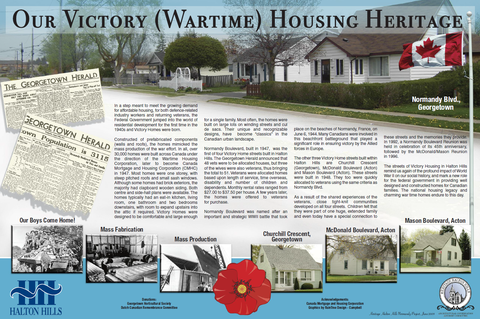
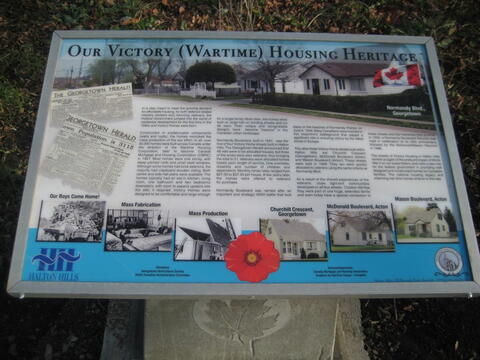
OUR VICTORY (WARTIME) HOUSING HERITAGE

Normandy Blvd.,
Georgetown

In a step meant to meet the growing demand for affordable housing, for both defence-related industry workers and returning veterans, the Federal Government jumped into the world of residential development for the first time in the 1940s and Victory Homes were born.

Constructed of prefabricated components (walls and roofs), the homes mimicked the mass production of the war effort. In all, over 30,000 homes were built across Canada under the direction of the Wartime Housing Corporation, later to become Canada Mortgage and Housing Corporation (CMHC) in 1947. Most homes were one storey, with steep pitched roofs and small sash windows. Although some homes had brick exteriors, the majority had clapboard wooden siding. Both centre and side-hall plans were available. The homes typically had an eat-in kitchen, living room, one bathroom and two bedrooms downstairs, with room to expand upstairs into the attic if required. Victory Homes were designed to be comfortable and large enough for a single family. Most often, the homes were built on large lots on winding streets and cul de sacs. Their unique and recognizable designs, have become “classics” in the Canadian urban landscape.

Normandy Boulevard, built in 1947, was the first of four Victory Home streets built in Halton Hills. The Georgetown Herald announced that 48 vets were to be allocated houses, but three of the wives were also veterans,  thus bringing the total to 51. Veterans were allocated homes based upon  length of service, time overseas, disability and number of children and dependents. Monthly rental rates ranged from $27.00 to $37.50 per house. A few years later, the homes were offered to veterans for purchase. 

Normandy Boulevard was named after an important and strategic WWII battle that took place on the beaches of Normandy, France, on June 6, 1944. Many Canadians were involved in this beachfront battleground that played a significant role in ensuring victory by the Allied forces in Europe. The other three Victory Home streets built within Halton Hills are Churchill Crescent (Georgetown), McDonald Boulevard (Acton) and Mason Boulevard (Acton). These streets were built in 1948. They too were quickly allocated to veterans using the same criteria as Normandy Blvd.

As a result of the shared experiences of the veterans, close tight-knit communities developed on all four streets. Children felt that they were part of one huge, extended family and even today have a special connection to these streets and the memories they provide. In 1992, a Normandy Boulevard Reunion was held in celebration of its 45th anniversary, followed by the McDonald/Mason Reunion in 1996.

The streets of Victory Housing in Halton Hills remind us again of the profound impact of World War II on our social history, and mark a new role for the federal government in providing well designed and constructed homes for Canadian families. The national housing legacy and charming war time homes endure to this day.

Image
Photo Credit
Town of Halton Hills
Caption
storyboard
1 of 2 images
Image
Photo Credit
Town of Halton Hills
Caption
inscription
1 of 2 images
War or Conflict Term
Province
!4v1645033343793!6m8!1m7!1s1Jer_ttrVgaYd_tJ7xl1Tw!2m2!1d43.64907588401462!2d-79.91740144291931!3f257.94126434722864!4f-6.512261540260326!5f1.9587109090973311
Body Content

During the 1940s the Canadian government made a concerted effort to supply housing for the men and women who worked in defense-oriented industries and later for Veterans returning from the Second World War. Much legislation, including The Veteran's Land Act, provided funding for such projects, and small subdivisions sprang up in virtually every major town or city in Canada. 

Most of Victory Housing was prefabricated, generally one-and-a-half storey with a steep roof, shallow eaves and no dormers. Homes built for Second World War Veterans created a blueprint for the city’s suburbs.

This storyboard was unveiled on June 6, 2009.

City
Halton Hills (Georgetown)
Country
Type Description
Interpretive Panel
Memorial CF Legacy ID
10773
City/Municipality
Halton Hills (Georgetown)
Memorial Number
35028-038
Type
Address
60 Guelph Street
Location
St. George's Anglican Church
in Canada
Yes
GPS Coordinates
43.6511949, -79.9223329
Inscription

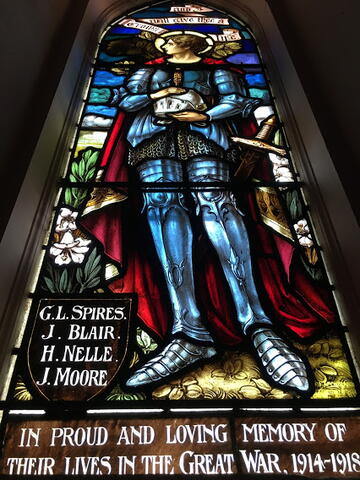
BE THOU FAITHFUL UNTO DEATH AND I WILL GIVE THEE A CROWN OF LIFE

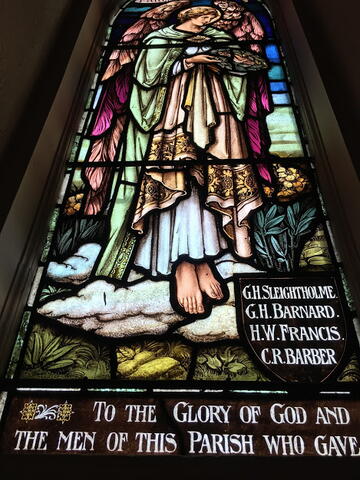
TO THE GLORY OF GOD AND IN PROUD MEMORY OF
THE MEN OF THIS PARISH WHO GAVE THEIR LIVES IN THE GREAT WAR, 1914-1918

Image
Caption
St. George's Anglican Church Great War Window
1 of 4 images
Image
Caption
Window - depicts an angel holding a wreath.
1 of 4 images
Image
Caption
Window - depicts a knight who persisted unto death.
1 of 4 images
Image
Caption
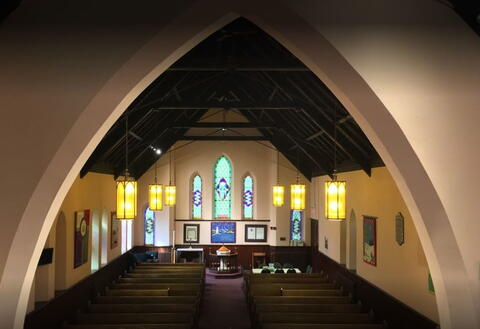
Expansion of sanctuary to make room for the two Great War windows, 1921.
1 of 4 images
War or Conflict Term
Province
!4v1729173911902!6m8!1m7!1sek-666LN-4nQi9qJVru2aw!2m2!1d43.65119488695695!2d-79.92233285091288!3f185.2359178990896!4f3.9635322622205393!5f0.7820865974627469
Body Content

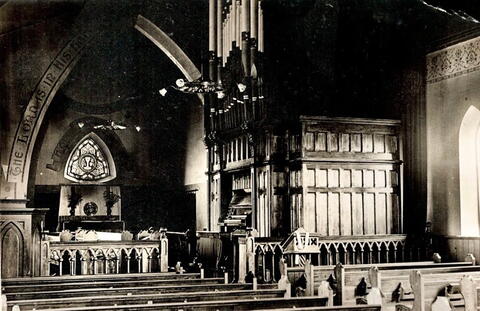
When St. George's Anglican Church was enlarged in 1921, a memorial window was unveiled by Lieutenant Governor H. O. Cockshatt and dedicated by Bishop Clark to those from the congregation who died in the First World War. The window depicts an angel holding a wreath, the crown of life, and a knight who persisted unto death.

City
Halton Hills (Georgetown)
Country
Type Description
Stained glass window
Photo Credit
St. George's Anglican Church
Memorial CF Legacy ID
10409
City/Municipality
Halton Hills (Georgetown)
Memorial Number
35028-037
Type
Address
127 Mill Street
Location
On the facade of the Royal Canadian Legion, Branch 120
in Canada
Yes
GPS Coordinates
43.6489985, -79.9267093
Image
Province
!4v1625502313968!6m8!1m7!1sLPukk0JVYfN-b9WCd6HyGg!2m2!1d43.6489984558294!2d-79.92670927170357!3f128.4804513288969!4f5.75981504933911!5f0.4000000000000002"
Body Content

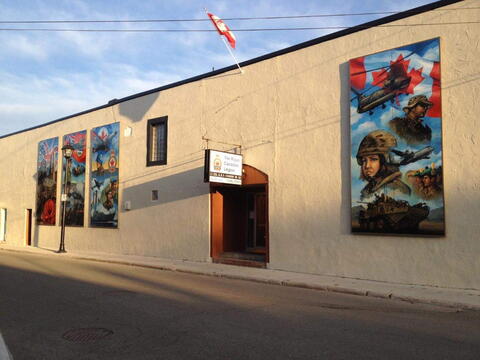
Robert Johannsen was commissioned by the Royal Canadian  Legion Georgetown branch 120 to paint a mural in 2012. The mural depicts the military history of the town in War and peacekeeping missions.

City
Halton Hills (Georgetown)
Country
Type Description
Mural
Memorial CF Legacy ID
10240
City/Municipality
Halton Hills (Acton)
Memorial Number
35028-036
Type
Address
McDonald and Wallace Streets
in Canada
Yes
GPS Coordinates
43.636979, -80.039468
Inscription

OUR VICTORY (WARTIME) HOUSING HERITAGE

McDonald Boulevard & Mason Boulevard, Acton

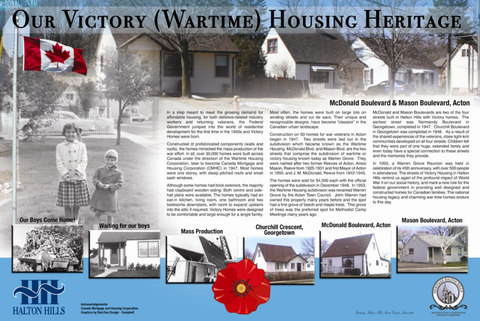
In a step meant to meet the growing demand for affordable housing, for both defence-related industry workers and returning veterans, the Federal Government jumped into the world of residential development for the first time in the 1940s and Victory Homes were born.

Constructed of prefabricated components (walls and roofs), the homes mimicked the mass production of the war effort. In all, over 30,000 homes were built across Canada under the direction of the Wartime Housing Corporation, later to become Canada Mortgage and Housing Corporation (CMHC) in 1947. Most homes were one storey, with steep pitched roofs and small sash windows.

Although some homes had brick exteriors, the majority had clapboard wooden siding. Both centre and side-hall plans were available. The homes typically had an eat-in kitchen, living room, one bathroom and two bedrooms downstairs, with room to expand upstairs into the attic if required. Victory Homes were designed to be comfortable and large enough for a single family. Most often, the homes were built on large lots on winding streets and cul de sacs. Their unique and recognizable designs, have become “classics” in the Canadian urban landscape.

Construction on 50 homes for war veterans in Acton began in 1947. Two streets were laid out in the subdivision which became known as the Wartime Housing. McDonald Blvd. and Mason Blvd. are the two streets that comprise the subdivision of wartime or victory housing known today as Warren Grove. They were named after two former Reeves of Acton, Amos Mason, Reeve from 1925-1931 and first Mayor of Acton in 1950; and J. M. McDonald, Reeve from 1942-1945.

The homes were sold for $4,500 each with the official opening of the subdivision in December 1948. In 1953, the Wartime Housing subdivision was renamed Warren Grove by the Acton Town Council. John Warren had owned this property many years before and the spot had a fine grove of beech and maple trees. This grove of trees was the preferred spot for Methodist Camp Meetings many years ago.

McDonald and Mason Boulevards are two of the four streets built in Halton Hills with Victory homes. The earliest street was Normandy Boulevard in Georgetown, completed in 1947. Churchill Boulevard in Georgetown was completed in 1948. As a result of the shared experiences of the veterans, close tight-knit communities developed on all four streets. Children felt that they were part of one huge, extended family and even today have a special connection to these streets and the memories they provide.

In 1993, a Warren Grove Reunion was held in celebration of its 45th anniversary, with over 500 people in attendance. The streets of Victory Housing in Halton Hills remind us again of the profound impact of World War II on our social history, and mark a new role for the federal government in providing well designed and constructed homes for Canadian families. The national housing legacy and charming war time homes endure to this day.

Image
Photo Credit
Town of Halton Hills
Caption
storyboard
1 of 2 images
Image
Photo Credit
Town of Halton Hills
Caption
inscription
1 of 2 images
War or Conflict Term
Province
!4v1645017279634!6m8!1m7!1sYh92_aJj4CmB9mzrRK2zSQ!2m2!1d43.63697902475796!2d-80.03946802956173!3f260.17200736440265!4f-3.2255790410855525!5f0.7820865974627469
Body Content

During the 1940s the Canadian government made a concerted effort to supply housing for the men and women who worked in defense-oriented industries and later for Veterans returning from the Second World War. Much legislation, including The Veteran's Land Act, provided funding for such projects, and small subdivisions sprang up in virtually every major town or city in Canada. 

Most of Victory Housing was prefabricated, generally one-and-a-half storey with a steep roof, shallow eaves and no dormers. Homes built for Second World War Veterans created a blueprint for the city’s suburbs.

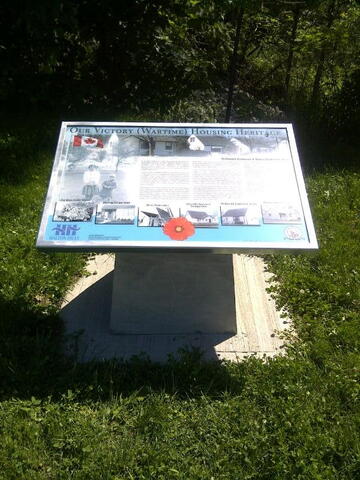
On September 10, 2013, Rick Bonnette, Mayor of Halton Hills; Councilor Moya Johnson, Chair, Heritage Halton Hills and John Wagg, President Royal Canadian Legion, Branch 197 Acton, unveiled the newly-installed storyboard highlighting the architecturally unique and historically significant Victory Housing.

City
Halton Hills (Acton)
Country
Type Description
Interpretive Panel
Memorial CF Legacy ID
10771
City/Municipality
Halton Hills (Georgetown)
Memorial Number
35028-034
Type
Address
1 Park Avenue
Location
Georgetown Fairgrounds
in Canada
Yes
GPS Coordinates
43.6458068, -79.9272846
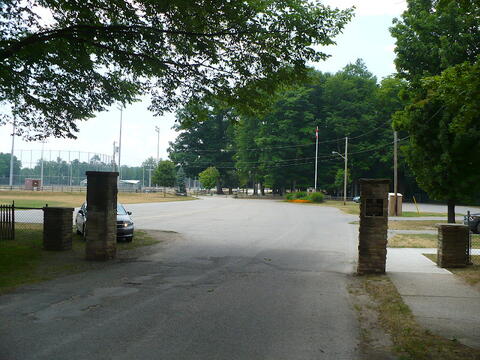
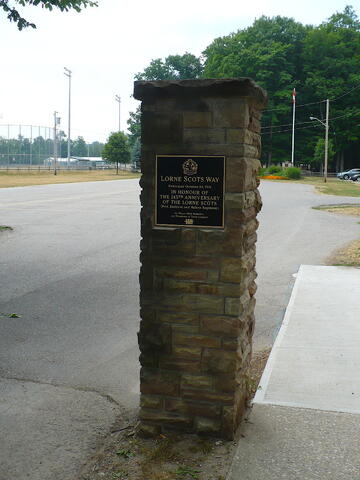
Inscription

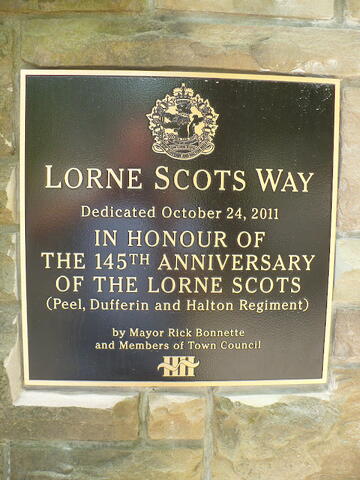
LORNE SCOTS WAY
Dedicated October 24, 2011

IN HONOUR OF
THE 145TH ANNIVERSARY
OF THE LORNE SCOTS
(Peel, Dufferin, and Halton Regiment)

by Mayor Rick Bonette
and Members of Town Council

Image
Photo Credit
Gerardo Cacella
Caption
Gateway to park.
1 of 3 images
Image
Photo Credit
Tim Laye, Ontario War Memorials
Caption
Column with plaque.
1 of 3 images
Image
Photo Credit
Tim Laye, Ontario War Memorials
Caption
inscription
1 of 3 images
Province
!4v1625501893732!6m8!1m7!1sYW6cp6T2kHtgxamBGJ7EFA!2m2!1d43.64580613220517!2d-79.92728918260683!3f222.2460450735785!4f-3.6756316877577433!5f1.5041220219451086"
Body Content

These gates and the entrance to the town park and fairgrounds have been dedicated to The Lorne Scots Regiment on their 145 anniversary of service.

City
Halton Hills (Georgetown)
Country
Type Description
Gate - columns
Memorial CF Legacy ID
9435
City/Municipality
Glen Williams Village, Halton Region
Memorial Number
35028-033
Type
Address
517 Main Street
in Canada
Yes
GPS Coordinates
43.6680812, -79.9266667
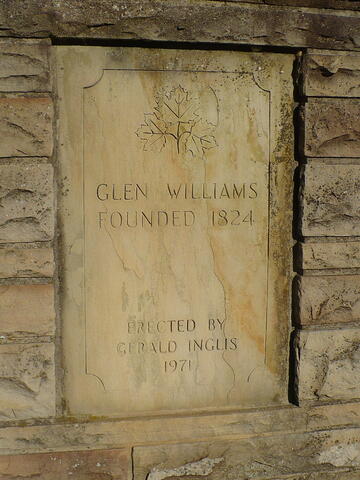
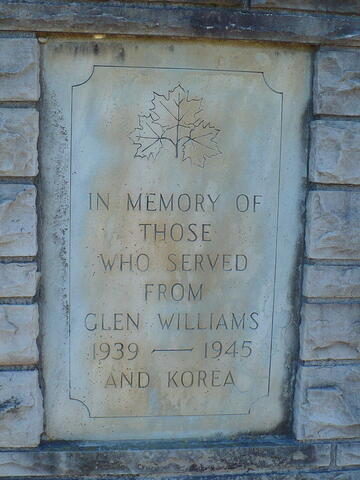
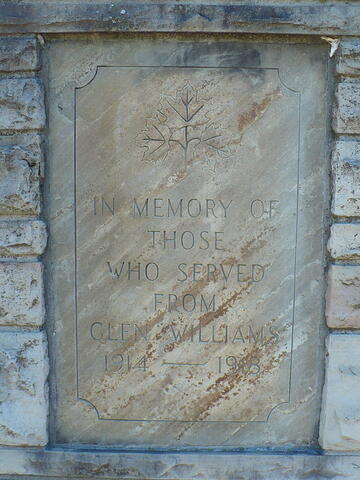
Inscription

[side 1/côté 1]

GLEN WILLIAMS
FOUNDED 1824
ERECTED BY
GERALD INGLIS
1971

[side 2/côté 2]
IN MEMORY OF
THOSE
WHO SERVED
FROM
GLEN WILLIAMS
1939--1945
AND KOREA

[side 3/côté 3]
IN MEMORY OF
THOSE
WHO SERVED FROM
GLEN WILLIAMS
1914--1918

Image
Caption
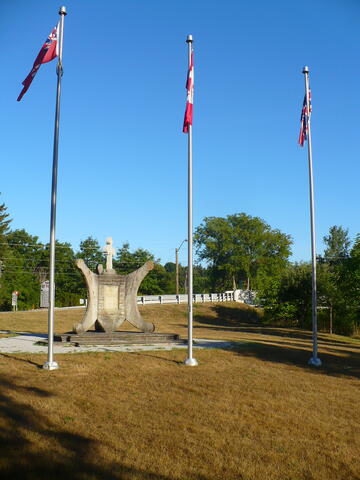
Glen Williams War Memorial
1 of 5 images
Image
Caption
side 1
1 of 5 images
Image
Caption
side 2
1 of 5 images
Image
Caption
side 3
1 of 5 images
Image
Caption
surroundings
1 of 5 images
Province
4v1623939874412!6m8!1m7!1sCAoSLEFGMVFpcE1oM1ZmaE9fLWllSWtlXzk3ZDNsRVRyU2hjRnlfMkIzVENrQ1RH!2m2!1d43.66808115003471!2d-79.9266666546464!3f91.1!4f-6.650000000000006!5f0.7820865974627469
Body Content

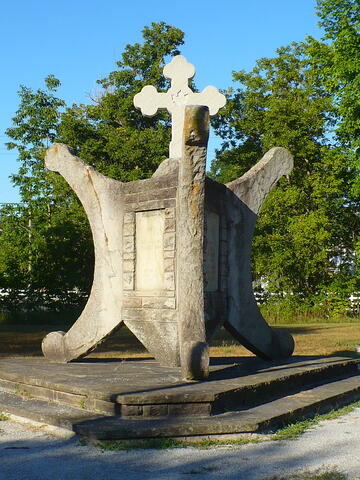
Despite longstanding interest in erecting a war memorial in Glen Williams following the end of the Second World War, the existing monument was not constructed until the 1970s. In 1971, local stonemason Gerald Inglis hand-carved the monument from freestone sourced from the Inglis farm on the 10th Line. Since its installation, the memorial has served as the central gathering place for Glen Williams residents during annual Remembrance Day services.

In 2010, Glen Williams stonemasons Gerry and Ryan Inglis, restored the memorial by reinstalling a stone cross. The cross, weighing approximately 200 pounds, was hand-cut by the duo from freestone at the Inglis farm, a few miles from the Glen Williams village center.

City
Glen Williams Village, Halton Region
Country
Type Description
Sculpture
Photo Credit
Tim Laye, Ontario War Memorials
Memorial CF Legacy ID
9433
City/Municipality
Norval (Georgetown)
Memorial Number
35028-032
Type
Address
9118 Winston Churchill Boulevard
Location
Inside the Queen of Peace Croatian Franciscan Centre
in Canada
Yes
GPS Coordinates
43.6290555, -79.8269403
Inscription

[front/devant]

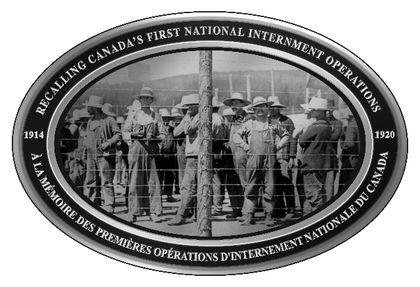
Recalling Canada's First National Internment Operations 1914-1920

A la mémoire des premières opérations d’internement nationale du Canada 1914-1920

Image
Photo Credit
Victoria Edwards
Caption
Plaque
War or Conflict Term
Province
!4v1636732790487!6m8!1m7!1s_NNUmm9vyNjaUAVoHEntKQ!2m2!1d43.62905548132222!2d-79.82694033884054!3f239.93050565125057!4f3.081212444715163!5f2.8814538312188387"
Body Content

This memorial recalls a historic injustice Canadians should pause to remember, as we recall the First World War and the valour of all those Canadian men, and some women, who served. It is a tribute to mark the memory of the thousands of "enemy aliens" who had their civil rights stripped, and were subsequently imprisoned during Canada's first national internment operations of 1914-1920, following the implementation of the War Measures Act. 2014 marks the 100th anniversary of the War Measures Act - adopted on August 22, 1914 during the First World War. It was used to imprison Ukrainian-Canadians, and other ethnic groups, including German, Hungarian, Serbian, Croatian, and Armenian communities, into one of Canada's 24 internment camps.

Dr. Lubomyr Luciuk, a professor at the Royal Military College of Canada and former chair of the Ukrainian Canadian Civil Liberties Association (UCCLA), had taken it upon himself to lead the way and organize the memorial. In the CTO ("One Hundred") project, 100 aluminum plaques were simultaneously unveiled at 100 different locations across the country at 11:00am local time on August 22, 2014. The first plaque was unveiled in Amherst, Nova Scotia, followed by a wave of plaque unveilings moved west, from province to province, culminating in Nanaimo, British Columbia. The plaques, which cost $1,000 to make, were funded by the generosity of the Endowment Council of the Canadian First World War Interment Recognition Fund.

Each plaque features a photo of internment prisoners confined behind a wire fence at the Castle Mountain Internment Camp in Banff, Alberta. The Castle Camp, which was built in 1915 at the base of Castle Mountain, was a Canadian internment camp which held immigrant prisoners of Ukrainian, Austrian, Hungarian, and German descent.

City
Norval (Georgetown)
Country
Type Description
Plaque, aluminum
Memorial CF Legacy ID
9083
City/Municipality
Halton Hills (Georgetown)
Memorial Number
35028-031
Type
Address
91 Todd Road
Location
Colonel J. R. Barber Armoury
in Canada
Yes
GPS Coordinates
43.6533943, -79.8958099
Inscription

[front/devant]

Colonel JR Barber Armoury

Province
!4v1625501244982!6m8!1m7!1sbfxC20-JfMJVILS1ndOm3A!2m2!1d43.65339429617709!2d-79.89580993775948!3f158.10775193684373!4f4.90530075684174!5f1.6444770629411924"
Body Content

This armoury, Colonel JR Barber Armoury, is named in honour of Colonel John Roaf Barber, ED, CD.

John Roaf Barber was born in Georgetown, Upper Canada, in July 1841. Barber was educated in Georgetown and planned to attend the Royal Military College in England, but remained in Georgetown to help run the family-owned paper-milling business which he took over in 1880. But Barber was also an integral member of his community. Between 1861 and 1905, he served in the militia, first in the Georgetown Volunteer Militia Infantry Company and then in the 20th (Halton) Battalion (the Lorne Rifles). He saw active service in 1866, at Ridgeway against the Fenians. He achieved the rank of major in 1876 and for many years was paymaster of the 20th Battalion, eventually becoming the Regiment’s 8th Commanding Officer. His community involvement led him as well into the political arena: he sat on the local council and was reeve of Georgetown from January 1867 to December 1876 and again in 1882, when he also served as warden of Halton County. From 1898 to 1904 he was the Liberal MPP for Halton. He died in Georgetown in March, 1917.

City
Halton Hills (Georgetown)
Country
Type Description
Building - armoury
Memorial CF Legacy ID
8930
City/Municipality
Milton
Memorial Number
35028-030
Type
Address
8815 Britannia Road
Location
Omagh Presbyterian Church
in Canada
Yes
GPS Coordinates
43.4944707, -79.8264269
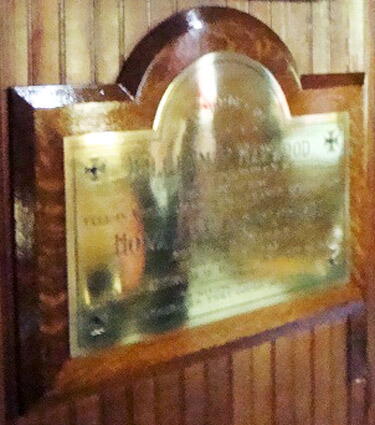
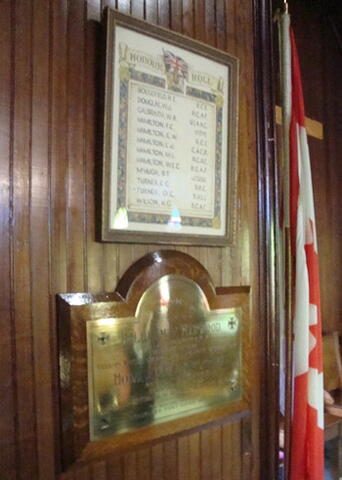
Inscription

[front/devant]

William P. Harwood
Cavalry Regiment of CEF
Born Nov. 1st 1897
Fell in action near ARRAS FRANCE
September 19, 1917

Howard C. Robertson (should read “Howard C. Robinson” confirmed record is #648785)
159th Battalion CEF Born July 15th 1890 Fell in action near ARRAS FRANCE
September 2, 1918

“IN SAVING OTHERS THEMSELVES THEY COULD NOT SAVE”.

Image
Photo Credit
Richard Laughton
Caption
front view
1 of 3 images
Image
Caption
front and surroundings
1 of 3 images
Image
Caption
church
1 of 3 images
War or Conflict Term
Province
!4v1629301832749!6m8!1m7!1sd5z87zY9FVjBFkaq3EooQQ!2m2!1d43.49447073839543!2d-79.8264268892358!3f319.72823470616686!4f7.207014430196196!5f1.5397427113343776"
Body Content

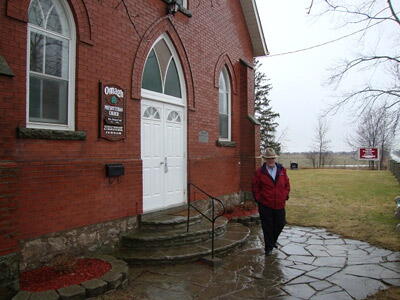
This memorial erected by the Omagh Presbyterian Church, is dedicated to members of the congregation killed in action duringthe Great War.

City
Milton
Country
Type Description
Bronze plaque on wooden frame
Memorial CF Legacy ID
8480