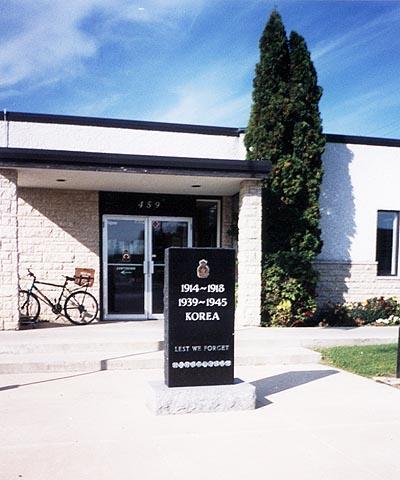
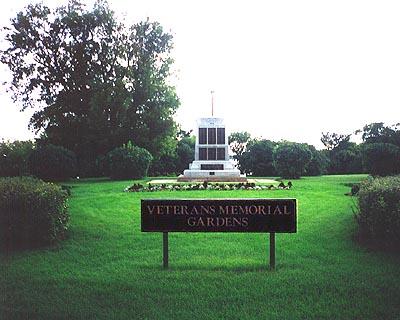
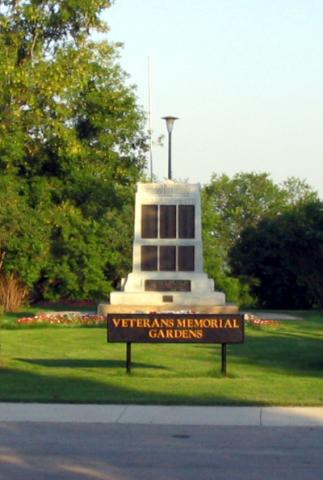
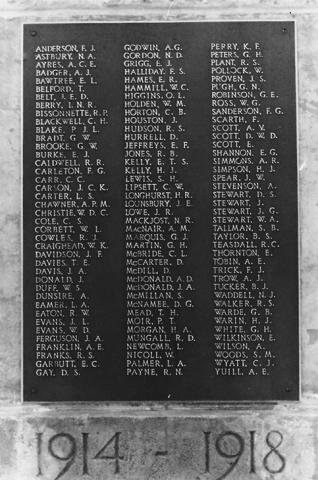
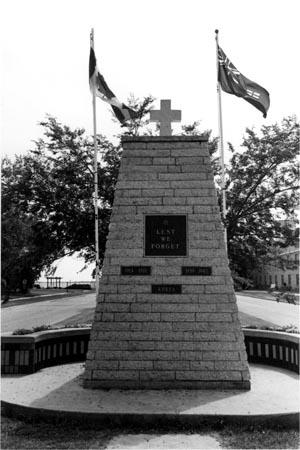
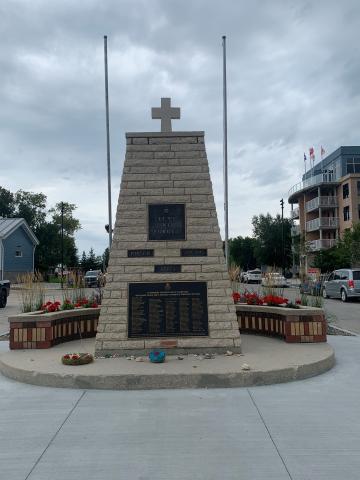
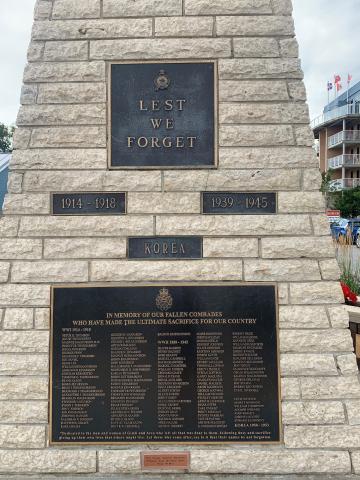
This memorial to the First and Second World Wars and the Korean War was erected by Royal Canadian Legion Branch No. 52.
Stonewall Cenotaph
[front/devant]
1914-1918
1939-1945
KOREA
LEST WE FORGET
My VAC Account
My VAC Account[front/devant]
1914-1918
1939-1945
KOREA
LEST WE FORGET
This memorial to the First and Second World Wars and the Korean War was erected by Royal Canadian Legion Branch No. 52.
[front/devant]
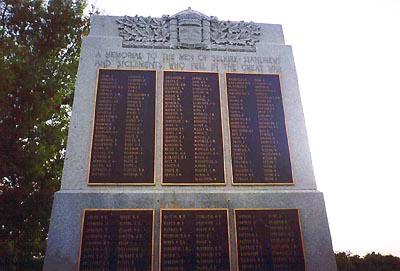
A MEMORIAL TO THE MEN OF SELKIRK, ST. ANDREWS AND ST. CLEMENTS WHO FELL IN THE GREAT WAR
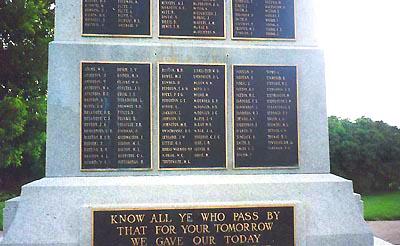
KNOW ALL YE WHO PASS BY THAT FOR YOUR TOMORROW WE GAVE OUR TODAY
1914 - 1918 1939 - 1945
This memorial is dedicated to the local war dead and veterans of the First World War and the veterans of the Second World War.
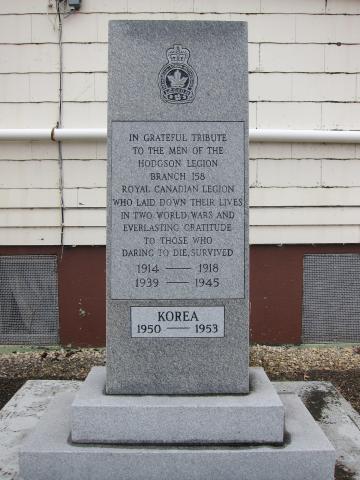
IN GRATEFUL TRIBUTE
TO THE MEN OF THE
HODGSON LEGION
BRANCH 158
ROYAL CANADIAN LEGION
WHO LAID DOWN THEIR LIVES
IN TWO WORLD WARS AND
EVERLASTING GRATITUDE
TO THOSE WHO
DARING TO DIE, SURVIVED
1914 — 1918
1939 — 1945
KOREA
1950 — 1953
The Hodgson War Memorial was erected in honour of soldiers from the Hodgson Legion Branch who died and those who served in the First and Second World Wars. Later, the Korean War inscription was added.
1914 - 1918
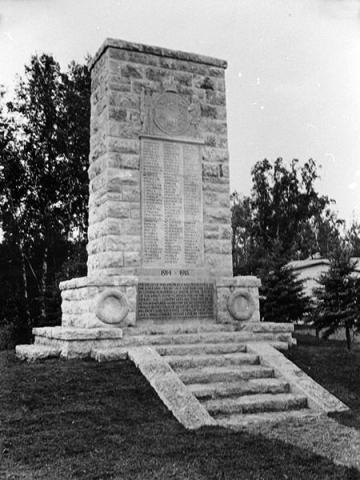
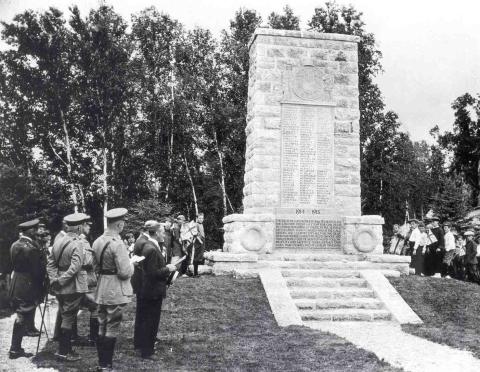
The Union Bank of Canada War Memorial at Camp Morton was previously located at Lakeside Fresh Air Camp for Children. It was erected in July 1922 by the Union Bank of Canada in commemoration of its employees killed during the First World War and unveiled by Lieutenant-Governor J. A. M. Aikins.
On July 11, 1922, the Union Bank of Canada War Memorial was dedicated. In attendance were Col. Borden, Major-General Ketchen, Major Hennesy, W.A. Allan, president of the Union Bank and Louis Northrup, vice-president of Lakeside Camp.
LEST
WE
FORGET
1914 - 1918 1939 - 1945
KOREA
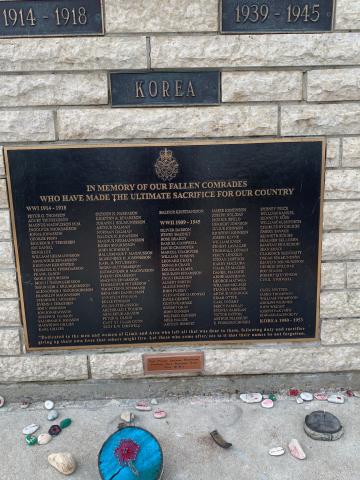
IN MEMORY OF OUR FALLEN COMRADES
WHO HAVE MADE THE ULTIMATE SACRIFICE FOR OUR COUNTRY
WW1 1914 - 1918
The Gimli Cenotaph was erected as a Centennial Project (1967) by the Gimli Legion. It is dedicated to the memory of the fallen in the two World Wars and the Korean War. It was designed and built by local artisan Leonard Ciszewski and was unveiled as part of the 1967 Remembrance Day service.
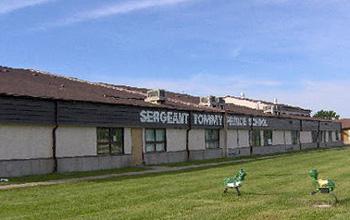
SERGEANT TOMMY PRINCE SCHOOL
The Sergeant Tommy Prince School is dedicated to Thomas George “Tommy” Prince, MM ( 1915 – 1977). He was one of Canada’s most decorated Indigenous soldiers, serving in the Second World War and the Korean War.
Sergeant Tommy Prince was a prominent Anishinaabe activist who served in the Second World War and Korean War. His story is one of the most widely known examples of the wartime contributions of Indigenous soldiers in the mid-20th century and the poor treatment they received upon their return to civilian life in Canada. His accomplishments attracted national media attention during his lifetime and earned him a great many posthumous tributes.
Prince was born in October 1915 in St. Peter's Reserve, Manitoba. He was the great-grandson of respected Ojibwa Chief Peguis, and one of eleven children born to Elizabeth and Henry Prince. In 1920, they moved to Brokenhead Ojibway Nation in Scanterbury, Manitoba. At age five, Prince was forced to leave his community and attend Elkhorn Residential School, where he joined the Cadet Corps. He suffered from post-traumatic stress disorder from the residential school before he joined the military.
In 1940, he volunteered to fight for Canada in the Second World War. He rose from sapper to lance corporal with the Royal Canadian Engineers before volunteering for the 1st Canadian Parachute Battalion in 1942. Soon after, he was assigned to the elite 1st Canadian Special Service Battalion, which was attached to the First Special Service Force (Devil’s Brigade). He reached the rank of sergeant by war’s end, and was one of three Canadians to receive both the Silver Star (United States) and the Military Medal. King George VI presented him with both honours during a ceremony at Buckingham Palace in 1945, shortly before Prince’s discharge from the army.
He wanted to prove his people were as good as any white man and restore their good name. One way to achieve this was to acquire as many medals as possible and he did so without putting his men at risk. Before any patrols he would ensure they were camouflaged and everything was secured. Often he would patrol alone because there would be less noise. Prince was a natural warrior and he excelled as the military developed the skills he learned on the reserve while living off the land. He loved the Devil's Brigade and was always praising his men, "If it wasn't for my men, I wouldn't be who I am today." He was a caring man who loved to joke around and make people laugh.
He was a prominent leader in the Indigenous rights movement of the 1940s. After the war, he served as spokesperson and vice-president of the Manitoba Indian Association, and appeared on its behalf before a Special Joint Committee of the Senate and House of Commons, tasked with studying the Indian Act. During his testimony in 1947, he advocated for the abolition of the Indian Act and respect for existing treaties, and presented submissions from Indigenous in Manitoba, which called for improved schools, better living conditions, and expanded hunting, trapping, and fishing rights.
In 1950, Prince re-enlisted in the Korean War. He contributed to the defence of Hill 677 in the Battle of Kapyong in 1951, for which the United States awarded the Princess Patricia’s Canadian Light Infantry the Distinguished Unit Citation—the only time a Canadian unit has received this honour. Military service took a heavy toll on his health and, following his honourable discharge from the army, he faced a difficult return to civilian life in Manitoba. Prince endured discrimination, illness, and poverty in the years that followed and died in 1977. He fought many demons after residential school and the horrors of combat, but he never lost his humility, self-worth, sense of humour and pride of being Anishinaabe.

LEST WE FORGET
IN MEMORY OF OUR COMRADES WHO GAVE THEIR LIVES
IN THE SERVICE OF THEIR COUNTRY.
WE WILL REMEMBER THEM.
Tablet to the left of the building.
[upper plaque/plaque du haut]
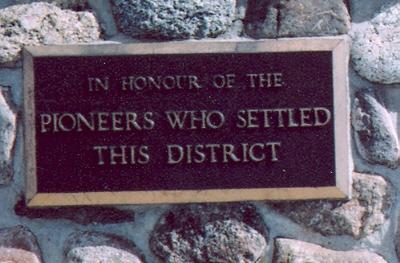
IN HONOUR OF THE
VETERANS OF THE WARS
OF THE WORLD
[lower plaque/plaque du bas]
IN HONOUR OF THE
PIONEERS WHO SETTLED
THIS DISTRICT
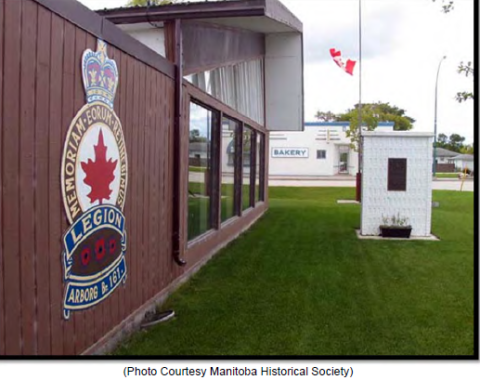
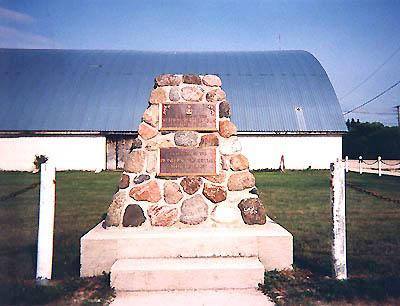
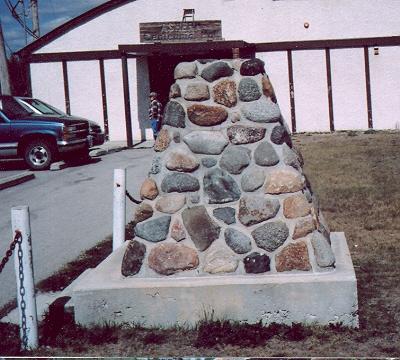
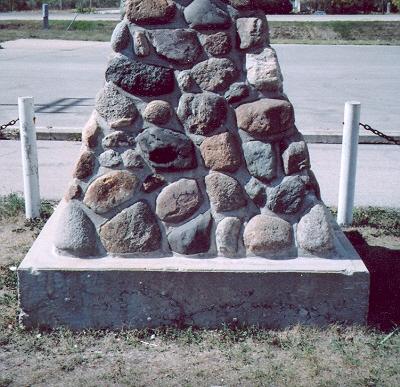
This memorial is dedicated to the local veterans and to the pioneers who settled this area. The cairn was built by a local farmer / stonemason named Willie Sonenholl and the concrete base was formed and poured by volunteer members of Royal Canadian Legion Branch No. 57, the memorial being unveiled in 1984 or 1985.
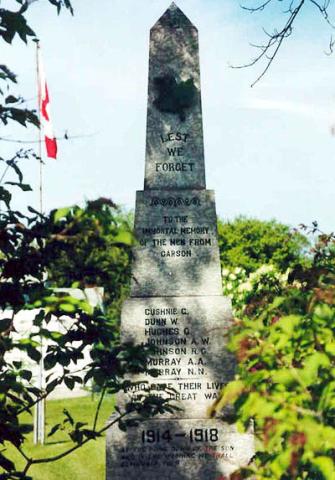
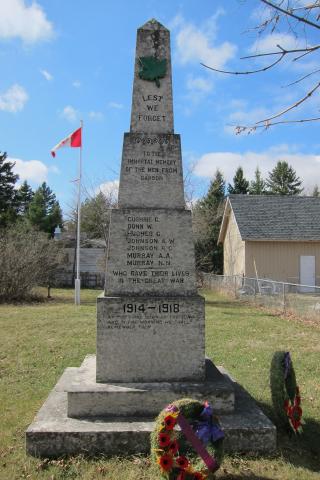
[front/devant]
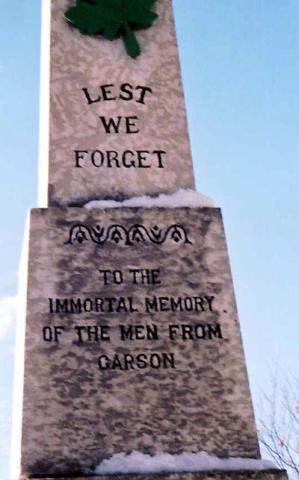
LEST
WE
FORGET
TO THE
IMMORTAL MEMORY
OF THE MEN FROM G
ARSON
CUSHNIE C.
DUNN W.
HUGHES G.
JOHNSON A.W.
JOHNSON R.G.
MURRAY A.A.
MURRAY N.N.
WHO GAVE THEIR LIVES
IN THE GREAT WAR
1914 — 1918
AT THE GOING DOWN OF THE SUN
AND IN THE MORNING WE SHALL
REMEMBER THEM
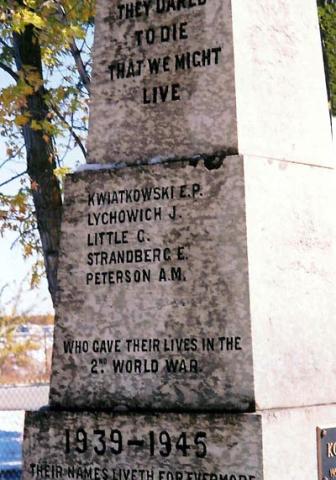
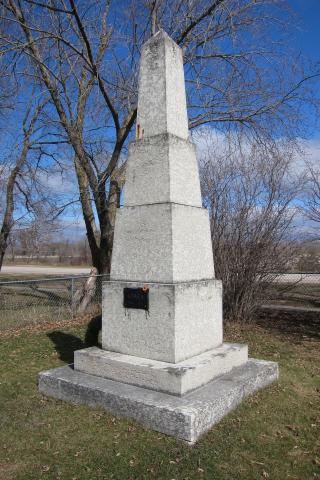
[right side/côté droit]
THEY DARED
TO DIE, THAT WE MIGHT
LIVE
KWIATKOWSKE E.P.
LYCHOWICH J.
LITTLE C.
STRANDBERG E.
PETERSON A.M.
WHO GAVE THEIR LIVES IN THE
2ND WORLD WAR
1939 — 1945
THEIR NAMES LIVETH FOREVER MORE
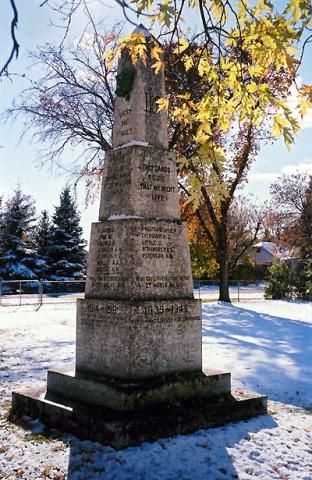
Erected by the village of Garson, this memorial is dedicated to the memory of the local war dead of the First and Second World Wars. The Garson history books date the unveiled on June 25, 1933.
The Garson Cenotaph combines a stout obelisk with tapered support blocks that make for an unusual design and presence. The monument is made from Manitoba limestone, also called Tyndall stone. The front has seven names from the First World War and an inscription from Lawrence Binyon’s 1914 poem “For the Fallen.” One stanza is familiar in the Act of Remembrance. Only the final lines are used (with a change from the original “will” to “shall”): “At the Going Down of the Sun and in the Morning we Shall Remember Them.”
Later, five names of the fallen from the Second World War were added.
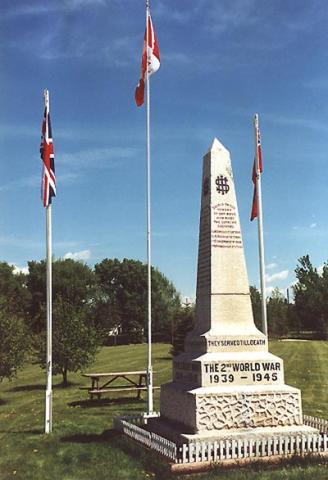
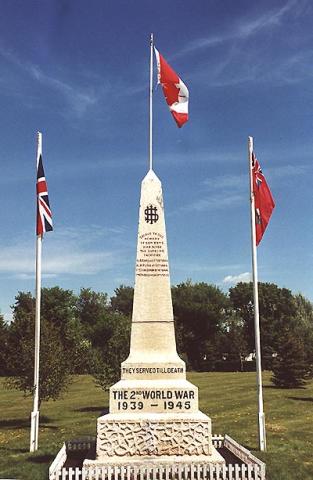
[front/devant]
TYNDALL'S TRIBUTE TO HER FALLEN HEROES AND IN LOVING MEMORY
O.P. LUND
W.J. HENRY
D.H. COX
H. WALTON
I. O'CONNOR
C. SLATER
F. TETROE
F. SOTTERMAN
J. WINKLER
J.S. HELLGREN
L.A. BLUE
J. CACHTLEY
THEIR NAMES LIVE FOREVER
THE GREAT WAR
1914 - 1918
[right side/côté droit]
SACRED TO THE MEMORY OF OUR BOYS WHO MADE THE SUPREME SACRIFICE
A. BARCLAY
A. ROSKI
E. LUNGSTRUM
N. PROBIZANSKI
THEY SERVED TILL DEATH
THE 2ND WORLD WAR
1939 - 1945
Erected by the Rural Municipality of Brokenhead, this memorial was unveiled on August 28, 19121, to the local war dead of the First World War. Later, the Second World War was added.