
Profile image

Military service
Service number:
R/93443
Rank:
Flight Sergeant
Force:
Air Force
Unit/Regiment:
Royal Canadian Air Force
Division:
102 Sqdn.
Death:
December 8, 1942
Burial/memorial information
Grave reference:
Panel 104.
Digital gallery of Flight Sergeant Gordon Carruthers Haig
-
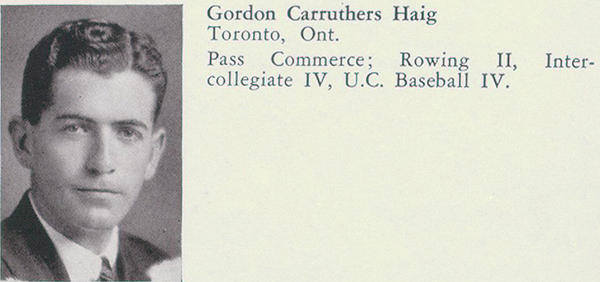
Photo of Gordon Haig
Photograph from Torontonensis, University of Toronto's yearbook in 1935 -

Roll of honour
Image from Torontonensis, University of Toronto's yearbook in 1935 shows Haig's name under 'Rowing'. A 'T Holder' is a person who has worn a U of T Athletic Letter (i.e. a 'T'). -

Team Photo
Photograph from Torontonensis, University of Toronto's yearbook in 1935 shows Haig and the rest of the U of T Rowing Crew. They were Intercollegiate Champions in 1934. -

Memorial Arch West
Memorial Arch West – The names of those who died in the Second World War were added to the archway beneath the Soldiers’ Tower in 1949. The name of “FS G. C. HAIG R.C.A.F.” is among the names inscribed. Photo: Cody Gagnon, courtesy of Alumni Relations. -
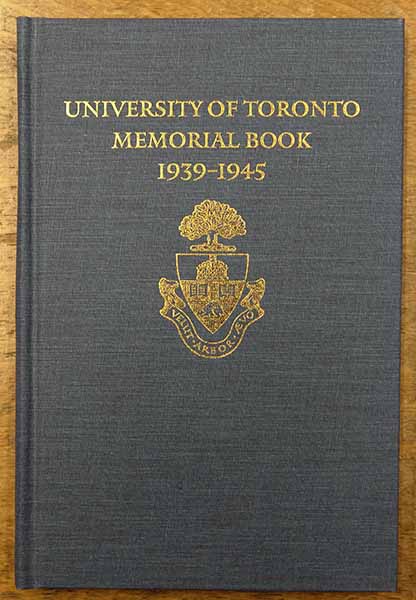
Memorial Book
University of Toronto Memorial Book, Second World War 1939-1945. Published by the Soldiers’ Tower Committee, 1993. Entry on page 26 reads: “F/Sgt Gordon Carruthers HAIG RCAF, 102 Sqn RAF. Graduate UTS 1930. University College, BA 1935. Missing, believed killed, in an air operation overseas, 9 December 1942. Name inscribed on the Runnymede Memorial, Cooper's Hill, Egham, Surrey, England.” -

Memorial Room
Soldiers’ Tower, University of Toronto. Photo: David Pike, courtesy of Alumni Relations. -

Soldiers' Tower Memorial
The Soldiers’ Tower was built by the University of Toronto Alumni Association in 1924 as a memorial to the Great War of 1914-1918. The names of those who died in that conflict are carved on the Memorial Screen at photo left. After the Second World War, more names were carved in the Memorial Arch at the Tower’s base. In total, almost 1200 names are inscribed. A Memorial Room inside the Tower contains mementoes and artifacts, and a 51-bell carillon serves as the audio element of the living memorial to the alumni, students, faculty and staff who died in the World Wars. The Soldiers’ Tower is the site of an annual Service of Remembrance. Photo: Kathy Parks, Alumni Relations. -

Memorial
Inscription - Runnymede Memorial - April 2017 … photo courtesy of Marg Liessens -
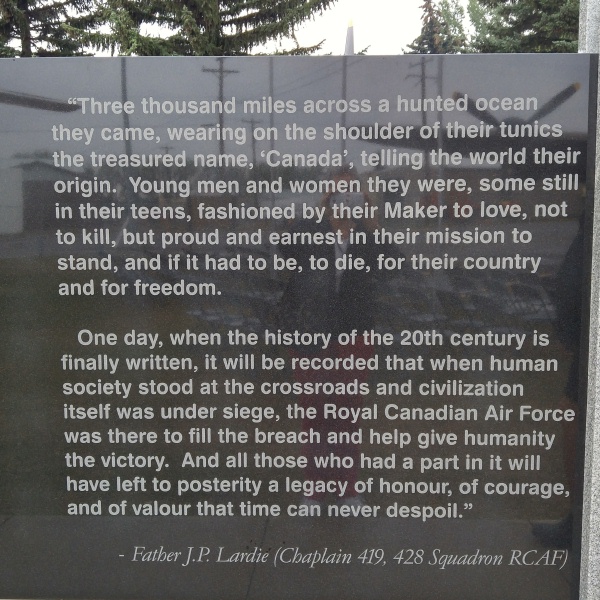
Memorial
Father J P Lardie's comments as inscribed on the Bomber Command Memorial Wall in Nanton, AB … photo courtesy of Marg Liessens -

Memorial
Flight Sergeant Gordon Carruthers Haig is also commemorated on the Bomber Command Memorial Wall in Nanton, AB … photo courtesy of Marg Liessens -

Memorial
Flight Sergeant Gordon Carruthers Haig is also commemorated on the Bomber Command Memorial Wall in Nanton, AB … photo courtesy of Marg Liessens -
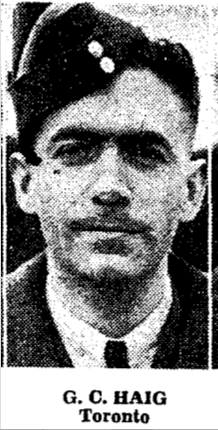
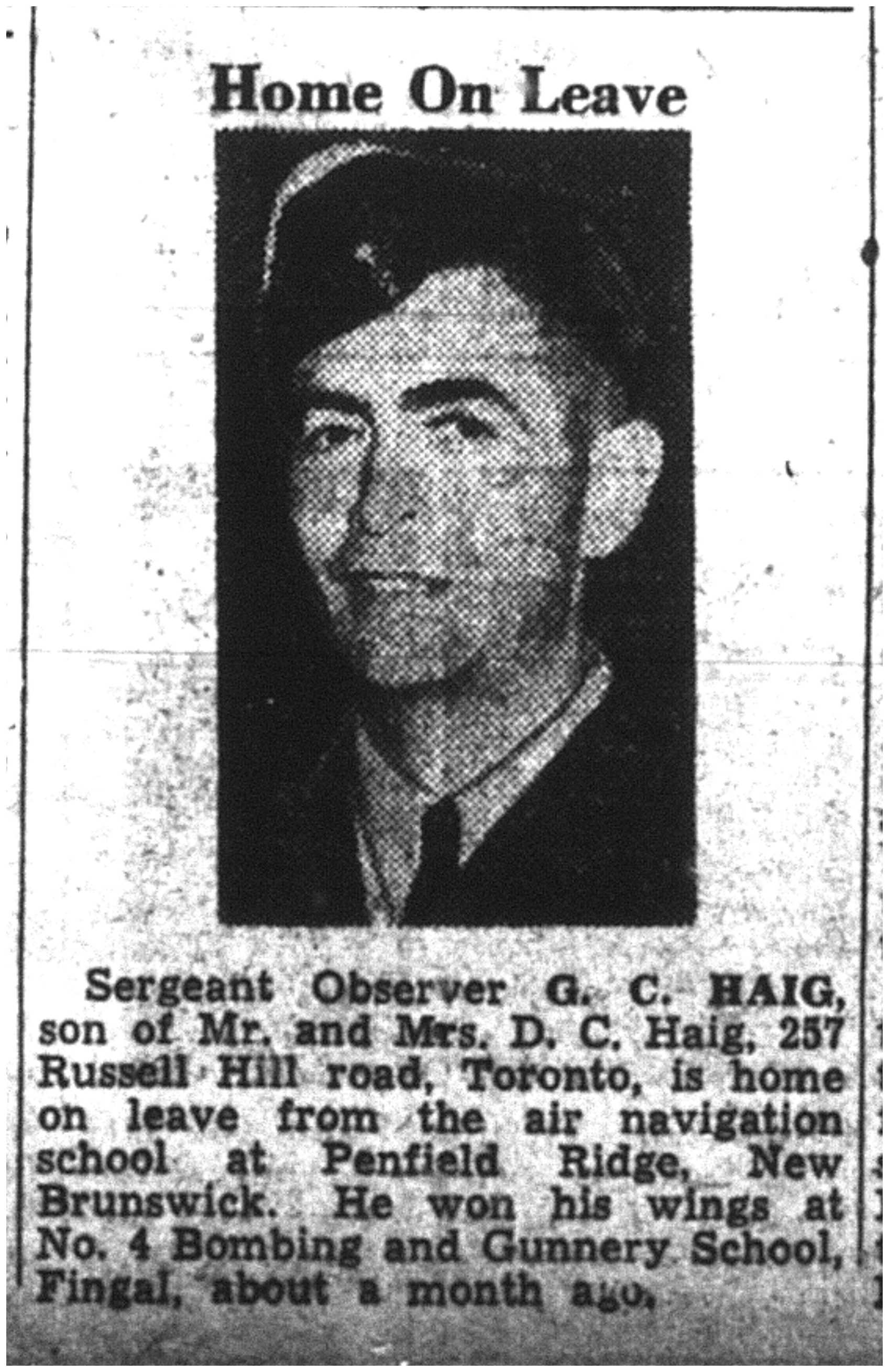
Newspaper clipping
From the Toronto Star March 1942. Submitted for the project Operation Picture Me -
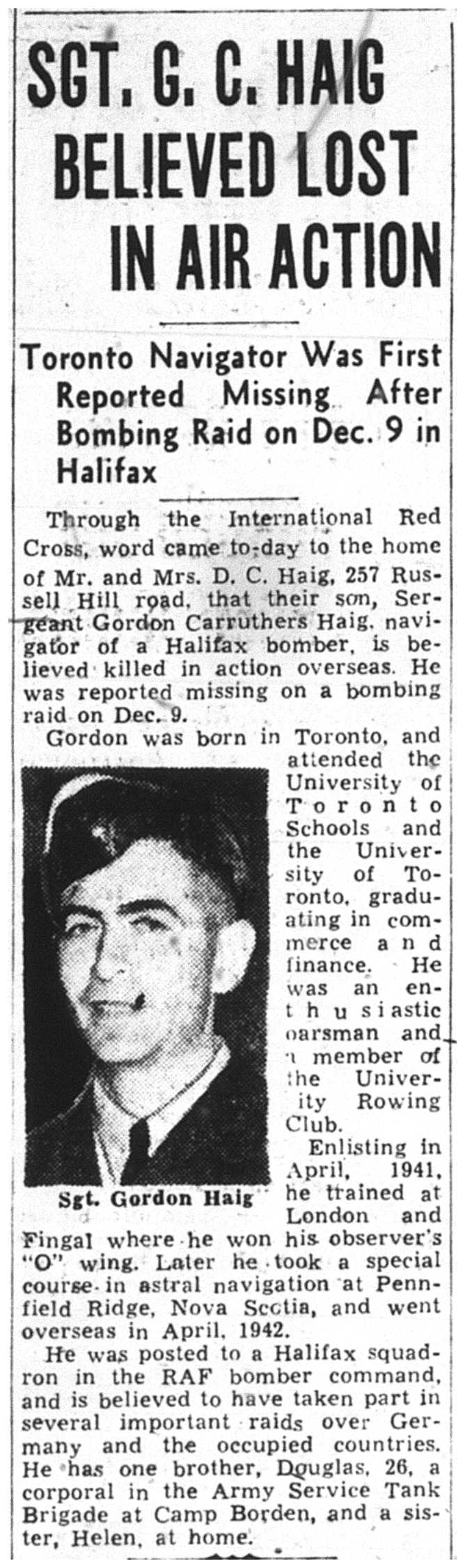
Newspaper clipping
From the Toronto Telegram April 1942. Submitted for the project Operation Picture Me -
Newspaper clipping
From the Toronto Telegram March 1943. Submitted for the project Operation Picture Me.
Digital gallery of
Flight Sergeant Gordon Carruthers Haig
Digital gallery of
Flight Sergeant Gordon Carruthers Haig
Digital gallery of
Flight Sergeant Gordon Carruthers Haig
Digital gallery of
Flight Sergeant Gordon Carruthers Haig
Digital gallery of
Flight Sergeant Gordon Carruthers Haig
Digital gallery of
Flight Sergeant Gordon Carruthers Haig
Digital gallery of
Flight Sergeant Gordon Carruthers Haig
Digital gallery of
Flight Sergeant Gordon Carruthers Haig
Digital gallery of
Flight Sergeant Gordon Carruthers Haig
In the Books of Remembrance
Commemorated on:
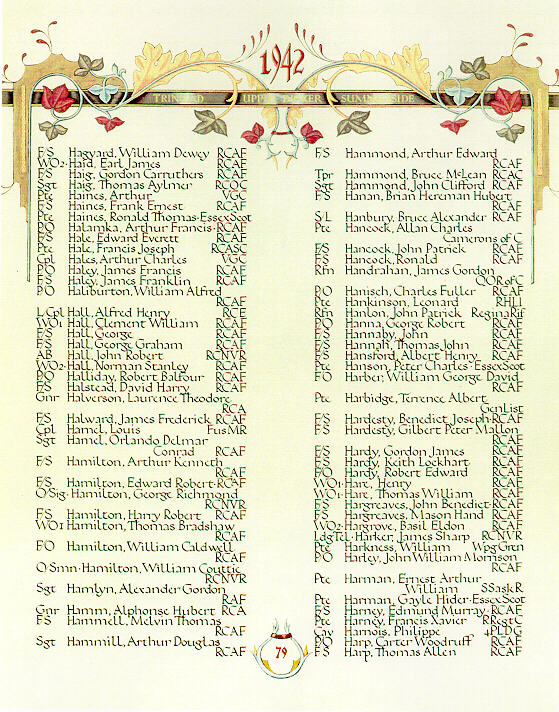
Page 79 of the Second World War Book of Remembrance.
Request this page
Download this page
The Poppy Design is a trademark of The Royal Canadian Legion (Dominion Command) and is used with permission. Click here to learn more about the poppy.
Did we miss something?
Contribute information to this commemorative page
Do you have photographs, information or a correction relating to this individual’s virtual memorial? Learn more about the CVWM and the information we collect.