
Canadian Memorial Chapel was born in the hearts of private soldiers in the First World War who, guided by a sergeant, formed a working party to bury six of Canada's war dead. On a November night of 1915, in the Ypres Salient, France, one of the soldiers said to Reverend Lieutenant-Colonel (Lt.-Col.) George Fallis, CBE, ED, DD: "Padre, after the war is over some chaplain should build a memorial in Canada in memory of fellows like these who have given their all." From that moment on, he would never lay away their beloved dead without the idea of a memorial chapel in his mind.
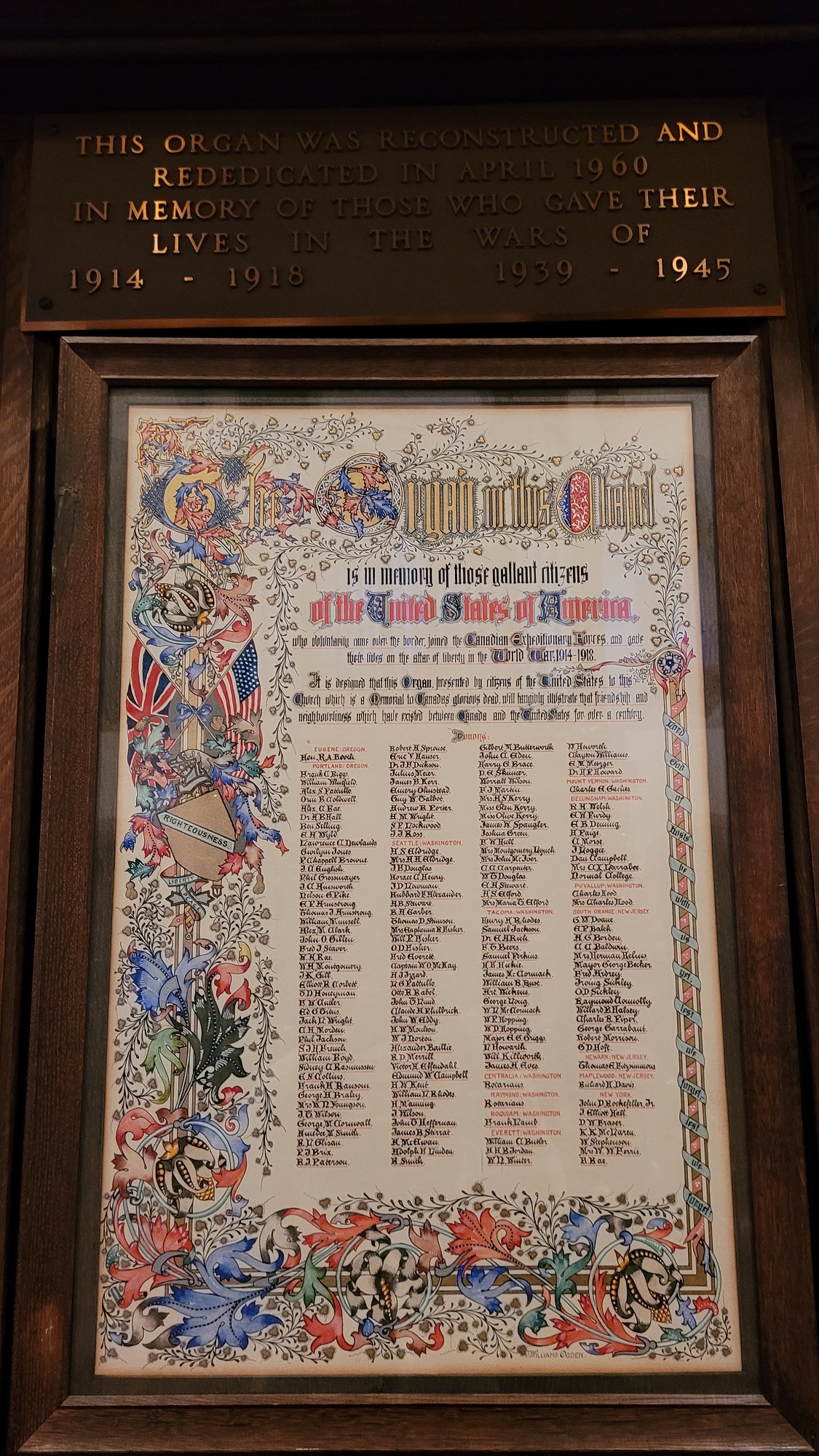
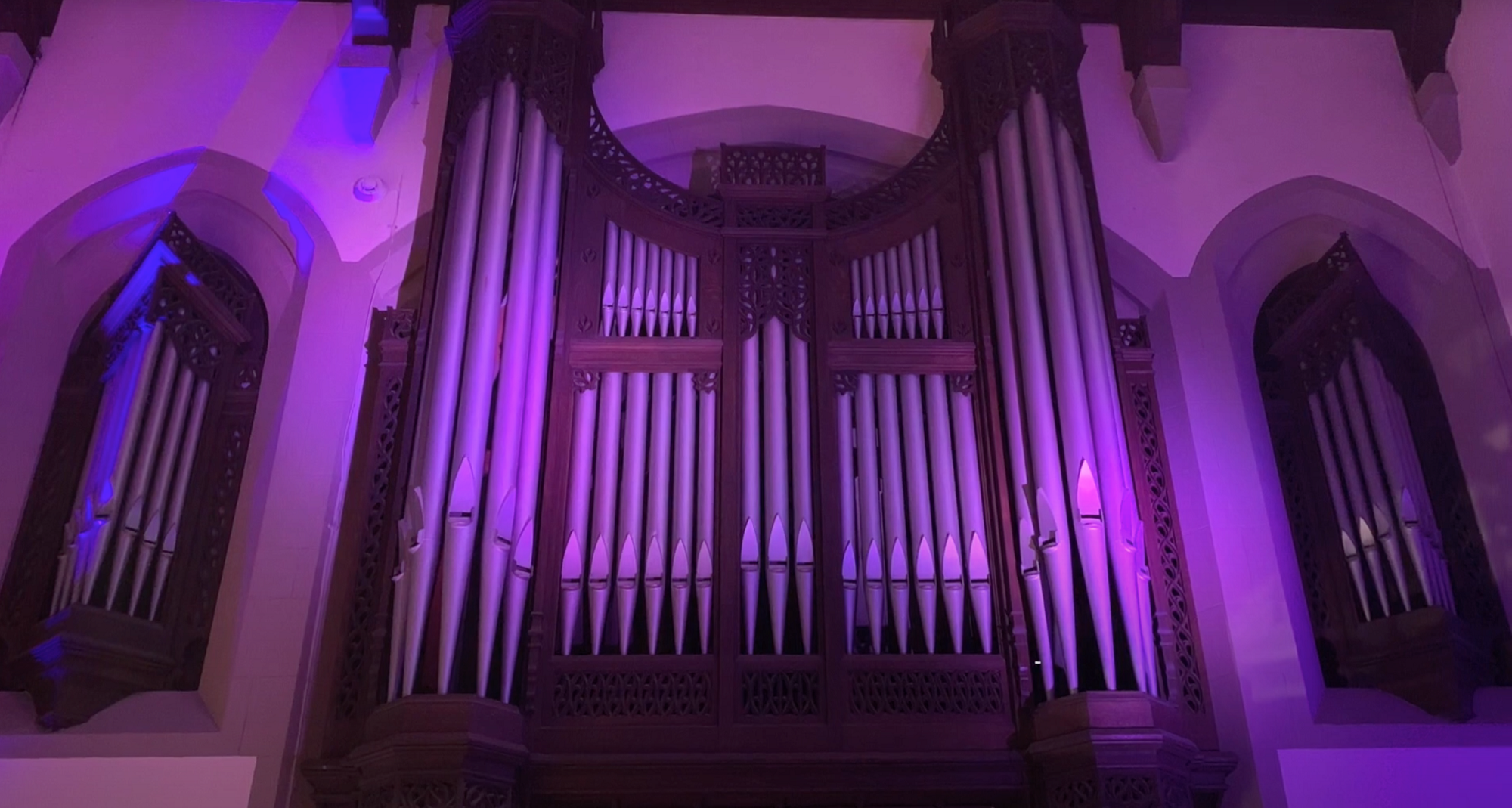
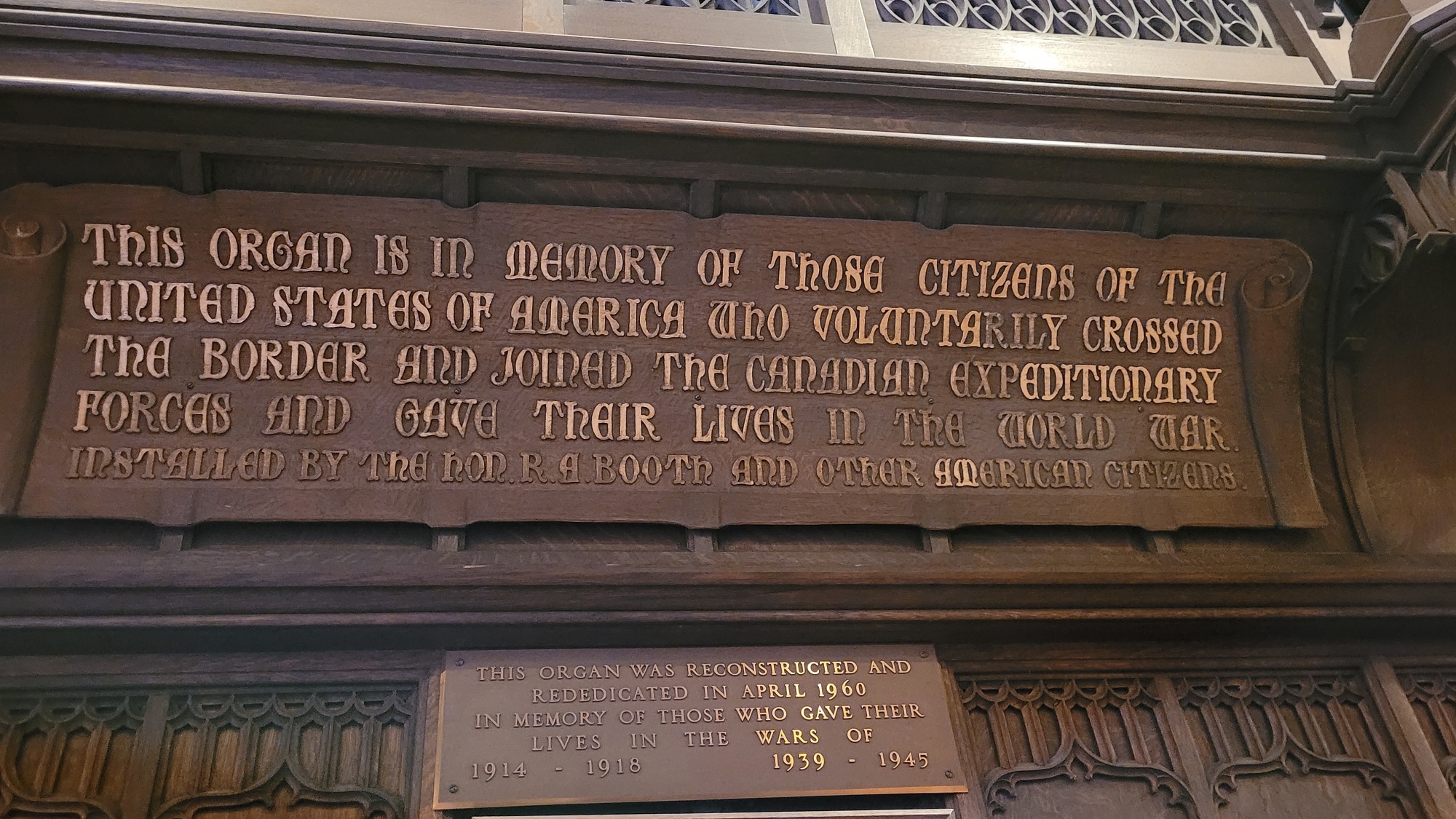
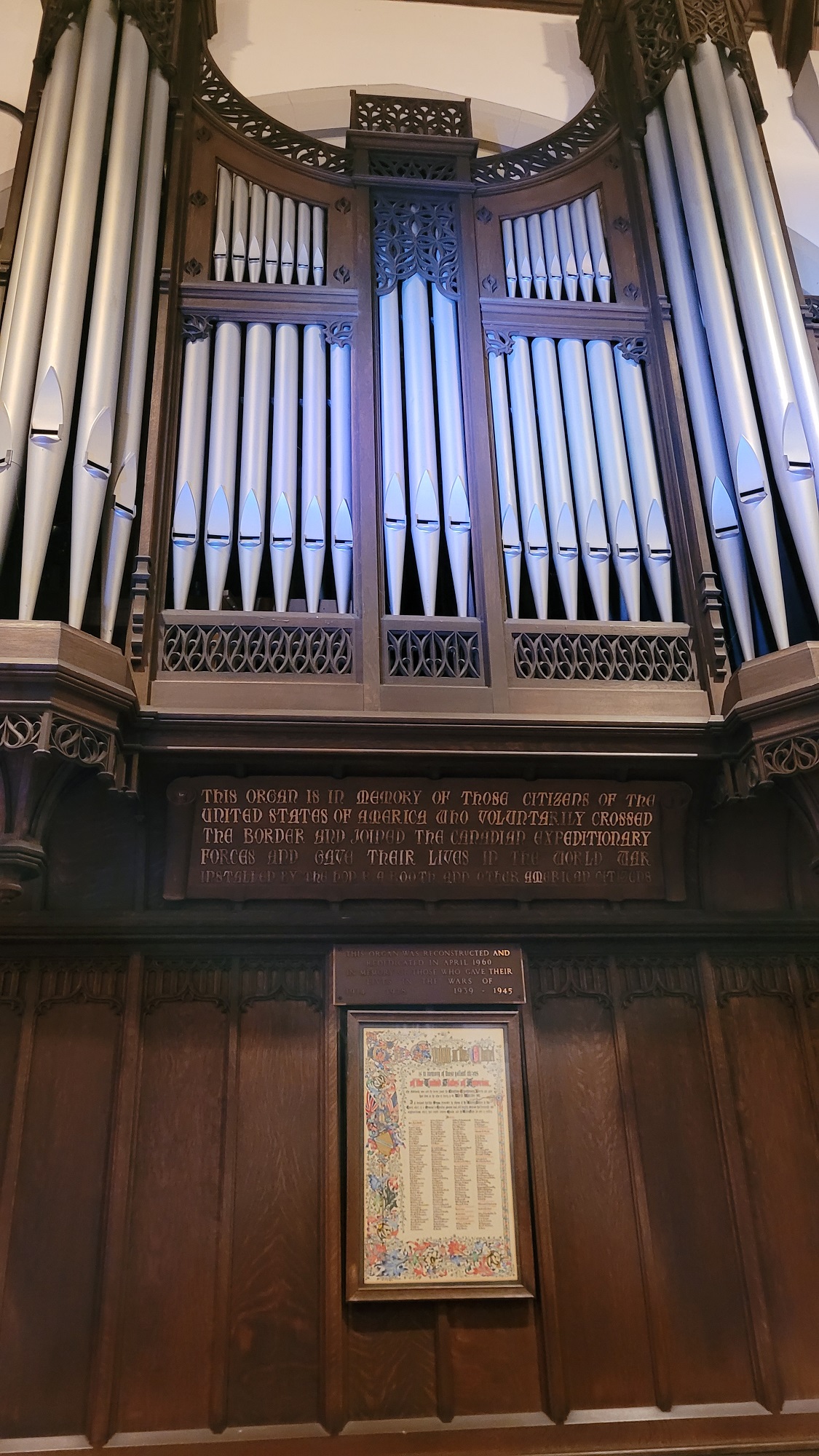
The organ was being constructed by Casavant Freres of St. Hyacinthe, Quebec and was not intended to be a special memorial. Lt.-Col. Fallis was invited to address several Rotary Clubs in Oregon, where Senator R.A. Booth was district governor. At the senator’s home, Lt.-Col. Fallis told his family the story of Canadian Memorial Chapel, which was to be dedicated on Remembrance Day, 1928.
The next morning at breakfast, Senator Booth said that he and his wife were amazed to hear that some fifteen hundred Americans were killed while serving with the Canadian army. He suggested, in the interest of international good will, that he should start a movement to have the organ erected in memory of those citizens of the United States of America who had crossed the border, joined the Canadian Expeditionary Force and had given their lives. He went on to say that if this appealed to the Trustees of Canadian Memorial Chapel, he would start the fund by subscribing five thousand dollars. The organ was costing thirty thousand. Senator Booth worked faithfully towards funds for the organ, as did many of his friends in Portland, Seattle, Eugene, Tacoma, and other Pacific Coast cities.
The Reverend Captain R. J. Edmison of South Orange, New Jersey, gained loyal support from interested citizens of the United States on the Atlantic Coast. He had been a beloved Padre overseas and was minister of First Presbyterian Church.
Each Sunday morning a dear old member of Lt.-Col. Fallis’ church, Mrs. William Alcorn, would pause at the church door to say she was praying daily to God that he would be given the physical strength to carry on his heavy task. One Sunday she handed him a letter in which she wrote that while she was saying her daily prayer for him, God revealed to her that Lt.-Col. Fallis was to write John D. Rockefeller Jr. and ask him for a subscription toward the Memorial Organ. He accepted the letter as a notion of a very old lady. Sunday after Sunday, she would ask if he had written Mr. Rockefeller. One day she handed him a second letter and it was a rebuke at his lack of faith. She said every time she prayed for him, God would reveal to her that he should write. To please the dear lady, Lt.-Col. Fallis wrote, never dreaming that he would get a reply in which Mr. Rockefeller sent twenty-five hundred dollars.
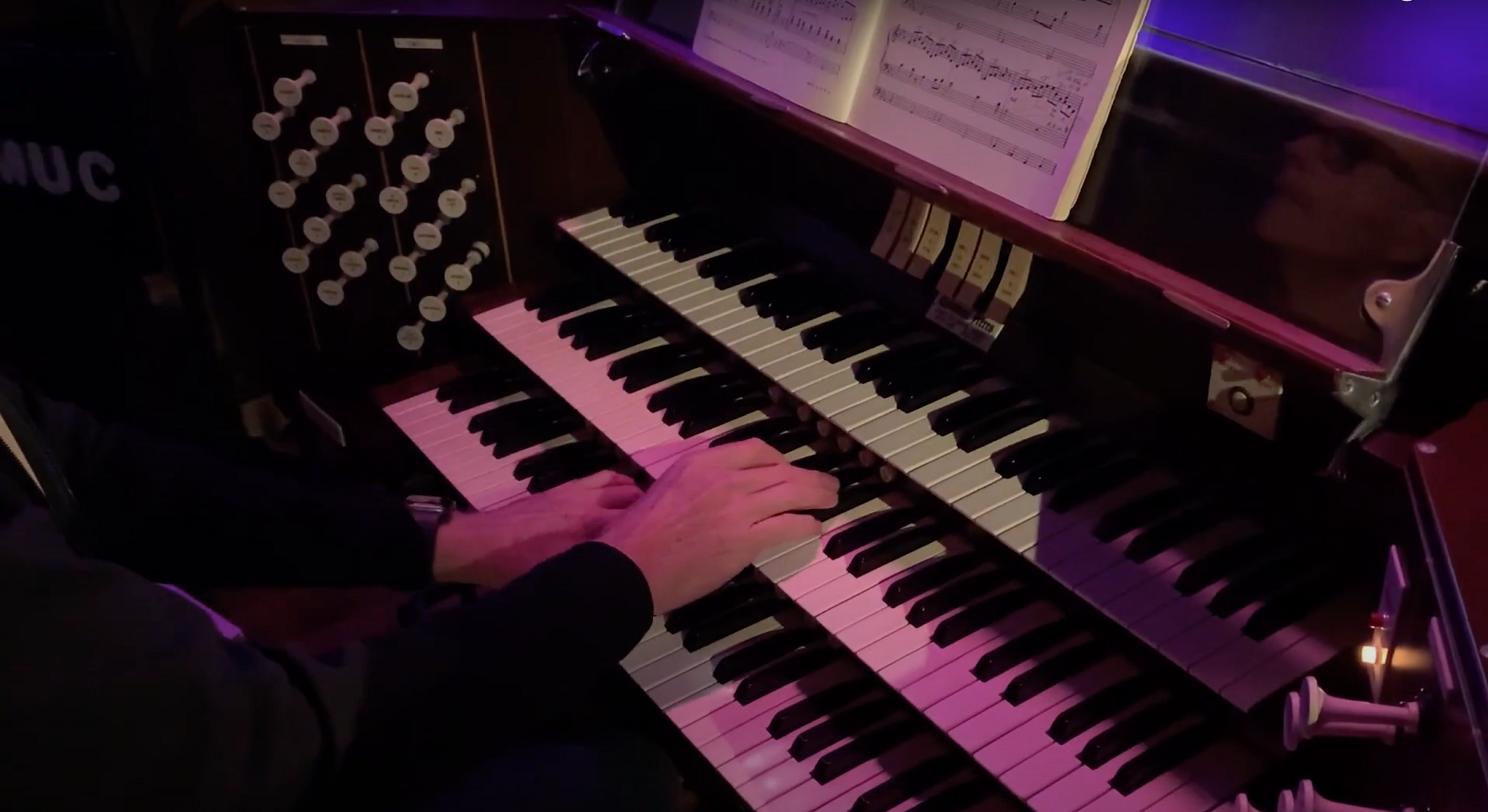
The Memorial Organ was dedicated on November 18, 1928, by Senator Booth. It was followed by an organ recital by Mrs. Montgomery Lynch of the Music Faculty of the University of Washington in Seattle. Her program was from composers of nine nations, symbolizing the international character of this organ.
In April 1960, the organ was reconstructed and rededicated in memory of those who gave their lives in the First and Second World Wars. In 1971, it was rebuilt and rededicated in memory of all members of the Armed Forces who lost their lives in the service of their country.