
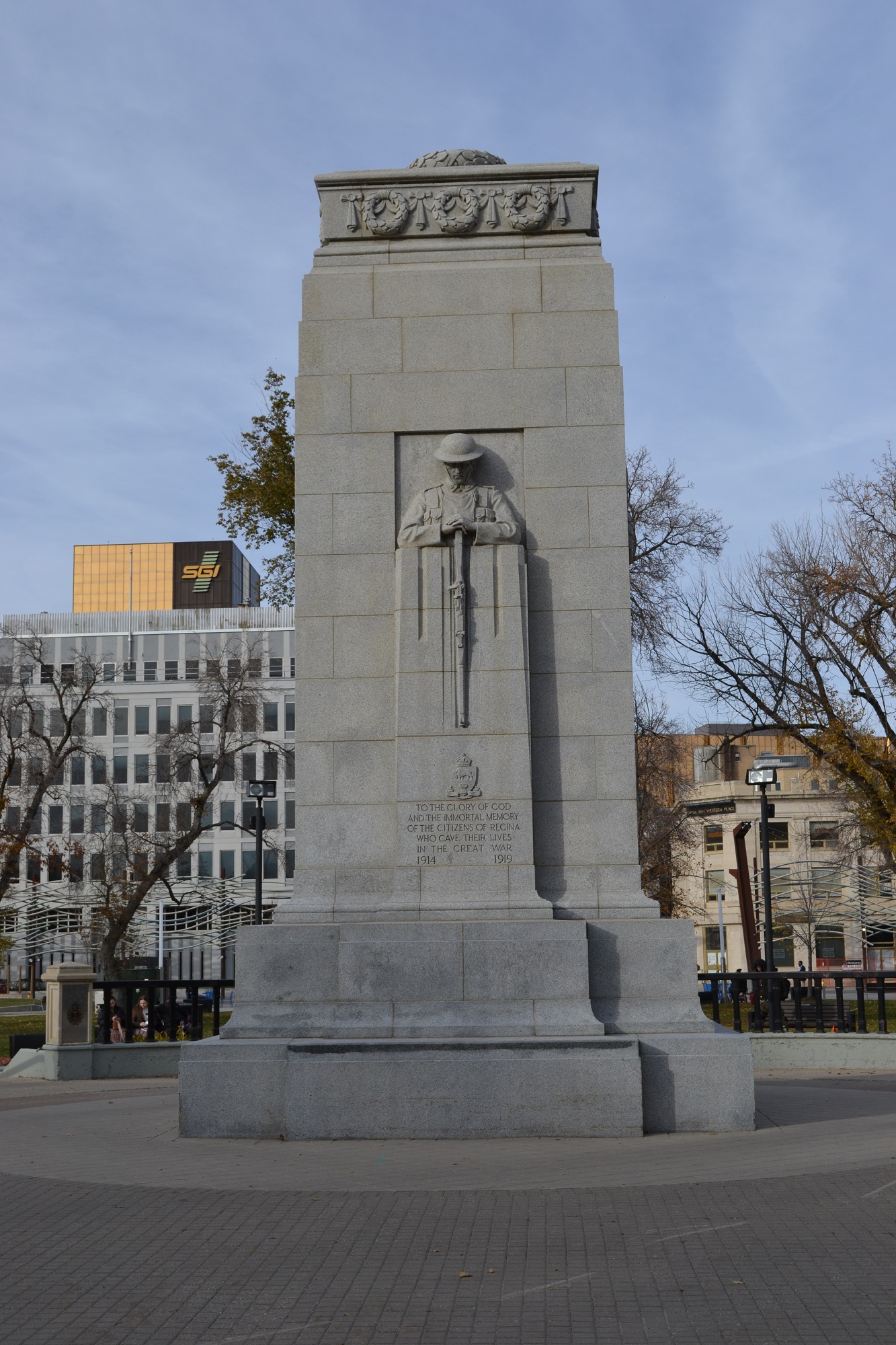
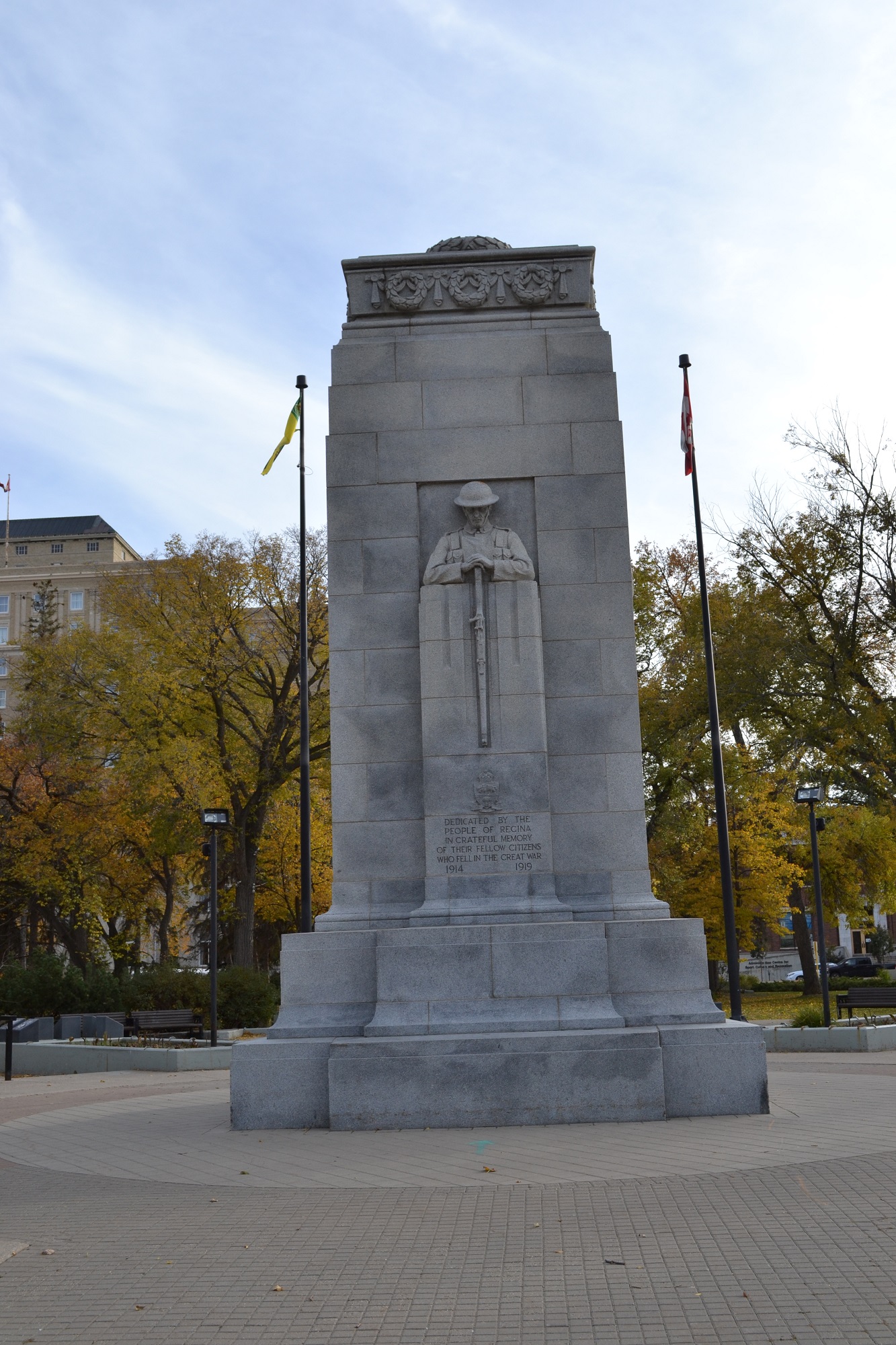
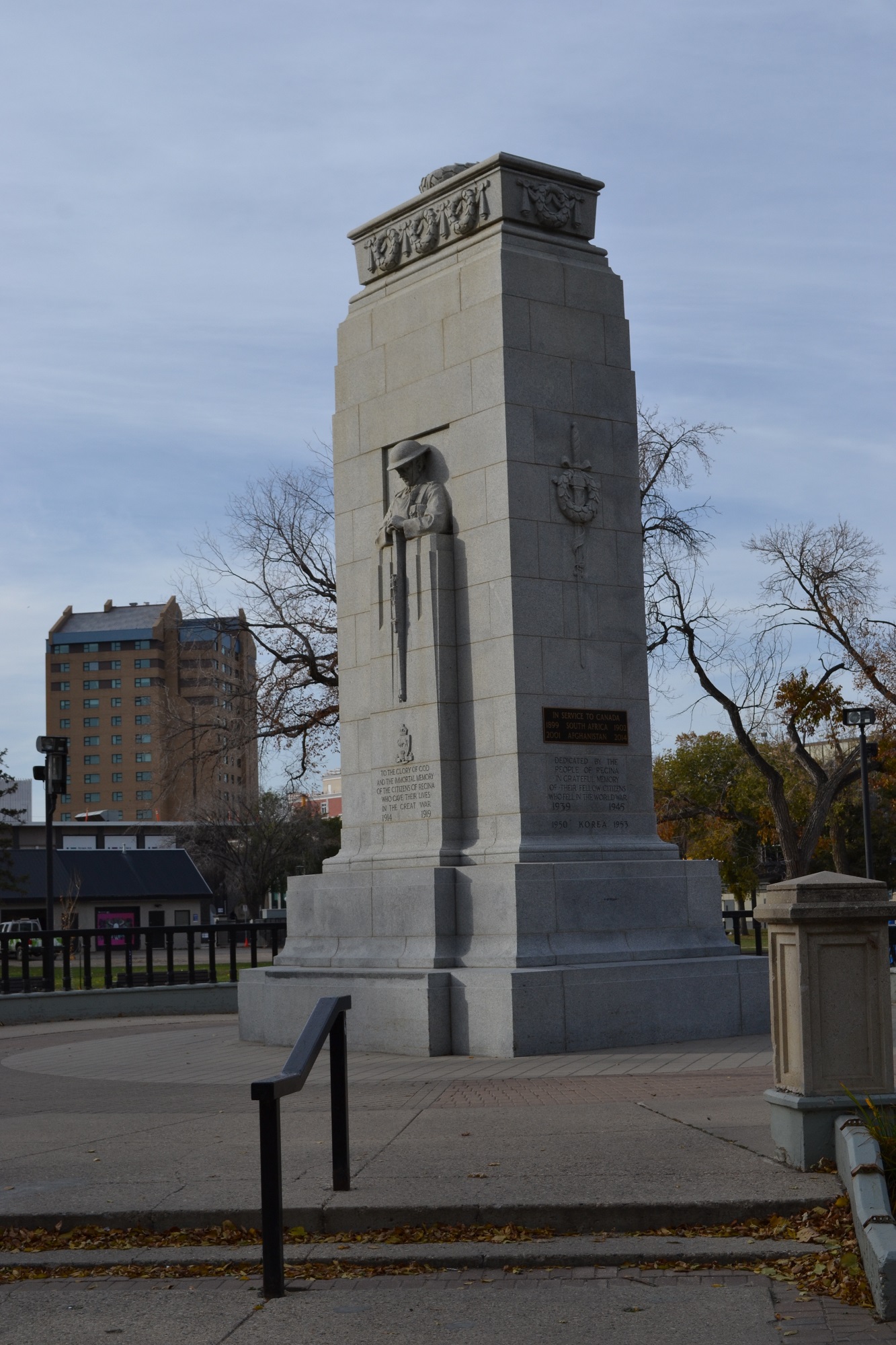
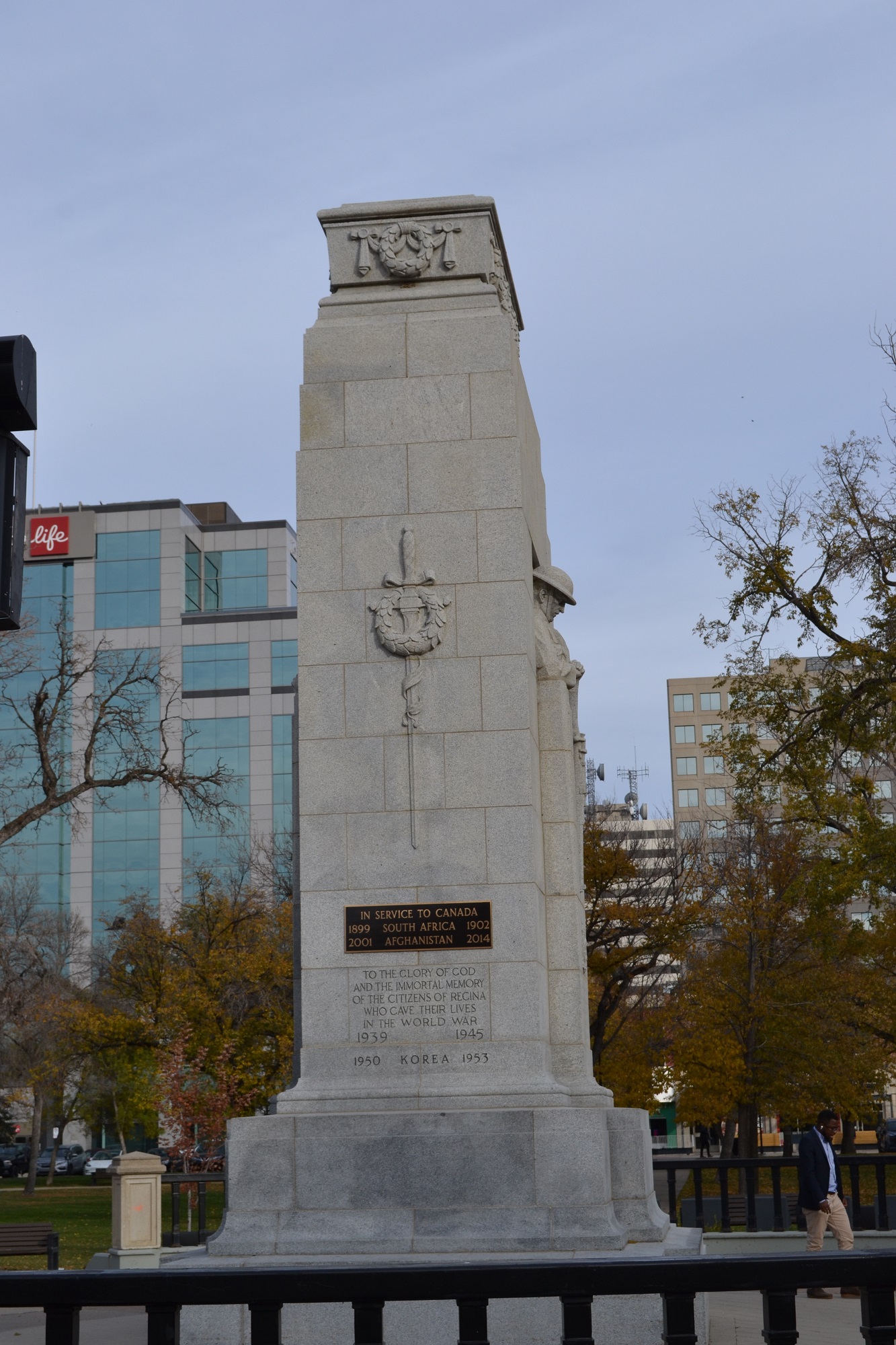
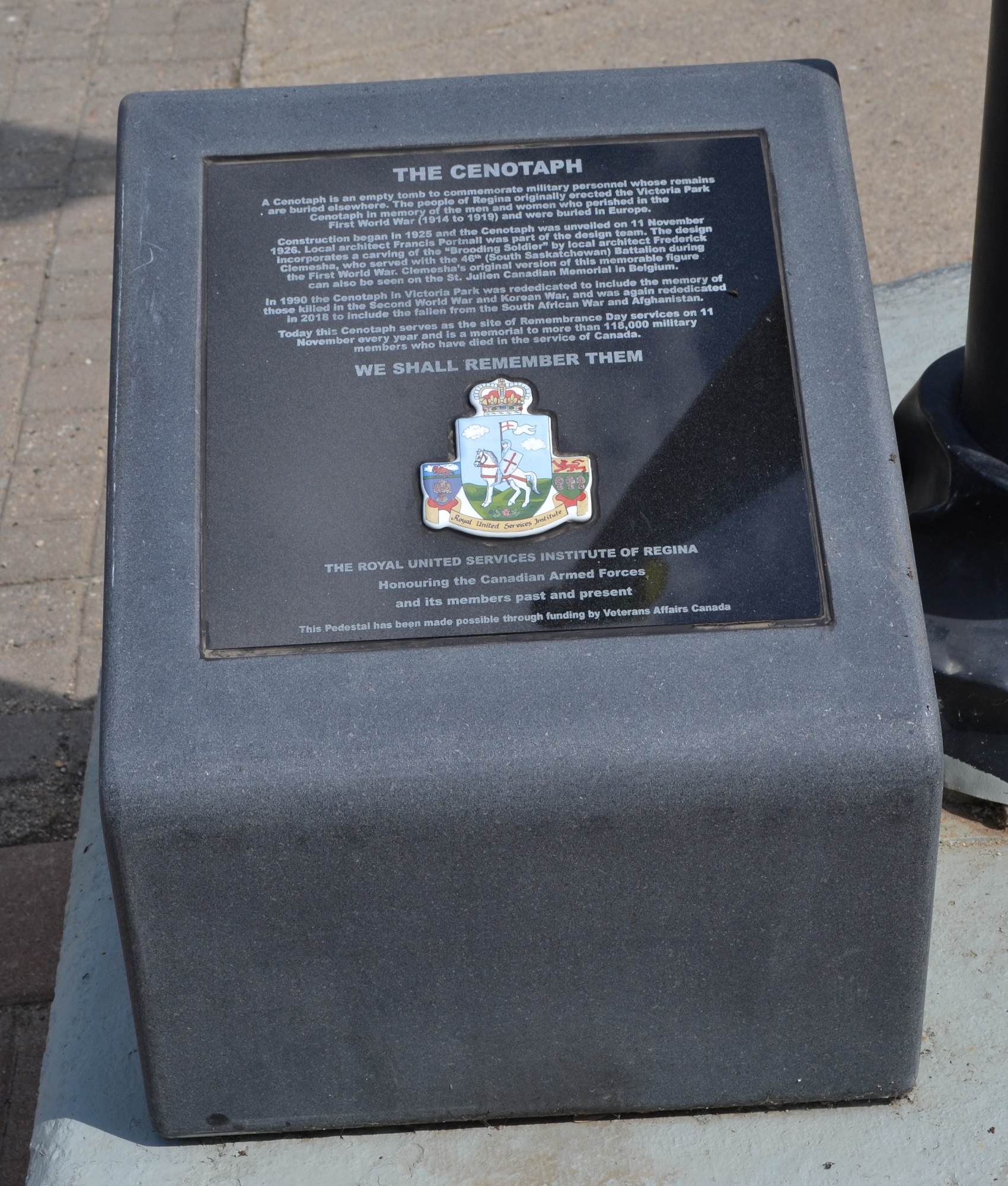
The Regina Cenotaph was unveiled on November 11, 1926, to honour local soldiers killed in the First World War. It was designed by R.W.G. Heughan of Ross & Macdonald of Montreal and Francis H. Portnall, a local architect and built from Barre Grey – a world-class granite which is quarried in Vermont.
The design incorporates a carving of the "Brooding Soldier" by local architect Frederick Clemesha, who served with the 46th (South Saskatchewan) Battalion during the First World War. Clemesha's original version of this memorable figure can also be seen on the St. Julien Canadian Memorial in Belgium. The plaques depict cap badges of the Regina Rifles, the South Saskatchewan Regiment and the Royal Canadian Air Force.
In 1990, the cenotaph was rededicated to include the memory of those killed in the Second World War and Korean War, and was again rededicated in 2018 to include the fallen from the South African War and Afghanistan.
After vandals scrawled graffiti across the base of the Regina Cenotaph in June 2017, Ron Eisler of Remco Memorials restored the cenotaph.