
Persons with disabilities were consulted in the preparation of this Accessibility Action Plan.
4.1 Who we consulted
The Accessibility Network
As highlighted in section 1.2, Message from the Accessibility Network, and section 2.8, organizational culture, the Network enables the identification, removal, and prevention of barriers by providing input based on the lived experience of persons with disabilities. Their expertise is sought on a regular basis on initiatives in the Department. In 2025, the Accessibility Network was consulted on several initiatives, including:
- the 2024 and 2025 Employee Accessibility Survey reports
- feedback to the Office of Public Service Accessibility on second language learning, testing, and exclusion barriers
- VAC’s Accessibility Progress Report 2024
- VAC’s internal People and Culture Strategy
- VAC’s prospective Disability Management Group
- VAC’s draft Recruitment and Retention Strategy for Persons with Disabilities
- VAC’s draft Diverse Assessment Board Workshop
- developing a list for future initiatives within the Accessibility Network
- My Software Accessibility internal service
- VAC’s Accessibility Action Plan 2025 - 2028
VAC employees
Through the VAC Employee Accessibility Survey 2025 employees were asked to measure how they felt about accessibility and identify areas that could increase or promote accessibility-confidence. This is the third year of conducting this survey, concluding the original 3-year commitment. Consistent with our 2024 results, when asked how they feel VAC is doing in a number of areas, between 80 – 90% of respondents feel progress is being made. The areas identified included:
- initiatives to increase awareness and empathy around persons with disabilities and the barriers they face
- the use of plain language
- offering/promoting accessibility-related learning events, trainings, tools, and resources
- initiatives to ensure that accessibility is modeled through all levels of the Department
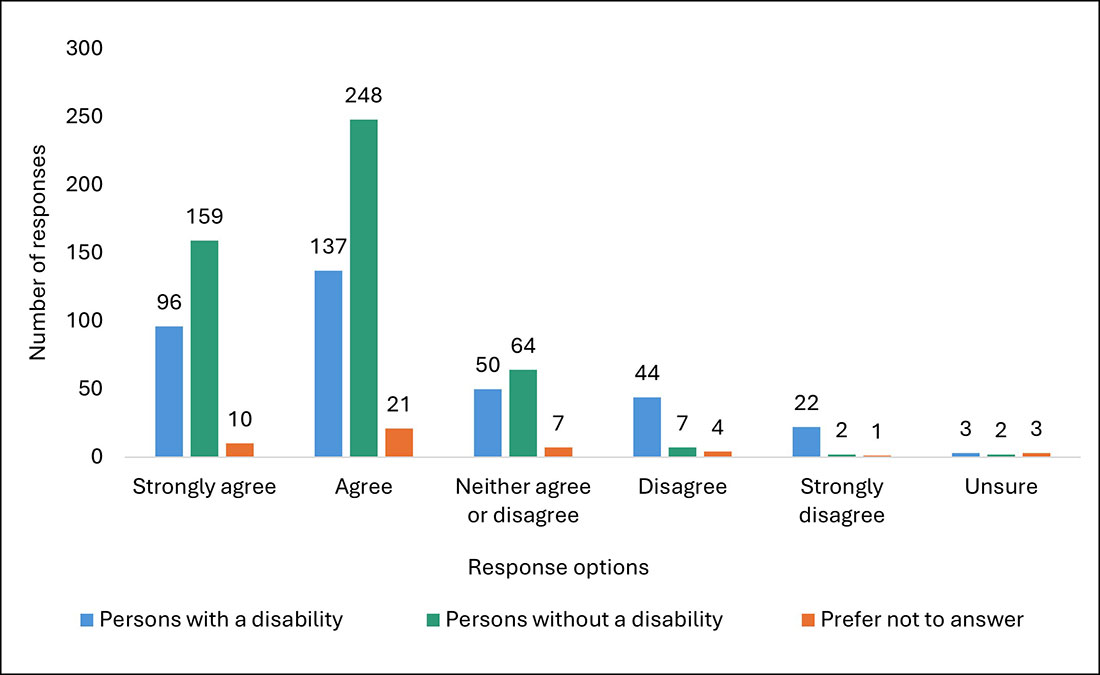
To better understand the lived experience of employees with disabilities in relation to accessibility, this year we added the question, “Are you a person with a disability” to the survey with the following responses: yes, no, prefer not to answer. This data has allowed us to identify important differences between the experiences of persons with disabilities and those without. For example, Figure 2 looks at how comfortable employees are talking with people in their work unit about issues related to accessibility.
Figure 2: Responses to the statement “I am comfortable talking with people in my work unit about issues related to accessibility.” (880 total responses)
Description of Figure 2: Responses to the statement “I am comfortable talking with people in my work unit about issues related to accessibility.” (880 total responses)
- Strongly agree: 96 persons with a disability, 159 persons without a disability, 10 prefer not to answer.
- Agree: 137 persons with a disability, 248 persons without a disability, 21 prefer not to answer.
- Neither agree nor disagree: 50 persons with a disability, 64 persons without a disability, 7 prefer not to answer.
- Disagree: 44 persons with a disability, 7 persons without a disability, 4 prefer not to answer.
- Strongly disagree: 22 persons with a disability, 2 persons without a disability, 1 prefer not to answer.
- Unsure: 3 persons with a disability, 2 persons without a disability, 3 prefer not to answer.
While most respondents reported feeling comfortable discussing accessibility in their work unit, participants with a disability were much more likely to express discomfort. Nearly 20% of employees with a disability selected disagree or strongly disagree, compared to fewer than 2% of employees without a disability. In other words, employees with a disability were about 10 times as likely to feel uncomfortable, highlighting the need to address barriers to open conversations about accessibility. This gap may be shaped by lived experiences as well as ongoing stigma related to disability and the process of requesting accommodations. A similar gap is found in the awareness and empathy around persons with disabilities and the barriers they face (Figure 3).
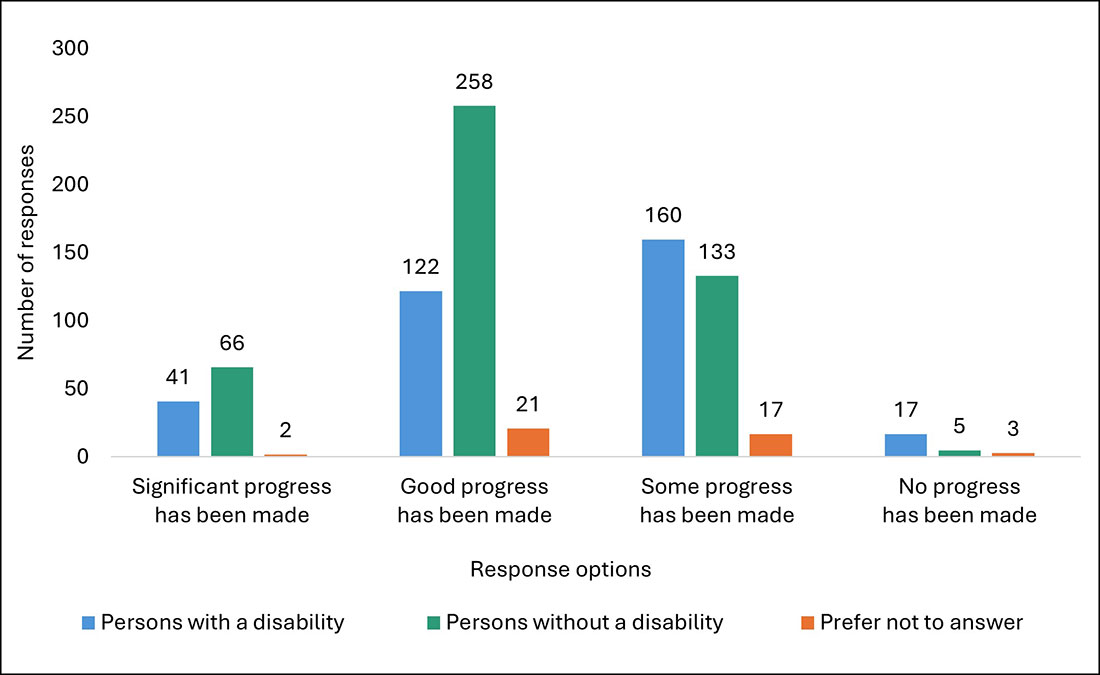
Figure 3: Responses to the statement “Initiatives to increase awareness and empathy around persons with disabilities and the barriers they face (panels, storytelling initiatives, Accessibility Confidence at VAC: A Playbook, Carillon articles, etc.)” (845 total responses)
Description of Figure 3: Responses to the statement “Initiatives to increase awareness and empathy around persons with disabilities and the barriers they face (panels, storytelling initiatives, Accessibility Confidence at VAC: A Playbook, Carillon articles, etc.)” (845 total responses)
- Significant progress has been made: 41 persons with a disability, 66 persons without a disability, 2 prefer not to answer.
- Good progress has been made: 122 persons with a disability, 258 persons without a disability, 21 prefer not to answer.
- Some progress has been made: 160 persons with a disability, 133 persons without a disability, 17 prefer not to answer.
- No progress has been made: 17 persons with a disability, 5 persons without a disability, 3 prefer not to answer.
As seen in Figure 3, among survey respondents who identified as persons with disabilities, 48% said that significant or good progress has been made on initiatives to build awareness and empathy around disability and the barriers people face. By comparison, 70% of respondents without a disability said the same, suggesting that people with lived experience of disability are less likely to feel these initiatives are making strong progress. This validates the need to continue our efforts.
4.2 How we consulted
We place a strong emphasis on consulting people about accessibility in ways that are meaningful, inclusive, and accessible. To meet this commitment, we ensured that our consultations were accessible by:
- inviting participants to identify their accommodation needs and addressing these in advance
- using accessible meeting and survey platforms
- providing Communication Access Realtime Translation services (instantaneous translation of what is being said into print so that it can be read)
- providing both American Sign Language (ASL) and Langue des signes québécoise (LSQ) interpretation
- providing opportunities for participants to provide feedback in writing or verbally, live during meetings or later
- having technical support available for those who need it
4.3 What we heard
Through consultations, unique learnings from the lived experiences of persons with disabilities have been identified. For instance, we heard that:
- there is still stigma for persons with disabilities that may deter some individuals from self-identifying
- there may be more we can do to support and equip employees and managers in regard to disability and accessibility
- it can be difficult for employees to speak with their managers about needing accommodations. The promotion and use of the GC Workplace Accessibility Passport can assist with these conversations
- there is still room for improvement in using plain language in all areas of work
As stated under organizational culture in section 2.8, the most important people for accessibility consultation remain persons with disabilities. We are committed to including these perspectives in our accessibility planning by:
- frequently engaging and updating the Accessibility Network on initiatives in the Department
- collecting data on the lived experience of persons with disabilities to better understand their lived experience and accessibility needs
- exploring opportunities to hear and learn from Veterans with disabilities
- working with other VAC employee resource groups to ensure initiatives take into consideration the lived experience of diverse groups of people