

August 2025
VAC's monthly digital newsletterIn this edition:
- News
- Check your ETB eligibility end date in My VAC Account
- Groundbreaking Veterans conference coming in early October
- Programs and Services
- World Suicide Prevention Day: Tools to help you talk about suicide
- Easing into artificial intelligence: A VAC AI primer
- New resource series on parenting with PTSI
- Help advance sleep health research: Veterans and family members needed for study
- Engagement
- The Fruit Machine documentary film
- Jillian Boutilier: Embracing leadership
- Veterans’ stories
- Veterans’ stories: Erik Andresen
- Mike Nelson: Going beyond the box
- Commemoration
- Commemorating the 80th anniversary of the end of the Second World War
- The legacy of Veterans lives on
- Being a good neighbour
- Commemoration calendar
News
Check your ETB eligibility end date in My VAC Account

You can now see your Education and Training Benefit (ETB) eligibility end date in My VAC Account under the Current Benefits page.
Under the Veterans Well-being Act, Veterans who qualify for the ETB have 10 years from the date they released from the Canadian Armed Forces, or transferred to the Supplementary Reserve, to receive the benefit.
Once your eligibility end date has passed, you won’t be able to have a Formal Program Plan or Short Course Application approved. However, if you have successfully completed a formal program plan, you can apply for a completion bonus.
Groundbreaking Veterans conference coming in early October
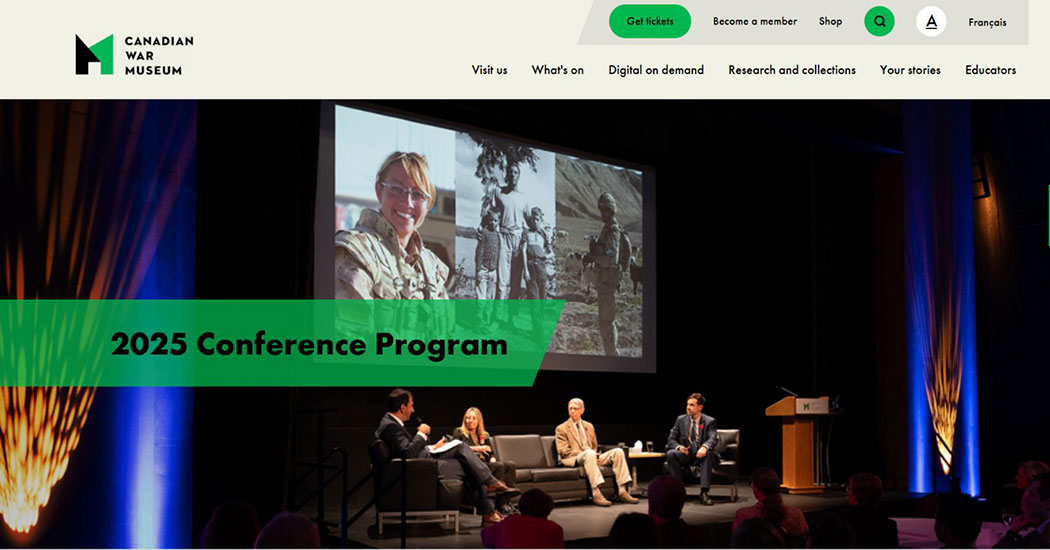
Register now for the groundbreaking Canadian War Museum Conference 2025: Oral History and the Veterans’ Experience, taking place from October 2 to 5.
Experts and Veterans will explore the many layers of the post-service experience from a number of areas. You will learn how oral history has played a role in demonstrating the impact of military service on Veterans, their families and their communities.
You will be able to access:
- practical perspectives on oral history practices,
- a better understanding of the connection between art and military testimony,
- historians and Veterans speaking about personal experiences that are not typically included in traditional stories of military service, and
- a forum for participants to engage with each other to shape a deeper understanding of this field of research.
Virtual sessions
Can’t make it in person to the War Museum? Then you may be interested in the virtual conference experience, which you can look into on their website.
Who Should Attend: students, historians, Veterans, members of the military community, and oral history practitioners. Feel free to share. Visit here to register. You can discover the program here.
Programs and services
World Suicide Prevention Day: Tools to help you talk about suicide
World Suicide Prevention Day on September 10 reminds us that open conversations about mental health can help prevent suicide.
The following LifeSpeak resources can help you talk about suicide with those you care about:
- Suicide Prevention Day: Overcoming the stigma surrounding suicidal ideation
- Conversations We Need to be Having About Suicide
- What should I do if I'm worried about someone’s risk for suicide?
- Suicide: frequently asked questions
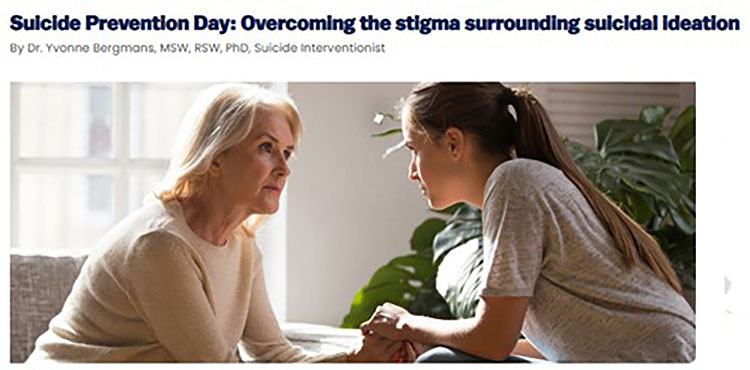
Browse LifeSpeak resources for free. To sign in, use access ID: canada (lowercase).
Mental health support
If you or someone you know is in immediate danger, please call 911.
The following support lines are available:
- Anyone can access the Suicide Crisis Helpline by calling or texting 988.
- Former CAF and RCMP members, their family members and caregivers can access the VAC Assistance Service via phone (1-800-268-7708) or online chat to set up an appointment.
- Youth can access the Kids Help Phone via phone (1-800-668-6868), text (686868), or online chat.
- Indigenous Peoples in Canada can also access the Hope for Wellness Helpline via phone (1 855-242-3310) or online chat.
For more resources, visit Mental health support: Get help.
Easing into artificial intelligence: A VAC AI primer

Artificial intelligence (AI) is a tool VAC has started using to help our employees so they can spend more time helping you.
AI is not used to make decisions about your benefits, to store or share your personal data or to learn from your information. Put simply, AI holds the potential for us to serve you better, both to better meet the needs of those we serve and improve the quality of services already offered.
We remain committed to protecting the privacy and security of your personal information.
Key benefits for you and your family
- Faster claims and fewer delays: AI can read handwritten notes and scanned applications, summarizing them for VAC staff so the information can move through the system more quickly and you get answers sooner. We have already seen improvements in this area.
- More time with a real person: by handling routine administrative work, AI gives caseworkers more time to focus on complex issues and one-on-one support for you and your family.
Privacy and accountability
- Only VAC employees make decisions about your file. AI only helps them work more efficiently and accurately.
- Protecting your personal information is our priority. We follow strict privacy and security rules at all times, including when using these tools.
We believe AI may enhance service delivery, improve how we operate, encourage innovation and help us with research and policy development. VAC will keep you up to date as this work continues.
New resource series on parenting with PTSI
The Atlas Institute for Veterans and Families has created a new resource series on parenting with post-traumatic stress injury (PTSI).
It includes practical tips and a helpful guide designed to support open, age-appropriate conversations with children about mental health.
You don’t need to have a diagnosis to benefit from these guides—they’re for anyone looking for support in navigating and talking about PTSI.
Explore these resources and take a step toward informed care, healing and empowerment for yourself or someone you love.
Help advance sleep health research: Veterans and family members needed for study
The Atlas Institute for Veterans and Families is looking for people to take part in a study about the sleep health of Veterans and Veteran family members.
The study, led together with a Veteran, will help researchers better understand:
- the factors that affect sleep health,
- how sleep affects daily activities, and
- what should be included in resources for sleep health.
You can take part by filling out an online survey. The survey is open to all CAF and RCMP Veterans and their family members, even if they do not have sleep problems. It takes about 30 minutes to complete. You will be asked questions about your sleep quality, habits, routine and information needs.
Learn more about the study and participate here.
Engagement
The Fruit Machine documentary film
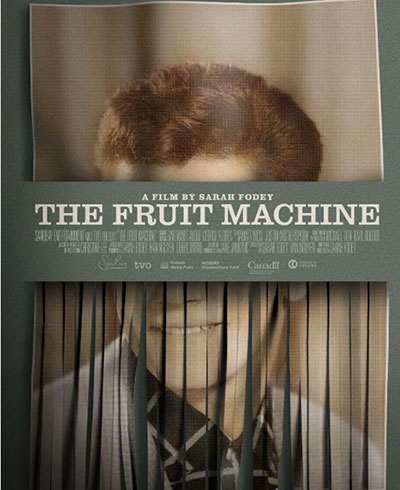
In 2018, the National Film Board of Canada released The Fruit Machine, a powerful documentary that explores the Government of Canada’s discrimination against 2SLGBTQI+ members of the Canadian Armed Forces, RCMP and federal public service during the Cold War era.
The “fruit machine” was the nickname of a series of psychological tests created by Canadian federal authorities in the 1960s that were used to identify individuals perceived as gay or lesbian so they could be flagged for removal. Despite lacking any scientific basis, the “fruit machine” was used to justify invasive interrogations, unwarranted dismissals and lifelong harm to countless military members, RCMP members and public servants.
The film, directed by Sarah Fodey, has the voices of LGBT Purge survivors at its heart. Through their personal testimonies, the film honours their resilience and sheds light on the trauma caused by institutional discrimination. For many, sharing their stories was an act of courage, recognition and a step toward healing.
In 2017, the Government of Canada formally apologized to those harmed by the LGBT Purge. The Fruit Machine honours LGBT Purge survivors and promotes understanding of this dark chapter in our history.
You can watch the film on the Rainbow Veterans of Canada website.
Jillian Boutilier: Embracing leadership
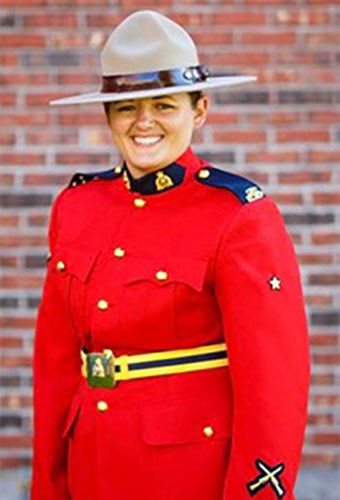
At just 38 years old, Inspector Jillian Boutilier stands at the forefront of change in Canadian policing. With 15 years of service, she’s not only a respected officer, but a visible leader in the 2SLGBTQI+ community—a role she didn’t seek but has come to embrace with pride and compassion.
Originally from Halifax, Boutilier’s path to the RCMP started with community service. At 17, she joined a local volunteer fire department. A few years later, her mother gave her a book about writing police exams. That nudge—combined with her interest in emergency response—led her to Depot (the RCMP training academy) in Regina and a career of service.
She didn’t want to be labelled or for her personal life and the fact she is gay to impact her career. But her first posting to a tiny, tight-knit rural Saskatchewan town made her realize she had to come out at work.
Veterans' stories
Erik Andresen: A Canadian Colonel’s global career
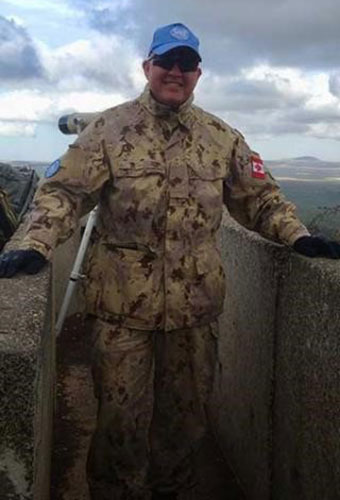
When Colonel Eric Andresen walked into a Montreal recruiting office at 19 years old, it was mostly to prove a point. His older brother, a cadet, had dared him to do it—and Andresen bit.
“Six months later I was in the Regular Force,” he says with a grin.
What started as a dare became a 35-year career spanning continents, conflicts and command positions—a life of military service shaped by grit, intellect and serendipity.
Today, Andresen is stationed at U.S. Central Command (USCENTCOM) in Tampa, Florida. It is one of the largest and most complex multinational military headquarters in the world.
Mike Nelson: Going beyond the box
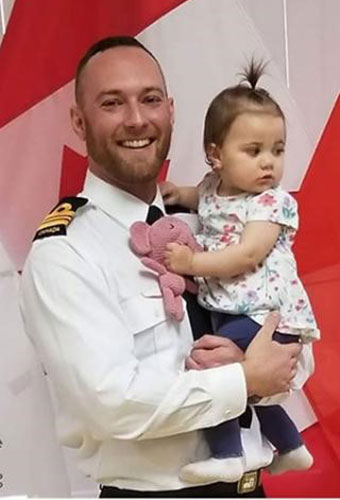
When Lieutenant Commander (Retired) Mike Nelson left the Canadian Armed Forces, he left with the drive to have an impact on the military from the private sector instead of from within the service.
“I was working on this really great project, and I was taking a little initiative that was outside my day-to-day responsibilities. My supervisor told me to get back in my box and stay in my box. It just rubbed me the wrong way.”
Nelson could see an opportunity to provide the decision-makers during operations with a bigger picture to make more informed choices. He saw that the systems used to gather intelligence weren’t talking to each other, so he wanted to bridge that gap. But to do that, Nelson knew he’d have to come at the problem from outside the military.
“I felt I could have a bigger impact from outside the military, working from the angle of industry, trying to drive change from the outside rather than working inside.”
Commemoration
Commemorating the 80th anniversary of the end of the Second World War
Events took place across the country earlier this month in honour of the 80th anniversary of the end of the Second World War.
In Ottawa, Ontario, a ceremony was held at the National War Memorial. Representatives from families of Hong Kong Veterans, the Government of Canada and members of other Veteran organizations laid wreaths to honour all those who served and sacrificed in the Pacific.
In British Columbia, a unique “Kites for Peace” event took place on Vancouver’s Sunset Beach. The festival explored the role of kites as symbols of joy and freedom and included kite-building workshops, educational talks, cultural exhibits and family-friendly activities.
Check out some of our photos.
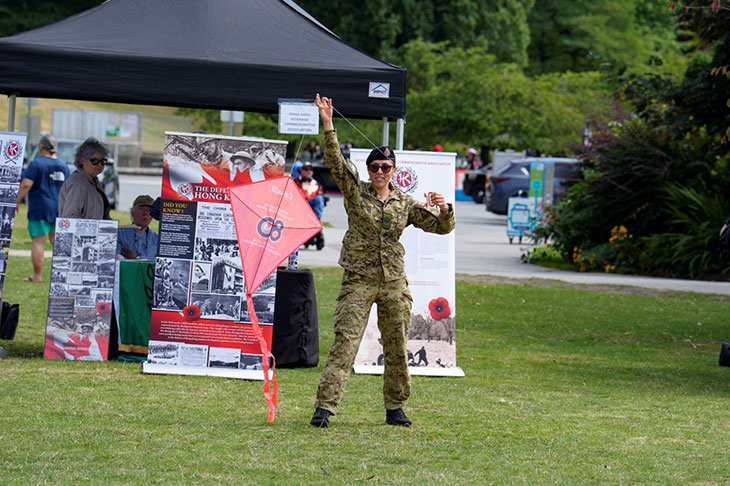
A Canadian Armed Forces member holds a kite at the Kites for Peace event in Vancouver, British Columbia.
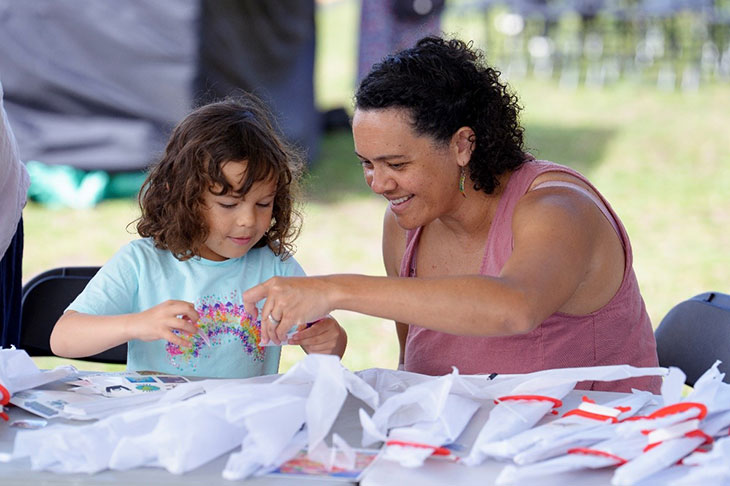
Fun for all ages at the Kites for Peace event in Vancouver.
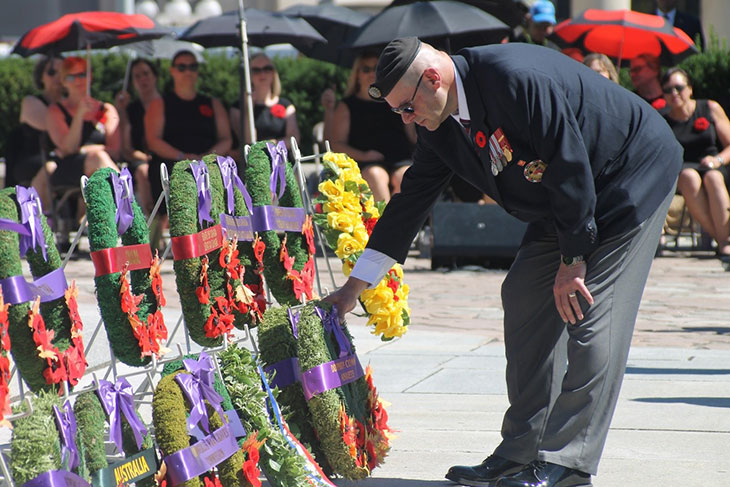
A Veteran lays a wreath at the National War Memorial on August 15.
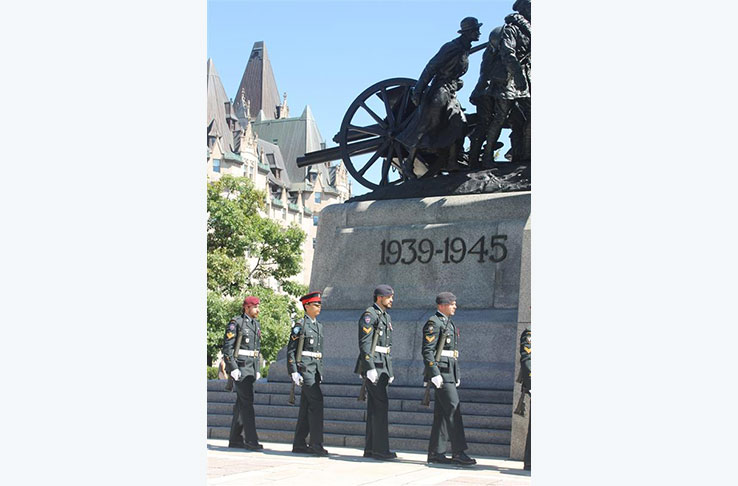
The Vigil Party marches into position at the National War Memorial.
The legacy of Veterans lives on
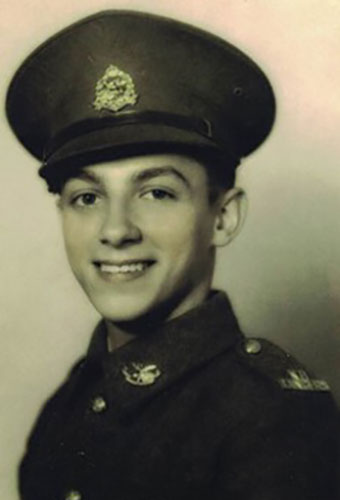
Meet Michael Babin, the son of Canadian Veteran Alfred Babin. Alfred served in the Battle of Hong Kong and was a prisoner of war until the end of the Second World War.
Michael is now president of the Hong Kong Veterans Commemorative Association. He shares his father’s harrowing experience as he educates Canadians about this historic battle.
Read more about Alfred’s story as told by his son.
Visit our website to learn more about the end of the Second World War and recognize the bravery and sacrifice of Canadian Veterans.
Lest we forget.
Being a good neighbour
Canada’s Armed Forces have helped others in need time and time again. They have provided aid after earthquakes in places like Haiti, Chile and Peru. They have promoted peace in Central America and responded to storms in the United States, Honduras and other countries.
In times of crisis, Canadians were there to lend a helping hand.
Commemoration calendar
September
September 2: Canada, represented by Colonel Lawrence Cosgrave, and other Allied powers accept Japan’s formal surrender aboard the USS Missouri in Tokyo Bay (1945)
September 2: Operation Medusa began in Afghanistan (2006)
September 3: Merchant Navy Veterans Day
September 9: The Canadian regular forces are placed on active service for deployment in Korea (1950)
September 15: Canadians begin the Battle of Courcelette during the Somme Offensive (1916)
September 15-16: Canadian peacekeepers saw heavy action in the Medak Pocket, Croatia (1993)
September 19-20: Newfoundland Regiment lands in Gallipoli (1915)
September 21: Battle of Britain Sunday
For a complete list of activities, please visit our calendar of commemorative events.
Do you know other Veterans, family members or others who would benefit from the information in this newsletter? Feel free to share it with them.
Follow us on social media
Do you know other Veterans, family members or others who would benefit from the information in this newsletter? Feel free to share it with them.
ISSN: 1926‑5948