

July 2025
VAC's monthly digital newsletterIn this edition:
- News
- Canada commits to NATO’s 2035 spending target
- Strengthen Canada’s workforce, hire a Veteran
- Programs and Services
- You could earn your high school equivalency
- Calling all Veterans and civilians: Share your story in thriving after service study
- Peer support groups available for those affected by military sexual trauma
- Lifespeak launches video series for caregivers
- Engagement
- Love in a Dangerous Time: Canada’s LGBT Purge
- Spotlight on women Veterans
- Trudi Fontaine and Nicole Crevier
- Veterans’ stories
- Captain (Retd) Arthur Lortie
- Commemoration
- V-J Day 80: The official end of the Second World War
- Anniversary of the Korean War Armistice
- Chief Warrant Officer (Retired) Edwin "Ted" Adye
- Commemoration calendar
News
Canada commits to NATO’s 2035 spending target

Canada will be supporting NATO with a new long-term target of spending 5 percent of GDP on defence by 2035. This new target includes 3.5 percent for military forces and equipment and 1.5 percent for things like infrastructure, communications, and other systems that support national security.
This move brings Canada in line with other NATO allies and reflects Canada’s strategic and forward-thinking investment towards strengthening the country’s defence.
Canada has already begun work in areas that fall under the 1.5 percent category, such as upgrading ports, airports, emergency systems, and investing in critical minerals. NATO members will review progress together in 2029.
Prime Minister Mark Carney says the increased investment is partly in response to new global threats, including challenges in the Arctic. He described the plan as part of a larger effort to improve Canada’s military readiness and support its defence industry. Click here to read more.
Strengthen Canada’s workforce, hire a Veteran
July 25 is Hire a Veteran Day, dedicated to recognizing Veterans’ service to Canada, the translatable, portable skills they develop and offers Canadian industries and employers meaningful, tangible ways they can be strengthening our nation’s workforce while growing their business or organization with capable, adaptable, problem-solving team members.
This day is a call to action, to first recognize the immense potential that Veterans have and can bring to the Canadian labour market as they transition to civilian employment after service. It continues when employers engage Canada’s Veterans, recognizing the skills, the capacity, and the leadership they bring to communities across the country.
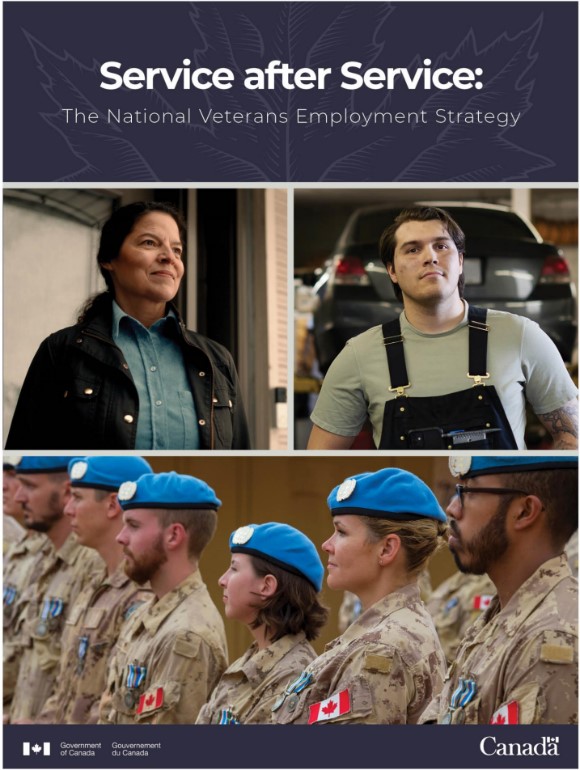
Hire a Veteran Day 2025 highlights a number of important milestones, including:
- the one-year anniversary of the launch of the National Veterans Employment Strategy on 28 June 2024; and
- the 10-year anniversary of the Veterans Hiring Act, which amended the Public Service Employment Act (PSEA) on 1 July 2015 to provide Veterans with better access to public service jobs.
If you are a Veteran looking to build your career, we encourage you to:
- visit our Find a new job web page;
- join our Hire A Veteran LinkedIn Group to network with over 6,000 other members including employers and Veteran jobseekers;
- attend our Veterans Employment Webinars;
- visit the Employment and Social Development Job Bank for Veterans; and
- visit the Veterans Affairs Canada JobConnex application portal.
Programs and services
You could earn your high school equivalency

Are you a Veteran looking for a high school equivalency credential? Did you know your previous education, basic military training and work experience may count towards a Canadian Adult Education Credential (CAEC)?
A CAEC is for adults without a high school diploma interested in new employment opportunities or furthering their educational journey. The CAEC could be the first step in your future career goals – the foundation for your next steps. The CAEC has testing available in both English and French and has options available for accommodations if needed.
Requirements for education equivalencies vary by province and territory. Read more about CAEC if you are interested in finding ways to get a high school equivalency.
Calling all Veterans and civilians: Share your story in a thriving-after-service study
The Atlas Institute for Veterans and Families is looking for participants for a study on positive mental health. The researchers are looking to hear from all perspectives, including members of the general public, the Royal Canadian Mounted Police and Canadian Armed Forces Veterans.
The goal of the study is to understand what makes people feel happy, connected and fulfilled in all aspects of life, and how it compares to the Veteran experience. This research will provide important insights into Veteran well-being and help develop and improve resources so Veterans can thrive in all aspects of their lives.
The survey takes about 60 minutes to complete online. You can do it in one or multiple sittings—your browser will remember where you left off. Participants don’t need to feel like they are thriving to participate – your views and your stories are what is important.
Take part at atlasveterans.ca/thriving-study.
Peer support groups available for those affected by military sexual trauma

You can connect with others who have been affected by military sexual trauma through our Peer Support Program. It offers formal and informal peer-support groups and activities. Peer-support groups provide a safe space to share experiences, build resilience with your peers and feel supported and less alone in your journey.
Groups are hosted virtually in English and French. To take part, you must be at least 18 years of age and a:
- CAF member
- Veteran
- Cadet or Junior Canadian Ranger, or
- current or former employee of the Department of National Defence
We work with the Sexual Misconduct Support and Resource Centre (SMSRC) to offer these groups. To ensure everyone’s safety, you must go through an intake process with a peer-support staff member.
For more information or to join an upcoming group, please email the SMSRC or call the 24/7 line at 1-844-750-1648. Visit the SMSRC website or follow them on Facebook, X, or LinkedIn to stay up to date on fall registration dates.
If you have experienced sexual misconduct or military sexual trauma, you can get immediate support by calling SMSRC’s 24/7 line at 1-844-750-1648. You may also qualify for VAC benefits and services―visit our page on military sexual trauma to learn more.
Lifespeak launches video series on finding balance for caregivers

Being a caregiver can be rewarding, but it can also come with real challenges. If you are looking for support, LifeSpeak has a new video series that may help.
The caregivers guide to balancing roles and relationships is a six-part series available on the LifeSpeak website. Short video essays cover important topics such as recognizing your role as a caregiver, managing complicated family dynamics, and taking care of yourself while helping others. The series includes a tip sheet and links to other resources.
LifeSpeak is part of the VAC Assistance Service. It is an online wellness platform that provides expert-led resources to support your mental and physical well-being. Visit the LifeSpeak website to anonymously access videos, podcasts, blog posts, and more. Log in to LifeSpeak from any computer or mobile device using Access ID: canada (lowercase). You do not need to have an account. Visit our website to learn more about LifeSpeak.
Engagement
Love in a Dangerous Time: Canada’s LGBT Purge
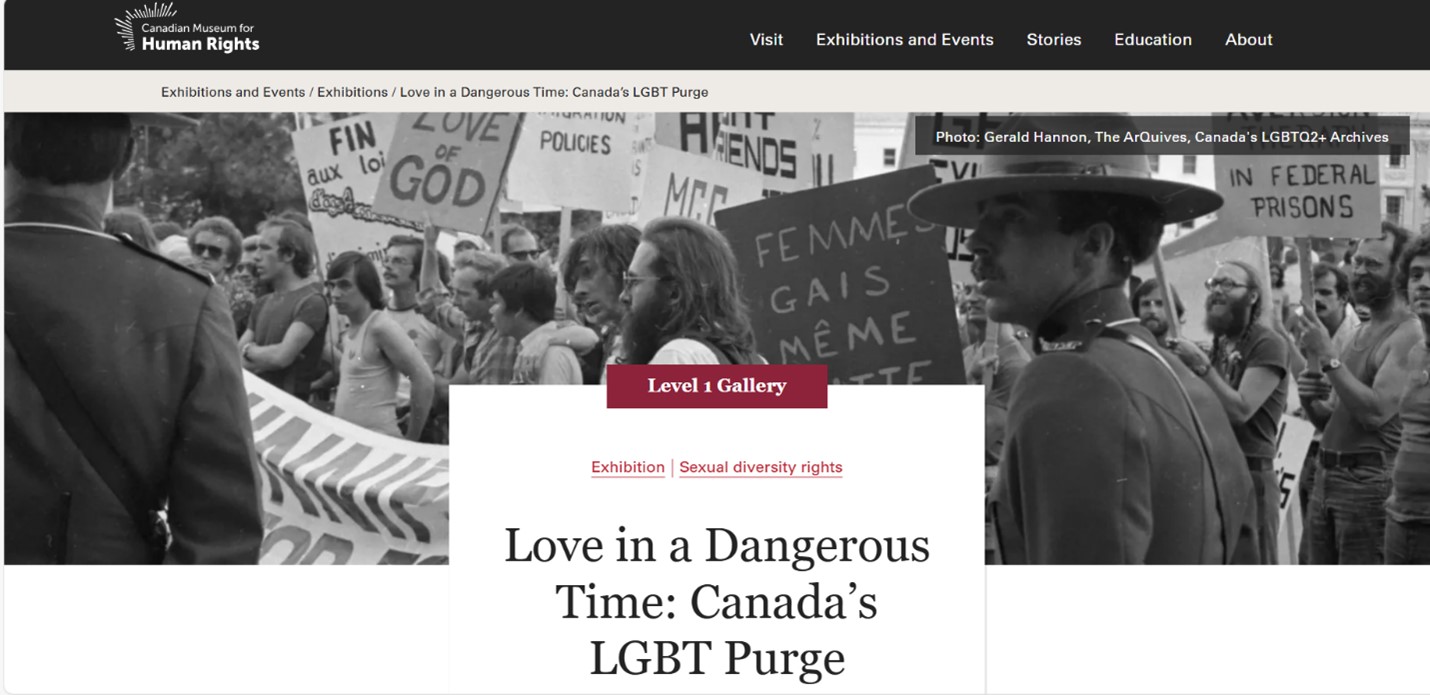
Between the 1950s and mid-1990s, 2SLGBTQI+ members of the CAF, the RCMP and the federal public service were systematically discriminated against, harassed and often fired as a matter of policy and sanctioned practice. In what came to be known as the “LGBT Purge,” people were followed, interrogated, abused and traumatized by their own government.
Love in a Dangerous Time: Canada’s LGBT Purge is a new exhibit which sheds light on this dark chapter in Canada’s military history.
Running until early 2026 at the world’s first museum dedicated to human rights—the Canadian Museum for Human Rights in Winnipeg, MB—this important exhibition honours courageous activists like Michelle Douglas and Todd Ross. Two works—The Regulation of Desire and The Fruit Machine: A Space Opera—were created specifically for the exhibition.
This interactive exhibit allows museum visitors to learn more from LGBT Purge survivors and allies through a voice user interface or a physical controller. A large, interactive wall allows visitors to consider present-day topics and explore the achievements and challenges of the 2SLGBTQI+ community. The museum is also offering a limited time exhibit titled "Love in a Dangerous Time," to make the exhibition more accessible to the public.
For more information, visit: Love in a Dangerous Time: Canada's LGBT Purge | CMHR.
Spotlight on Women Veterans
Trudi Fontaine and Nicole Crevier
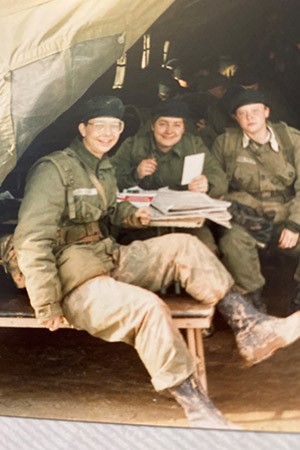
Forced out of the military during the LGBT Purge, their friendship became their armour.
In November 1988, two young women stood proudly on the parade square at Canadian Forces Base (CFB) Cornwallis, their boots shining in the Autumn sun—their hearts full of optimism and courage.
It was basic training—the intensive transformation where civilians become soldiers.
For new recruits Nicole Crevier and Trudi Fontaine, it also marked the birth of a 37-year friendship that would endure the trials of military life and the injustice of one of the darkest chapters in Canada’s military history—the LGBT Purge.
Veterans' stories
Captain (Retired) Arthur Lortie
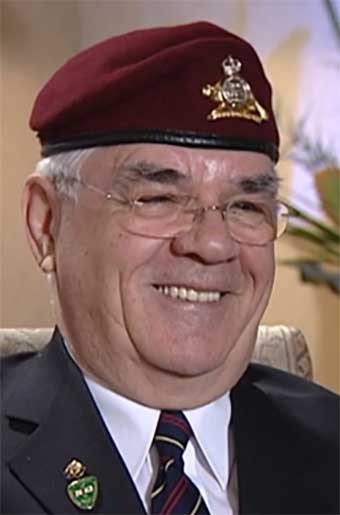
Captain Arthur Lortie is a man of honour and integrity. He served in the military for 32 years, including serving in the Korean War with the Royal 22nd Regiment.
Arthur was born in 1932 into a family of eight children in Québec City. He remembers spending time with many service members as a young man during the Second World War.
When the Korean War broke out, he felt a desire to do his part. At age 18, he enlisted as a private on 28 February 1951, together with three of his brothers. Arthur and his younger brother completed their recruit training at Saint-Jean d’Iberville.
Their military adventure continued in Rivers, Manitoba, where they were sent for an intensive parachuting training course.
Commemoration
V-J Day 80: The official end of the Second World War
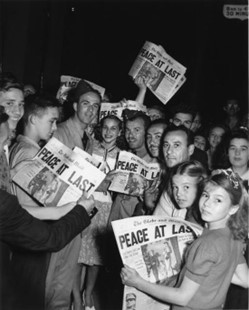
This year marks the 80th anniversary of V-J (Victory over Japan) Day and the end of the Second World War in the Pacific.
Fighting had been raging for two years when Canada officially declared war on Japan after the bombing of Pearl Harbor in December 1941.
In May 1945, peace arrived in Europe following V-E (Victory in Europe) Day, but the war continued in other parts of the globe. The Allies focused their military power in Asia and the Pacific and finally, on 15 August 1945, V-J Day marked the end of the war in the Pacific and the official end of the Second World War.
Canadians endured many hardships fighting in Asia. Almost 800 of the 1,975 Canadians who took part in the Defence of Hong Kong were killed or wounded in the fighting. More than 260 also died in harsh prisoner-of-war camps.
Events
To mark the 80th anniversary of V-J Day and the end of the Second World War, Veterans Affairs Canada is leading or supporting commemorative events in Ottawa and Vancouver. Find events near you.
Remember Canada’s Veterans
We all share a responsibility to keep Veterans’ stories alive, to recognize the cost of war, and honour their sacrifices. Learn more about V-J Day and Canadians in the Pacific during the Second World War.
Anniversary of the Korean War Armistice
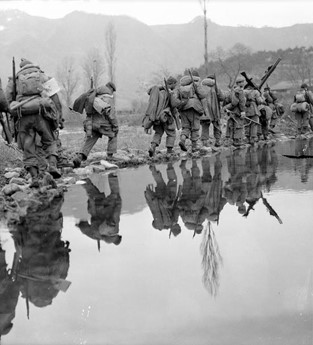
This month marks the 72nd anniversary of the Korean Armistice Agreement, a time when we remember the more than 26,000 Canadians who served on land, at sea and in the air during the Korean War.
The war began on 25 June 1950 when North Korean troops invaded South Korea. Soon afterwards, the United Nations entered the fray, with Canadian troops joining the fight to help defend peace and freedom.
Chief Warrant Officer (Retired) Edwin "Ted" Adye
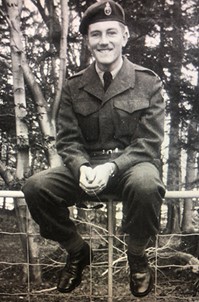
Edwin “Ted” Adye was among the thousands of Canadians who enlisted to serve their country halfway around the world. Ted, like many others, was too young to serve in the Second World War. When the Korean War began in June 1950, they all saw an opportunity to do their part.
As we mark this anniversary, we remember Ted’s service, courage and sacrifices, as well as those of the thousands of others who served, the many who were wounded and the 516 who gave their lives.
Lest we forget.
Commemoration calendar
August
August 2: Gulf War began in the Middle East; Canadians later took part in the conflict (1990)
August 4: HMCS Rainbow is commissioned at Portsmouth, England, as the first warship in the Royal Canadian Navy (1910)
August 7: Creation of the Canadian Army Special Force during Korean War (1950)
August 9: National Peacekeepers’ Day: nine Canadian peacekeepers were killed in the Middle East when CAF plane was shot down (1974)
August 15: V-J (Victory over Japan) Day (1945)
August 16-17: No. 1 and No. 3 Stationary Hospitals arrived at the Greek island of Lemnos to support the Gallipoli Campaign (1915)
August 24: Beginning of Operation Friction. Three Canadian warships left Halifax to serve in the Gulf War (1990)
August 31: HMCS Prince Robert entered Hong Kong to represent Canada at the surrender ceremonies of Japanese forces (1945)
For a complete list of activities, please visit our calendar of commemorative events.
Do you know other Veterans, family members or others who would benefit from the information in this newsletter? Feel free to share it with them.
Follow us on social media:
Do you know other Veterans, family members or others who would benefit from the information in this newsletter? Feel free to share it with them.
ISSN: 1926‑5948