
Origins
Many Canadians volunteered with the Red Cross during the First and Second World Wars, whether at home, on the front lines, in prisoner-of-war camps or in rest areas away from the fighting.
The roots of the Red Cross in Canada date back to the Northwest Rebellion in 1885. Dr. George Sterling Ryerson was the regimental surgeon in the battalion that later known as the Royal Grenadiers. To try to protect his supply wagons from attack, he needed to distinguish them from military equipment. He took two red pieces of fabric and sewed them into the shape of a cross on a white cotton cloth, creating one of the very first Red Cross flags seen in our country.
South African War
Dr. Ryerson’s Canadian branch of the Red Cross would be the British organization’s first overseas affiliate. It was quickly put into action when the South African War erupted in 1899. Dozens of Red Cross branches immediately sprang up across Canada to collect money, clothing and food supplies to help the sick and injured overseas. School children volunteered too, putting together parcels for those serving on the other side of the world.
First World War
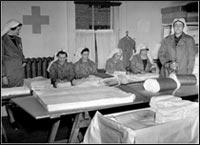
This branch officially became the Canadian Red Cross in 1909. During the First World War from 1914 to 1918, Red Cross volunteers across Canada knitted socks and sweaters, and sewed bandages and bed linens to be sent to war-torn Europe. They raised large sums of money for supplies to aid war victims. The Canadian Red Cross also played a central role in establishing and supporting hospitals for those injured in the war, like the Duchess of Connaught Red Cross Hospital in Maidenhead, England.
Second World War
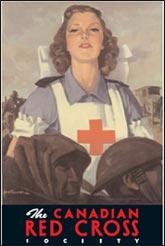
During the Second World War, almost three million Canadians were active Red Cross members over the course of the conflict.
There was a trained, uniformed Canadian Red Cross Corps, as well as junior clubs for youth. Just as in the First World War, they sent medical aid overseas. They also sent home comforts – food, warm clothing, quilts made at quilting parties, sweets, cigarettes and books. These packages were especially appreciated by those held in prisoner-of-war camps.
The Canadian Red Cross raised large amounts of money by holding fundraising events like dances and concerts. They also arranged entertainment, like movie nights and picnics, for wounded servicemen recuperating in local hospitals.
With a shortage of medical workers in Canada, Red Cross volunteers drove ambulances, assisted nurses, trained individuals in first aid, ran blood donor clinics and provided medical aid as needed. They supported local hospitals by donating beds and medical supplies. The volunteers were quick to respond to fires, floods and other community emergencies.
Tens of thousands of women played a huge role in the Canadian Red Cross during the war. Hundreds even served overseas. Canadian Red Cross personnel also served in Newfoundland (which was not yet part of Canada at that time), helping injured seamen whose ships had been torpedoed on the Atlantic Ocean.

After the war ended in 1945, thousands of war brides (European women who had married Canadian servicemen) and their children sailed across the Atlantic to their new homes in Canada. Red Cross volunteers were on the ships with them to help.
Korean War to present day
The Canadian Red Cross served during the Korean War of 1950 to 1953. They sent medical-social welfare teams to Korea, and played a role in prisoner-of-war exchanges between North and South Korea.
The Canadian Red Cross continues to help Canadians and those in need beyond our borders whose lives are disrupted by war and natural disasters. For more information on the work of the Canadian Red Cross, visit the Canadian Red Cross Web site.