
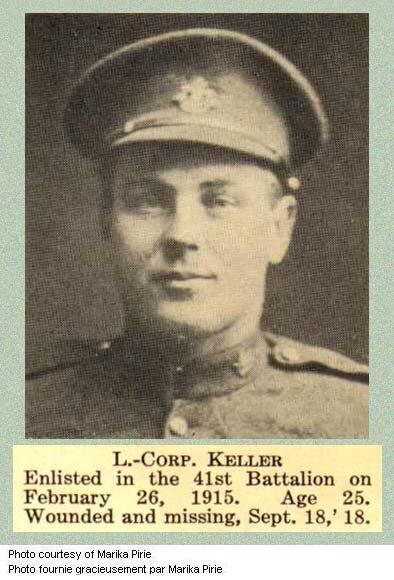

Citation(s);
Military service
Burial/memorial information
Baptized Joseph-Louis-Paul Keller. Son of Louis Keller (deceased in 1907) and Clara Madère. Husband of Moyra Brien, all of Aylmer, Gatineau, Québec. Father of Edith, Lilian Amy Rebecca and Rose Elsie Josephine Keller.
He stated being born in 1891 when he enlisted. His father immigrated from France in 1882.
Enlisted in Company D of the 41st Battalion of the Canadian Expeditionary Force, he reported having served in the 70th Régiment de Hull. He sailed for Great Britain on October 18, 1915, and landed on the 28th in Plymouth, England. Assigned to the 23rd Reserve Battalion on April 20, 1916, he was transferred to the 22nd Battalion on June 7. On the 8th, he crossed the English Channel to land in France. He was initially reported wounded and missing in action between September 14 and 18, 1916. On January 17, 1917, he was officially recognized as having been killed in action on September 18, 1916, during the Battle of Courcelette, Somme.
Digital gallery of Private Joseph Keller
-
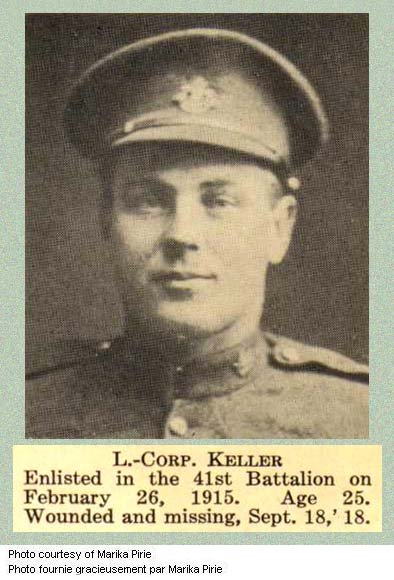
Photo of Joseph Keller
Photograph from "Our Heroes in The Great World War", compiled by J. H. De Wolfe, Patriotic Publishing Co., Ottawa, Ontario, 1919. -
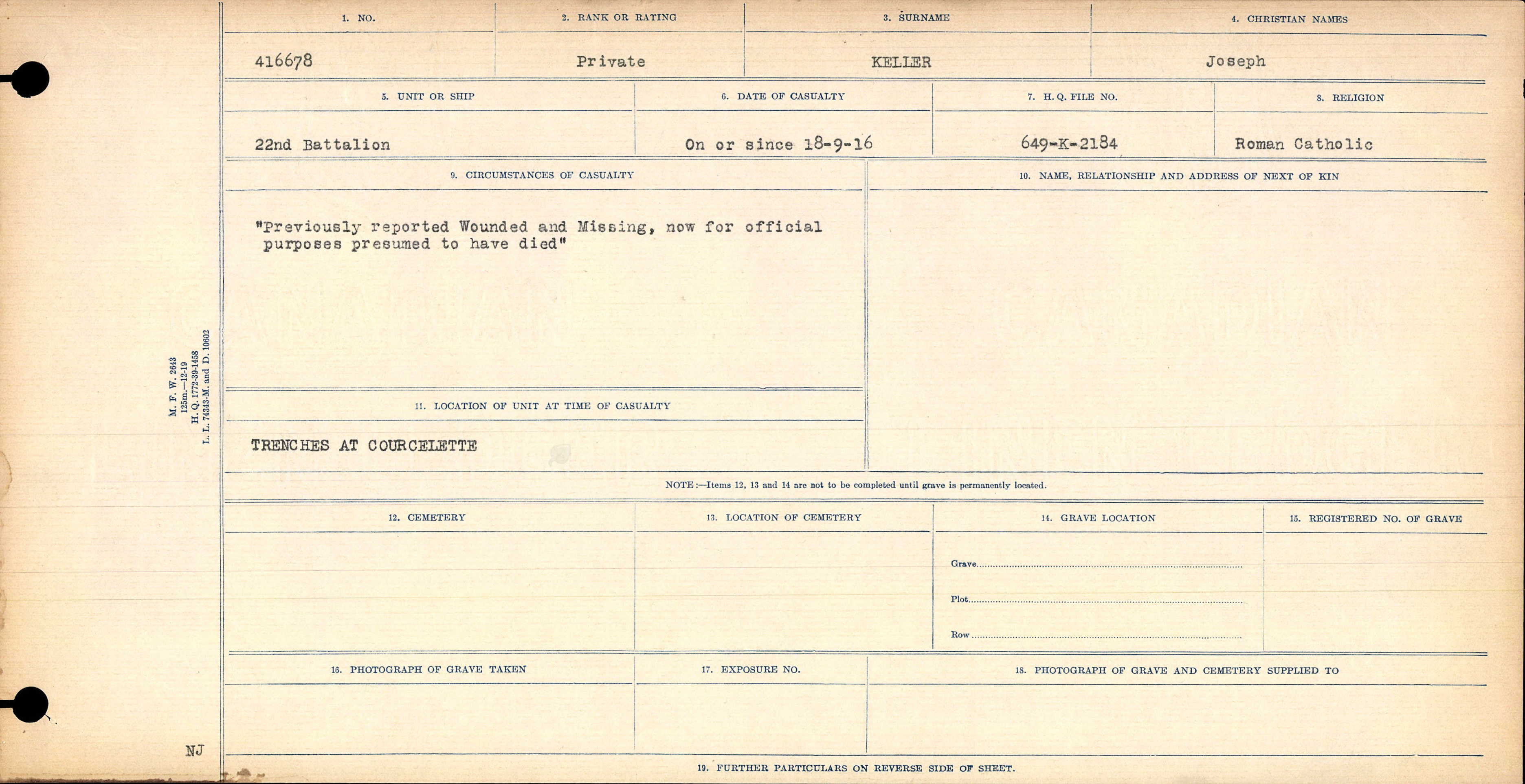
Circumstances of death registers
-
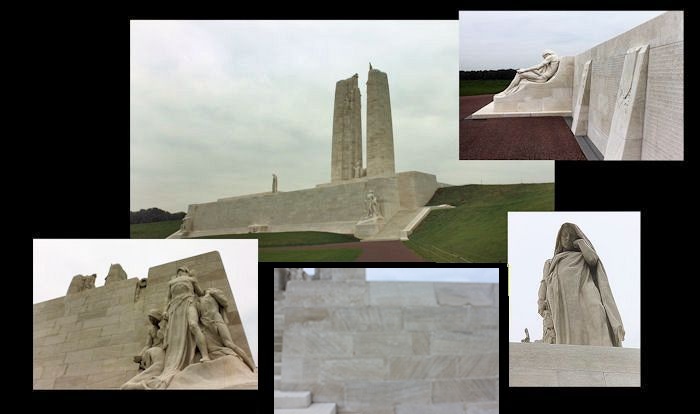
Vimy Memorial
Canada's Vimy Memorial, located approximately 8 kilometres to the north-east of Arras, France. May the sacrifice of so many never be forgotten. (J. Stephens) -

Inscription
His name as it is inscribed on the Vimy Memorial. Over 11,000 fallen Canadians having no known place of burial in France, are honoured on this Memorial. May they never be forgotten. (J. Stephens)
Digital gallery of
Private Joseph Keller
Digital gallery of
Private Joseph Keller
Digital gallery of
Private Joseph Keller
Digital gallery of
Private Joseph Keller
In the Books of Remembrance
Commemorated on:
Page 112 of the First World War Book of Remembrance.
Request this page
Download this page

The Poppy Design is a trademark of The Royal Canadian Legion (Dominion Command) and is used with permission. Click here to learn more about the poppy.
Did we miss something?
Contribute information to this commemorative page
Do you have photographs, information or a correction relating to this individual’s virtual memorial? Learn more about the CVWM and the information we collect.