


Citation(s);
Military service
Burial/memorial information
Son of John Robert and Harriet Susannah Osborn; Husband of Margaret Elizabeth Nelson, of St. Vital, Manitoba. Father of John Robert, Ethel Fern, Gerald Nelson, George Henry and Patricia Margaret Osborn.
During the First World War, he served in the Royal Naval Division. Osborn immigrated to Canada in 1920. In 1933, he enlisted in the Winnipeg Grenadiers, a non-permanent active militia unit.
When the Second World War began in September 1939, the Grenadiers were placed on active service and were stationed for a time in Bermuda with B Force and in Jamaica with Y Force. In October 1941, at the request of the British government, the battalion was sent to Hong Kong with C Force to reinforce the garrison there.
On December 8th 1941, Japanese army units attacked British defensive positions in Hong Kong. By December 18th, three Japanese regiments had landed on the island. At dawn on December 19th, "A" Company of the Winnipeg Grenadiers was ordered to move to Jardine's Lookout to dislodge the enemy and then advance to and retake Mount Butler. Shortly after dawn, "A" Company, led by Company Sergeant Major (CSM) Osborn, led a bayonet charge and captured the summit of Mount Butler. Three hours later, when three companies of Japanese troops counterattacked and forced his men to fall back down the western slope of the mountain, CSM Osborn calmly directed protective fire that kept the enemy at bay. Eventually, after CSM Osborn's group joined the rest of "A" Company, the Japanese were able to surround the group. By mid-afternoon, after repelling two Japanese attacks and now facing an ammunition shortage and a growing number of casualties, the company commander, Major A.B. Gresham, decided to surrender and stood in the open with a white flag. He was immediately shot down by the Japanese, who began throwing grenades at the "A" Company position. CSM Osborn picks up several and sends them back to the enemy. However, one of the grenades lands in a place where Osborn cannot retrieve it in time. Giving a warning shout as he pushes one of his men aside, he lunges at the grenade, which explodes and kills him instantly.
When CSM Osborn's leadership and sacrifice on this occasion were highlighted after the defeat of Japan, he was posthumously awarded the Victoria Cross.
To commemorate his sacrifice, the Manitoba government named Osborn Creek located on the Driftwood River in his honor in 1973 and John Osborn Lake located east of Nuelton Lake in 1986.
The citation in the London Gazette of 1st April, 1946:
At Hong Kong, on 19th December, 1941, a company of the Winnipeg Grenadiers became divided in an attack on Mount Butler. A part of the company led by C.S.M. Osborn captured the hill at bayonet point, but after three hours owing to the superior numbers of the enemy the position became untenable. C.S.M. Osborn and a small group covered the withdrawal and when their turn came to fall back he single-handed engaged the enemy, exposing himself to heavy enemy fire to cover their retirement. Later the Company was cut off and completely surrounded. Several enemy grenades were thrown which C.S.M. Osborn picked up and threw back. When one landed in a position where it was impossible to pick it up, he threw himself upon it and was instantly killed. His self-sacrifice undoubtedly saved the lives of many of his comrades. C.S.M. Osborn was an inspiring example to all throughout the defence, and in his death he displayed the highest qualities of heroism and self-sacrifice.
Digital gallery of Warrant Officer Class II John Robert Osborn
-
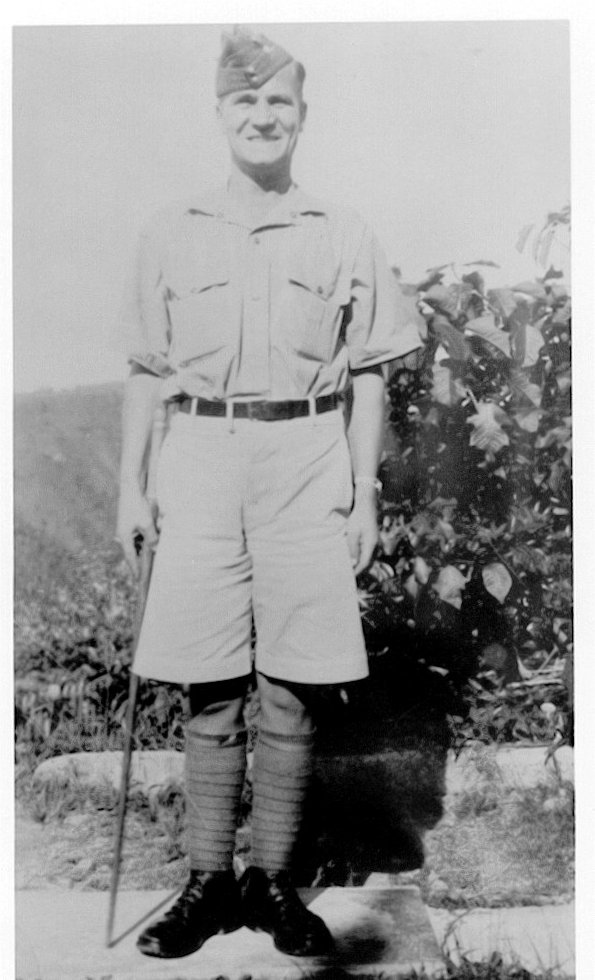
Photo of John Robert Osborn
-
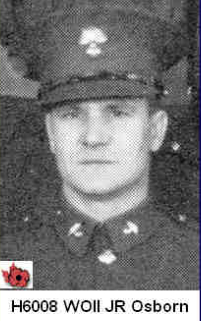
Newspaper clipping
In memory of those who served in Hong Kong during World War 11 and did not come home. Submitted with permission on behalf of the Hong Kong Veterans Commemorative Association by Operation: Picture Me. -
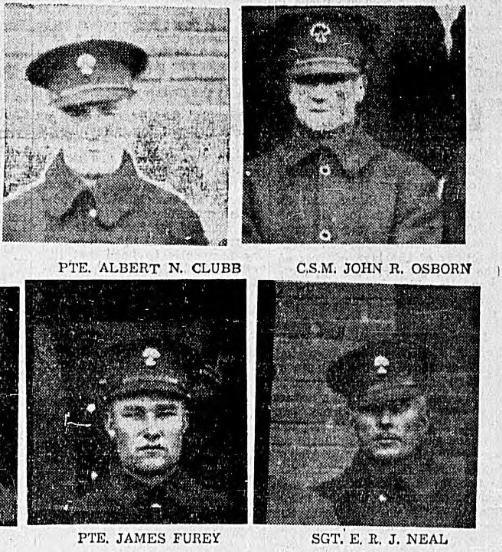
Newspaper Clipping
In memory of the men and women memorialized on the pages of the Winnipeg Evening Tribune. Submitted for the project, Operation: Picture Me -
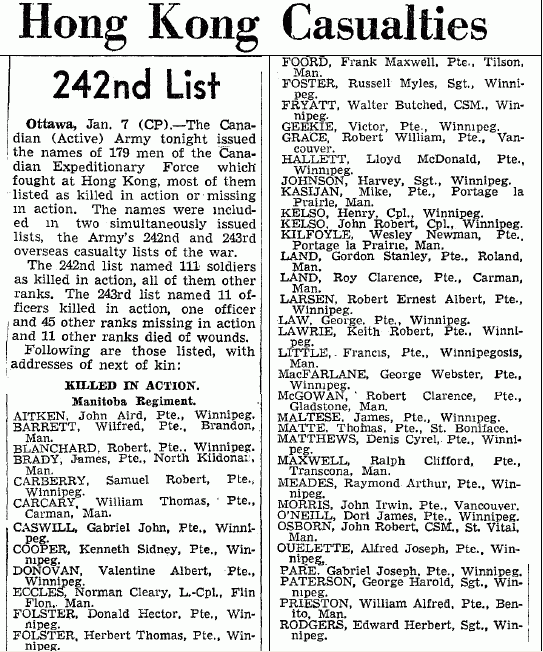
Newspaper Clipping
Company Sergeant Major JOHN ROBERT OSBORN is was reported to have been Killed in Action in the Canadian Army's 242nd overseas casualty list of the war published in the Globe and Mail on January 8, 1943. -
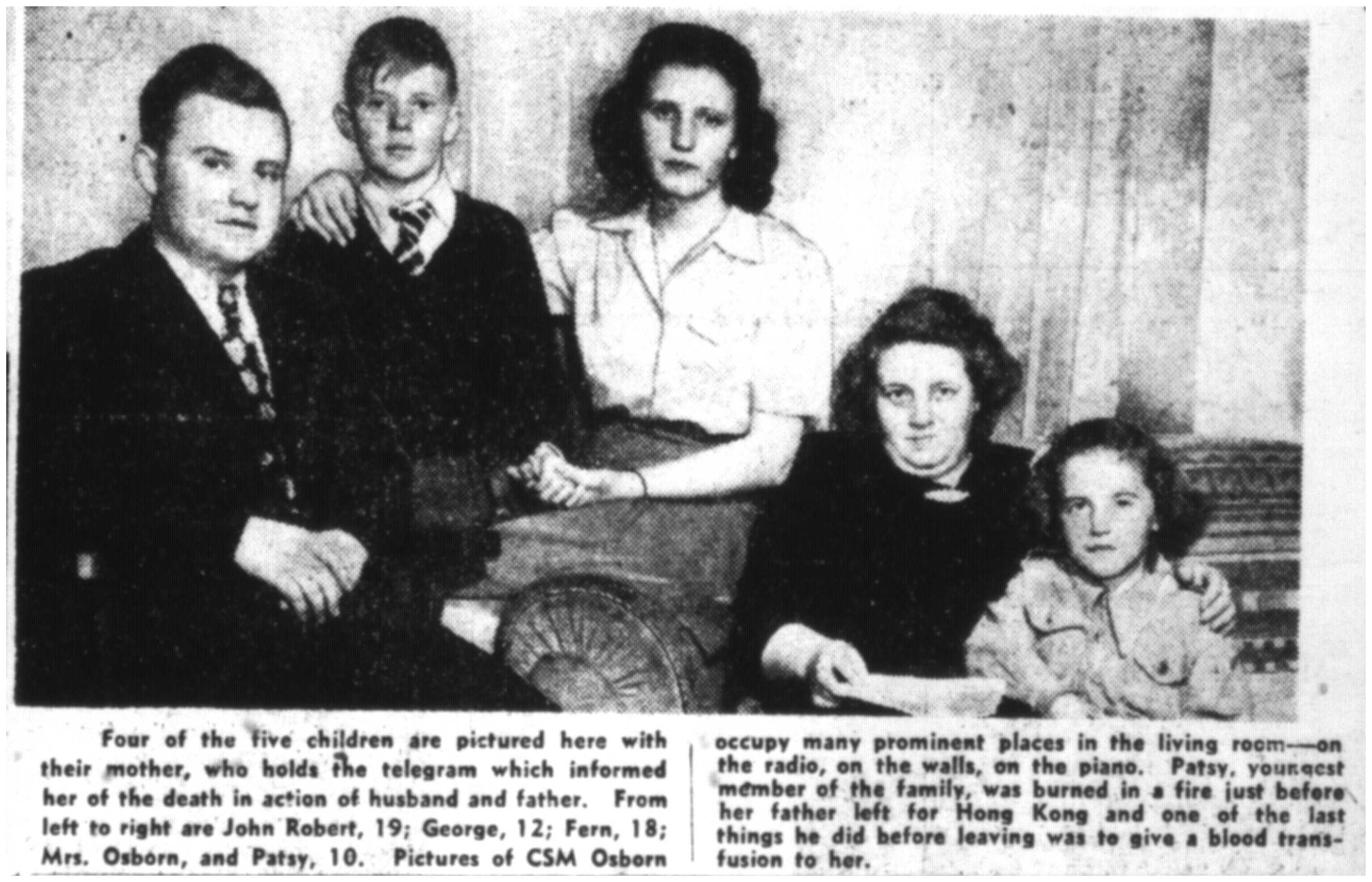
Newspaper clipping
From the Toronto Telegram March 1946. Submitted for the project Operation Picture Me -
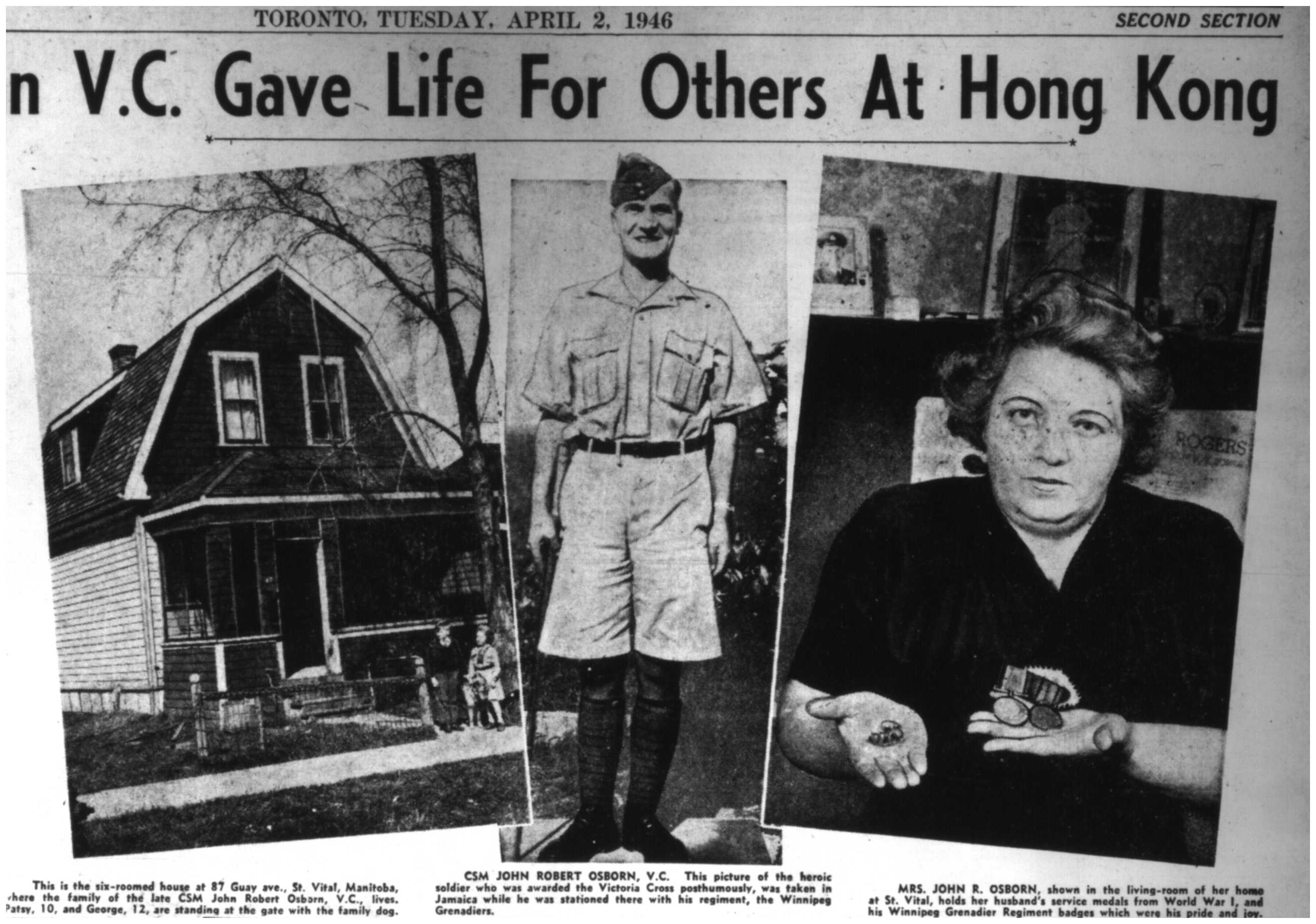
Newspaper clipping
From the Toronto Telegram March 1946. Submitted for the project Operation Picture Me -
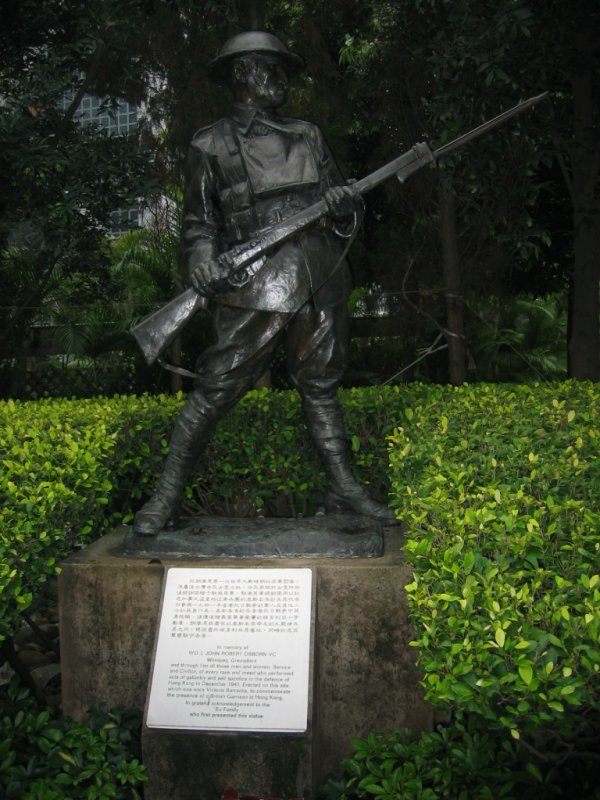
Monument
John Osborn VC Memorial - Hong Kong Park -
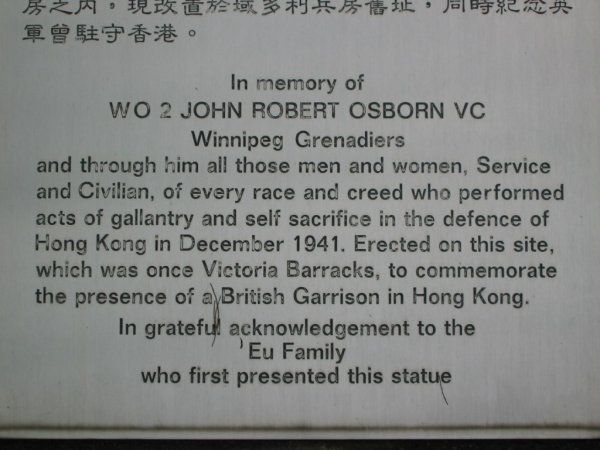
Memorial Plaque
John Osborn VC Memorial - Hong Kong Park -
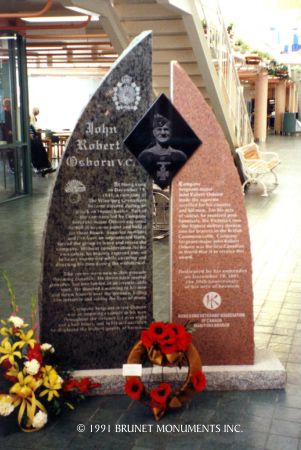
Monument
Monument was designed, manufactured & installed by Brunet Monuments back in Dec. 19, 1991. Made of three different types of granite interlocked together. The monument was dedicated by his comrades to celebrate the 30th anniversary of his acts of heroism. Event was attended by Osborn's family and surviving veterans of the Hong Kong Veterans Association of Canada - Manitoba Branch. It is placed inside the Tower building of the Deer Lodge Centre in Winnipeg, MB. The Tower Building was renamed "John Osborn VC Tower" in Honour of the WW II heroes. -
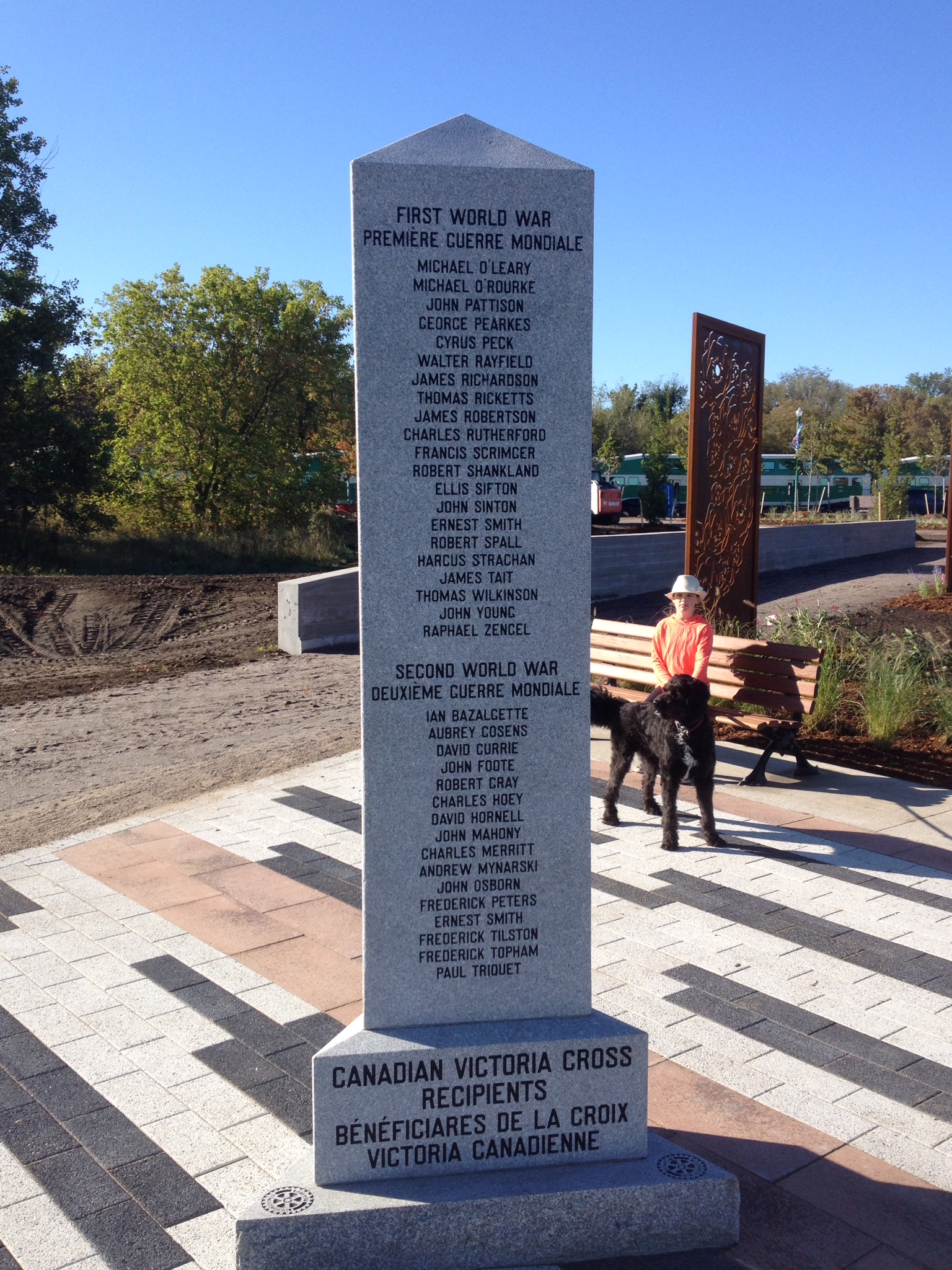
Cenotaph
Barrie Military Park, Canadian Victoria Cross Recipients, Cenotaph -
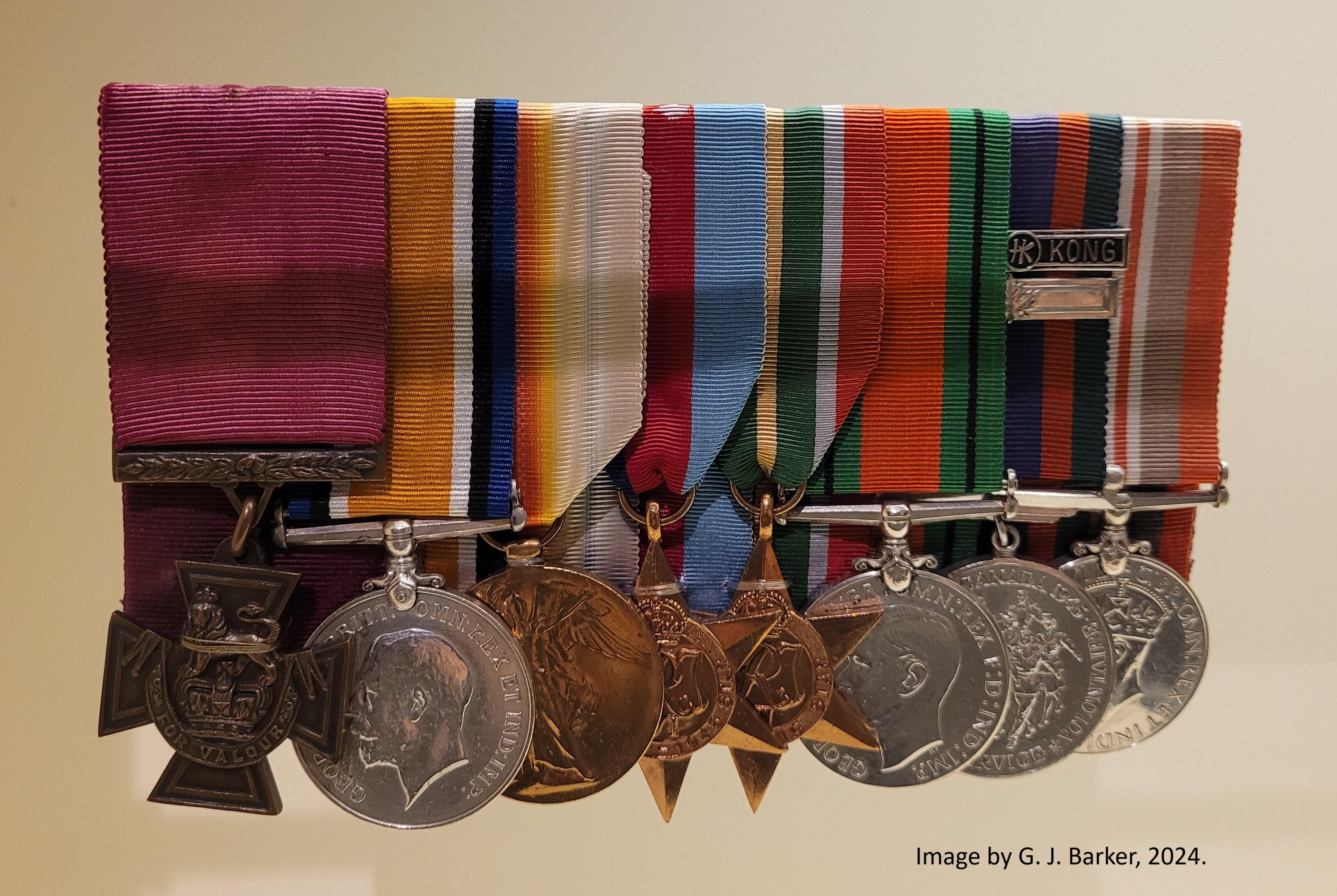
Medal
Medals awarded to John R. Osborn. They are (left to right): the Victoria Cross, British War Medal, Victory Medal, 1939-45 Star, Pacific Star, Defence Medal, Canadian Volunteer Service Medal (with Overseas Service Bar and Hong Kong Bar), and War Medal 1939-45. These are on permanent display in the Canadian War Museum at Ottawa. (Image taken by Gregory J. Barker of Barrie, Ontario, in 2024.) -
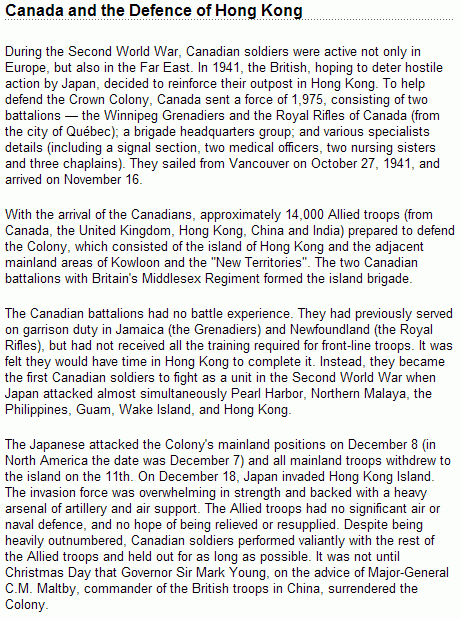
Canada and the Defence of Hong Kong
Source: Veterans Affairs Canada. -

Canadian Casuatlies in the Defence of Hong Kong
Source: Veterans Affairs Canada. -

Unknown Marker
The Sai Wan Memorial is located at the entrance of Sai Wan Cemetery. 1,505 Commonwealth casualties of the Second World War are buried or commemorated at this cemetery, of which 444 of the burials are the remains of unidentified soldiers, including those of 107 Canadian soldiers, most of whom were killed or died of wounds during the defense of Hong Kong, which took place from December 8th to December 25th, 1941. This is one such grave marker. There is a possibility that the remains of Company Sergeant Major JOHN ROBERT OSBORN lie beneath this grave marker, or one of the other 106 grave markers in Sai Wan Cemetery that simply read, A SOLDIER OF THE 1939-1945 WAR. A CANADIAN REGIMENT. KNOWN UNTO GOD. The unidentified soldiers are commemorated at the Sai Wan Memorial. -
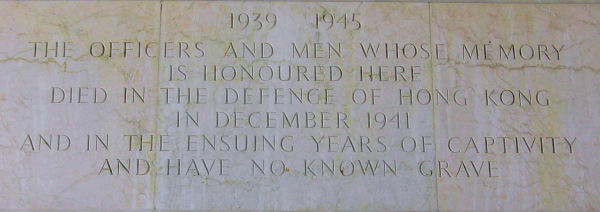
Dedicatory Inscription of the Sai Wan Memorial
Dedicatory inscription of the SAI WAN MEMORIAL. This memorial bears the names of more than 2,000 Commonwealth servicemen, including 228 Canadians. -
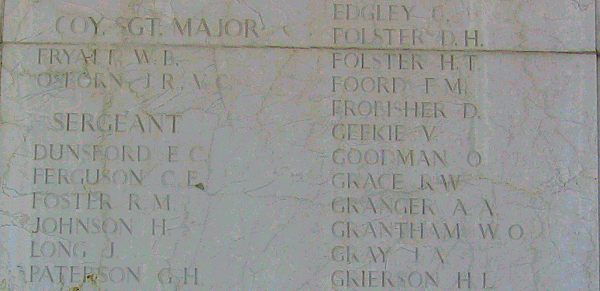
Memorial
Company Sergeant Major JOHN ROBERT OSBORN is one of 20 members of the Winnipeg Grenadiers, Royal Canadian Infantry Corps who are commemorated on this panel of the Sai Wan Memorial. He was one of 290 Canadian soldiers killed during the defense of Hong Kong, from December 8th to December 25th, 1941.
Digital gallery of
Warrant Officer Class II John Robert Osborn
Digital gallery of
Warrant Officer Class II John Robert Osborn
Digital gallery of
Warrant Officer Class II John Robert Osborn
Digital gallery of
Warrant Officer Class II John Robert Osborn
Digital gallery of
Warrant Officer Class II John Robert Osborn
Digital gallery of
Warrant Officer Class II John Robert Osborn
Digital gallery of
Warrant Officer Class II John Robert Osborn
Digital gallery of
Warrant Officer Class II John Robert Osborn
Digital gallery of
Warrant Officer Class II John Robert Osborn
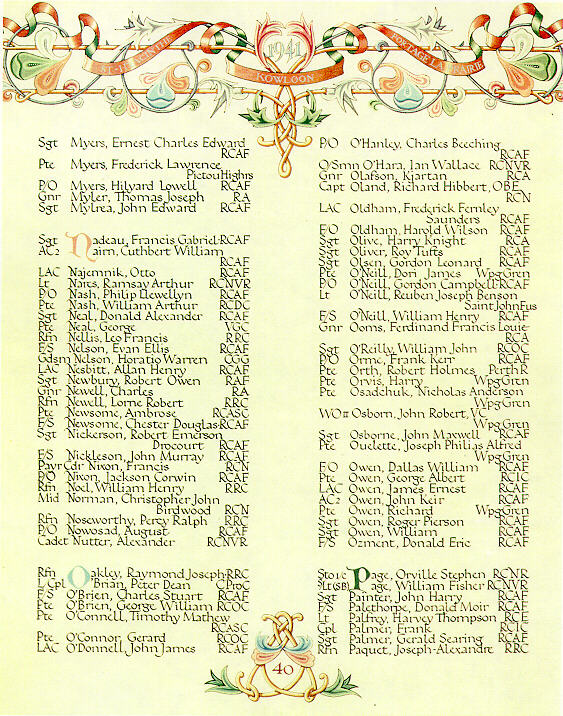
In the Books of Remembrance
Commemorated on:
Page 40 of the Second World War Book of Remembrance.
Request this page
Download this page
SAI WAN MEMORIAL Victoria, Hong Kong
This SAI WAN MEMORIAL honours over 2,000 men of the land forces of the British Commonwealth and Empire who died in the defence of Hong Kong during the Second World War.
The SAI WAN MEMORIAL is in the form of a shelter building 24 metres long and 5.5 metres wide. It stands at the entrance to Sai Wan Bay War Cemetery, outside Victoria, the capital of Hong Kong. From the semi-circular forecourt, two wide openings lead to the interior of the building. The names are inscribed on panels of Portland stone. The dedicatory inscription reads:
1939 - 1945 The officers and men whose memory is honoured here died in the defence of Hong Kong in December 1941 and in the ensuing years of captivity and have no known grave.
The northern side of the Memorial is open and four granite piers support the copper roof. From a commanding position 305 metres above sea level, it looks out over the War Cemetery where some 1,500 men lie buried, and across the water to Mainland China - a magnificent view of sea and mountains.
The Cape Collinson area has many cemeteries. Walking up this narrow one-way traffic road, one will pass the Catholic Cemetery situated on the hillside to the left of the road, and the Hong Kong Military Cemetery on the right. Sai Wan War Cemetery is about half way up Cape Collinson Road and faces the Muslim and Buddhist cemeteries.
One can also get a taxi from Chai Wan Terminus and follow the same route. Alternatively, one can board a public light bus, Route No.16M, which runs from Chai Wan MTR Terminus to Stanley. En route to Stanley the minibus will pass Sai Wan War Cemetery.
For more information, visit Commonwealth War Graves Commission.
The Poppy Design is a trademark of The Royal Canadian Legion (Dominion Command) and is used with permission. Click here to learn more about the poppy.
Did we miss something?
Contribute information to this commemorative page
Do you have photographs, information or a correction relating to this individual’s virtual memorial? Learn more about the CVWM and the information we collect.