
Military service
Burial/memorial information
His mother passed away when he was young and he was raised by his maternal uncle, Alphonse Michaud; that explains why he enrolled and served as Hormisdas Michaud.
He served for two years with the 11th Regiment. Enlisted in the 22nd Battalion, Canadian Expeditionary Force, he arrived in Plymouth, England on 29 May 1915, then in Boulogne, Pas-de-Calais, France, on the following 15 September. He was wounded in action on 25 September 1916 in the left eye, and shot a second time in the left arm on 7 November 1917. He was killed in action on 28 May 1918 in hand-to-hand combat during an assault on a German trench east of Boisleux-Saint-Marc, near Mercatel, France.
He served as Hormisdas Michaud and he is also commemorated on page 470 of the First World War Book of Remembrance.
Digitized service file.
1914-1915 Star, British War Medal, Victory Medal
Digital gallery of Corporal Hormisdas Brousseau
-

Memorial
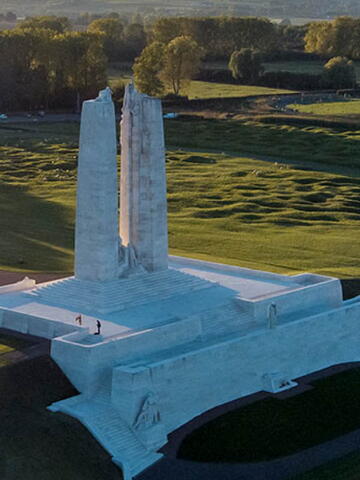
His name as it is inscribed on the Vimy Memorial. Over 11,000 fallen Canadians having no known place of burial in France, are honoured on this Memorial. May they never be forgotten. (J. Stephens)
Digital gallery of
Corporal Hormisdas Brousseau
In the Books of Remembrance
Commemorated on:
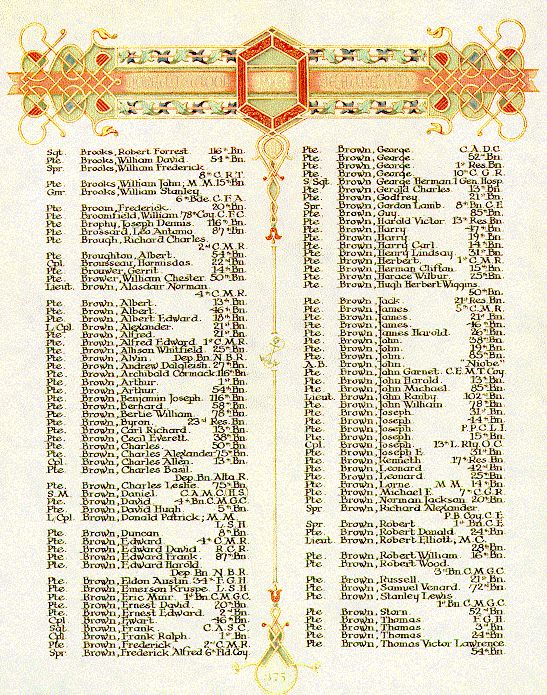
Page 375 of the First World War Book of Remembrance.
Request this page
Download this page
The Poppy Design is a trademark of The Royal Canadian Legion (Dominion Command) and is used with permission. Click here to learn more about the poppy.
Did we miss something?
Contribute information to this commemorative page
Do you have photographs, information or a correction relating to this individual’s virtual memorial? Learn more about the CVWM and the information we collect.