
Profile image
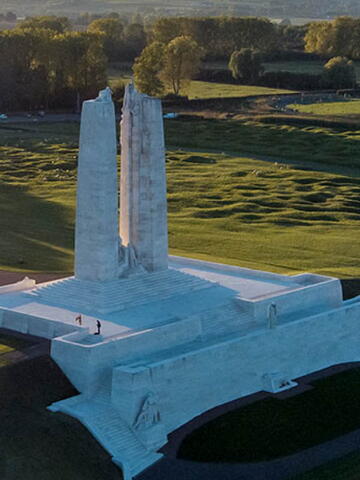
Military service
Service number:
688085
Age:
27
Rank:
Private
Force:
Army
Unit/Regiment:
Canadian Infantry (British Columbia Regiment)
Division:
47th Bn.
Birth:
April 14, 1889
Bollington, Cheshire, United Kingdom
Death:
April 13, 1917
Burial/memorial information
Additional information
Son of James Solomon and Martha (née Bollington) Trueman, of Bollington, Cheshire, England. He was educated in Bollington, a stone mason by trade. He served 3 years with the Cheshire Yeomanry. Brother of Wright, the eldest, who did not serve; James and Tom who both served with the 54th Battalion; Frank, who served with the British Army; Herbert, twin to Frank, served in the 1st and 7th Battalions of the Cheshire Regiments and was killed in France on 3 September 1918, William, who served with the 5th Battalion, King's Liverpool Regiment; Jane (Jenny); Harold and Stanley. Of his eight brothers, six served in the First World War, two with Canada, three with England. John, generally called Jack, was the first member of the Trueman family to settle at Dragon Lake near Quesnel, British Columbia. In the early 1900s he left England to visit his uncles, who resided in Skagit Valley, Washington State, U.S.A. From there he travelled north to the Yukon in search of a fortune. After a short stay he travelled overland south to Prince George and worked on the construction of the Grand Trunk Railroad.
Digital gallery of Private John Trueman
-

Photo of John Trueman
-

Essay (Page 1)
-
Memorial
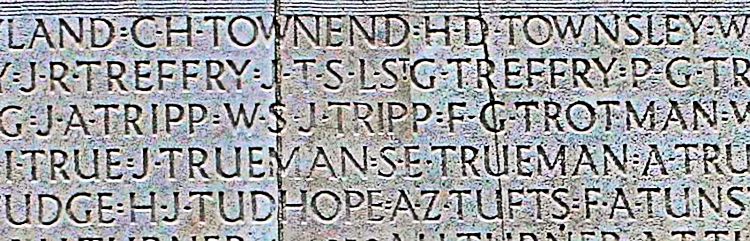
His name as it is inscribed on the Vimy Memorial. Over 11,000 fallen Canadians having no known place of burial in France, are honoured on this Memorial. May they never be forgotten. (J. Stephens) -
Memorial
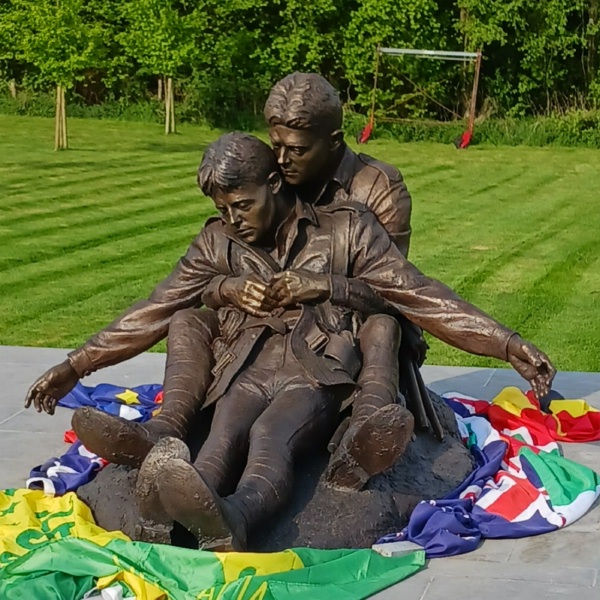
Remembering brothers lost … Brothers In Arms Memorial, Zonnebeke, BE … photo courtesy of Marg Liessens … May 2022
Digital gallery of
Private John Trueman
Digital gallery of
Private John Trueman
Digital gallery of
Private John Trueman
Digital gallery of
Private John Trueman
In the Books of Remembrance
Commemorated on:
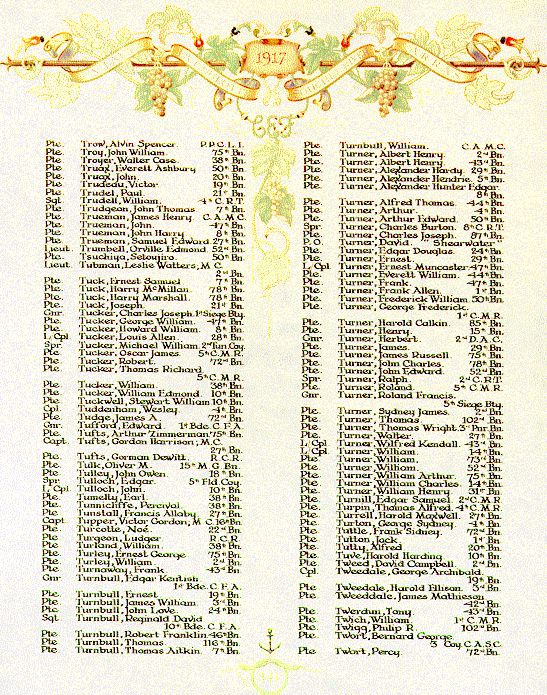
Page 341 of the First World War Book of Remembrance.
Request this page
Download this page
The Poppy Design is a trademark of The Royal Canadian Legion (Dominion Command) and is used with permission. Click here to learn more about the poppy.
Did we miss something?
Contribute information to this commemorative page
Do you have photographs, information or a correction relating to this individual’s virtual memorial? Learn more about the CVWM and the information we collect.