Military service
Burial/memorial information
Son of Henry Martinieus Bjerke, of Pelly, Saskatchewan, and Jakapine Jasopine Bjerke. Husband of the late Jacobine Melsine Bjerke and father of Henry Martinius Bjerke.
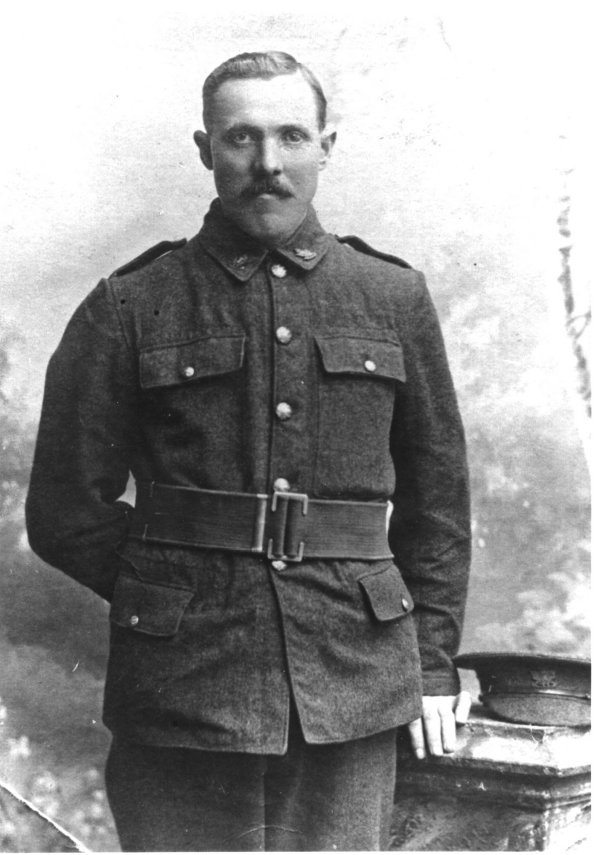
Digital gallery of Private Karl Oscar Bjerke
Digital gallery of
Private Karl Oscar Bjerke
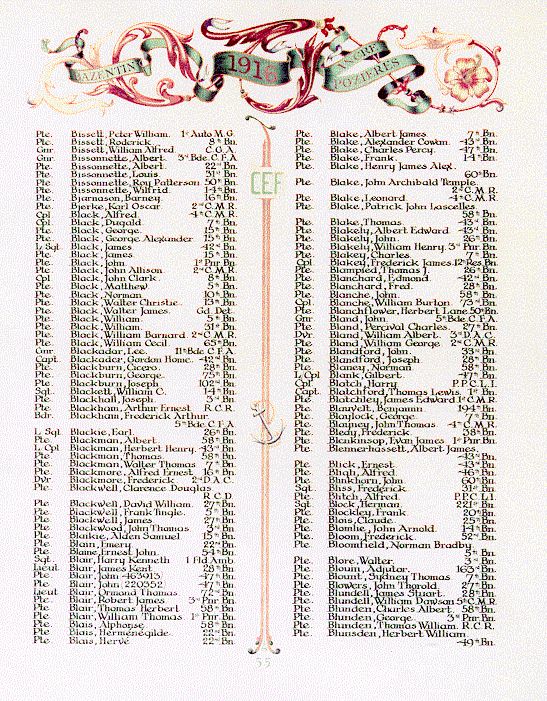
423272 Private (2nd Canadian Mounted Rifles, British Columbia Regiment) Karl Oscar Bjerke (b.1885) of Pelly was KIA 19160602 at Mount Sorrel and is commemorated on the Menin Gate Memorial, Ieper, Belgium, for the 55,000 men who were lost without trace during the defence of the Ypres Salient. He was the husband of the late Jacobine Melsine Bjerke and the father of Henry Martinius Bjerke. He was the son of Martinius Andreason Bjerke and Emma Julia Bjerke(Olson) who came from West Toten, Norway, to homestead SE30-34-32-W1 north of Pelly. Karl was born in the West Toten area of Norway on the 24 December 1885. He accompanied his parents when they emigrated to Portland, North Dakota, en route, in 1906 homesteaded himself at NW30-34-32-W1, and enlisted at Roblin, Manitoba, in 1915.
Image gallery
-
423272 Private (2nd Canadian Mounted Rifles, British Columbia Regiment) Karl Oscar Bjerke (b.1885) of Pelly was KIA 19160602 at Mount Sorrel and is commemorated on the Menin Gate Memorial, Ieper, Belgium, for the 55,000 men who were lost without trace during the defence of the Ypres Salient. He was the husband of the late Jacobine Melsine Bjerke and the father of Henry Martinius Bjerke. He was the son of Martinius Andreason Bjerke and Emma Julia Bjerke(Olson) who came from West Toten, Norway, to homestead SE30-34-32-W1 north of Pelly. Karl was born in the West Toten area of Norway on the 24 December 1885. He accompanied his parents when they emigrated to Portland, North Dakota, en route, in 1906 homesteaded himself at NW30-34-32-W1, and enlisted at Roblin, Manitoba, in 1915.
-
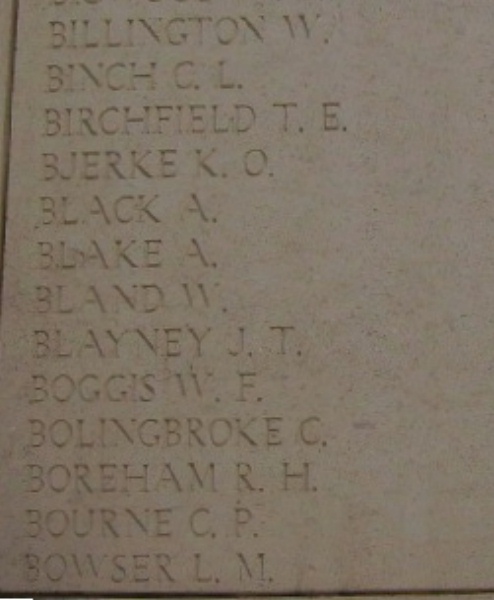
Inscription on the Menin Gate, photo courtesy of Marg Liessens.
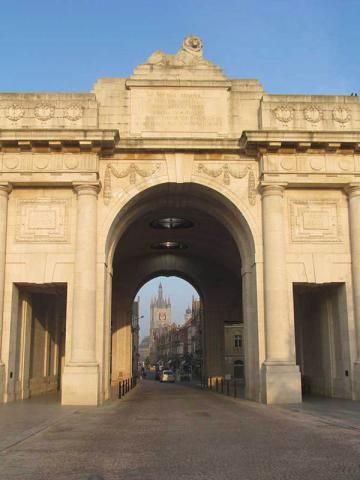
MENIN GATE (YPRES) MEMORIAL Belgium
The Menin Gate Memorial is situated at the eastern side of the town of Ypres (now Ieper) in the Province of West Flanders, on the road to Menin and Courtrai. It bears the names of 55,000 men who were lost without trace during the defence of the Ypres Salient in the First World War. Designed by Sir Reginald Blomfield and erected by the Imperial (now Commonwealth) War Graves Commission, it consists of a Hall of Memory", 36.6 metres long by 20.1 metres wide. In the centre are broad staircases leading to the ramparts which overlook the moat, and to pillared loggias which run the whole length of the structure. On the inner walls of the Hall, on the side of the staircases and on the walls of the loggias, panels of Portland stone bear the names of the dead, inscribed by regiment and corps. Carved in stone above the central arch are the words:
TO THE ARMIES OF THE BRITISH EMPIRE WHO STOOD HERE FROM 1914 TO 1918 AND TO THOSE OF THEIR DEAD WHO HAVE NO KNOWN GRAVE.
Over the two staircases leading from the main Hall is the inscription:
HERE ARE RECORDED NAMES OF OFFICERS AND MEN WHO FELL IN YPRES SALIENT BUT TO WHOM THE FORTUNE OF WAR DENIED THE KNOWN AND HONOURED BURIAL GIVEN TO THEIR COMRADES IN DEATH.
The dead are remembered to this day in a simple ceremony that takes place every evening at 8:00 p.m. All traffic through the gateway in either direction is halted, and two buglers (on special occasions four) move to the centre of the Hall and sound the Last Post. Two silver trumpets for use in the ceremony are a gift to the Ypres Last Post Committee by an officer of the Royal Canadian Artillery, who served with the 10th Battery, of St. Catharines, Ontario, in Ypres in April 1915."
For more information, visit Commonwealth War Graves Commission.
The Poppy Design is a trademark of The Royal Canadian Legion (Dominion Command) and is used with permission. Click here to learn more about the poppy.
Did we miss something?
Contribute information to this commemorative page
Do you have photographs, information or a correction relating to this individual’s virtual memorial? Learn more about the CVWM and the information we collect.