
Life for soldiers in the trenches during the First World War was miserable. They were often muddy and cold and had to live in the midst of pests like rats, lice and fleas.
In this form of warfare, soldiers faced the enemy across a narrow strip of land between the opposing trenches. This was a harsh "No Man’s Land" of mud, barbed wire and shell craters, swept by machine gun fire, and menaced by artillery and snipers. This is what soldiers had to cross when they went "over the top" and launched an attack.
Learn more about life in the trenches and listen to Veterans as they share their stories.
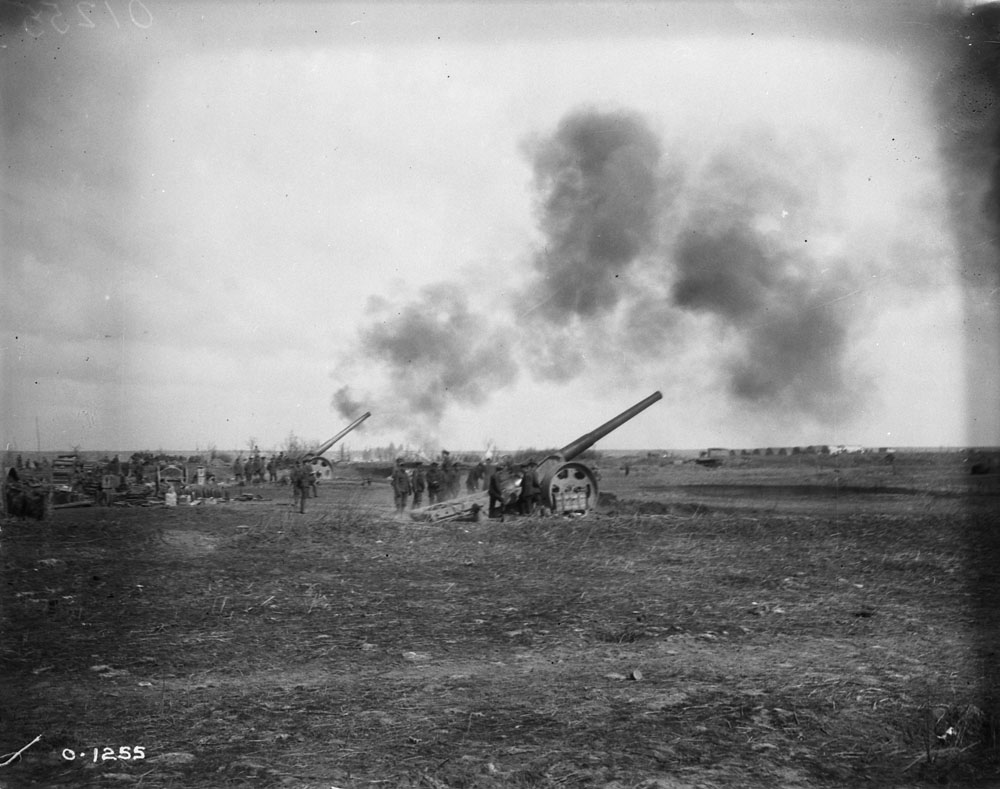
Heavy artillery
The 18-Pounder Field Gun weighed almost 1,300 kg. It was the main field artillery weapon used by the Allied army. With a good crew and conditions, it could fire a shell over a distance of 6 km in a little over 12 seconds.
Hear their story
Thomas Wood describes its role and discusses the shelling of Vimy Ridge and the effect it had on the outcome.
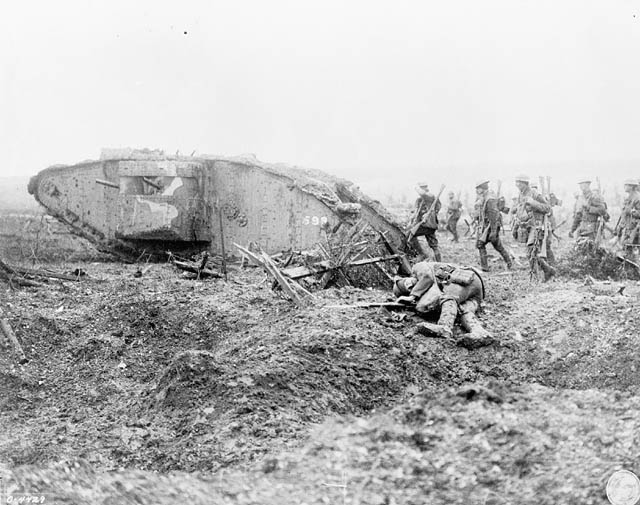
Tanks
Tanks were first used successfully in battle by the Allies in the fall of 1917 to break through the enemy's defenses, in particular barbed wire entanglement. Although slow-moving, the tank was able to roll across a trench and climb obstacles.
Hear their story
James MacLeod describes the effectiveness of newer tracked tanks in the Amiens offensive.
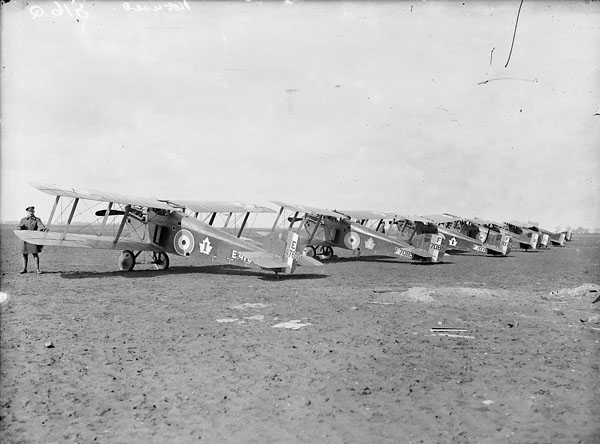
Aerial combat
Airplanes were fitted with machine guns and used in "dogfights" or battles in the air between enemy airplanes. The airplanes were made of wood and canvas, and could catch fire quickly. A pilot’s average life-span was two months as few wore parachutes.
Hear their story
Frank Conrad gives an eye witness account of an Allied spotter plane being chased and shot down by a German aircraft, with a surprisingly humorous outcome.
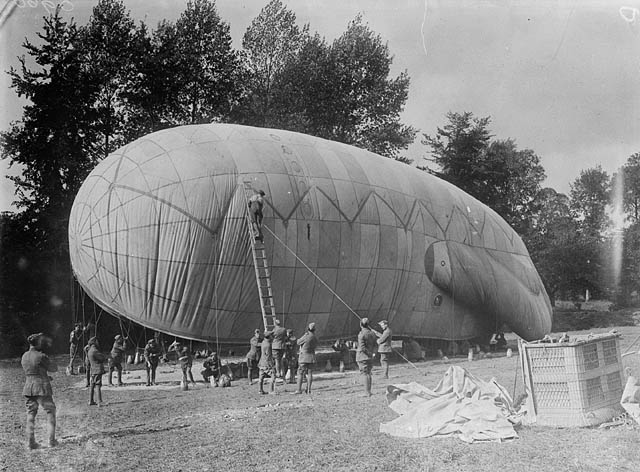
Observation balloons
Observation balloons were filled with hydrogen and were attached to a machine to pull them down quickly if threatened by an enemy airplane. The observer in the basket of the balloon had a wireless radio transmitter, binoculars and a long-range camera. His job was to report enemy activity.
Hear their story
George Vale describes being on cavalry patrol, being spotted by an observation balloon and being shelled with shrapnel bombs.
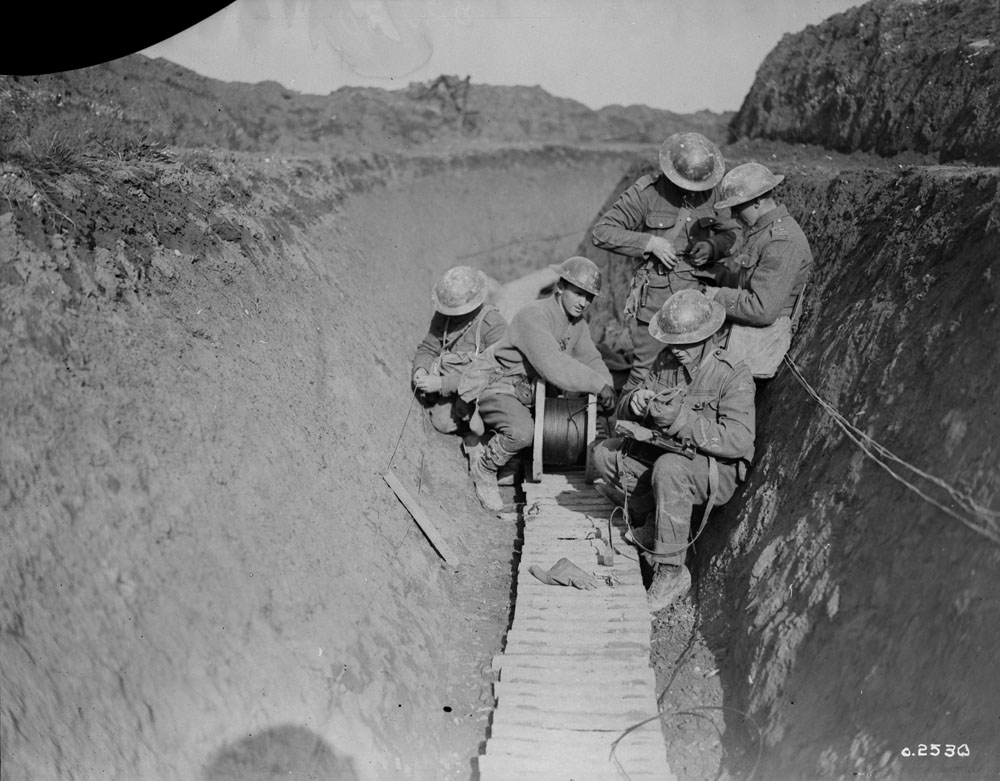
Signal stations
Signal stations were set up in trenches and gun pits to maintain contact between troops on the front lines and with commanders at headquarters. Messages were transmitted in Morse Code using various means such as flares, lamps, telephone, telegraph or wireless radios.
Hear their story
Donald MacKay describes being selected from a pool of signalmen to join the 46th Battalion, and then describes his responsibilities during an infantry advance.
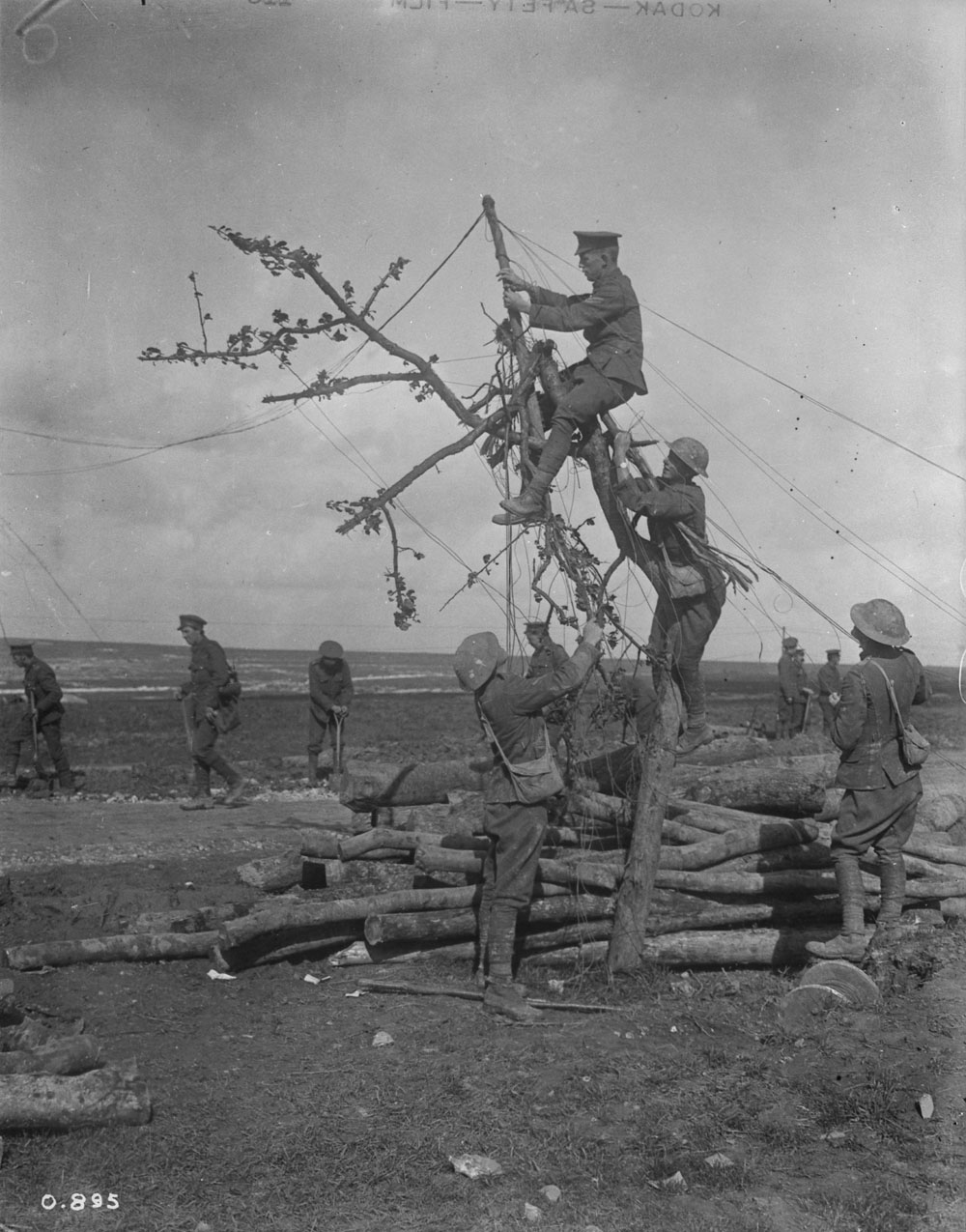
Listening posts
Listening posts were located far forward of the front line. Typically hidden, they were set up in narrow, shallow trenches or craters in No Man's Land. Soldiers, called sappers, kept a close watch on any enemy activity and gathered information.
Hear their story
Thomas Spear discusses his arrival in France, and being sent to an outpost, a forward position used to intercept German signal traffic. Here he would copy what he heard and pass it to a runner, who would deliver it to Headquarters.
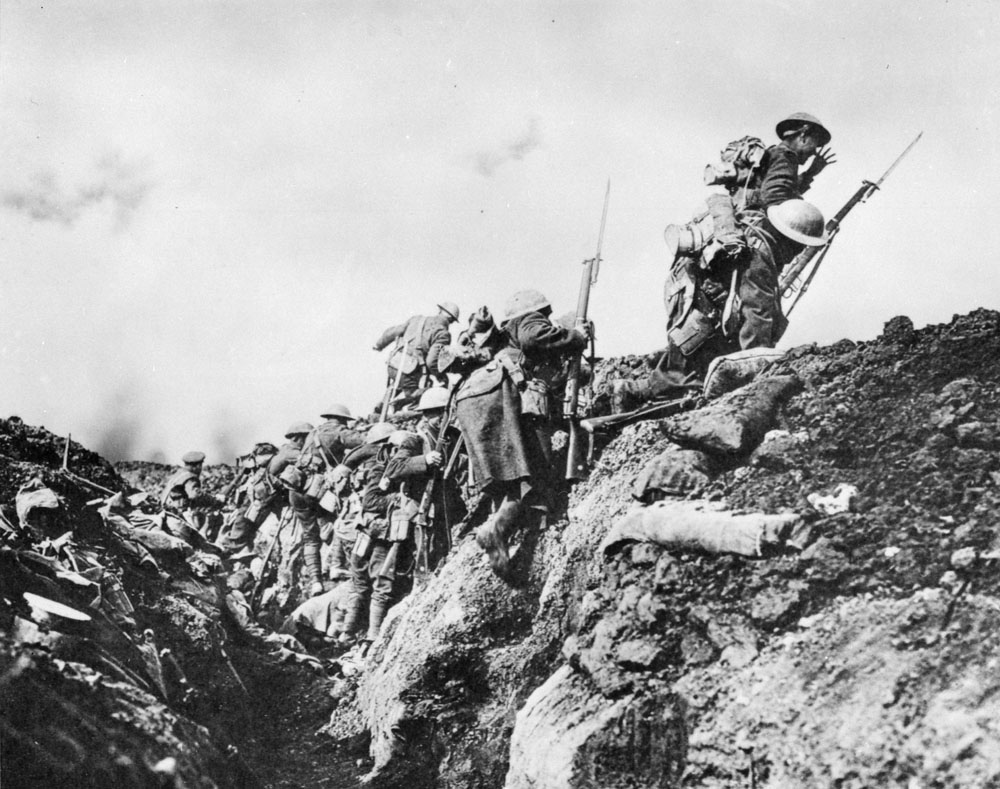
Over the top
The phrase "over the top" describes the process whereby infantrymen climbed up the side of their trenches and ran into No Man's Land to attack the opposing enemy trenches. Since the soldiers were exposed to the enemy’s machine-gun fire, such action usually resulted in high casualties.
Hear their story
James Butterworth describes a raid at the M and N Line at Ypres, and the loss of a sergeant.
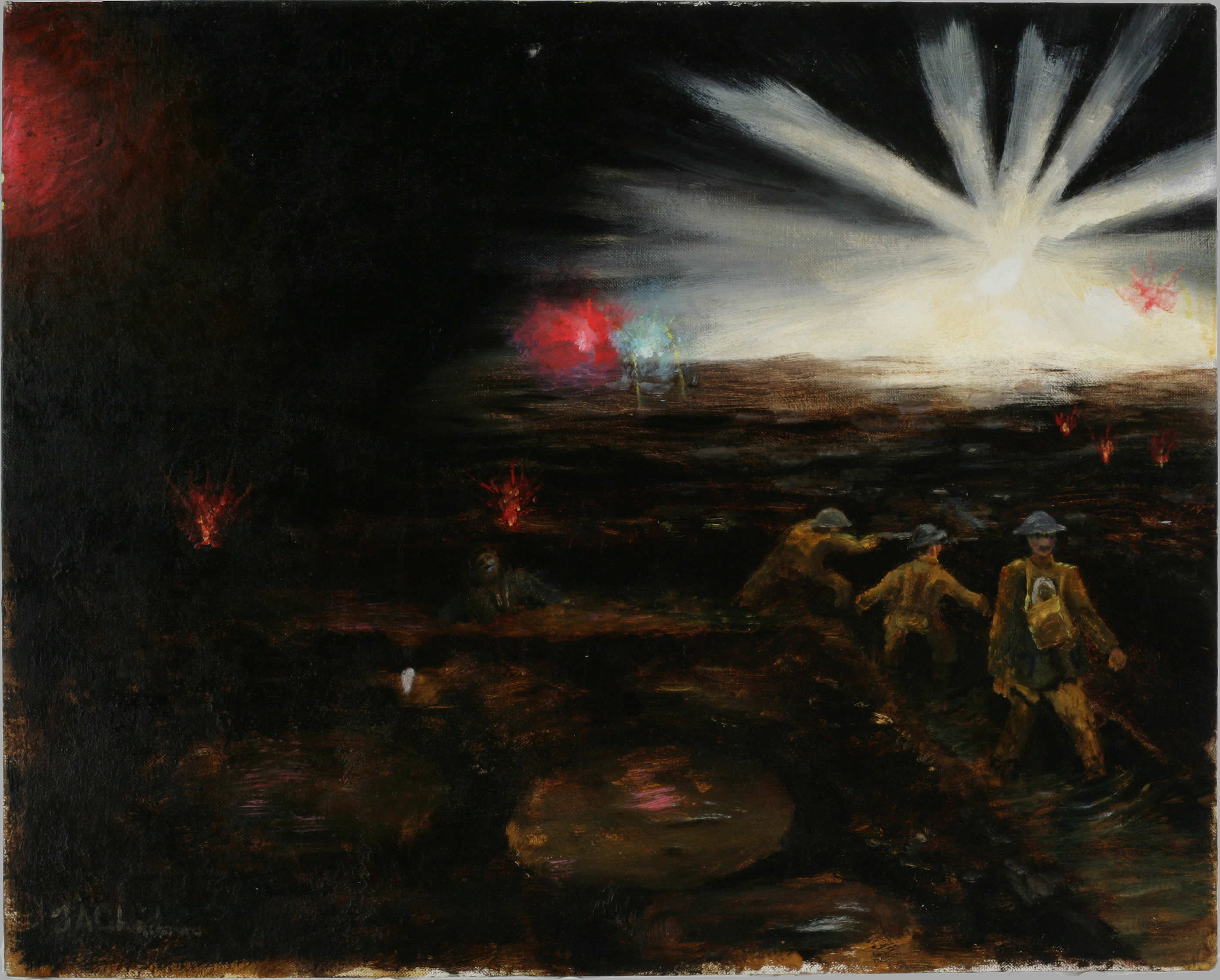
Flares
Flares, or star shells, were fired from a gun as signals between troops, or to light a section of No Man's Land at night so that enemy patrols or activity could be detected. The flares were usually followed with intense machine-gun fire.
Hear their story
Jack Featherstone describes the use of flares in the field and how to avoid being spotted.
Fallen soldiers
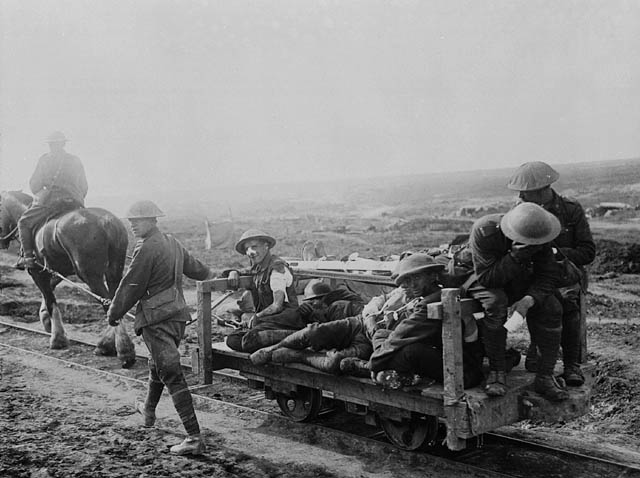
The First World War had a very high casualty rate. By the end of the war, armies from both sides suffered a total of 37 million casualties, representing half of the men who enlisted. About 25 percent of them were killed.
Hear their story
Jack Turner discusses the fatalism that crept into the soldiers' conversations.
So much mud
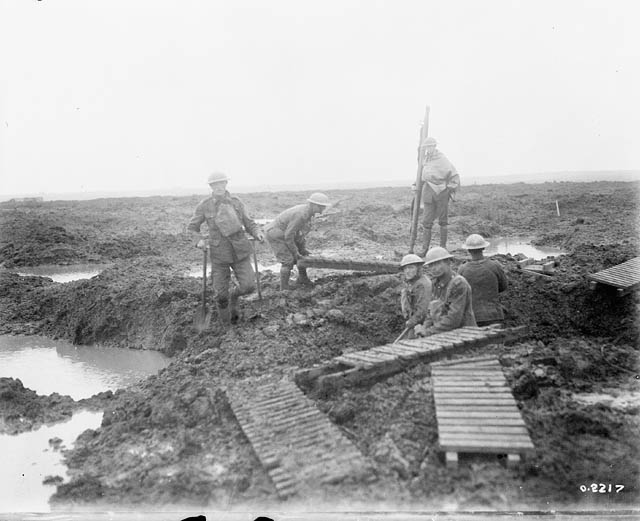
Days of rain could change the marshy battle ground into deep mud and fill the trenches with water until the wet soft earth made them collapse. Wounded soldiers sometimes suffocated in the mud of No Man's Land or drowned in deep shell-holes filled with water.
Hear their story
Donald Stevenson describes trying to move around in mud caused by heavy rain.
Gas masks
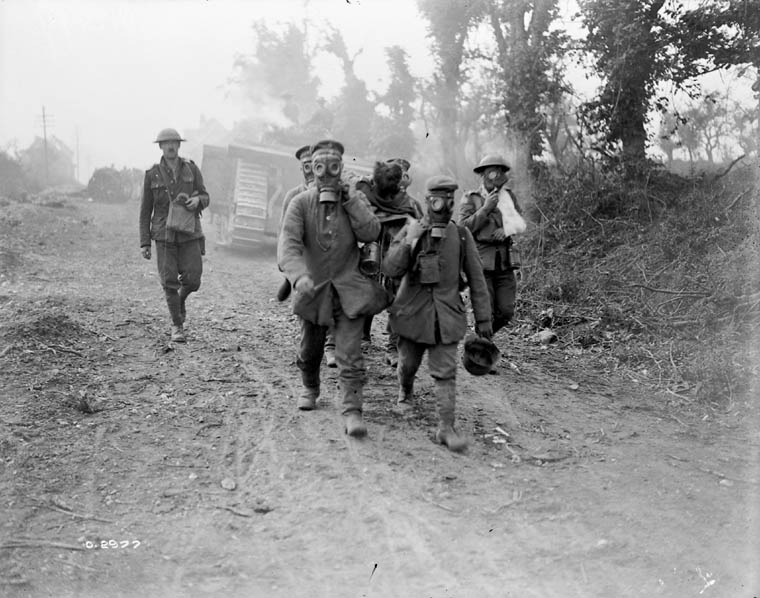
Allied troops were given gas masks to protect against chlorine gas attacks. However, the masks could not protect them against mustard gas used later in the war, which burned the skin, caused severe breathing problems, and could cause blindness.
Hear their story
James MacLeod gives a good comparison between the original respirator and newer gas masks used by Canadian soldiers.
Barbed wire
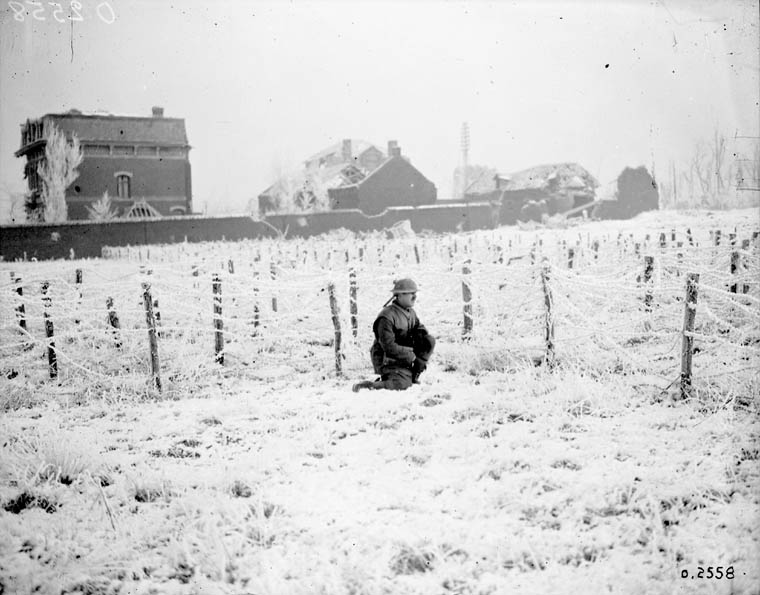
Barbed wire entanglements slowed down an army's attack on opposing trenches. Many soldiers were killed by machine-gun fire as they tried to climb over the wire. Using shell-fire to blow up the barbed wire was ineffective, so soldiers used wire cutters to cut through the wire at night.
Hear their story
Lester Stokes briefly describes nocturnal inspections of protective barbed wire for possible German sabotage.
Fear
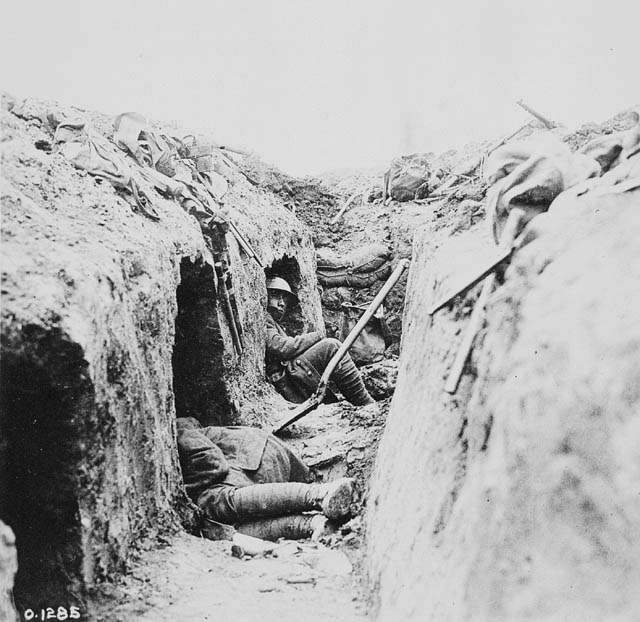
Fear could be a soldier's greatest enemy. Many soldiers also suffered from shell shock, or psychological trauma as a result of their war experiences, where they were no longer able to deal with the terrible conditions around them.
Hear their story
Campbell MacLellan describes his naivete early in the war and gaining the confidence of his men as the war progressed.
Rations
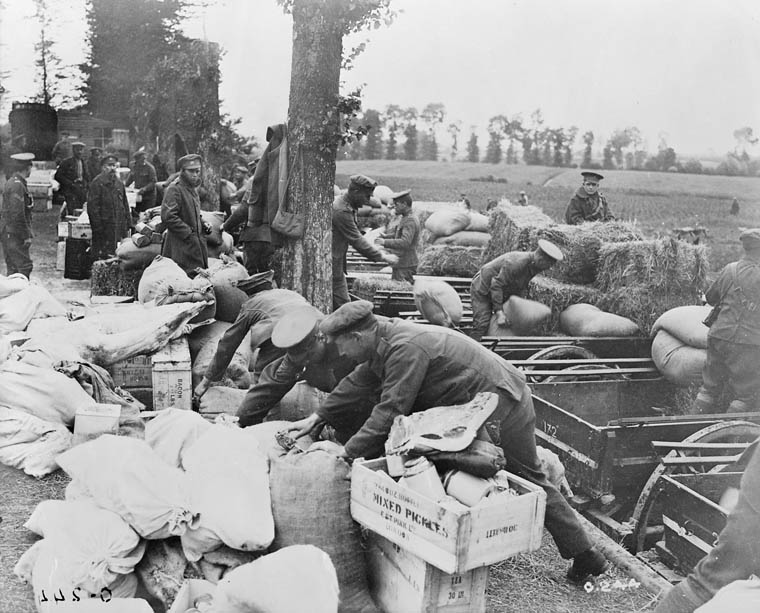
Troops serving in the trenches received a regular supply of food called rations. The daily ration for a British soldier consisted of measured amounts of fresh or canned meat, bread, vegetables, bacon, cheese, jam, tea and sugar, rum and tobacco.
Hear their story
Robert Burton describes the precision with which rations were given out to the troops.
Cookhouse
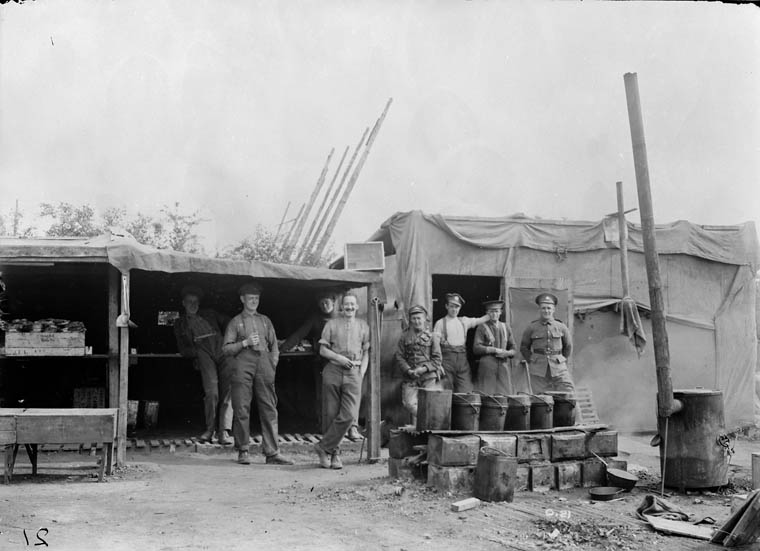
A cook house was a mobile cooking facility set up several miles behind the front lines where hot meals were prepared for the troops. Soldiers delivering meals to the front often had to duck to avoid shell-fire. By the time meals reached the trenches they could be cold, wet and muddy.
Hear their story
John Copp describes an unexploded German shell landing in their field kitchen. Feeling his men are too exhausted, he removes the danger himself.
Supplying the troops
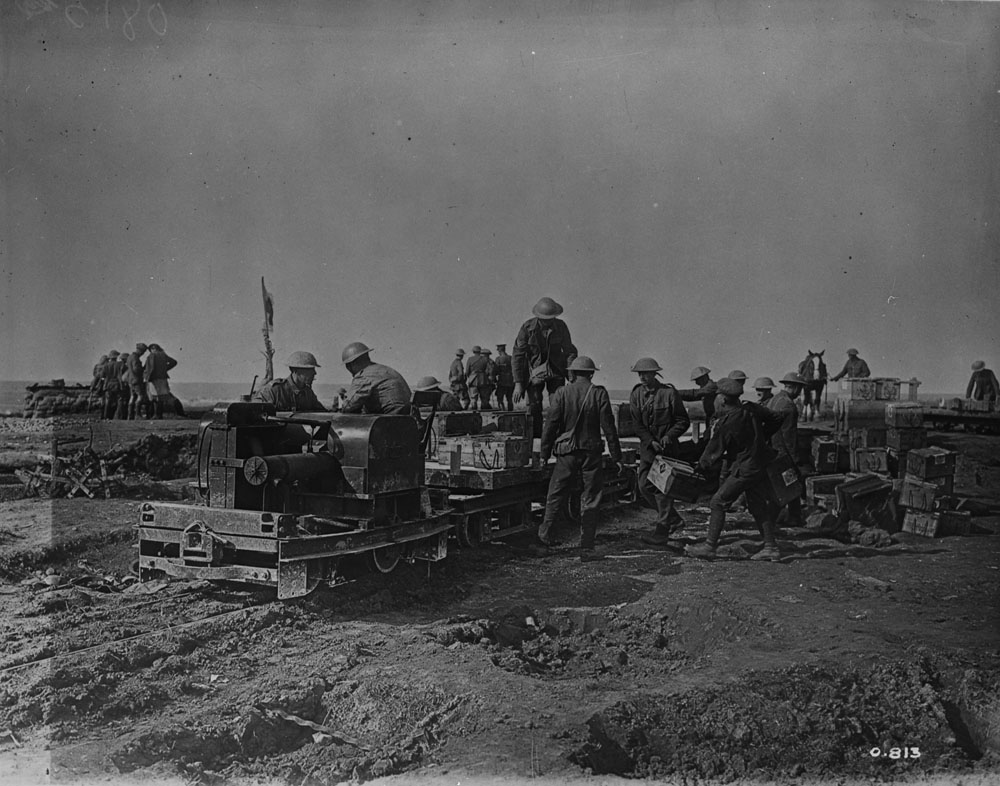
Railroads were used to transport troops, ammunition, food, water and other supplies to the front lines, as well as wounded soldiers from the front to medical aid posts. Supplies were loaded onto trains and pulled by small locomotives.
Hear their story
The Canadian Railway Troop – Efficiently getting soldiers and supplies to the front lines was very important. Rail tracks were laid to aid the Canadians in the battle.