The origins of the Paralympic Games have their roots in the Second World War.
In 1944, Dr. Ludwig Guttman founded the National Spinal Injuries Centre at the Stoke Mandeville Hospital in Great Britain. The needs of the many military members who had suffered serious injuries in the war spurred new approaches in treatment, including the idea of using sport to aid in rehabilitation.
Background
In 1948, the inaugural ‘Stoke Mandeville Games’ began on the grounds of the hospital. Two British teams made up of 14 servicemen and two servicewomen with spinal injuries competed in archery that first year. The competitions would continue at Stoke Mandeville in subsequent years, first becoming an international event when Dutch Veterans took part in 1952.
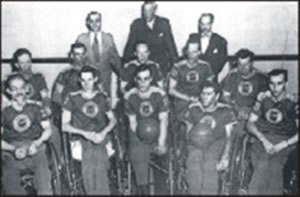
The Second World War Veterans who returned home to Canada with spinal injuries also created an interest in our country for wheelchair sports. By the 1950s, wheelchair basketball teams began to appear across the country. The Montréal Wheelchair Wonders were the first Canadian team to take part in the Stoke Mandeville Games, competing from 1953 to 1955.
The first Paralympic Summer Games were held in Rome in 1960. Canada participated for the first time in the Paralympic Games, with 22 Canadian wheelchair athletes competing in Tel Aviv, Israel in 1968. Canada has participated in every Paralympic Games since those games.
The first Paralympic Winter Games were held in Sweden in 1976 with six Canadian athletes competing in the sports of alpine and cross-country skiing.
Steve Daniel
Steve Daniel was born in Sudbury, Ontario and joined the Canadian Armed Forces as a teenager. A Veteran of missions in Bosnia, Croatia and Afghanistan, Sergeant Daniel suffered a spinal injury during a parachute training jump in 2005. After 19 years in the military, was suddenly paralyzed from the waist down.
After months of initial rehabilitation, Daniel began to learn how to live his life without the use of his legs. He had been in excellent physical shape before the accident and he began participating in wheelchair basketball. He soon moved on to arms-only rowing, where his athletic skills allowed him to rise surprisingly quickly to an elite level in the demanding sport.
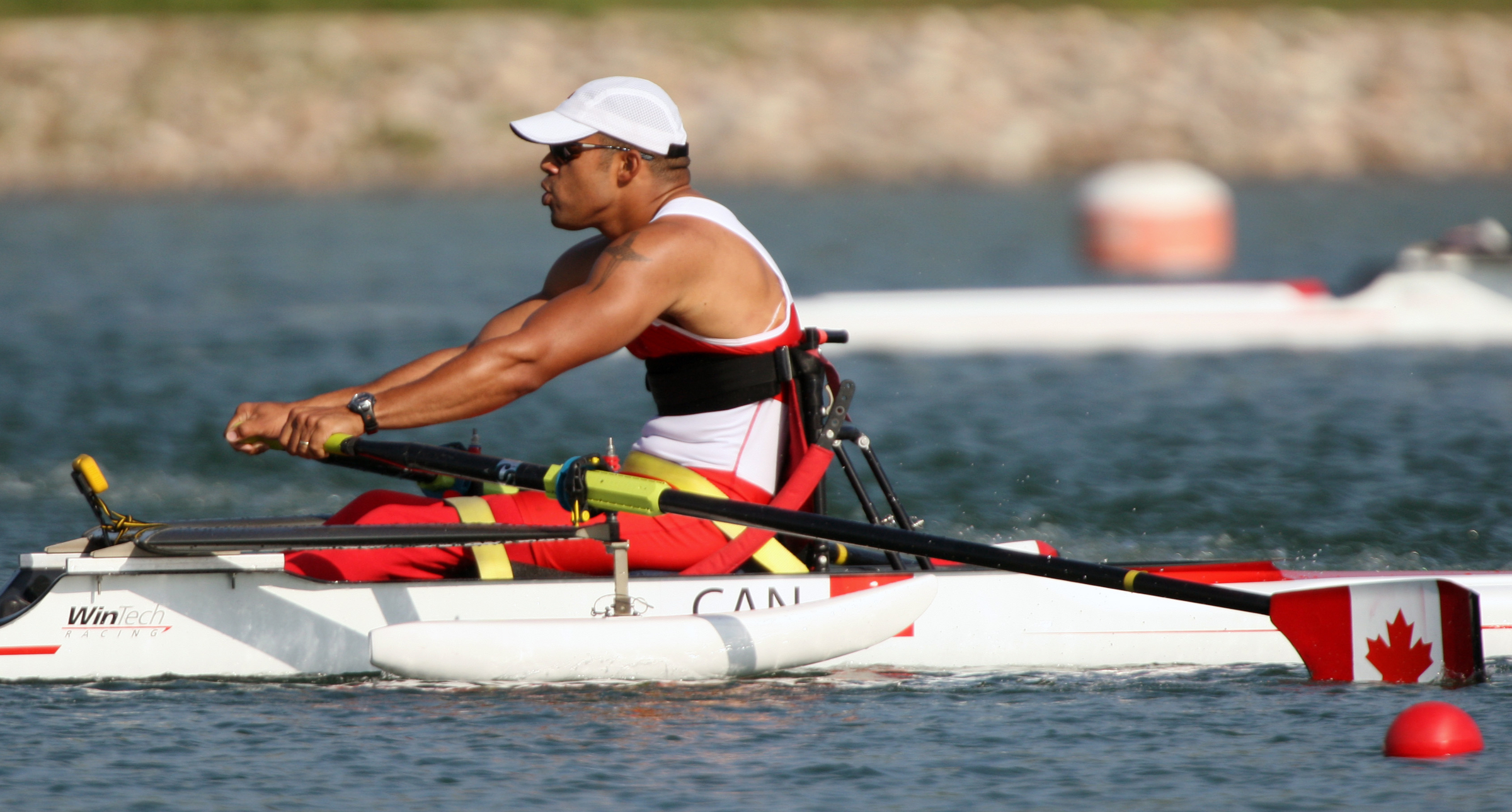
Only three years after the accident that changed his life, Daniel competed in adaptive rowing at the 2008 Summer Paralympic Games in Beijing, China. Battling equipment problems, he did not win a medal but showed he was one of the best in the world by qualifying for the world-class event so soon after taking up the sport.
Steve competes in the men's single sculls in rowing action at the Paralympic Games in Beijing (10 September 2008). Photo: Canadian Paralympic Committee.
Dominic Larocque
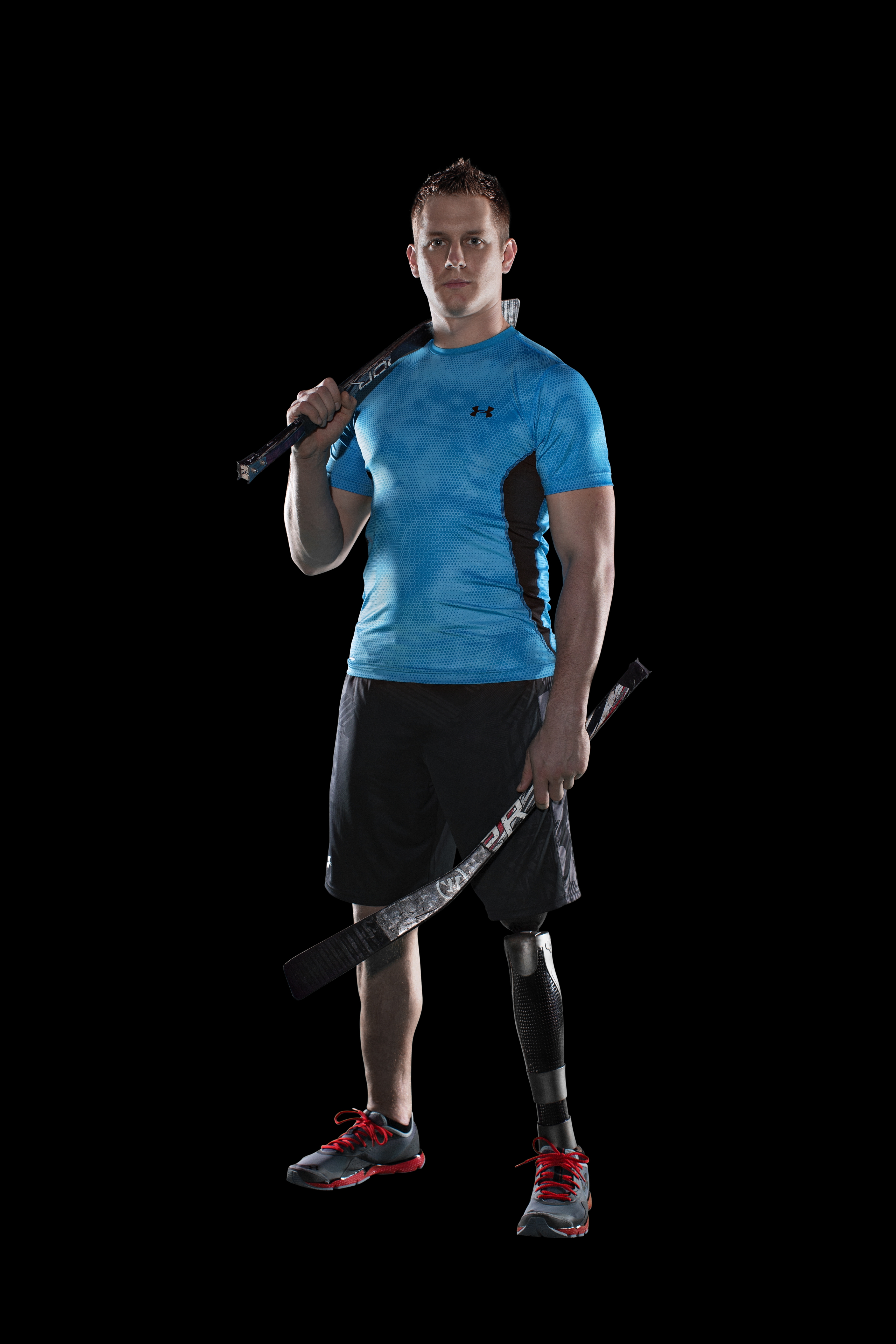
In 2007, in the Panjwai District in Afghanistan, Corporal Dominic Larocque was deployed with the 3rd Battalion, Royal 22e Régiment. On November 27, while on patrol, he was wounded when an improvised explosive device hit the vehicle that he was riding in. He spent several weeks in the hospital recovering from wounds, the most serious of which involved the amputation of his left leg above the knee.
After a long process of rehabilitation, many complications and further operations, he put his uniform back on in September 2008 and went back to work with the 3rd Battalion’s reconnaissance platoon, before becoming a first-aid instructor a few months later.
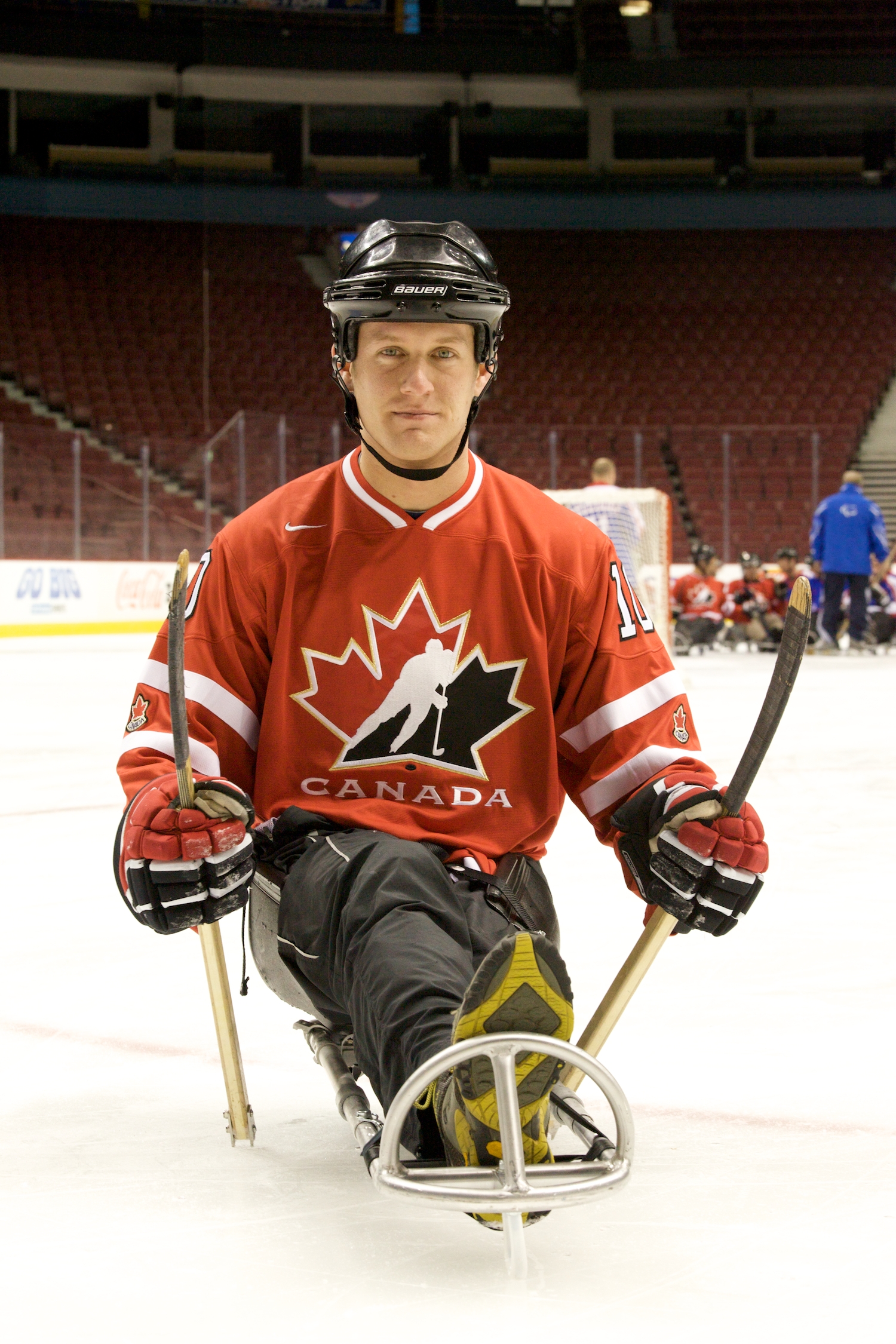
He was introduced to sledge hockey by the members of the Montréal sledge hockey team in December 2009, and one year later, thanks to the Soldier On program, he had the chance to participate in an event that coincided with the Paralympic Winter Games in Vancouver. Dominic decided to participate in some competitions and six months later, he was invited to the national sledge hockey team tryout camp at Canadian Forces Base Petawawa.
He was selected to the national sledge hockey team and had the chance to play all over Canada, as well as in the United States, Europe, and twice in Japan, winning three gold, one silver, and one bronze. He then competed at the Paralympic Games, winning a bronze medal in Sochi, Russia in 2014.
Dominic Larocque is the first Canadian soldier to take part in the Winter Paralympic Games.
Photo: Department of National Defence
4 images
Dominic Larocque receives his Bronze medal in Sledge Hockey at the 2014 Paralympic Winter Games in Sochi, Russia.
Photo: Canadian Paralympic Committee
4 images
Dominic Larocque, Solider On since 2010.
Photo: Soldier On
4 images
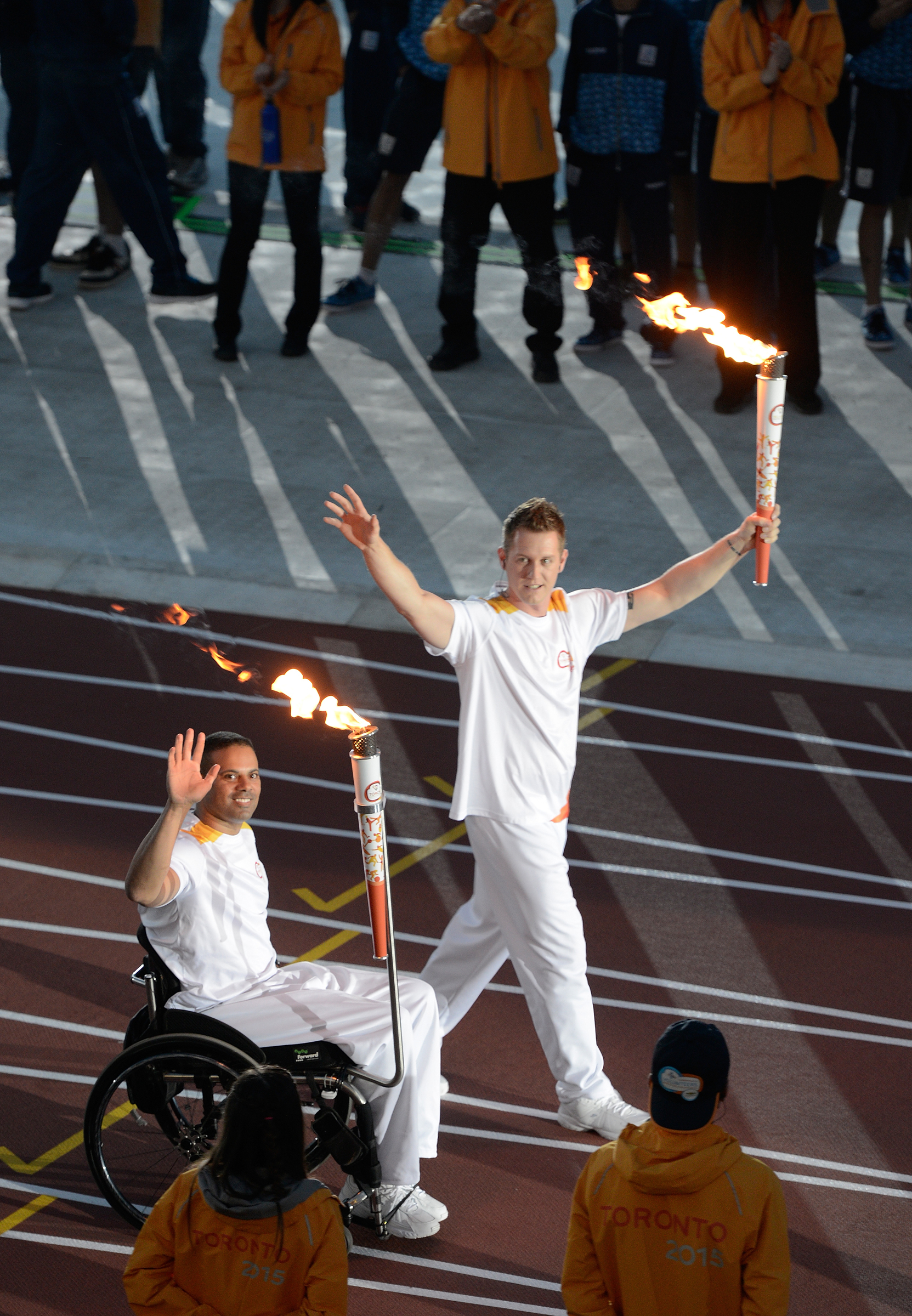
Steve Daniel and Dominic Larocque carry the flame into the stadium during the Opening Ceremonies for the Toronto 2015 Parapan American Games.