British Columbia

Province Code
BC
City/Municipality
Esquimalt
Memorial Number
59005-081
Type
Address
Lyall and Head Streets
Location
Canadian Forces Base Esquimalt, Work Point
in Canada
Yes
GPS Coordinates
48.4261391, -123.3983846
Inscription

QUEEN'S OWN RIFLES OF CANADA
IN PACE PARATUS

Unveiled on 20 April, 2010 by
Her Royal Highness Princess Alexandra, KG, GCVO
Colonel-in-Chief
The Queen’s Own Rifles of Canada
To mark the 150th Anniversary of her Regiment
Stationed here from 1963 to 1970

Image
Photo Credit
Jack Bates
Caption
The Queen’s Own Rifles of Canada Memorial
1 of 2 images
Image
Photo Credit
Jack Bates
Caption
The Queen’s Own Rifles of Canada Memorial, Princess Patricia’s Canadian Light Infantry Cairn, Work Point Barracks Memorial.
1 of 2 images
Province
!4v1662740922696!6m8!1m7!1solRK-uj6_7N9xooLoqsWLQ!2m2!1d48.42613907806026!2d-123.3983846394522!3f160.72542640329033!4f-1.0202404284349456!5f1.2836551123170608
Body Content

This memorial was unveiled on 20 April 2010 and commemorates the service of two of the Battalions of The Queen’s Own Rifles of Canada. Formed in Toronto in 1860, the regiment is Canada’s oldest continuously serving infantry unit. Two of its Regular Army Battalions were stationed in Victoria during the Cold War, 2nd Battalion returned from Korea in 1955 to Gordon Head Camp, now the University of Victoria prior to departure to Germany on 1957. The 1st Battalion returned from NATO duty in Germany in 1963 and was at Work Point Barracks until re-designated Third Battalion, Princess Patricia’s Canadian Light infantry in 1970.

The Queen’s Own Rifles of Canada have a long and proud record of service to Canada, fighting its first engagement in 1866 near Ridgeway, Ontario against Fenian Raiders from the United States. The deaths of nine soldiers at that time heralded sacrifices in campaigns throughout the 19th, 20th and 21st centuries serving in the North West Rebellion, Boer war, First and Second World Wars, Korea, NATO duty, Cyprus and other Peacekeeping Operations and today in Afghanistan.

This memorial symbolizes the dedication and sacrifice of soldiers of the regiment in war and peace. It reflects the affection, admiration and appreciation of all riflemen of The Queen’s Own Rifles of Canada for their service to the regiment and to Canada of their Colonel-in-Chief, Her Royal Highness, Princess Alexandra, KG, GCVO. They celebrated her 50 years as their Colonel-in-Chief as well as their 150th birthday.

City
Esquimalt
Country
Type Description
Slab
Memorial CF Legacy ID
11165
City/Municipality
Esquimalt
Memorial Number
59005-080
Type
Address
Lyall and Head Streets
Location
Canadian Forces Base Esquimalt, Work Point
in Canada
Yes
GPS Coordinates
48.4261391, -123.3983846
Inscription

THIS GROVE OF OAK TREES IS DEDICATED BY
THE VANCOUVER ISLAND CHIEF AND PETTY OFFICERS'
ASSOCATION TO CELEBRATE THE CANADIAN NAVAL
CENTENNIAL 1910-2010.

THE OAK TREES SYMBOLIZE THE HISTORIC
RELATIONSHIP BETWEEN THE CANADIAN NAVY AND
THE ROYAL NAVY. TRH THE PRINCE OF WALES AND
THE DUCHESS OF CORNWALL VIEWED THE FIRST THREE
ENGLISH OAK TREES DURING THEIR VISIT TO
HMC DOCKYARD ESQUIMALT 9 NOVEMBER 2009

Image
Photo Credit
Jack Bates
Caption
plaque
1 of 2 images
Image
Photo Credit
Jack Bates
Caption
oak trees
1 of 2 images
Province
!4v1662740922696!6m8!1m7!1solRK-uj6_7N9xooLoqsWLQ!2m2!1d48.42613907806026!2d-123.3983846394522!3f160.72542640329033!4f-1.0202404284349456!5f1.2836551123170608
Body Content

A grove of oak trees were dedicated on 4 May 2010 by Vancouver Island Chief and Petty Officers' Association to celebrate the Canadian Naval Centennial. Oak trees symbolize the historic relationship between the Canadian Navy and the Royal Navy. 

City
Esquimalt
Country
Type Description
Trees - oak, plaque
Memorial CF Legacy ID
11164
City/Municipality
Esquimalt
Memorial Number
59005-079
Type
Address
Lyall and Head Streets
Location
Canadian Forces Base Esquimalt, Work Point
in Canada
Yes
GPS Coordinates
48.4261391, -123.3983846
Inscription

4" HA MK XIX TWIN SIGHT
MANUFACTURED BY
VIVIAN ENGINE WKS LTD
VANCOUVER, BC
1942

Image
Photo Credit
Jack Bates
Caption
Naval gun
1 of 2 images
Image
Photo Credit
Jack Bates
Caption
inscription
1 of 2 images
War or Conflict Term
Province
!4v1662740922696!6m8!1m7!1solRK-uj6_7N9xooLoqsWLQ!2m2!1d48.42613907806026!2d-123.3983846394522!3f160.72542640329033!4f-1.0202404284349456!5f1.2836551123170608
Body Content

Prior to 2005, this twin 4” quick firing naval gun was placed adjacent to the Collier Building in Work Point, presented to building housing Her Majesty's Canadian Ship (HMCS) Venture at the time. Venture was a Royal Canadian Navy establishment name, part of the Naval Officer Training Centre, which moved to Work Point after 3rd Battalion, Princess Patricia's Canadian Light Infantry relocated in 1994. These British design guns were also built in Canada during the Second World War. They were mounted on Canadian built River class frigates, as secondary armament on cruisers and in the post-war years they replaced the twin 4.7" inch low angle guns on Canadian Tribal class destroyers. Although not used for coast defence on the west coast, some twin 4" inch guns of this type were used in the coast artillery role on Canada’s east coast.

City
Esquimalt
Country
Type Description
Artillery - naval gun
Memorial CF Legacy ID
11163
City/Municipality
Esquimalt
Memorial Number
59005-078
Type
Address
Lyall and Head Streets
Location
Canadian Forces Base Esquimalt, Work Point
in Canada
Yes
GPS Coordinates
48.4261391, -123.3983846
Inscription

C BATTERY
THIS CAIRN IS IN RECOGNITION OF
THE CONTRIBUTIONS OF “C” BATTERY, 1st REGIMENT
ROYAL CANADIAN HORSE ARTILLERY TO VICTORIA.
THIS UNIT WAS STATIONED AT
WORK POINT BARRACKS FROM 1887 TO 1893.
UNVEILED
BY THE COLONEL COMMANDANT
MGEN (RET’D) J.A. MacINNES, CMM, MSC, CD
18 MAY 2003

Image
Photo Credit
Jack Bates
Caption
C Battery Memorial
Province
!4v1662740922696!6m8!1m7!1solRK-uj6_7N9xooLoqsWLQ!2m2!1d48.42613907806026!2d-123.3983846394522!3f160.72542640329033!4f-1.0202404284349456!5f1.2836551123170608
Body Content

The 5th (BC) Field Regiment, Royal Canadian Artillery, has a strong historical connection to Esquimalt. The Victoria based army reserve unit unveiled a monument at Work Point Barracks on 18 May 2003, while commemorating its 125th anniversary and is a component of the Cultural Landscape of the "Saluting Battery." The regiment is a descendent of the first Canadian army unit that was stationed in Greater Victoria in 1878.

The memorial was established in recognition of the contributions “C” Battery, 1st Regiment Royal Canadian Horse Artillery (RCHA), which was stationed at Work Point Barracks from 1887 – 1893. It was officially unveiled by retired Major General John Arch MacInnes, Colonel Commandant of the Royal Regiment of Canadian Artillery, and Major Craig Dalton, who commands the modern day “C” Battery, RCHA from Shilo, Manitoba.

In 1871, when the colony of British Columbia joined the Dominion of Canada and became a province, the responsibility of defence for the new province passed from Great Britain to the Dominion. There were fears the remoteness of the west coast from the rest of Canada, would mean the region was poorly defended. On 20 July 1878, the Victoria Battery of Garrison Artillery was formed in response to a threat of war with Russia. The war never happened.

They fired their first round from a seven inch gun at Macaulay Point on July 26, about the first time the unit conducted a test run with one of its guns. Three days later, the 28 man unit fired a 13 gun salute for the opening of the third provincial assembly. The unit continued to operate coastal defence batteries at Macaulay Point until 1887 when they were replaced by “C” Battery.

In 1893, the unit was replaced by a garrison of Royal Marine Artillery, through an agreement between Canada and Great Britain. That unit was eventually augmented by the new 5th (BC) Regiment, Canadian Artillery in 1898. 

City
Esquimalt
Country
Type Description
Slab
Memorial CF Legacy ID
11162
City/Municipality
Esquimalt
Memorial Number
59005-077
Type
Address
Lyall and Head Streets
Location
Canadian Forces Base Esquimalt, Work Point
in Canada
Yes
GPS Coordinates
48.4261391, -123.3983846
Inscription

[pedestal plaque/plaque sur piédestal]

3-IN 20 - CWT Mk III A QF ANTI-AIRCRAFT GUN

THIS GUN WAS PLACED HERE BY
THE ROYAL CANADIAN ARTILLERY ASSOCIATION
TO COMMEMORATE THE CONSTRUCTION OF
WORK POINT BARRACKS
AS AN ARTILLERY GARRISON IN 1890
AND THE UNITS OF
THE ROYAL REGIMENT OF CANADIAN ARTILLERY
THAT HAVE BEEN PART OF THE GARRISON
SINCE THAT TIME

[plate attached to gun/plaque attachée au canon]

THIS 3“ Q.F. SHOREMOUNT
GUN WAS REFURBISHED
BY MAINT 3PPCLI DEC ‘78

Image
Photo Credit
Jack Bates
Caption
Artillery Garrison Memorial
1 of 5 images
Image
Photo Credit
Jack Bates
Caption
Plaque on pedestal in front of the gun.
1 of 5 images
Image
Photo Credit
Jack Bates
Caption
Inscription on plate attached to the gun.
1 of 5 images
Image
Caption
Monument commémoratif de la garnison de l’artillerie et monument commémoratif de la batterie C avec la baie de Rose en arrière-plan.
1 of 5 images
Image
Caption
Monument commémoratif de la garnison de l’artillerie avec l’édifice Haida en arrière-plan et l’édifice Amiens à gauche.
1 of 5 images
Province
!4v1662740922696!6m8!1m7!1solRK-uj6_7N9xooLoqsWLQ!2m2!1d48.42613907806026!2d-123.3983846394522!3f160.72542640329033!4f-1.0202404284349456!5f1.2836551123170608
Body Content

The Royal Canadian Artillery Association gunners presented a three inch anti-aircraft gun to Work Point Barracks on March 3, 1981. The gun is a permanent memorial marking the service of the Royal Regiment of Artillery at Work Point Barracks. The Regiment of Canadian Artillery first established itself in Victoria in 1887, “C” Battery moved into Work Point Barracks when it was completed in 1890. Since then, the artillery units and schools have remained on strength at Work Point until 1957.

C Battery, Regiment of Cdn Artillery 1890 – 1893
Royal Marine Artillery 1893 – 1899
19 Company, Royal Garrison Artillery 1899 – 1901
83 Company, Royal Garrison Artillery 1901 – 1902
58 Company, Royal Garrison Artillery 1903 – 1906
5 Company, Royal Canadian Garrison Artillery 1906 – 1924
5 Heavy Battery, RCA 1924 – 1939
9 Heavy Anti Aircraft Battery, RCA 1946 – 1955
4 Light Anti Aircraft Battery, RCA 1955 – 1957
Other units included:
1 Coastal Artillery Maintenance Unit, RCA 1954
Royal School of Artillery, Esquimalt 1922 – 1939
A 24 Canadian Artillery Training Centre (Coast Artillery and Anti Aircraft) 1941 – 1946
Royal Canadian School of Artillery (Coastal and Anti Aircraft) 1946 – 1953


The gun came from the Royal Canadian Artillery Museum in Canadian Forces Base Shilo, Manitoba and was refurbished by the 3rd Battalion, Princess Patricia's Canadian Light Infantry Maintenance Platoon. It is a three inch, 20 CWT, MK IIIA, quick firing anti-aircraft gun and was introduced in 1914. They were used during the Second World War and subsequently removed from service.

The 3" AA memorial gun was placed in the center of the defined "Saluting Battery" adjacent to the flag staff. On the left is the C Battery Memorial, on the right is the raised platform where the gun battery of the day was situated from 1890. At one time it facilitated four 12-pounder field guns for protection of Rose Bay and one 7" rifled muzzle loading cannon for Royal and local ceremonial gun salutes.

City
Esquimalt
Country
Type Description
Artillery - anti-aircraft gun
Memorial CF Legacy ID
11157
City/Municipality
Esquimalt
Memorial Number
59005-076
Type
Address
Lyall and Head Streets
Location
Canadian Forces Base Esquimalt, Work Point
in Canada
Yes
GPS Coordinates
48.4261391, -123.3983846
Inscription

Bâtiment
YPRES
Block

[plaque]
CAVE BLOCK

CONSTRUCTED BY
ROYAL ENGINEERS – 1902

RENOVATED BY
ROYAL CANADIAN ENGINEERS – 1957

Image
Photo Credit
Jack Bates
Caption
Cave Block plaque
1 of 3 images
Image
Photo Credit
Jack Bates
Caption
Cave Block
1 of 3 images
Image
Photo Credit
Jack Bates
Caption
Ypres Block sign
1 of 3 images
Province
!4v1662740922696!6m8!1m7!1solRK-uj6_7N9xooLoqsWLQ!2m2!1d48.42613907806026!2d-123.3983846394522!3f160.72542640329033!4f-1.0202404284349456!5f1.2836551123170608
Body Content

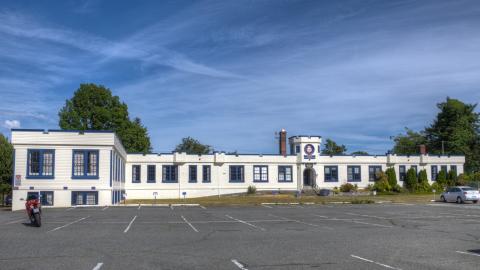
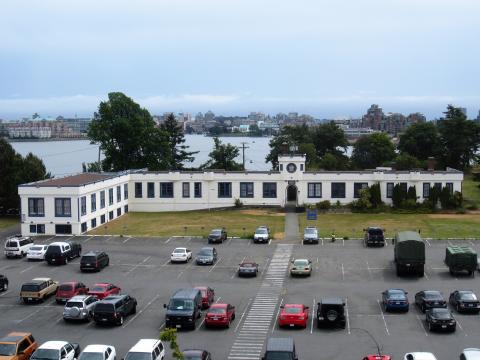
Building 1075 in Work Point Barracks was built for the Royal Garrison Artillery in 1902. A bronze plaque was embedded in the outside south wall next to the entrance in 1957 that is dedicated to Lieutenant-Colonel (Lt.-Col.) J.C. Cave, CD, Commandant of Esquimalt Garrison. After a period of 18 years absence, during which the battalion saw service in two wars, and a two year tour of duty in NATO, the Princess Patricia’s Canadian Light Infantry returned to Work Point Barracks in 1957. Foresight on the part of Lt.-Col. J.C. Cave, in having renovations of the old barrack block begun prior to the arrival of the advance party, avoided a difficult situation in barrack room space. Lt.-Col. Cave was quartered in the same building while serving with B Company before the Second World War. 

Cave Block also retains the commemorative designation of Ypres Building in honour of the Canadians who through terrible fighting, withered with shrapnel and machine-gun fire, hampered by their issued Ross rifles which jammed, violently sick from a gas attack and gasping for air through soaked and muddy handkerchiefs, they held on during the First World War at the Battle of Ypres until reinforcements arrived. It was designated Ypres Building in 1977 by the 3rd Battalion, Princess Patricia's Canadian Light Infantry in honour of the Princess Patricia's Canadian Light Infantry who fought in that battle and for which action they received a Battle Honour.

City
Esquimalt
Country
Type Description
Building - barracks
Memorial CF Legacy ID
11156
City/Municipality
Esquimalt
Memorial Number
59005-075
Type
Address
Lyall and Head Streets
Location
Canadian Forces Base Esquimalt, Work Point
in Canada
Yes
GPS Coordinates
48.4261391, -123.3983846
Inscription

VP
PRINCESS PATRICIA’S
CANADIAN LIGHT INFANTRY
GARRISONED
WORK POINT BARRACKS
“B” COY – 1920-1939 : 1st BN – 1957-1963
3rd BN – 1970-1994
V.I. PPCLI ASSOCIATION – JUNE 8, 2014

Image
Photo Credit
Princess Patricia’s Canadian Light Infantry
Caption
Princess Patricia’s Canadian Light Infantry Cairn
1 of 2 images
Image
Photo Credit
Jack Bates
Caption
The Queen’s Own Rifles of Canada Memorial, Princess Patricia’s Canadian Light Infantry Cairn, Work Point Barracks Memorial
1 of 2 images
Province
!4v1662740922696!6m8!1m7!1solRK-uj6_7N9xooLoqsWLQ!2m2!1d48.42613907806026!2d-123.3983846394522!3f160.72542640329033!4f-1.0202404284349456!5f1.2836551123170608
Body Content

This cairn commemorates the three occasions that the Princess Patricia’s Canadian Light Infantry (PPCLI) garrisoned at Work Point Barracks, which total 52 years that they were stationed in Esquimalt. It was unveiled on June 8, 2014. PPCLI was founded for service in the First World War on August 10, 1914.

At the Princess Patricia’s Canadian Light Infantry Association AGM in 2014, Jack Bates presented the idea of a commemorative cairn and it was well received. Jack's father, Captain A.A. Bates, was stationed with “B” Company, PPCLI at Work Point Barracks from 1921 to 1937. He transferred to Currie Barracks in Calgary from 1938 until 1945, retiring from the PPCLI  in 1947 in Victoria. He enlisted in Victoria in 1915 for the First World War.

Jack then ran into his friend, Tony Miller who worked for Western Grater, a local blasting firm. After hearing Jack's idea, they met at Bear Mountain development where they picked out a blasted rock. Tony delivered it within an hour to the side of the Guardhouse on Head street. The cairn was inscribed by Mortimer’s Monument Works. Larry Gollner, a retired Brigadier-General PPCLI  and the Association Vice President Ed Widenmaeir, a retired Warrant Officer PPCLI, helped with the inscription details. A time capsule was placed by Ed in the concrete pad under the cairn.

City
Esquimalt
Country
Type Description
Slab - granite
Memorial CF Legacy ID
11155
City/Municipality
Saanich
Memorial Number
59005-074
Type
Address
Shelbourne Street
Location
Gore Peace Memorial Park
in Canada
Yes
GPS Coordinates
48.4604804, -123.333067
Inscription

Saanich Remembers

Through its Saanich Remembers project the Municipality of Saanich invested significant resources in commemorating the men and women of the municipality who served in the Great War.

Ordinary People

Five Girling brothers of the Swan Lake neighbourhood served as soldiers. Godfrey Girling, 26, was killed in action January 1918 while serving with the 123rd Pioneer Battalion. After Stanley Girling was wounded another brother supplied necessary blood transfusions. Stanley lived but Leonard Girling, 29, died of complications resulting from the life-saving transfusions he had given.

On one single day - September 27, 1918 - 843 Canadians died in the  fighting for Bourlon Wood in France. One of the fallen was Saanich resident Robert Stark Little, 34. His is one of 221 Canadian graves at  nearby Bourlon Wood Cemetery.

The prescribed minimum age at which a youth was allowed to fight in the Canada Corps was 19. Like so many other volunteers, Frank Butts misrepresented his age when he volunteered. On Snowy Easter Monday, April 9, 1917, Frank was one of 2,400 Canadians killed in the first day of the battle for Vimy Ridge. At the time young Butts' real age was 17.

Saanich Honour Roll

Beginning in 1916 Saanich Council began compiling an Honour Roll listing the names of Saanich residents who served. The roll was eventually lost and remained missing for many years but it was recovered and is now  displayed in Saanich Archives.

The roll bears 355 names. The dedicated people working at Saanich  archives continue to supplement it was new names when additional Saanich soldiers come to light.

Image
Photo Credit
District of Saanich
Caption
Saanich Remembers Interpretive Panel
War or Conflict Term
Province
!4v1634212207802!6m8!1m7!1sYzCkV-M3fcE2loOyFIMO-A!2m2!1d48.46048043966479!2d-123.3330670068846!3f269.7329955581122!4f0.9190946567752718!5f0.7820865974627469
Body Content

This interpretive panel was installed in 2018 by Parks Saanich on Shelbourne Memorial Avenue, in memory of the men and women from Saanich who served in the First World War.

City
Saanich
Country
Type Description
Interpretive panel
Memorial CF Legacy ID
10569
City/Municipality
Saanich
Memorial Number
59005-073
Type
Address
Shelbourne Street and Cedarglen Road
in Canada
Yes
GPS Coordinates
48.479802, -123.3355652
Inscription

Sir Arthur Currie  Victoria, WWI and McGill

Born and raised in Middlesex County,
Ontario, Arthur Currie (1875-1933)
moved to Vancouver Island in his
early twenties.

He was a school teacher, first at a tiny Sidney School, then
at the Victoria Boys Central School. A photograph from
1899 shows the young teacher with a group of boys
(above), many destined to become a soldiers in the First
World War.

Currie himself was a part-time soldier who quickly rose to
command a local militia unit. After his teaching days he
became a realtor, earning a living as an agent for buyers
and sellers of real estate.

When war erupted in 1914, he was given command of an
infantry brigade, then became the Commander of the
First Canadian Division. By April 1917 he was a key player
in the planning and execution of the great Canadian

victory at Vimy Ridge. Following that success Currie
was given command of the entire Canada Corps and he
led Canadian forces in France and Belgium for the final
eighteen months of the war, including the momentous
Last Hundred Days.

As a senior general Currie emphasized fastidious
planning and preparation. He was highly regarded not
just for his effectiveness in battle but also for his care
and concern in minimizing casualties. The British prime
minister, David Lloyd George, was among those having
a high regard for Currie. In his post-war memoirs Lloyd
George wrote that had the war extended into 1919 he
would have given Currie command of the entire British
Expeditionary Force. Currie was knighted by King
George V in 1918.

In 1920, Currie became the principal and vice-chancellor
of McGill University, and served in this post until his death
in 1933.

Arthur Currie returned to Victoria in 1931; he planted a
copper beech in Mayor's Grove, Beacon Hill Park. The
tree flourishes to this day.

Image
Photo Credit
District of Saanich
Caption
Sir Arthur Currie Interpretive Panel
War or Conflict Term
Province
Body Content

The Sir Arthur Currie Interpretive Panel was installed in 2019 by Parks Saanich along Shelbourne Memorial Avenue.

City
Saanich
Country
Type Description
Interpretive panel
Memorial CF Legacy ID
10568
City/Municipality
Saanich
Memorial Number
59005-072
Type
Address
Shelbourne Street
Location
Browning Park
in Canada
Yes
GPS Coordinates
48.4517636, -123.3330806
Inscription

British Columbia's Victoria Crosses

The highest of British gallantry awards, the Victoria Cross (VC) was awarded to 73 Canadians during the Great War. Though British Columbia comprised less than eight percent of Canada's population in 1914, nineteen percent of the country's Great War VCs - fourteen - went to British Columbians.

George Randolph Pearkes

Of the eleven British Columbians who survived to
receive their Victoria Cross, the one who perhaps
went on to the greatest success in life was
George Randolph Pearkes. It was for his actions in
the Battle of Passchendaele in October 1917 that
he was awarded a Victoria Cross. Pearkes served
again in the Second World War, initially as a
brigade commander. After the war he was
elected to Parliament in 1945 and eventually
served as Minister of National Defence.
He was B.C. Lieutenant-Governor
from 1960 to 1968.

Gordon Flowerdew

Gordon Flowerdew of Walhachin is one of three
British Columbia VC recipients of the war who
never knew of the honour awarded them. The
action that earned Flowerdew a VC - and cost
him his life - was a cavalry charge he led in late
March 1918, an action commemorated in a
famous Canadian war painting.

Rowland Bourke

Due to poor eyesight, Rowland Bourke was
rejected for service as a Canadian soldier.
Determined to make a contribution to the war
effort, he went to the England and managed to enlist
in the Royal Naval Volunteer Reserve. It was for
his actions while serving as an officer aboard
HMS Vindictive in April 1918 at Ostend, Belgium,
that Bourke was awarded his Victoria Cross, like
George Pearkes he served again in WWII. He lived
for many years in Esquimalt. Every November 11
Victoria's Naval Reserves conduct a ceremony
beside his grave at Royal Oak Burial Park.

Image
Photo Credit
District of Saanich
Caption
British Columbia's Victoria Crosses Interpretive Panel
War or Conflict Term
Province
!4v1634212364937!6m8!1m7!1smG-Cg0TphvZ4iRVjPwGoZg!2m2!1d48.45176358966983!2d-123.3330805677419!3f265.647006713868!4f3.9366792486286073!5f1.685693846247717
Body Content

This interpretive panel was installed in 2019 by Parks Saanich along Shelbourne Memorial Avenue, in memory of the British Columbians who were awarded the Victoria Cross during the First World War.

City
Saanich
Country
Type Description
Interpretive panel
Memorial CF Legacy ID
10567