New Brunswick

Province Code
NB
City/Municipality
Saint John
Memorial Number
13009-020
Type
Address
115 Charlotte Street
Location
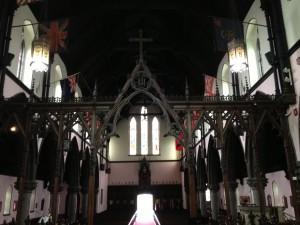
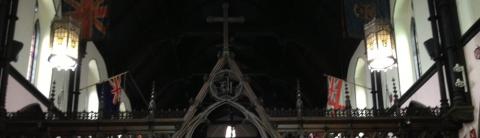
Trinity Anglican Church (inside)
in Canada
Yes
GPS Coordinates
45.272388, -66.058709
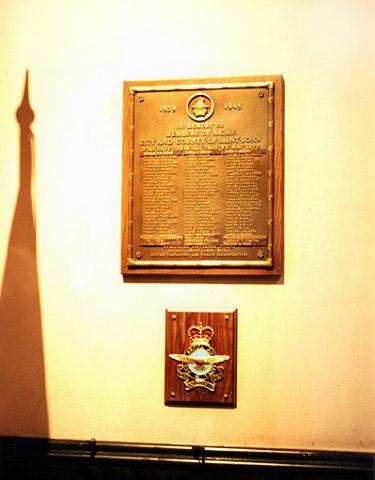
Inscription

1939-1945
IN MEMORY OF
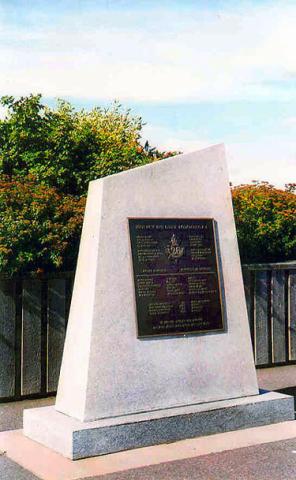
MEMBERS OF R.C.A.F.
CITY AND COUNTY OF SAINT JOHN
WHO GAVE THEIR ALL THAT WE MAY LIVE

[needs further research/recherche incomplète]

DEDICATED SEPTEMBER
BY (SAINT JOHN) WING
ROYAL CANADIAN AIR FORCE ASSOCIATION

Image
Photo Credit
Terry MacDonald
Caption
Plaque
War or Conflict Term
Province
!4v1631281028692!6m8!1m7!1sADi_0KlIhtZi_onjanJg_A!2m2!1d45.27217693138307!2d-66.06031330048154!3f95.10294894728061!4f20.434550168435493!5f1.0333366252060152"
Body Content

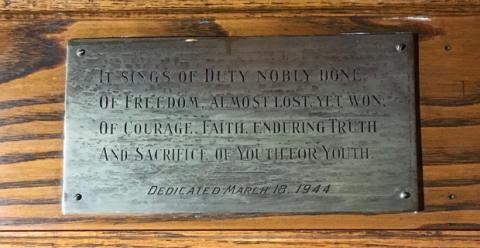
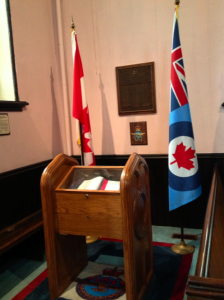
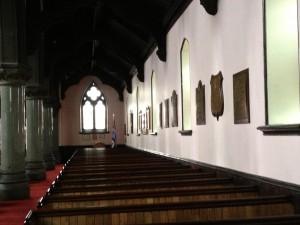
This memorial is dedicated to members of RCAF. City and County of Saint John who gave their all that we may live. It was erected by (Saint John) Wing, Royal Canadian Air Force Association.

City
Saint John
Country
Type Description
Plaque
Memorial CF Legacy ID
4768
City/Municipality
Saint John
Memorial Number
13009-019
Type
Address
1650 Manawagonish Road
Location
Cedar Hill Cemetery - needs research
in Canada
Yes
GPS Coordinates
45.236864, -66.1218165
Inscription

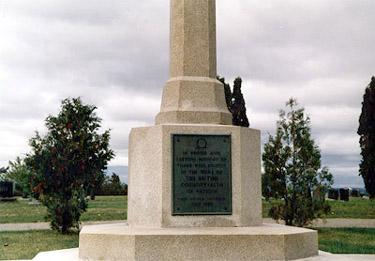
IN PROUD AND
LASTING MEMORY OF
THOSE WHO FOUGHT
IN THE WARS OF
THE BRITISH
COMMONWEALTH
OF NATIONS

THIS CROSS UNVEILED
JULY 1959

Image
Photo Credit
Terry MacDonald
Caption
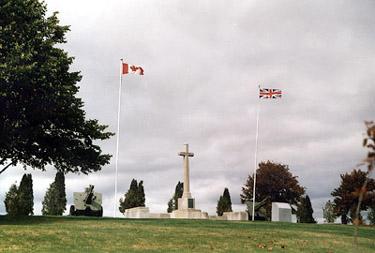
Memorial Cross and two Cannons
1 of 2 images
Image
Caption
Plaque
1 of 2 images
Province
!4v1631211756920!6m8!1m7!1s9ZduwDwJ8uasxcDMReBD1Q!2m2!1d45.23571104659378!2d-66.12343502668517!3f351.6838151377429!4f6.166253808989268!5f0.7820865974627469"
Body Content

This memorial is dedicated to those who fought in the wars of the British Commonwealth of Nations. The cross was unveiled in 1959.

City
Saint John
Country
Type Description
Cross
Memorial CF Legacy ID
4769
City/Municipality
Saint John
Memorial Number
13009-018
Type
Address
75 Charlotte Street
Location
King's Square
in Canada
Yes
GPS Coordinates
45.2735284, -66.0589127
Inscription

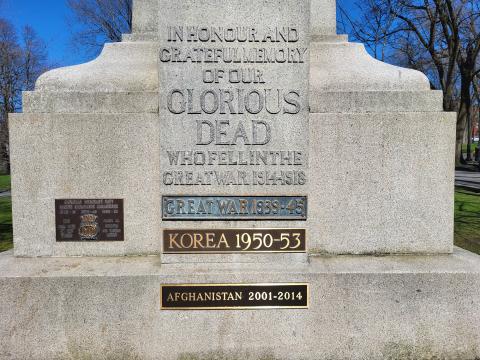
IN HONOUR AND
GRATEFUL MEMORY
OF OUR
GLORIOUS
DEAD
WHO FELL IN THE
GREAT WAR 19114-1918
GREAT WAR 1939-45
KOREA 1950-53
AFGHANISTAN 2001-2014

CANADIAN MERCHANT NAVY
MARINE MARCHANDE CANADIENNE
1914-18  1939-45  1950-53

THE
LIFE LINE
OF THE
WORLD

POUR LA
SURVIE
DU MONDE
LIBRE

Image
Photo Credit
1989.83.183, New Brunswick Museum, N.B., Canada
Caption
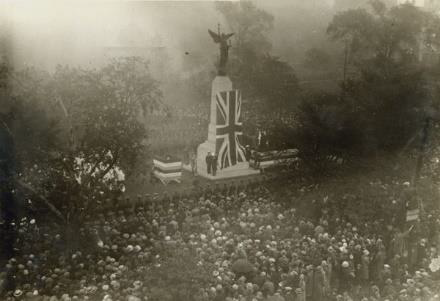
War Memorial unveiling, 1925.
1 of 3 images
Image
Photo Credit
Veterans Affairs Canada
Caption
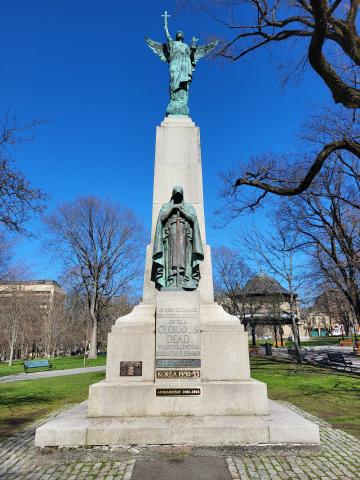
War Memorial
1 of 3 images
Image
Photo Credit
Veterans Affairs Canada
Caption
inscription
1 of 3 images
Province
!4v1715618555922!6m8!1m7!1smN5IzF86zkqz2VwLiHQvZg!2m2!1d45.27352837537298!2d-66.05891272859905!3f94.09416719483862!4f12.33340301203475!5f0.7820865974627469
Body Content

In 1922, the Municipal Chapter of the Imperial Order of the Daughters of the Empire in Saint John held a meeting to organize a memorial to honour the city’s war dead. The War Memorial Committee held a design competition and chose a design by Canadian sculptor, Alfred Howell. It symbolizes the triumph of victory through sacrifice with a winged bronze figure holding a flag of victory and a cross. She stands on a globe, suggesting the universal victory for which men died. A statue below, depicts a figure mourning, with her hands resting on a sword and at its feet, lies a soldier’s helmet with a spray of laurel leaves on it. 

The War Memorial Committee wanted to put the monument at the head of King Street, which was in the center of town and close to many prominent buildings and institutions. However, in 1885 the local branch of the Women’s Christian Temperance Union had installed a water fountain at the head of King Street in memory of the Loyalist women who had settled in the city. Some prominent Saint John citizens, including the mayor, thought that removing the fountain would be erasing that sacred memory. The majority of Saint John citizens wanted it moved and there wasn’t a single letter to the editor in favour of keeping the fountain. In the end, the War Memorial Committee put aside the debate and agreed to put the memorial a few feet to one side of the fountain in order to unveil the memorial in a timely fashion.

The lower mourning statue was covered in a massive Union Jack which General A.H. Macdonell removed on June 10, 1925, with the words, "I now reverently unveil this War Memorial to the glory of those citizens of Saint John who served in the Army, the Navy, the Air Force, or as nursing sisters, who lost their lives in the Great War." General Macdonell commanded the 5th Infantry Brigade of which the local regiment, the 26th New Brunswick Battalion was part.

Canon Lawrence prefaced his dedicatory prayer by saying that Saint John is a good place to live in, thanks to the sacrifices of the men whom this memorial remembered. "Be it ours," he said, "to make Saint John what they would like it to be." The War Memorial was erected for $20,000 in perpetual memory of those who paid the supreme sacrifice during the Great War. On June 24, 1925, the City of Saint John formally took over the care and maintenance of the memorial. 

The dates of the Second World War, Korean War, and Afghanistan were added to the memorial after those conflicts.

Alfred Howell was born in 1889 in Oldbury, England and studied at the Royal College of Art in London. In Canada, he taught at the Toronto Central Technical School. Following the First World War, he was awarded a contract to create bronze monuments throughout Canada to commemorate the sacrifices of Canadian soldiers. His commissions include: Guelph War Memorial, Garden of the Unforgotten, Triumph of Right over the God of War, William Hamilton Merritt Memorial and Central Technical School Memorial.

City
Saint John
Country
Type Description
Shaft, statues
Memorial CF Legacy ID
5175
City/Municipality
Saint John
Memorial Number
13009-017
Type
Address
63 Water Street
in Canada
Yes
GPS Coordinates
45.2708192, -66.0623548
Inscription

26TH NEW BRUNSWICK BATTALION C.E.F.

  • SAILED FROM
    THIS LOCATION
    ON S.S. CALEDONIA
    13 JUNE 1915
  • RETURNED TO
    CANADA ON
    S.S. OLYMPIC
    16 MAY 1919
  • SONT PARTIS DE CET
    EMPLACEMENT À BORD
    DU S.S. CALEDONIA
    LE 13 JUIN 1915
  • SONT RETOURNES AU
    CANADA À BORD DU
    S.S. OLYMPIC
    LE 16 MAI 1919

BATTLE HONOURS    HONNEURS DE BATTAILLES

MONT SORREL
SOMME 1916-18
FLERS-COURCELLETTE
THIEVAL
ANCRE HEIGHTS
ARRAS 1917-18

VIMY 1917
ARLEUX
SCARPE 1917-1918
HILL 70
YPRES 1917
PASSCHENDALE

AIMENS
HINDENBURG LINE
CANAL DU NORD
CAMBRAI 1918
PURSUIT TO MONS
FRANCE & FLANDERS 1915-1918

SUPREME SACRIFICE - 918 - MORT AU COMBAT
NON-FATAL CASUALTIES - 2,977 - BLESSES
HONOURS/AWARDS - 334 - HONNEURS
TOTAL STRENGTH - 5,719 - EFFECTIFS

WE GAVE OUR TODAY FOR YOUR TOMORROW
NOUS AVONS SACRIFIE NOTRE PRESENT POUR VOTRE AVENIR

Image
Caption
26th Battalion Canadian Expeditionary Force Memorial
Province
!4v1729270556330!6m8!1m7!1sR6UeTFKgyZRZo2ZsssPF9A!2m2!1d45.27081922832345!2d-66.0623548013305!3f262.0389284355209!4f-9.27071978809569!5f1.954972567528841
Body Content

This memorial is located at the departure location of the 26th "New Brunswick" Battalion, Canadian Expeditionary Force. It was erected by the 26th Battalion Overseas Association and Saint John Port Authority.

The 26th Battalion Canadian Expeditionary Force was  the only infantry battalion raised in New Brunswick that saw action in the First World War. It departed Saint John on 13 June 1915 and returned on the SS Olympic on 16 May 1919. The battalion had a total strength of 5,719, suffered 918 dead, 2,977 non-fatal casualties, and won 334 honours and awards.

City
Saint John
Country
Type Description
Stele - granite
Memorial CF Legacy ID
2561
City/Municipality
Saint John
Memorial Number
13009-015
Type
Address
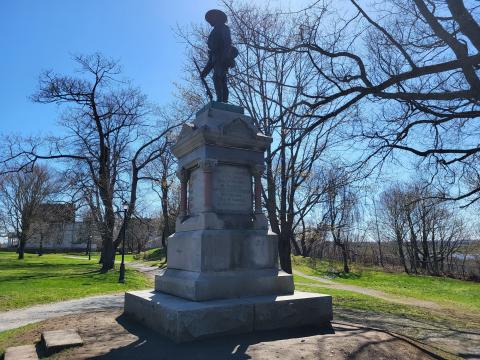
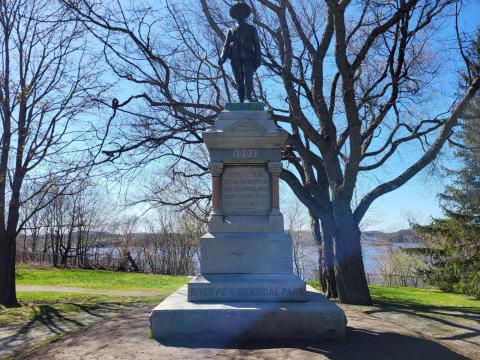
276 Douglas Avenue
Location
Riverview Memorial Park
in Canada
Yes
GPS Coordinates
45.2681787, -66.0820189
Inscription

[front/devant]
1902

ERECTED
TO THE MEMORY OF
THE SOLDIERS, WHO
LOST THEIR LIVES,
IN SOUTH AFRICA

RIVERVIEW MEMORIAL PARK

[right side/côté droit]
MONTROSE C. CHAPPELL
74TH REGT.
DIED AT BELMONT,
OF TONSILITIS.
CAPT. CHARLES F. HARRISON
8TH HUSSARS,
DIED AT WYNBERG,
OF ENTERIC FEVER

[back/arrière]
DR. NELSON O. PRICE
NO. 6610 CFHC,
DIED AT KLERKSDORP
OF ENTERIC FEVER

[left side/côté gauche]
PATRICK H. MCGREARY
74TH REGT.
JOSEPH M. JOHNSON
62ND REGT.
JACOB B. SCOTT
R.C.R.I.
FREDERICK W. WITHERS
3RD REGT. C.A.
KILLED AT PAARDEBERG

Image
Caption
left side
1 of 4 images
Image
Caption
back
1 of 4 images
Image
Caption
right side
1 of 4 images
Image
Caption
South African War Monument
1 of 4 images
War or Conflict Term
Province
!4v1612876265065!6m8!1m7!1sRMnox89RvnzugB-04jc20A!2m2!1d45.26815333449172!2d-66.08203095219646!3f286.3930666135714!4f-1.1826709532118542!5f3.325193203789971
Body Content

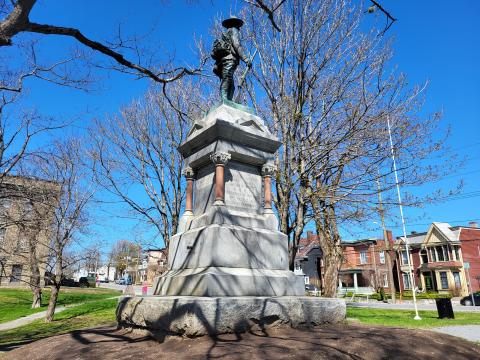
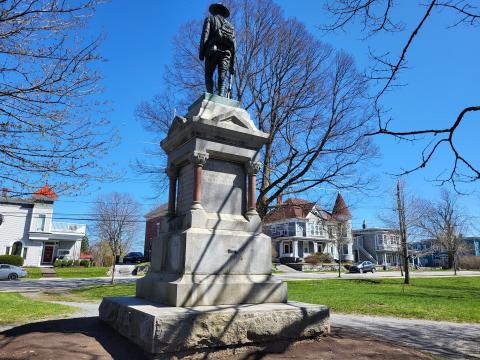
The statue on the South African War Monument was added in two phases. The stone bottom was added in 1902, but a decision was not made on the form of the top until almost two years later when enough funding was secured through Margaret Baizley and the Women’s Christian Temperance Union.

A bronze statue of a soldier in uniform stands at ease on a stone base, attired in the slouch hat, cross belts of ammunition, a pistol on his belt and in his right hand a Lee-Enfield rifle. The rifle was stolen by vandals in the late 1990s, but it was restored by the 26th (Overseas) Battalion Canadian Expeditionary Force Regimental Association in May 2002.

City
Saint John
Country
Type Description
Shaft - marble and granite, statue - bronze
Photo Credit
Veterans Affairs Canada
Memorial CF Legacy ID
328
City/Municipality
Saint John
Memorial Number
13009-014
Type
Address
Magazine Street
Location
Fort Howe National Historic Site
in Canada
Yes
GPS Coordinates
45.2779014, -66.0706077
Inscription

(needs further research/recherche incomplète)

Image
Photo Credit
Paul Ozorak
Caption
Fort Howe Memorial Tower
Province
!4v1612876006842!6m8!1m7!1sKuqwO4ZHz0q89mh4P_o1Qw!2m2!1d45.2779044642667!2d-66.0706028712988!3f293.4071321929471!4f12.367135296092186!5f2.7630472752373287
Body Content

Fort Howe was a British fort built during the American Revolution after the American Siege in 1777 to help fortify and protect the city. The fort held eight cannons, barracks for 100 people, blockhouses and protective walls.

In the fall of 1777, Brigade Major Gilfred Studholme arrived in Saint John harbour with a detachment of soldiers tasked to secure the area. They brought with them a prefabricated blockhouse and four 6-pounder canons. Studholme opted not to build on the site of Fort Frederick, but on the high ground behind the site of Fort La Tour, which gave complete command of the inner harbour. He named it Fort Howe, after Lieutenant-General Sir William Howe, the Commander-in-Chief of the British forces in North America between 1775-1778. Although fire destroyed the fort in 1819 and much of its property was sold at public auction in 1823, the site played a part in the defence of Saint John until the Second World War.

On 30 March 1914, the fort became the first historic site in the National Parks system.

City
Saint John
Country
Type Description
Tower
Memorial CF Legacy ID
2663
City/Municipality
Saint John
Memorial Number
13009-013
Type
Location
Carleton Martello Tower in the National Historic Park
in Canada
Yes
GPS Coordinates
45.25203, -66.07636
Inscription

(needs further research/recherche incomplète)

Image
Photo Credit
Paul Ozorak
Caption
tower (side)
War or Conflict Term
Province
!4v1612875738804!6m8!1m7!1sCAoSLEFGMVFpcE9HSm1HR0didG1RTWZPd1hxOVo3Y1RCSDIzdmNtRk1DOGJVVEJX!2m2!1d45.2520293!2d-66.07633009999999!3f223.74052628548037!4f17.193904057730464!5f1.4508446511879178"
Body Content

The Carleton Martello Tower was built during the war of 1812 to guard the land approaches to the city but was not completed until after the war. It was modified in order to be used as a powder magazine from 1859 to 1866 by the New Brunswick Regiment of Garrison Artillery. From 1866 to 1869 the tower was used as barracks. It was not used again until the First World War when it was used as a detention centre for deserters of the 69th Battalion from November 1915 until April 1916. At the beginning of the Second World War the tower was used as an anti-aircraft position by the Eighth Anti-Aircraft Battery. In August 1941 the tower was used as a Fire Command Post until August 1944. When originally built the tower was a round masonry structure, 30 feet high and 50 feet in diameter. In 1846 a bomb-proof magazine was built inside the tower. The only major architectural change to the tower was the addition of a concrete fire command post built on top of the tower. The roof was added to the tower between 1866 and 1868 but it was replaced in 1876. The opening in the roof served as a gun port. The New Brunswick Museum operated the tower for many years under a contract with Parks Canada. The exhibits concentrated on the barracks life of a soldier during the War of 1812 and featured the 104th New Brunswick Regiment. The sentries of the 104th Regiment were a popular attraction for the tourists. The tower was designated as a National Historic Park in the 1980’s. The powder magazine and the barracks were restored. The top two levels contain displays on the Second World War.

City
Saint John
Country
Type Description
Tower
Memorial CF Legacy ID
2662
City/Municipality
Saint John
Memorial Number
13009-012
Type
Address
39 Graham Street
Location
Jervis Bay - Ross Memorial Park
in Canada
Yes
GPS Coordinates
45.2875065, -66.0358737
Inscription

CARLETON YORK

IN MEMORY OF ALL MEMBERS
OF THE CARLETON AND YORK
REGIMENT WHO SERVED
DURING THE SECOND WORLD WAR
1939 - 1945
LEST WE FORGET
DEDICATED IN 1994 BY THE
CARLETON AND YORK
REGIMENTAL ASSOCIATION
SAINT JOHN, N.B.

CARLETON AND YORK
REGIMENT ASSOCIATION

Image
Caption
Carleton and York Regiment Second World War Memorial
Province
!4v1683718706877!6m8!1m7!1s8QNTcY0foFvB3mmzSQNhzQ!2m2!1d45.2875064514374!2d-66.03587369675925!3f262.96566512731283!4f-2.7267371018117785!5f2.1482303118059214
Body Content

This memorial is dedicated to all the members of the Carleton and York Regiment who served in the Second World War. It was erected in 1994 by the Carleton and York Regimental Association. Carleton and York Regiment Story The Regiment mobilized on September 1, 1939. It embarked for the United Kingdom on December 9, 1939. On July 10, 1943, it landed in Italy as part of the 1st Canadian Infantry Division. The Regiment was moved to North-West Europe in March of 1945. The "2nd Canadian Infantry Battalion (Carleton and York Regiment)" mobilized on June 1, 1945, for service with the Canadian Army Pacific Force, but Japan surrendered before the force could be sent into action. Battle Honours: Landing in Sicily, Landing at Reggio, Point 59, Hitler Line, Naviglio Canal, Italy 1943-1945, North-West Europe 1945.

City
Saint John
Country
Type Description
Slab
Photo Credit
Veterans Affairs Canada
Memorial CF Legacy ID
5176
City/Municipality
Lameque
Memorial Number
13009-011
Type
Address
75 Principale Street
Location
Next to house
in Canada
Yes
GPS Coordinates
47.79361, -64.65018
Inscription

[left/gauche]

ERIGE PAR LA LEGION DES ILES FILIALE 92 A L'OCCASION DU 50ieme ANNIVERSAIRE DE LA LEGION CANADIENNE

1926-1976

[right/droit]

EN MEMOIRE DE NOS VAILLANTS SOLDATS MORT AU CHAMP D'HONNEUR

IN MEMORY OF OUR GALLANT SOLDIERS DEAD ON THE BATTLEFIELD

1914-1918 1939-1945

KOREE

Image
Caption
front view
Province
!4v1612875233126!6m8!1m7!1sUt6JNxbvsIjQ4S_-Bi5nXA!2m2!1d47.79346611339302!2d-64.65021588073931!3f6.584867994128185!4f-2.479259229294783!5f3.325193203789971"
Body Content

This memorial was erected by Royal Canadian Legion Branch No. 92 on the fiftieth anniversary of the founding of the Royal Canadian Legion in 1976. It is dedicated to the memory of the war dead of the two World Wars and the Korean War.

City
Lameque
Country
Type Description
Stelia - granite
Memorial CF Legacy ID
1964
City/Municipality
Saint John
Memorial Number
13009-010
Type
Address
39 Graham Street
Location
Jervis Bay - Ross Memorial Park
in Canada
Yes
GPS Coordinates
45.2877728, -66.035755
Inscription

IN HONOURED MEMORY OF
CAPTAIN E.S. FOGARTY FEGEN V.C. OFFICERS and MEN of H.M.S. JERVIS BAY
WHO GAVE THEIR LIVES IN A GALLANT ACTION AGAINST OVERWHELMING ODDS WITH
A GERMAN RAIDER IN THE NORTH ATLANTIC NOVEMBER 5, 1940 IN ORDER THAT
38 SHIPS UNDER THEIR CARE MIGHT BE SAVED

Image
Caption
surroundings
1 of 4 images
Image
Caption
surroundings
1 of 4 images
Image
Caption
inscription
1 of 4 images
Image
Caption
HMS Jervis Bay Memorial
1 of 4 images
Province
!4v1683719711764!6m8!1m7!1s1BuNgDeNo6u7w4_PtM4uBg!2m2!1d45.28777310106303!2d-66.03575497955113!3f295.99250323494647!4f8.37197189869525!5f0.7820865974627469
Body Content

The Jervis Bay was a 1922 vintage passenger liner of 14,000 tons employed mainly in the United Kingdom - Australia run. When the Second World War broke out, it was converted into an Armed Merchant Cruiser with seven out-of-date 6 inch guns. In the autumn of 1940, it was in refit in the Saint John drydock. Before the refit was complete, duty called HMS Jervis Bay to Halifax. Some of the dock-workers sailed with her to Halifax to continue maintenance work.

In Halifax, HMS Jervis Bay was tasked to escort Convoy HX84 of 38 ships to England. On November 5, 1940, south of Greenland, the convoy encountered the German pocket battleship Admiral Sheer, armed with 11 inch guns. HMS Jervis Bay sprang to the attack and was sunk with the loss of 198 men out of the crew of some 250. The three hour battle provided a sufficient delay to permit the majority of merchant ships to scatter for safety. This action earned Commander (Acting Captain) Edward Stephen Fogarty Fegen the Victoria Cross.

This memorial was erected by the Royal Canadian Legion Branch No. 53 and dedicated to the crew of HMS Jervis Bay. The legion has a display of memorabilia from the ship, including a white ensign, clock, crockery and pictures. The legion also helped develop the Jervis Bay - Ross Memorial Park on Lock Lomond Road, where there is an attractive bronze plaque.

City
Saint John
Country
Type Description
Stele - granite
Photo Credit
Veterans Affairs Canada
Memorial CF Legacy ID
331