Ontario

Province Code
ON
City/Municipality
London
Memorial Number
35042-133
Type
Address
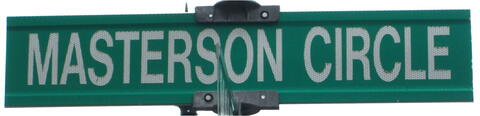
Masterson Circle
Location
Off of Malpass Road
in Canada
Yes
GPS Coordinates
42.9135687, -81.3104965
Inscription

Masterson Circle

Image
Photo Credit
Richard Turcotte
Caption
Photo- Masterson Circle- street sign (photo by R. Turcotte)
War or Conflict Term
Province
!4v1629477415784!6m8!1m7!1sMykPiSVNJhw2zmN3JM9Asg!2m2!1d42.91356867770313!2d-81.31049645778207!3f190.05277478710394!4f1.9081944617935847!5f3.325193203789971"
Body Content

(Note: Though a poppy does not appear on the street sign, this street is part of the City of London's "Streets of Honour" program and was named for Sergeant Masterson)


This street is named in memory of Sergeant James Craig Masterson.


James Craig Masterson was born on 17 November 1911 in Belfast, Northern Ireland. He emigrated to Canada and settled in London, ON where he lived on Elizabeth Street with his wife and children. He was in the workforce when he enlisted on 7 September 1939 at the age of 27. Upon joining the military, he was assigned to the Royal Canadian Regiment (RCR) and soon after, embarked for England with his Regiment.

It is unclear at what point Masterson was transferred to the West Nova Scotia Regiment (WNSR) but both the RCR and WNSR were in the 1st Canadian Division and took part in the invasion of Sicily on 10 July 1943, as well as the invasion of mainland Italy in September and the subsequent advance along the Adriatic coast. There followed the Battle for Ortona, the breaking of the Gustav and Hitler lines and Gothic Line. By September 1944, the Canadians were advancing towards Rimini and the Rimini Line. On 15 September 1944, the West Nova Scotia Regiment were fighting for the small town of San Lorenzo in Corregianno when Sergeant Masterson was killed in this heated battle. Sergeant James Craig Masterson is buried at the Coriano Ridge War Cemetery.

City
London
Country
Type Description
Street
Memorial CF Legacy ID
9679
City/Municipality
London
Memorial Number
35042-132
Type
Address
Robertson Place
Location
Off of Cranbrook Road
in Canada
Yes
GPS Coordinates
42.9387576, -81.3068036
Inscription

Robertson Place

Image
Photo Credit
Richard Turcotte
Caption
Photo- Robertson Place- street sign (photo by R. Turcotte)
War or Conflict Term
Province
!4v1629477266913!6m8!1m7!1sdrIJCVhVIeLOW9s__HOK3Q!2m2!1d42.93875756569054!2d-81.30680364049813!3f309.24253551687224!4f3.513307842393658!5f3.2923669978989647"
Body Content

(Note: Though a poppy does not appear on the street sign, this street is part of the City of London's "Streets of Honour" program and was named for Flying Officer Robertson).


This street is named in memory of Flying Officer James Albert Robertson. 

James Albert Robertson was raised in London, ON and attended Central Collegiate High School. He enlisted at the outbreak of the Second World War in September 1939 and undertook aircrew training. He qualified as a pilot and remained in Canada as a Flight Instructor until 1941, at which time he was transferred to 412 (Falcon) Squadron, RCAF as a Spitfire pilot. Flying Officer James Robertson was shot down during aerial combat on 29 November 1943 as his squadron escorted a bombing mission over Belgium. He was 21 years old. FO Robertson is buried at the Pervijze Churchyard in the village of Pervijze, Belgium.

City
London
Country
Type Description
Street
Memorial CF Legacy ID
9678
City/Municipality
London
Memorial Number
35042-131
Type
Address
Smithson Court
Location
Off of Father Dalton Avenue
in Canada
Yes
GPS Coordinates
43.0483993, -81.2484705
Inscription

Smithson Crt

Image
Photo Credit
Richard Turcotte
Caption
Photo- Smithson Court- street sign (photo by R. Turcotte)
War or Conflict Term
Province
!4v1629477100725!6m8!1m7!1syYFgWC2LPuBGsRIFBrADZg!2m2!1d43.04839926546018!2d-81.2484705103878!3f117.39261055045701!4f0.5794996486292945!5f3.325193203789971"
Body Content

(Note: Though a poppy does not appear on the street sign, this street is part of the City of London's "Streets of Honour" program and was named for Stoker Smithson)


This street is named in memory of Stoker Stanley Lawrence Smithson.


Stanley Lawrence Smithson was born on 1st June 1922 in London ON. He grew up on High Street and attended Riverview Public School and Beal Technical High School before joining the Royal Canadian Naval Volunteer Reserve as a Stoker. Assigned to the corvette HMCS SHAWINIGAN, he was killed and lost at sea on 25 November 1944, when his ship was torpedoed by U-1228, in the Cabot Strait off of Channel-Port-aux-Basques, Newfoundland. Stoker 1st Class Stanley Lawrence Smithson was 22 years old and is commemorated on the Halifax Memorial.


HMCS SHAWINIGAN was a Flower Class corvette built in Quebec City and commissioned on 19 September 1941. She left for her first trans-Atlantic convoy duty on January 1942 and would complete 2 more trans-Atlantic crossings before being assigned escort tasks for the Quebec-Labrador convoys. Operating out of Sydney, Nova Scotia, HMCS SHAWINIGAN was on an anti-submarine patrol in the Cabot Strait (47° 34'N, 59° 11'W) when she was hit by a torpedo at 0230 hours on 25 November 1944. She exploded and sank immediately. Of the 91 personnel on board ship, none survived.

City
London
Country
Type Description
Street
Memorial CF Legacy ID
9677
City/Municipality
London
Memorial Number
35042-130
Type
Address
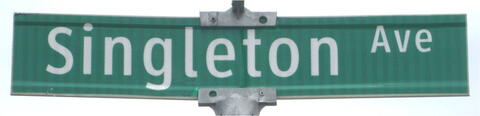
Singleton Avenue
Location
Off of Southdale Road West
in Canada
Yes
GPS Coordinates
42.9394453, -81.2746898
Inscription

Singleton Ave

Image
Photo Credit
Richard Turcotte
Caption
Photo- Singleton Avenue- street sign (photo by R. Turcotte)
War or Conflict Term
Province
!4v1629476929881!6m8!1m7!1sECsiD6SrfbqrlPHOKWDaWA!2m2!1d42.93944531439524!2d-81.27468977415491!3f117.28442389597807!4f0.7139511829255696!5f3.325193203789971"
Body Content

(Note: Though a poppy does not appear on the street sign, this street is part of the City of London's "Streets of Honour" program and was named for Able Seaman Singleton)


John Clifford Singleton was born on 21 September 1914 in London, ON. He attended Aberdeen and St. George’s Public schools before graduating from H.B. Beal Technical High School. Singleton enlisted in the Royal Canadian Naval Volunteer Reserve in September 1941 and after completing his training, was assigned to HMCS ATHABASCAN, remaining with the ship throughout the war. Able Seaman Singleton was killed and lost at sea on 29 April 1944, when his ship was torpedoed by T-24, off the coast of France.  John Clifford Singleton was 29 years old and is commemorated on the Halifax Memorial.


HMCS ATHABASKAN was commissioned in Feb 1943 and assigned to the British Home Fleet. In March 1943, she sailed for her first mission patrolling the Iceland-Faeroes Passage area and in Jun 1943, she took part in OP GEARBOX III, the relief of the garrison at Spitsbergen. In Jul and Aug 1943 she was based at Plymouth, carrying out anti-submarine patrols in the Bay of Biscay, and on 27 Aug 1943 was hit by a glider bomb off the Spanish coast. ATHABASKAN managed to reach Devonport, where she remained under repair until Nov 1943. During the Dec – Jan period , she escorted three convoys after which she returned to Plymouth Command. On 26 Apr 1944 she assisted in the destruction of German torpedo boat T-29 in the Channel off Ushant, and three days later was sunk by a torpedo from T-24 north of Ile de Batz. Her captain and 128 men were lost; among them was AS Singleton.

City
London
Country
Type Description
Street
Memorial CF Legacy ID
9676
City/Municipality
London
Memorial Number
35042-129
Type
Address
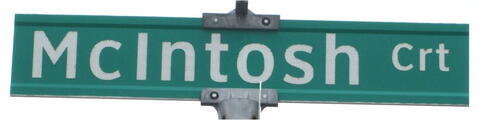
McIntosh Court
Location
Off of Drummond Place
in Canada
Yes
GPS Coordinates
42.9554152, -81.2530133
Inscription

McIntosh Crt

Image
Photo Credit
Richard Turcotte
Caption
Photo- McIntosh Court- street sign (photo by R. Turcotte)
War or Conflict Term
Province
!4v1629476772503!6m8!1m7!1sfwaFE7x1cOOKEoZcNDM6Xw!2m2!1d42.95541518041608!2d-81.25301334242877!3f193.75998590128523!4f0.1741499726268927!5f3.325193203789971"
Body Content

(Note: Though a poppy does not appear on the street sign, this street is part of the City of London's "Streets of Honour" program and was named for Corporal McIntosh)


This street is named in memory of Corporal Gordon Peter McIntosh.


Gordon Peter McIntosh was born in 1916 and grew up in London, Ontario. He joined the Canadian Fusiliers (City of London Regiment) and was killed on 3 May 1942 while on active service in Canada. He is buried at the Mount Pleasant Cemetery in London.

City
London
Country
Type Description
Street
Memorial CF Legacy ID
9675
City/Municipality
London
Memorial Number
35042-128
Type
Address
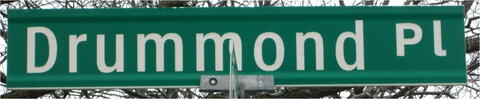
Drummond Place
Location
Off of Carnegie Lane
in Canada
Yes
GPS Coordinates
42.9561136, -81.2524416
Inscription

Drummond Pl

Image
Photo Credit
Richard Turcotte
Caption
Photo- Drummond Place- street sign (photo by R. Turcotte)
War or Conflict Term
Province
!4v1629476595247!6m8!1m7!1sPk9rghmU2_v7fax1X-4hvA!2m2!1d42.95611360692673!2d-81.25244155927813!3f191.02655811336962!4f3.648909449100742!5f3.325193203789971"
Body Content

(Note: Though a poppy does not appear on the street sign, this street is part of the City of London's "Streets of Honour" program and was named for Private Drummond) 

This street is named in memory of Private Stuart Drummond. 

Stuart Drummond was born on 7 October 1921 in London, ON. Growing up on Edward Street, he enlisted soon after completing his education. Once in England, he was assigned to the Essex Scottish Regiment who had been decimated during the Dieppe Raid.

The following months saw the Regiment (part of the 2nd Division) train in preparation for the D-Day invasion of June 1944. However crowding in the Normandy bridgehead delayed the move of the Division to France to the 7th July. Once in France, Private Stuart Drummond took part in his Regiment’s operations throughout the north-west Europe campaign and by February 1945, The Essex Scottish Regiment found themselves fighting as part of OPERATION VERITABLE, whose objective was to clear the enemy from the area between the Rhine and Maas rivers. On 19 February 1945, the Essex Scottish Regiment were advancing in the area of Bedburg-Louisendorf, Germany. It is during this action that Private Stuart Drummond was killed. He is buried at the Groesbeek Canadian War Cemetery, in the Netherlands.

City
London
Country
Type Description
Street
Memorial CF Legacy ID
9674
City/Municipality
London
Memorial Number
35042-127
Type
Address
Vandusen Court
Location
Off of Devos Drive
in Canada
Yes
GPS Coordinates
43.045776, -81.2392519
Inscription

Vandusen Crt

Image
Photo Credit
Richard Turcotte
Caption
Photo- Vandusen Court- street sign (photo by R. Turcotte)
War or Conflict Term
Province
!4v1629476401409!6m8!1m7!1sC6-4jdALHaSut0EqKAEW7Q!2m2!1d43.04577604671701!2d-81.23925193773061!3f108.34766223971553!4f-0.2576643519059729!5f3.2935942775255342"
Body Content

(Note: Though a poppy does not appear on the street sign, this street is part of the City of London's "Streets of Honour" program and was named for Private Vandusen)

Vandusen Court is named in memory of Private George Frederick Vandusen.


George Vandusen was born on 7 June 1924 and grew up on Carfrae Crescent in London, Ontario. He enlisted in May 1943 and was assigned to the Highland Light Infantry of Canada based in the Galt (Cambridge)- Waterloo area. After training in England for numerous months, the Highland Light Infantry landed in France during OPERATION OVERLORD (D-Day), landing at Bernières-sur-Mer. They participated in the ensuing actions, notably in the Mue Valley near Carpiquet, as well as the preliminary actions for the capture of Caen, in June and July 1944. It is during these battles that Private George Frederick Vandusen was killed on 27 June, at the age of 20 years old. He is buried at the Beny-sur-Mer Canadian War Cemetery.


City
London
Country
Type Description
Street
Memorial CF Legacy ID
9673
City/Municipality
London
Memorial Number
35042-126
Type
Address
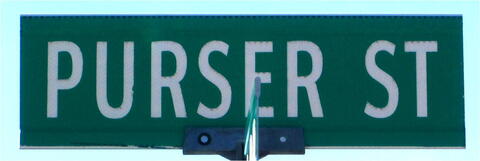
Purser Street
Location
Off of Agathos Street
in Canada
Yes
GPS Coordinates
43.0338047, -81.2187163
Inscription

Purser St

Image
Photo Credit
Richard Turcotte
Caption
Photo- Purser Street- street sign (photo by R. Turcotte)
War or Conflict Term
Province
!4v1629476224498!6m8!1m7!1s4Jf_Bf8i7wwUlspzvxJlGA!2m2!1d43.03380467664068!2d-81.21871625615084!3f259.3981228152888!4f0.16983608991542098!5f3.325193203789971"
Body Content

(Note: Though a poppy does not appear on the street sign, this street is part of the City of London's "Streets of Honour" program and was named for P/O Purser) 

Purser Street is named in memory of Pilot Officer John Henry Purser. 

John Henry Purser was born on 27 February 1920 in Lucknow, 125 km north of London, ON. During his early childhood, his family moved to London where he attended Aberdeen Public School before going on to study at Sir Adam Beck and South Collegiate. He joined the military soon after graduating from high school and went overseas after completing his aircrew training. Once in England, he was assigned to No. 115 Squadron, RAF, flying Wellington bombers out of RAF Marham. On the night of 29-30 June 1941, his crew took off from their airfield for a bombing raid on Hamburg, flying an aircraft modified to carry a 4000 lb “Blockbuster” bomb. During their mission, they were attacked by a German night fighter and crashed near Altenwerder, 4 km southwest of Hamburg. Six crewmembers perished in the crash, among them Pilot Officer John Henry Purser. He is buried at Becklingen War Cemetery, south east of Soltau, Germany.

City
London
Country
Type Description
Street
Memorial CF Legacy ID
9668
City/Municipality
London
Memorial Number
35042-125
Type
Address
Kennedy Place
Location
Off of Railton Avenue
in Canada
Yes
GPS Coordinates
42.9943008, -81.1521052
Inscription

Kennedy Pl

Image
Photo Credit
Richard Turcotte
Caption
Photo- Kennedy Place- street sign (photo by R. Turcotte)
War or Conflict Term
Province
!4v1629476083881!6m8!1m7!1s7LNDQOTmQ0TUgJSrgsMiDg!2m2!1d42.99430081201272!2d-81.15210523448746!3f157.36911113575053!4f0.7250329966492188!5f3.1831188666962587"
Body Content

(Note: Though a poppy does not appear on the street sign, the street is part of the City of London's "Streets of Honour" program and was named for LCpl Kennedy) 

Kennedy Place is named in memory of Lance-Corporal Samuel David Kennedy. 

Samuel David Kennedy grew up on Ada Street in London, ON. As a young man, he joined the Canadian Fusiliers (City of London Regiment) but with the Second World War raging on in Europe, he was later assigned to the Algonquin Regiment. By September 1944, the Algonquin Regiment were heavily involved in the Battle of the Scheldt. Starting on 22 September, the Regiment made several unsuccessful attempts to cross at Isabella, south of Braakman. On 10 October, The Algonquin Regiment were ordered to attempt another breakthrough at Isabella and open a route for the 8th Infantry Brigade. It is during this battle that Lance-Corporal Samuel David Kennedy was killed on 10 October 1944 at the age of 20. He is buried at the Adegem Canadian War Cemetery.

City
London
Country
Type Description
Street
Memorial CF Legacy ID
9666
City/Municipality
London
Memorial Number
35042-124
Type
Address
Spyer Road
Location
Off of Lighthouse Road
in Canada
Yes
GPS Coordinates
42.9583638, -81.1714092
Inscription

Spyer Rd

Image
Photo Credit
Richard Turcotte
Caption
Photo- Spyer Road- street sign (photo by R. Turcotte)
War or Conflict Term
Province
!4v1629475909270!6m8!1m7!1s6MZPoiFOAkMrIEsFf3tIOg!2m2!1d42.95836382625742!2d-81.17140915939387!3f183.34204238729637!4f-0.20063652353037753!5f3.325193203789971"
Body Content

Spyer Road is named in memory of Lieutenant James Spyer.


James Spyer was born in Herhertfordshire, England on 13 Oct 1893 (some documents indicate his year of birth as 1895). He emigrated to Canada as a young man and settled in the Stratford area where he was employed as a labourer. He joined the military in November 1914 and was assigned to the 18th Battalion (Western Ontario), Canadian Expeditionary Force. On 18 April 1915, he embarked for England where his battalion trained until its transfer to France on 15 September 1915. The 18th Battalion served throughout the war, earning seventeen Battle Honours including Vimy, Hill 70, Ypres and Passchendaele. Lieutenant James Spyer survived these battles and returned to Canada, establishing himself in London, ON. He obtained a position at Westminster Hospital, a military hospital established to assist WW I soldiers suffering from psychological injuries.

With the declaration of the Second World War, James Spyer volunteered to serve his country once again. As with other older veterans of WW I, he was assigned to the newly formed Veterans Guard of Canada, formed in the early days of the Second World War as a defence force in case of an attack on Canadian soil. This force was also later tasked with the guarding of POW camps in Canada. It is while on active service with the Veterans Guard that James Spyer died on 18 August 1943. He is buried at Mount Pleasant Cemetery in London, ON.

City
London
Country
Type Description
Street
Memorial CF Legacy ID
9662