Tablet to the left of the building.
Arborg Cenotaph
LEST WE FORGET
IN MEMORY OF OUR COMRADES WHO GAVE THEIR LIVES
IN THE SERVICE OF THEIR COUNTRY.
WE WILL REMEMBER THEM.
My VAC Account
My VAC AccountLEST WE FORGET
IN MEMORY OF OUR COMRADES WHO GAVE THEIR LIVES
IN THE SERVICE OF THEIR COUNTRY.
WE WILL REMEMBER THEM.
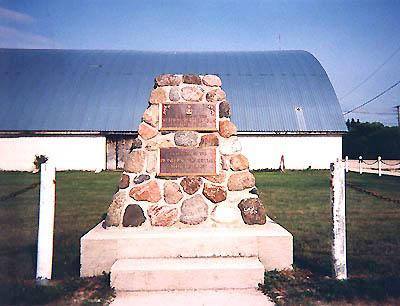
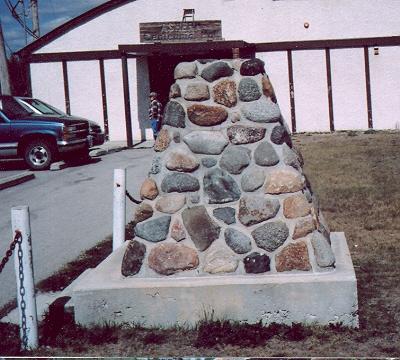
Tablet to the left of the building.
[upper plaque/plaque du haut]
IN HONOUR OF THE
VETERANS OF THE WARS
OF THE WORLD
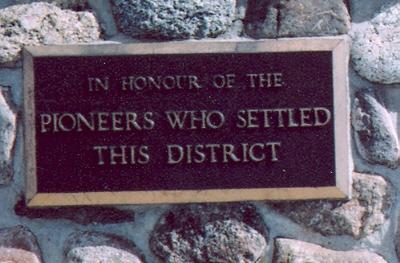
[lower plaque/plaque du bas]
IN HONOUR OF THE
PIONEERS WHO SETTLED
THIS DISTRICT
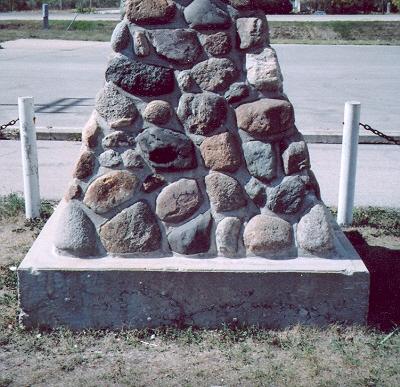
This memorial is dedicated to the local veterans and to the pioneers who settled this area. The cairn was built by a local farmer / stonemason named Willie Sonenholl and the concrete base was formed and poured by volunteer members of Royal Canadian Legion Branch No. 57, the memorial being unveiled in 1984 or 1985.
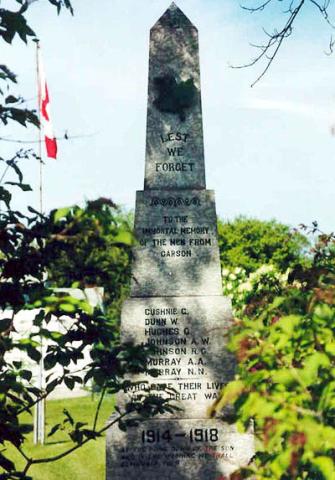
[front/devant]
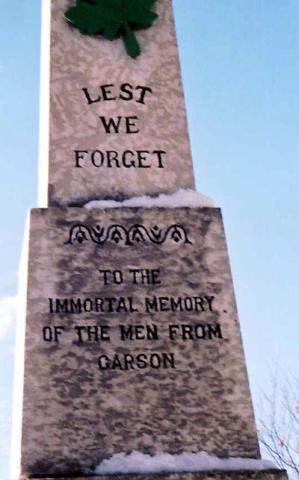
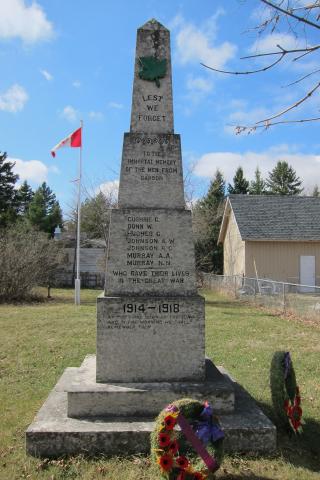
LEST
WE
FORGET
TO THE
IMMORTAL MEMORY
OF THE MEN FROM G
ARSON
CUSHNIE C.
DUNN W.
HUGHES G.
JOHNSON A.W.
JOHNSON R.G.
MURRAY A.A.
MURRAY N.N.
WHO GAVE THEIR LIVES
IN THE GREAT WAR
1914 — 1918
AT THE GOING DOWN OF THE SUN
AND IN THE MORNING WE SHALL
REMEMBER THEM
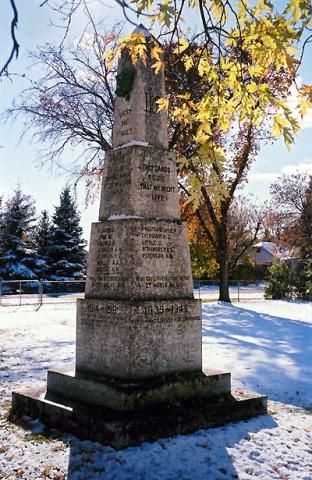
[right side/côté droit]
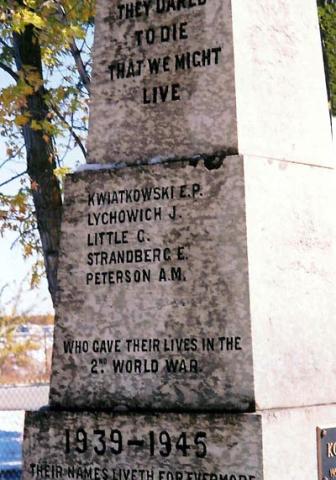
THEY DARED
TO DIE, THAT WE MIGHT
LIVE
KWIATKOWSKE E.P.
LYCHOWICH J.
LITTLE C.
STRANDBERG E.
PETERSON A.M.
WHO GAVE THEIR LIVES IN THE
2ND WORLD WAR
1939 — 1945
THEIR NAMES LIVETH FOREVER MORE
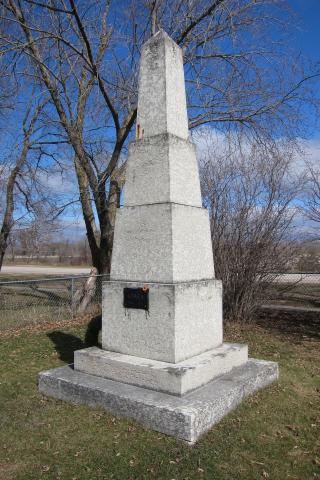
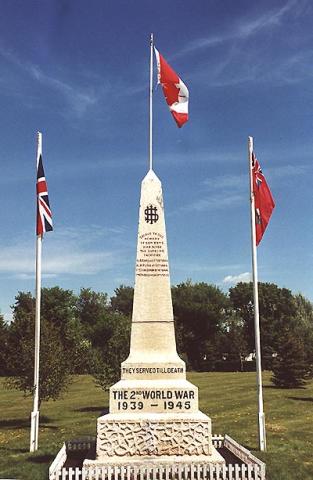
Erected by the village of Garson, this memorial is dedicated to the memory of the local war dead of the First and Second World Wars. The Garson history books date the unveiled on June 25, 1933.
The Garson Cenotaph combines a stout obelisk with tapered support blocks that make for an unusual design and presence. The monument is made from Manitoba limestone, also called Tyndall stone. The front has seven names from the First World War and an inscription from Lawrence Binyon’s 1914 poem “For the Fallen.” One stanza is familiar in the Act of Remembrance. Only the final lines are used (with a change from the original “will” to “shall”): “At the Going Down of the Sun and in the Morning we Shall Remember Them.”
Later, five names of the fallen from the Second World War were added.
[front/devant]
TYNDALL'S TRIBUTE TO HER FALLEN HEROES AND IN LOVING MEMORY
O.P. LUND
W.J. HENRY
D.H. COX
H. WALTON
I. O'CONNOR
C. SLATER
F. TETROE
F. SOTTERMAN
J. WINKLER
J.S. HELLGREN
L.A. BLUE
J. CACHTLEY
THEIR NAMES LIVE FOREVER
THE GREAT WAR
1914 - 1918
[right side/côté droit]
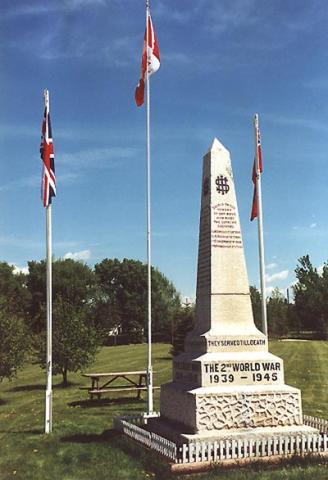
SACRED TO THE MEMORY OF OUR BOYS WHO MADE THE SUPREME SACRIFICE
A. BARCLAY
A. ROSKI
E. LUNGSTRUM
N. PROBIZANSKI
THEY SERVED TILL DEATH
THE 2ND WORLD WAR
1939 - 1945
Erected by the Rural Municipality of Brokenhead, this memorial was unveiled on August 28, 19121, to the local war dead of the First World War. Later, the Second World War was added.
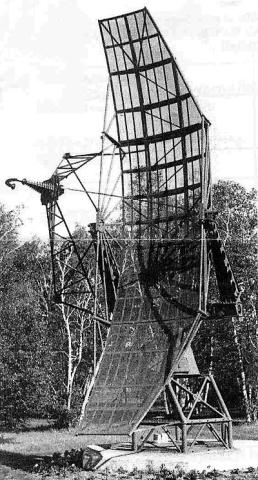
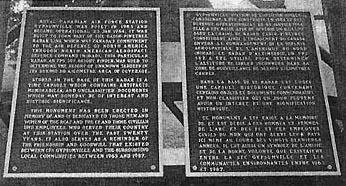
[plaque/plaque] ROYAL CANADIAN AIR FORCE STATION GYPSUMVILLE WAS BUILT IN 1963 AND BECAME OPERATIONAL 23 JAN 1964. IT WAS BUILT TO FORM PART OF THE CADIN-PINETREE RADAR LINE WHICH WAS CANADA'S COMMITMENT TO THE AIR DEFENCE OF NORTH AMERICA THROUGH NORTH AMERICAN AEROSPACE DEFENCE COMMAND (NORAD). THIS PARTICULAR RADAR, AN FPS 507 HEIGHT FINDER, WAS USED TO DETERMINE THE HEIGHT OF UNKNOWN TARGETS IN ITS 383,000 SQ KILOMETRE AREA OF COVERAGE.
STORED IN THE BASE OF THIS RADAR IS A TIME CAPSULE WHICH CONTAINS ARTIFACTS, MEMORABILIA, AND UNCLASSIFIED DOCUMENTS WHICH MAY SOMEDAY BE OF INTEREST AND HISTORIC SIGNIFICANCE.
THIS MONUMENT HAS BEEN ERECTED IN MEMORY OF, AND IS DEDICATED TO THOSE MEN AND WOMEN OF THE RCAF AND THE CF AND THOSE CIVILIAN DND EMPLOYEES WHO SERVED THEIR COUNTRY AT THIS STATION OVER THE PAST TWENTY YEARS. IT ALSO SERVES AS A REMINDER OF THE FRIENDSHIP AND GOODWILL THAT EXISTED BETWEEN CFS GYPSUMVILLE AND THE SURROUNDING LOCAL COMMUNITIES BETWEEN 1963 AND 1987.
GYPSUMVILLE STATION DE L'AVIATION ROYALE CANADIENNE, A ETE CONSTRUITE EN 1963 ET EST DEVENUE OPERATIONELLE LE 23 JANVIER 1964. ELLE A ETE BATTE AFIN DE DEVENIR UN MAILLON DANS LA CHAINE DE RADAR CADIN-PINETREE CONSTITUENT AINSI L'ENGAGEMENT DU CANADA ENVERS LE COMMANDEMENT DE LA DEFENSE AEROSPATIALE DE L'AMERIQUE DU NORD (NORAD). CE RADAR D'ALTIMETRIE, UN FPS 507 A ETE UTILISE POUR DETERMINER L'ALTITUDE DE CIBLES INCONNUES DANS SA ZONE DE SURVEILLANCE DE 383,000 KILOMETRES CARRES.
DANS LA BASE DE CE RADAR EST LOGEE UNE CAPSULE HISTORIQUE CONTENANT CERTAINS OBJETS ET DOCUMENTS COMMEMORATIES ET NON-CLASSIFIES QUI UN JOUR PLUVENT AVOIR UN INTERET ET UNE SIGNIFICATION HISTORIQUE.
CE MONUMENT A ETE ERIGE A LA MEMOIRE DE ET EST DEIDE A CES HOMMES ET FEMMES DE L'ARC ET DES FC, ET CES EMPLOYES CIVILS DU MDN QUI ONT SERVI LEUR PAYS ICI MEME AU COURS DES VINGTS DERNIER ANNEES. IL EST AUSSI UN SYMBOLE DE L'AMITE ET DE LA BONNE VOLONTE QUI EXISTAIENT ENTRE LA SFC GYPSUMVILLE ET LES COMMUNAUTRES ENVIRONNANTES ENTRE 1963 ET 1987.
This memorial, constructed by members of the Canadian Forces, was dedicated on 19 September 1986 in honour of those men and women of the Canadian military and the Department of National Defence who served at Royal Canadian Air Force Station, later Canadian Forces Station, Gypsumville between 1963 and 1987.
[front/devant]
DEDICATED TO OUR VETERANS
WE WILL REMEMBER THEM
COMMEMORATION BRANCH # 140
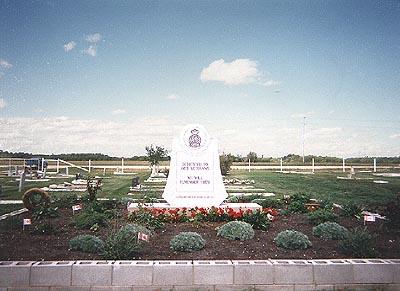
This stele was constructed by Royal Canadian Legion Branch No. 140 (Eriksdale) and is dedicated to all local veterans.
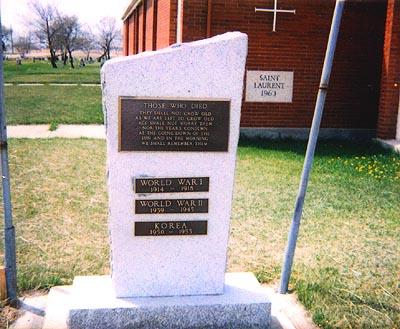
[front/devant]
THOSE WHO DIED
THEY SHALL NOT GROW OLD AS WE ARE LEFT TO GROW OLD
AGE SHALL NOT WORRY THEM NOR THE YEARS CONDEMN
AT THE GOING DOWN OF THE SUN AND IN THE MORNING
WE SHALL REMEMBER THEM
WORLD WAR I
1914 - 1918
WORLD WAR II
1939 - 1945
KOREA
1950 - 1953
This memorial was erected by Royal Canadian Legion Branch No. 250 (St. Laurent) and is dedicated to the veterans of the First and Second World Wars and the Korean War.
THIS TABLET COMMEMORATES THOSE IN THE SERVICE
OF THE CANADIAN PACIFIC RAILWAY COMPANY WHO
AT THE CALL OF KING AND COUNTRY LEFT ALL THAT
WAS DEAR TO THEM, ENDURED HARDSHIP, FACED DANGER
AND FINALLY PASSED OUT OF SIGHT OF MEN BY THE
PATH OF DUTY AND SELF SACRIFICE. GIVING UP THEIR
OWN LIVES THAT OTHERS MIGHT LIVE IN FREEDOM
LET THOSE WHO COME AFTER SEE TO IT
THAT THEIR NAMES BE NOT FORGOTTEN.
1914 YPRES FESTUBERT THE SOMME VIMY HILL 70 1918
PASSCHENDAELE AMIENS CAMBRAI DROCOURT QUEANT MONS
Navy Division
Alexander A.J.
Alexander D.
Armstrong F.J.
Astbury W.E.
Astbury W.
Bain E.
Bain G.A.
Bale W.L.
Beakley G.A.
Beattie J.A.
Beerling L.D.
Beggs R.H.
Bellavie J.H.
Benger A.C.
Berg L.H.
Berry R.G.
Biggar B.C.
Biggar M.C.
Birch L.R.
Llahuta T.N.
Booth H.
Bourbonniere H.E.J.
Bradshaw B.J.
Brady E.T.
Bryan F.W.
Buckles W.
Burdus J.M.
Burges D.G.
Burns G.
Burns H.F.
Burrows A.F.
Cannell D.R.
Cannell R.F.
Cannon H.J.
Chadburn G.W.
Clarke W.G.
Cochrane D.S.
Colburn M.
Coley H.W.
Cook L.N.
Cooper T.J.
Corley J.G.
Craig W.J.
Crothers C.
Crothers T. SR.
Crothers T. JR.
Crothers W.
Cunnian T.T.
Cunningam H.W.
Dann F.G.
Davis H.W.J.
Decoster J.A.
Delbridge W.J. SR
Delbridge W.J. JR
Dickens J.
Dublas W.I.
Dryden E.L.
Dunlop J. SR
Dunlop J. JR
Eagle F.T.
Fedoruk M.
Ferguson A.R.
Fual L.J.
Folkes J.W.
Fraser S.R.
Gallagher W.
Galton H.
Garvin W.J.
Gibbons K.J.
Gloag W.M.
Goodman L.
Granath J.A.
Grant C.
Gratto L.J.
Hammond R.E.
Hanna D.
Hardy G.
Harmon C.G.
Harper R.T.C.
Harper S.
Heaney W.C.
Hellofs V.W.
Hems W.
Henrickson G.
Hogsden A.E.
Holland W.
Hopps E.
Hornby A.G.E.
Howard R.V.
Huggins E.A.
Hughes E.D.
Hughesman H.
Hutchison J.H.
Ings F.P.
Iwanicki J.A.
Jaworski T.
Johnson B.R.
Johnston J.
Jolly B.B.
Jones E.G.
Joyce S.
Kearney F.J.
Kennedy R.J.
Kirk R.J.
Kostyra A.
Kostyra A.B.
Kowalski W.S.
Kruk A.
Landkamer R.W.
Lang C.
Lebeau C.
Lichfield L.
Lutz A.W.
Lynch J.
Macbeath D.G.
Mackay W.W.
Madden P.G.
Mandrick D.
Manning R.W.
Marchant A.
Marlow H.
McBride W.S.
McClements G.T.
McCreedy R.W.
McDonnell J.H.
McDowell W.
McGregor M.N.
McIsaac J.R.W.
McLachlan R.L.
McMillan D.W.
McNeil J.
Miller J.
Mitchell S.C.
Montgomery E.
Moore A.W.
Moss C.J.
Moss J.L.
Motz E.A.
Muse A.M.
Nicholson H.
Nicholson W.M.
Nixon J.R.W.
Noseworthy C.F.
Odger W.J.
Ogilvie D.K.
Palmer J.
Patterson G.W.
Patterson J.R.H.
Pattie M.
Payne E.T.
Peters F.W.
Phillips I.C.*
Pike D.J.
Pinkos J.
Povey L.E.
Price C.E.
Pritchard C.A.
Prudent L.P.
Purser F.
Racham L.H.
Ratcliffe E.
Ritchie T.M.
Robertson D.
Robinson A.J.
Robinson J.C.
Robinson J.D.
Robson G.G.
Rogers C.R.
Rombough W.O.
Rose J.F.W.
Rushworth A.R.
Russel W.A.
Sandiford D.
Schade C.
Scoville D.R.
Seaberg W.E.
Serafin J.F.
Sharples W.
Shaw E.A.
Shaw G.
Shields W.
Shute W.R.
Silver S.S.
Sinclair J.B.
Sjoblom H.I.E.
Slater A.
Slidders J.D.
Smith A.W.
Smith E.H.
Smith H.J.
Smyth D.D.
Stein E.A.
Sunderland J.H.
Sunderland R.J.
Swystun W.
Szydlowski S.J.
Taylor K.P.
Thomson S.R.
Thompson T.A.
Toolis E.
Treller H.
Turner R.P.
Tyler H.W.
Van Ryssel O.R.
Vickers W.H.
Viney R.
Wade R.J.
Wainwright F.
Wallin H.H.
Webb C.
Wells G.
Wharrie J.
Wheeler R.D.
Wilford S.
Williams W.
Willis N.
Windgrove G.P.
Winogradoff N.
Wood W.
Woodfield A.
Wozniak M.
Zloty S.
Army Division
Aikens D.W.
Allan J. *
Allan T.L.
Allen J.C.
Armstrong A.
Arnold J.F.
Ashton R.G.
Bain T.I.
Bannister W.
Bannister WM
Barchuk F.
Beach R.N.H.
Benger H.J.
Bennett J.
Benzelcok M.
Bertulli E.
Bilinski J.
Blundell G.
Bodnar M.
Borashynski E.
Boxer N.
Boyarski J.
Boyd A.E.
Brenko W.
Britton C.
Brokker F.K.
Brown J.
Bryan F.
Brycha J.
Bundzelak P.
Cachal A.
Call P.
Campbell C.
Cant R.
Carpenter G.
Chambers W.H.
Chivers F.W.
Chmil S.
Chornenki W.
Christopherson E.
Chwailboga O.
Ciechewicz A.
Clark D.G.
Clark F.
Clark G.W.
Cooke H. *
Cooper R.H.
Corrigan F.K.
Cunningham K.
Curtis G.E.A.
Czurowski F.
Delbridge T.H.
Dickson E.
Diuk E.J.
Doroz S.
Drennar G.
Drystek M.
Dubesky T.
Duce H.T.
Duff H.A.
Duncan G.
Dunsford G.R.
Durand W.A.
Dwizona W.
Dyck W.
Enman G.H.
Everard J.R.
Everard W.M.
Fardoe W.F.
Fasco A.G.
Fawcet D.V.
Fellows J.H.
Fenton G.
Ferril H.
Filozof M.
Francey J.
Frickier S.
Fudge M.H.
Gall J.A.
Gates E.
Gates F.R.
Gracel N.
Gray W.T.
Gregory J.
Gregory N.
Haas A.
Harrison R.
Harrop H.
Harrow J.
Hayden S.
Henlook M.
Hipgrave A.V.
Hodgert J.
Hossak C.H.
Hreckory P.
Hughesman R.
Hummerston J.
Hutchinson S.
Johnston J.C.
Jowett D.
Kamins W.
Kappy N.
Kelly C.E.
Kennedy R.
Kinzel H.
Klisko A.
Klisko J.A.
Klook P.
Knight F.L.
Kondrysyn S.
Kopachynsky T.E.
Kosky M.
Koswin S.
Koszowski M.
Kowal F.
Koziarski K.
Krempin J.F.
Kruk T.
Krywochyza T.
Kuc A.
Kunicky A.
Kusner J.M.
Lacomy S.
Lakowitch M.
Lamb A.S.
Law A.
Law G.
Leclair W.J.
Lenoski A.J.
Lewer E.G.
Lisoweski T.
Loholt K.
Lovallo C.
Lovallo D.
Luchock J.
Lons R.A.
Magnusson E.A.
Markiewich M.B.
Marquardson A.
Matwichuk J.
Masik E.W.
Masik N.
Masters T.
Matewush F.T.
Mazepa J.
Mazepa R.
McAllister J.G.
McBurney J.
McCammon J.
McClements S.
McDougall E. (CWAC)
McFarlane J.
McGhee H.
McKenna O.E.
McOlarsen T.
McClay S.B.
McMillian P.W.E.
McNamara F.
McNaughton T.
Miller J.
Mitchell R.I.
Monteith W.L.
Moody B.
Morris J.P.
Mosiuk M.
Muir F.B.
Muir J.A.
Munt E.
Muzik M.A.
Nahernick M.
Nasechuk S.
Novak E.
Novak J.
O'Connell M.T.
Odger F.G.
Olchowecki W.
Owen H.
Packowich P.
Page J.R.
Palmer R.C.
Pfeifer R.
Piche J.
Piercy A.K.
Pinder H.
Pinkos C.C.
Plant G.
Pokrywka T.
Povey A.E.
Proberts C.
Ptashnik J.
Rank R.
Reay L.L.
Reid A.P.
Robertson C.S.
Roubble A.
Scalena J.
Schlamp W.F.
Seepish F.
Seliski J.A.
Sikomas J.
Simpson J.
Simpson R.C.
Simpson S.W.
Sims D.J.
Sinclair J.P.
Smart F.
Smerek J.S.
Smith E.J.
Smith G.T.
Smith G.W.
Smith R.H.
Stakowich J.
Stanowski W.
Starosilec M.
Starosilec W.
Stephens V.O.A.
Stokes E.
Sumner J.
Sutton B.
Suzanski N.
Szechoski C.
Thomas C.W.
Tilley J.
Tottle D.H.C.
Towarnicki W.
Tojan H.
Trylenski M.
Turner R.A.
Turner R.E.
Uhryn W.
Vince H.C.
Wachniuk O.
Walker R.
Weir J.C.
Weiss J.
Welychanko T.
Werbin F.
Wheaton D.W.
Whitledge E.G.
Wilford A.J.
Williams R.W.
Williamson N.S.
Wilson H.G.
Worsley N.L.
Yanishko J.
Yanishko W. *
Young H.N.
Zacharkow J.
Zajac P.
Zluchowsky B.
Zub W.
Zurba W.
Air Force Division
Algeo T.W.
Armstrong S.W.
Ballendine E.
Bamford S.W.
Barnes R.H.
Barnes S.F.
Baron H.W.
Belan J.
Bell M.
Bending S.A.
Booth R.A.
Bowes D.
Bowyer K.G.
Brown C.W.
Bown E.O.
Brown F.G.
Buchan W.M.
Buck C.D.
Bunting J.H.
Burch H.H.
Burton D.R.
Butterworth A.
Cady P.R.
Cameron J.E.
Cameron W.P.
Cannell A.F.
Carter E.P.
Cheropita W. *
Cohens S.
Comfort L.H.
Cook W.
Dingwall T.G.
Dobko J.P.
Doer W.H.
Doyle J.E.
Drysdale J.L. *
Edgerton G.F.
Elidoros T.
Emmert L.
Esselmont W.
Faires H.R.
Fedoroski B.E.
Fisher R.G.
Fox H.P.
Frosk J.
Fudge R.A.
Goff W.V.B.
Grimwood F.J.
Hall D.K.
Hall J.
Hand G
Handley J.A.
Harper J.
Harper T.J.
Heath J.C.
Henderson? I.L.
Houston H.A.
Howie J.C.G.
Hunter A.C.
Hutchison D.K.
Ings K.A.
Ispas W.
Jameson L.
Johnson A.J.
Hones T.J.
Joyce L.C.
Knowles H.J.
Ladd A.C.
Lathan W.
Leitch C.H.
Lindsay R.
Lingwood J.
Lepsky M.
Lobdell N.E.
Lowe V.W.
Lutz J.
Maines L.M.
Maw A.D. *
McCallum F.P.
McCance C.W.
McCreedy J.A.
McDonald A.J.
McDonald F.W.
McGregor G.N.
McGregor J.D.M.
McIntosh J.
McLachlan M.
McLaren R.C.
Miller R.
Mills B.W.
Missler R.J.B.
Morris I.W.
Murray W.J.
Nelson S.F.
Niven W.C.
Osman J.J.
Parbery A.
Parbery S.
Peters D.A.
Pickering J.H.
Pozerniuk P.R.
Prochera W.
Quickenden H.G.
Rawluk P.P.
Raynor W.
Reed A.C.
Rees W.G.
Ritchie R.W. *
Robetson D.M.
Robinson W.G.
Romance W.C.
Rosin E.
Rudick P. *
Ruppenthal E.
Ryckman G.O.
Salt W.H.
Sanketti A.
Seibel W.
Sellar E.H. *
Sexton W.
Skinner G.C.
Slingsby L.G.
Smith F.J.
Smith G.E.J.
Smith L.
Snyder E.
Snyder R.L.
Spencer A.C.
Stephens R.J.
Stewart J.G. *
Stolash F.J.
Storey J.I.L.
Sudal A.
Tait R.
Tapping A.
Tapping A.
Townsend G.F.
Troughton W.A.
Tumilson D.E.
Turenne G.A.
Ustiuk W.
Wade A.C.
Wade J.R.
Waintman D.
Walker G.
Walker J.
Walker J.A.
Wallis A.
Wardle J.W.
Waterer A.
White A.
Whitledge E.L.
Whittaker H.W.
Whittaker J. *
Wilby C.
Wilkinson H.W.L.
Wilson G.
Young R.
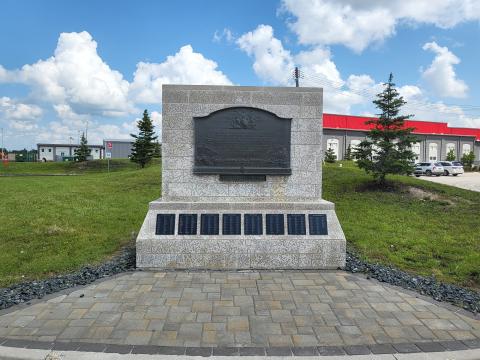
The Canadian Pacific Railway Great War Tablet in Weston Shops was dedicated on April 28, 1922. The ceremony was led by Assistant Superintendent (Motive Power) A. Sturrock, with long-serving and retired employee S.J. Pentland unveiling the monument, Alderman (Major) Robert James Shore gave the formal address, and Reverend Robert Weston Ridgeway provided the dedication.
Following the Second World War, a small crest was added to the tablet, now honouring employees who served in either conflict. By the early 1950s, the war memorial was next to the Weston Yard main gate at McPhillips Street and Jarvis Avenue. An Honour Roll was created for the over 400 local employees who served during the Second World War, with both co-located at the main gate for many years and later moved into the yard.
Between 2018 and 2020, the tablet was relocated to the employee parking area and mounted on a new stone base, with the 1914-1918 and 1939-1945 crest immediately below, and set above an updated Second World War Honour Roll.
To honour those who served and gave their lives during the Great War, the Canadian Pacific Railway (CPR) erected a series of bronze memorial tablets in over twenty select locations along their railway system and offices in Canada, United States, England and China. The tablet depicts Britannia, the national personification of Britain, as a helmeted female warrior with a lion to her right and a shield at her feet, HMS Lion (Admiral Beatty's flagship during the Battle of Jutland) with airplanes above and a tank in front, Canadian Pacific Steamship RMS Empress of Russia (used during the war as an armed merchant cruiser and transport ship), Canadian troops, and a CPR locomotive in a nod to all those who travelled by train across Canada before heading overseas. The plaque was designed by Archibald Pearce, Chief Engineer's Department, Montreal, with its model and casting by the Bromsgrove Guild at Worcester, England.
| Original location | Current location |
| CPR Office, Saint John, New Brunswick | McAdam Railway Museum, McAdam, New Brunswick |
| Du Palais CPR Station, Quebec City, Quebec | Du Palais CPR Station, Quebec City, Quebec |
| Viger Station, Montreal, Quebec | Exporail, Montreal, Quebec |
| Windsor Station, Montreal, Quebec | Windsor Station, Montreal, Quebec |
| Angus Shops, Montreal, Quebec | CPKC Archives, Calgary, Alberta (in storage) |
| North Toronto Station, Toronto, Ontario | Union Station, Toronto, Ontario |
| West Toronto Station, Toronto, Ontario | unknown |
| North Bay Station, North Bay, Ontario | North Bay Memorial Park, North Bay, Ontario |
| Fort William Union Station, Fort William, Ontario | Thunder Bay Station, Thunder Bay, Ontario |
| Weston Shops, Winnipeg, Manitoba | Weston Shops, Winnipeg, Manitoba |
| Saskatoon Station, Saskatoon, Saskatchewan | Thomas Cook Restaurant, Saskatoon, Saskatchewan |
| Moose Jaw Station, Moose Jaw, Saskatchewan | Old Moose Jaw Station, Moose Jaw, Saskatchewan |
| Regina Station, Regina, Saskatchewan | Casino Regina, Regina, Saskatchewan |
| Calgary Station, Calgary, Alberta | CPKC Headquarters, Calgary, Alberta |
| Calgary Natural Resources Building, Calgary, Alberta | The Military Museums, Calgary, Alberta |
| Edmonton Station, Edmonton Alberta | CPKC Archives, Calgary, Alberta (in storage) |
| Nelson Station, Nelson, British Columbia | Nelson Museum, Archives & Gallery, Nelson, British Columbia |
| Vancouver Station, Vancouver, British Columbia | unknown |
| Steamship Office, Victoria, British Columbia | Royal British Columbia Museum, Victoria, British Columbia |
| CPR Office, New York, New York, United States | Exporail, Montreal, Quebec |
| CPR Office, Liverpool, England | Royal Liver Building, Liverpool, England |
| CPR Building, Charing Cross, London, England | unknown |
| CPR Office, Hong Kong, China | Believed destroyed during the Japanese occupation in the Second World War. |
All tablets were unveiled simultaneously on the same date along with three identical Winged Victory memorials in Montreal, Winnipeg and Vancouver.
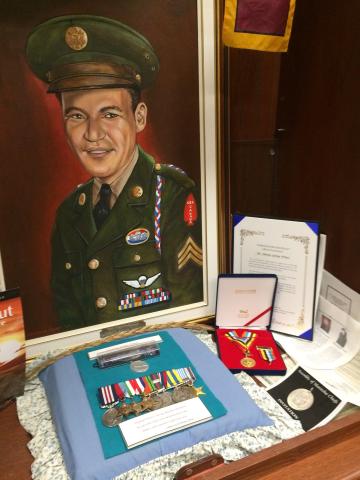
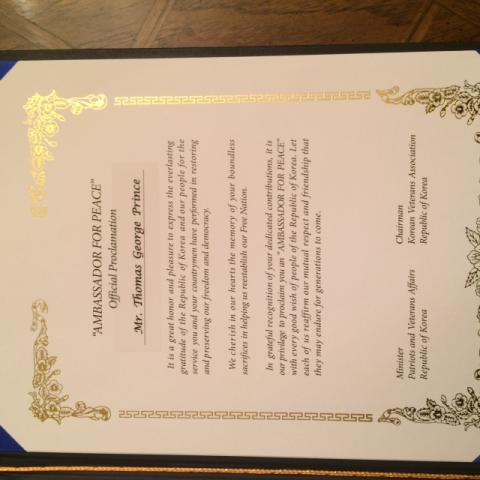
In 2002, a display of Sergeant Tommy Prince's medals, pictures and other memorabilia was set up in the main lobby by 7 First Nations and Brokenhead Ojibway Nation. The painting of Prince was commissioned by John Stempken, a fellow First Special Service Force (Devil’s Brigade).
Sergeant Tommy Prince was a prominent Anishinaabe activist who served in the Second World War and Korean War. His story is one of the most widely known examples of the wartime contributions of Indigenous soldiers in the mid-20th century and the poor treatment they received upon their return to civilian life in Canada. His accomplishments attracted national media attention during his lifetime and earned him a great many posthumous tributes.
Prince was born in October 1915 in St. Peter's Reserve, Manitoba. He was the great-grandson of respected Ojibwa Chief Peguis, and one of eleven children born to Elizabeth and Henry Prince. In 1920, they moved to Brokenhead Ojibway Nation in Scanterbury, Manitoba. At age five, Prince was forced to leave his community and attend Elkhorn Residential School, where he joined the Cadet Corps. He suffered from post-traumatic stress disorder from the residential school before he joined the military.
In 1940, he volunteered to fight for Canada in the Second World War. He rose from sapper to lance corporal with the Royal Canadian Engineers before volunteering for the 1st Canadian Parachute Battalion in 1942. Soon after, he was assigned to the elite 1st Canadian Special Service Battalion, which was attached to the First Special Service Force (Devil’s Brigade). He reached the rank of sergeant by war’s end, and was one of three Canadians to receive both the Silver Star (United States) and the Military Medal. King George VI presented him with both honours during a ceremony at Buckingham Palace in 1945, shortly before Prince’s discharge from the army.
He wanted to prove his people were as good as any white man and restore their good name. One way to achieve this was to acquire as many medals as possible and he did so without putting his men at risk. Before any patrols he would ensure they were camouflaged and everything was secured. Often he would patrol alone because there would be less noise. Prince was a natural warrior and he excelled as the military developed the skills he learned on the reserve while living off the land. He loved the Devil's Brigade and was always praising his men, "If it wasn't for my men, I wouldn't be who I am today." He was a caring man who loved to joke around and make people laugh.
He was a prominent leader in the Indigenous rights movement of the 1940s. After the war, he served as spokesperson and vice-president of the Manitoba Indian Association, and appeared on its behalf before a Special Joint Committee of the Senate and House of Commons, tasked with studying the Indian Act. During his testimony in 1947, he advocated for the abolition of the Indian Act and respect for existing treaties, and presented submissions from Indigenous in Manitoba, which called for improved schools, better living conditions, and expanded hunting, trapping, and fishing rights.
In 1950, Prince re-enlisted in the Korean War. He contributed to the defence of Hill 677 in the Battle of Kapyong in 1951, for which the United States awarded the Princess Patricia’s Canadian Light Infantry the Distinguished Unit Citation—the only time a Canadian unit has received this honour. Military service took a heavy toll on his health and, following his honourable discharge from the army, he faced a difficult return to civilian life in Manitoba. Prince endured discrimination, illness, and poverty in the years that followed and died in 1977. He fought many demons after residential school and the horrors of combat, but he never lost his humility, self-worth, sense of humour and pride of being Anishinaabe.

In Memory of Officer NCO’s and Men
16th Canadian Scottish
Who fell in Action
On the Arras front from
Sept. 2nd to Oct. 2nd, 1918
This cross was brought to Canada from the battlefields near Arras, France, where it had been erected to honour the sacrifices of the 16th Battalion (The Canadian Scottish) Canadian Expeditionary Force who fell in the fall of 1918 during the final stage of the Second Battle of Arras, the Battle of the Drocourt-Quéant Line, and Breaking of the Hindenburg Line.
In March of 1935, it was agreed that a wooden cross should be erected in front of the First Presbyterian Church in memory of the members of the 16th Battalion who had been killed in the First World War. Annie Kay, wife of 16th Battalion Regimental Sergeant Major James Kay, unveiled the cross on May 8, 1935. Regimental Sergeant Major James Kay, was one of the approximately 250 members of the 79th Cameron Highlanders of Canada, a militia regiment formed in Winnipeg in 1910, who joined the 16th Battalion (The Canadian Scottish) when it was formed for overseas service in 1914. The cross was first placed on the grounds of the church and is now kept in the Cameron Chapel.
Battle of Arras, Battle of the Drocourt-Quéant Line, and Breaking of the Hindenburg Line are the long/formal battle honours for the fighting that occurred during the period named on the memorial inscription.