
The Afghanistan Memorial Monument, designed by Dr. Mike Crouzat, was unveiled on August 20, 2010. The names of 152 Canadian soldiers killed in Afghanistan are etched into the granite maple leaf.
The Afghanistan Memorial Forest is also located here.
My VAC Account
My VAC Account[Inscription]
CPL DYER, A., 3 PPCLI
PTE GREEN, R., 3 PPCLI
SGT LÉGER, M., 3 PPCLI
PTE SMITH, N., 3 PPCLI
CPL BEERENFENGER, R., 3 RCR
SGT SHORT, R., 3 RCR
CPL MURPHY, J., 1 RCR
PTE WOODFIELD, B., 2 RCR
CPL DAVIS, P., 2 PPCLI
MCPL WILSON, T., 2 PPCLI
PTE COSTALL, R., 1 PPCLI
CPL DINNING, M., 2 MP PL
BDR MANSELL, M., 5TH FD ARTILLERY REG`T RCA
CPL PAYNE, R., 1 MP PL
LT TURNER, W., LFWAHQ
CAPT GODDARD, N., 1 RCHA
CPL BONECA, A., LAKE SUPERIOR SCOTTISH REG`T
CPL GOMEZ, F., 1 PPCLI
CPL WARREN, J., 3 RHC
CPL REID, C., 1 PPCLI
PTE DALLAIRE, K., 1PPCLI
SGT INGRAM, V., 1 PPCLI
CPL KELLER, B., 1 PPCLI
MCPL ARNDT, R., THE LOYAL EDMONTON REG`T
MCPL WALSH J. 2 PPCLI
CPL EYKELENBOOM, A., 1 FIELD AMBULANCE
CPL BRAUN, D., 2PPCLI
PTE CUSHLEY, W., 1 RCR
WO MELLISH, F., 1 RCR
WO NOLAN, R., 1 RCR
SGT STACHNIK, S., 2 CER
PTE GRAHAM, M., 1 RCR
CPL ARNOLD, G., 2 FIELD AMBULANCE
PTE BYERS, D., 2 PPCLI
CPL KEATING, S., 2 PPCLI
CPL MORLEY, K., 2 PPCLI
PTE KLUKIE, J., 1 RCR
SGT GILLIAM, C., RCD
CPL MITCHELL, R., RCD
TPR WILSON, M., RCD
SGT TEDFORD, D., 1 RCR
PTE WILLIAMSON, B., 1 RCR
CWO GIROUARD, R., 1 RCR
CPL STORM, A., 1 RCR
CPL MEGENEY, K., 1 BN NS HIGHLANDERS
PTE GREENSLADE, D., 2 RCR
PTE KENNEDY K., 2 RCR
SGT LUCAS, D., 2 RCR
CPL POLAND, B., 2 RCR
CPL STANNIX, C., PRINCESS LOUISE FUSILIERS
CPL WILLIAMS, A., 2 RCR
TPR PENTLAND, P., RCD
MCPL STEWARD, A., RCD
MCPL KLUMPENHOUWER, A., CANSOFCOM
CPL McCULLY, M., 2 CMBG HQ & SIG SQN
MCPL PRIEDE, D., 3 ASG
TPR CASWELL, D., RCD
CPL BOUZANE, S., 3 PPCLI
SGT KARIGIANNIS, C., 3 PPCLI
PTE WIEBE, J., 3 PPCLI
CPL ANDERSON, J., 3 PPCLI
CPL BARTSCH, C., 3 PPCLI
MCPL BASON, C., ROYAL WESTMINSTER REG`T
CAPT DAWE, D., 3 PPCLI
CAPT FRANCIS, J., 1 RCHA
PTE WATKINS, L., 3 PPCLI
PTE LONGTIN, S., 3RD BN ROYAL 22ND REG`T
MCPL DUCHESNE, C., 5TH FIELD AMBULANCE
MWO MERCIER, M., 2ND BN ROYAL 22ND REG`T
MAJ RUCKPAUL, R., RCD
CPL HORNBURG, N., KING`S OWN CALGARY REG`T
CPL BEAUCHAMP, N., 5TH FIELD AMBULANCE
PTE LÉVESQUE, M., 3RD BN, ROYAL 22ND REG`T
GNR DION, J., 5 RGC
CPL LABBÉ, E., 2ND BN, ROYAL 22ND REG`T
WO MASSOUH, H., 2ND BN, ROYAL 22ND REG`T
TPR RENAULD, R., 12TH RBC
CPL GONTHIER, E., 5 RGC
TPR HAYAKAZE, M., LDSH RC
BDR OUELLET, J., BDR, 1 RCHA
SGT BOYES, J., 2 PPCLI
PTE STREET, T., 2 PPCLI
CPL STARKER, M., 15 FD AMBULANCE
CAPT LEARY, R., 2 PPCLI
CAPT SNYDER, J., 1 PPCLI
CPL DOWNEY, B., 1 CAD MP DET DUNDURN
PTE WILMOT, C., 1ST FIELD AMBULANCE
CPL ARNAL, J., 2 PPCLI
MCPL ROBERTS, J., 2 PPCLI
MCPL DOYLE, E., 3 PPCLI
SGT EADES, S., 1 CER
SPR STOCK, S., 1 CER
CPL WASDEN, D., 1 CER
CPL GRENON, A., 2 PPCLI
PTE HORN, C., 2 PPCLI
CPL SEGGIE, M., 2 PPCLI
SGT SHIPWAY, P., 2 PPCLI
PTE DIPLAROS, D., 1 RCR
CPL McLAREN, M., 1 RCR
WO WILSON, R., 1 RCR
PTE CURWIN, J., 2 RCR
CPL HAMILTON, T., 2 RCR
PTE JONES, J., 2 RCR
PTE FREEMAN, M., 3 RCR
SGT KRUSE, G., 2 CER
WO ROBERGE, G., 2ND BN, THE IRISH REG'T OF CANADA
TPR GOOD, B., RCD
SPR GREENFIELD, S., 2 CER
WO BROWN, D., LINCOLN & WELLAND REG'T
CPL FORTIN, D., 425 TACTICAL FIGHTER SQN
CPL O'QUINN, C., 2 CMBG HQ & SIG SQN
TPR DIAB, M., RCD
MCPL VERNELLI, S., 3 RCR
TPR HAYES, C., RCD
CPL CROOKS, T., 3 RCR
TPR BOUTHILLIER, J., RCD
TPR BLAIS, K., 12 RBC
MAJ MENDES, M., CDI
PTE PÉLOQUIN, A., 34RD BN, ROYAL 22ND REG'T
CPL DUBÉ, M., 5 RGB
MCPL MICHAUD, C.-P., 2ND BN ROYAL 22ND REG`T
CPL BULGER, N., 3 PPCLI
CPL JOANNETTE, M., 3RD BN, ROYAL 22ND REG`T
MCPL AUDET, P., 430 TACTICAL HELICOPTER SQN
PTE COURCY, S., 2ND B,, ROYAL 22ND REG`T
CPL BOBBITT, C., 5 RGC
SPR ALLARD, M., 5 RGC
MAJ PÉPIN, Y., 5 RGC
CPL DROUIN, J.-F., 5 RGC
PTE LORMAND, P., 22ND BN, ROYAL 22ND REG`T
PTE COUTURIER, J., 2ND BN, ROYAL 22ND REG`T
LT BOYES J., 3 PPCLI
SPR MARSHALL, S., 1 CER
LT NUTTALL, A., 3 PPCLI
SGT TAYLOR, K., 84 INDEPENDENT FIELD BATTERY, RCA
SGT MIOK, G., 41 COMBAT ENGINEER REG`T
CPL McCORMACK, Z., THE LOYAL EDMONTON REG`T
PTE CHIDLEY, G., 2 PPCLI
SGT FAUGHT, J., 1 PPCLI
CPL BAKER, J., THE LOYAL EDMONTON REG`T
CPL FITZPATRICK, D., 3 PPCLI
PTE TODD, T., 1 PPCLI
PO2 BLAKE, C., FLEET DIVING UNIT (ATLANTIC)
PTE McKAY, K., 1 PPCLI
COL PARKER, G., RCR
TPR RUDD, L., RCD
SGT GOUDREAULT, M., 1 CER
SGT MACNEIL, J., 2 CER
MCPL GIESEBRECHT, K., 1 CDN FD HOSPITAL
PTE MILLER, A., 1 FD AMBULANCE
SPR COLLIER, B., 1 CER
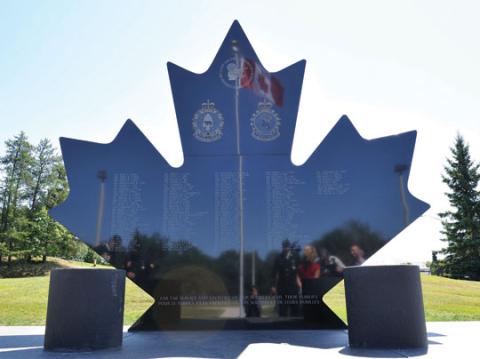
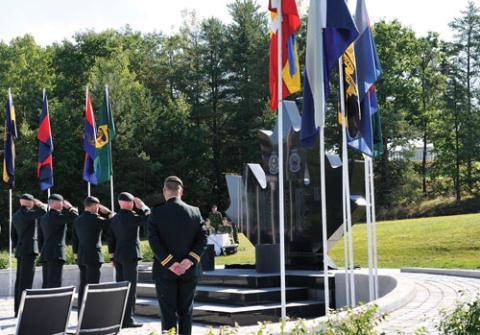
The Afghanistan Memorial Monument, designed by Dr. Mike Crouzat, was unveiled on August 20, 2010. The names of 152 Canadian soldiers killed in Afghanistan are etched into the granite maple leaf.
The Afghanistan Memorial Forest is also located here.
|
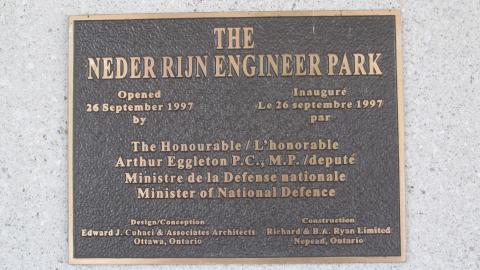
The Neder Rijn Engineer Park |
|
|
Opened 26 September 1997 by |
Inauguré Le 26 septembre 1997 par |
|
The Honourabe / L`honorable Arthur Eggleton P.C., M.P. / député Ministre de la Défence nationale Minister of National Defence |
|
|
Design / Conception Edward J. Cuhaci & Associates Architects Ottawa, Ontario |
Construction Richard & B.A. Ryan Limited Nepean, Ontario |
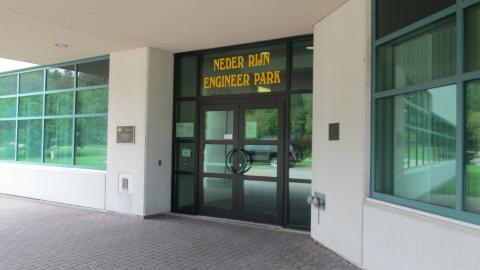
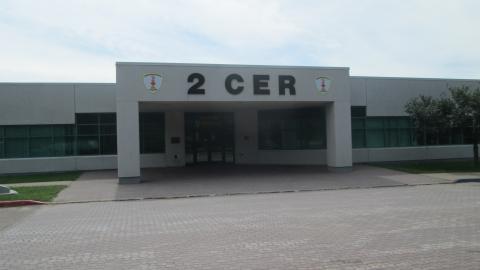
The Neder Rijn Engineer Park building is named for the Neder Rijn River where 23rd Field Company, RCE, evacuated soldiers from the 1st British Airborne Division during the ill-fated capture of the Arnhem Bridge in September 1944.
Allied Forces launched OPERATION MARKET GARDEN on 17 September 1944 with the aim of capturing major bridges at Eindhoven, Nijmegen, Arnhem and points in between. The capture of bridges at Eindhoven and Nijmegen was successful but encountered stiff opposition, delaying the relieving force from reaching Arnhem and the 1st British Airborne Division. With limited elements across the Neder Rijn (Lower Rhine) River at Arnhem, by 21 September the 1st British Airborne Division could no longer hold on and began withdrawing their soldiers across the river. By the night of 25 Sept, a more robust withdrawal plan was put in place- OPERATION BERLIN. Through the efforts of 260 and 553 Field Companies, RE and the 20th and 23rd Field Companies, RCE, close to 2500 soldiers of the 1st British Airborne Division were evacuated by boat, from the far bank of the Neder Rijn River to a landing point near Driel. As the result of their conduct during this operation, Major M.L. Tucker received the Distinguished Service Order, Lieutenant R.J. Kennedy the Military Cross, and Sappers H.D. Thicke, D.J. McCready and R. Lebouthillier received the Military Medal.
[On building]
Caserne Prince Barracks
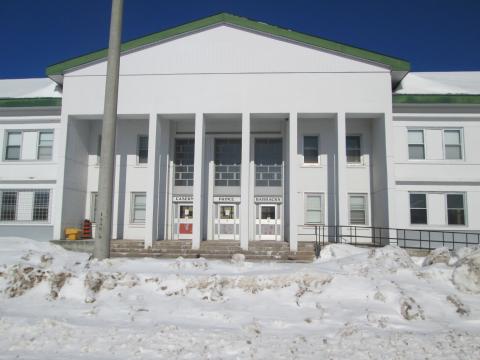
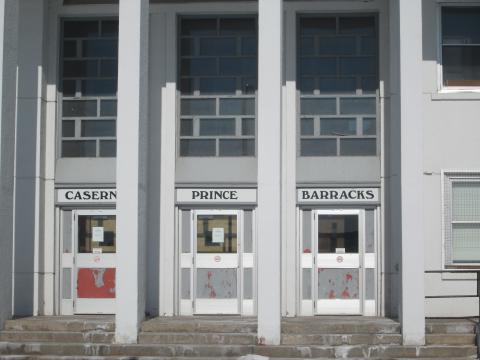
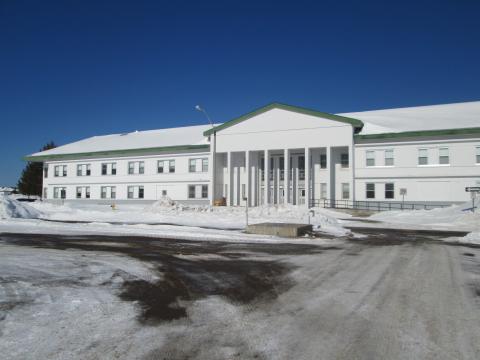
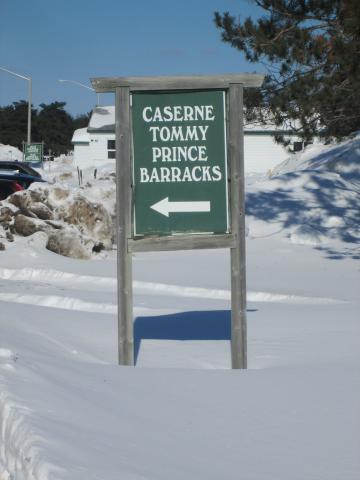
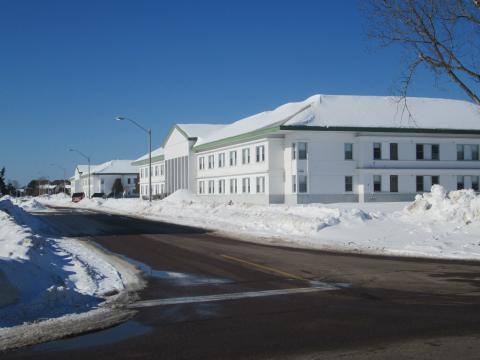
Sergeant Tommy Prince was a prominent Anishinaabe activist who served in the Second World War and Korean War. His story is one of the most widely known examples of the wartime contributions of Indigenous soldiers in the mid-20th century and the poor treatment they received upon their return to civilian life in Canada. His accomplishments attracted national media attention during his lifetime and earned him a great many posthumous tributes.
Prince was born in October 1915 in St. Peter's Reserve, Manitoba. He was the great-grandson of respected Ojibwa Chief Peguis, and one of eleven children born to Elizabeth and Henry Prince. In 1920, they moved to Brokenhead Ojibway Nation in Scanterbury, Manitoba. At age five, Prince was forced to leave his community and attend Elkhorn Residential School, where he joined the Cadet Corps. He suffered from post-traumatic stress disorder from the residential school before he joined the military.
In 1940, he volunteered to fight for Canada in the Second World War. He rose from sapper to lance corporal with the Royal Canadian Engineers before volunteering for the 1st Canadian Parachute Battalion in 1942. Soon after, he was assigned to the elite 1st Canadian Special Service Battalion, which was attached to the First Special Service Force (Devil’s Brigade). He reached the rank of sergeant by war’s end, and was one of three Canadians to receive both the Silver Star (United States) and the Military Medal. King George VI presented him with both honours during a ceremony at Buckingham Palace in 1945, shortly before Prince’s discharge from the army.
He wanted to prove his people were as good as any white man and restore their good name. One way to achieve this was to acquire as many medals as possible and he did so without putting his men at risk. Before any patrols he would ensure they were camouflaged and everything was secured. Often he would patrol alone because there would be less noise. Prince was a natural warrior and he excelled as the military developed the skills he learned on the reserve while living off the land. He loved the Devil's Brigade and was always praising his men, "If it wasn't for my men, I wouldn't be who I am today." He was a caring man who loved to joke around and make people laugh.
He was a prominent leader in the Indigenous rights movement of the 1940s. After the war, he served as spokesperson and vice-president of the Manitoba Indian Association, and appeared on its behalf before a Special Joint Committee of the Senate and House of Commons, tasked with studying the Indian Act. During his testimony in 1947, he advocated for the abolition of the Indian Act and respect for existing treaties, and presented submissions from Indigenous in Manitoba, which called for improved schools, better living conditions, and expanded hunting, trapping, and fishing rights.
In 1950, Prince re-enlisted in the Korean War. He contributed to the defence of Hill 677 in the Battle of Kapyong in 1951, for which the United States awarded the Princess Patricia’s Canadian Light Infantry the Distinguished Unit Citation—the only time a Canadian unit has received this honour. Military service took a heavy toll on his health and, following his honourable discharge from the army, he faced a difficult return to civilian life in Manitoba. Prince endured discrimination, illness, and poverty in the years that followed and died in 1977. He fought many demons after residential school and the horrors of combat, but he never lost his humility, self-worth, sense of humour and pride of being Anishinaabe.
The Prince Barracks in CFB Petawawa are named in his memory.
ROYAL CANADIAN DRAGOONS
SACRED TO THE MEMORY OF
THE OFFICERS OF
THE ROYAL CANADIAN DRAGOONS
WHO LOST THEIR LIVES DURING
THE SOUTH AFRICAN CAMPAIGN
OF 1899, 1900, 1901.
KILLED IN ACTION
Lieut. Harold L. Borden,
Lieut. John E. Burrh,
AT WITPPORT 16TH JULY 1900.
DIED FROM DISEASE
Captain Charles F Harrison,
AT WYNBERG 10TH JUNE 1900.
Captain Charles St Aubin Prarse,
AT PRETPROA 17TH Oct. 1900.
Lieut. F.H. Clifford Suttoh,
ON BAORD ROSLIN CASTLE 6TH JAN. 1901.
THIS TABLET WAS ERECTED BY THE OFFICERS
OF THE REGIMENT.
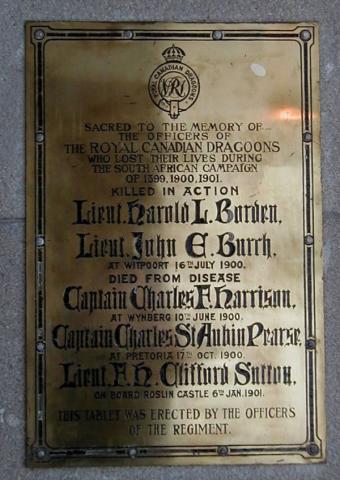
This plaque was erected by officers in memory of the Royal Canadian Dragoons who lost their lives during the South African War.
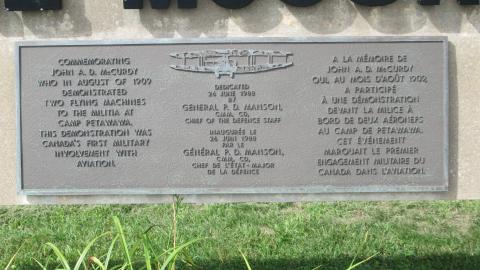
Commemorating John A.D. McCurdy who in August 1909 demonstrated two flying machines to the Militia at Camp Petawawa. This demonstration was Canada’s first military involvement with aviation.
À la mémoire de John A.D. McCurdy qui, au mois d’août 1909, a participé à une démonstration devant la Milice à bord de deux aéronefs au Camp de Petawawa. Cet événement marquait le premier engagement militaire du Canada dans l’aviation.
Dedicated
26 June 1988
by
General P.D. Manson
CMM, CD
Chief of the Defence Staff
Inauguré le
26 juin 1988
par le
Général P.D. Manson
CMM, CD
Chef de l’État-Major
de la Défence
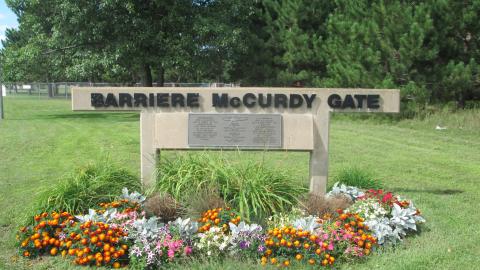
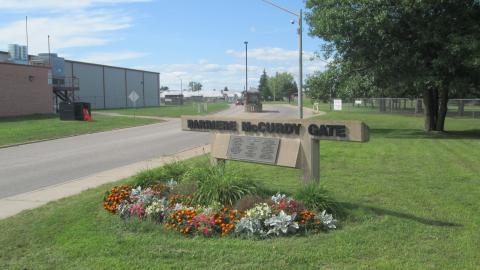
This access gate is named in honour of John Alexander Douglas McCurdy, a former member of 2nd Field Company, Canadian Engineers, and one of the pilots conducting the first military powered aircraft flight in Canada.
John Alexander Douglas McCurdy was born in Baddeck, NS on 2 August 1886. He attended St. Andrew’s College in Aurora, ON and graduated from the University of Toronto in mechanical engineering in 1906. During his studies at U of T, he joined 2nd Field Company, Canadian Engineers, before working with Alexander Graham Bell on the development of powered aircraft. In July-August 1909, he and colleague F.W. Baldwin assembled the Silver Dart and Baddeck I at Camp Petawawa and proceeded to conduct a number of demonstration flights. McCurdy continued his work with Bell’s Aerial Experiment Association and opened Canada’s first aviation school in 1915. He helped create Canadian Aeroplanes Ltd. In 1916, producing planes for the Royal Flying Corps. He continued his involvement in airplane production throughout the inter-war years and the Second World War and in 1947 was appointed the Lieutenant-Governor of Nova Scotia. McCurdy died in 1961, following a lengthy illness, and was buried in his native Baddeck, NS.
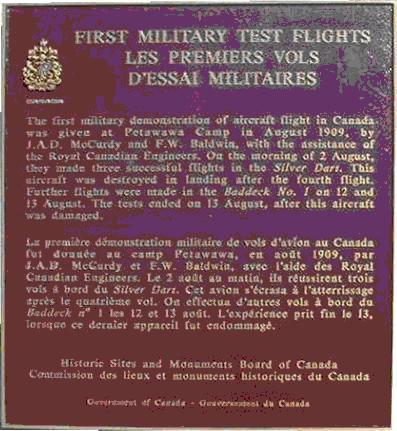
FIRST MILITARY TEST FLIGHTS
LES PREMIERS VOLS
D’ESSAI MILITAIRES
The first military demonstration of aircraft flight in Canada
was given at Petawawa Camp in August 1909, by
J.A.D. McCurdy and F.W. Baldwin, with the assistance of
the Royal Canadian Engineers. On the morning of 2 August,
they made three successful flights in the Silver Dart. This
aircraft was destroyed in landing after the fourth flight.
Further flights were made in the Deddeck No. 1 on 12 and
13 August. The tests ended on 13 August, after this aircraft was damaged.
La première démonstration militaire de vols d’avion au Canada
fut donnée au camp Petawawa, en août 1909, par
J.A.D. McCurdy et F.W. Baldwin, avec l’aide des Royal
Canadian Engineers. Le 2 août au matin, ils réussirent trois
vols a bord du Silver Dart. Cet avion s’ecrass à l’atterrissage
après le quatrième vol. On effectua d’autres vols à bord du
Baddeck n 1 les 12 et 13 août. L’expérience prit fin le 13,
lorsque ce dernier appareil fut endommagé.
Historic Sites and Monuments Board of Canada
Commission des lieux et monuments hisoriques du Canada
Government of Canada – Gouvernement du Canada
The Silver Dart, a monument in CFB Petawawa, is in memory of the first military demonstration of powered aircraft flight in Canada that was given at Camp Petawawa on 2 August 1909 by J.A.D. McCurdy and F.W. Baldwin in the Silver Dart. Both pilots, former members of the 2nd Field Company, Toronto and Engineers of No 8 Engineer Services and Works Company, acted as the ‘ground crew.’
Today, an access gate separating the domestic area from the military part of the Base is called McCurdy Gate to further remember one of the pilots. (Also refer to memorial number 35070-039)
IN HONOUR OF
THE BRAVE MEN AND WOMEN
OF
MURCHISON AND LYELL
TOWNSHIPS
WHO SERVED IN WORLD WAR I
WORLD WAR II
AND THE DOREAN WAR
TO PRESERVE OUR FREEDOM
ROZAK, NEIL
THURSTON, HAROLD
LEST WE FORGET
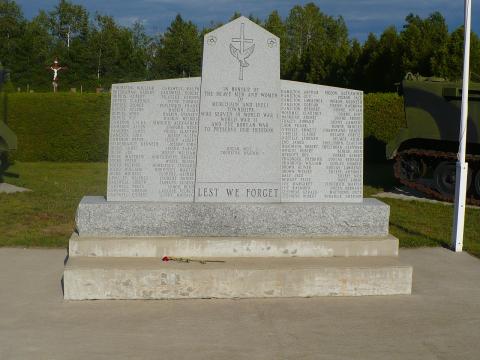
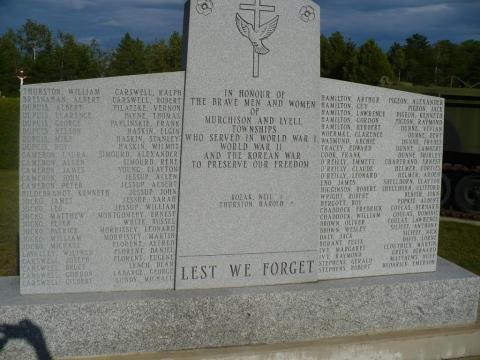
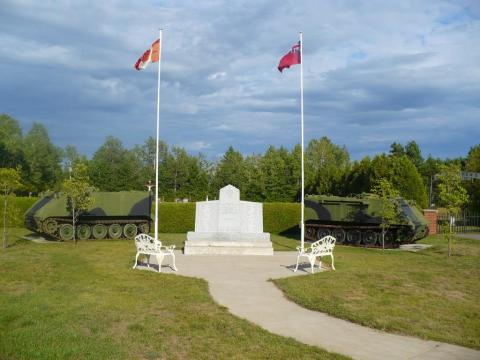
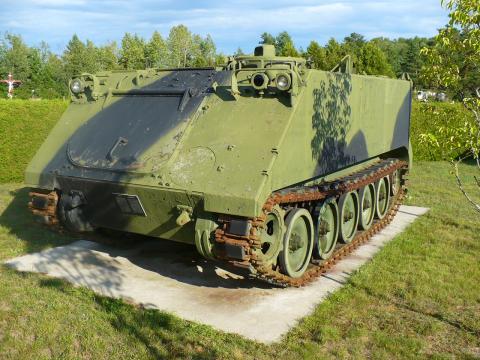
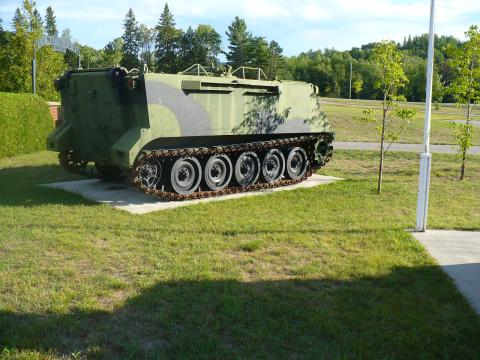
This memorial is dedicated to the brave men and women of Murchison and Lyell Townships who served in the First and Second World Wars and the Korean War. It was unveiled October 8, 2005, by the Murchison and Lyell Cenotaph Committee.
(Badge of the Canadian Legion – British Empire Service League/écusson de la Légion canadienne – Ligue des anciens des armées du Commonwealth britannique)
1914-1918
CHARLES BAILEY
CLEVELAND CRAIG
MILTON CHARBONNEAU
JACK MARTEL
WE WILL
REMEMBER THEM
(Centennial Logo/logo du centenaire)
ERECTED BY
BAGOT
AND
BLYTHFIELD
CENTENNIAL
COMMITTEE
1967
(Badge of the Canadian Legion – British Empire Service League/écusson de la Légion canadienne – Ligue des anciens des armées du Commonwealth britannique)
1939-1945
JOHN ALEXANDER BOX
JOSEPH MILTON
CHARBONNEAU
WILFRID RAYMOND GAGNON
DUNCAN RAY KIPPEN
THOMAS PATRICK MULVIHILL
EARL LLOYD NICOL
HOWARD ALEXANDRA
O’HARE
GORDON KEITH WILLIS
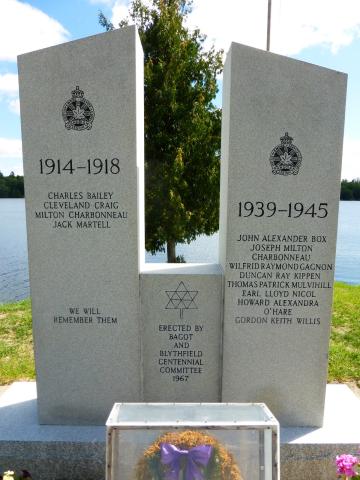
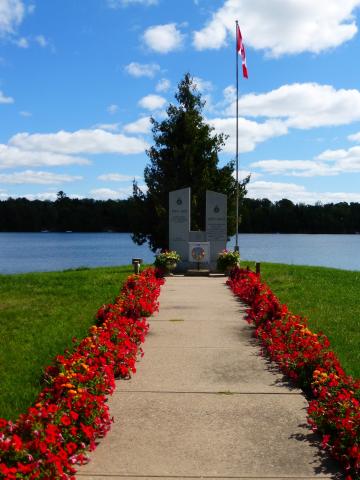
This memorial is dedicated to the locals who died during the First and Second World Wars. It was erected by Bagot and Blythfield Centennial Committee in 1967.
IS IT NOTHING TO ALL YE WHO PASS BY
TO THE UNDYING MEMORY
OF THE
OFFICERS N.C.O'S AND MEN
OF THE
CANADIAN ARMY
WHO AT SOME TIME SERVED
AT PETAWAWA MILITARY CAMP
AND WHO LAID DOWN THEIR
LIVES FOR THEIR COUNTRY IN
THE SECOND WORLD WAR
1939-1945
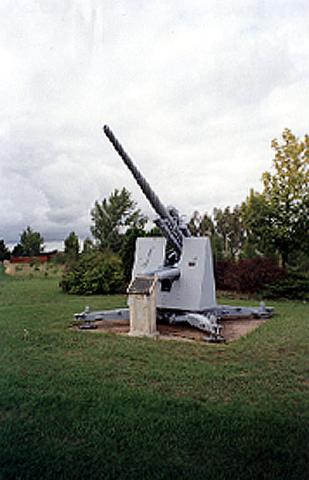
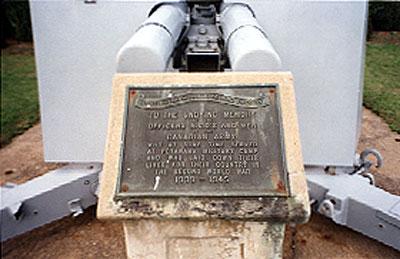
This memorial is dedicated to the Officers, NCO's and men who served at Petawawa Military Camp and died for their country in the Second World War.
TO
SECOND REGIMENT
ROYAL CANADIAN HORSE ARTILLERY
IN APPRECIATION FROM
7TH TORONTO REGIMENT
ROYAL CANADIAN ARTILLERY
needs further research/recherche incomplète
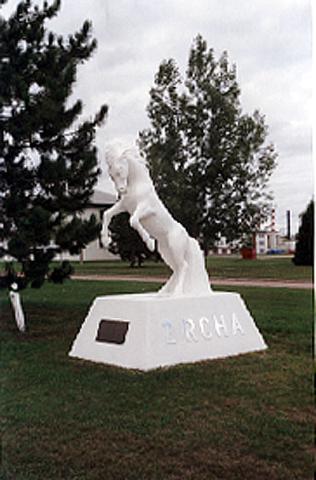
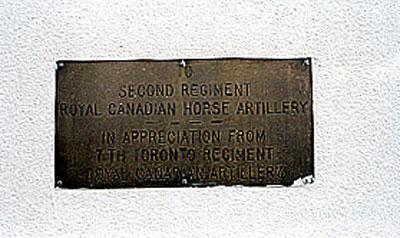
This memorial is dedicated to the 2nd Regiment, Royal Canadian Horse Artillery. It was erected by the 7th Toronto Regiment of the Royal Canadian Artillery.
The painted, concrete horse was installed at Canadian Forces Base Petawawa in 1988 as a symbol of the association of the artillery unit in Petawawa and the artillery unit in Toronto. In 2018, Memorial Restorations restored the memorial and plaque and installed a second plaque.