Needs further research
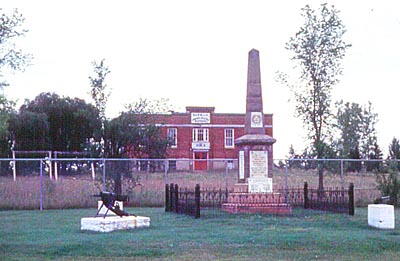
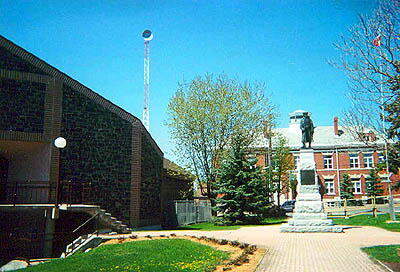
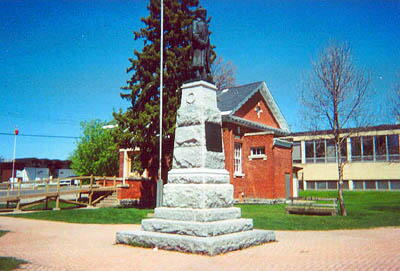
Barwick Cenotaph
Sign in to My VAC Account
Needs further research
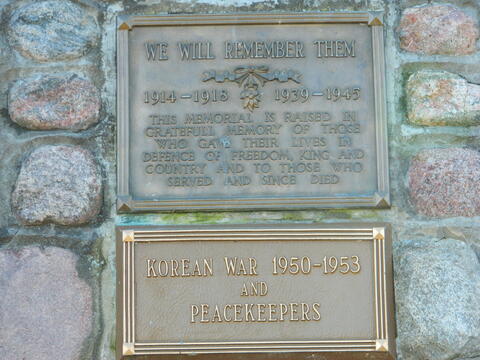
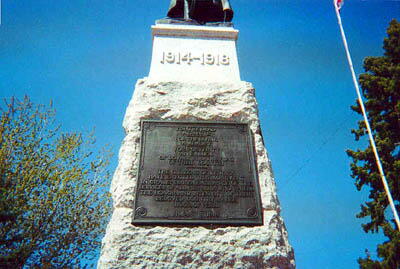
[plaque]
WE WILL REMEMBER THEM
1914 - 1918 1939 - 1945
THIS MEMORIAL IS RAISED IN
GRATEFUL MEMORY OF THOSE
WHO GAVE THEIR LIVES IN
DEFENCE OF FREEDOM, KING AND
COUNTRY AND TO THOSE WHO
SERVED AND SINCE DIED
[plaque]
KOREAN WAR 1950 - 1953
AND
PEACEKEEPERS
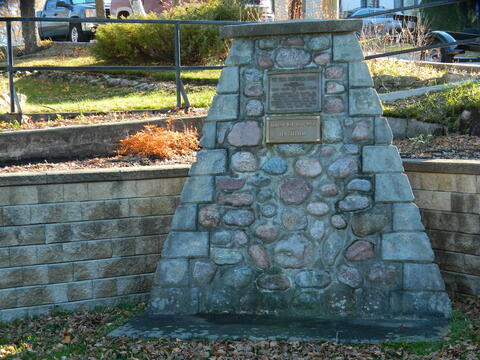
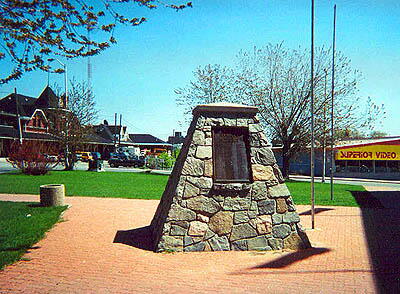
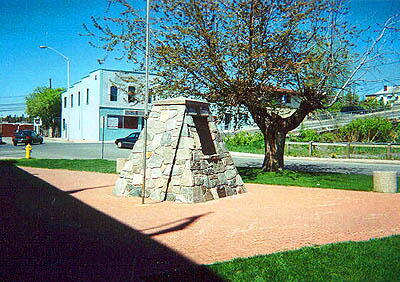
Directly across the street from the Memorial Building is the Keewatin Memorial Cairn. It was dedicated in 1953, by the Great War Veterans, to honour the men from the First and Second World Wars that lost their lives and those that fought, returned and later passed. The Korean War plaque was added later, to give those Veterans, as well as those that served in Peace Keeping Operations, the recognition they deserved.
[front/devant]
1914 - 1918
FOR THE DEAD
A TRIBUTE
FOR THE LIVING
A MEMORY
FOR PROSPERITY
AN EMBLEM
OF LOYALTY TOTHE FLAG
OF THEIR COUNTRY.
THE CITIZENS OF KENORA
HAVE ERECTED THIS MONUMENT
INGRATEFUL REMEMBRANCE OF THE
SERVICES OF ALL HER SONS WHO UPHELD
THE HONOUR AND INTEGRITY OF THEIR
BELOVED COUNTRY INHER HOUR
OF PERIL.
1914 - 1918
[right side/côté droit]
A GRATEFUL TRIBUTE TO THE MEN OF THIS COMMUNITY
WHO GAVE THEIR LIVES IN THE SECOND GREAT WAR.
1939 - 1945
THESE HAVE DIED IN FAITH, NOT HAVING RECEIVED THE PROMISES,
BUT HAVING SEEN THEM AFAR OFF.
HEBREWS XI:13
[back/arrière]
OUR HEROIC DEAD WHO
MADE THE SUPREME SACRIFICE
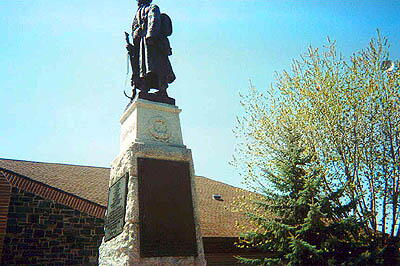
In the spring of 1923, a War Memorial Committee was established in the town of Kenora. Its mandate was a war memorial to commemorate the local people who fought in the First World War and never returned.
By early May, the Committee selected the site of the square in front of the Court House. A fundraising campaign was launched for the latter part of June and into July when the town was thoroughly canvassed. By August of 1923, enough money had been raised to proceed. The Creber Brothers of Toronto were awarded the contract – their design judged the best by the Committee. The 22-feet tall monument was made of Stanstead granite and surmounted by the bronze figure of a soldier created by Toronto sculptor Charles Adamson.
The foundation was installed the fall of 1923 and fundraising continued with such events as “The War Memorial Carnival.” The Committee canvassed the community to ensure that the name of every soldier who fell in the Great War was placed on the cenotaph.
On Sunday, September 7, 1924, the unveiling address was delivered by Lieutenant-Colonel H.A.C. Machin, commanding officer of the 94th overseas battalion, followed by a prayer of consecration by Reverend E. Diamond and an address by Captain the Reverend A.J. Labonte, military chaplain overseas. The cenotaph was unveiled by Mrs. E. Mills, Mrs. John Bull, and Mrs. J.A. Horan – the wives or mothers of three of the 96 Kenora men who are commemorated on the cenotaph. Nearly 4,000 people attended the unveiling, an impressive showing considering the population of the town was about 7,500 in 1924.
Following the Second World War, the names of those who never returned from that war were added to the cenotaph.
[front/devant]
LEST WE
FORGET
WORLD WAR I
1914 - 1918
[A list of 96 names follows, but the wording is not clear in the photo./Une liste de 96 noms suit, mais le texte n’est pas clair sur la photo.]
[rear/arrière]
LEST WE
FORGET
WORLD WAR II
1939 - 1945
[A list of 80 names follows, but the wording is not clear in the photo./Une liste de 80 noms suit, mais le texte n’est pas clair sur la photo.]
This memorial is dedicated to the veterans of the First and Second World Wars.
[front/devant]
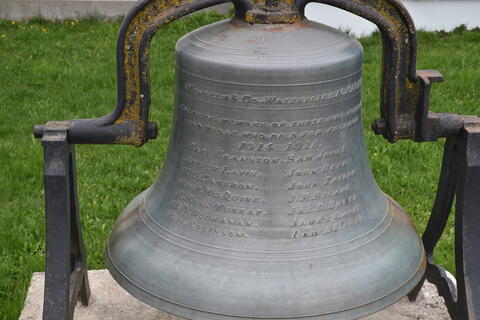
MENEELY & CO., WATERVLIET, N.Y. 1919
IN LOVING MEMORY OF THOSE WHO FOUGHT
AND THOSE WHO DIED FOR FREEDOM
1914 1918
[back/arrière]
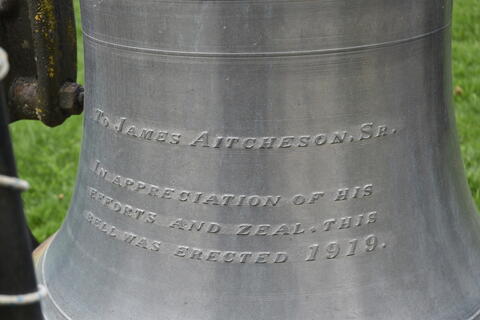
TO JAMES AITCHESON, SR.
IN APPRECIATION OF HIS
EFFORTS AND ZEAL, THIS
BELL WAS ERECTED 1919.
After the demolition of the St. Helens United Church in 1978, a bell with the names of men who had fought and died in the Great War was placed beside the West Wawanosh Soldiers’ Monument.
[front/devant]
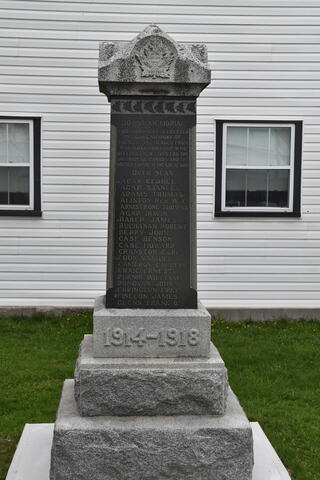
JOYNT MEMORIAL
THIS MONUMENT IS ERECTED
IN LOVING MEMORY OF
THE GALLANT HEROES FROM
WAWANOSH TOWNSHIP WHO
OFFERED THEIR LIVES FOR THE
DOMINION OF CANADA AND THE
BRITISH EMPIRE IN THE GREAT WAR
OVERSEAS
*AGAR GEORGE
AGAR STANLEY
ADAMS THOMAS
ALISTON REV. W.C.
ARMSTRONG THOMAS
AGAR IRWIN
*BAKER JAMES
BUCHANAN ROBERT
BERRY JOHN
CASE BENSON
CASE HOWARD
CRANSTON EARL
*COOK SAMUEL
CAMERON CALLUM
CRAIG ERNEST
DURNIN WILLIAM
DONOVAN JOHN
*ERRINGTON FRED
*FINELON JAMES
GLENN FRANK O.
1914 - 1918
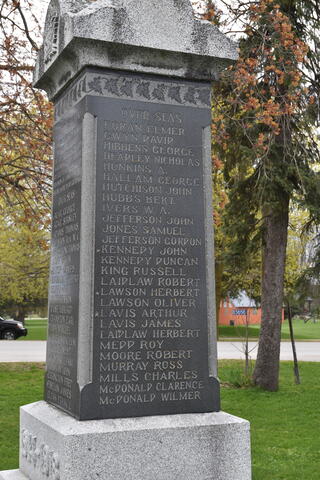
[right side/côté droit]
OVERSEAS
FORAN ELMER
GWYN DAVID
HIBBENS GEORGE
HEADLEY NICHOLAS
HUNKINS A.
HALLAM GEORGE
HUTCHINSON JOHN
HUBBS BERT
IVERS W.A.
JEFFERSON JOHN
JONES SAMUEL
JEFFERSON GORDON
*KENNEDY JOHN
KENNEDY DUNCAN
KING RUSSELL
LAIDLAW ROBERT
*LAWSON HERBERT
LAWSON OLIVER
*LAVIS ARTHUR
LAVIS JAMES
LAIDLAW HERBERT
MEDD ROY
MOORE ROBERT
MURRAY ROSS
MILLS CHARLES
McDONALD CLARENCE
McDONALD WILMER
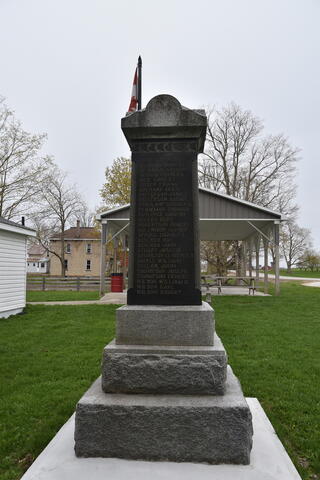
[back/arrière]
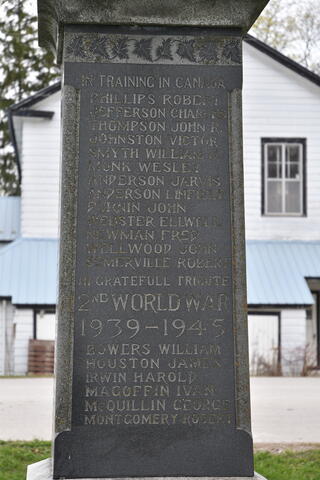
IN TRAINING IN CANADA
PHILLIPS ROBERT
JEFFERSON CHARLES
THOMPSON JOHN R.
JOHNSTON VICTOR
SMYTH WILLIAM J.
MONK WESLEY
ANDERSON JARVIS
ANDERSON LINFIELD
DURNIN JOHN
WEBSTER ELLWELL
NEWMAN FRED
WELLWOOD JOHN
SOMERVILLE ROBERT
IN GRATEFUL TRIBUTE
2ND WORLD WAR
1939 - 1945
BOWERS WILLIAM
HOUSTON JAMES
IRWIN HAROLD
MAGOFFIN IVAN
McQUILLAN GEORGE
MONTGOMERY ROBERT
[left side/côté gauche]
OVERSEAS
McGUIRE ROBERT
NEWMAN ARTHUR
NEVINS CHARLES
NEIL ERNEST
ORSER FRANK
ORCHARD CECIL
PATTERSON JAMES
PATTERSON ARCHIE
PENTLAND HAROLD G.
PLOWMAN THOMAS
RUTLEDGE GORDON
RIVERS BERT
ROBERTSON ROBERTS
ROLLINSON ALFRED
SPROUL HAROLD L.
STALKER ROY
STALKER JOHN
STUART JOSEPH
SYMINGTON CLARENCE H.
SMYLE WILLIAM
TAYLOR JOHN
THOMPSON JOSEPH
THOMPSON ERNEST
WILSON WILLIAM H.
WILSON EARL
WILSON ROBERT
John Joynt was born in Mayo County, Ireland in November 1854 to John and Ellen Joynt. The family immigrated to Canada about 1865 and after initially settling in Durham County, the Joynt family moved to West Wawanosh. By 1919, John was elected to the provincial legislature as the Conservative member in North Huron, owned 1,400 acres of land and was one of the most prosperous men in the county. Too old to serve in the First World War and having only daughters, he wanted to do something for those that went overseas. He spent the then-considerable sum of $5,000 on a monument to honour those from West Wawanosh who served in the Great War. The Joynt War Memorial, also known as the West Wawanosh Soldiers’ Monument, was the only cenotaph in Huron County paid for entirely by a private individual.
In 1922, Johan donated land and moved the St. Helens community center to the northeast corner of the crossroads where he intended to place the war memorial. On May 24, 1923, Lieutenant-Colonel H.B. Combe, former commander of the 161st Huron Battalion, drew back the Union Jack and unveiled the monument. Seven girls placed bouquets on the monument for each West Wawanosh soldier who fell in battle. Between 3,000 and 4,000 people gathered for the unveiling ceremony. It was the largest gathering ever held before or since at St. Helens. The Women’s Institute purchased 600 loaves of bread and provided sandwiches and lemonade for everyone.
After the Second World War, six names were added to the monument.
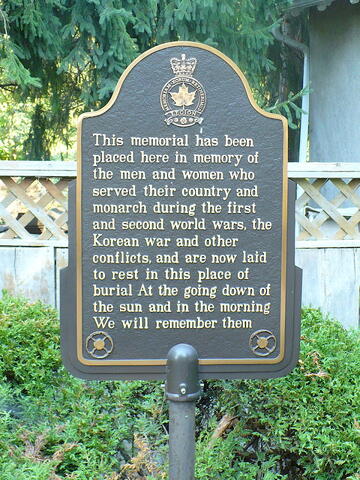
This memorial has been
placed here in memory of
the men and women who
served their country and
monarch during the first
and second world wars, the
Korean war and other
conflicts, and are now laid
to rest in this place of
burial At the going down of
the sun and in the morning
We will remember them
This Service Plaque was erected by the local legion in in memory of the men and women who served their country and monarch during the First and Second World Wars, the Korean War and other conflicts.
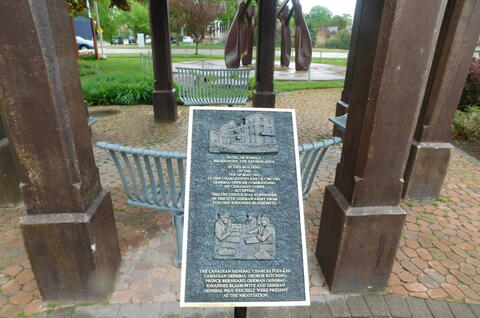
HOTEL DE WERELD
WAGENINGEN THE NETHERLANDS
IN THIS BUILDING
ON THE
5TH MAY, 1945
LT GEN CHARLES FOULKES, CB, CBE, DSO
GENERAL OFFICER COMMANDING
1ST CANADIAN CORPS
ACCEPTED
THE UNCONDITIONAL SURRENDER
OF THE 25TH GERMAN ARMY FROM
COL GEN JOHANNES BLASKOWITZ
THE CANADIAN GENERAL CHARLES FOULKES,
CANADIAN GENERAL GEORGE KITCHING,
PRINCE BERNHARD, GERMAN GENERAL
JOHANNES BLASKOWITZ AND GERMAN
GENERAL PAUL REICHELT WERE PRESENT
AT THE NEGOTIATION.
Princess Margriet of the Netherlands unveiled the Surrender at Wageningen Plaque on May 14, 2017, and signed a scroll of gratitude expressed for the Canadian sacrifice in the Liberation of the Netherlands.
On 4 May 1945, Field Marshal Bernard Montgomery accepted the official surrender of the German Army in North-West Europe at his headquarters. Then, on 5 May 1945, Lieutenant-General Charles Foulkes, Commander of the First Canadian Army, drew up a separate surrender document and summoned German General Blaskowitz to the Hotel de Wereld in Wageningen to sign it.
Initially, Blaskowitz sent his chief of staff, Lieutenant-General Reichelt, but he was told Blaskowitz had to come himself. At four o'clock that afternoon, Blaskowitz came to the hotel. Prince Bernhard, acting as commander-in-chief of the Dutch Interior Forces was present, along with a large number of reporters and cameramen.
A detailed document of surrender was presented to Blaskowitz who asked for 24 hours to sign the document to asses if he could meet all of the demands. Blaskowitz returned the next day and signed the official surrender of all German Forces in the Netherlands. After five years of occupation the country was free. Wageningen calls itself ‘City of Liberation’ and every year on May 4/5, the city commemorates the Second World War and celebrates freedom.
In 2005, the 60th anniversary of the liberation of Holland, a pavilion was erected and unveiled in Liberation Memorial Park. There was a large parade and celebration which included approximately 460 Veterans and caregivers. The pavilion commemorates the 60th anniversary of the liberation of Holland by their friends and heroes the Canadian soldiers. It represents the four corners of Holland by its distinctively different gable ends.
LIBERATION
MEMORIAL PARK
Liberation Memorial Park was developed in 1907 on the occasion of the 25th anniversary of the Liberation of the Netherlands. The park has been a place of celebration of freedom for Dutch Canadian's in Huron County. This is where Princess Margriet of the Netherlands unveiled a plaque on May 14, 2017, and signed a scroll of gratitude expressed for the Canadian sacrifice in the Liberation of the Netherlands where 20 Huron County men gave their lives.
The park was donated by the Dutch immigrants, who settled in this area in the 1950s, as a tribute to the role Canadian soldiers played in the liberation of Holland during the Second World War. The Liberation of the Netherlands Fountain and Liberation of Holland Pavilion are located in the park.