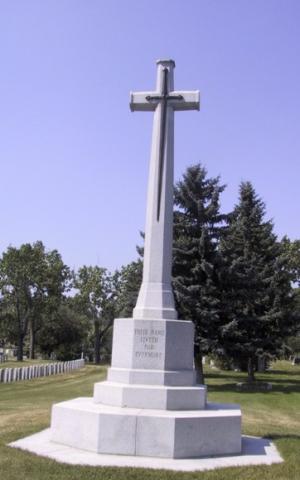
This cross with a sword mounted on it is located in the centre of the veterans section of the Burnsland Cemetery.
Burnsland Cemetery Veterans' Memorial Cross
[front/devant]
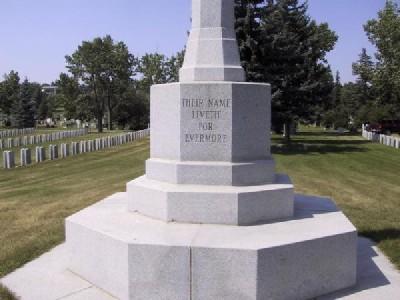
THEIR NAME
LIVETH
FOR
EVERMORE
My VAC Account
My VAC Account[front/devant]
THEIR NAME
LIVETH
FOR
EVERMORE
This cross with a sword mounted on it is located in the centre of the veterans section of the Burnsland Cemetery.
[front/devant]
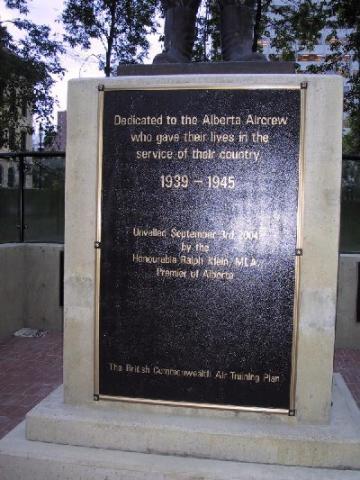
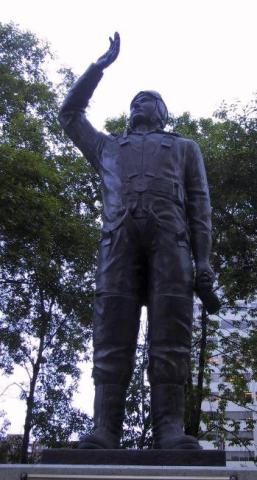
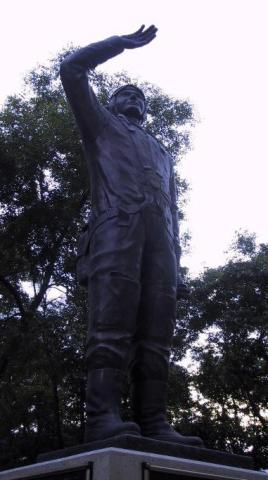
Dedicated to the Alberta Aircrew
who gave their lives in the
service of their country.
1939-1945
Unveiled September 3r, 2004,
by the
Honourable Ralph Klein, MLA.
Premier of Alberta
The British Commonwealth Air Training Plan
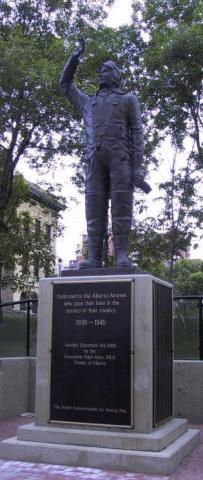
This memorial is dedicated to the more the 1600 Alberta air crew who lost their lives in the Second World War. The monument was based on a model by Calgary artist Andrew Hulbert and sculpted by Don and Shirley Begg. It was unveiled 3 September 2004.
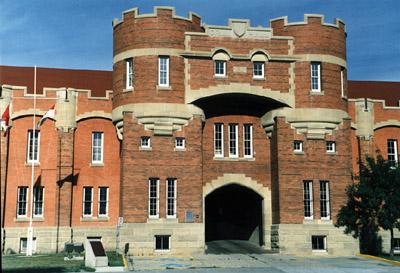
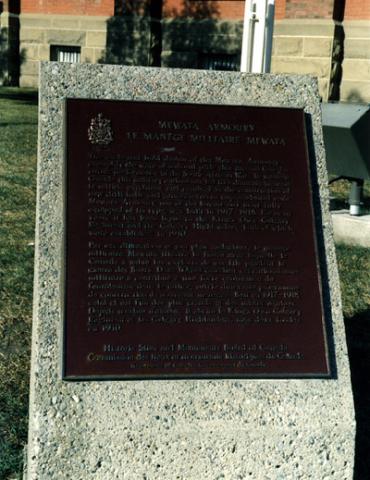
MEWATA ARMOURY
LE MANÈGE MILITAIRE MEWATA
The seale and bold design of the Mewata Armoury
exemplify the wave of national pride that greeted Canada’s
strong performance in the South African War. In western
Canada this military enthusiasm led to a dramatic increase
in militia enrolment and resulted in the construction of
new drill halls and armouries on an unprecedented scale.
Mewata Armoury, one of the largest and most fully
equipped of its type, was built in 1917-1918. For many
years it has been home to the King’s Own Calgary
Regiment and the Calgary Highlanders, both of which
were established in 1910.
Par ses dimensions et son plan audacieux, le manège
militaire Mewata illustre la fierté avec laquelle le
Canada a salué les exploits de ses fils pendant la
guerre des Boers. Dans l’Ouest canadien, cet enthousiasme
militaire a contribué à une forte croissance de
l’enrôlement dans la milice, suivie d’un vaste programme
de construction de nouveaux manèges. Bâti en 1917-1918,
celui-ci est l’un de plus grands et des mieux équipés.
Depuis nombre d’années, il abrite le King’s Own Calgary
Regiment et les Calgary Highlanders, tous deux fondés
en 1910.
Historic Sites and Monuments Board of Canada
Commission des lieux et monuments historiques du Canada
Government of Canada - Gouvernement du Canada
This memorial is dedicated to the increase in militia enrolment and the resulting construction of the Mewata Armoury as well as other armouries and drill halls.
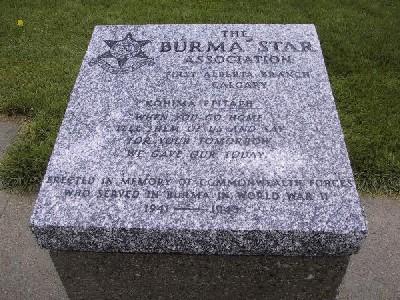
THE
BURMA STAR
ASSOCIATION
FIRST ALBERTA BRANCH
CALGARY
KOHIMA EPITATH
"WHEN YOU GO HOME
TELL THEM OF US AND SAY
FOR YOUR TOMORROW
WE GAVE OUR TODAY."
ERECTED IN MEMORY OF COMMONWEALTH FORCES
WHO SERVED IN BURMA IN WORLD WAR II
1941 - 1945
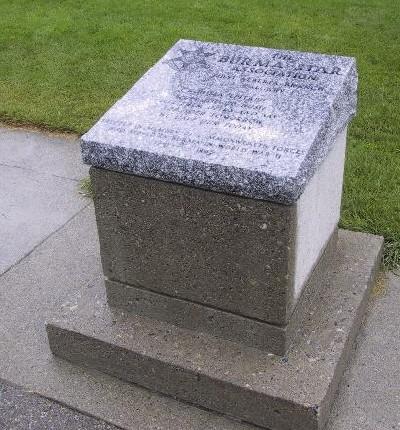
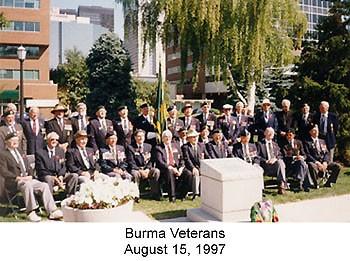
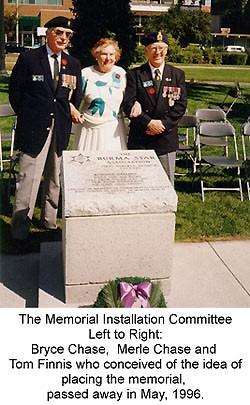
Unveiled by the First Alberta Branch, The Burma Star Association, on 15 August 1996, this memorial is dedicated to those who served with the Commonwealth Forces in Burma during the Second World War.
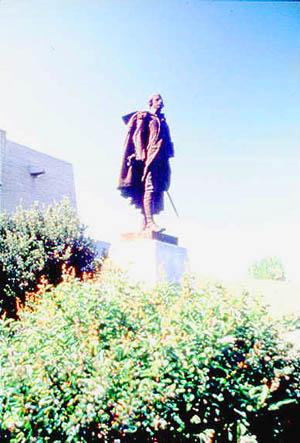
This memorial statue of General Wolfe was erected in 1898.
[front/devant]
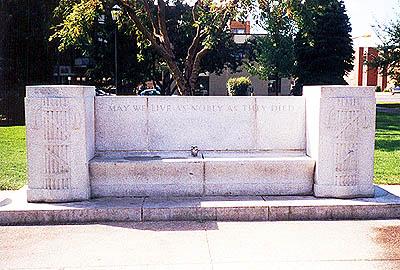
MAY WE LIVE AS NOBLY AS THEY DIED
This memorial, erected by the citizens of Calgary, is dedicated to the local war dead of the First World War and the Korean War.
[front/devant]
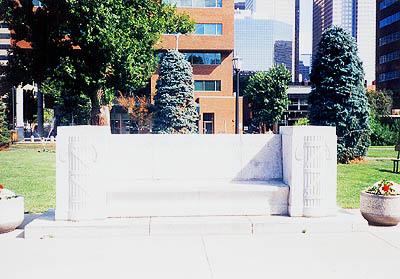
PASS NOT IN SORROW BUT WITH PRIDE
This memorial, erected by the citizens of Calgary, is dedicated to the local war dead of the First World War and the Korean War.
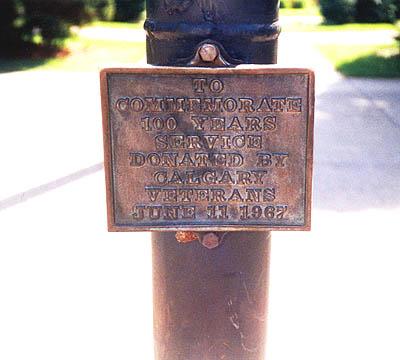
[plaque]
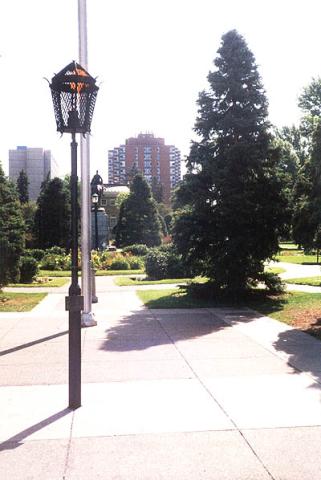
TO COMMEMORATE 100 YEARS SERVICE DONATED BY CALGARY VETERANS JUNE 11 1967
This flame was erected by Calgary veterans on 11 June 1967 in honour of one hundred years of military service.
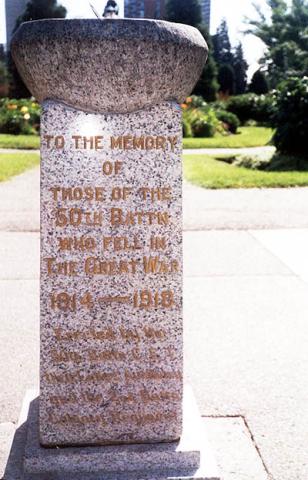
TO THE MEMORY
OF
THOSE OF THE
50TH BATTN.
WHO FELL IN
THE GREAT WAR
1914 — 1918
Erected by the
50th Battn. C.E.F.,
their Ladies' Auxiliary
and the 2nd Battn.
Calgary Regiment
The 50th Battalion Fountain was erected in 1930 to honour those of the 50th Battalion, Canadian Expeditionary Force, who died during the First World War. It was erected by the battalion, its Ladies' Auxiliary and the 2nd Battalion, The Calgary Regiment.
The 50th Battalion, which was authorized on 7 November 1914 as the 50th Battalion, Canadian Expeditionary Force, embarked for Britain on 27 October 1915. The battalion disembarked in France on 11 August 1916, where it fought as part of the 10th Canadian Infantry Brigade, 4th Canadian Division in France and Flanders until the end of the war. The battalion was disbanded on 30 August 1920.
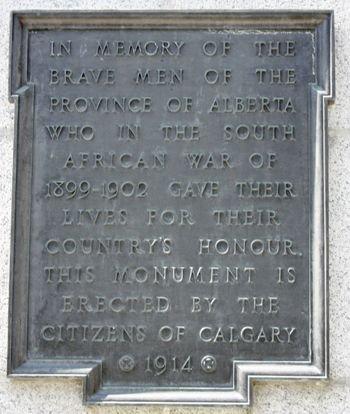
IN MEMORY OF THE
BRAVE MEN OF THE
PROVINCE OF ALBERTA
WHO IN THE SOUTH
AFRICAN WAR OF
1899-1902 GAVE THEIR
LIVES FOR THEIR
COUNTRY'S HONOUR.
THIS MONUMENT IS
ERECTED BY THE
CITIZENS OF CALGARY
1914
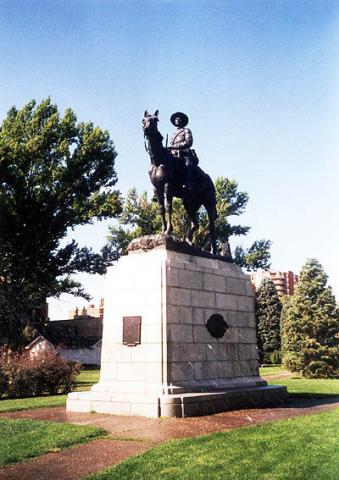
The South African War Memorial was unveiled on June 20, 1914. Only Veterans and their families were allowed in the park, while non-military citizens packed the streets. Boy scouts, fire fighters, and cadets were mobilized to guard the flower beds at the park. The memorial was unveiled by the District Officer Commander Colonel Cruickshank. R.B. Bennett, KC, MP, addressed the crowd.
In 1909, a man was found on the outskirts of city, frozen to death. The only documentation found on him were papers identifying him as a Veteran of the South African War, having been discharged from the Lord Strathcona’s Horse Regiment. The Veterans of Calgary raised funds and provided the man with a proper soldier's funeral and burial.
Word of the soldier's death reached his family in England and they insisted the Veterans be reimbursed the cost of the funeral. When the money arrived, the Veterans decided that it was more important that the memories of their brethren be remembered, and so the reimbursed funeral expenses became the beginning of a fundraising campaign to build a memorial to the fallen of the South African War.
A committee was formed with representatives from the Western Veterans Association, the Canadian Club, Imperial Order of the Daughters of the Empire, and the City of Calgary. In 1911, the committee approached the world famous French-Canadian sculptor Louis-Phippe Hebert in 1911 to design a memorial.
Hebert himself decided that the Central Memorial Park site was the best location for the statue. He went to great lengths to ensure the accuracy of his first and only equestrian monument. Hebert had a genuine Calgary Quarter Horse sent by train to his Montreal studio and came to Calgary periodically to study the Calgary Horses in their natural environment.
Hebert requested a “typical Canadian army man type” to be sent to him from the Canadian Army, but was given a new recruit fresh off the boat from the United Kingdom instead of an Albertan soldier. Captain Thomas Henry Johnson posed for the statue. When Hebert came to Calgary to make the final arrangements for the monument, he decided to take the opportunity to see “the western horse in its own setting” and make a few alterations to the horse and rider. Hebert had Eneas McCormick dress as a South African War soldier to model for the piece.
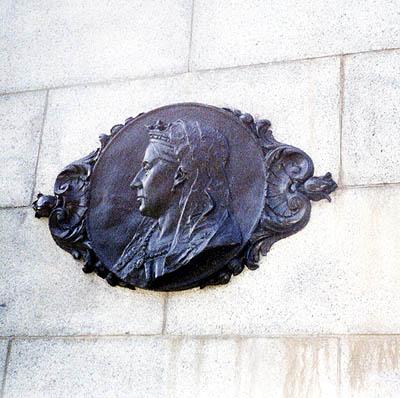
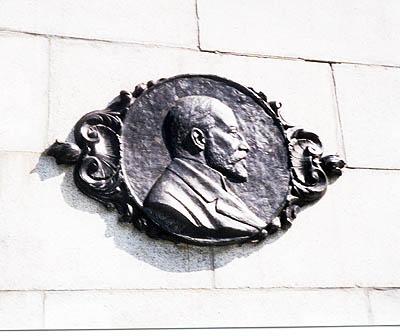
On the left side is a bronze plate with King Edward VII's profile and on the right side is a bronze plate with a profile of Queen Victoria. The memorial was completed in 1914. It was the last major piece of artwork Louis-Phippe Hebert completed and the only equestrian statue he ever made.