
Order of events
1 September 1939
Germany invades Poland, setting off fighting in Europe
3 September 1939
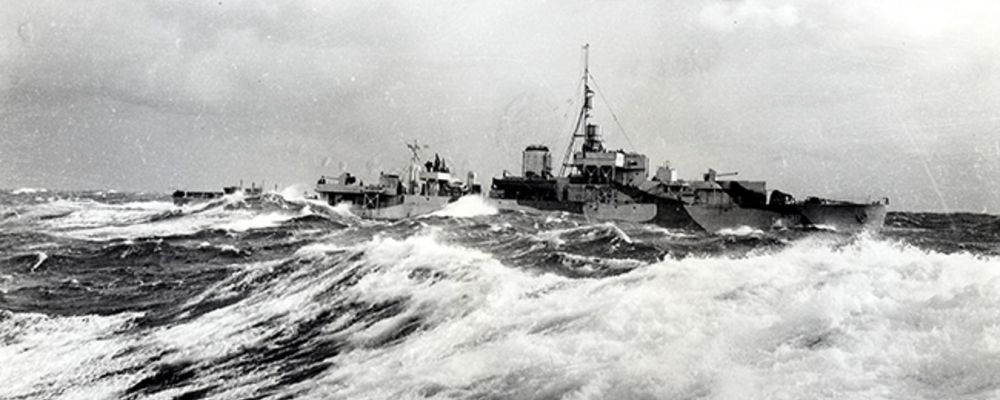
Britain enters Second World War and the Battle of the Atlantic begins
10 September 1939
Canada officially enters the Second World War
19 August 1942
Canadians take part in the Dieppe Raid
10 July 1943
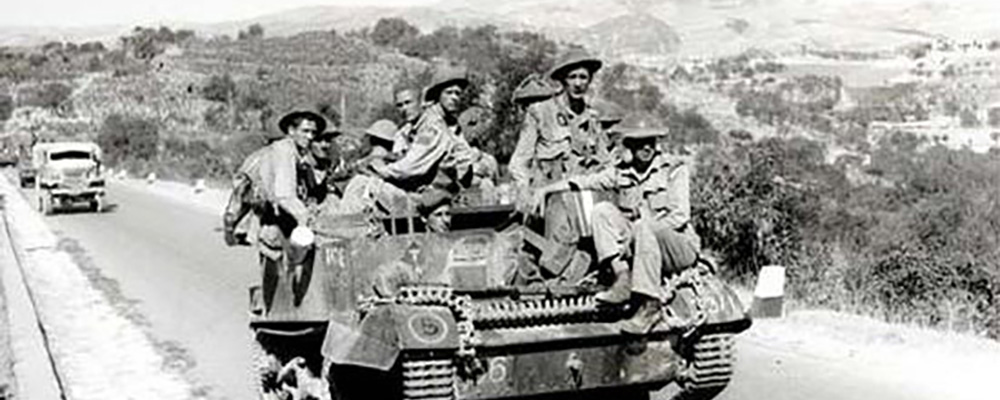
Allied forces come ashore in Sicily
6 June 1944
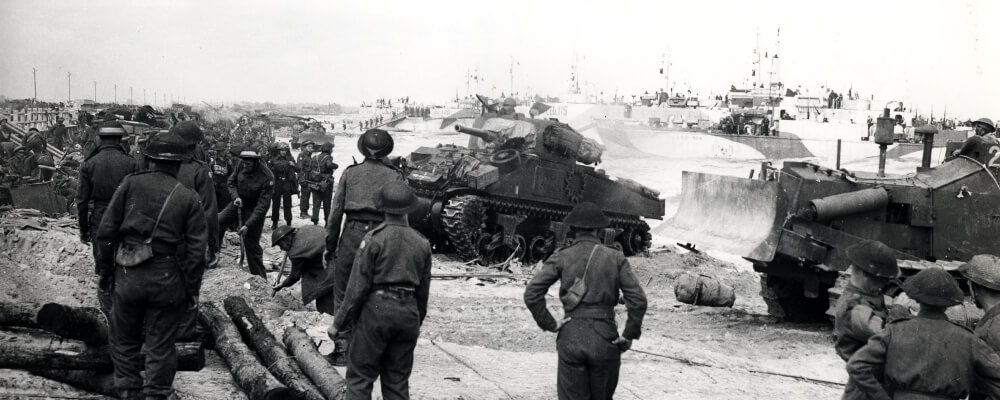
Allied forces come ashore in Normandy on D-Day
5 May 1945
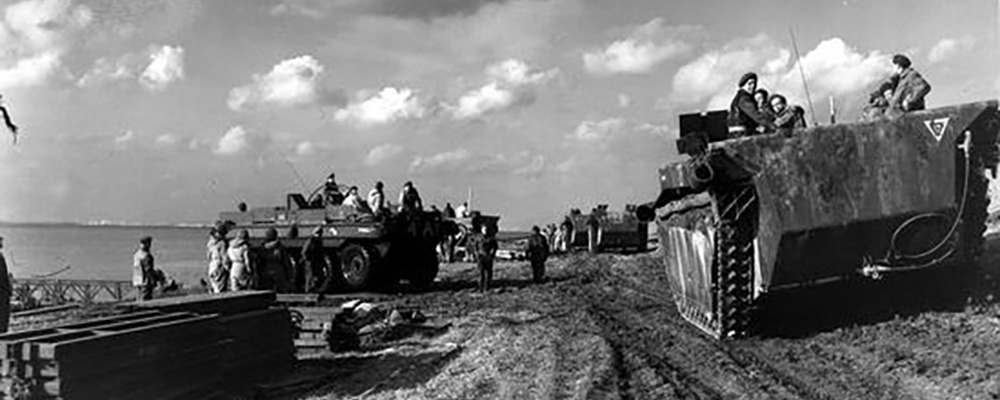
Canadians complete liberation of the Netherlands
8 May 1945
V-E Day: Official end of the Second World War in Europe
15 August 1945
V-J Day: Official end of the Second World War
Second World War
1939 – 1945
Read more about the Second World War

Second World War Tribute Program
The Second World War Tribute program honours the sacrifices and achievements of Canada's Second World War Veterans.
Canada responds
The Second World War was a total war involving most elements of society. Canadians contributed in many ways, fighting overseas, defending the country at home, and producing the weapons of war and food for Allied nations. With massive financial support and incredible exertions demanded of most Canadians, few were left untouched by the war.
Learn more about these efforts in Canada:
Two fronts
During the Second World War, Canadians defended the east and the west coasts and fought in a series of long and difficult campaigns around the world—on land, at sea and in the air—to defeat the German, Italian and Japanese forces.
Learn more about the contributions and sacrifices Canadians made throughout the war:

Members of the first contingent of the Canadian Women's Army Corps (C.W.A.C.) entering Hamm, Germany, 12 June 1945. Library and Archives – 3396484.
Aftermath
More than 1.1 million Canadian men and women served in the armed forces. The home front was largely directed to winning the war.
Canada contributed significantly to the Allied victory. Revelations of the Nazi atrocities and the Holocaust shocked the world. The war also led to the decolonization of empires, the creation of the United Nations, and what became known as the “Cold War” between the United States and the Soviet Union, and their respective allies.
Canada was fundamentally transformed by the war. More than a million veterans came home and would help lead Canada into its very prosperous second half of the twentieth century.
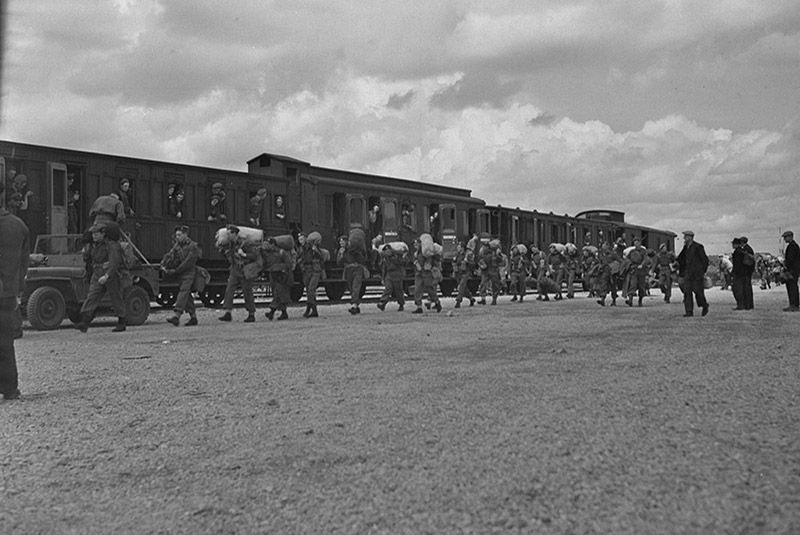
Canadian troops from various services embarking on train for return to England and eventual repatriation to Canada. Library and Archives - 3204016.
Transcription
The Second World War was a pivotal chapter in our country’s history. More than one million Canadian men and women would serve in uniform during this bitter conflict that raged on land, at sea and in the air from September 1939 to August 1945.
From fighting on the battlefields to supporting the war effort on the home front, Canada stood strong alongside our allies to help defend peace and freedom.
This Veterans’ Week, we honour the countless ordinary Canadians who stepped forward to do their part during the Second World War and did extraordinary things.
It was a school picnic on the 28th of June and four of us, or three of us really, decided we would join the army. I don’t know why and we thought we could go over to Germany and finish that war off on the first day, you know, so we joined the army.
I was playing at Royal Athletic Park one Saturday afternoon and a man came up to me after the game and he said, “How would you like to join the army?” Of course, that was 1935, the hungry thirties and there was no work, of course, and people just lazed around or looked for, if they could paint boats for a day and that would be about it. So I was sixteen at the time and he said, “Well, you have to be eighteen. Never mind, we’ll get around that.” So as it turned out by the time they got the wheels in motion I was seventeen years and three days when I joined the Patricia’s.
War took over everything in our lives, everything was on hold until the war was over. It just seemed to go on and on and on. Interviewer: Tell me about that, war took over your lives, in what way? Well you didn't make any plans for the future.
Today is Victory in Europe Day. Long live the cause of freedom. God save the King.
And the order we heard on the guns, we’d never heard since D-Day. “Cease fire, empty guns.” The war was over. Interviewer: It meant a lot to you then and it still means something to you now. Yep, we sat there and laid there in bed. We didn’t get up. Nobody said nothing, just laid there. Got up and had breakfast and walked around talked to him. So we took off up to the Regina Rifles, the Winnipegs and then we had a few words with them up there. There was no loud cheering. Interviewer: But it was over, you survived. I survived and, thank God, but then you sit back and remember, a lot of guys that didn’t.
First thing you know they told us the war was ended. Holy whiskers, and me and a guy another guy, his name was Gerald Frank Harrow, he and I were buddies. He was my co-driver. We were on duty, in fact, at the petrol dump. They used to issue us cigars. Those little short plump cigars; so him and I was, we would smoke one of those and talking and then when we heard the war was ended, oh jee whiz we thought that was something. So we had all the liquor so we said, "Let's go celebrate!"
It was a great feeling. They broke out a little bottle of something or other and passed it around, I believe, used to call it rations. That was passed around and we had a singsong and we had a pretty nice time. I, of course, had a guitar with me and it was a great night, a great night.
We were right there. We went right into Oslo, the piper on the bridge, the skirling, and the men lined up and we were there. We could stand outside on the deck, and we saw the excitement of a city relieved after the war, after a terrible time.
The Americans had devastated Japan but still they wouldn't surrender until the bomb was dropped. And we knew they wouldn't surrender. They had never surrendered anywhere else. But the bomb saved us. And it saved millions of Japanese civilians as well.
On VJ Day, I was lucky enough, the phone from Ottawa to Washington was posted at our, our headquarters and I was lucky enough to man it for an hour or so, which is historical for me, and then Mackenzie King came in and received the news from Washington, talked to Washington, and the Prime Minister, Mackenzie King came in and received the news that, that, not from me but from Washington, that the, that the war was over. Then, the ticker tape flew out the windows. We were deprived. We could throw nothing out. And the people flooded the streets and ticker tape was coming out of every window everywhere. Cases were just flying.
What was your reaction when you realized it was over? I don't know that I, I think because of the circumstances over that period of time, emotions were very difficult to, they never showed. I think that, you just took everything - the good things and the bad things, sort of in your stride. You didn't know how to handle it. And I know that I had great trouble after getting home to even appreciate humour, and I don't know, it just, it just took a long time to recover from that mental circumstance.
75 years ago the bloodiest conflict in human history finally ended. The Second World War had a huge impact on Canada, transforming both our society and our place in the world as an important member of the international community.
But the contributions our country made to help achieve victory came at a steep price – more than 45,000 Canadians lost their lives and over 55,000 were wounded.
To all those who served and sacrificed during the Second World War, we will always be grateful. We will remember.
We owe them a debt we can never repay. But we will remember them. Lest we forget.

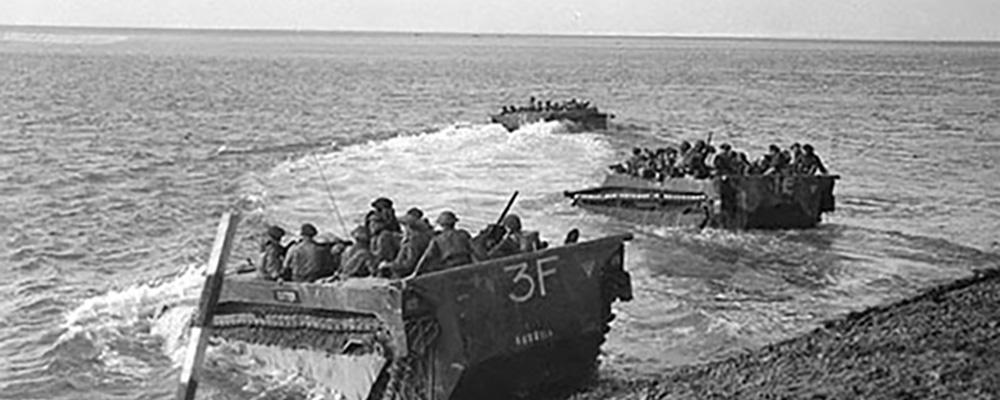
Related Memorials
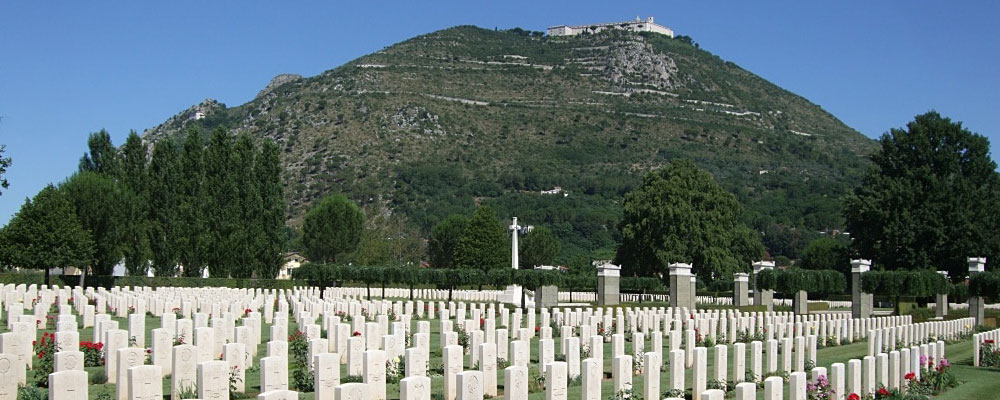
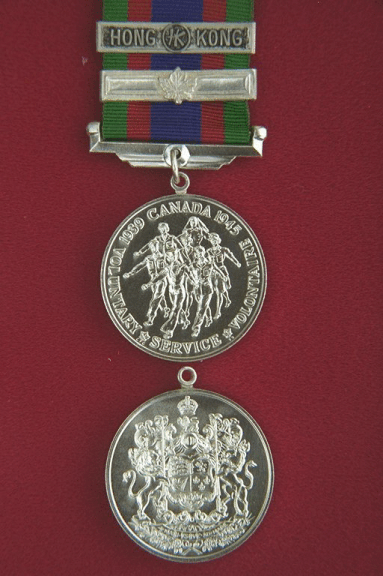
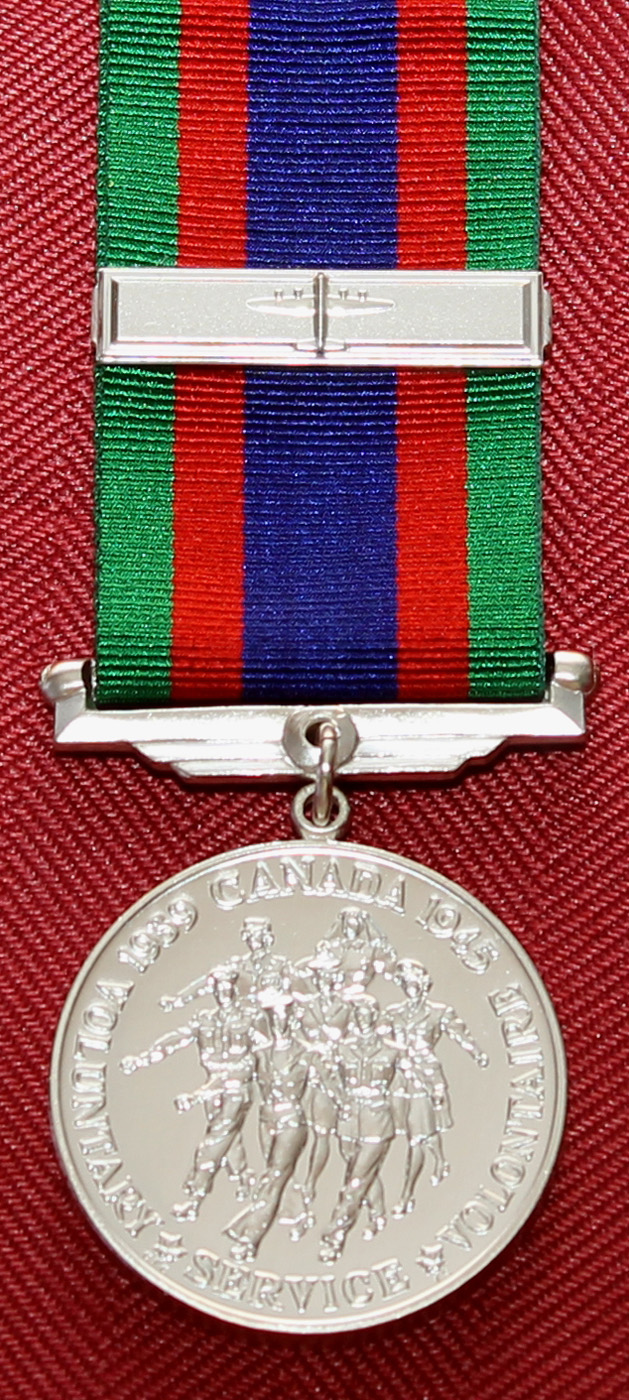
Related Medals

Related Lesson Plans
Photo Gallery
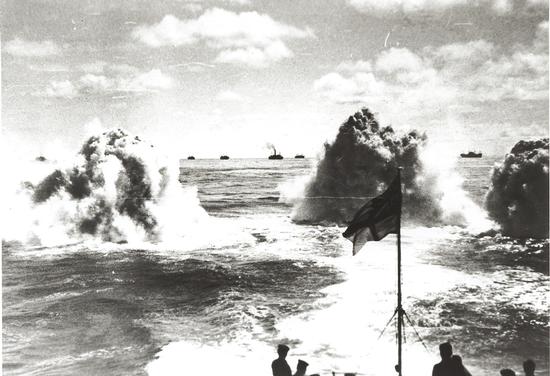
Depth charges being dropped by HMCS Saguenay. Photo: Library and Archives Canada PA 116840
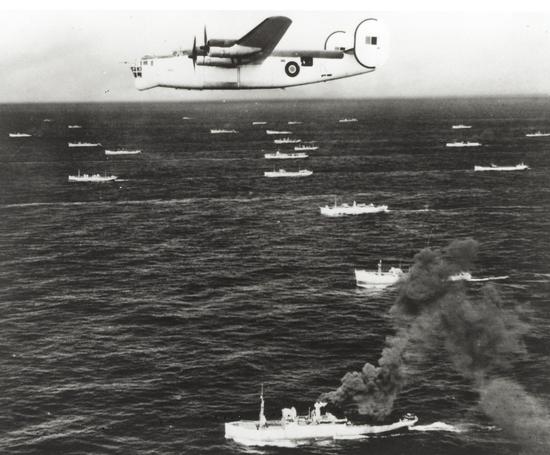
A Consolidated VLR Liberator provides air-cover for a transatlantic convoy. Photo: Library and Archives Canada PA 107907
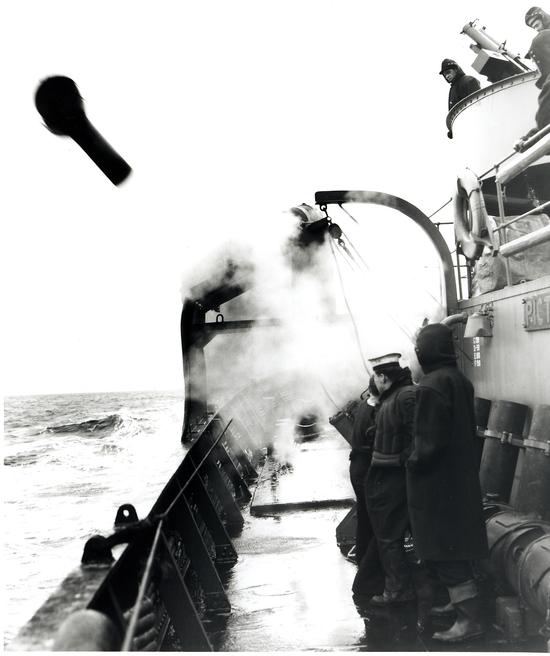
Anti-submarine grenade launched into the air by the corvette HMCS Pictou during a submarine attack, March 1942.
Library and Archives Canada PA 116838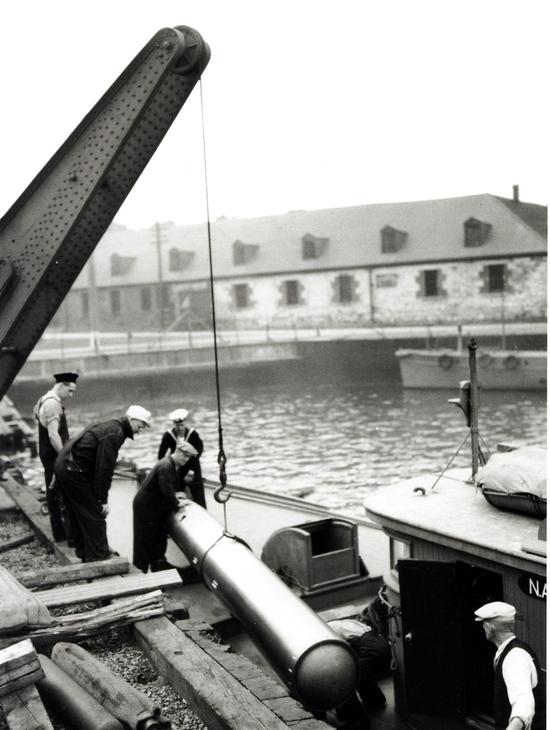
Personnel handling torpedo in HMC dockyard, Halifax. Photo: Library and Archives Canada PA 104147
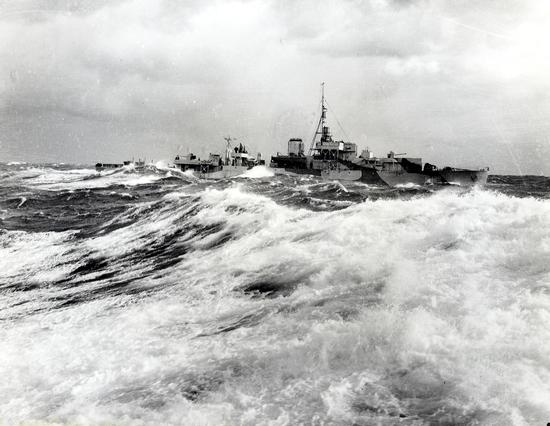
Frigate HMCS Swansea, 1 January 1944. Photo: Library and Archives Canada PA-107941
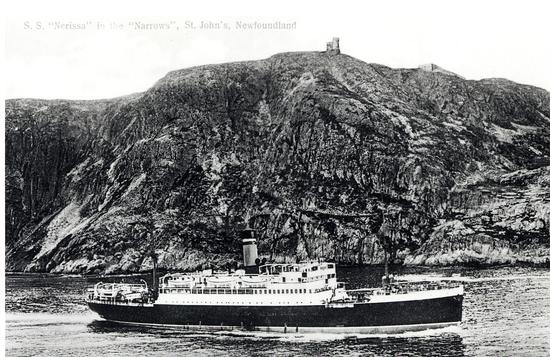
SS Nerissa in the 'Narrows', St. John's Newfoundland. Photo: McBride Collection, Martime Museum of the Atlantic NP 18.334.1
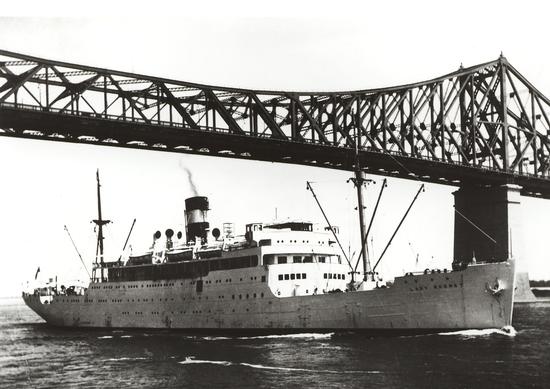
Lady Rodney. Photo: Martime Museum of the Atlantic MP18.82.3

HMCS Brantford covered with ice, February 1944. Photo: Library and Archives PA-136146
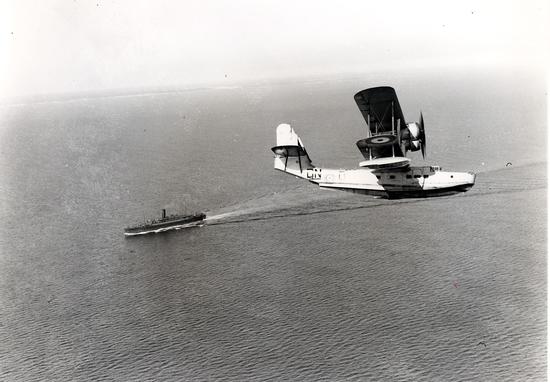
Supermarine Stranraer flying boat of the RCAF escorting convoy, 3 April 1941. Photo: Veterans Affairs Canada 692
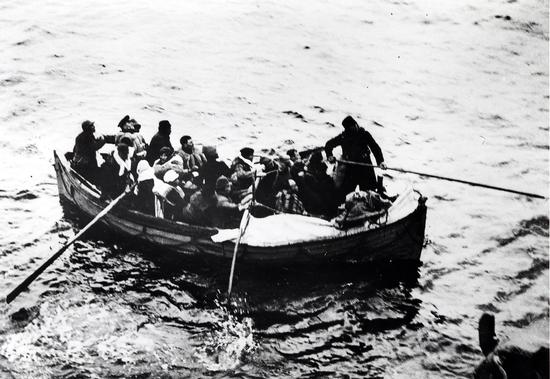
Boatload of seamen from torpedoed ship aboard HMCS Arvida, St. John's, NL June 1945. Photo: Library and Archives Canada PA 136285
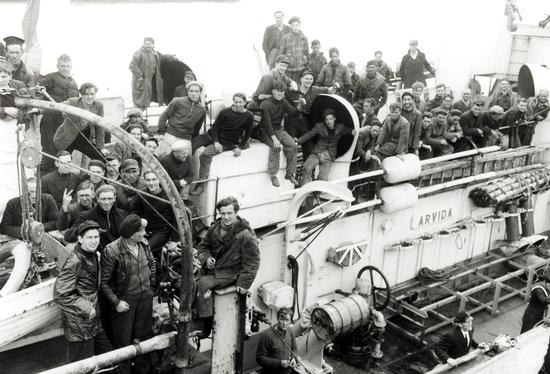
Les survivants d'un navire marchand torpillé à bord du NCSM Arvida, St. John's (T.-N.), septembre 1942. Photo : Bibliothèque et Archives Canada PA 136285
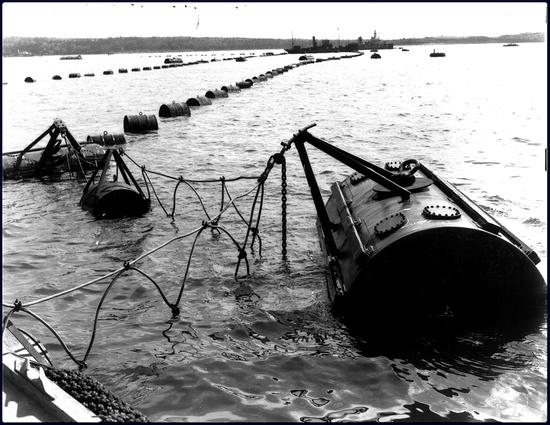
Filet anti-sous-marins installé entre la Redoute Youk et l'île McNab, à Halifax (N.-É.), mai 1942. Ministère de la Défense nationale / Archives nationales du Canada / PA-105924
Battle of the Atlantic
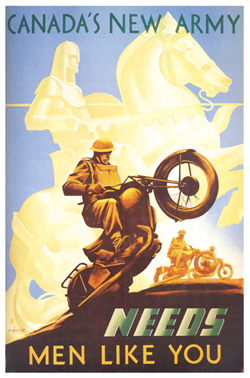
Image: Eric Aldwinckle and A.E. Cloutier, 1941-42 Lithograph/The Carson Collection (Marc H. Choko, Canadian War Posters, Méridien 1993)
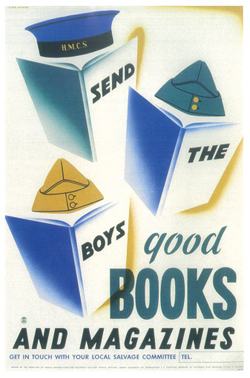
Image: Library and Archives Canada / Credit: Clair Stewart / Second World War collection / C-087534
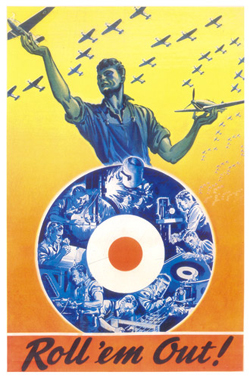
Image: Anonymous, 1940-45 Lithograph/The Carson Collection (Marc H. Choko, Canadian War Posters, Méridien 1993)

Image: Library and Archives Canada / Credit: Hubert Rogers / Hubert Rogers Collection / C-103527
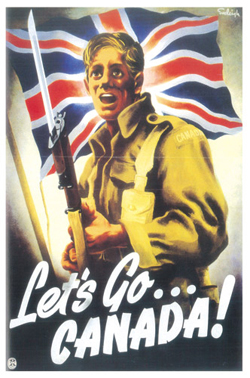
Image: Henri Eveleigh, 1941-42 Lithograph/The Carson Collection (Marc H. Choko, Canadian War Posters, Méridien 1993)
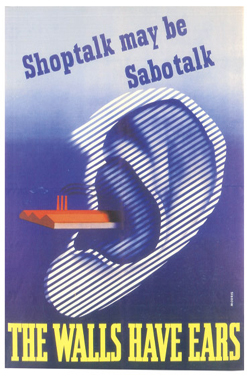
Image: Morris, 1943-44 Lithograph/The Carson Collection (Marc H. Choko, Canadian War Posters, Méridien 1993)
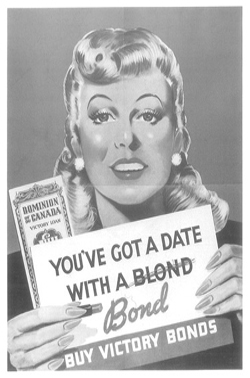
Image: Library and Archives Canada / Second World War Collection / C-091546
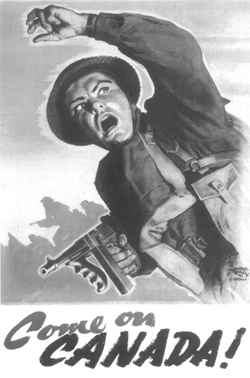
Image: Library and Archives Canada / Credit: Hubert Rogers / National Film Board of Canada Poster Collection / C-087122
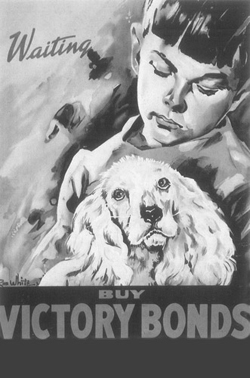
Image: Library and Archives Canada / Credit: Ron White / Second World War Collection / C-091866
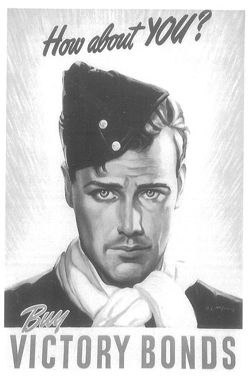
Image: Library and Archives Canada /Second World War Collection / C-091596
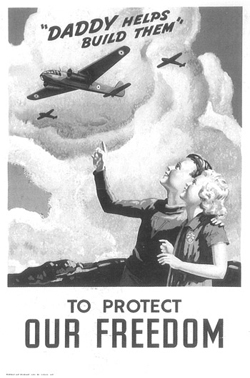
Image: Library and Archives Canada / Second World War Collection / C-087516
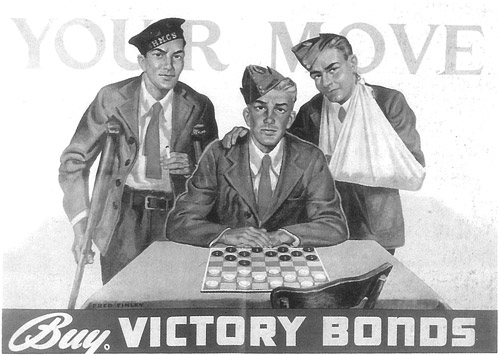
Image: Library and Archives Canada / Credit: Fred Finley / Second World War Collection / C-091467
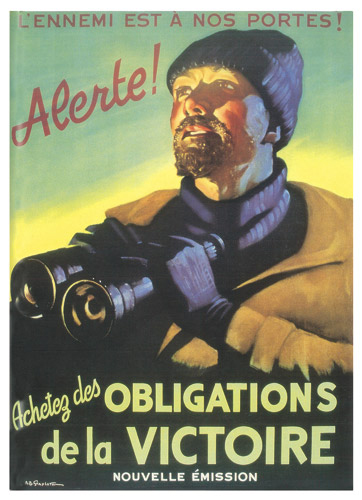
Image: Library and Archives Canada / Second World War Collection / C-090884
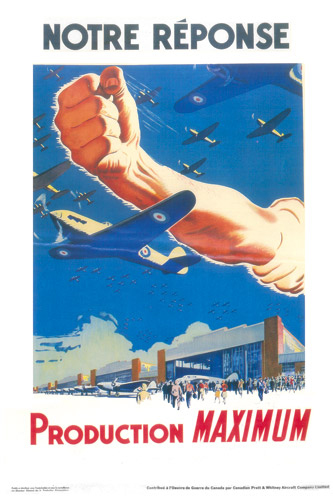
Image: Library and Archives Canada / Second World War Collection / C-087505
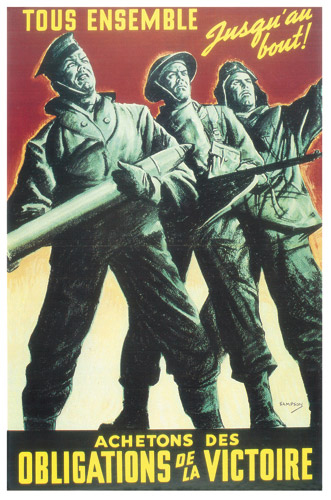
Image: Library and Archives Canada / Credit: Sampson / Second World War Collection / C-091445

Image: Library and Archives Canada / Credit: Charles Fainmel / Second World War Collection / C-087500
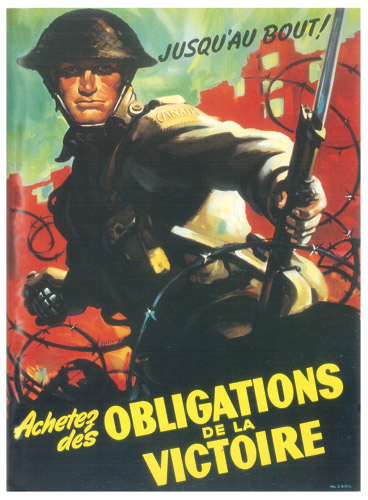
Image: Library and Archives Canada / Credit: Wilcox / Second World War Collection / C-091851
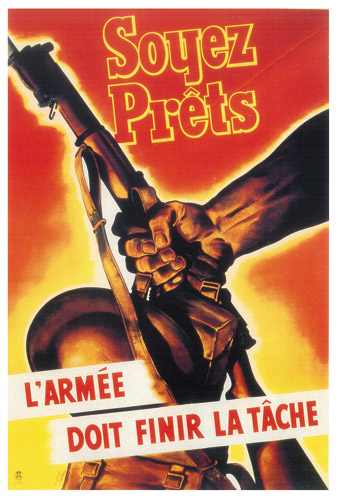
Image: Taber, 1941-42 Lithograph/The Carson Collection (Marc H. Choko, Canadian War Posters, Méridien 1993)
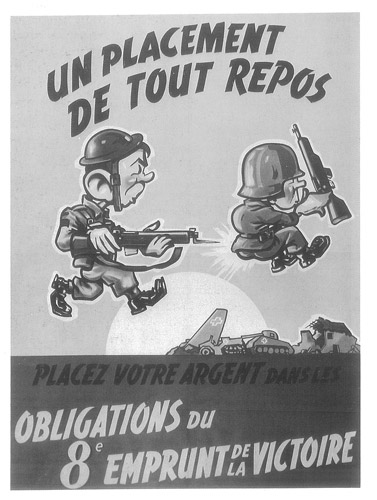
Image: Library and Archives Canada / Credit: Adams / Second World War Collection / C-091549
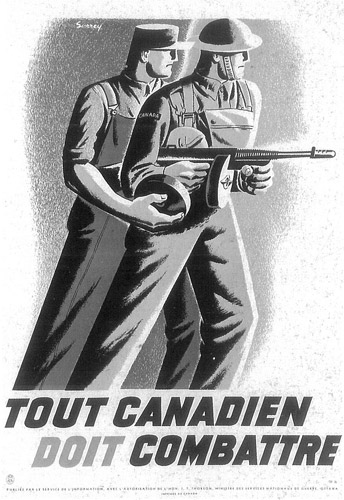
Image: P. H. Surrey, 1941-42 Lithograph/The Carson Collection (Marc H. Choko, Canadian War Posters, Méridien 1993)
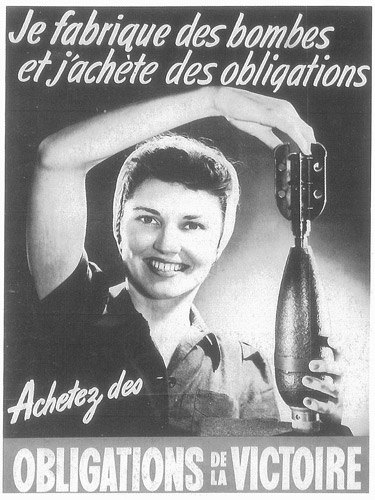
Image: Library and Archives Canada / Second World War Collection / C-091437
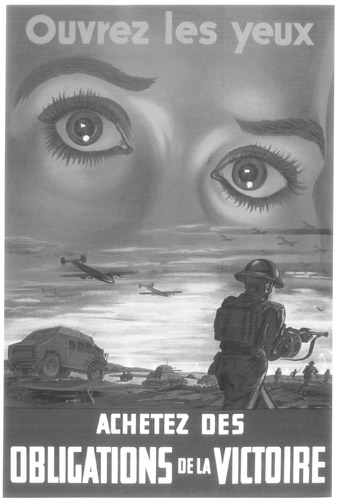
Image: Library and Archives Canada / Second World War Collection / C-091837
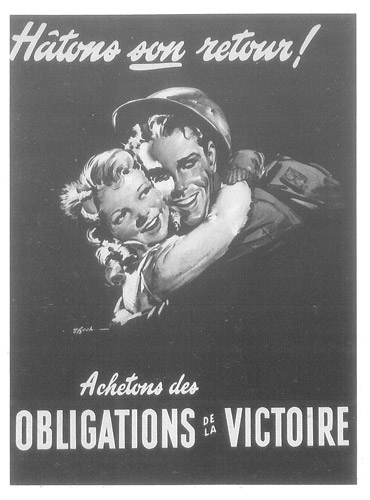
Image: Library and Archives Canada / Second World War Collection / C-091538
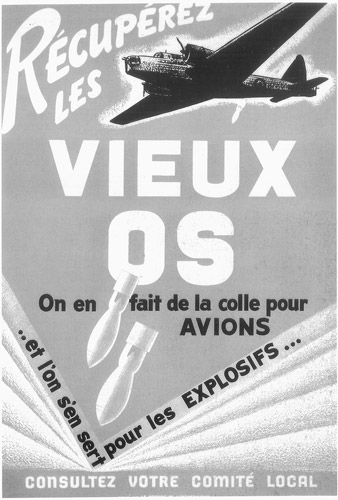
Image: Library and Archives Canada / Second World War Collection / C-087545
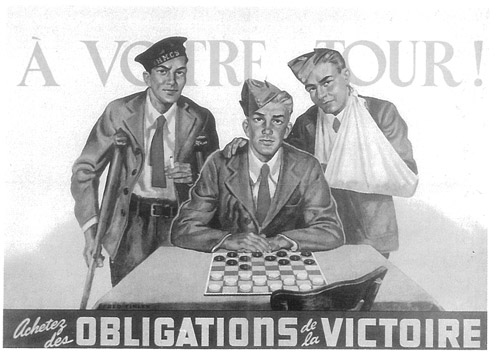
Image: Library and Archives Canada / Credit: Fred Finley / Second World War Collection / C-091468
Posters
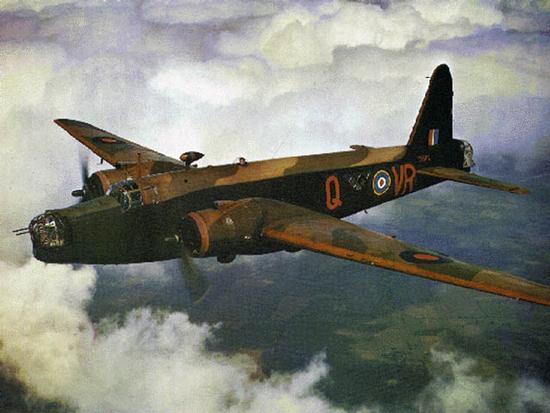
Vickers Wellington medium bomber: the ‘Wimpy’. Photo: Canadian Forces Image.
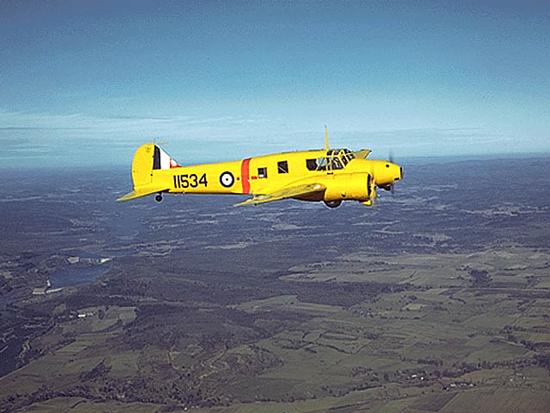
The Avro Anson, the primary twin-engined aircraft used by the BCATP to train pilots, navigators and gunners. Photo: Canadian Forces Image.

Aircrew walking to their RCAF No. 6 Group Handley Page Halifax bomber in October, 1944. Photo: Library and Archives Canada / Department of National Defence PL-3394.
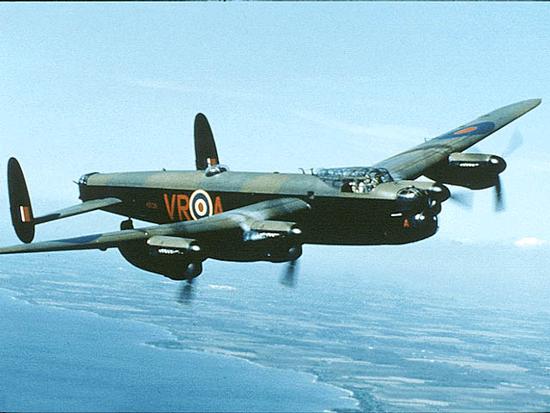
Restored Canadian Avro Lancaster bomber in the colours and markings of RCAF 419 Moose Squadron aircraft. Photo: Canadian Forces image.
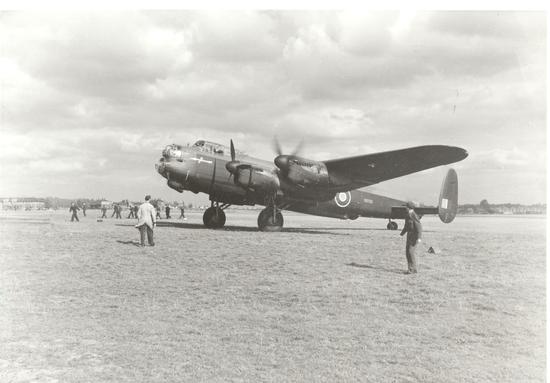
The first Canadian-built Lancaster bomber arriving at an RCAF airfield in England after its flight across the Atlantic. Photo: Department of National Defence PL-19698.
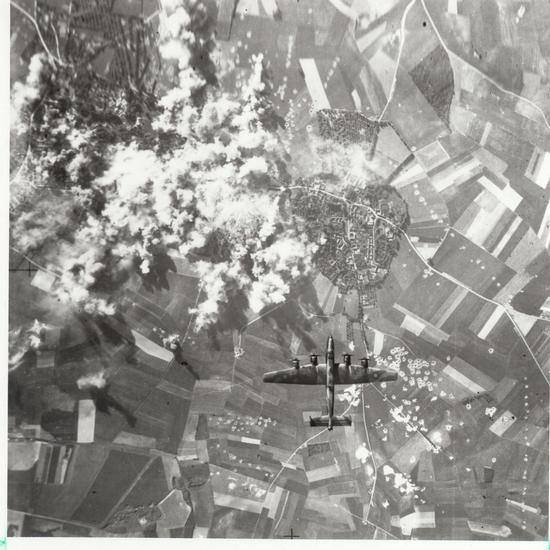
Canadian bombers from 431 Squadron attacking German flying bomb site in occupied Europe, June 25, 1944. Photo: National Defence Image Library PL-30780.
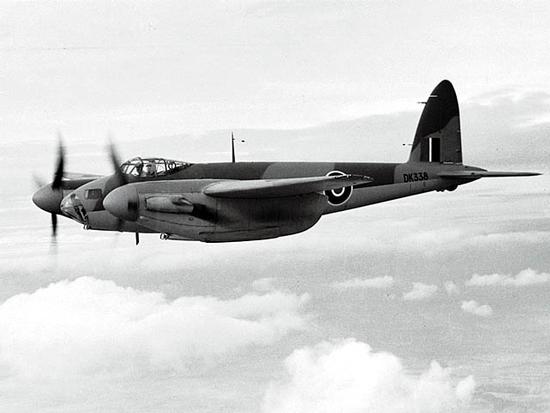
De Havilland Mosquito fighter-bomber: a mainstay of the Pathfinder Squadrons. Photo: Canadian Forces image.
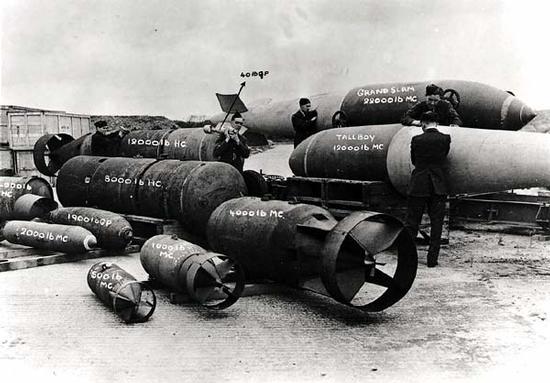
Different types of bombs used by Bomber Command - the smallest weighing 40 pounds (18 kg) and the biggest, the “Grand Slam”, tipping the scale at 22,000 pounds (10,000 kg). Photo: Department of National Defence / Library and Archives Canada, PA-213867.
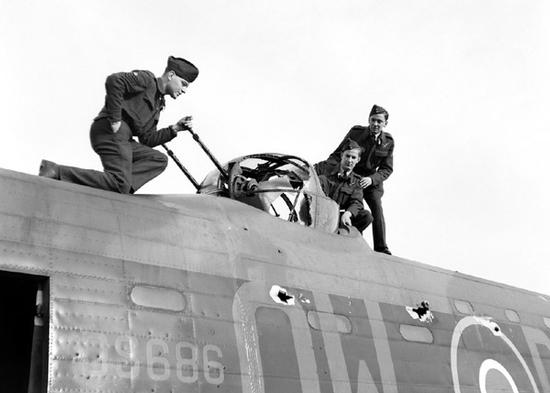
A damaged Lancaster from No. 426 Squadron after returning from a sortie over Leipzig, Germany in October 1943. Photo: National Defence, Image Library, PL 22172.
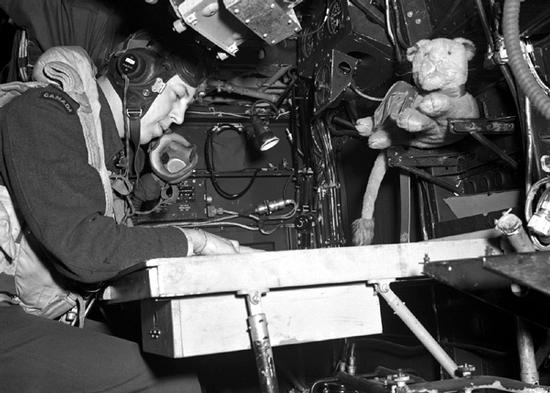
A navigator on a 427 Squadron bomber with ‘Ruthless Robert’, the crew’s mascot, at his side. Photo: National Defence Image Library, PL 28520.
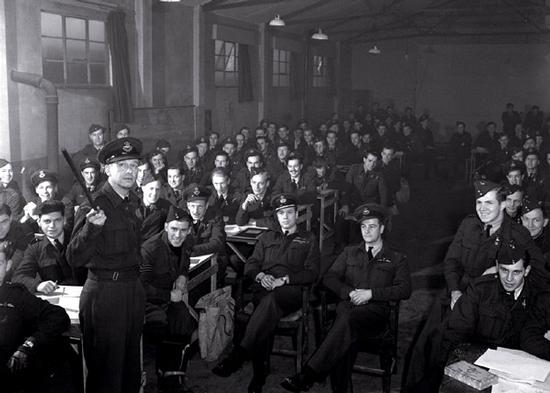
Crew members of 431 and 434 Squadrons being briefed before a night mission to Essen, Germany in October 1944. Photo: National Defence Image Library, PL 33941.
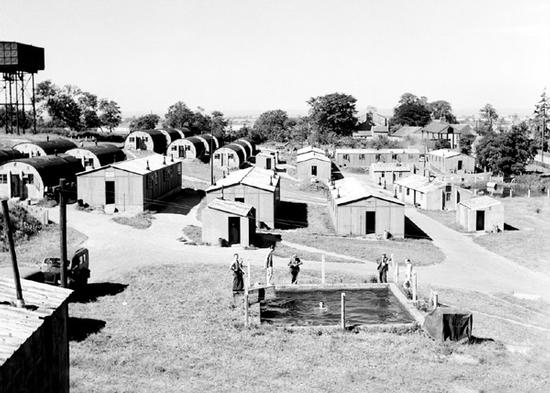
Skipton-on-Swale Air Base in Yorkshire, England, home of the No. 424 and 433 Squadrons. The rounded Nissen huts to the left of the picture were used as quarters for the personnel. Photo: National Defence Image Library, PL 45597
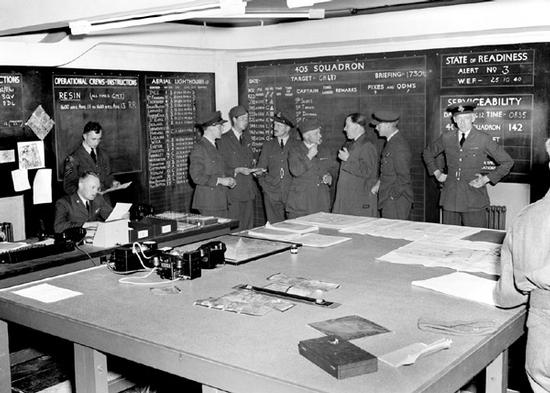
The Operations Room of RCAF No. 405 Squadron. 1941. Photo: National Defence Image Library, RE 74-385.
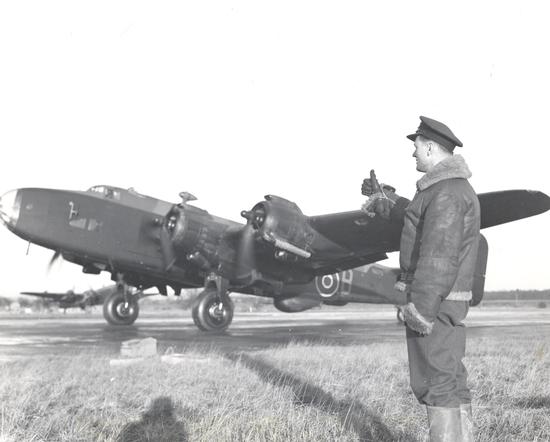
Crew of Handley Page Halifax bomber from RCAF No. 420 (Snowy Owl) Squadron getting a ‘thumbs-up’ in January 1945. Photo: Library and Archives Canada / Department of National Defence PL-41608.
Bomber Command
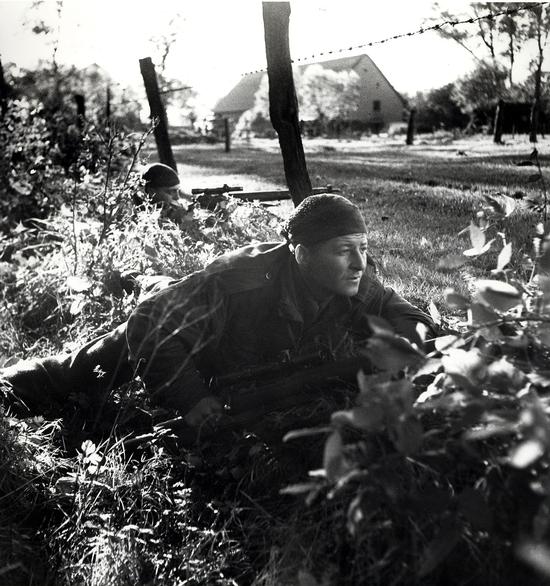
Scouts of the Calgary Highlanders keeping watch for enemy troops near Kapellen, Belgium on 6 October 1944. Photo: Library and Archives Canada PA-116727
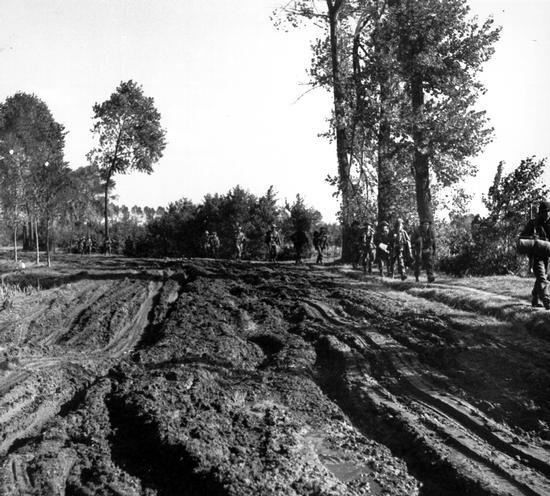
Scouts of the Canadian Scottish Regiment moving up towards the Leopold Canal in Belgium on 7 October 1944. Photo: Library and Archives Canada PA-130255
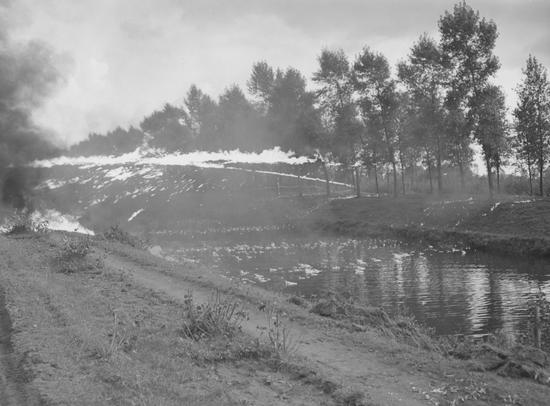
Flame throwers of the 4th Canadian Armoured Division firing across a canal in Belgium in early October 1944. Photo: Library and Archives Canada PA-131240
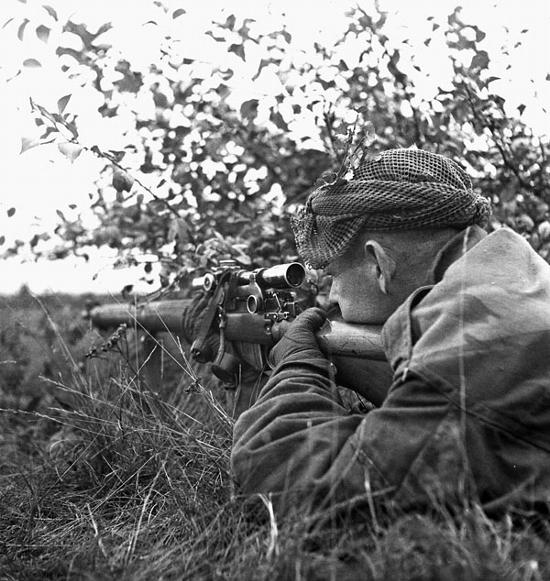
A scout from the Queen’s Own Cameron Highlanders of Canada during the Battle of the Scheldt on 9 October 1944. Photo: Library and Archives Canada PA-184142
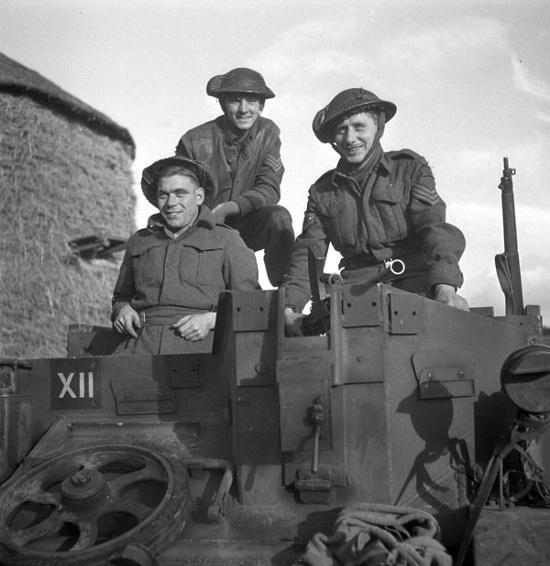
Soldiers of The Black Watch (Royal Highland Regiment) of Canada in South Beveland, Netherlands, in the fall of 1944. Photo: Library and Archives PA-168677

Buffalo amphibious vehicles carrying Allied troops across the Scheldt River on 13 October 1944. Photo: Library and Archives PA-136754
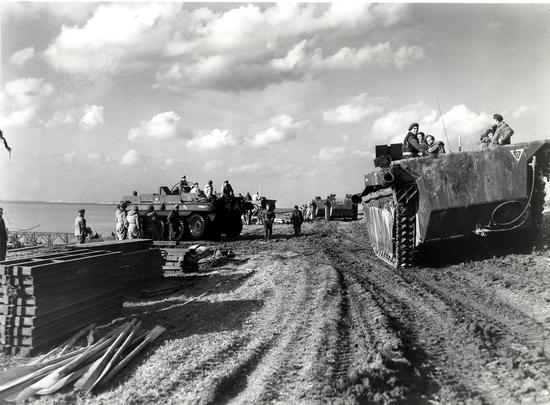
First Canadian Army amphibious vehicles along the shores of the Scheldt River on 13 October 1944. Photo: Library and Archives Canada PA-114754
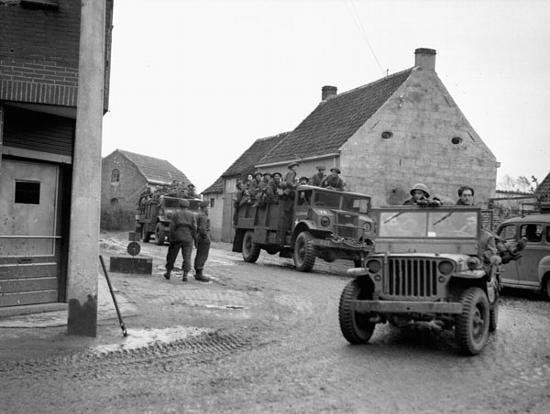
Troops of the 3rd Canadian Infantry Division moving through Bockhoute, Belgium, on 18 October 1944. Photo: Library and Archives Canada PA-137188
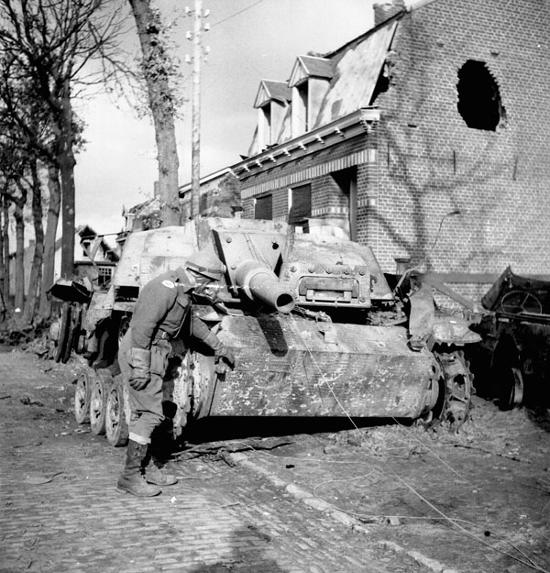
Soldier of Le Régiment de Maisonneuve examining a damaged German armoured vehicle in the Netherlands on 27 October 1944. Photo: Library and Archives PA-137147
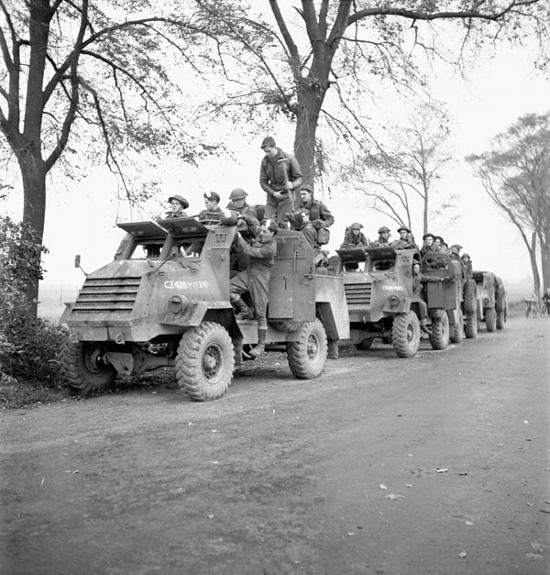
Soldiers of The Royal Hamilton Light Infantry in armoured trucks during the Battle of the Scheldt on 27 October 1944. Photo: Library and Archives PA-137145
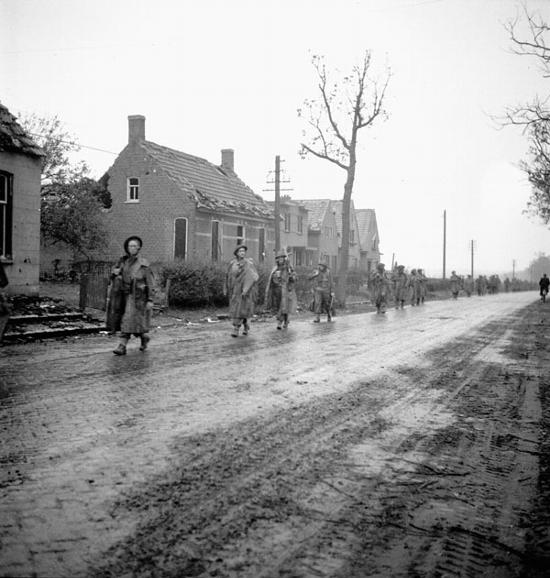
Infantrymen of The Calgary Highlanders moving through the Dutch village of Krabbendijke on 27 October 1944. Photo: Library and Archives PA-137146
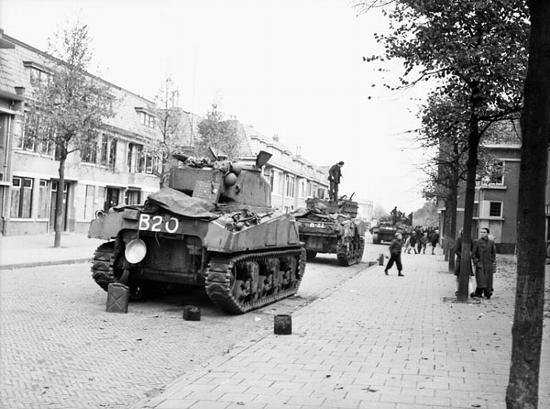
Sherman tanks of the South Alberta Regiment stopping in Bergen op Zoom, Netherlands, on 29 October 1944. Photo: Library and Archives PA-140896
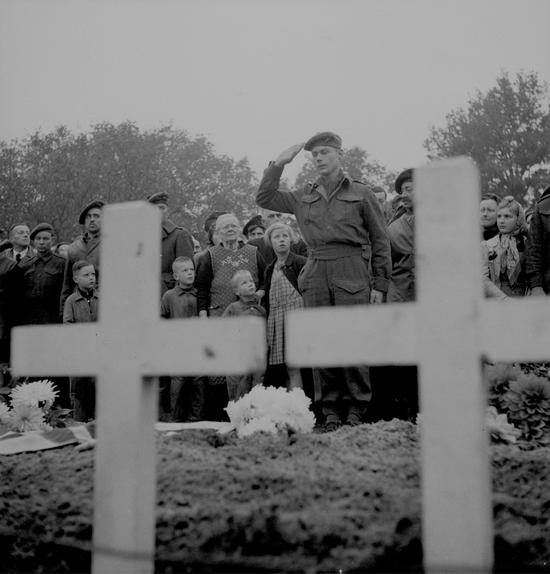
Funeral of 55 members of The Black Watch (Royal Highland Regiment) of Canada killed in the Battle of the Scheldt. Photo: Library and Archives Canada PA-13675
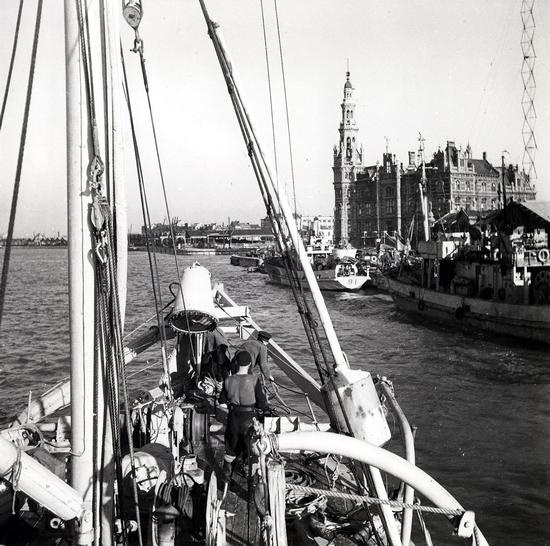
Allied minesweeper returning to the docks of Antwerp on 26 November 1944 after the Battle of the Scheldt. Photo: Library and Archives Canada PA-192758
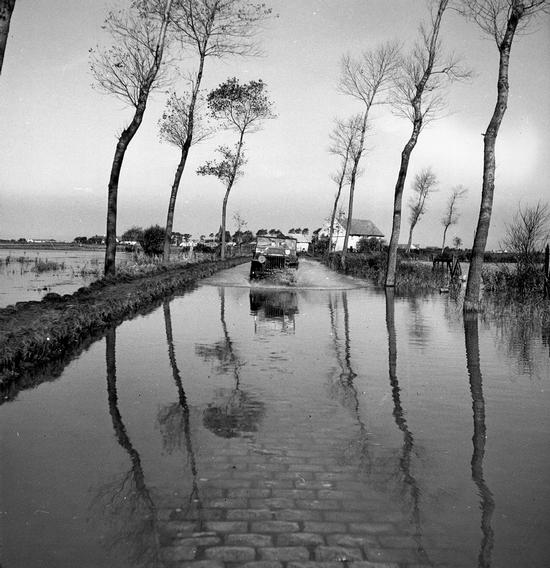
Flooded section of road near Ostend, Belgium. September 11, 1944. Photo: Donald I. Grant/Canada. Dept. of National Defence/Library and Archives Canada/PA-116728
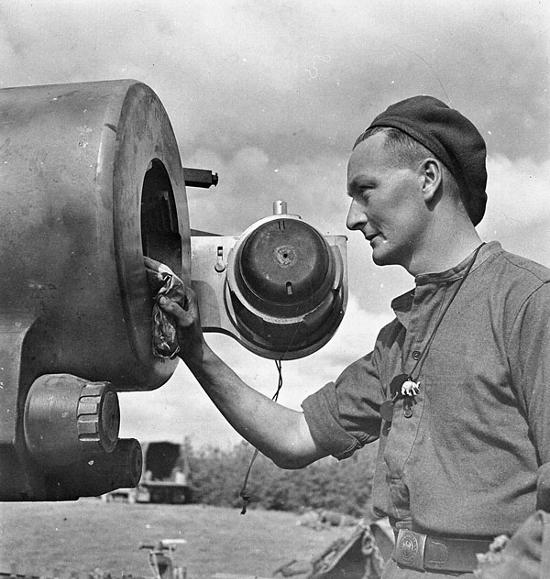
Gunner M. Lupton of the 6th Field Regiment, Royal Canadian Artillery (R.C.A.), cleaning the breach of a French 155mm coastal gun which had been used by a German coastal artillery unit north of Nieuport. September 13, 1944 / Nieuport, Belgium (Vicinity). P
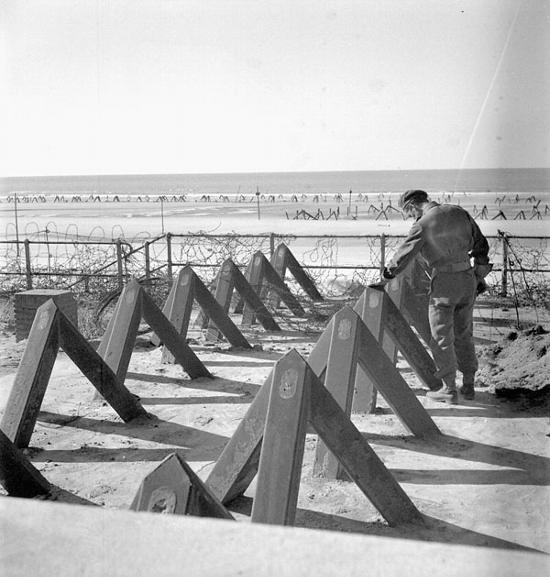
Unidentified Canadian soldier examining German-installed tank obstacles on the beach at Blankenberghe. September 11, 1944 / Blankenberghe, Belgium. Photo: Ken Bell/Canada. Dept. of National Defence/Library and Archives Canada/PA-174348
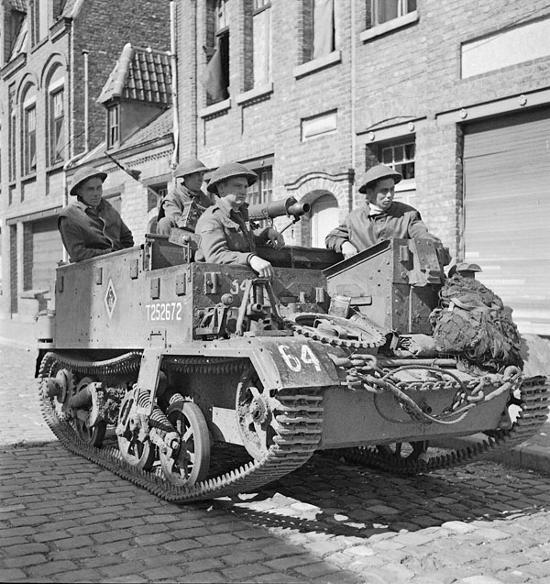
Fantassins du Toronto Scottish Regiment à bord de leur porteur universel, attendant de pouvoir avancer. De gauche à droite : Soldats L. E. Munn, F. T. Parrish et R. C. Felstead et le Caporal R. G. Stewart. Le 9 septembre 1944/Nieuport, Belgique. Photo : K
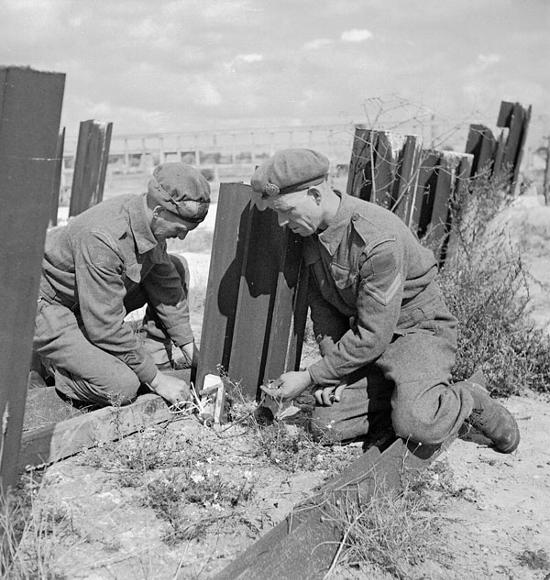
Personnel of the 11th Field Company, Royal Canadian Engineers (R.C.E.), placing charges to blow up a German roadblock. (L-R): Sapper M.E. Lawton, Corporal O.G. Webster. September 9, 1944 / Nieuport, Belgium. Photo: Lieut. Ken Bell / Canada. Dept. of Natio
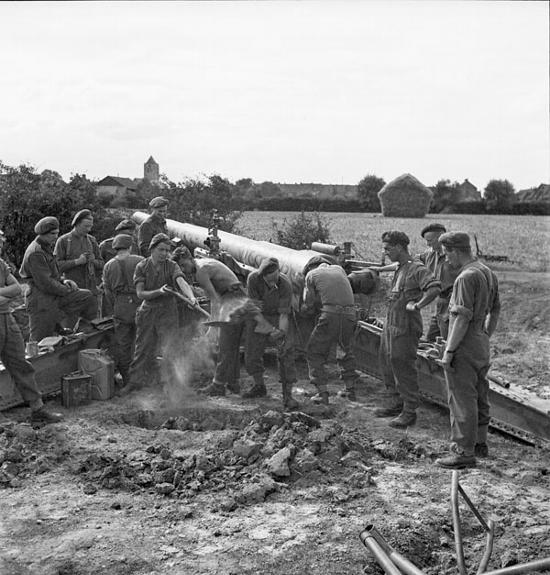
Gunners of 'X' Battery, Royal Canadian Artillery (R.C.A.), digging a breech pit for a captured 155mm. gun to be used to fire on Dunkirk. September 15, 1944 / Adinkerke, Belgium. September 9, 1944 / Nieuport, Belgium. Photo: Canada. Dept. of National Defen
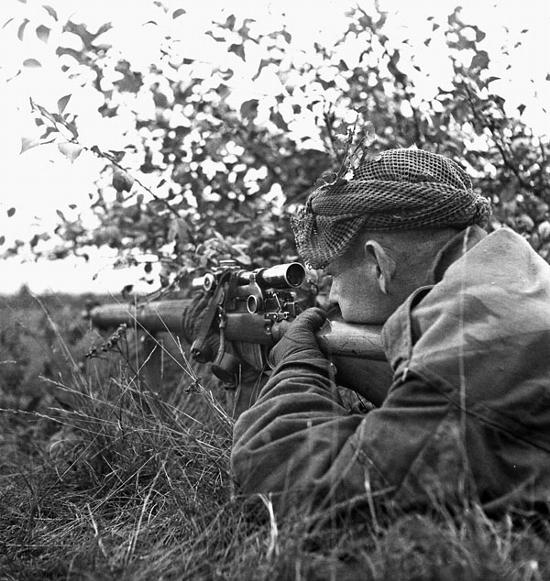
Corporal G.E. Mallery covering other members of the Scout Platoon, Queen's Own Cameron Highlanders of Canada, advancing towards Fort de Brasschaet. October 9, 1944. Photo: Lieut. Ken Bell/Canada. Dept. of National Defence/Library and Archives Canada/PA-18
Liberation of Belgium and the battle of the Scheldt
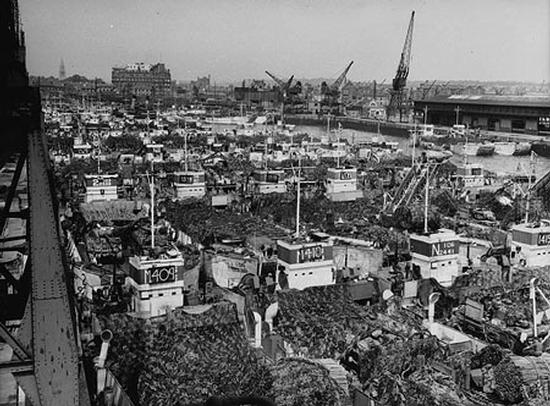
D-Day preparations. Overhead shot showing part of the huge invasion fleet: Landing Craft, Tanks (LCTs) fully loaded and camouflaged. Photo: Frank L. Dubervill / Canada. Dept. of National Defence / Library and Archives Canada / PA-137130
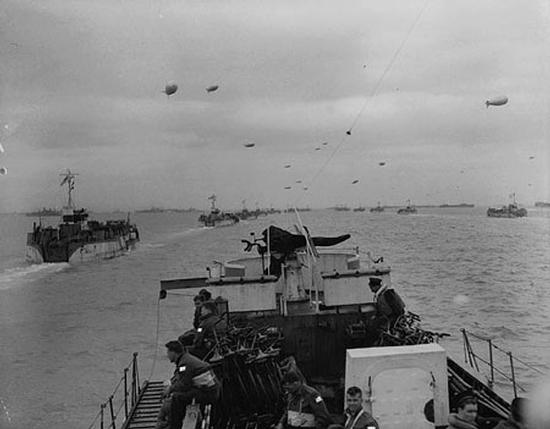
View from LCI(L) 306 of the 2nd Canadian (262nd RN) Flotilla showing ships of Force 'J' en route to France on D-Day. Photo: Gilbert Alexander Milne / Canada. Dept. of National Defence / Library and Archives Canada / PA-137014
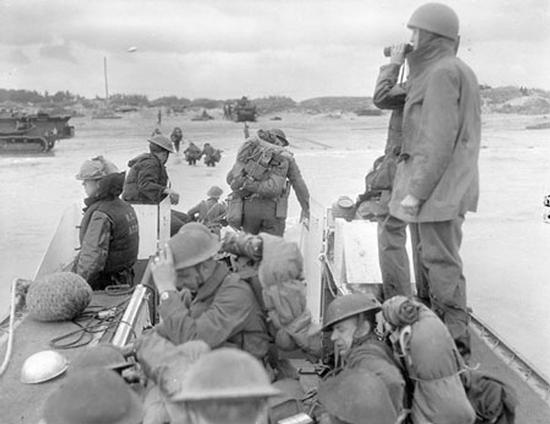
Reinforcements going ashore from a (LCA) Landing Craft Assault from H.M.C.S. Prince Henry off the Normandy bridgehead. Photo: Dennis Sullivan / Canada. Dept. of National Defence / Library and Archives Canada / PA-190123.

Troops of the 9th Canadian Infantry Brigade (Stormont, Dundas, and Glengarry Highlanders) going ashore from LCI (L) 299 [Landing Craft Infantry], Bernières-sur-Mer, Normandy, France, 6 June 1944. Photo: Gilbert Alexander Milne/Canada. Dept. of National De
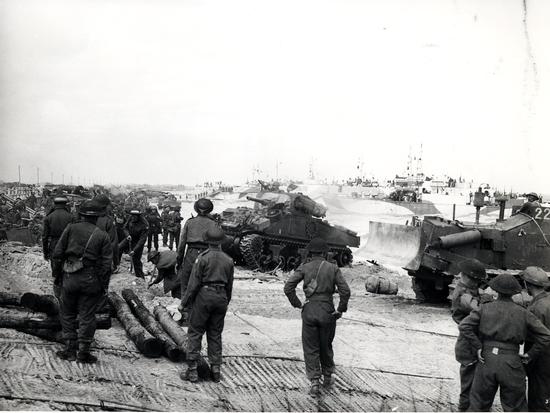
Canadian tank crews removing water-proofing from their tanks, Normandy beachhead. June 6, 1944. Photo: Canada. Dept. of National Defence / Library and Archives Canada / PA-132898.

German personnel captured on D-Day embarking for England. Photo: Ken Bell / Canada. Dept. of National Defence / Library and Archives Canada / PA-132474.
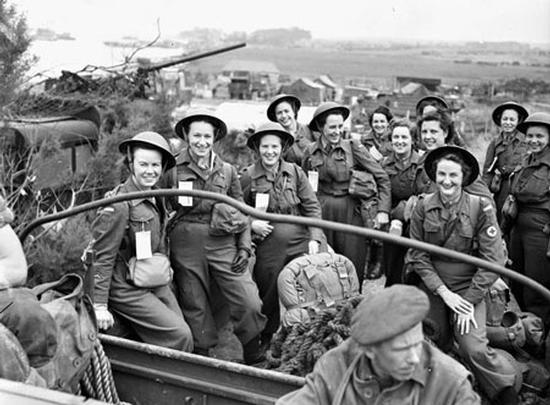
Nursing sisters of No. 10 Canadian General Hospital, R.C.A.M.C. Photo: Harold G. Aikman / Canada. Dept. of National Defence / Library and Archives Canada / PA-108174

Canadian troops entering Caen, France, July 10, 1944. Photo: Lt. Harold G. Aikman/Canada. Dept. of National Defence/Library and Archives Canada/PA-116510

Lt.-Col. C. Petch (Montreal, Quebec) brings his North Nova Scotia Highlanders across the Odon River on the 'London' bailey bridge. July 18, 1944. Photo: Ken Bell/Canada. Dept. of National Defence/Library and Archives Canada/PA-131393
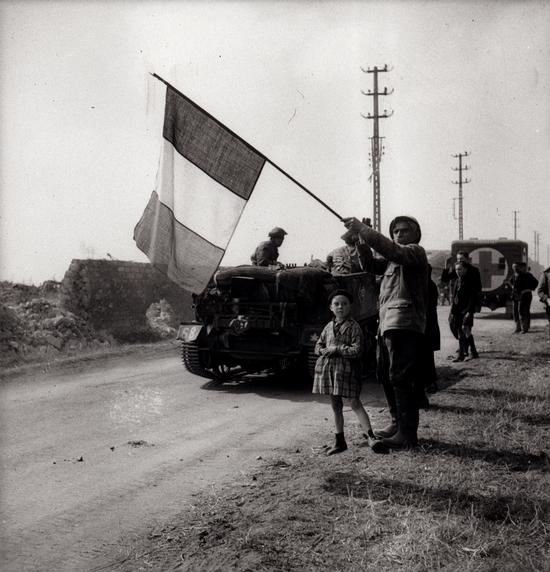
A French veteran of the First World War greeting Universal Carriers of the South Saskatchewan Regiment during a Canadian advance in Normandy. July 20, 1944. Photo: George A. Cooper / Canada. Dept. of National Defence / Library and Archives Canada / PA-131

Allied officers examining a damaged aircraft of the Luftwaffe in a hangar at Carpiquet. July 12, 1944. Photo: Ken Bell/Canada. Dept. of National Defence/Library and Archives Canada/PA-162519
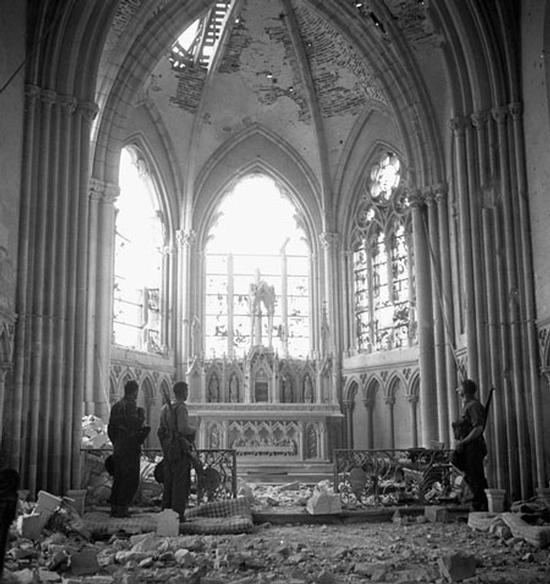
Unidentified personnel of the 9th Canadian Infantry Brigade in front of the altar of a church in Carpiquet. July 12, 1944. Photo: Ken Bell/Canada. Dept. of National Defence/Library and Archives Canada/PA-162545
D-Day and the Battle of Normandy
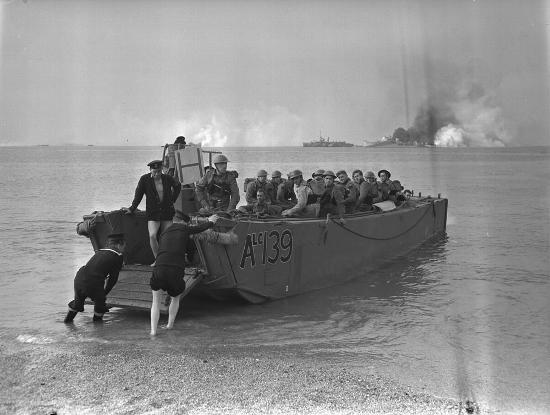
Final exercise prior to assault landing at Dieppe. Photo: Library and Archives Canada 4341223
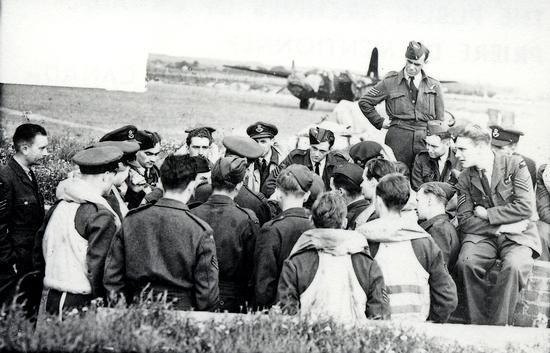
Aircrew who took part in the raid on Dieppe. Photo: DVA 725
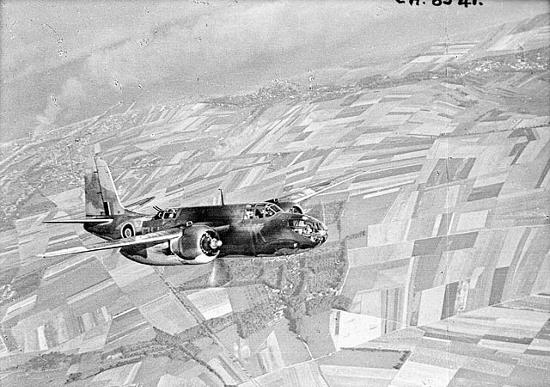
Royal Air Force warplane on a mission during the Dieppe Raid. Photo: Library and Archives Canada PA-183771
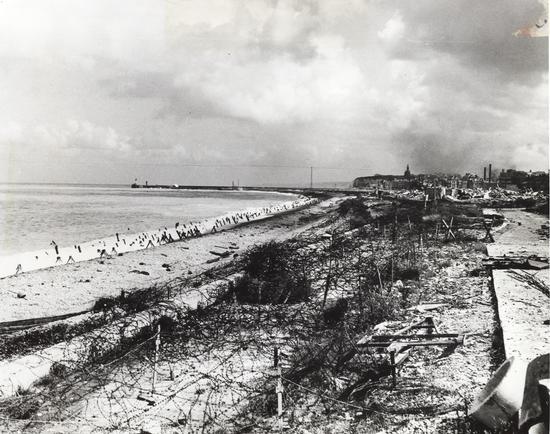
The concrete barriers, wire fencing, and other obstacles on the beach show how well the Germans fortified the Dieppe beach. Several hundreds of miles of beaches were fortified in the same fashion as the Germans saw their greatest threat of Allied invasion
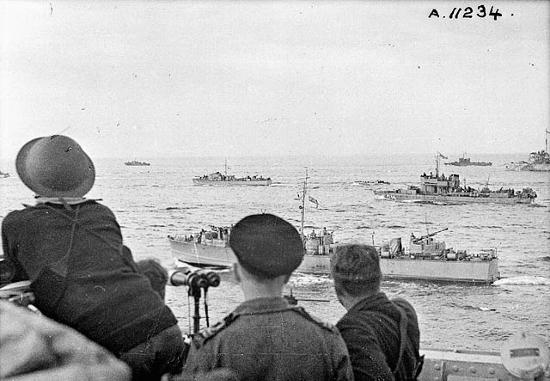
Allied warships en route to Dieppe on August 19, 1942. Photo: Library and Archives Canada PA-171080
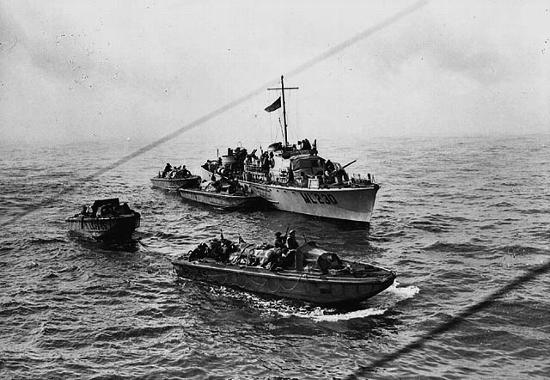
Landing craft preparing to hit the beaches at Dieppe. Photo: Library and Archives Canada PA-113247
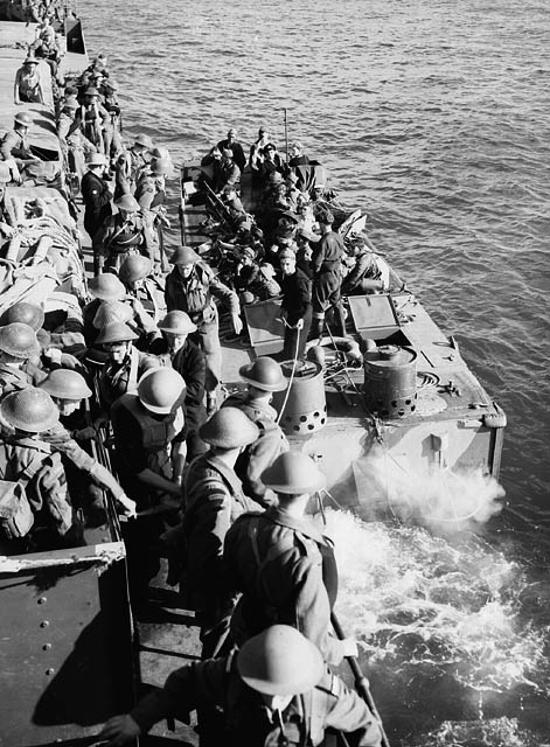
Queen’s Own Cameron Highlanders of Canada troops readying to go ashore at Dieppe. Photo: Library and Archives Canada PA-113245
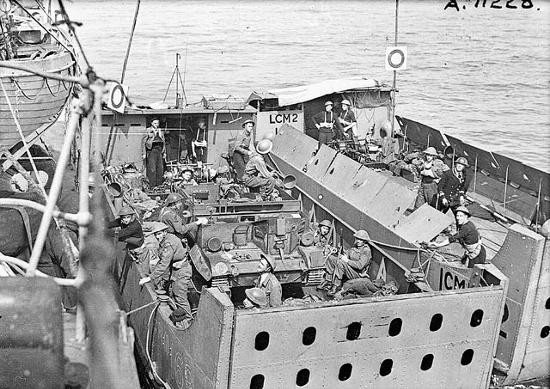
Soldiers and armoured vehicle preparing to go ashore during the Dieppe Raid. Photo: Library and Archives Canada PA-183767
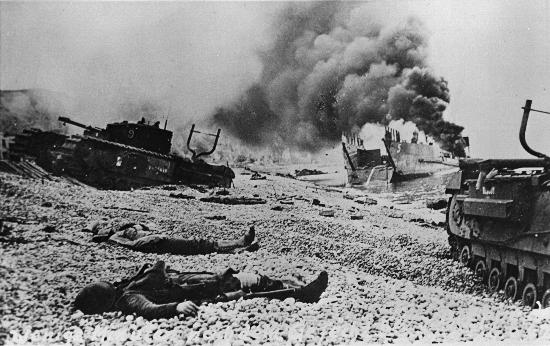
Carnage on the beaches of Dieppe after the raid. Photo: Library and Archives Canada C-014160
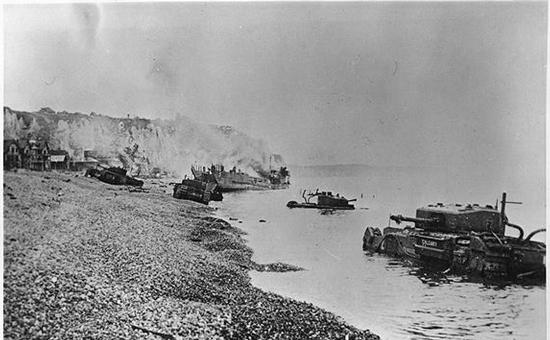
Wrecked Allied tanks and landing craft in the aftermath of the Dieppe Raid. Photo: Department of National Defence

German soldiers examining a damaged Canadian tank in Dieppe. Photo: Library and Archives Canada C-029878
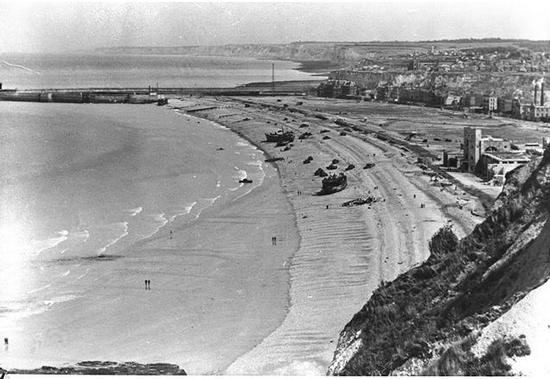
View of the beach from the Dieppe cliffs in the aftermath of the raid. Photo: Department of National Defence
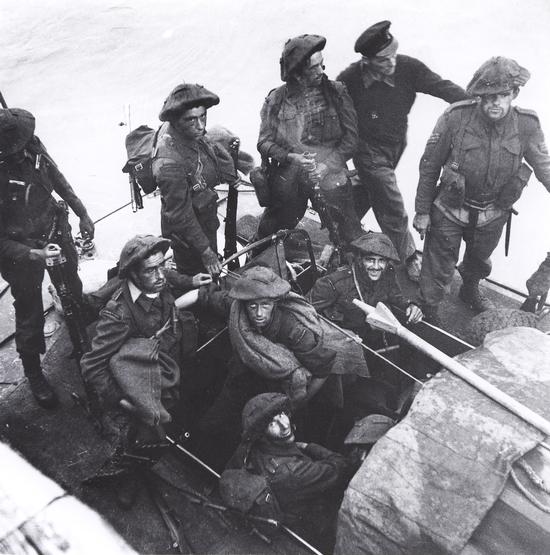
Allied troops arriving back in England after the Dieppe Raid. Photo: Imperial War Museum. H 22585
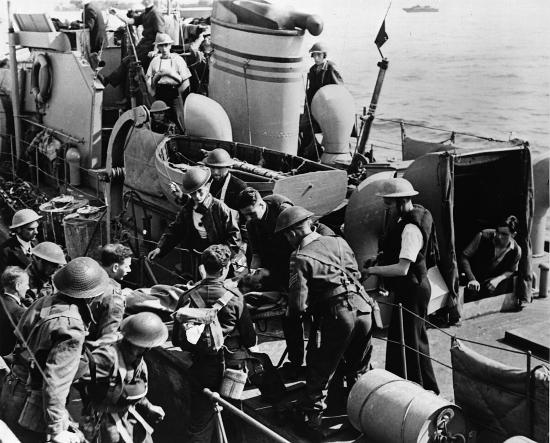
Evacuation of wounded. Photo: Library and Archives 4113923
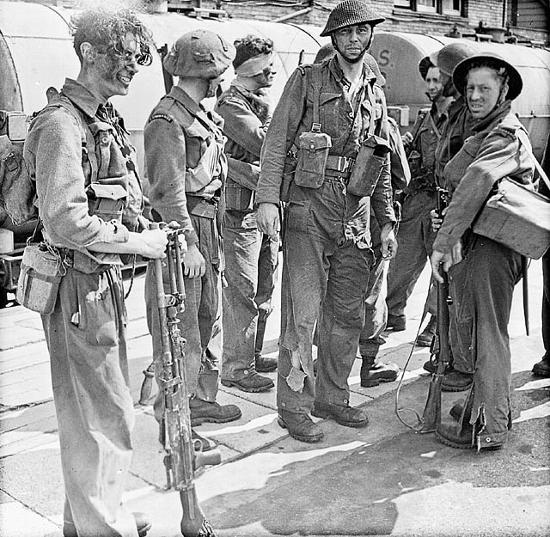
Weary soldiers back in England after the Dieppe Raid. Photo: Library and Archives Canada PA-183775
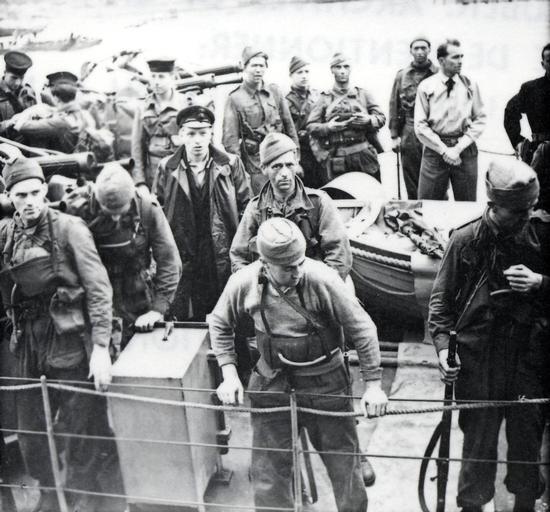
German soldiers who were captured during Operation Jubilee—the Raid on Dieppe—disembarking in England. Photo: Library and Archives Canada/PA-183777
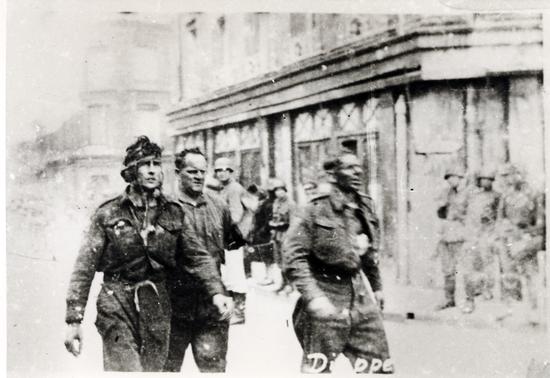
Allied soldiers taken prisoner by the Germans at Dieppe. Photo: R.16 and DVA 735
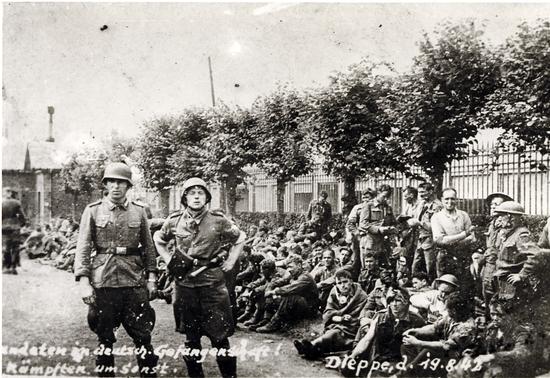
German soldiers round up Allied prisoners following the Dieppe Raid. Photo: R.24 and DVA 735
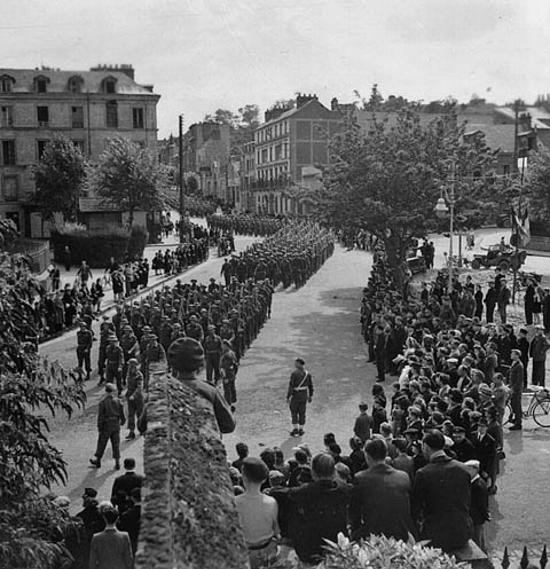
Canadian soldiers marching through liberated Dieppe in September 1944. Photo: Library and Archives Canada PA-131233

Canadian officers examining abandoned German defences in liberated Dieppe in 1944. Photo: Library and Archives Canada PA-134448
Dieppe Raid
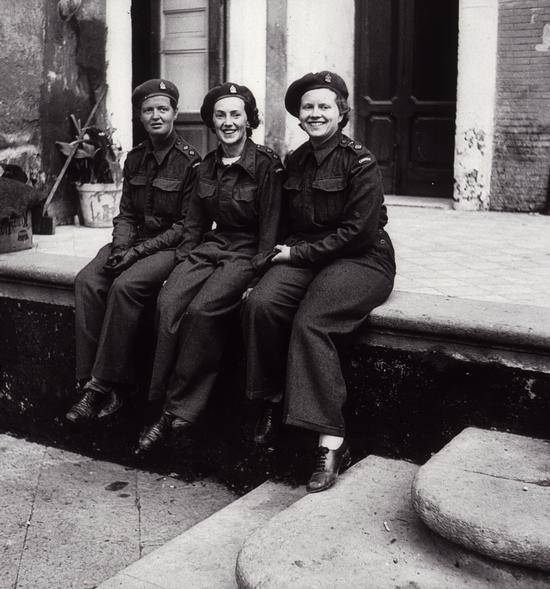
Nursing sisters of No.14 Canadian General Hospital, Royal Canadian Army Medical Corps (RCAMC), who survived the sinking of SS Santa Elena landing at Naples. Credit: Department of National Defence / Library and Archives Canada / PA-116492
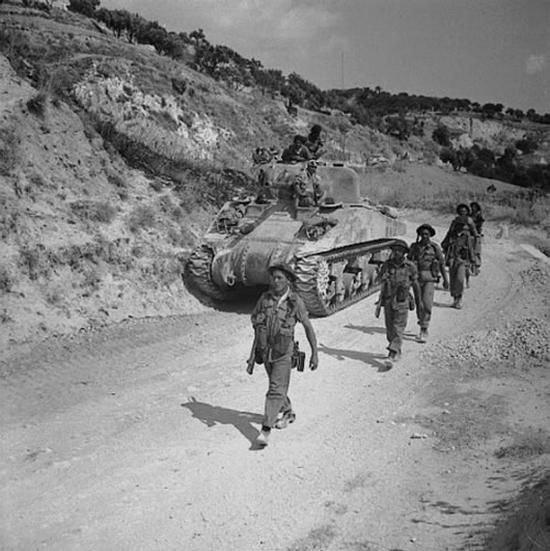
Personnel of Princess Patricia's Canadian Light Infantry advancing past a 'Sherman' tank. Credit: Jack H. Smith / Department of National Defence / Library and Archives Canada / PA-166755
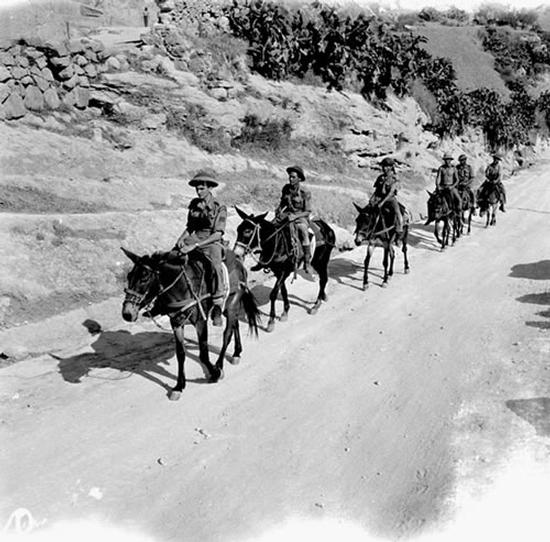
Personnel of the Pioneer Platoon, Support Company, Royal Canadian Regiment, using mules to transport supplies. Credit: Lieut. Jack H. Smith / Department of National Defence / Library and Archives Canada / PA-188914.
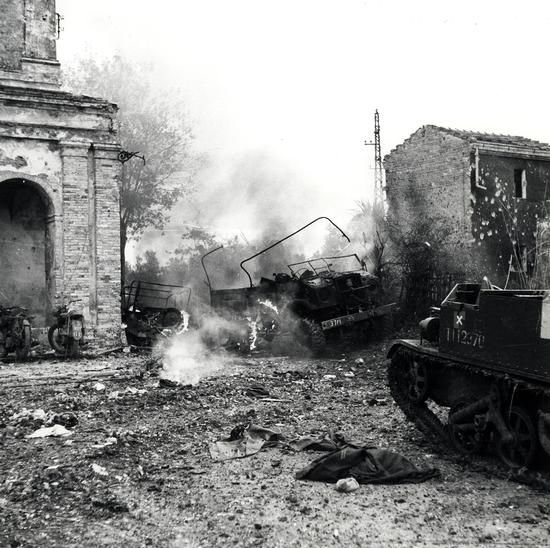
Truck and jeep of the 1st Canadian Division burning after being mortared by German troops. Credit: Terry F. Rowe / Department of National Defence / Library and Archives Canada / PA-170291
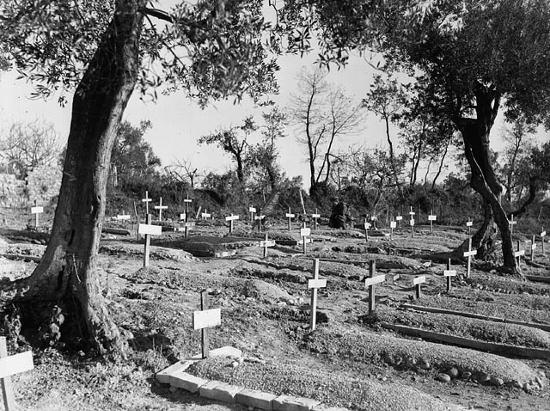
Graves of personnel of the Edmonton Regiment killed in Battle of Ortona. Credit: Alexander M. Stirton/ Department of National Defence / Library and Archives Canada / PA-115151
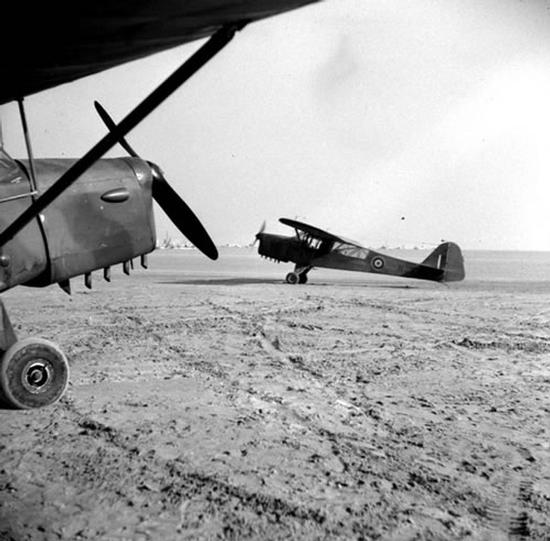
Taylorcraft Auster A.O.P. III aircraft of the R.A.F. operating from the beach at Ortona in support of regiments of the Royal Canadian Artillery. Ortona, Italy, 10 Feb 1944. Credit: Alex M. Stirton / Department of National Defence / Library and Archives Ca
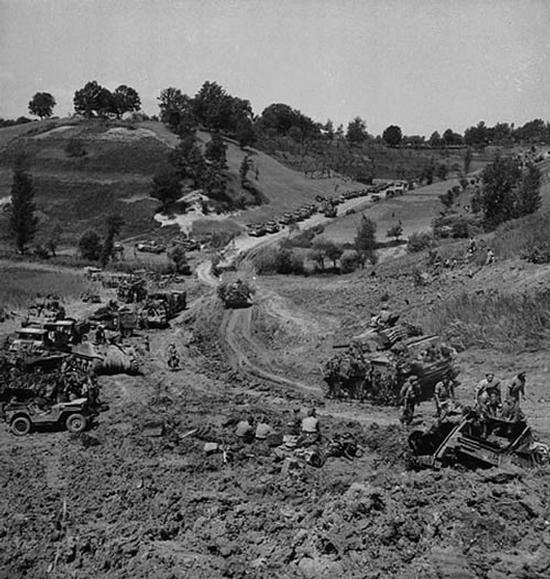
Canadian forces advancing from the Gustav Line to the Hitler Line. Credit: Strathy Smith / Department of National Defence / Library and Archives Canada / PA-140208
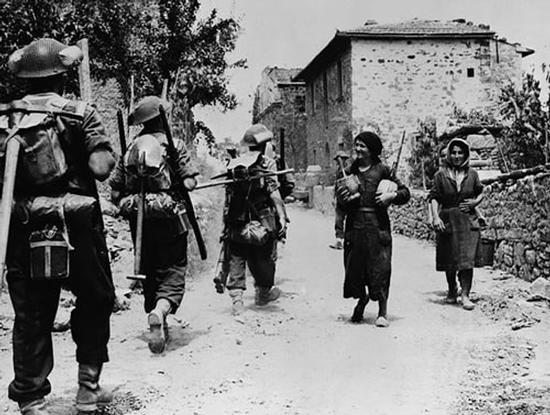
Canadian troops enter village where the previous week German soldiers had massacred the male inhabitants. Credit: Alexander M. Stirton / Department of National Defence / Library and Archives Canada / PA-129763
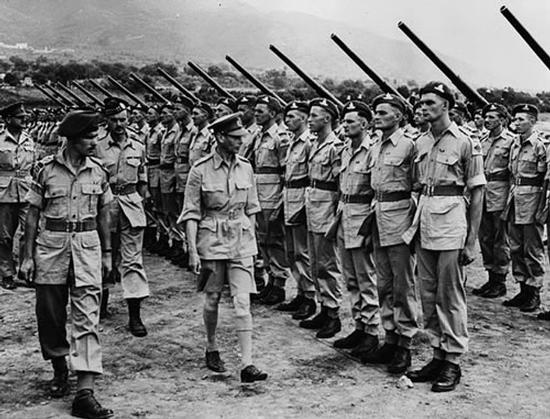
His Majesty King George VI inspecting the 2nd Medium Regiment, Royal Canadian Artillery (R.C.A.). Credit: Alexander M. Stirton / Department of National Defence / Library and Archives Canada / PA-128090
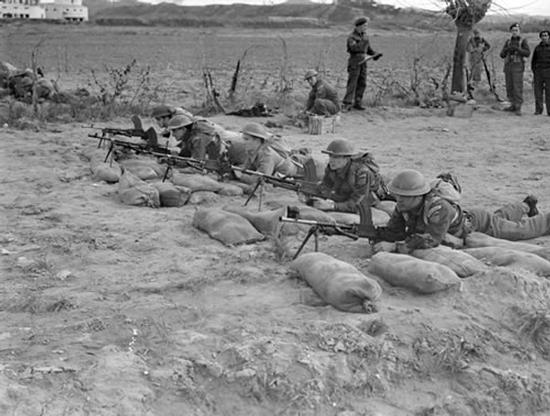
Infantrymen of the Royal 22e Régiment shooting target practice on a Bren gun range near Cattolica. Credit: Lt. J.E. Dequire/Department of National Defence/Library and Archives Canada/PA-190299
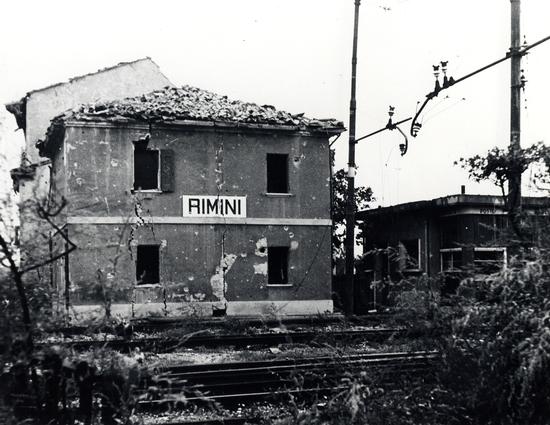
Ruins of railway station, Rimini, Italy, September 1944. Credit: Department of National Defence/Library and Archives Canada/PA-41299
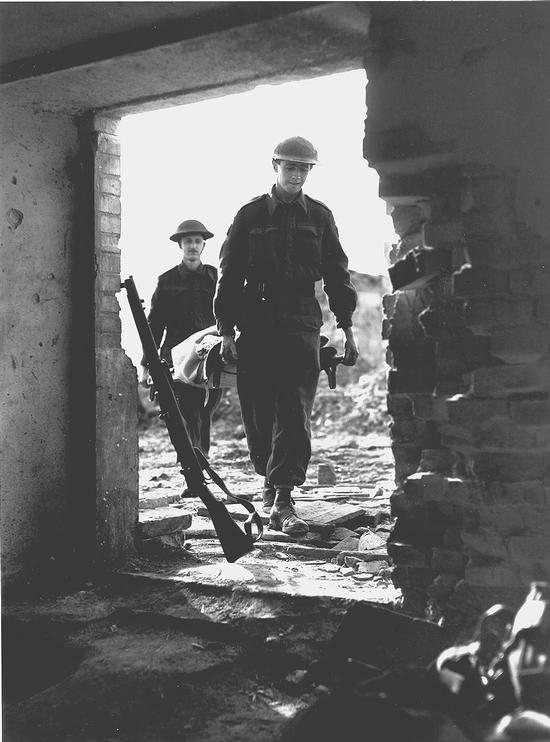
Evacuation of wounded, Ortona, Italy, January 1944. Credit: Alexander M. Stirton/Department of National Defence/PA-112945
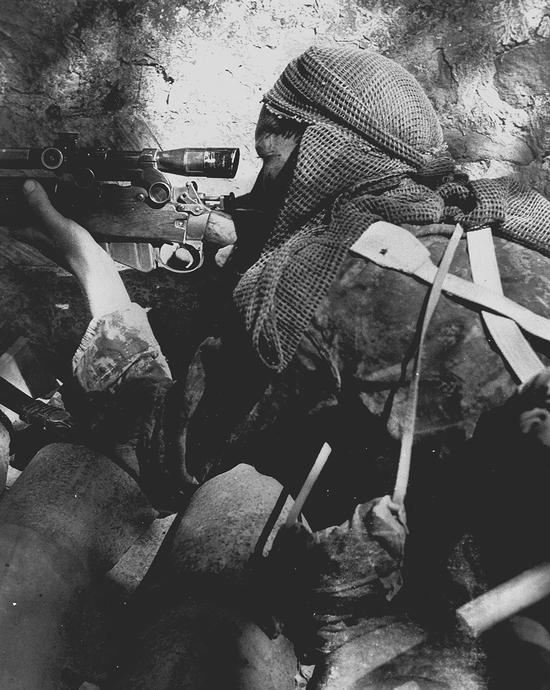
Private L.V. Hughes, 48th Highlanders of Canada, sniping German position 1944 / Foglio River, Italy (vicinity). Credit: Department of National Defence/Library and Archives Canada/PA-116842
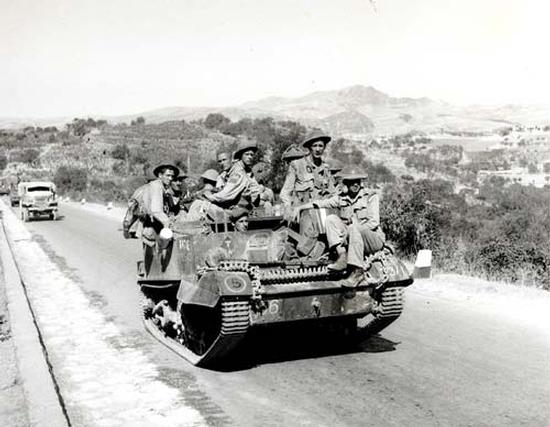
Personnel of the Hastings and Prince Edward Regiment in a Universal Carrier advancing on Nissoira, Italy. July 1943. Credit: Library and Archives Canada PA-114511
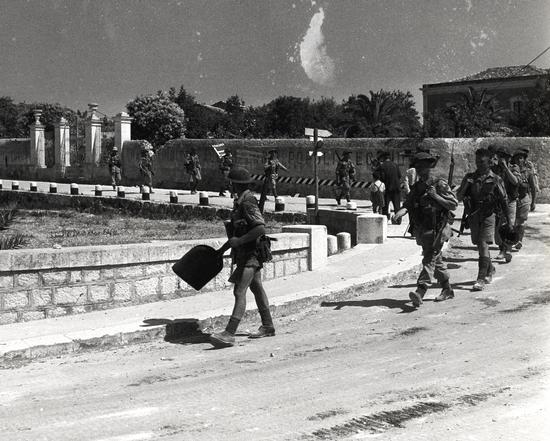
Personnel of the Edmonton Regiment entering Modica, Italy, 13 July 1943. Credit: Library and Archives Canada/PA-116848
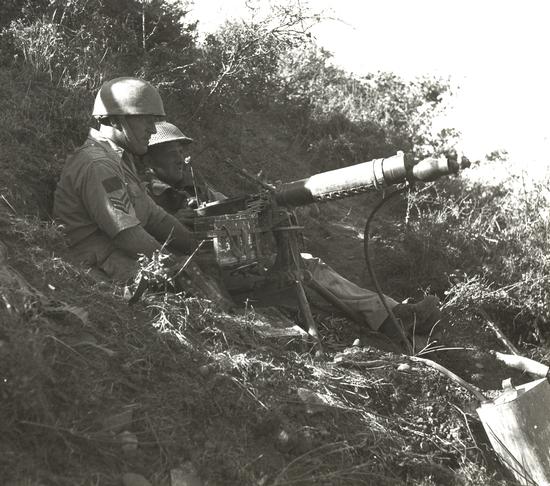
Machine gunners of the Saskatoon Light Infantry, Potenza, Italy, 20 September 1943. (Left to right): Cp. L. Mason, Pte. D. Holstein. Credit: Alexander M. Stirton/ Department of National Defence/Library and Archives Canada/PA116851
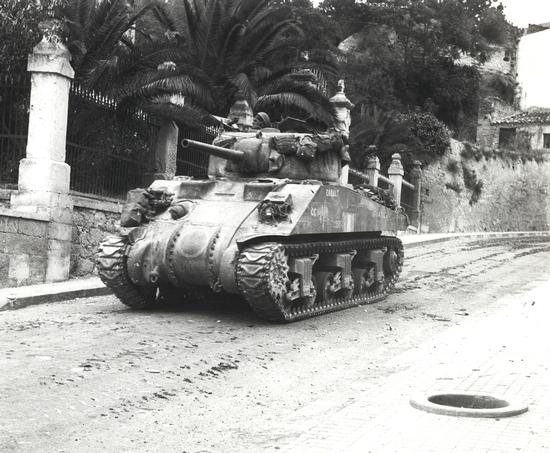
'Sherman' tank 'Cobalt' of Three Rivers Regiment, Agira, Italy, July 1943. Credit: Library and Archives Canada/PA-116853
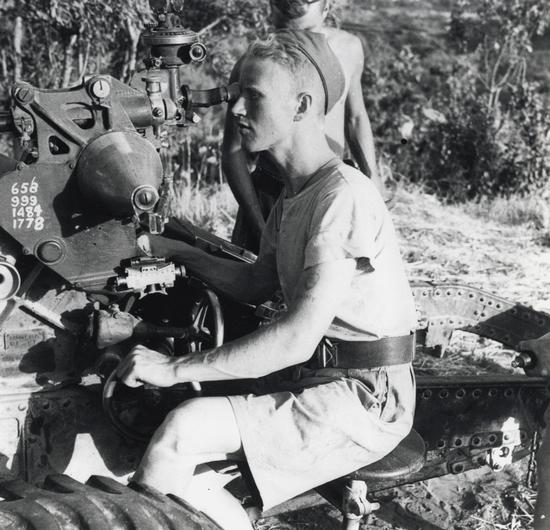
Gunner James Francis Walsh works sights of 25-pounder, 2 Field Regiment Royal Canadian Artillery 28 July 1943/Sicily. Credit: Department of National Defence/Library and Archives Canada/ PA-134528
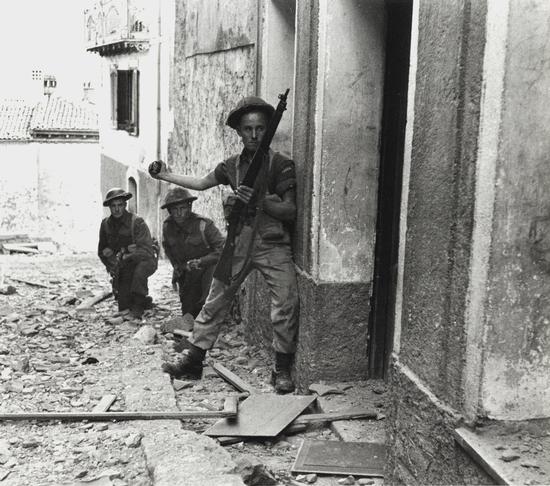
Trois hommes de la Brigade d'infanterie canadienne s'apprêtent à lancer une grenade dans une cachette de tireurs isolés dans les montagnes de Malta. Le 23 octobre 1943. Campochiaro (Italie). Source : Alexander M. Stirton/Ministère de la Défense nationale/
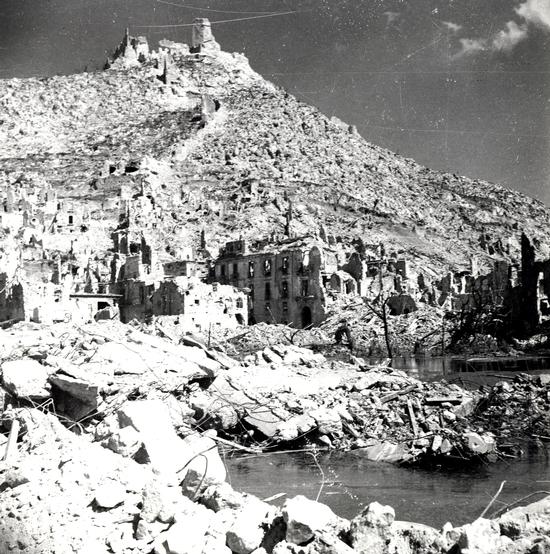
Ruines du colisée et du château, le 21 mai 1944, Cassino (Italie). Source : W. H. Agnew/Ministère de la Défense nationale/Bibliothèque et Archives Canada/PA-136204)

Princess Patricia's Canadian Light Infantry patrol walking up main street. July 1943/Agira, Italy. Credit: Library and Archives Canada/PA-138269
Italian Campaign
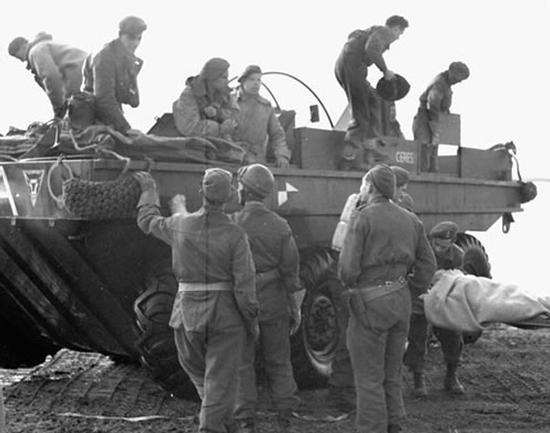
Wounded being unloaded from Terrapin, Scheldt pocket embarkation point, West of Terneuzen. 13 Oct. 1944 / Netherlands. Credit: Donald I. Grant/Canada. Dept. of National Defence/Library and Archives Canada/PA-136822
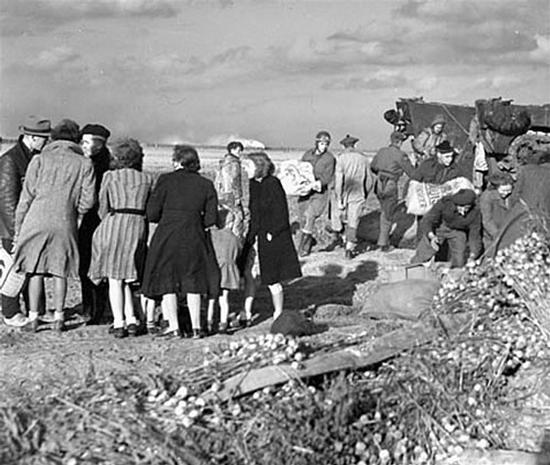
Soldiers of the 8th Brigade, North Shore Regiment, help civilians unload luggage from Alligator carrier after evacuation 13 Oct. 1944 / Neuzen, Netherlands. Credit: Donald I. Grant/Canada. Dept. of National Defence/Library and Archives Canada/PA-137233
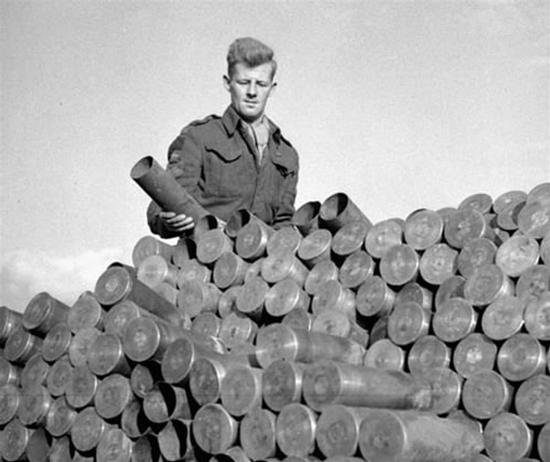
Sergeant E.F. Offord (Ottawa, Ont.) piling empty shell cartridges from previous barrage 23 Oct. 1944 / Ossendrecht, Netherlands. Credit: Ken Bell/Canada. Dept. of National Defence/Library and Archives Canada/PA-143928
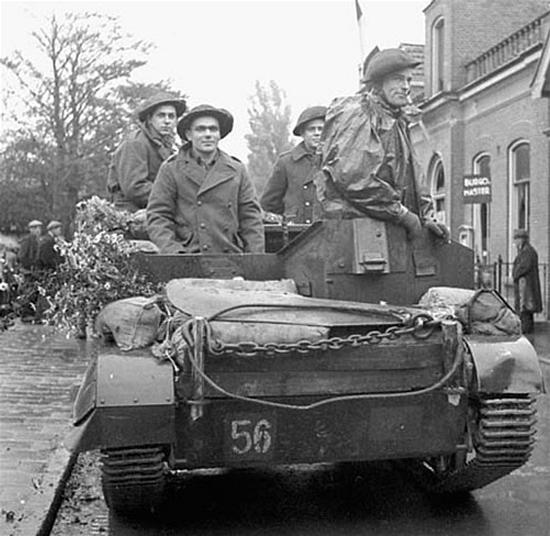
Personnel of the Royal Hamilton Light Infantry riding in Universal Carrier 27 Oct. 1944 / Krabbendijke, Netherlands. Credit: Ken Bell/Canada. Dept. of National Defence/Library and Archives Canada/PA-138420
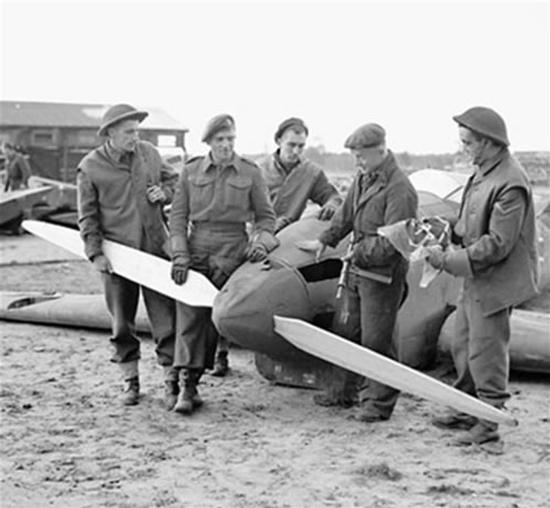
Royal Canadian Army Service Corps (R.C.A.S.C.) personnel of the 4th Canadian Armoured Division examining a captured German dummy aircraft. October 28, 1944 / Huijbergen, Netherlands. Credit: Harold G. Aikman/Canada. Dept. of National Defence/Library and A
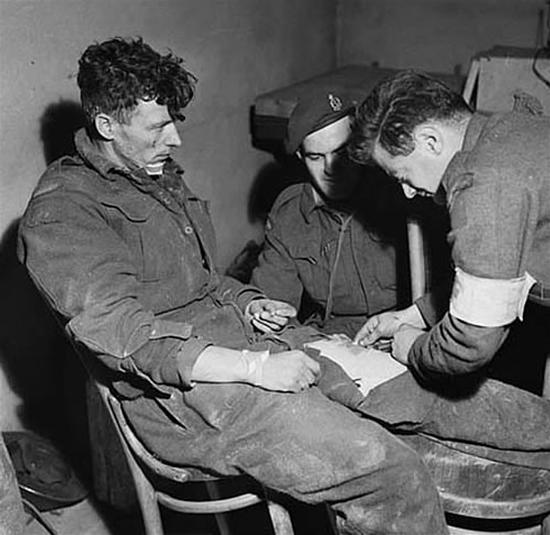
Private W.R. Van Herne of the Calgary Highlanders receiving an injection in his wounded thigh from Privates G.M. Goderre and H. Couture 1 Nov. 1944 / Beveland Peninsula, Netherlands. Credit: Ken Bell / Canada. Dept. of National Defence / Library and Archi
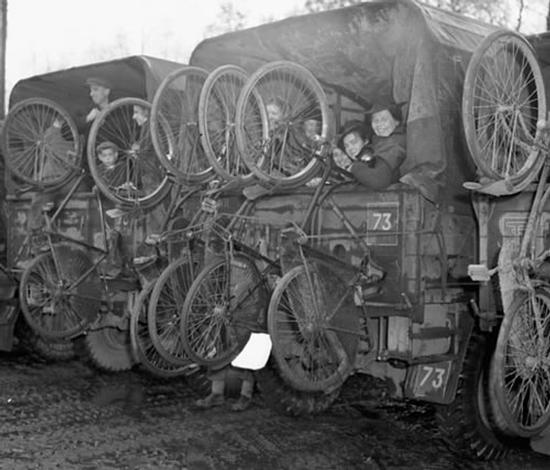
Army truck loaded w ith evacuees. Bicycles which are prize possessions, can be seen hanging from the back of the truck 20 Nov. 1944 / Nijmegen, Netherlands. Credit: Library and Archives Canada/PA-140430
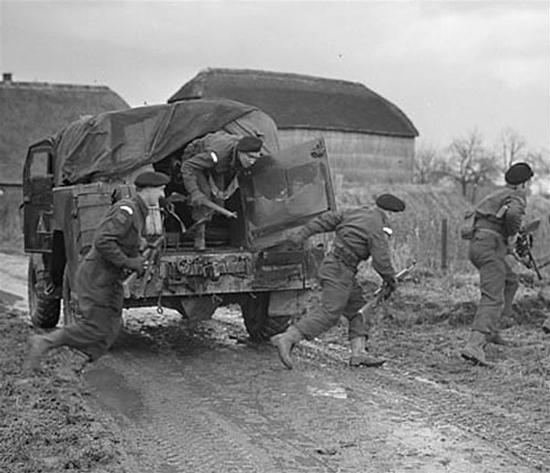
Troopers of a Canadian armoured brigade getting out of a new General Motors Canada fifteen-hundred weight armoured truck near Nijmegen. December 5, 1944 / Nijmegen, Netherlands (vicinity). Credit: Barney J. Gloster/Canada. Dept. of National Defence/Librar
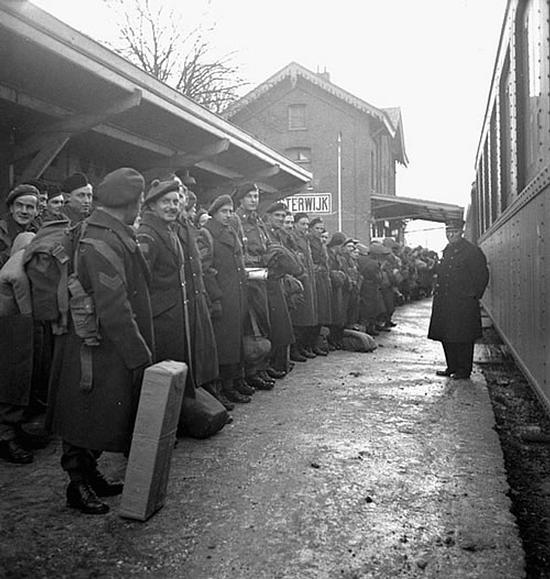
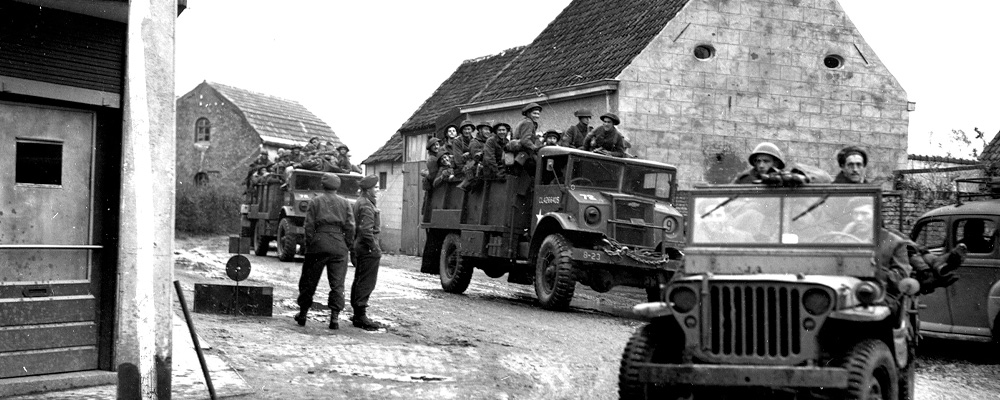
Arrival of English and Canadian troops at station 31 Dec. 1944 / Oisterwijk, Netherlands. Credit: Canada. Dept. of National Defence /Library and Archives Canada/PA-138301
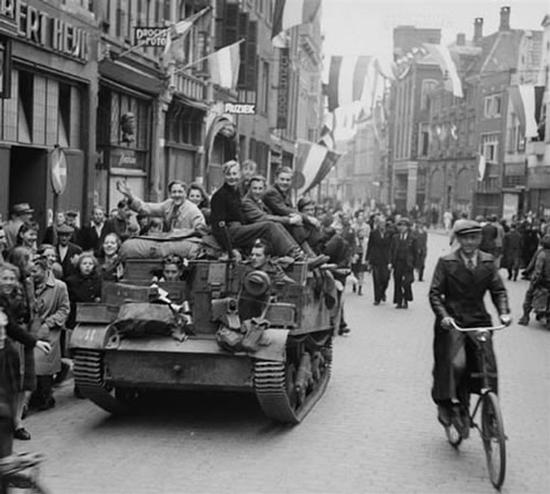
Dutch civilians on a Universal Carrier of Le Régiment de la Chaudiere celebrating the liberation of Zwolle 13 Apr. 1945 / Zwolle, Netherlands. Credit: Donald I. Grant / Canada. Dept. of National Defence / Library and Archives Canada / PA-136176
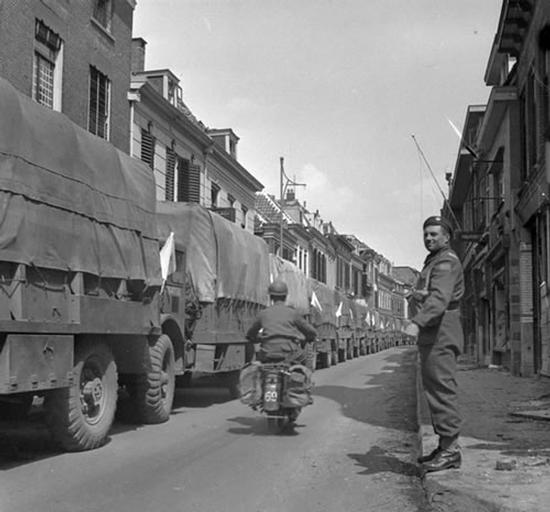
Convoy of trucks of Allied foodstuffs being moved to German occupied territory in western Netherlands. 3 May 1945 / Wageningen, Netherlands (vicinity). Credit: Alexander M. Stirton/Canada. Dept. of National Defence/Library and Archives Canada/PA-134419 .
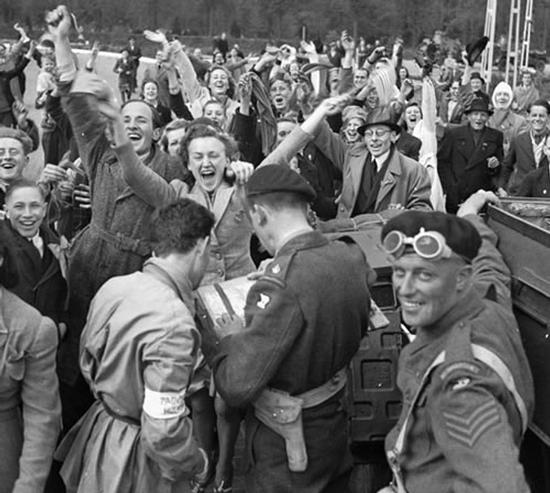
Dutch civilians and Canadian Army troops celebrating the Liberation. 7 May 1945 / Utrecht, Netherlands. Credit: Alexander M. Stirton/Canada. Dept. of National Defence/Library and Archives Canada/PA-134377.
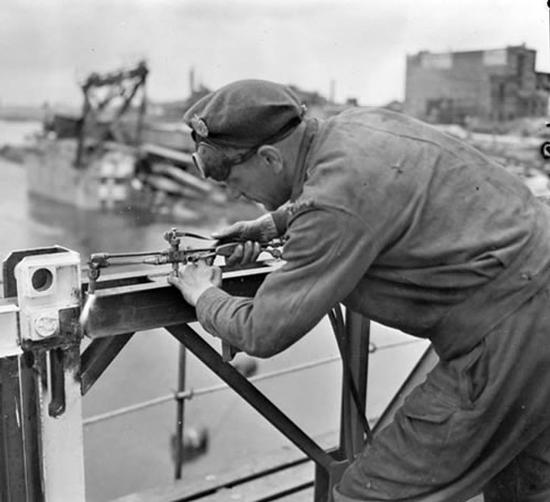
Spr. M.G. Ougler, Second Battalion Canadian Engineers, putting the finishing touches to one of the two new bridges built by the Canadian Engineers. 28 May 1945 / Zutphen, Netherlands. Credit: Canada. Dept. of National Defence/Library and Archives Canada /
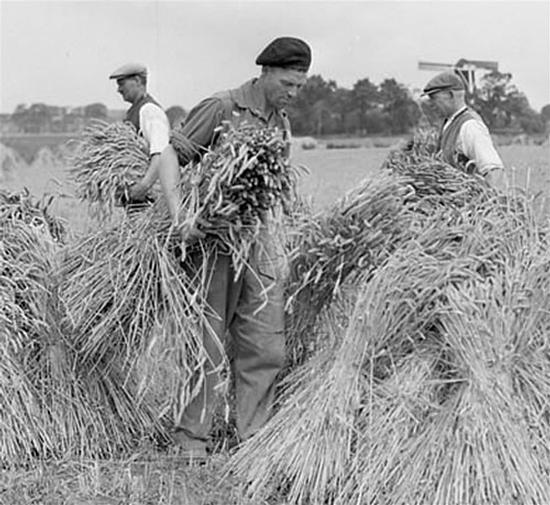
Trooper G.E. Hawley, Westminster Regiment, stooking wheat with Dutch farmers 10 Aug. 1945 / Groningen, Netherlands. Credit: Canada. Dept. of National Defence /Library and Archives Canada PA-140419
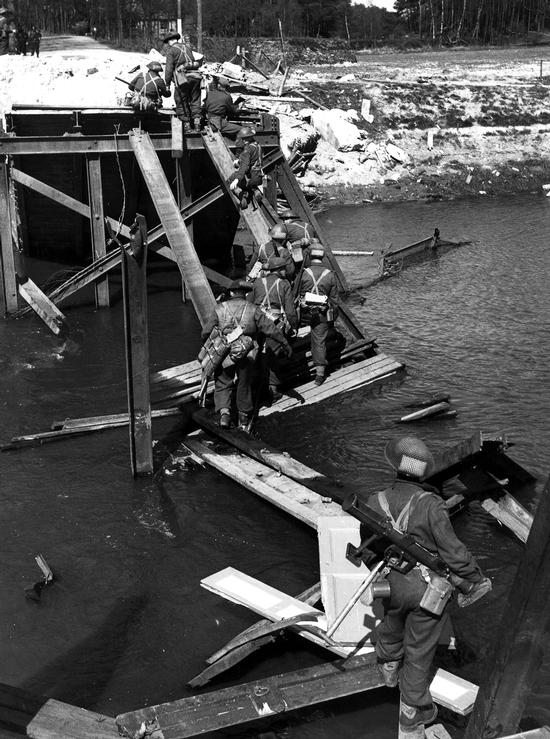
'D' Troops of the Black Watch of Canada crossing the Regge River near Ommen, Netherlands. 10 April 1945. Photo: Dan Guravich/Canada. Dept. of National Defence/Library and Archives Canada/PA 114596

This oil painting, Infantry, near Nijmegen, Holland, created by Canadian war artist Alex Colville, depicts obviously exhausted Canadian soldiers during the fighting which liberated the Netherlands from German occupation. Credit: Captain David (Alex) Alexa
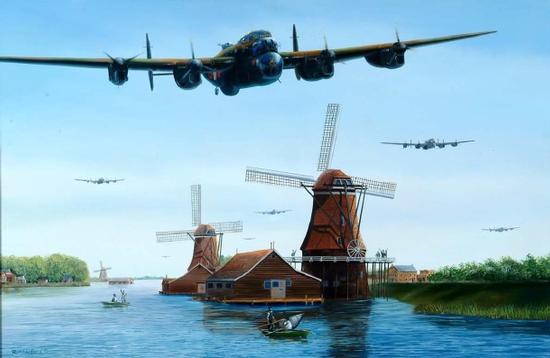
This painting by prominent aviation artist John Rutherford, of Kamploops, B.C., was commissioned for the Nanton Lancaster Air Museum 'Operation Manna Commemoration' which was held on 22 July, 1995. The aircraft depicted is the No. 625 Squadron Lancaster f
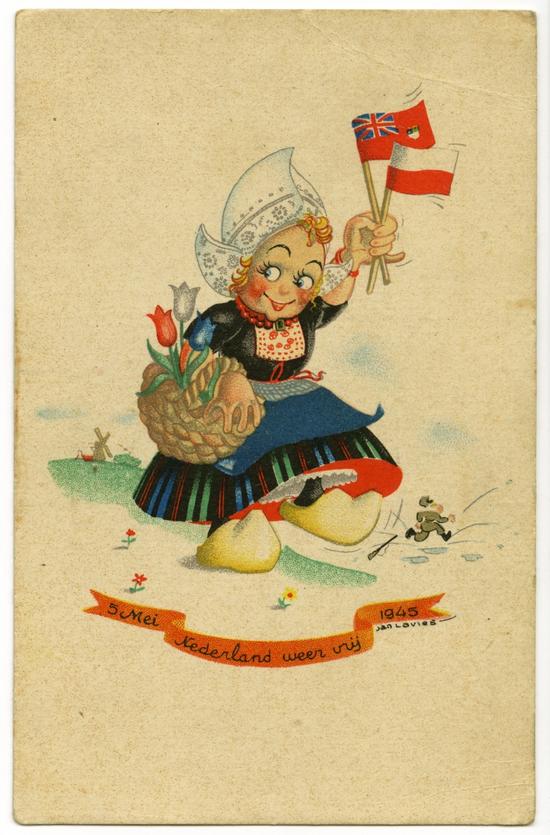
Postcard commemorating the liberation of the Netherlands. With symbolism and humour, the artist Jan Laviesm depicted the liberation of the Netherlands by Canadian and Polish forces. When German troops in the province of Holland surrendered on May 5, 1945,
Liberation of the Netherlands
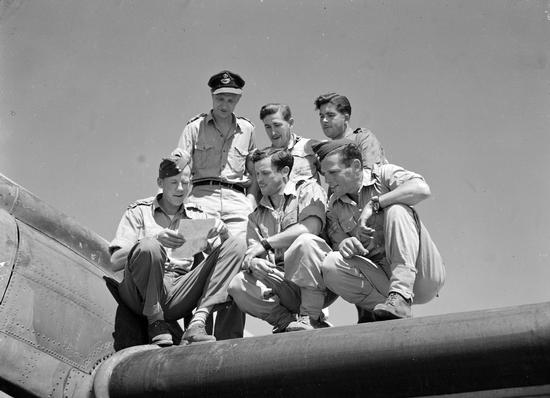
The Canadian transport Squadrons on the Burma front number six men from the bustling town of Powell River, B.C. and here they are getting together over the news from home. Standing: F/O John McIntosh (J 44080), Cpl. Roy Smythe, and LIC I.E. Hanson. Kneeli
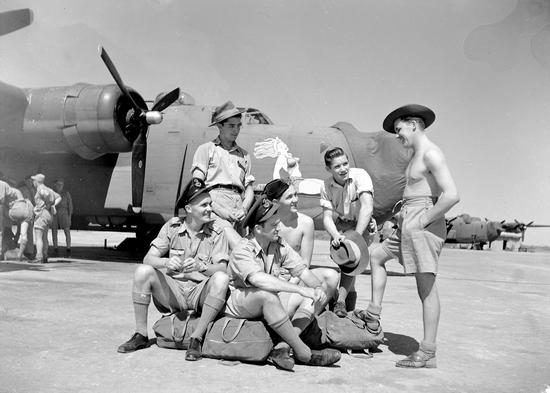
Night bombing of the important Japanese supply line between Bangkok and Rangoon has played a big part in the support of the 14th Army in its sweep through central Burma to Mandalay and the Irrawaddy. Some of the Canadians who have been doing this bombing

Cpl. Henry Schellinok of Eldersley, Sask., examines one of the headstones in a Japanese cemetery at the foot of Temple Hill, scene of some bitter fighting on the outskirts of Mandalay. April 19, 1945. Photo: Department of National Defence PL 60423
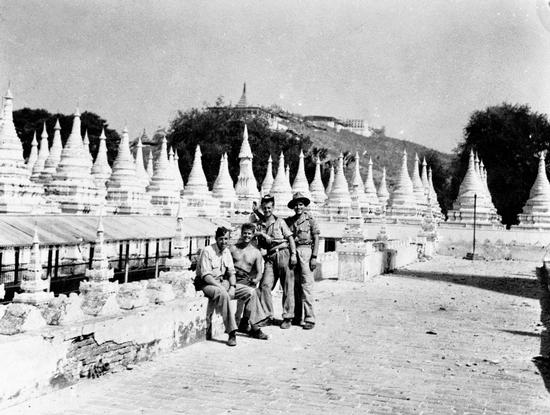
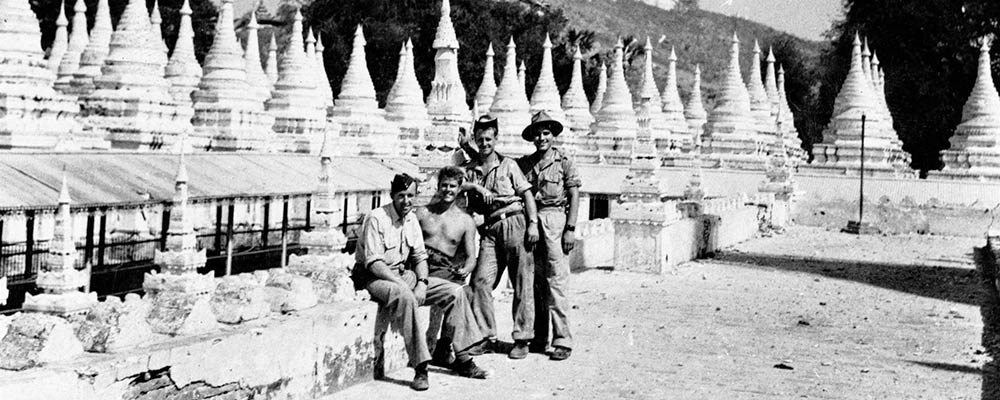
Four Torontonians, sight-seeing in Mandalay, visit the Place of Thousand Pagodas, a few of whose spires can be seen spreading behind them. In the background looms Temple Hill, which dominates the city from all directions. Left to right are LAC’s Lee Lodso
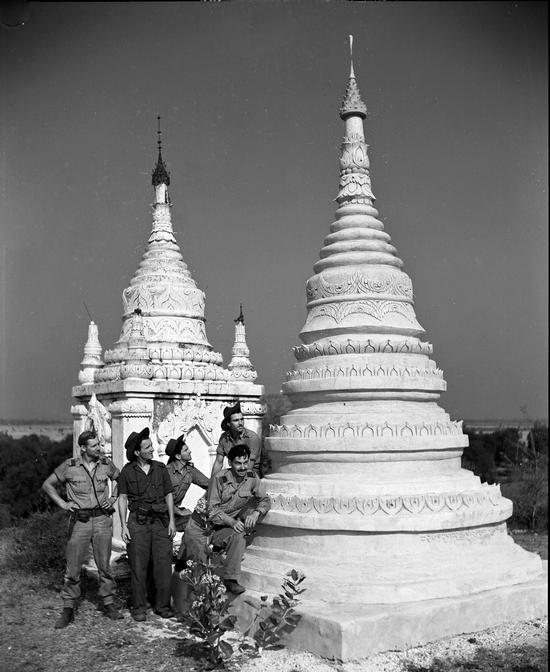
On the road to Mandalay the crew stopped to examine Buddhist pagoda. L to R. Dolphin, Simpson, Coyle, Cooper, Gordon. 436 SQN. April 17, 1945. Photo: Department of National Defence PL 60576
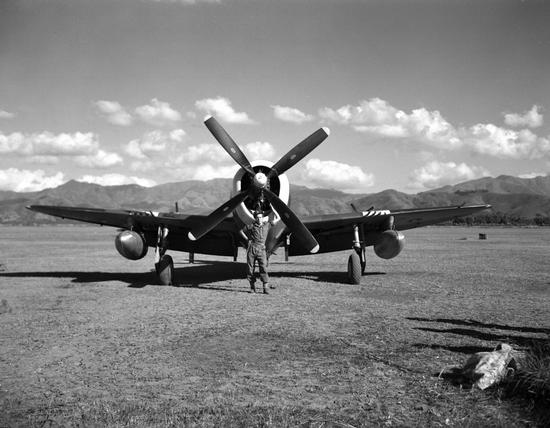
W.O R.E. Amey, flies in an RAF Thunderbolt squadron operating from a forward airfield on the Burma front. Designed as a high-altitude escort fighter. The “T-Box” is formidable also as a dive-bomber and low level strafing plane. No. 79 (RAF) SQN. Dec 44. P
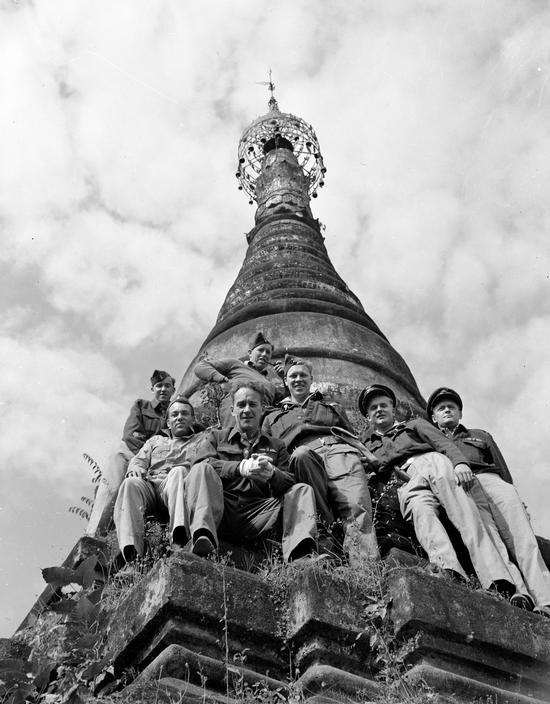
Delivering supplies to a newly won air strip in Burma, these airmen of an RCAF squadron discovered an interesting looking temple and hastened to investigate. It was abandoned, but the bells at the top still tinkled in the breeze. 435 SQN. December 28, 194
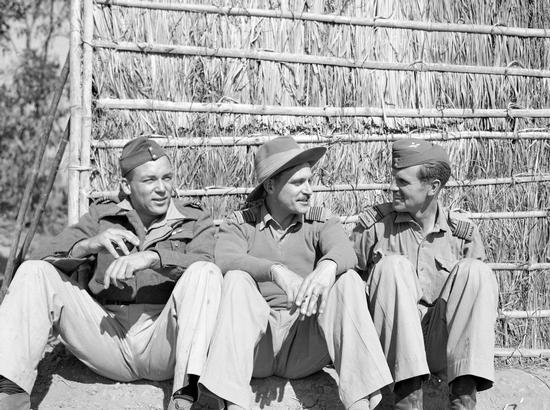
Thousands of hours of operational flying are represented in this picture of the C.O. and two flight commanders of the first RCAF squadron on the Burma front. 435 SQN. Dec 28, 1944. Photo: Department of National Defence PL 60119
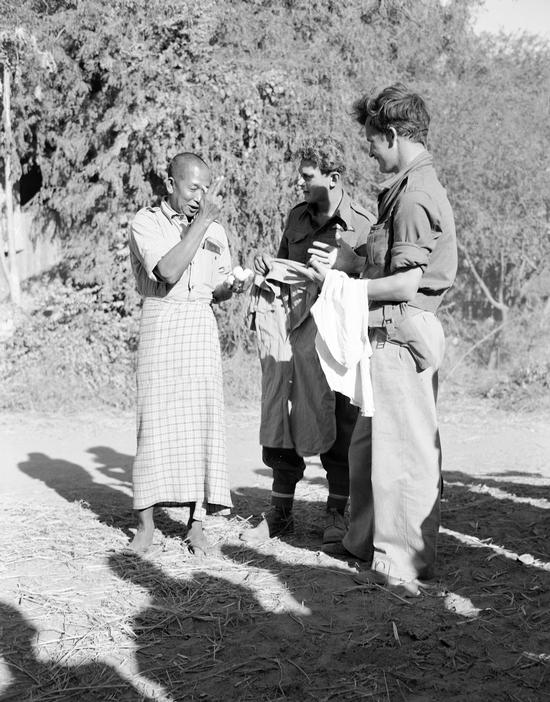
Burmese are hard up for clothing after three years of Japanese occupation and will barter chickens, eggs, etc. for old shirts and trousers. Trading shirt for eggs are Spitfire pilots. No. 155 (RAF) SQN. February 26, 1945. Photo: Department of National Def
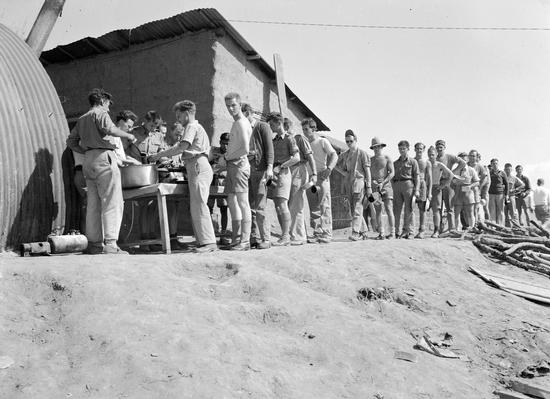
All over the world, in every war front, men are standing in line. Here they are getting their kharna (food) at an RCAF Dakota Squadron camp in Indian. Photo: Department of National Defence PL 60275
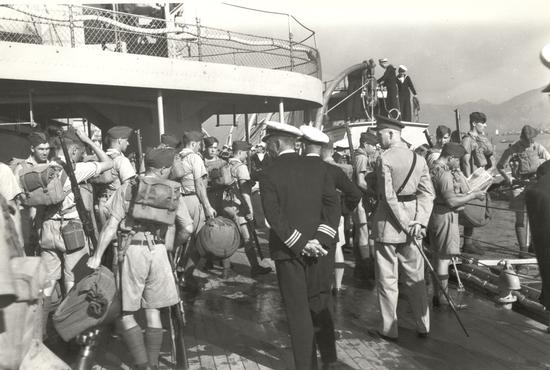
Disembarkation of Force C from H.M.C.S. Prince Robert. (Hong Kong) Photo: Canada. Dept. of National Defence / Library and Archives Canada / PA-114820
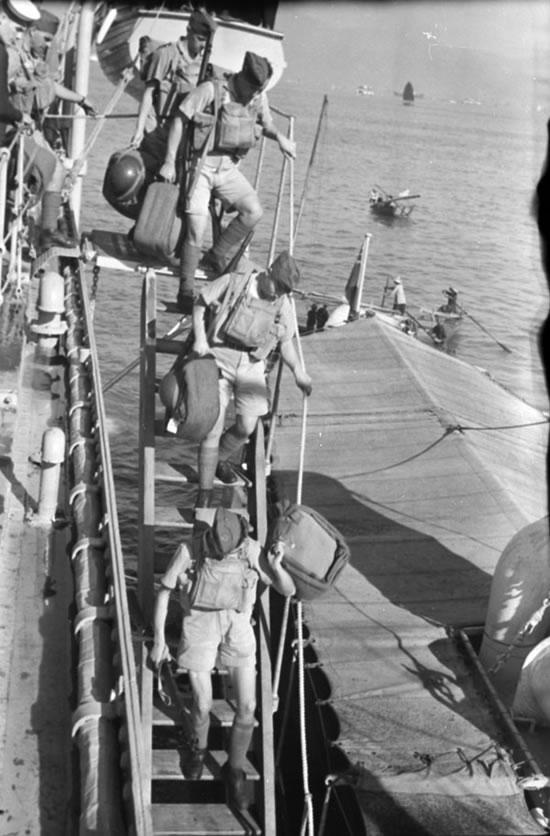
Troops of C Force landing at Hong Kong, 16 November 1941. Photo: Canada. Dept. of National Defence / Library and Archives Canada / PA-037419
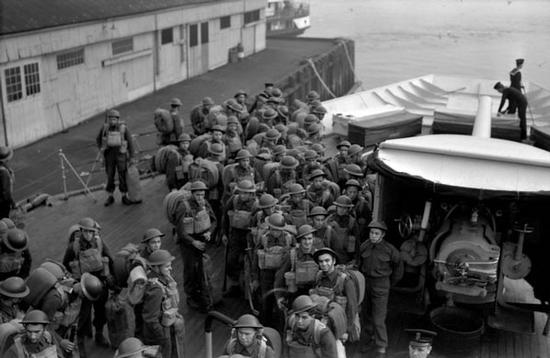
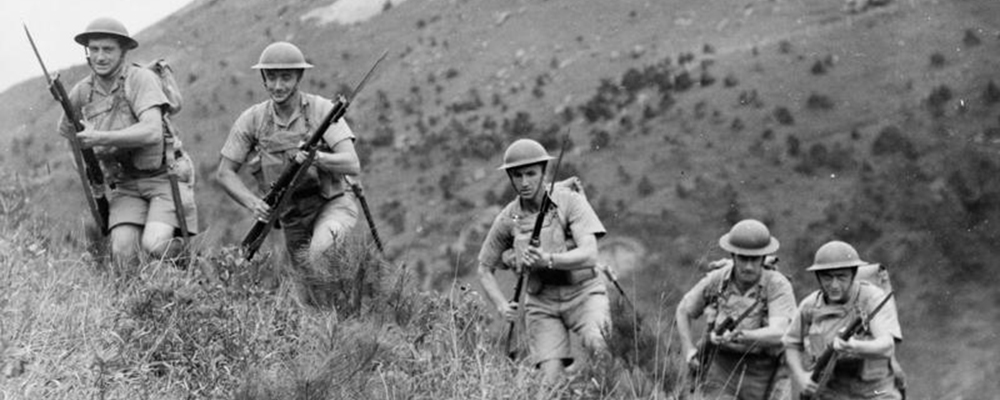
Canadian troops aboard H.M.C.S. Prince Robert en route to Hong Kong. Photo: Canada. Dept. of National Defence / Library and Archives Canada / PA-114891
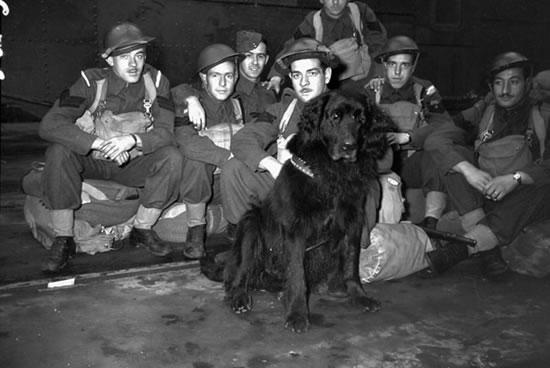
Personnel of the Royal Rifles of Canada and mascot en route to Hong Kong. Photo: Canada. Dept. of National Defence / Library and Archives Canada / PA-116791
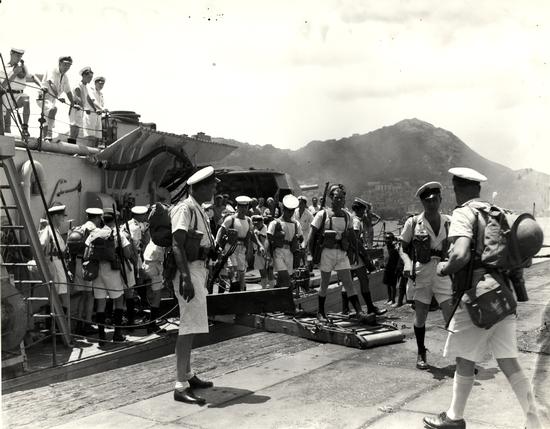
Landing party coming ashore from H.M.C.S. Prince Robert during the liberation of Hong Kong. Photo: Jack Hawes / Canada. Dept. of National Defence / Library and Archives Canada / PA-114810
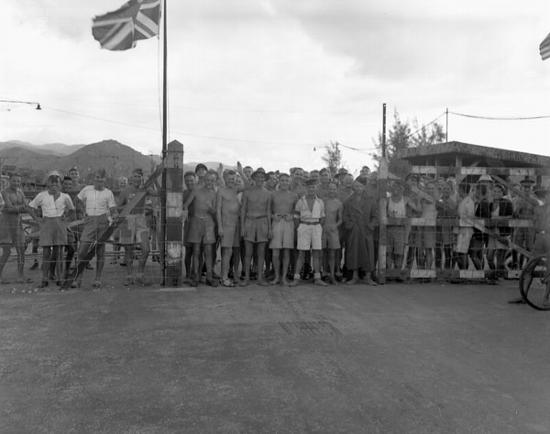
Canadian and British prisoners of war awaiting liberation by landing party from H.M.C.S. Prince Robert. Photo: Jack Hawes / Canada. Dept. of National Defence / Library and Archives Canada / PA-114811
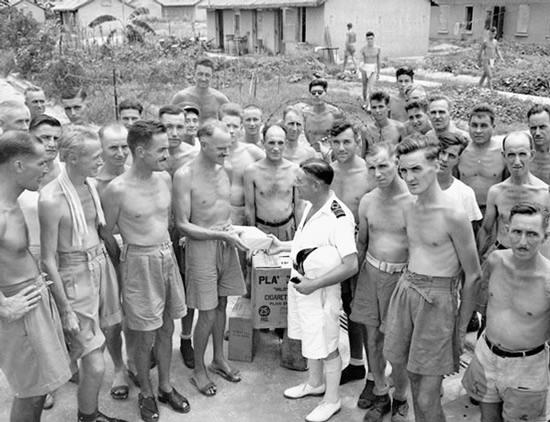
Commander Peter MacRitchie of H.M.C.S. Prince Robert meeting with liberated Canadian prisoners-of-war at Shamshuipo Camp. Photo: Petty Officer Jack Hawes / Canada. Dept. of National Defence / Library and Archives Canada / PA-193015
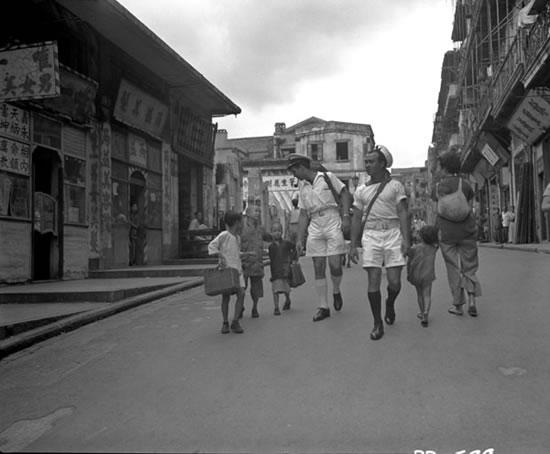
Chief Petty Officer Harold Kelly and Leading Seaman Nick Kryway of H.M.C.S. Prince Robert at liberty. Photo: Jack Hawes / Canada. Dept. of National Defence / Library and Archives Canada / PA-166427
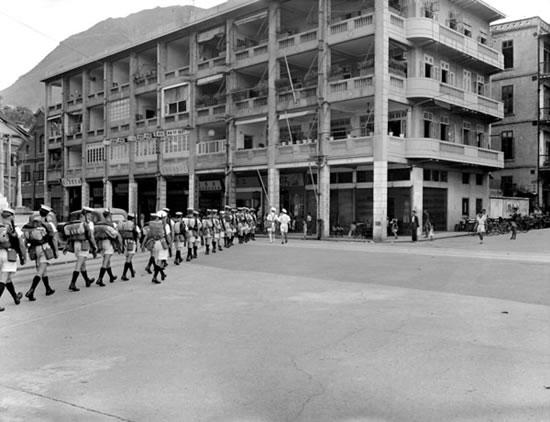
Landing party from the H.M.C.S. Ontario marching towards the Chinese Hotel, the headquarters of the Ontario and barracks for the troops. Photo: S.H. Draper / Canada. Dept. of National Defence / Library and Archives Canada / PA-136813
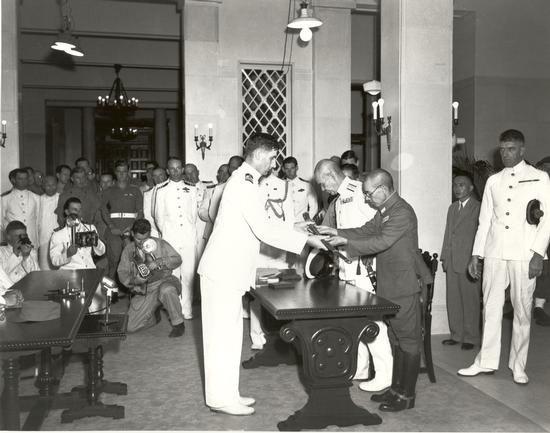
Major-General Okada handing over his sword during ceremony marking surrender of Japanese forces in Hong Kong, Government House. Photo: Jack Hawes / Canada. Dept. of National Defence / Library and Archives Canada / PA-114815
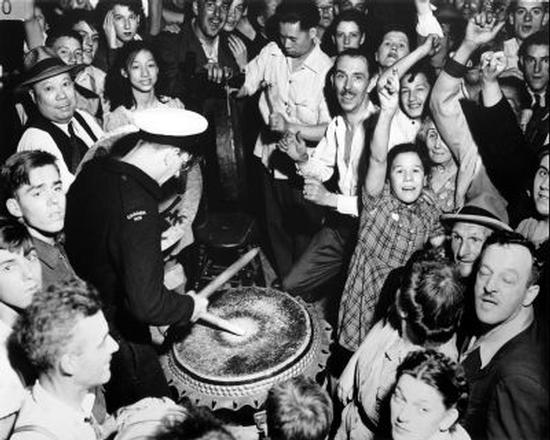
A drummer celebrates with the crowd on V-J Day in Montreal (August 15, 1945). Photo: National Archives of Canada PA-112810
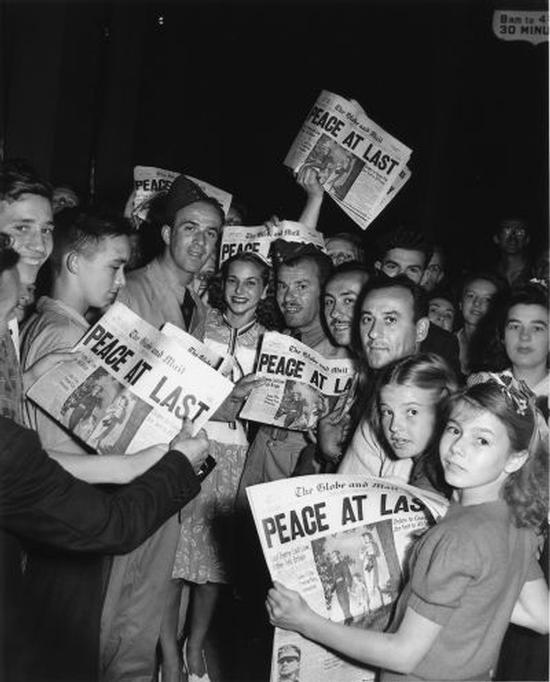
Children read the newspaper in Toronto (August 14, 1945). Photo: City of Toronto Archives, Globe and Mail Collection, Fond 1266 Item
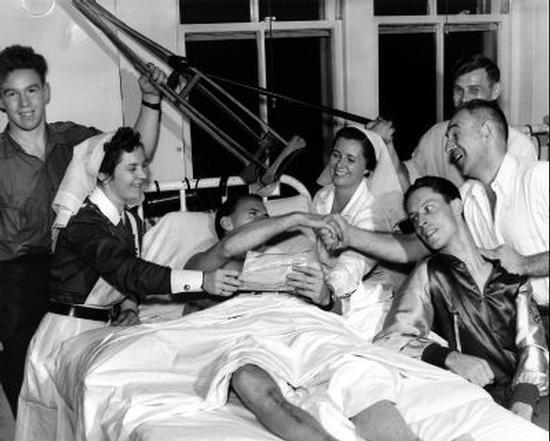
Wounded soldiers are treated at Christie Street Hospital in Toronto, August 14, 1945. Photo City of Toronto archives, Globe and Mail collection, Fund 1266, Item 98378
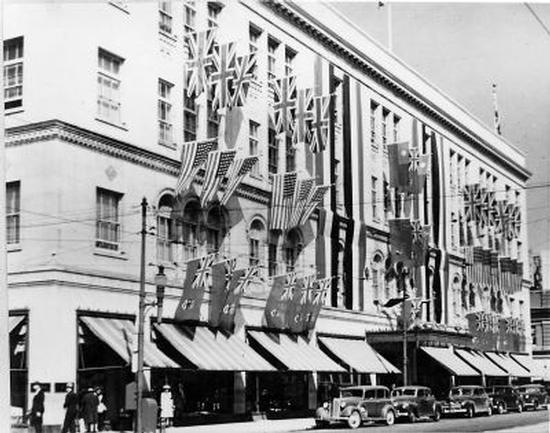
A decorated Eaton's department store, Calgary, Alberta (August 15, 1945). Photo: Glenbow Archives NA-2304-1
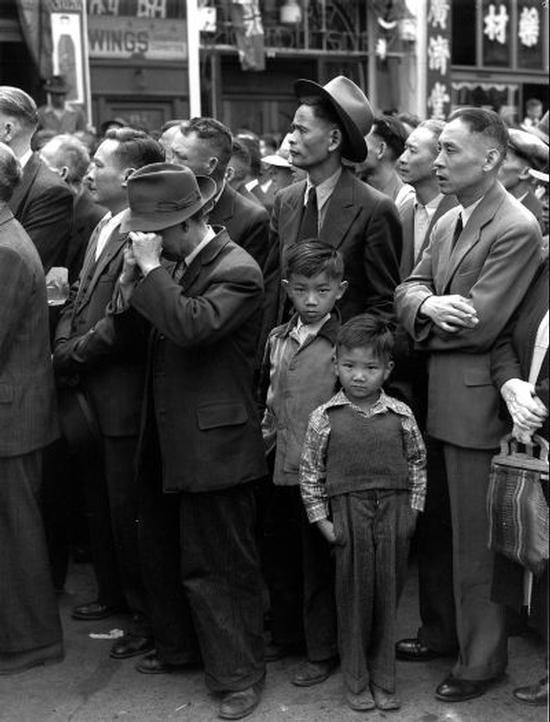
Watching the parade in Chinatown, Vancouver, British Columbia (August 15, 1945). Photo: City of Vancouver Archives/Jack Lindsay CVA 1184-3046

Celebrating V-J Day in Montreal, Quebec. National Archives of Canada PA-112805
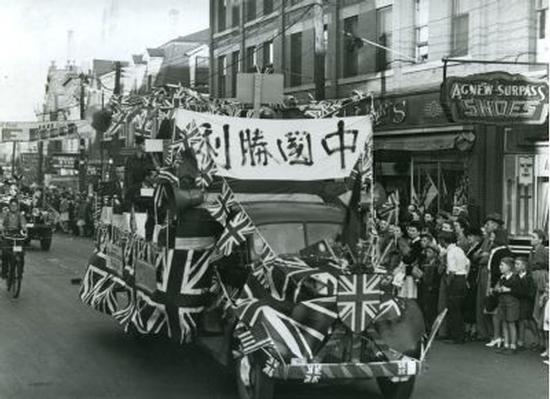
The Chinese community parades in Moncton, New Brunswick (August 15, 1945). Photo: Moncton Museum
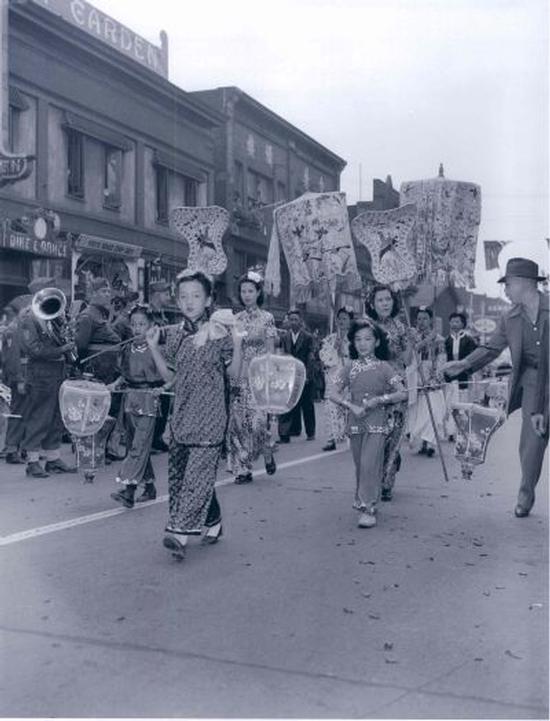
V-J Day parade in Chinatown, Vancouver, British Columbia (August 15, 1945). Photo: City of Vancouver Archives/Jack Lindsay CVA 1184-3047
South-east Asia