Manitoba

Province Code
MB
City/Municipality
Brandon
Memorial Number
46001-005
Type
Address
1116 Victoria Avenue
Location
26th Field Regiment Museum
in Canada
Yes
GPS Coordinates
49.8421537, -99.9534127
Inscription

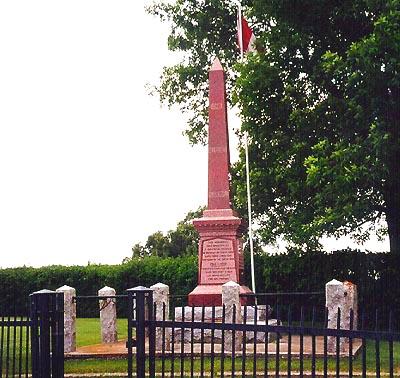
TO THE GLORY OF GOD AND IN MEMORY OF THOSE MEN OF 71ST BATTERY RCA WHO GAVE THEIR LIVES IN WORLD WAR II
1939-1945

"THEIR MISSION ACCOMPLISHED - OURS BUT BEGUN"

Image
Caption
71st Battery, Royal Canadian Artillery Memorial
Province
!4v1619523519907!6m8!1m7!1s56PsxJJ7wEJsw4erHVxluA!2m2!1d49.84215388409311!2d-99.95341237212477!3f146.37496659104872!4f-3.2026688834829002!5f3.290961834739859
Body Content

This memorial is dedicated to the men of the 71st Battery, Royal Canadian Artillery, Canadian Army Service Force, who died during the Second World War.

City
Brandon
Country
Type Description
Cairn - cement, cross
Memorial CF Legacy ID
2163
City/Municipality
Killarney
Memorial Number
46001-004
Type
Address
415 Broadway Avenue
Location
Municipal Civic Office
in Canada
Yes
GPS Coordinates
49.1823153, -99.6646771
Inscription

[front/devant]
IN HONOUR OF ALL
WHO SERVED
FOR THE CAUSE OF FREEDOM
IN THE
GREAT WAR
1914 - 1919

ELOQUENT DEAD
WE WILL NOT LET YOU DIE

SOMME     AMIENS
PASSCHENDAELE
VIMY     ARRAS

[left side/côté gauche]

[back/arrière]
ERECTED BY THE PEOPLE
OF KILLARNEY AND DISTRICT

(plaque)
WORLD WAR II 1939 - 1945

[right side/côté droit]

Image
Photo Credit
Dr. Gordon Goldsborough
Caption
front
1 of 5 images
Image
Photo Credit
Dr. Gordon Goldsborough
Caption
Second World War plaque
1 of 5 images
Image
Caption
back
1 of 5 images
Image
Photo Credit
Dr. Gordon Goldsborough
Caption
right side
1 of 5 images
Image
Photo Credit
Dr. Gordon Goldsborough
Caption
left side
1 of 5 images
War or Conflict Term
Province
!4v1619523332775!6m8!1m7!1s--ZkJ93uz5wbUa6NQOk1ew!2m2!1d49.18231460177122!2d-99.66467849769592!3f306.7251675020056!4f1.2684043845802222!5f2.8595389548288708
Body Content

At the Armistice Day service in 1923, Rev S. J. Wickens, Anglican Rector and former army chaplain, deplored the lack of a memorial to the war dead. By June 1924, the local Great War Veterans Association had established its own fund.

Rev Wickens announced at the annual Memorial Service in July 1925 the formation of a new committee headed by A. L. Mason, chairman; J. G. Kellet, secretary; H. L. Rogers, treasurer; and members T. Fairhall, B. Mason, W. J. Schnarr, W. A. Shaver, R. Squires and R. Clark. A sketch of the proposed monument appeared on the service leaflets. The district had been mapped out for canvassing with an objective of $3,000. Funds previously collected had been turned over to the committee in the amount of $1,290.

The site chosen was in front of the Town Hall and the canvas was completed by mid-December. Late in May 1926, a contract was signed with Hooper Marble and Granite of Winnipeg to supply the cenotaph at a cost of $3,350. Emanuel Hahn's grieving soldier was carved of marble in Italy. The foundation was laid and the materials arrived in early September and a dedication ceremony took place on Sunday September 25, 1926. The guest speaker was the Rev Col G. A. Wells together with Major F. G. Taylor, (later Colonel), chairman of the Canadian Pension Commission. The honour of the actual unveiling fell to the padre of the newly chartered branch of the Canadian Legion.

Emanuel Hahn's design represents the sorrows caused by war. The soldier atop the cenotaph looks down in sadness at the ground below him, as if he might find there, his fallen comrades, if not for the tragedy of war.

The statue depicts a young, grieving Canadian soldier in First World War army uniform. With uncovered head, he is standing at a battlefield grave – a simple cross with poppies and a broken chain at the base and the flag draped behind it – the final resting place of a comrade killed in action. His left hand rests on the cross, while his right hand holds a reversed rifle. His helmet is slung over his shoulder.

After 1945, a plaque was added to honour those that died in the Second World War.

Emanuel Hahn moved to Toronto at the age of seven with his family of artists and musicians from Germany, in 1888. He studied commercial design and model-making at Toronto Technical School and Ontario College of Art and Industrial Design. At 25 years old Hahn began a nearly lifelong contract with Thomson Monument Company of Toronto. Two years later, he also started work as a studio assistant to sculptor Walter Seymour Allward. Part of his duties included assisting on Allward’s significant works such as the South African War Memorial in Toronto.

In 1912 Hahn began an association with the Thomson Monument Company of Toronto. It was there, along with several assistants, he made the many war memorials that are found across Canada: Fernie, British Columbia; Killarney and Russell, Manitoba; Alvinston, BoltonCornwall, Hanover, Lindsay Malvern, Milton, Petrolia and Port Dalhousie, Ontario; Gaspe, Quebec; Moncton, New Brunswick; Springhill and Westville Nova ScotiaSummerside, Prince Edward Island.

Hahn is probably most famous as the designer of the Bluenose on the back of the Canadian dime and the Caribou on the back of the Canadian quarter. He was a victim of anti-German sentiment in the years following the Great War, when his design for the Winnipeg Cenotaph was rejected in 1925.

City
Killarney
Country
Type Description
Shaft, statue - granite
Memorial CF Legacy ID
195
City/Municipality
Melita
Memorial Number
46001-003
Type
Address
Elm Street and Veterans Way
Location
Central Park
in Canada
Yes
GPS Coordinates
49.27364, -100.9904
Inscription

[gate posts/poteaux de barrière]
MEMORIAL PARK

[front/devant]
IN MEMORY

THEIR NAME LIVETH

1899 SOUTH AFRICA 1902
A.W. ARMSDEN

1914 - 1918

MELITA ARTHUR

[right side/côté droit]
IN MEMORY
OF THOSE CANADIANS WHO
GAVE THEIR LIVES IN THE
PURSUIT OF PEACE
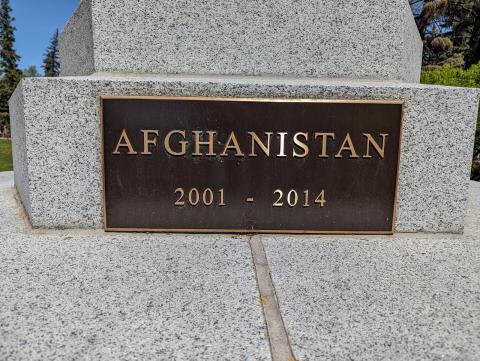
AFGHANISTAN
2001 - 2014

DEDICATED TO THOSE
CANADIANS THAT
MADE THE ULTIMATE
SACRIFICE IN THE
SERVICE OF THEIR
COUNTRY DURING
PEACEKEEPING MISSIONS
AROUND THE GLOBE.

[back/arrière]
IN MEMORY

KOREA
1950 - 1953

THIS MONUMENT WAS ERECTED BY THE
CITIZENS OF THE TOWN OF MELITA
AND THE MUNICIPALITY OF ARTHUR
IN HONOUR OF THOSE WHO GAVE THEIR
LIVES FOR THE CAUSE OF FREEDOM
IN THE GREAT WAR.

THIS CENOTAPH RE-DEDICATED TO THE
MEMORY OF THOSE WHO GAVE THEIR LIVES
IN WORLD WAR II 1939 - 1945

DIED IN THE SERVICE


1939 - 1945
1914 - 1918

MELITA ARTHUR

Image
Caption
right side inscription
1 of 6 images
Image
Caption
front inscription
1 of 6 images
Image
Caption
back
1 of 6 images
Image
Caption
right side
1 of 6 images
Image
Caption
front
1 of 6 images
Image
Caption
back inscription
1 of 6 images
Province
!4v1619523079559!6m8!1m7!1sabMQR07SnQiyCATErwXz9A!2m2!1d49.27327857861545!2d-100.9901923839258!3f332.3058108770902!4f-0.30928279101536305!5f3.325193203789971"
Body Content

Plans for the Melita Cenotaph were approved in July of 1931 and it was dedicated on November 11, 1931, to the memory of those who gave their lives in the First World War. In attendance were Mayor Lamont, Lieutenant-Colenel Clingan, E. Willis M.L.A., Honourable D. L. McLeod, Reeve McCallum (Arthur), Reeve Hartry (Brenda), Revs Franklin and Lee, and W. R. Cosgrove Secretary Treasurer of Napinka. This memorial was constructed by the town of Melita and Rural Municipality of Arthur.

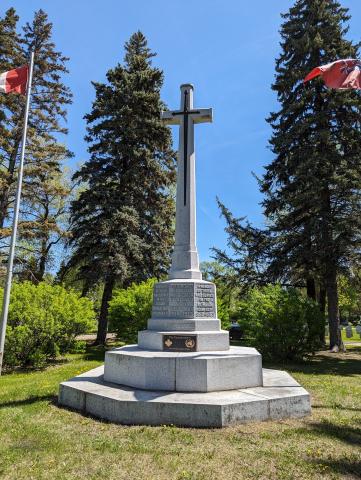
The main base of the cenotaph is 10 feet square and is topped by two smaller squares which support the nine feet high and four feet wide column. Names of those who died in the First World War are listed on a marble panel. Walkways lead to the northeast and southwest corners of the park. A driveway leads from the cenotaph to wrought iron gates with brick posts. The cost was about $1,100.

After the Second World War the cenotaph was re-dedicated to include the names of those who died in that war. In 2020, the cenotaph underwent minor renovations - the bottom step was removed and replaced with new brickwork, the stone was supplied from a quarry in Manitoba and the broken pieces were salvaged for a future project. A new plaque was installed commemorating the fallen soldiers of peacekeeping missions and the fallen from Afghanistan. Funds were raised  from Federal and Provincial grants (including the Military Memorial Conservation Grant), Municipality of Two Borders, Town of Melita, Sunrise Credit Union and private donations from the community. The Town of Melita also helped with the labour of restoring the centoaph under the direction of Earl Line who was commissioned for the project.

City
Melita
Country
Type Description
Stele - Tyndall stone
Photo Credit
Town of Melita
Memorial CF Legacy ID
201
City/Municipality
Deloraine
Memorial Number
46001-002
Type
Address
115 Cavers Street North
in Canada
Yes
GPS Coordinates
49.19451, -100.49557
Inscription

TO THE GLORY OF GOD
AND
THOSE WHO PAID THE SUPREME SACRIFICE
IN THE SECOND WORLD WAR
1939 - 1945

W H BOLES
G BRYSON
E F DECHIEF
G DINGWALL 
W J S EMBLETON
W G HUNTER


H W McCOLM
N B MORRISON
A H SCOTT
M K SEXTON
W J SKENE
H. C. WEIDENHAMER

 
PRESENTED IN THE TOWN OF DELORAINE AND DISTRICT A.D. 1953

Image
Caption
Deloraine Second World War Memorial
War or Conflict Term
Province
!4v1619522920038!6m8!1m7!1sEy5oQvrYZTR-MJp5MGBZ1Q!2m2!1d49.19453418739484!2d-100.4954425436613!3f255.9679722835612!4f-6.467503168201134!5f3.0035055679428067"
Body Content

This monument was constructed by the town of Deloraine in 1953 and is dedicated to the local men who died during the Second World War.

City
Deloraine
Country
Type Description
Slab - granite
Memorial CF Legacy ID
1807
City/Municipality
Deloraine
Memorial Number
46001-001
Type
Address
109 Kellett Street South
Location
Bren-Del-Win Lodge, Personal Care Home
in Canada
Yes
GPS Coordinates
49.1919037, -100.49813
Image
Caption
arch (front)
War or Conflict Term
Province
!4v1619522728610!6m8!1m7!1sTUTmrA7jJfny6HuiaXYaJQ!2m2!1d49.19211773902403!2d-100.4981356340014!3f261.2794296107921!4f-7.317381778014237!5f1.7321343503899738"
Body Content

This arch was constructed through the support of the citizens of Deloraine and is dedicated to twenty-seven local men who died during the First World War.

City
Deloraine
Country
Type Description
marble arch
Memorial CF Legacy ID
170
City/Municipality
Rockwood
Memorial Number
35026-028
Type
Address
Meridian Road
Location
Brant Argyle Cemetery
in Canada
Yes
GPS Coordinates
50.18914, -97.45931
Inscription
Image
Photo Credit
Settlers, Rails & Trails Inc.
Caption
surroundings
1 of 3 images
Image
Photo Credit
Settlers, Rails & Trails Inc.
Caption
front inscription
1 of 3 images
Image
Photo Credit
Settlers, Rails & Trails Inc.
Caption
front
1 of 3 images
War or Conflict Term
Province
Body Content

A stylized Egyptian obelisk was ordered by the congregation of the Brant-Argyle Presbyterian Church, to commemorate the local men who were killed in the First World War. The monument is made of white marble, in three pieces, and was shipped to Argyle via the Canadian Northern Railway. The local fathers (several who had lost sons) gathered at the railway station and used heavy wagons/horses to haul the three pieces 1/2 mile north to the church yard. The men then assembled the pieces on site.

The cenotaph lists the names of those who were killed in the First World War, has two crossed rifles carved near the top, and a palm frond surrounded by the dates 1914 1918 near the bottom.

At the end of the Second World War, the community added three names of those local men who were killed in that war. 

City
Rockwood
Country
Type Description
Obelisk
Memorial CF Legacy ID
9957
City/Municipality
Winnipeg
Memorial Number
46010-021
Type
Address
Memorial Boulevard and York Avenue
Location
Memorial Provincial Park
in Canada
Yes
GPS Coordinates
49.8876067, -97.149184
Inscription

[front/devant] 

Sir William S. 
STEPHENSON 
1897 - 1989 

The man called 
INTREPID

Image
Photo Credit
Tamara Wally; Victor Jarman
Caption
front
1 of 4 images
Image
Caption
detail
1 of 4 images
Image
Caption
inscription
1 of 4 images
Image
Caption
front
1 of 4 images
War or Conflict Term
Province
!4v1632761079738!6m8!1m7!1syszbJeDnxgJOIF0qKLrFPA!2m2!1d49.88760667794886!2d-97.14918400938053!3f341.0642726337663!4f-1.8167289846801964!5f0.7820865974627469
Body Content

The Intrepid statue depicts Sir Stephenson dressed in a First World War flight suit. He wears a standard aviator's hat with fleece and heavy elbow-length aviator gloves. His silk aviator's scarf is blowing slightly and his flight suit is tucked neatly into his flight boots. In his right hand he holds his flight book and his left arm is at his side, fist clenched. The statue was created by Winnipeg sculptor Leo Mol and unveiled by Princess Anne in 1999.

Sir William Stephenson was born in Winnipeg on January 23, 1897. He was orphaned as a young child, fascinated with Morse code as a teenager and was good at boxing. He enlisted in the First World War and is confirmed to have shot down twelve enemy planes, after just five hours of flying instructions. Taken prisoner of war, he escaped after three months. He returned to his squadron in 1918 where he was awarded the Military Cross, Distinguished Flying Cross, the Legion of Honour and the Croix de Guerre with Palms – all while still in his early 20s.

Stephenson moved to Britain where he invented the process for sending photographs over the wire electronically. He purchased a radio manufacturing company that made him a millionaire before he was thirty and then diversified into film, coal and oil refining, steel industry, television and aircraft production. He also helped found the British Broadcasting Corporation.

He was a soldier, airman, businessman, inventor and a true spymaster. Stephenson was pivotal in the creation of Special Operations for Canada and the Allied war efforts worldwide. One of his greatest successes was the establishment of a secret spy-training school during the Second World War that bordered Whitby and Oshawa, Ontario, known as Camp X. More than 2000 covert operators were trained at this school including Ian Fleming, author of the James Bond novels. Fleming said he used about 15 different spies as models for his character James Bond and William Stephenson was definitely one of them.

Spying was Stephenson’s greatest gift and he landed a position as Sir Winston Churchill’s most trusted confidant. As early as April 1936, he began voluntarily passing confidential information to Winston Churchill about how Adolf Hitler was building up his armed forces while hiding his military expenditures. He was given the name Intrepid by Churchill after he led the team that broke Enigma, the essential German coding machine.

He travelled between London and Washington, to convince President Roosevelt to join the Second World War. Stephenson was a key player in the establishment of an American intelligence service during the Second World War, which eventually became the CIA. There is a bronze statue of Stephenson at the CIA Headquarters in Washington, DC. This statue was also created by Leo Mol. He died at Paget, Bermuda on January 31, 1989.

Sir William Stephenson's medals confirmed as being awards or decorations he was entitled to are: Military Cross (ref London Gazette 30761); Distinguished Flying Cross (ref London Gazette 30913), British War Medal and Victory Medal (per UK Air Ministry Medal Roll); Queen Elizabeth Silver Jubilee Medal and the US Presidential Medal for Merit, the Companion of the Order of Canada, Knight Bachelor and Military Order of Malta insignia.

City
Winnipeg
Country
Type Description
Statue - bronze, granite shaft
Memorial CF Legacy ID
2723