
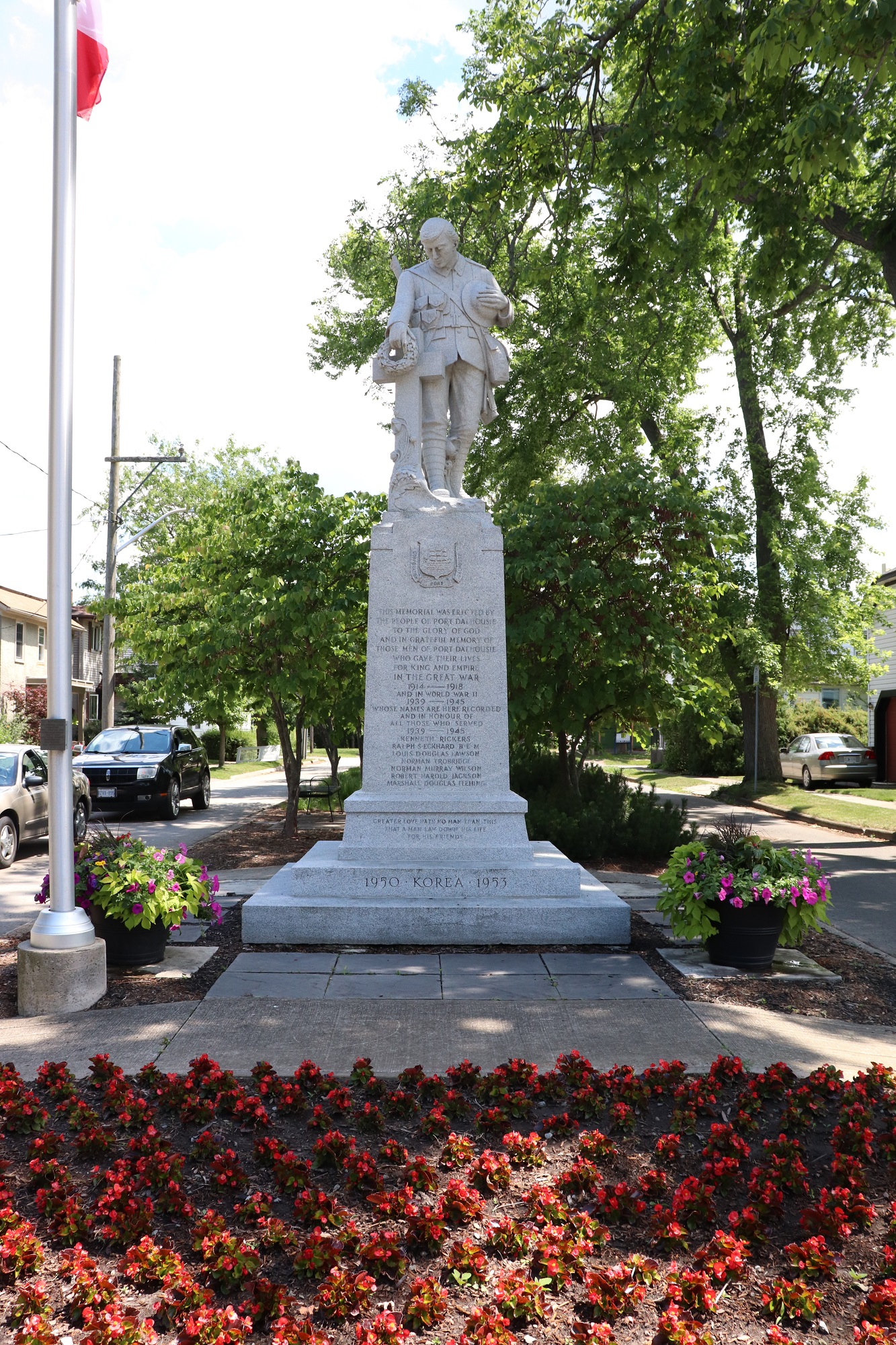
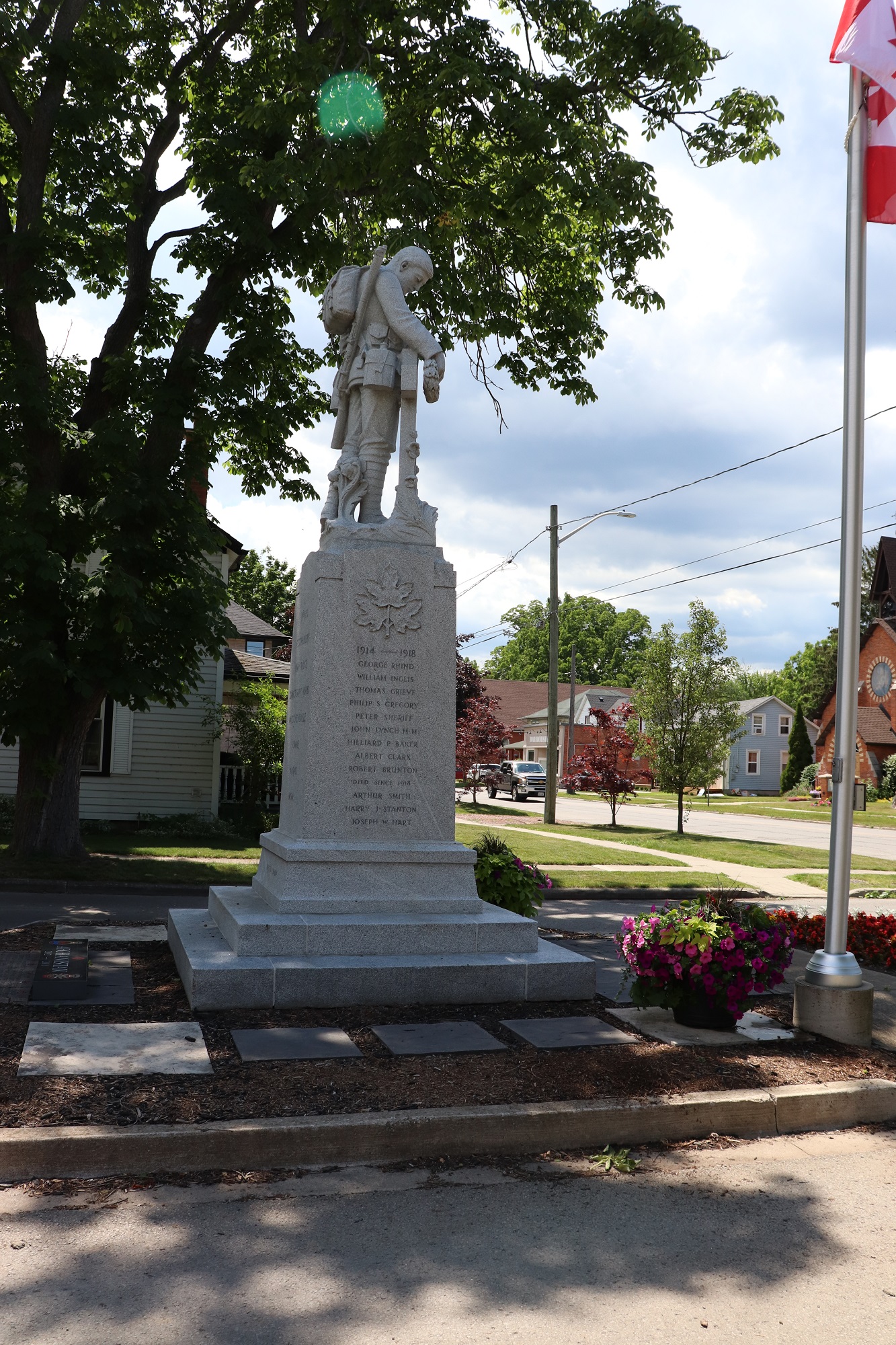
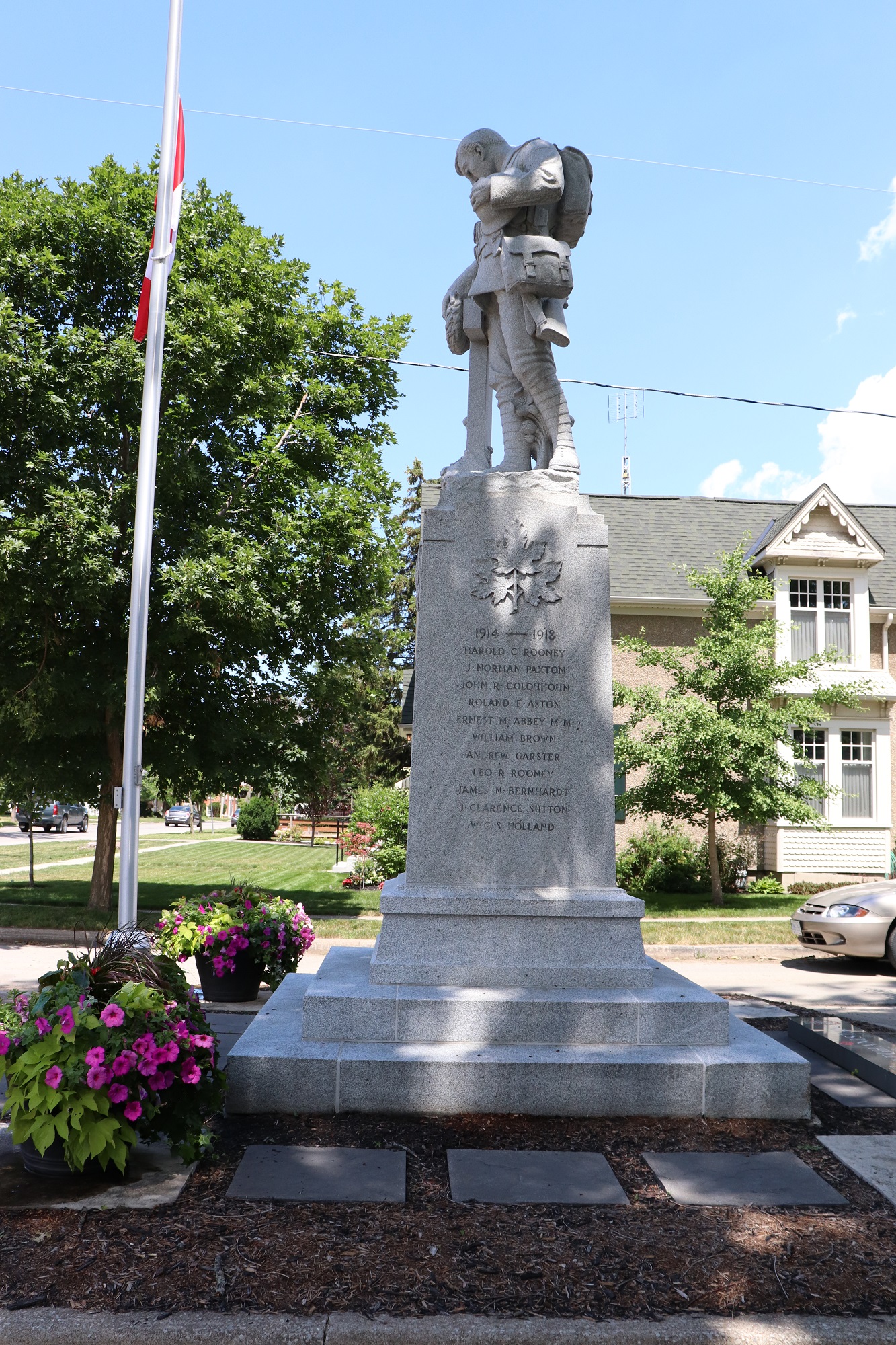
To remember the sacrifice of Port Dalhousie men who died in the First World War, the citizens decided a cenotaph would be placed in the center of town. The memorial fund was started in 1916 after receiving word of the first casualty Harold Rooney who died on June 6, 1916. All the necessary funds were raised by donations.
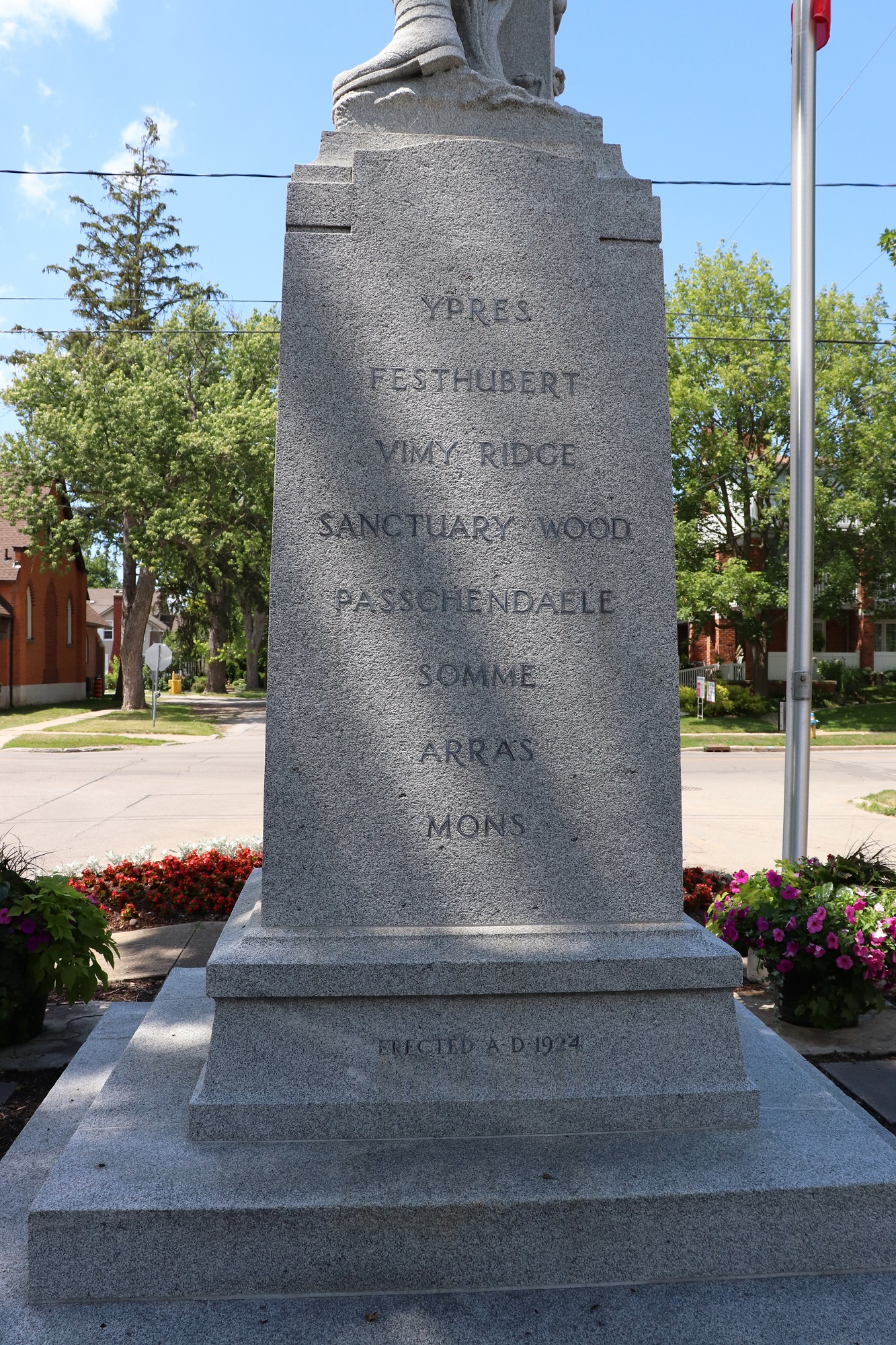
Port Dalhousie Cenotaph was dedicated on Sunday afternoon November 23, 1924. A huge crowd attended the parade, unveiling and dedication. The Lincoln Regiment formed the guard for Lieutenant-Governor Henry T. Cockshutt who received the military salute, inspected the guard and unveiled the monument. The 10th Field Battery, Veterans of the 1866 Fenian Raids and many Great War Veterans were in attendance.
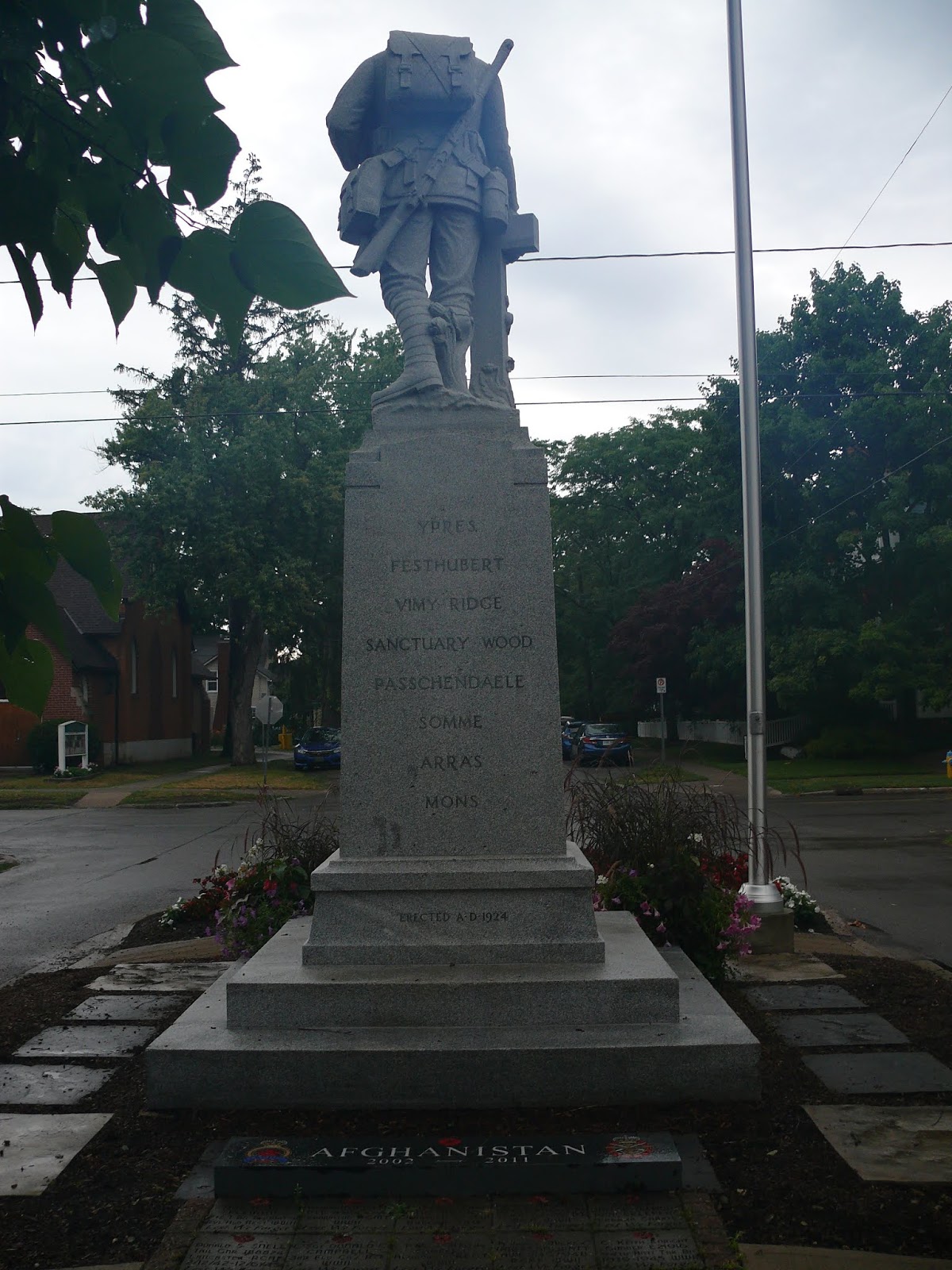
The cenotaph bears the names of 20 soldiers who died during the war and an additional three who passed away shortly after the armistice. Carved into the back side is a list of battles where they fought and the Town’s seal is on the upper portion of the front face.
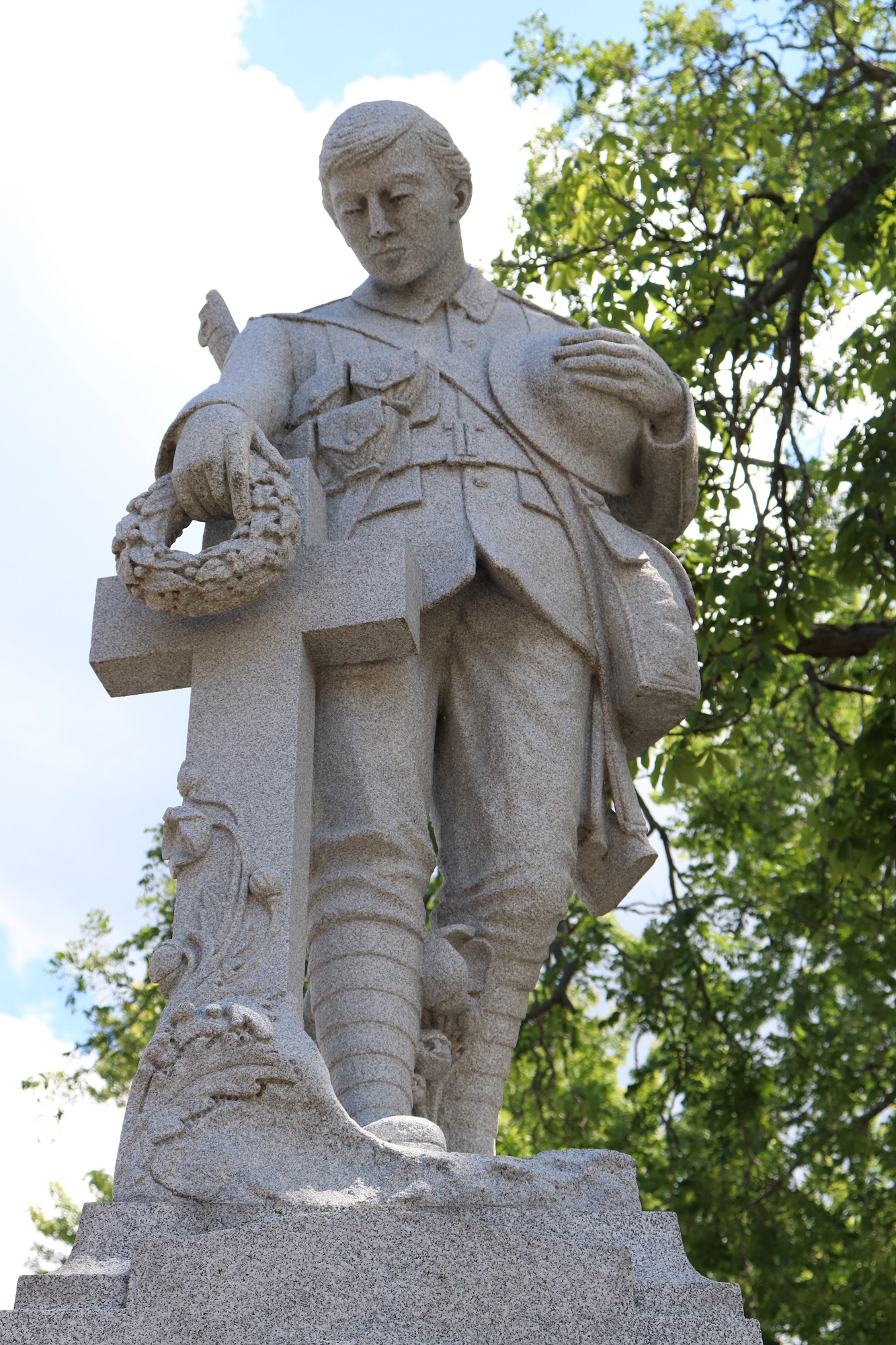
Emanuel Hahn was the sculptor and designer of the statue and it was constructed by the McIntosh Granite Company of Toronto. Hahn's design represents the sorrows caused by war. The soldier atop the cenotaph looks down in sadness at the ground below him, as if he might find there, his fallen comrades, if not for the tragedy of war. The statue depicts a young, grieving Canadian soldier in First World War army uniform. He is standing at a battlefield grave – a simple cross with poppies at the base – the final resting place of a comrade killed in action. His helmet is held close to his heart with his left hand and his right hands rests upon the cross while holding a laurel wreath.
The seven casualties of the Second World War were subsequently added. On the lower base is inscribed to remind us that citizens from Port Dalhousie also fought in the Korean War. A memorial walkway was later added behind the memorial to commemorate those who served in Afghanistan.
Emanuel Hahn moved to Toronto at the age of seven with his family of artists and musicians from Germany, in 1888. He studied commercial design and model-making at Toronto Technical School and Ontario College of Art and Industrial Design. At 25 years old Hahn began a nearly lifelong contract with Thomson Monument Company of Toronto. Two years later, he also started work as a studio assistant to sculptor Walter Seymour Allward. Part of his duties included assisting on Allward’s significant works such as the South African War Memorial in Toronto.
In 1912 Hahn began an association with the Thomson Monument Company of Toronto. It was there, along with several assistants, he made the many war memorials that are found across Canada: Fernie, British Columbia; Killarney and Russell, Manitoba; Alvinston, Bolton, Cornwall, Hanover, Lindsay, Malvern, Milton, Petrolia and Port Dalhousie, Ontario; Gaspe, Quebec; Moncton, New Brunswick; Springhill and Westville Nova Scotia; Summerside, Prince Edward Island.
Hahn is probably most famous as the designer of the Bluenose sculpture on the back of the Canadian dime and the Caribou on the back of the Canadian quarter. He was a victim of anti-German sentiment in the years following the Great War, when his design for the Winnipeg Cenotaph was rejected in 1925.